
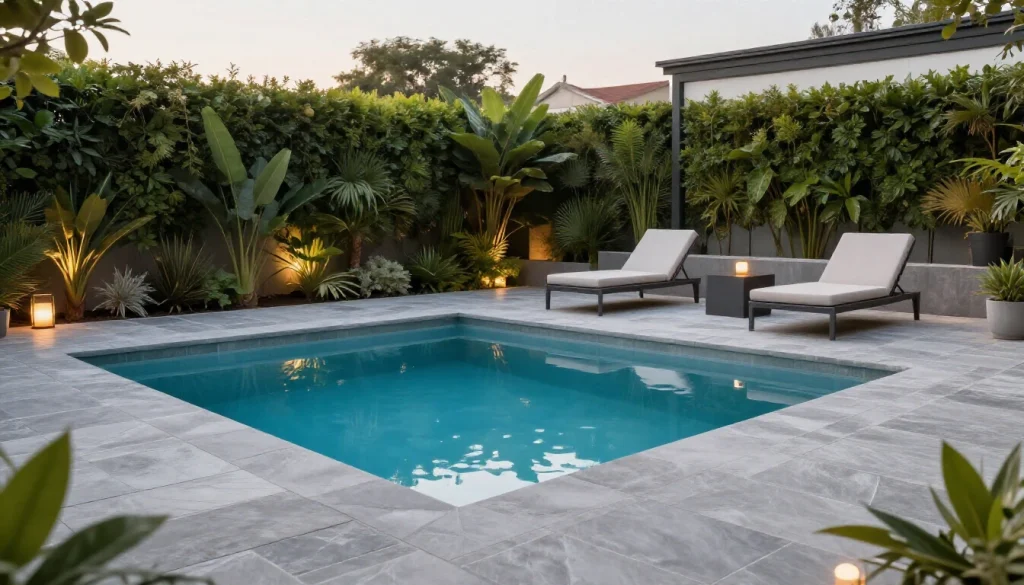
A small yard is not a reason to skip having a pool. It’s a reason to pick a smarter one.
Plunge pools, also called cocktail pools, typically run 6 to 12 feet wide and 10 to 22 feet long, sitting deeper than a standard pool relative to their footprint. They’re built for soaking and cooling rather than lap swimming, and they cost significantly less to install and maintain than a full-size pool. According to FIXR’s 2024 Outdoor Living Trends Report, 41% of homeowners now prioritize compact, low-maintenance pools when redesigning outdoor spaces.
This guide covers 41 specific plunge pool ideas organized by style, shape, material, and budget, along with a buying guide, real cost data, permit guidance, and three FAQ answers written for featured snippets.
What Makes a Plunge Pool Different From a Regular Pool?
Standard pools run 12×24 feet or larger and are built around swimming laps or water sports. Plunge pools top out around 12×20 feet and are designed primarily for cooling off, soaking, hydrotherapy, and entertaining in a compact footprint.
The practical difference shows up in cost and upkeep. A full-size pool typically costs $50,000 to $100,000 or more to install. A plunge pool runs $20,000 to $50,000 for most builds. Less water means fewer chemicals, lower electricity bills, and less time spent on maintenance each week.
Plunge Pool vs. Standard Pool: Side-by-Side Comparison
| Feature | Plunge Pool | Standard Pool |
|---|---|---|
| Typical Size | 6×10 ft to 12×20 ft | 12×24 ft and up |
| Average Install Cost | $20,000–$50,000 | $50,000–$100,000+ |
| Annual Maintenance | $1,400–$2,900/yr | $3,000–$5,000+/yr |
| Install Time | 1–8 weeks | 3–6 months |
| Best Use | Soaking, cooling, entertaining | Laps, water sports |
| Year-Round Use | Yes, with heater | Often seasonal |
How to Choose the Right Plunge Pool for Your Small Yard
Measure Before You Commit
Leave at least 3 feet on each side of the pool for coping, decking, and safe movement. Most municipalities require pools to sit 5 to 10 feet from property lines, so check your local setback rules before planning anything. Mark the footprint on the ground with a garden hose or spray paint and live with that outline for a day or two before signing any contracts.
Match the Material to Your Budget and Timeline
| Material | Average Cost | Install Time | Lifespan |
|---|---|---|---|
| Stock Tank (DIY) | $1,500–$3,500 | 1–2 days | 10–15 yrs |
| Vinyl Liner | $18,000–$35,000 | 2–4 weeks | 10–15 yrs (liner) |
| Fiberglass Shell | $20,000–$40,000 | 1–3 weeks | 25–30 yrs |
| Precast Concrete | $20,000–$45,000 | 1–7 days | 30+ yrs |
| Custom Gunite/Concrete | $35,000–$65,000+ | 2–4 months | 50+ yrs |
| Spool (Spa-Pool Combo) | $25,000–$55,000 | 2–6 weeks | 25+ yrs |
Concrete/Gunite gives you the most design freedom but costs the most and takes the longest. Fiberglass installs in one to three weeks and resists algae growth, but shapes are limited to manufacturer molds. Vinyl liner is the lowest entry price but needs the liner replaced every 5 to 10 years. Precast concrete brands like Plungie can install via crane in a single day, which suits tight access yards where excavation equipment can’t easily reach.
Think About How You’ll Actually Use It
- Cooling off after work: 8×10 feet is plenty for one or two people
- Entertaining guests regularly: go to 10×14 feet or wider
- Aqua therapy or water fitness: 12×18 feet minimum, with jet positioning in the brief
- Hot-cold contrast therapy: plan for two separate small pools or a spool with heating and cooling modes
Modern and Minimalist Designs
1. Flush-Set Rectangular Pool Sitting Level With the Patio

A rectangular pool installed so the coping sits flush with the surrounding concrete patio creates a clean, uninterrupted surface. No raised edges, no coping overhang. The pool looks like it was always part of the ground. Two low-profile lounge chairs on one side and the setup is complete. This works best paired with contemporary architecture where clean geometry is already the dominant language.
Design note: Keep decor to a minimum. The power of this design comes from restraint.
2. Matte Black Tile Pool With Wraparound Timber Deck
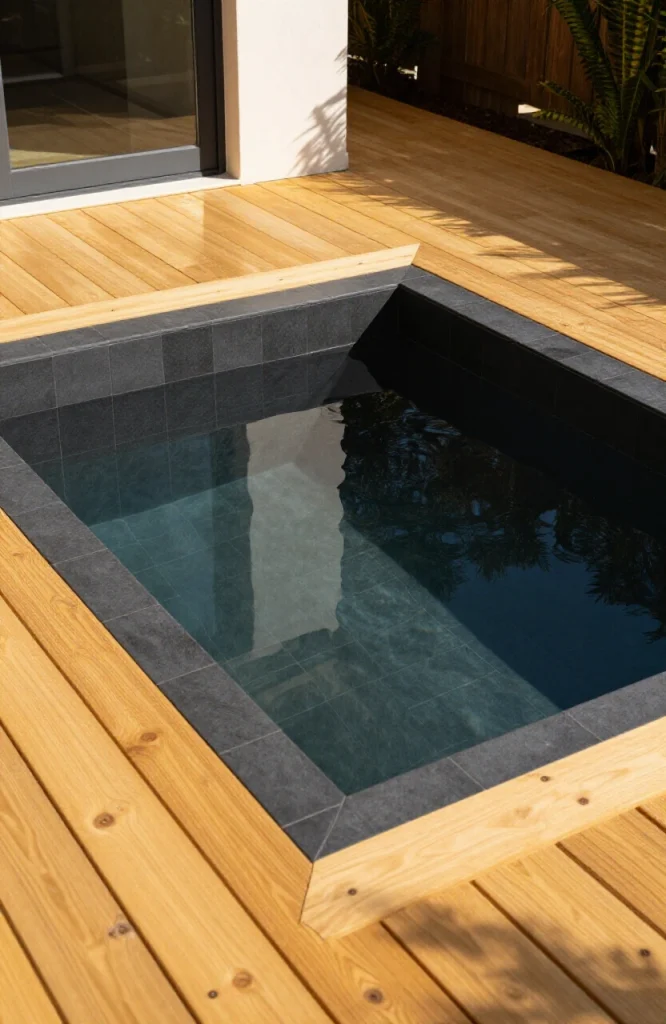
Dark charcoal or matte-black pool tiles give a resort-like visual weight without requiring extra square footage. The contrast between the dark water and warm timber decking makes the pool feel more considered than a standard blue tile finish. Wrap deck boards on all four sides at coping height so guests can sit directly on the pool edge.
Practical tip: Dark tiles absorb heat and warm the water passively in sunny climates, which can reduce heating costs.
3. White Rendered Shell Behind Frameless Glass Fencing
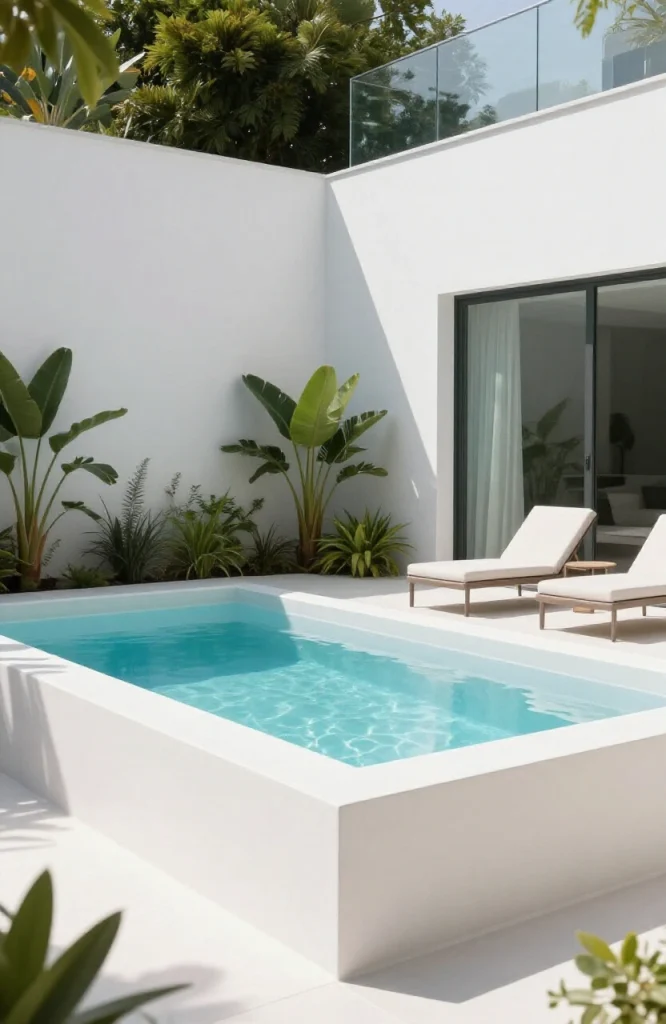
White or off-white rendered pool walls bounce light and make a tight yard feel noticeably larger. A frameless glass fence around the perimeter maintains that openness because the eye travels straight through it rather than stopping at a solid barrier. This combination is one of the most requested by homeowners with lots under 400 square feet.
Cost addition: Frameless glass fencing runs $200 to $400 per linear foot installed, but the visual return is high in small spaces.
4. Sunken Courtyard Pool Two Steps Below the Patio
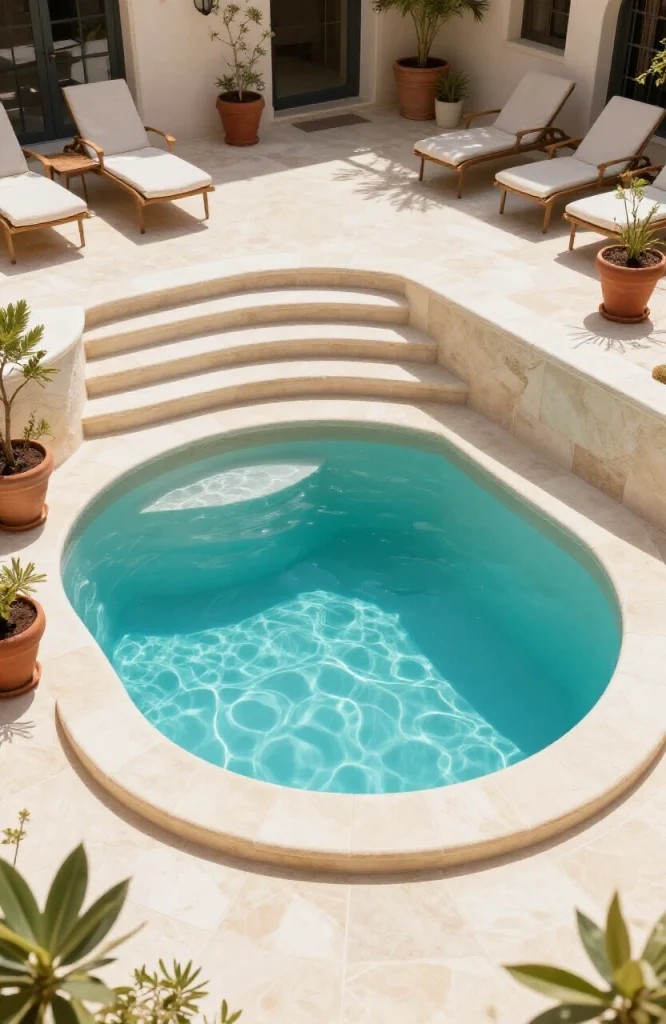
Dropping the pool area 2 to 3 steps below the main patio level creates a natural enclosure. Swimmers feel sheltered from wind, the transition between patio and pool becomes an architectural feature rather than a safety hazard, and the lower level adds a sense of depth to a yard that might otherwise feel flat.
Good for: Cooler climates where wind protection extends the usable season.
5. Narrow Lap-Style Pool for Long, Thin Yards
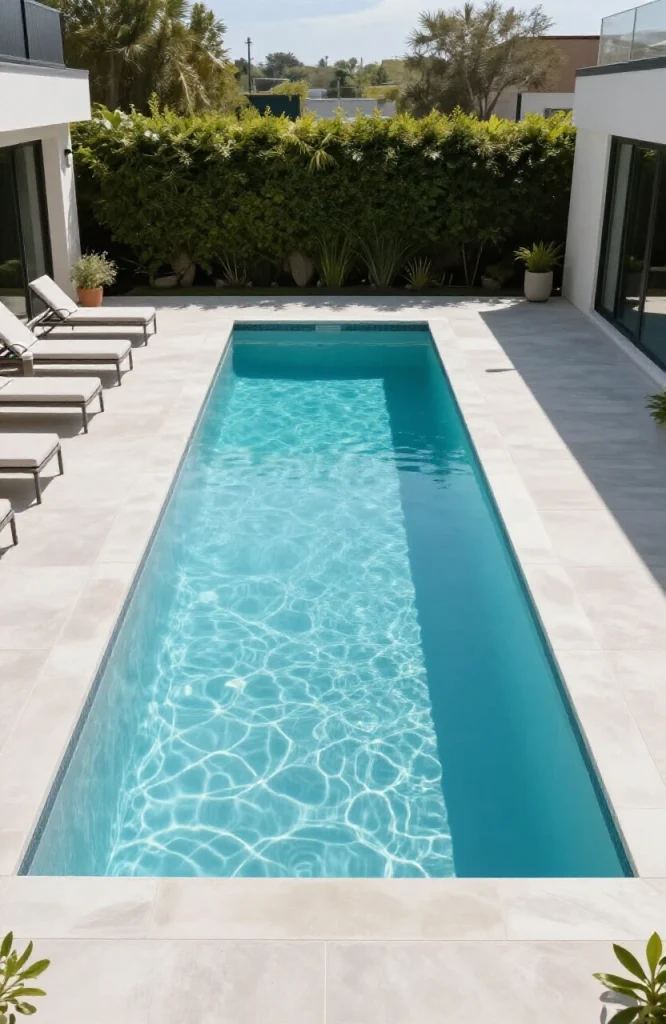
For a yard that runs long but sits narrow, a pool shaped 8 feet wide by 18 to 22 feet long uses the available length without consuming the full width. You won’t swim laps in the traditional sense, but you get enough room to stretch out, float, and do water resistance exercises. Leave at least 4 feet of paved surround on the long sides for seating.
6. Zero-Depth Beach Entry on One End of a Compact Pool
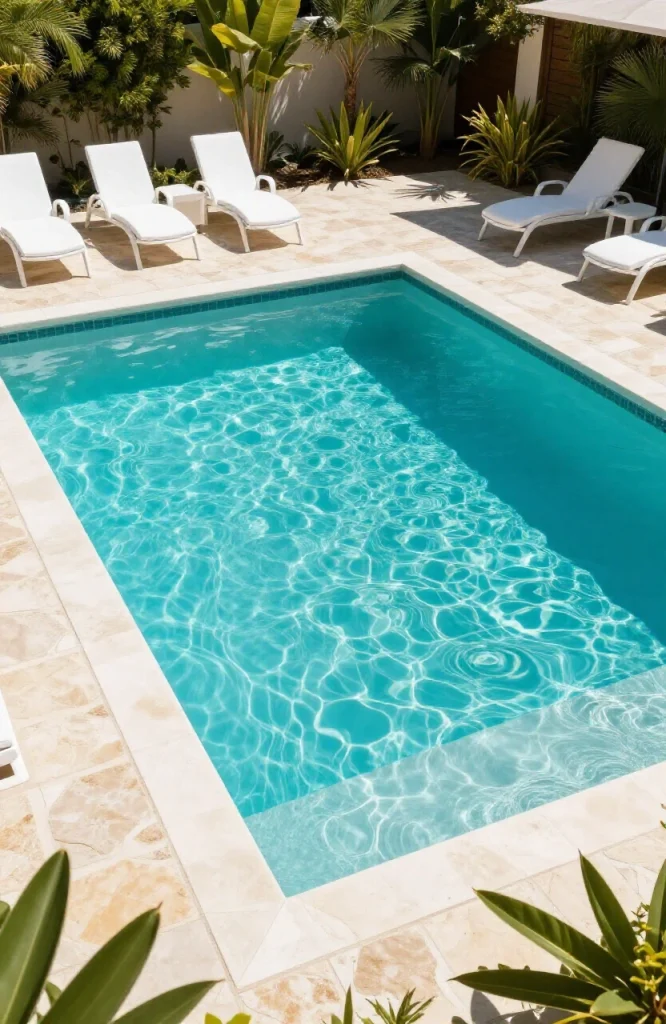
A shallow entry point that slopes gradually from zero depth into the pool eliminates the need for steps, makes entry easier for children or older adults, and adds a resort visual that you rarely see in small-yard designs. The overall pool footprint stays the same. Only the entry end changes.
Builder note: Request this as a gunite or concrete build. Most fiberglass molds don’t include this feature.
Recommended:22 Pool Fence Ideas for Every Style & Budget
7. Freestanding Above-Ground Steel Panel Pool
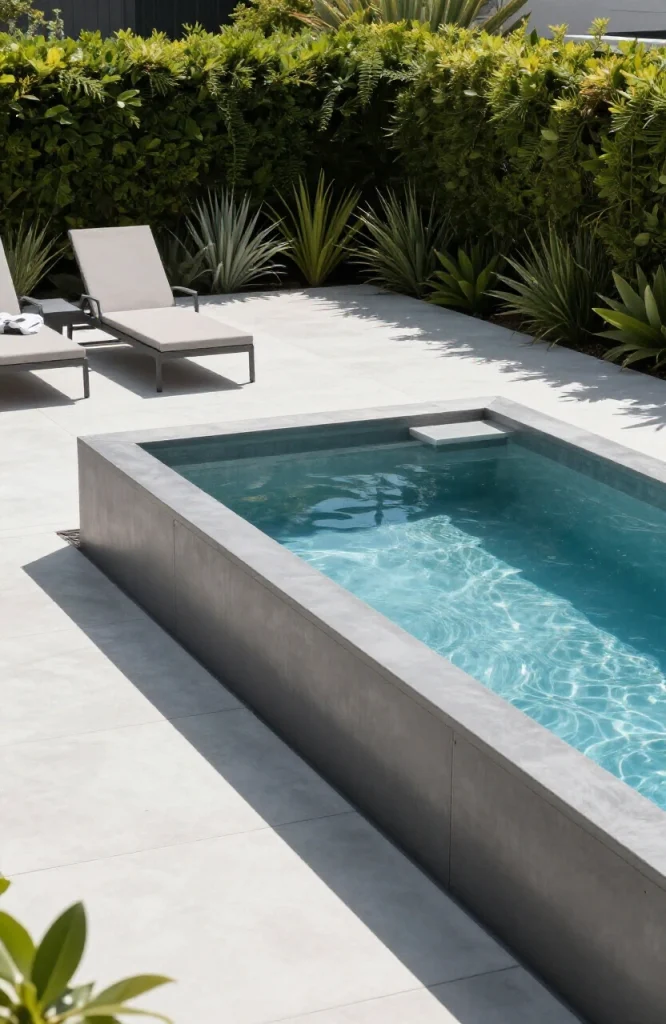
Powder-coated steel panel pools sit on an existing patio slab with no excavation required. This makes them genuinely feasible for renters or homeowners in areas where digging is restricted by underground utilities or building codes. Modern designs in charcoal, slate, or warm grey read as intentional rather than temporary.
Cost range: $8,000 to $18,000 depending on size and finish, plus installation.
Naturalistic and Garden-Integrated Styles
8. Exposed Aggregate Shell Surrounded by Native Grasses
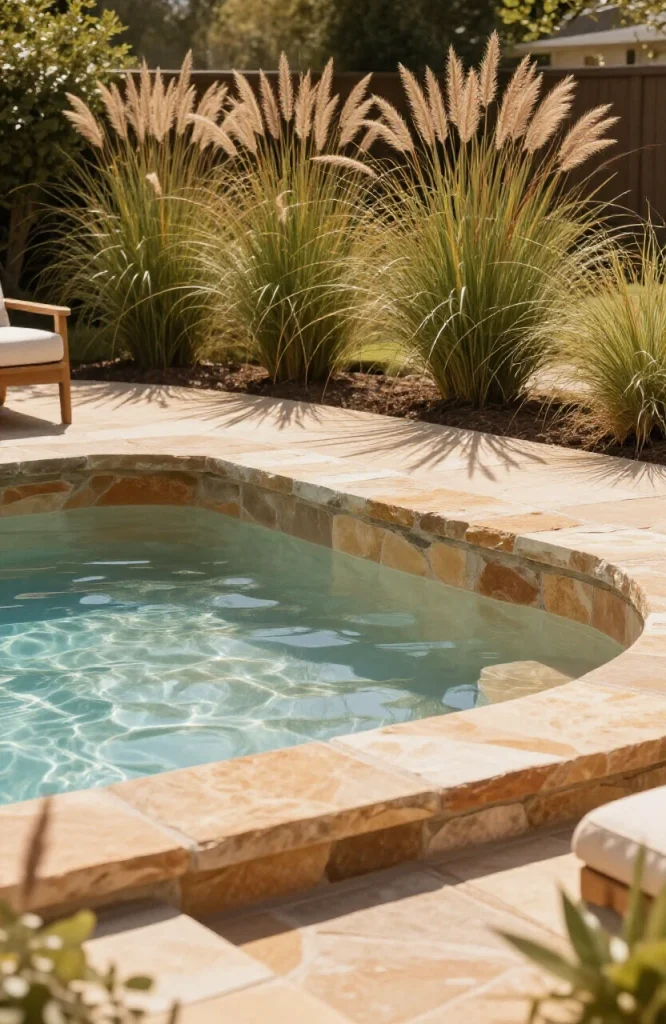
A pebble-tec or exposed aggregate pool finish blends with natural surroundings far better than standard white plaster. Frame the surround with ornamental grasses, sedges, or native groundcover and use flat stone coping rather than poured concrete. The result feels more like a natural swimming hole than a constructed pool.
Maintenance note: Native plants around the pool reduce maintenance compared to tropical species and shed less debris into the water.
9. Stacked Stone Edge With a Small Recirculating Waterfall
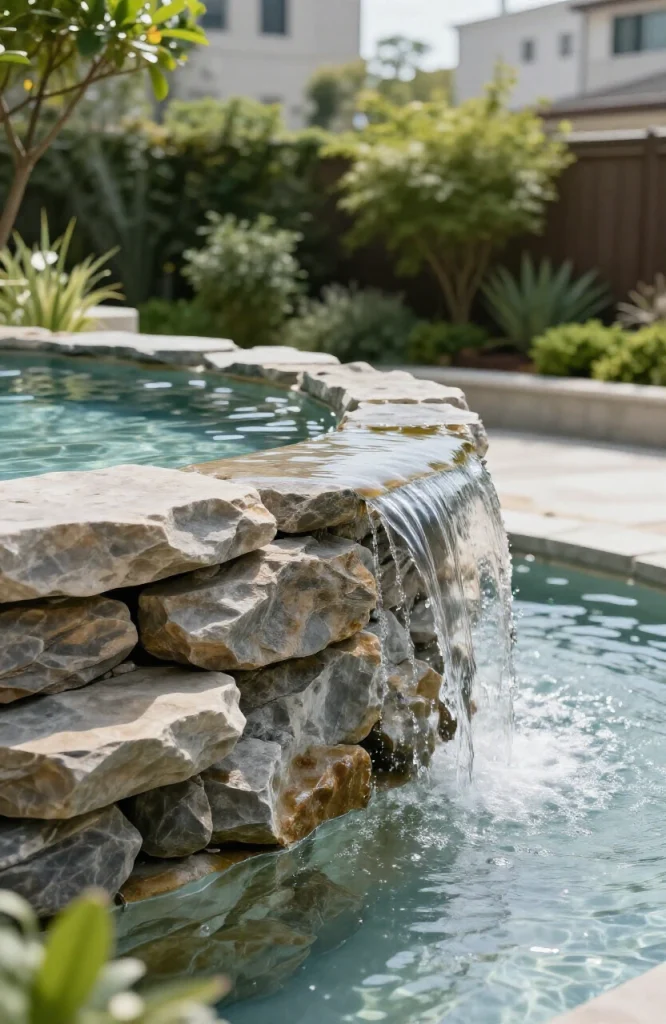
Flat fieldstone stacked around the pool rim with a small pump pushing water over one edge adds both visual texture and sound. The sound of running water in a small urban yard has a disproportionate effect on the feel of the space. This setup costs $1,500 to $4,000 to add to an existing build.
10. Dense Foliage Screen Behind a Tropical Pool
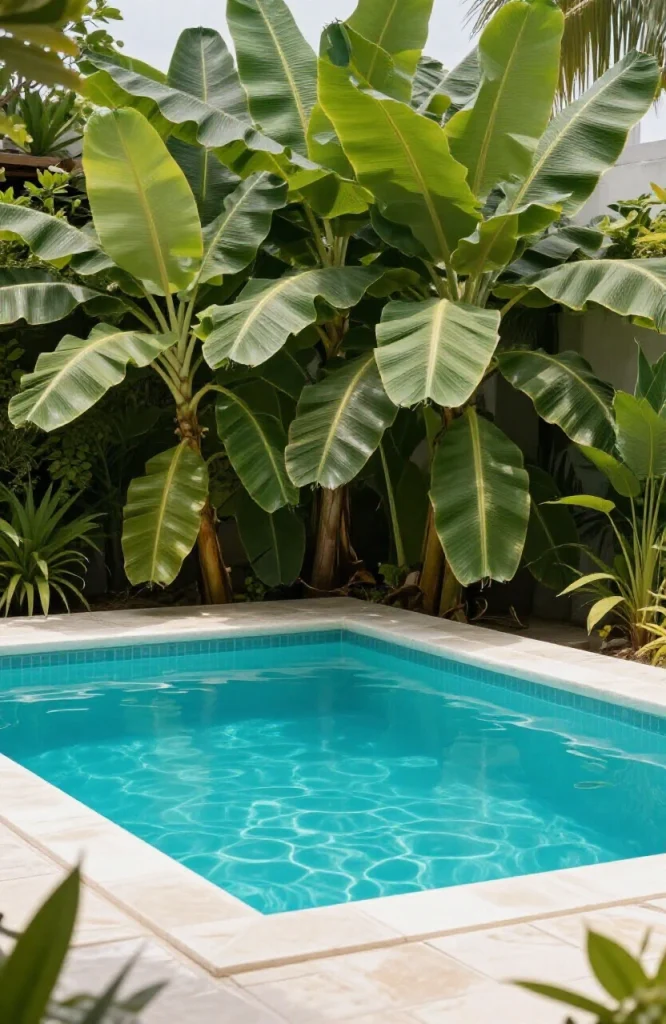
Banana plants, large-leaf ginger, or bamboo along the back boundary create a privacy screen that also functions as a backdrop. The pool sits in front of the greenery rather than against a fence or wall. Pair with warm-toned timber decking and terracotta planters on the sides to complete the look.
Climate note: In cooler zones, use cold-hardy large-leaf plants like Fatsia japonica or Gunnera rather than true tropical species.
11. Japanese-Inspired Square Soaking Pool With Moss and Stone
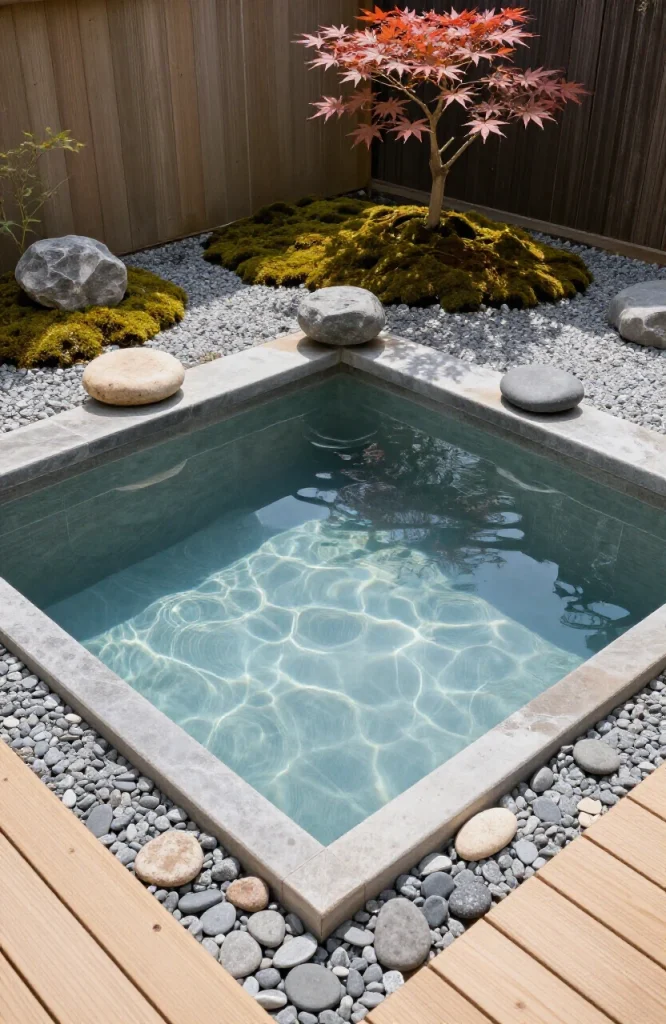
A square pool, roughly 8×8 feet, surrounded by decomposed granite, smooth river stones, and low moss plantings draws from onsen culture. Keep the hardscaping minimal. One specimen plant, such as a Japanese maple or cloud-pruned pine, provides the visual anchor. This design works particularly well in a walled or fenced yard where the enclosure already creates a quiet, contained feeling.
12. Desert Oasis Pool With Sandstone Pavers and Succulents
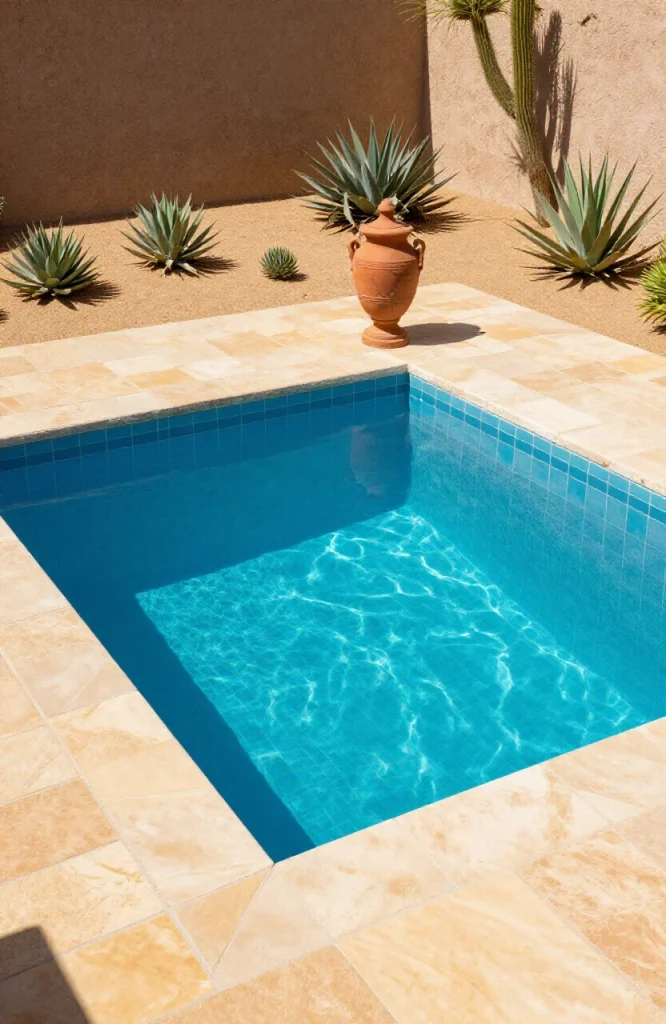
In dry climates where a traditional lawn isn’t viable, a vivid blue-tile pool surrounded by sandstone pavers, terracotta urns, and low-water succulents creates a yard that works with the climate rather than against it. The contrast between the heat of the stone and the cool of the water is the whole experience.
Water use note: A plunge pool uses 80 to 90% less water than a standard pool, which matters in drought-prone regions.
13. Shaded Pool Tucked Under Mature Tree Canopy
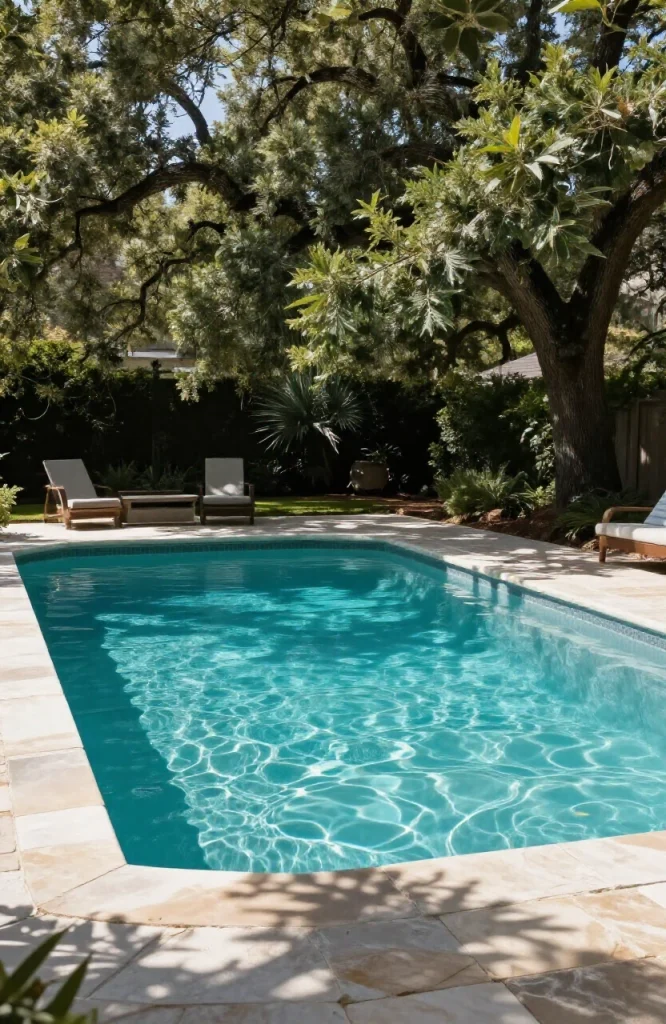
Existing mature trees can provide more value than a purpose-built pergola. A pool positioned under established tree canopy stays cooler in summer, requires less chemical treatment because direct sunlight reduces algae growth, and feels genuinely private without any additional fencing. The main challenge is leaf management. A good skimmer system handles it.
14. Lagoon-Edge Pool With Stepping Stones and Planted Borders
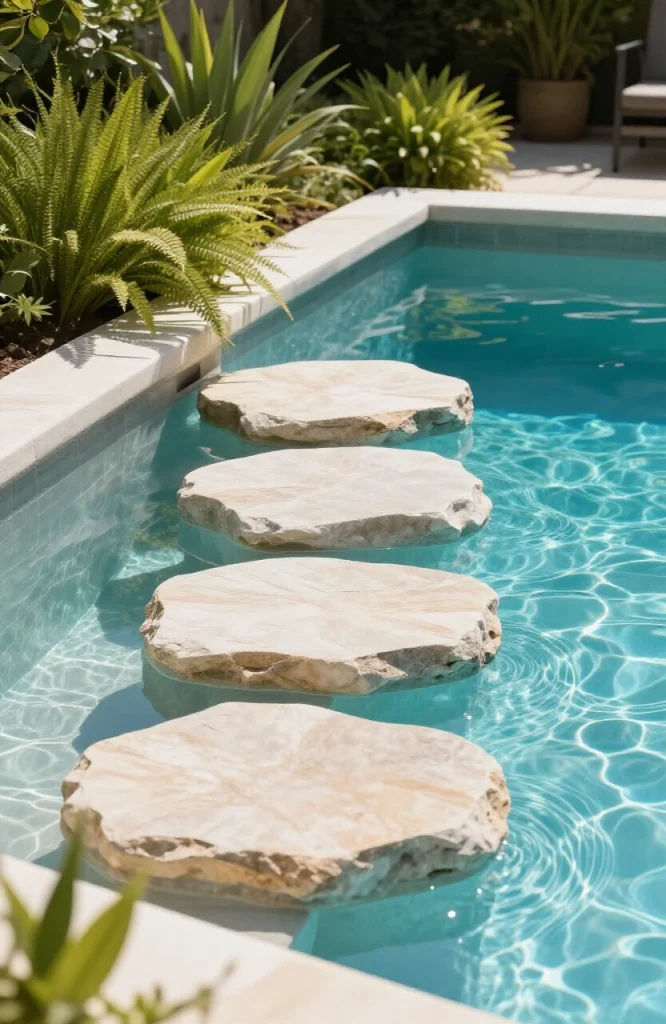
Natural stone stepping stones crossing one side of the pool, with low planting spilling over the edges, blurs the line between the pool and the garden. This works better as a concrete build because the irregular planted edges are difficult to achieve with a fiberglass shell. Budget an extra $3,000 to $6,000 for detailed pool-edge planting and stonework.
Pool and Deck Combinations
15. Full Wrap Timber Deck Flush With the Water Line
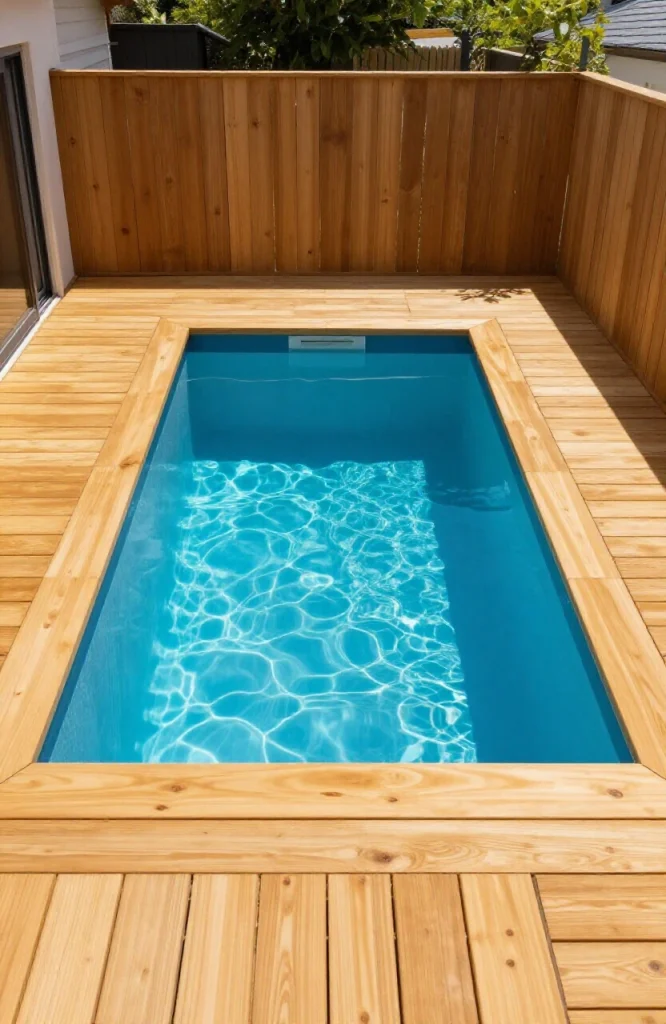
Deck boards wrapping all four sides of the pool at coping height create a continuous surface from patio to water. Guests can walk right to the edge without a physical barrier marking the transition. This is the configuration most often seen in Australian and New Zealand residential pool design and it translates well to any small yard where entertaining is the primary use.
See also:13 Pool Deck Ideas That Actually Work
16. Split-Level Design With a Raised Deck Looking Down Into the Pool
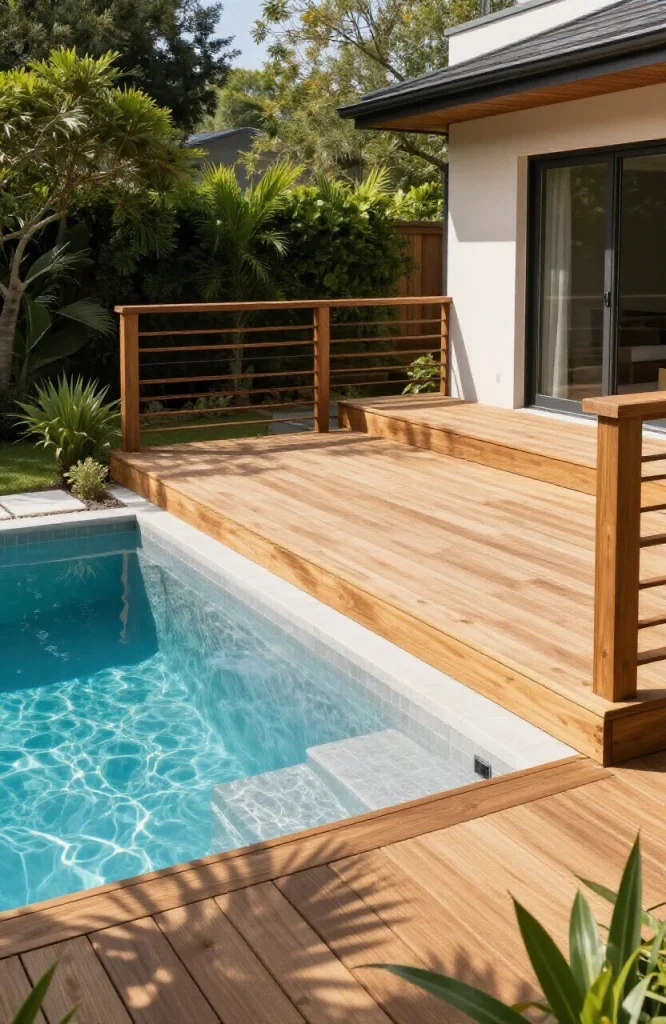
On sloped lots, a raised timber or concrete deck on the high side of the yard can sit directly above or at the edge of a pool installed on the lower level. Instead of paying to level the entire yard, the slope becomes a design feature. The raised deck functions as a viewing and seating area while the pool sits in the lower space that might otherwise be unusable.
17. Composite Deck With Built-In Bench Seat at Water Level
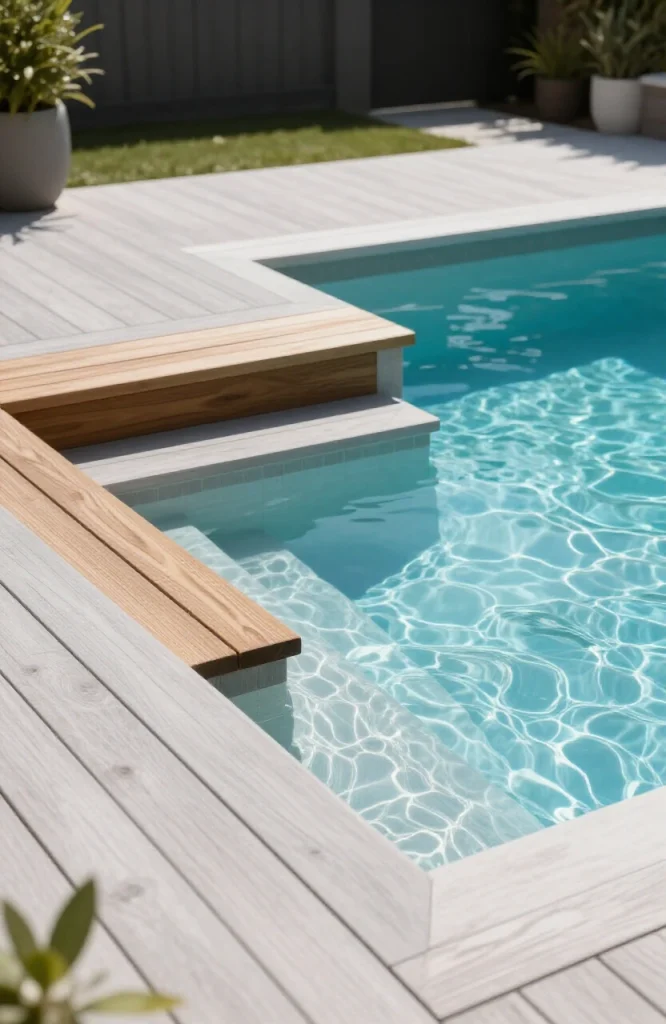
A bench seat built along one pool wall and sitting 10 to 12 inches below the waterline allows adults to sit submerged to the chest without floating or lying flat. This configuration is particularly popular for entertaining because guests can hold a drink, stay cool, and hold a conversation simultaneously. Composite decking on the surrounding area resists moisture, fading, and splinters.
18. Floating Timber Platform Over a Shallow In-Pool Shelf
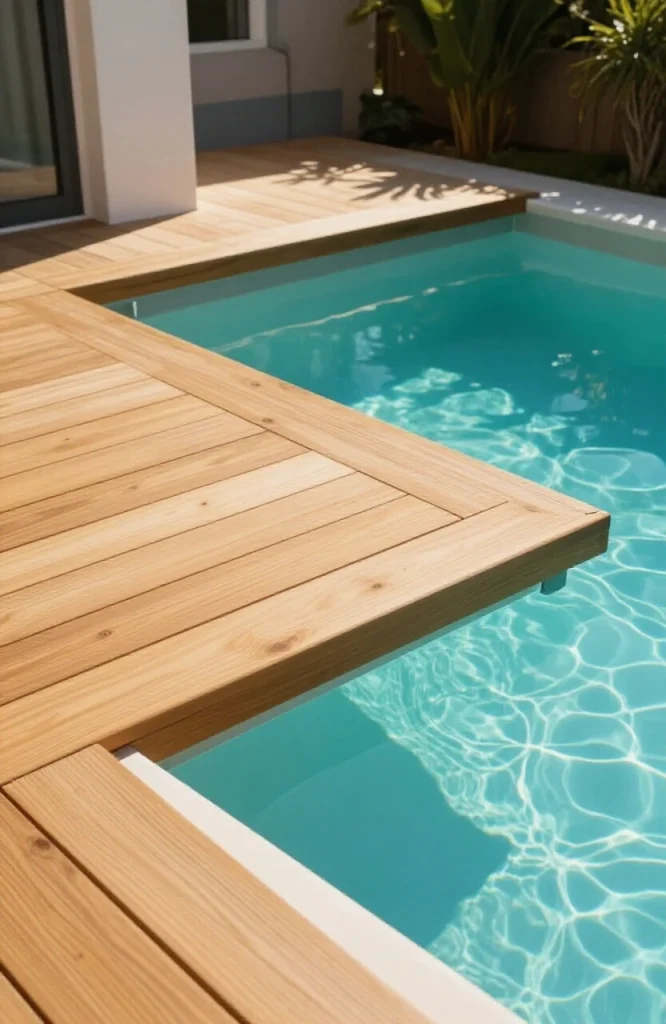
A timber platform built to extend over a 6-inch-deep shelf on one end of the pool appears to float above the water surface. From above it looks like a deck that meets the pool edge seamlessly. Adults can lie on the platform with their feet in the water. The shelf below makes a safe wading area for children.
19. Pool and Outdoor Kitchen Sharing a Single Patio Footprint
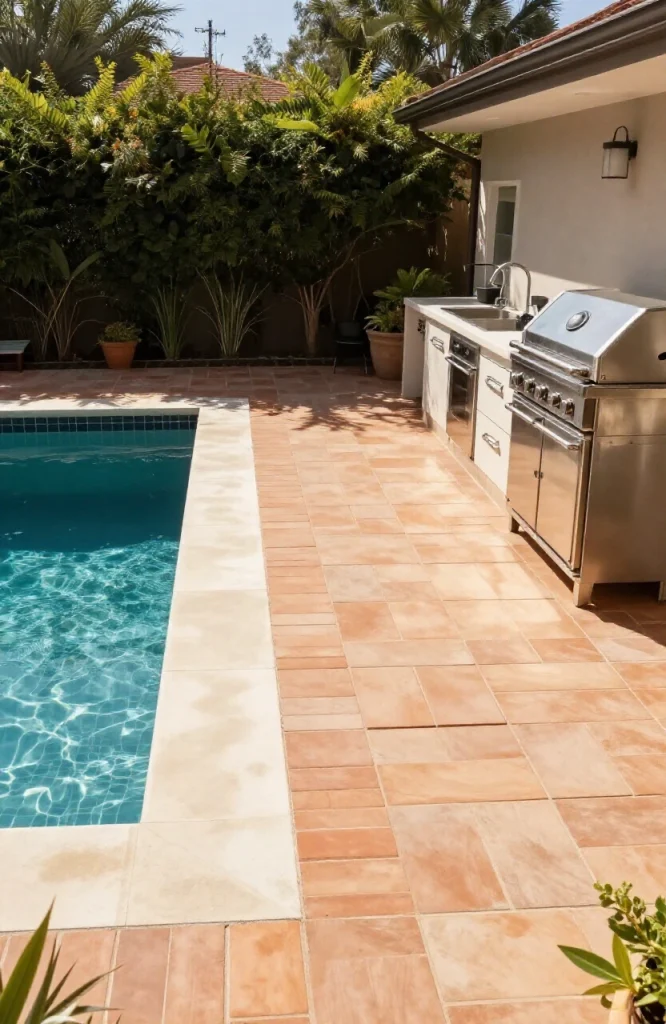
A plunge pool on one side of a small yard and a built-in outdoor kitchen or BBQ station on the other, both opening onto the same central paved area, covers the two most-requested features in small backyard renovations within a single build budget. The shared footprint means neither feature competes with the other for space.
Budget note: Combined builds often cost less than two separate projects because excavation, plumbing, and concrete pours can be coordinated.
20. Rooftop or Terrace Plunge Pool in an Urban Home
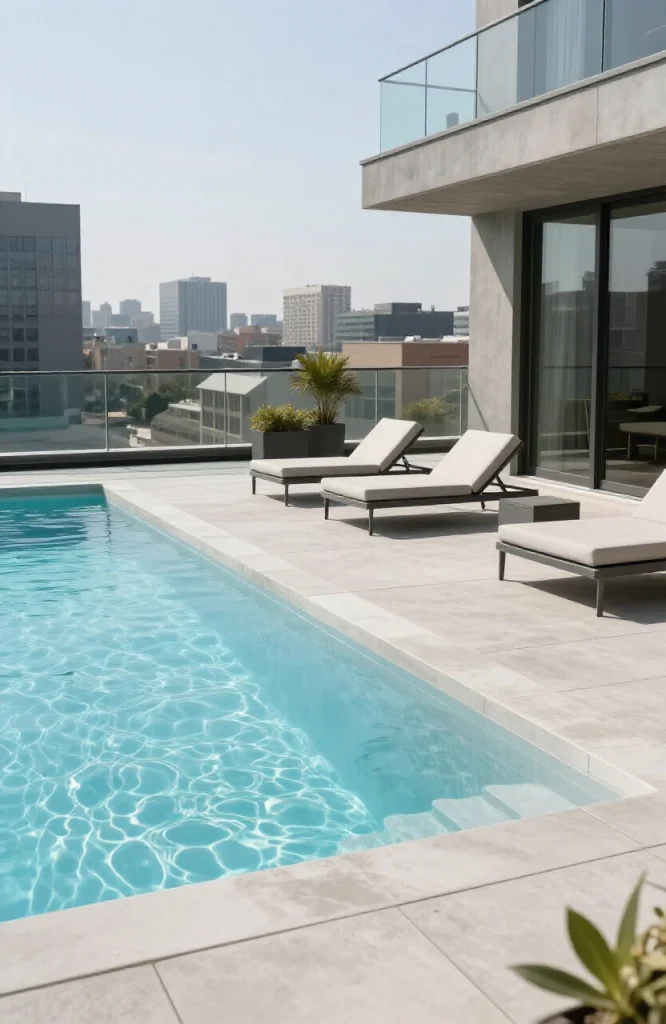
Flat-roofed urban homes with structural terraces can support a fiberglass or precast plunge pool when the roof is rated for the load. This requires a structural engineer’s assessment before any planning, but it’s a viable and increasingly common solution for city homes where ground-level outdoor space is minimal or non-existent. City views from the water are the obvious reward.
Key requirement: Always get a certified structural assessment before planning a rooftop pool installation.
Shape and Layout Configurations
21. Corner Pool That Leaves the Rest of the Lawn Open
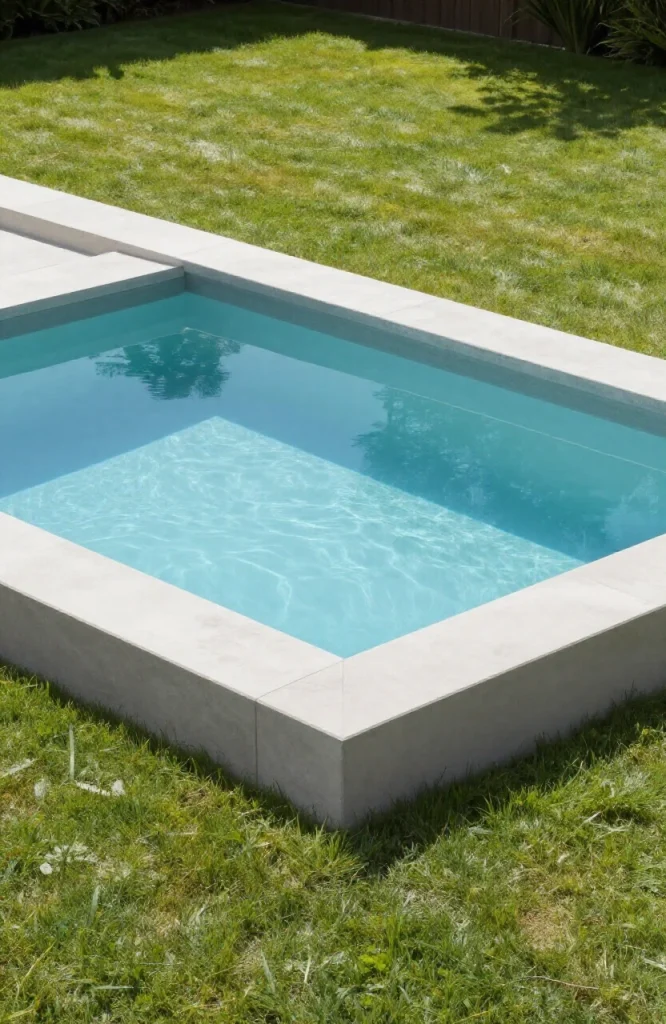
Fitting a pool into a 90-degree corner of the yard preserves the remaining lawn or garden space as a single open area rather than fragmenting it. L-shaped shells or triangular custom builds work here. The diagonal face of the pool facing the yard becomes a natural focal point.
22. Round Plunge Pool in a Square Yard
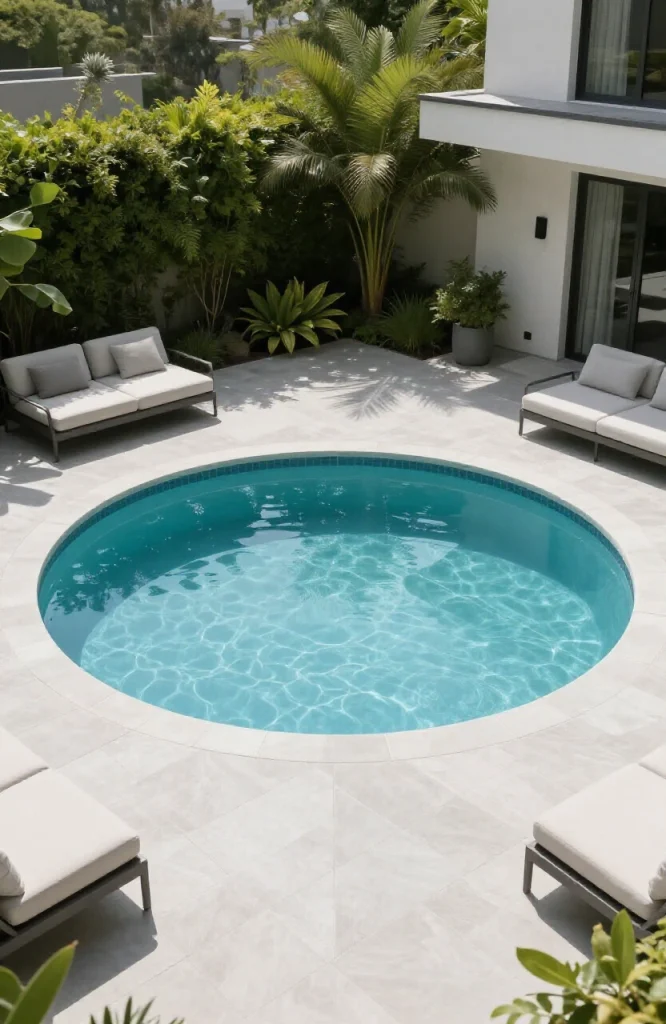
A round pool, typically 11 to 12 feet in diameter, suits small square yards naturally because the circular shape leaves equal space on all sides. The soft edge reads as deliberate rather than forced. Round fiberglass shells are available from several manufacturers in this size range.
23. Perfectly Centered Square Pool With Symmetrical Paving
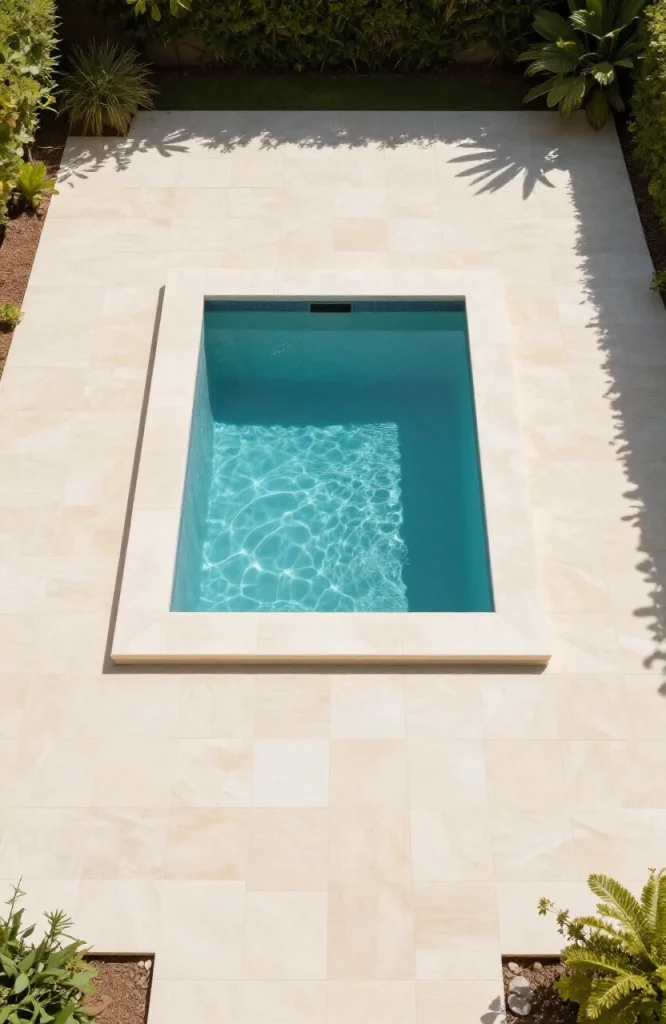
A square pool centered in the yard with matching paved surrounds on all four sides creates formal symmetry. This is one of the more photogenic configurations in small-yard design and one of the most pinned on visual platforms. It requires the yard to be reasonably level and the surround dimensions to be equal on all four sides.
24. Kidney or Freeform Shape to Soften a Boxy Yard
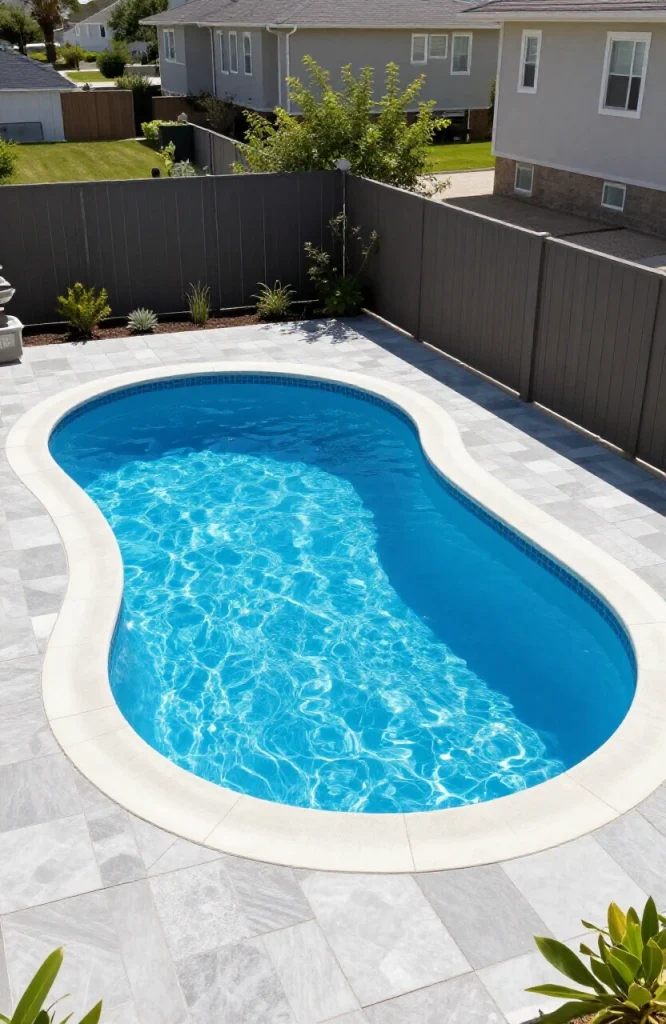
A curved freeform pool shell breaks the rectangular grid of a standard suburban lot. In yards where every other element, including fences, walls, and the house itself, runs in straight lines, a kidney shape introduces organic movement. This requires a custom concrete or gunite build; most fiberglass shells are rectangular.
25. Side Yard Pool Running the Length of a Narrow Passage
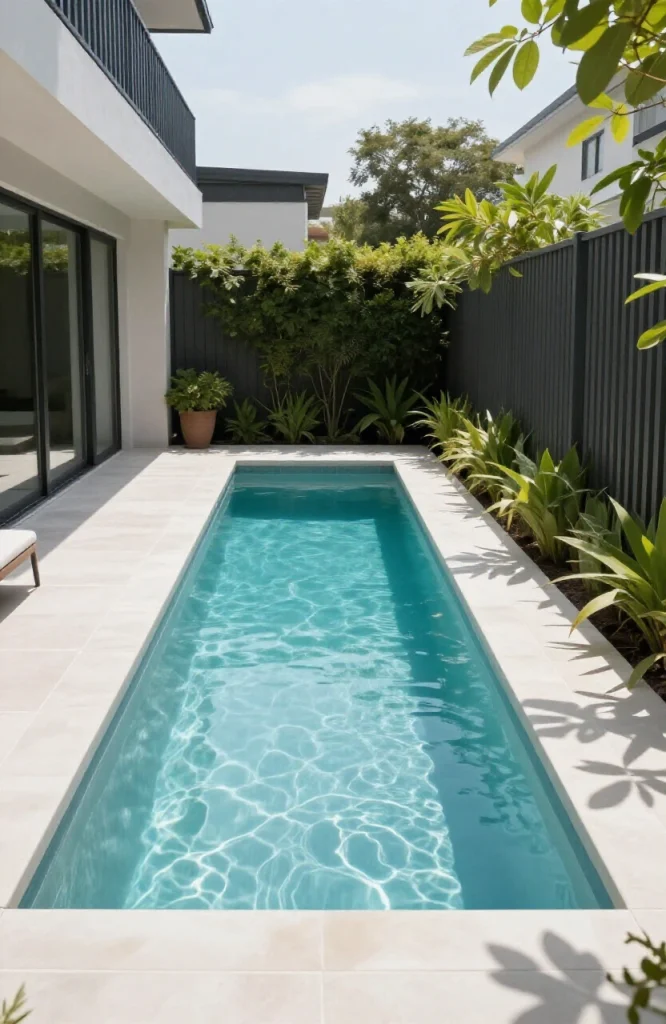
Side passages of 8 feet or wider are often entirely wasted in suburban homes. A slim plunge pool, 6 to 7 feet wide and 15 to 20 feet long, running the full length of a side yard converts what was essentially a service corridor into a usable and visually striking feature. Access at each end doubles as a swim-through connection between the front and back yard.
26. Two-Depth Pool With a Shallow Lounge Shelf and a Deep Soaking Zone
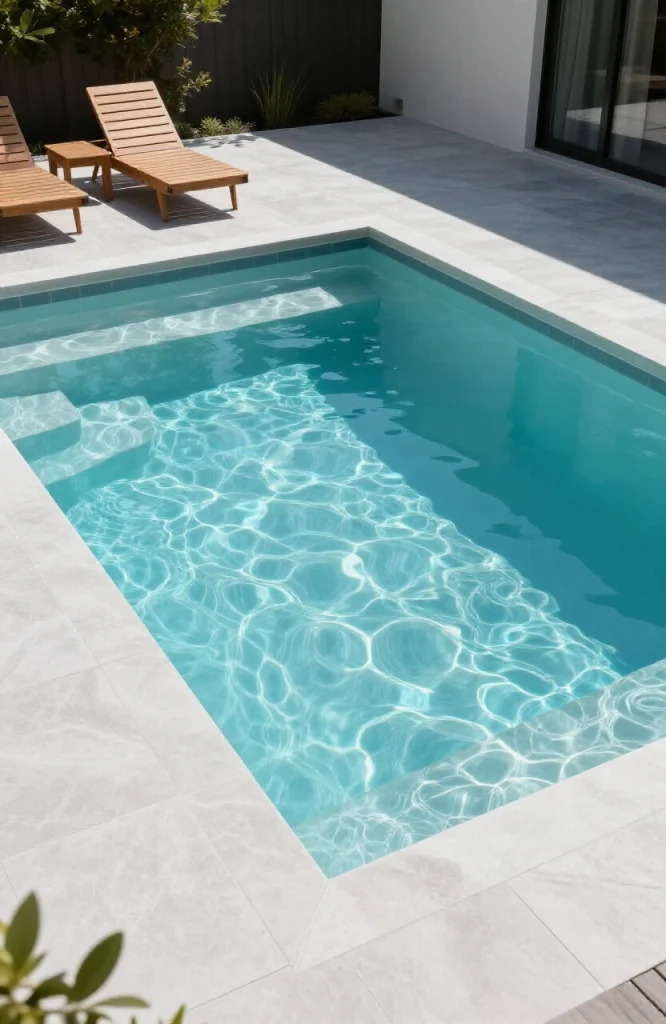
Dividing one pool into two distinct zones, a shallow 18-inch shelf for lounging and a deeper 5-foot section for full submersion, gives the pool more uses per square foot than a single-depth design. Families with young children find the shallow shelf particularly useful. This is standard in gunite builds and available in select fiberglass molds.
Spa, Wellness, and Recovery Pools
27. Spool (Spa-Pool Combo) for Year-Round Use
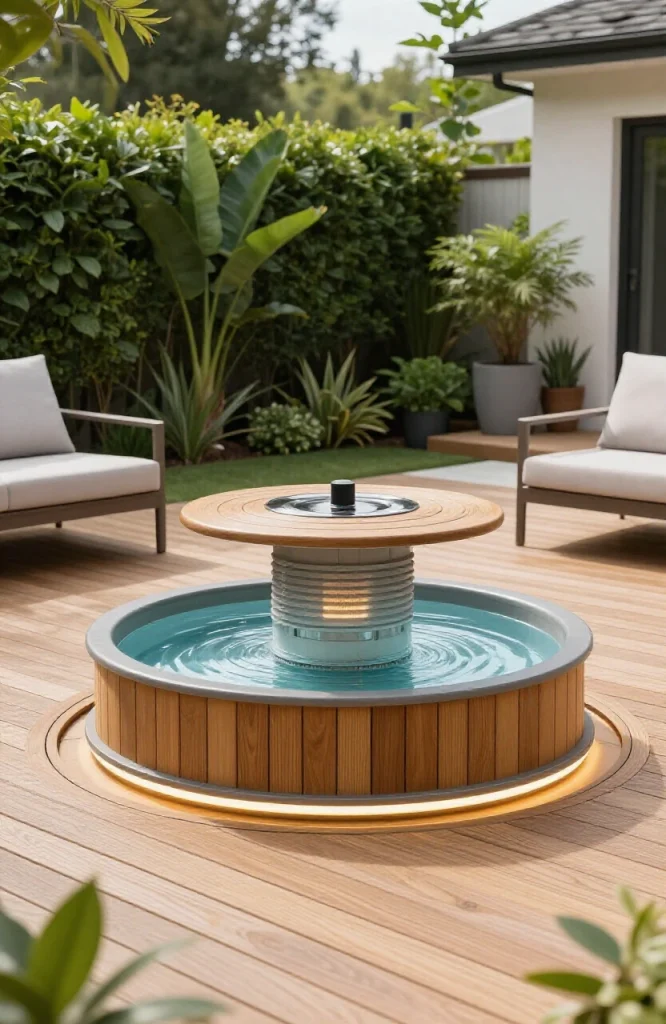
A spool is a hybrid unit that heats like a spa in cold months and cools like a pool in warm months. Typically 8 to 12 feet long, it occupies roughly the same footprint as a large hot tub but functions as a full pool for soaking and light exercise. It’s one of the fastest-growing categories in residential pool installation for 2025 and 2026.
Cost range: $25,000 to $55,000 installed, depending on size and heating system.
28. Side-by-Side Hot and Cold Contrast Pools
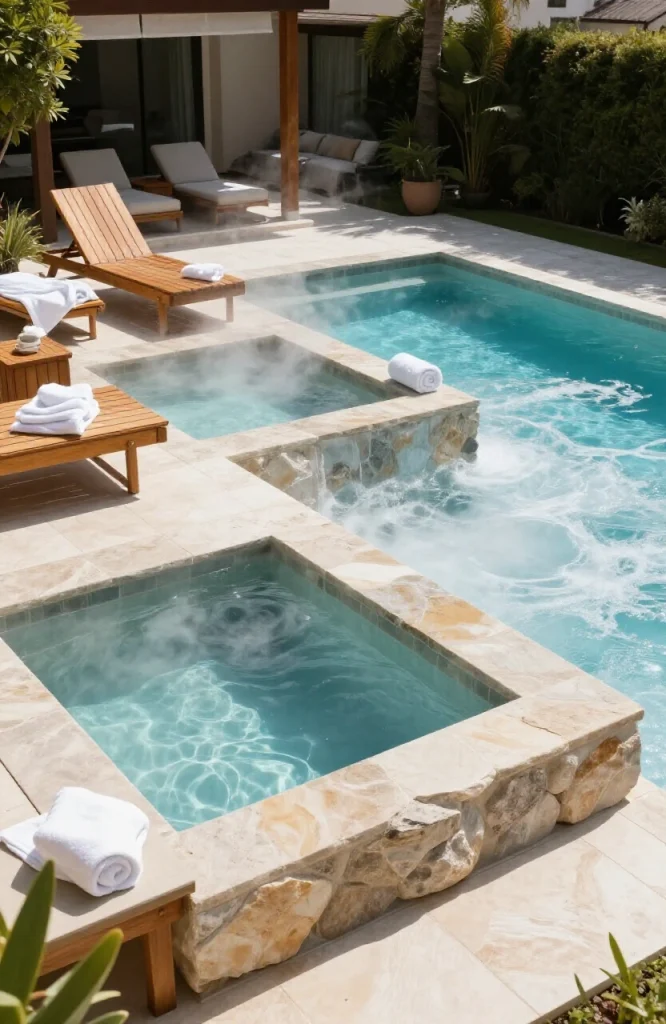
Two small pools placed directly adjacent, one heated to 100 to 104°F and one cooled to 50 to 60°F, create a contrast therapy setup used widely in athletic recovery and wellness routines. Each pool can be as small as 4×6 feet and still serve its purpose. The combined footprint is similar to a single mid-size plunge pool.
29. Dedicated Cold Plunge for Post-Workout Recovery
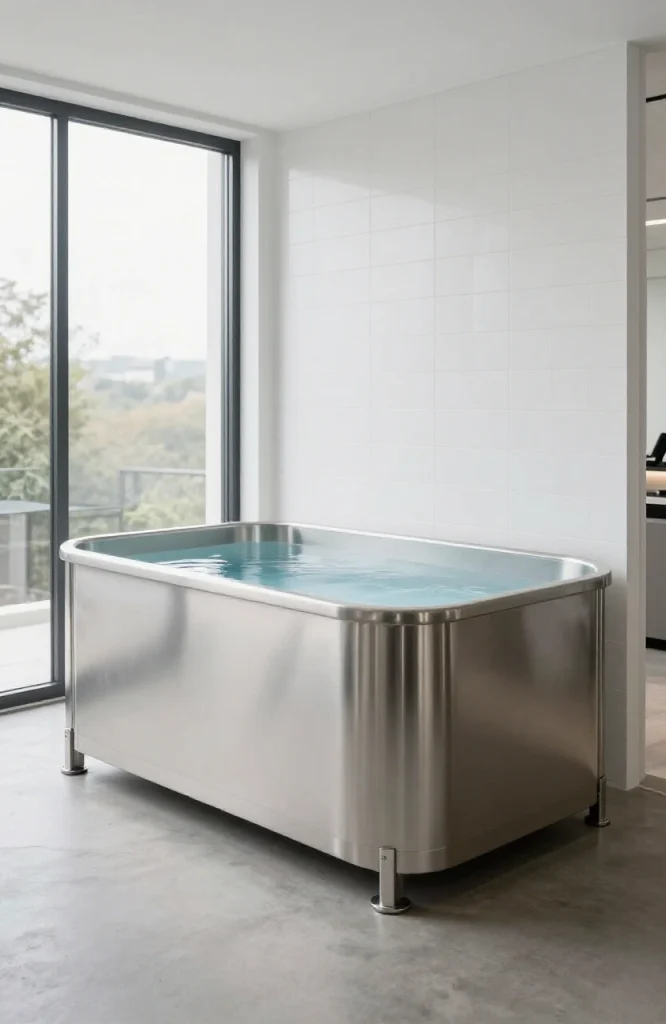
A cold plunge pool kept at 50 to 59°F doesn’t need to be large. A 4×6-foot or 5×8-foot basin is enough for full-body submersion. Precast and fiberglass options in this size start around $8,000 to $15,000. The operational cost is low because a small chiller unit runs efficiently on a compact volume of water.
Trend note: Cold plunge installations increased by over 300% between 2022 and 2024 as cold therapy moved from professional sports into residential wellness.
30. In-Pool Jet Wall for Water Resistance Training
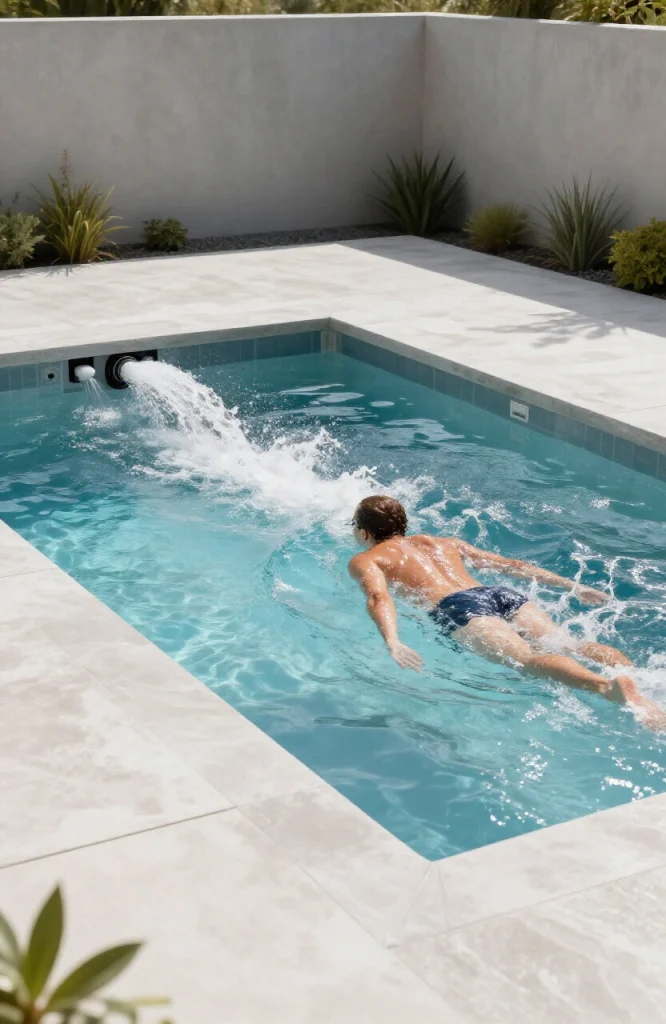
Positioning two or three hydrotherapy jets along one wall of a small pool creates a swim-current effect. Users can aqua jog, swim in place, or do resistance exercises without the pool needing to be lap-swim length. This works in a pool as small as 8×12 feet. Budget $2,000 to $5,000 for jet installation on top of the base pool cost.
31. Cedar Sauna and Cold Plunge Pool Paired in 15×15 Feet
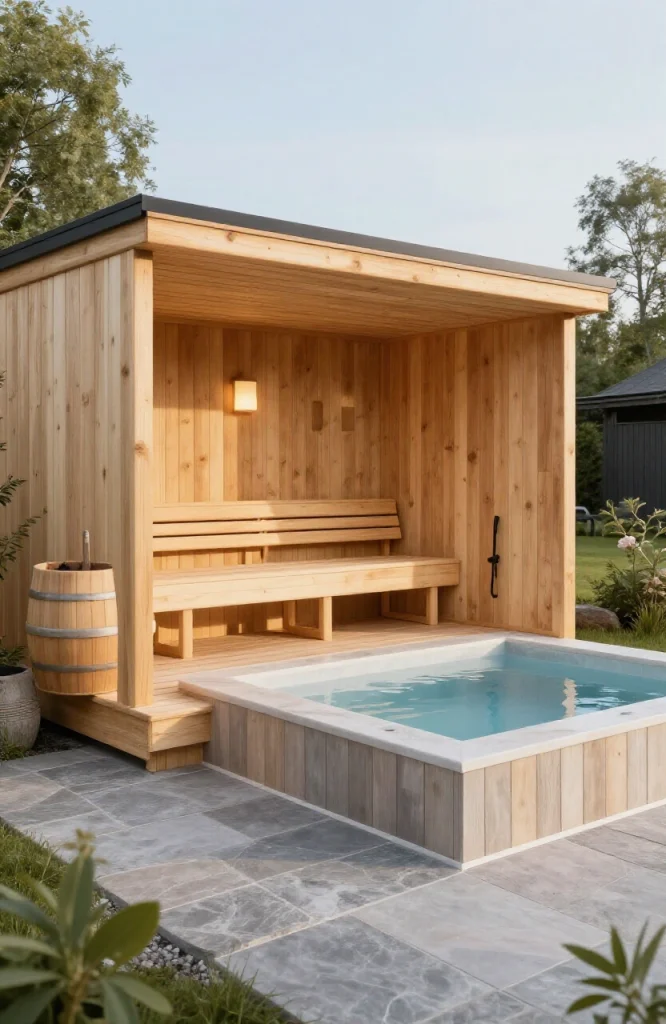
A cedar barrel or prefab sauna on one side and a cold plunge pool on the other fits comfortably in a 15×15-foot outdoor zone. This is a direct adaptation of the Scandinavian sauna and cold-water bathing tradition. The combination delivers genuine physiological benefits including improved circulation and faster muscle recovery, and it requires far less space than most people expect.
See also:10 Indoor Pool Ideas That Make You Want to Swim Year-Round
32. Heated Plunge Pool With an Insulated Cover for 365-Day Use
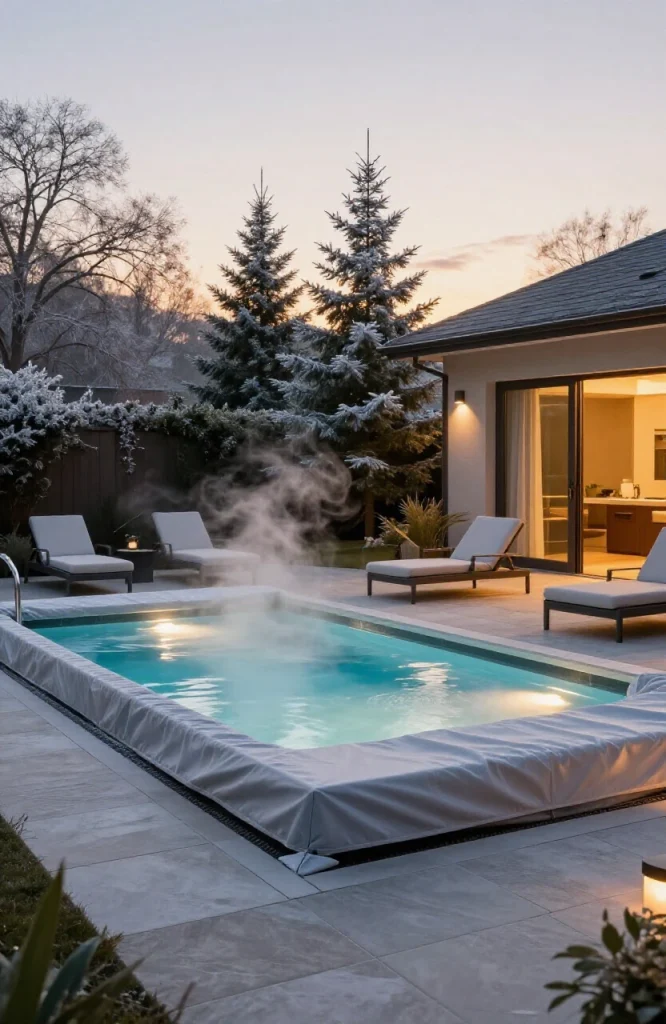
A plunge pool with a quality gas heater or heat pump and a fitted insulating cover can operate through winter in most climates, including those that see frost. The pool becomes a year-round feature rather than a 4 to 5-month seasonal one. Insulated covers also reduce chemical consumption and water evaporation significantly.
Running cost: Heating adds $50 to $200 per month depending on climate, pool volume, and the type of heating system used.
Budget-Minded and Creative Builds
33. Galvanized Stock Tank Pool on an Existing Patio
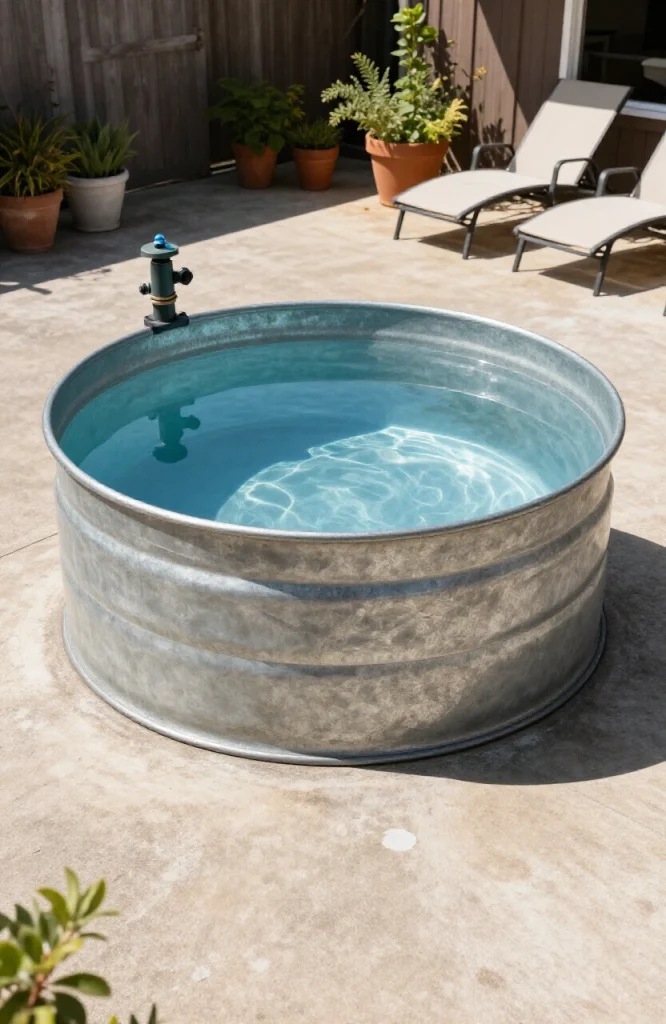
An 8 to 10-foot diameter galvanized steel stock tank, fitted with a basic filtration pump, costs $1,500 to $3,500 all in and can sit on any existing concrete patio. It needs no excavation and no building permit in most jurisdictions. This is the most accessible entry point for renters or homeowners who want to test whether a pool suits their lifestyle before committing to a full install.
34. Crane-Installed Precast Concrete Pool in a Single Day
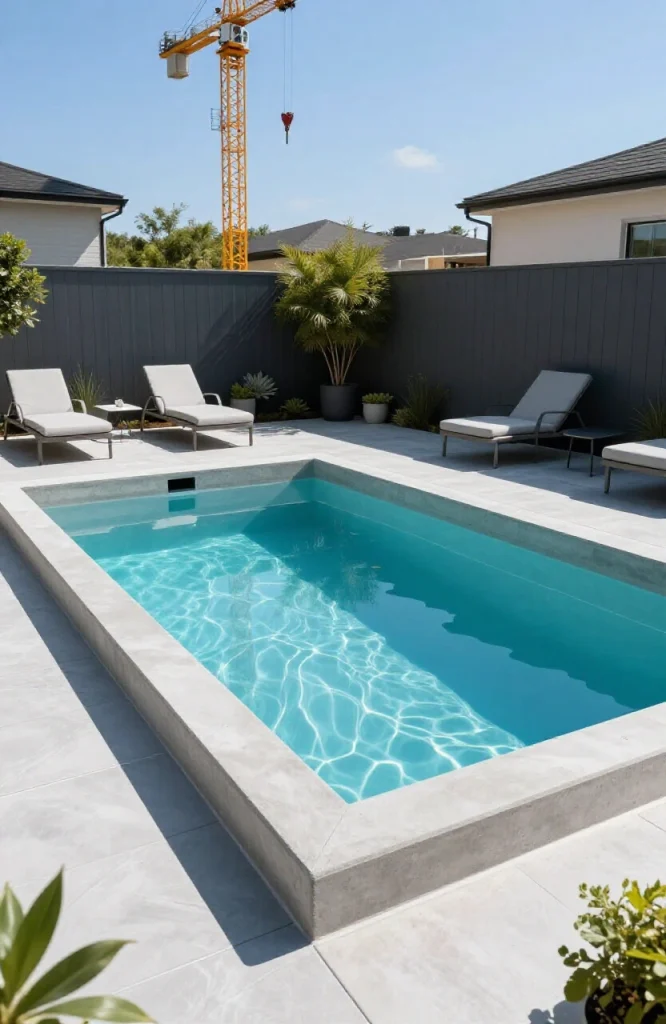
Precast concrete pool brands like Plungie ship a finished pool shell that arrives via crane and drops into a prepared hole in one day. No months-long construction, no wet concrete on site. Costs start around $20,000 to $25,000 before installation. Particularly useful for tight access yards where a concrete truck and pump can’t physically reach the pool area.
35. Repurposed Shipping Container Converted to a Pool
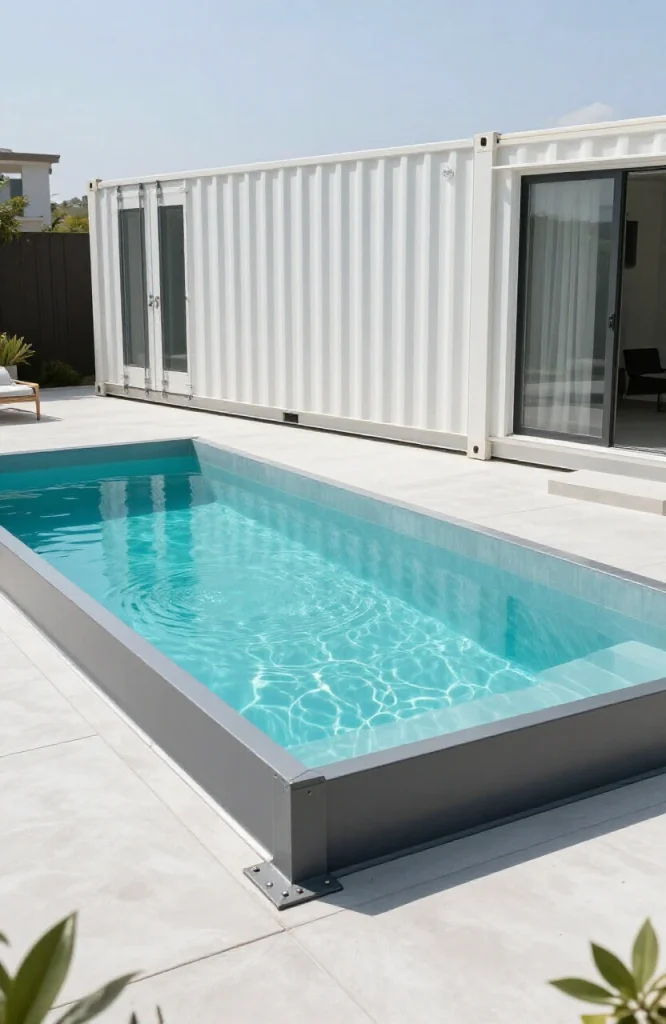
A 20-foot shipping container cut, cleaned, lined, and fitted with a filtration system produces a pool that runs 8 feet wide by 16 feet long at a fraction of a custom concrete build. The industrial look suits contemporary yards. Structural integrity is high. The main challenge is ensuring the site is level and that drainage is planned before installation.
Cost range: $8,000 to $20,000 depending on how much interior work and finishing the conversion requires.
36. Partial Above-Ground Fiberglass Shell on an Existing Slab
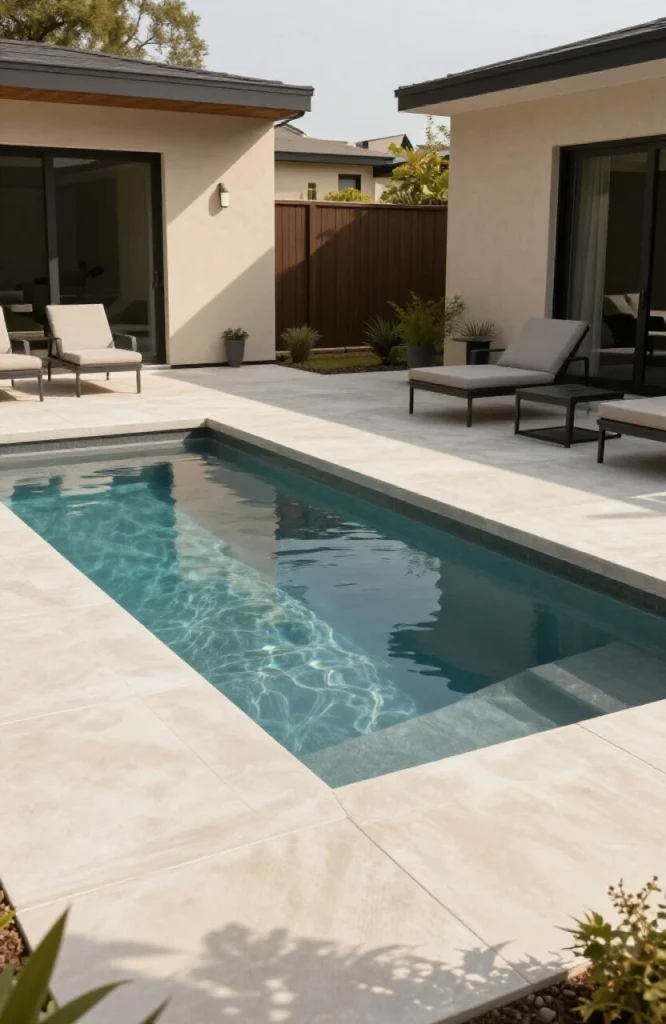
If you have an existing concrete patio in good condition, a fiberglass shell can be installed semi-above-ground, sitting partially in the slab and partially above it, which reduces excavation depth and therefore excavation costs. The raised portion of the pool shell doubles as seating along the edge.
37. Bolt-Together Modular Aluminum Pool Kit
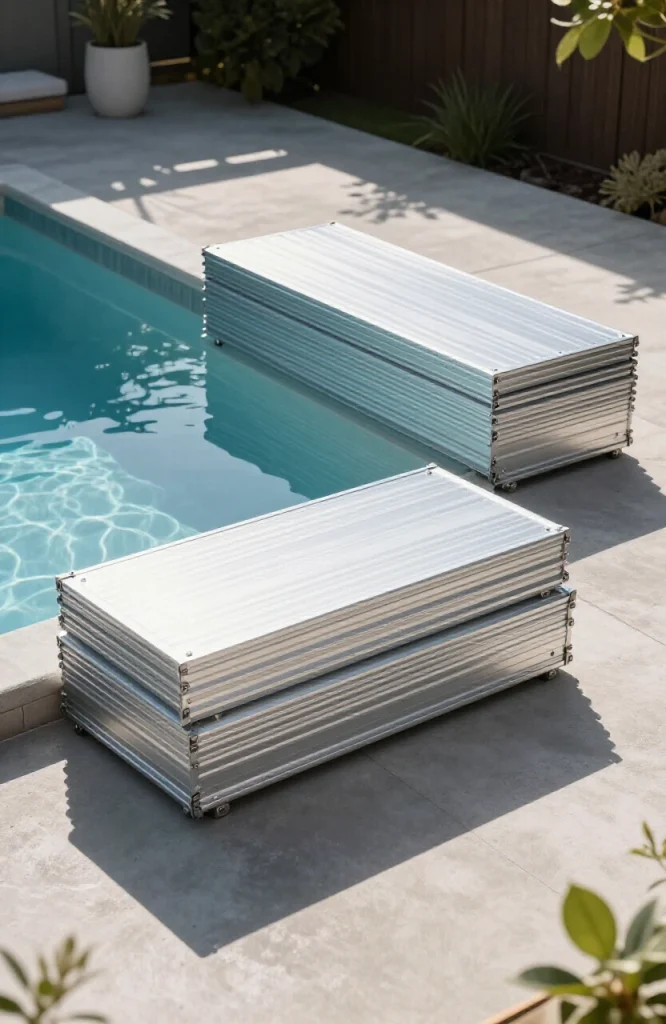
Bolt-together aluminum or steel wall systems sold as modular pool kits bring the entry cost down significantly for homeowners willing to handle part of the project. Professional installation of the plumbing and filtration is still recommended, but wall assembly is manageable for someone with basic construction experience. These systems are available in rectangular configurations from 8×12 to 12×20 feet.
38. Heritage Stone Trough Converted to a Garden Soaking Pool
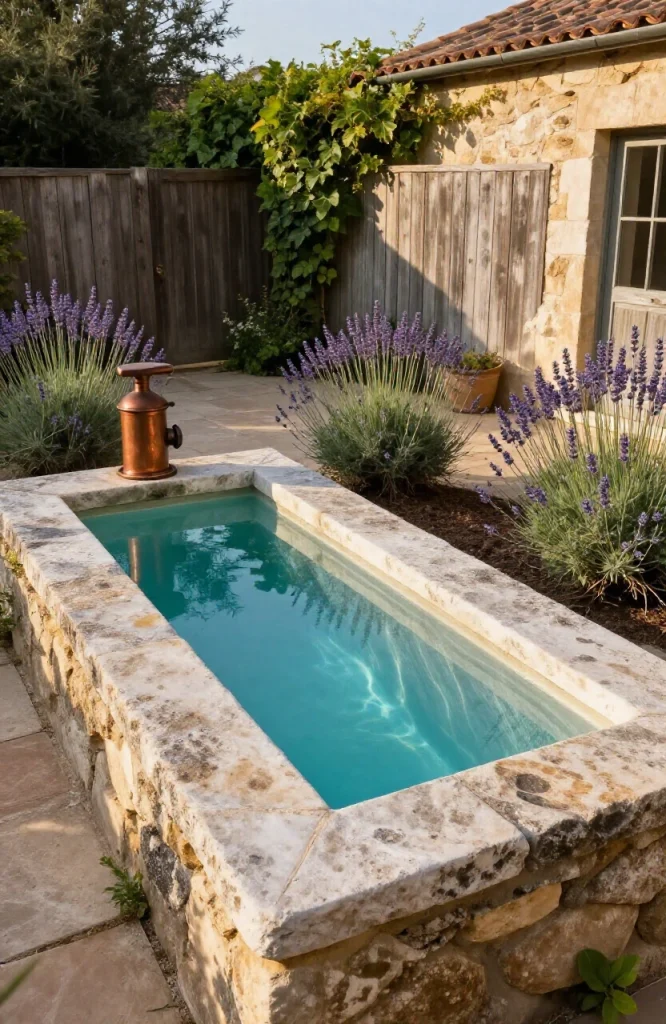
In rural, farmhouse, or heritage properties, a large stone water trough cleaned, sealed internally with pool-grade epoxy, and fitted with a small circulation pump becomes a soaking pool unlike anything manufactured. These troughs often appear in salvage yards for $500 to $2,000. The result is genuinely one-of-a-kind and fits naturally into a period garden.
Lighting, Privacy, and Feature Add-Ons
39. RGB LED Underwater Lighting for Evening Swimming
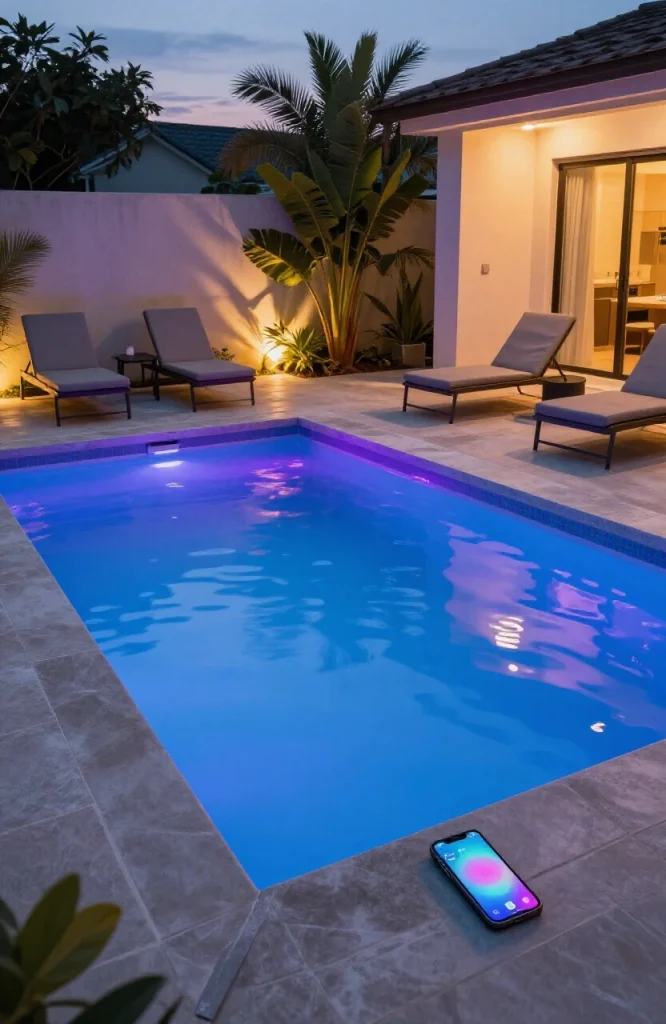
Programmable RGB LED strips along the pool walls make a small pool visually dramatic at night. Color scenes can change via smartphone app. This is one of the highest-return additions for entertaining use because it extends the pool’s usable hours into the evening and creates an atmosphere that standard white pool lights don’t.
Cost: $500 to $1,500 added to a standard build, or retrofitted to existing pools.
40. Living Privacy Screen Using Bamboo or Tall Ornamental Grasses
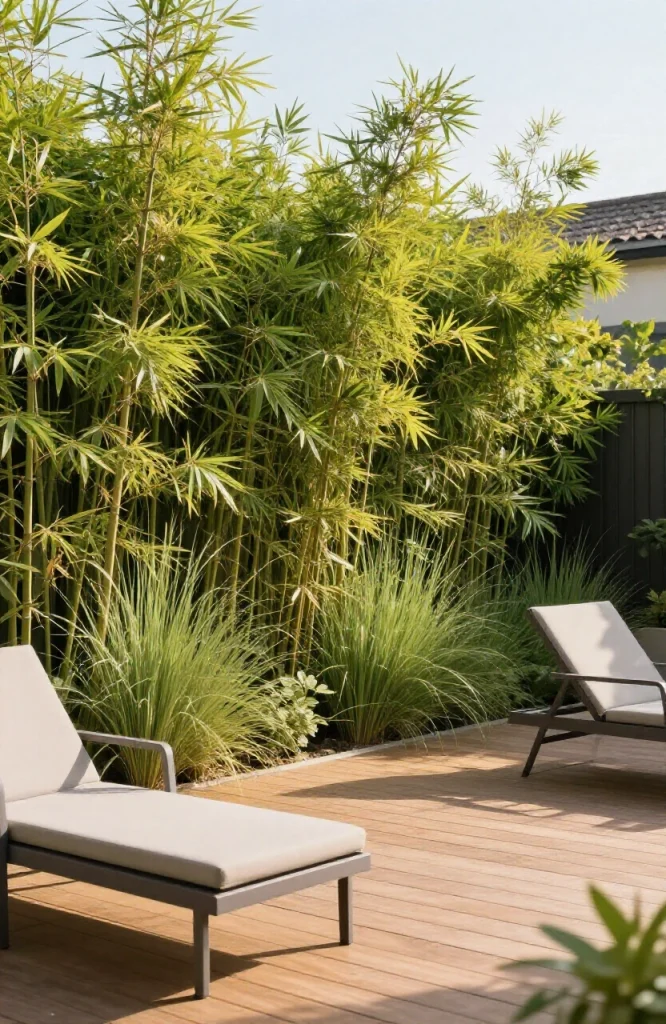
A planted screen of clumping bamboo, tall ornamental grasses, or a trellis covered in climbing plants delivers full privacy without the cost or visual weight of a solid fence. The yard reads as green rather than enclosed. Clumping bamboo varieties grow 10 to 15 feet tall and stay contained, unlike running species. This approach works particularly well in overlooked urban yards.
Maintenance tip: Plant the screen at least 18 inches from any pool coping to keep roots away from the pool shell.
41. Cedar or Steel Pergola Directly Over the Pool Zone
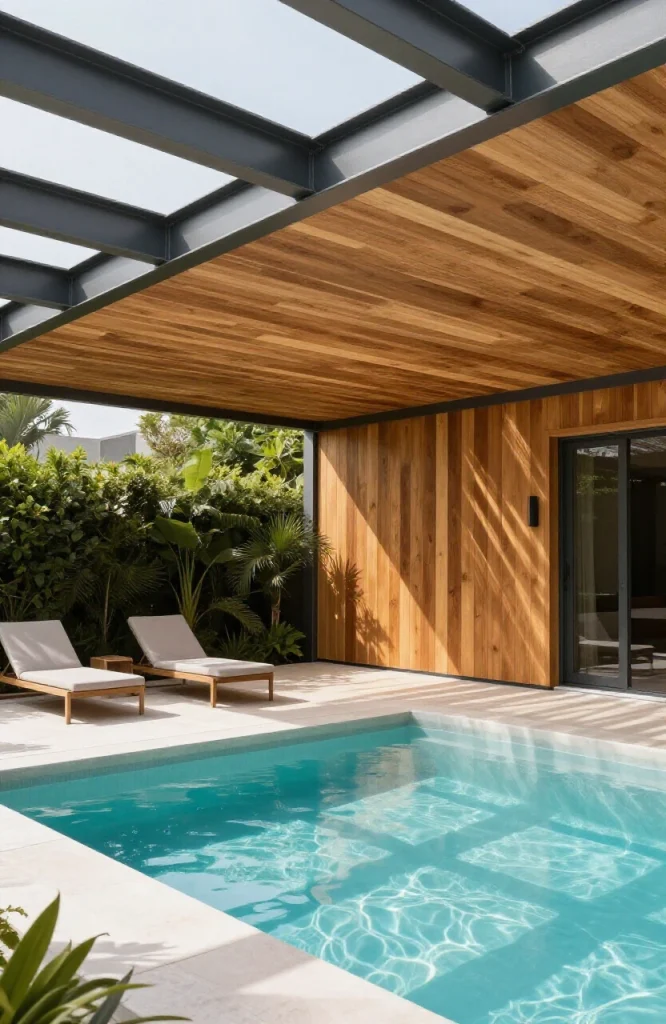
A pergola built directly above the pool creates a defined outdoor room. It provides shade during peak sun hours, frames the pool visually from inside the house, and gives something to hang outdoor lighting or trailing plants from. Cedar and steel are both viable materials at different price points. A shade sail stretched between fixed posts achieves a similar sun-filtering effect at lower cost.
Size guide: The pergola should extend at least 3 feet beyond the pool edge on each side to cover the seating area as well as the water.
Plunge Pool Costs at a Glance for 2025–2026
Pool costs vary based on material, size, access, and local labor rates. These figures represent typical ranges for a professionally installed pool in a standard residential lot.
| Pool Type | Average Cost | Install Time | Lifespan |
|---|---|---|---|
| Stock Tank (DIY) | $1,500–$3,500 | 1–2 days | 10–15 yrs |
| Fiberglass Shell | $20,000–$40,000 | 1–3 weeks | 25–30 yrs |
| Vinyl Liner | $18,000–$35,000 | 2–4 weeks | 10–15 yrs (liner) |
| Precast Concrete | $20,000–$45,000 | 1–7 days | 30+ yrs |
| Custom Gunite/Concrete | $35,000–$65,000+ | 2–4 months | 50+ yrs |
| Spool (Spa-Pool Combo) | $25,000–$55,000 | 2–6 weeks | 25+ yrs |
Ongoing annual costs typically include $400 to $900 for chemicals, $800 to $1,800 for electricity, and $1,000 to $2,000 for professional maintenance. Heating adds $50 to $200 per month depending on climate, pool volume, and heating system type.
For broader surface and material decisions around pool surrounds and patios, see our guide on marble countertop alternatives which covers material durability in detail.
Permits, Setbacks, and What to Check Before You Break Ground
Most municipalities require a permit for any in-ground pool, regardless of size. Don’t assume a plunge pool is small enough to skip this step. The permit process also triggers a site inspection that can catch drainage or utility issues before they become expensive problems.
Standard rules to verify before planning:
- Setback distances: Most areas require 5 to 10 feet from property lines and 10 to 15 feet from the house foundation.
- Fencing requirements: Most states and countries require a childproof fence of a specified minimum height around any pool. Verify the exact height and latch specifications in your jurisdiction.
- HOA restrictions: Check before signing any contracts. Some HOAs prohibit pools entirely or restrict size, material, and finish color.
- Underground utilities: Get a utility locate done before any excavation. Hitting a gas line or electrical conduit is a serious safety risk and adds significant cost.
- Site survey: Request a formal survey before finalizing the pool position. Surveys often reveal usable space that owners hadn’t noticed or identify boundary issues that could affect the build.
If you’re also planning outdoor living areas alongside the pool, our guide to outdoor living spaces covers furniture placement, shade structures, and lighting that work alongside pool installations.
Design Tips From Pool Professionals
Pool builders and residential landscape designers consistently point to the same patterns in small-yard pool projects that succeed versus those that feel crowded.
Go vertical with screening. Using trellis, tall plants, or architectural feature walls draws the eye upward and makes the pool zone feel more spacious than a fence or low hedge would. The more vertical elements you introduce, the less the small footprint registers.
Match the pool to the house style. A sleek rectangular concrete pool reads as wrong next to a Victorian cottage. A round, pebble-finish pool clashes with ultra-modern architecture. The pool should extend the design language of the house, not compete with it.
Keep coping materials consistent. The material used on the pool coping should reappear somewhere on the patio, steps, or garden edging nearby. Continuity between surfaces makes a small yard feel designed rather than assembled from unrelated parts.
Plan drainage before anything else. Splash water, pool backwash, and rain runoff around a small pool need a path to go. Poor drainage turns a beautiful pool surround into a muddy, slippery surface within a season.
One feature per pool. A waterfall, or LED lighting, or a sun shelf. Trying to include all three in a compact pool creates visual noise. One well-executed feature stands out. Three compete.
Who Gets Real Value From a Plunge Pool (And Who Doesn’t)
A plunge pool is a good fit for homeowners with yards under 500 to 800 square feet, anyone who wants a pool mainly for cooling off, soaking, or entertaining, and anyone who wants to use a heated pool through winter without committing to a large running budget.
It may not be the right choice if you have young children and a very small yard, because the required safety fencing around the pool will consume meaningful space and may leave the yard feeling restricted. It’s also not ideal if your primary goal is lap swimming. A swim spa, which generates a current to swim against in place, serves that use better in a compact footprint.
Difficult site access is another real constraint. If excavation equipment can’t reach the pool location, a custom concrete build becomes significantly more expensive. In that situation, a precast or fiberglass option with crane delivery is usually the more practical route.
For more ideas on making the most of compact outdoor and indoor spaces, browse our home decor guides.
Conclusion
A small yard shapes the type of pool you build, but it doesn’t prevent you from having one. The 41 ideas above cover a range wide enough that most small-yard configurations, from narrow side passages to compact urban courtyards, will find at least one realistic option.
The most practical starting point is to measure your outdoor space, decide on the primary use (cooling off, entertaining guests, wellness, or year-round soaking), and get two or three quotes from licensed pool builders in your area. Bring a layout sketch to each consultation. Builders who see that you’ve done the groundwork tend to give more specific and useful advice.
Build for how you actually live, not the biggest pool the yard can technically fit.
Frequently Asked Questions
How small can a plunge pool be?
The smallest practical plunge pools start at around 6×8 feet, which is large enough for one or two adults to soak in comfortably. Most homeowners find 8×10 feet or larger more usable for anything beyond individual soaking. Precast and fiberglass options come in fixed manufacturer sizes, while custom concrete builds can be spec’d to almost any dimension that fits the available space and passes local permit requirements.
How much does a plunge pool cost for a small yard?
Most homeowners spend between $20,000 and $50,000 for a professionally installed plunge pool in a small yard. Budget options like stock tanks run $1,500 to $3,500, while custom gunite pools with heating, jets, and premium tile finishes can exceed $65,000. Annual running costs typically fall between $2,200 and $4,700 including chemicals, electricity, and maintenance, which is roughly half what a full-size pool costs to run each year.
Do plunge pools add value to a home?
Yes, in most markets a well-built plunge pool adds measurable value, particularly in warmer climates where outdoor entertaining is part of daily life. Real estate professionals generally estimate that a quality plunge pool returns 50 to 70% of its installation cost in added home value, though that figure varies by neighborhood, climate, and the overall condition of the property. A poorly built or badly maintained pool can reduce value, which is why build quality and the landscaping around the pool matter as much as the pool itself.