
Having a pool you can actually use in January, without worrying about the weather, is one of those home upgrades that sounds like a dream until you realize it’s genuinely possible. Whether you have a big basement, a sunny sunroom, or a spare room you’ve been ignoring for years, there are real indoor pool ideas that fit different spaces, budgets, and styles. And you don’t need a mansion to pull it off.
From sleek lap pools to cozy rustic retreats, here are 10 indoor pool designs worth considering before you start planning.
1. The Classic Lap Pool Built for Swimmers

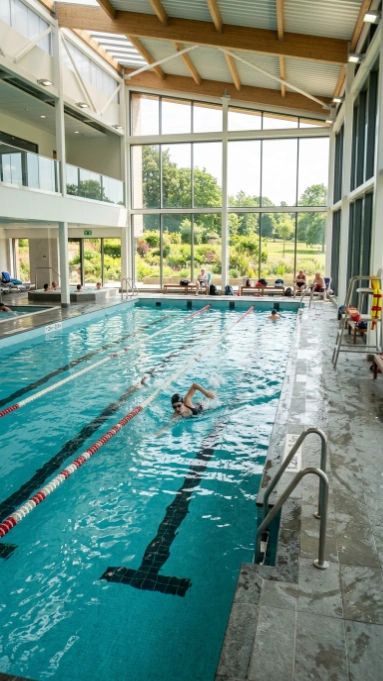
If you swim regularly or want to start, a proper lap pool is the most functional choice you can make. A rectangular shape keeps things simple and gives you the most distance per square foot. It’s also easier and cheaper to build than any curved or freeform design.
The sweet spot for actual lap swimming is around 40 feet, but a 25-foot pool still works well for fitness if space is tight. Keep the tile neutral, the deck clean, and add a skylight above the water for that open-air feel without fighting the elements.
This design pairs especially well with homes in colder climates where an outdoor pool would sit unused for most of the year.
2. The Sunroom Pool That Brings the Outside In

A sunroom or screened porch is one of the easiest spaces to convert into an indoor pool room. You already have glass walls, natural light, and a semi-outdoor atmosphere. Add a resistance pool or compact swim spa and you’ve got something that feels like a luxury resort escape without building a full addition.
The natural light flickering on the water is something a basement pool simply can’t replicate. And because you’re not fully enclosed, fresh air circulation is much easier to manage.
If your sunroom opens into a shared living area, it’s worth thinking about poolside safety from day one. A well-chosen fence or glass barrier keeps the space safe without killing the aesthetic. For ideas that don’t look like an afterthought, check out these stylish pool fence ideas that keep things safe without ruining the look.
3. The Minimalist Indoor Pool for a Modern Home

Clean lines. Calm water. No fuss. The minimalist indoor pool is exactly what it sounds like: a geometric shape, a restrained color palette, and materials that let the water itself become the focal point.
Matte concrete, monochrome tile, and polished stone are the go-to materials here. Colors stay in the white, warm gray, and charcoal range. Recessed lighting handles the ambient glow, and filtration equipment gets hidden behind walls or in a dedicated mechanical room.
This works beautifully in contemporary homes where the architecture already favors open space and clean geometry. The pool doesn’t decorate the room. It completes it.
4. The Mosaic Tile Pool That Doubles as Art

If you want your pool to be a design statement on its own, mosaic tile is the most visually striking direction you can take. Hand-laid tiles in shifting blues, aquas, and gold tones create an entirely different look as sunlight moves across the water throughout the day.
You can go bold with jewel tones for a Mediterranean feel, or stay soft with sea glass and sand palettes for something more understated. Either way, pair it with arched windows and natural stone decking to lean into that classical aesthetic.
One design rule that holds up every time: keep the surrounding walls simple. Let the tile do the talking.
5. The Basement Pool Hidden Beneath the House

Turning a basement into a pool room is the most private indoor pool option you can build. No neighbors, no noise from outside, no weather at all. It’s just you and the water.
The main challenges here are ventilation and ceiling height. You’ll want a dedicated dehumidification system installed before the pool goes in, not after. And ideally, your ceiling clearance is at least 9 feet for comfortable swimming.
Because natural light isn’t coming through the walls, your lighting strategy matters more here than in any other setup. A layered approach works best: recessed LED strips for ambient light, wall sconces for warmth, and underwater lights to give the water that signature glow at night.
6. The Resistance Pool or Swim Spa for Small Spaces

Not every indoor pool needs to be 40 feet long. A resistance pool or swim spa lets you swim against a current, which means the pool itself can be as compact as 8 to 15 feet. That fits in a sunroom, a garage conversion, or a large bathroom addition without much fuss.
Most swim spa models also double as hot tubs, with one end heated for relaxation and the other set up for swimming. It’s a genuinely smart use of a small footprint, and the ongoing maintenance costs are significantly lower than a full inground pool.
If you’re working with a smaller budget or a tighter space, this is where to start. You can also find inspiration from small backyard pool ideas that won’t break the bank for compact pool formats that punch well above their size.
7. The Glass-Walled Pool That Connects Two Rooms

This one is genuinely rare in residential design, which is exactly why it’s so impressive when you see it. A glass-walled pool has one or more transparent panels so you can see into the water from an adjoining room. Think of it as an aquarium effect built into your home’s architecture.
You can view the water and the swimmers from the side or even from below if the pool sits elevated relative to a lower room. The visual depth it adds to both spaces is hard to replicate with any other design choice.
It works best when the lighting on both sides of the glass is balanced. Too much light on the pool side and the view from the living area washes out. Get it right and it’s one of the most striking features a home can have.
8. The Spa-Style Indoor Pool With a Hot Tub and Steam Room

This is the full wellness setup: a pool in the center, a hot tub at one end, and a steam room or sauna at the other. The kind of space that makes your home feel like a boutique hotel.
Materials here tend to run warmer than the minimalist approach. Teak wood, travertine stone, and natural slate create that spa atmosphere without trying too hard. Lighting should be dimmable, with warm-toned pendants and candle-lantern sconces that soften the space at night.
Plants thrive in this environment because of the humidity, so don’t hold back on tropical greenery. A few large leafy plants around the pool perimeter add color and life without requiring much care.
9. The Rustic Indoor Pool With Wood Beams and Stone Walls

Not every indoor pool has to be sleek. The rustic approach leans into warmth, texture, and natural materials in a way that feels completely different from modern minimalism.
Timber ceiling beams, rough-cut stone walls, and wooden decking around the water create a mountain-lodge atmosphere that’s cozy instead of cool. It works especially well in traditional, farmhouse-style, or country homes where the architecture already has that warmth built in.
Color palette keeps to warm browns, deep ambers, and forest greens. The one practical note worth remembering: wood near water needs proper sealing and the right species. Teak, cedar, and ipe hold up well over time. Standard pine doesn’t.
10. The Skylight Pool That Puts the Sky Above You

A long, narrow pool positioned directly below a full-length skylight or retractable glass roof is one of those ideas that sounds almost too good to be real. You swim and look straight up at the sky: clouds moving, stars at night, rain on the glass.
Frame the pool in white or light stone to maximize how the natural light bounces off the water. Some retractable roof systems let you open the ceiling completely in summer, giving you the outdoor experience without losing the comfort of an enclosed space the rest of the year.
If a retractable roof isn’t in the budget, a ceiling mural painted to look like an open sky gives a similar visual effect for a fraction of the cost. It sounds unusual, but in photos it’s consistently one of the most beautiful indoor pool treatments around.
What to Think About Before You Start Building
Getting the design right matters, but so does getting the planning right before a single shovel hits the ground.
Ventilation is the number one thing people underestimate. An indoor pool generates a significant amount of humidity, and if that moisture has nowhere to go, you’ll be dealing with mold, peeling walls, and structural damage within a few years. A dedicated dehumidification system is non-negotiable, not optional.
Structural requirements go beyond just the floor. The walls, ceiling, and surrounding structure all need to handle the weight and moisture load of an indoor pool. Full waterproofing is required, not just water-resistant finishes.
Lighting needs to be planned, not added after the fact. In a basement pool especially, your artificial lighting layers, including ambient, accent, and underwater, need to be wired into the design from the start.
Budget for the enclosure separately from the pool itself. Whether you’re building a new addition, finishing a basement, or converting a sunroom, the structural work around the pool often costs as much as the pool itself.
Work with an architect who has actually built indoor pools before. It’s a different discipline from standard residential design, and the mistakes that come from general contractors who haven’t done it before tend to be expensive ones.
Whatever style appeals to you, an indoor pool changes the way you live at home in a way that’s hard to describe until you have it. Swimming laps before work without leaving the house, floating on a cold Sunday afternoon, using the steam room after a long week without driving anywhere. It’s the kind of upgrade that pays for itself in quality of life, even when the cost per square foot looks intimidating on paper.
Start with the style that fits your space and your actual habits, not the most impressive option in a photo gallery. The best indoor pool is the one you’ll actually use.