
Good garden lighting does more than help you see after dark. It defines zones, adds safety, extends how long you actually use your outdoor space, and changes the entire mood of a garden from forgettable to genuinely beautiful. Over years of covering home design, one pattern keeps coming up: gardens that look stunning during the day often disappoint at night, simply because lighting was an afterthought. These 45 garden lighting ideas cover every space, style, and budget so you can plan a scheme that works from the first stake in the ground.
1. Start With a Lighting Layer Plan

Before buying a single fixture, map out three layers: ambient (general illumination), task (focused functional light), and accent (decorative highlights). Ambient light sets the base level, task light handles areas like a grill station or reading corner, and accent light creates drama. Most gardens that feel underwhelming at night are missing one of these layers entirely. Sketch your garden, mark zones, and assign a lighting type to each before choosing products.
2. Use Path Lights Along Every Walkway
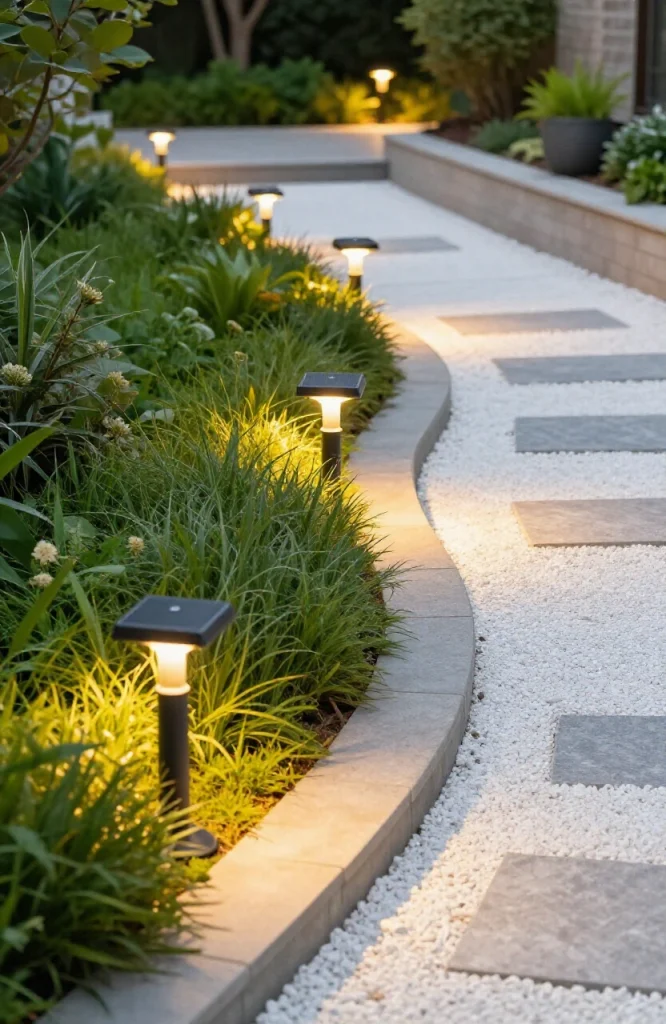
Path lights are the most practical starting point in any garden. They define edges, prevent trips on steps or changes in level, and guide visitors naturally from one area to another. Space them 6 to 8 feet apart on alternating sides of the path for a natural feel. Avoid placing them in a straight line on one side only, which creates a runway effect rather than a welcoming approach.
3. Uplight Your Best Trees
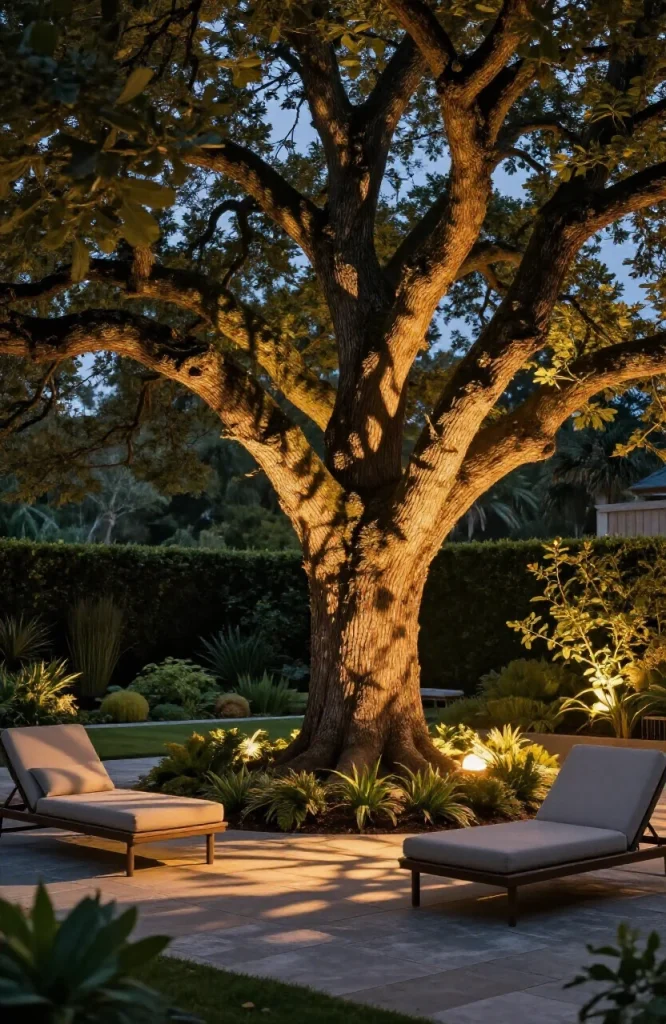
Positioning a spotlight or uplight at the base of a tree and angling it upward is one of the most dramatic moves in garden lighting. The beam travels through branches and leaves, casting patterns on surrounding walls and the ground. For trees with interesting bark texture, like birch or oak, this technique brings out detail that’s invisible during the day. Adjust the beam angle so light falls on the canopy without spilling directly into a neighbor’s windows.
4. Add String Lights Over a Patio or Seating Area
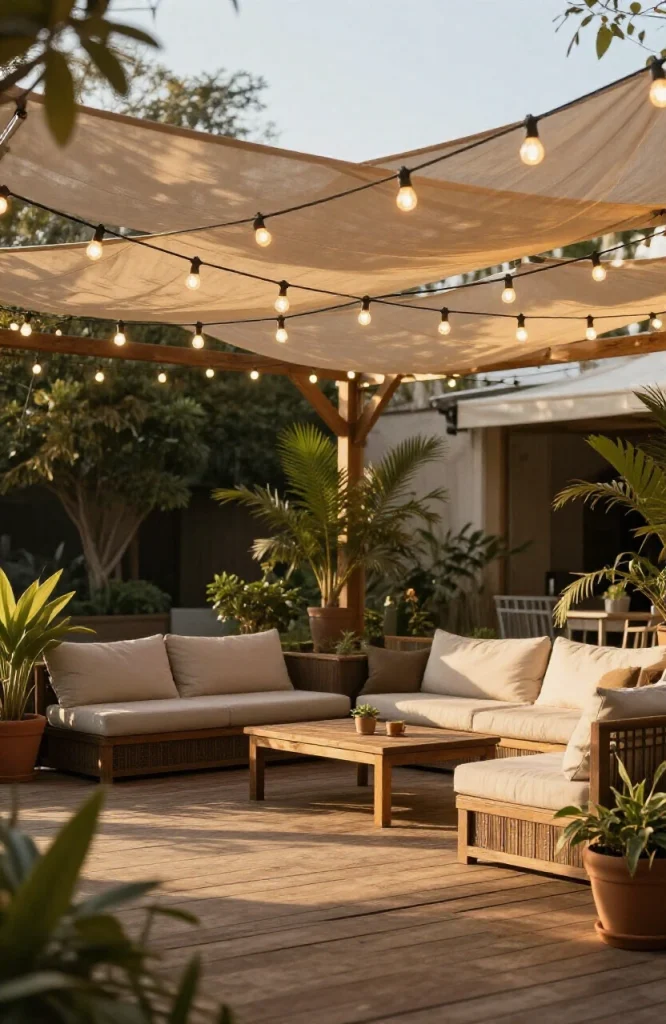
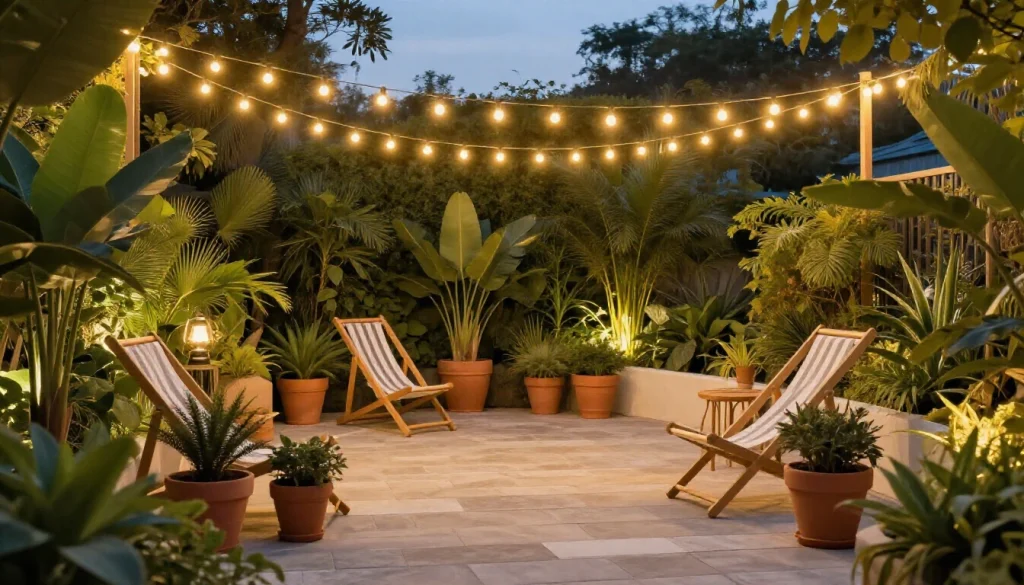
String lights draped in a grid or canopy pattern over an outdoor seating area create instant warmth. Warm white bulbs (2700K to 3000K) are the most flattering option for people and food, making them the right choice for an entertaining space. Fix the line to posts, pergola beams, or a fence at a consistent height, and use a weatherproof outdoor-rated cable rated for your local climate.
5. Install Recessed Deck Lights in Steps
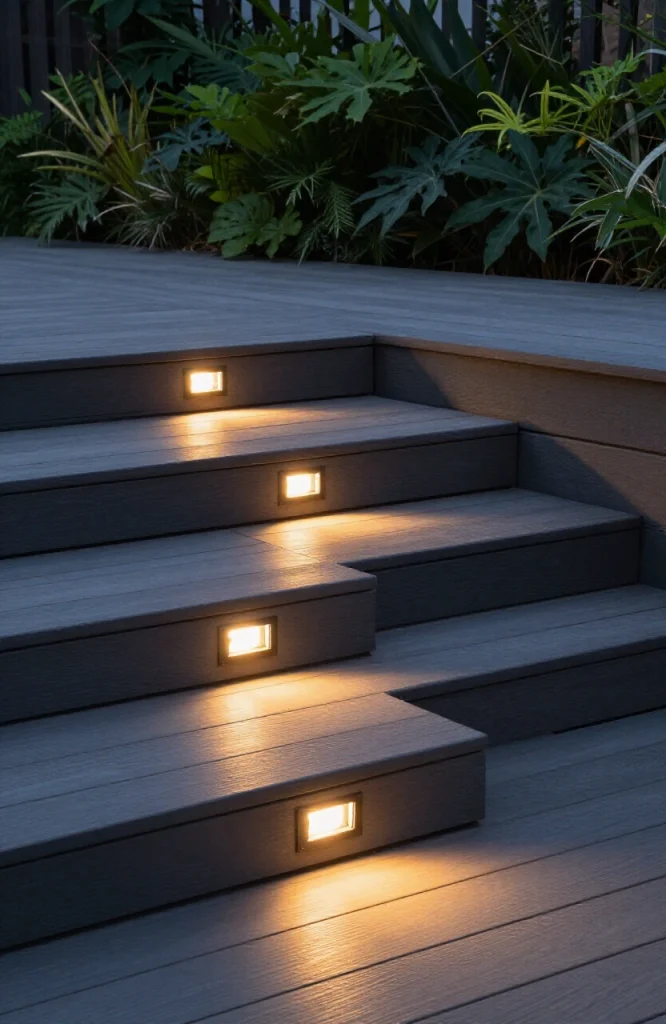
Steps and raised decks are accident points after dark. Recessed deck lights fit into the riser of each step, casting light downward onto the tread without glare in anyone’s eyes. They also look clean and architectural, which suits both modern and traditional gardens. Use low-voltage LED versions for efficiency, and wire them on the same circuit as your path lights so everything activates together.
6. Try Moonlighting From Tree Canopies
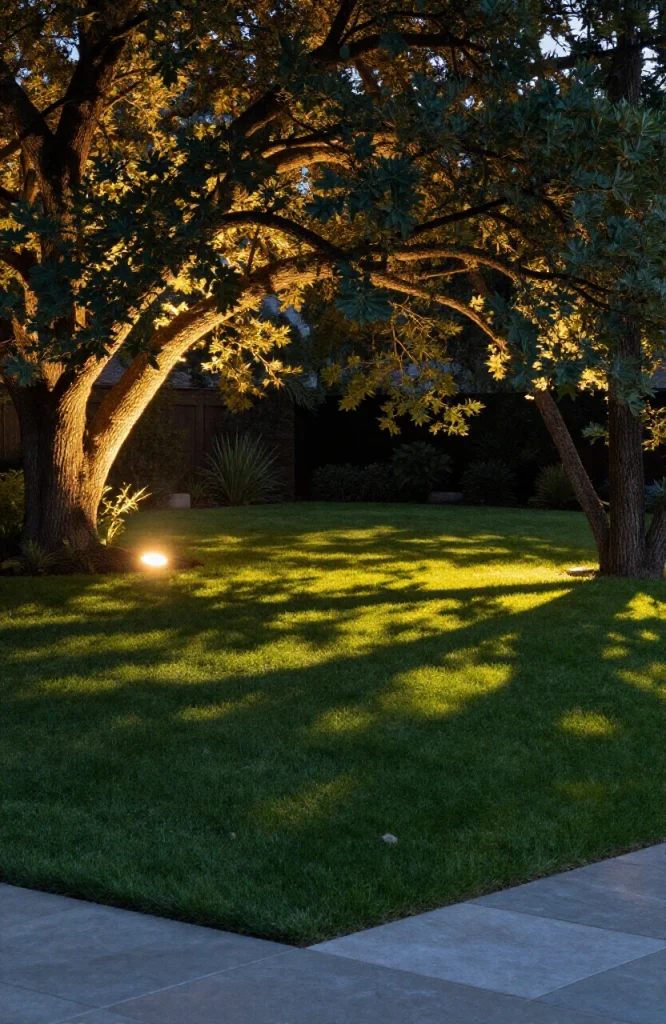
Moonlighting means fixing a downlight high in a tree’s branches and angling it toward the ground. The effect mimics natural moonlight filtered through leaves, producing soft, dappled shadows on lawns and terraces. This is particularly useful in a large garden where overhead string lights aren’t practical. Use a weatherproof fixture with a narrow beam and position it at least 15 feet up for the most natural result.
7. Highlight Water Features With Submersible LED Lights
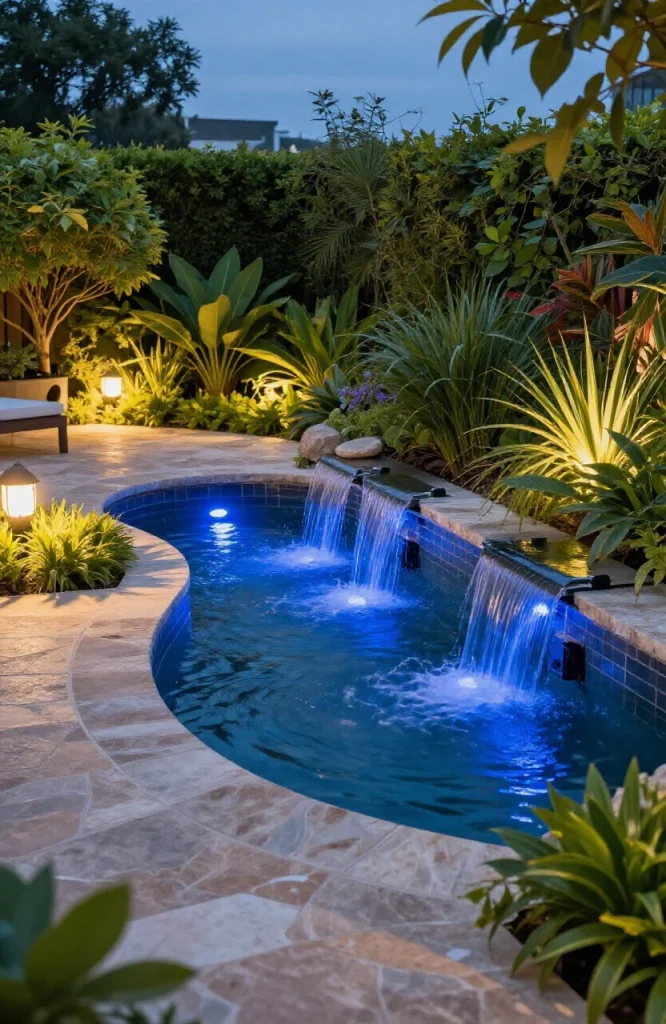
A pond, fountain, or water wall becomes a completely different feature after dark when lit from below or within. Submersible LED lights placed at the base of a fountain highlight moving water, making it appear to glow. For a still pond, place underwater lights along the far edge so the beam travels across the surface. Always use lights rated for full submersion and check that any transformer is positioned well away from the water line.
8. Illuminate Garden Sculpture and Statues

Any meaningful sculpture or ornamental feature in your garden earns a dedicated spotlight. Position the light at a 30 to 45-degree angle to the piece to show depth and texture rather than washing it flat. For smaller statues among planting, tuck a compact spike light into the surrounding ground cover so the fixture itself disappears. The result draws the eye to the sculpture precisely as you intended.
9. Use Solar Spike Lights for Bed Borders
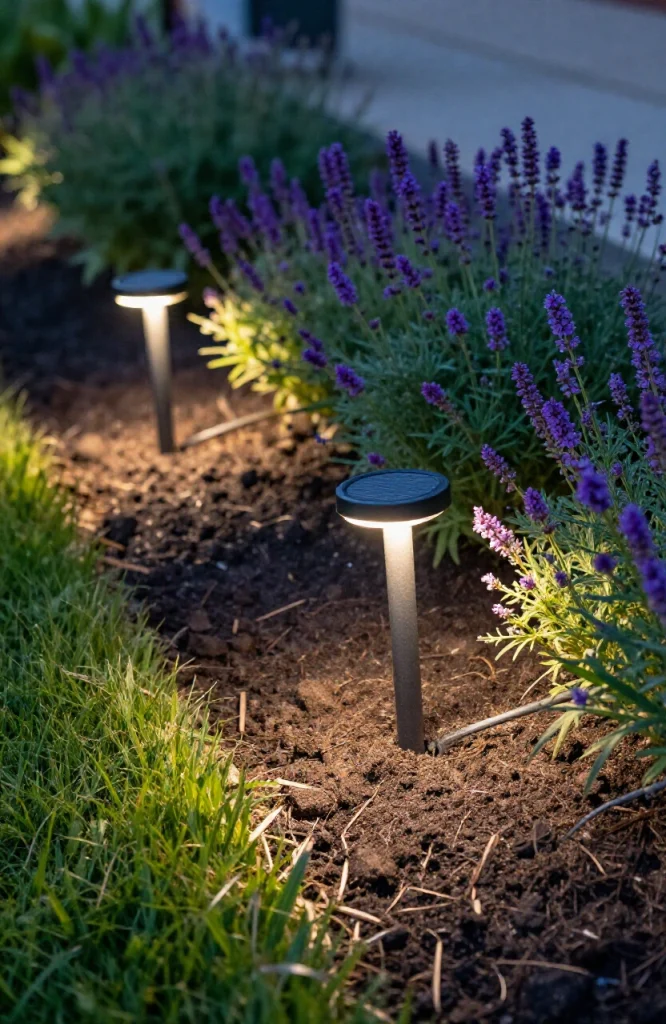
Solar stake lights require no wiring and are easy to reposition as planting changes. Press them into the soil along a border edge to define the line between lawn and beds at night. Modern solar lights are significantly more reliable than earlier versions, particularly in climates with consistent daylight. For best performance, site them where they receive unobstructed sun for at least six hours each day.
10. Line a Driveway With Bollard Lights
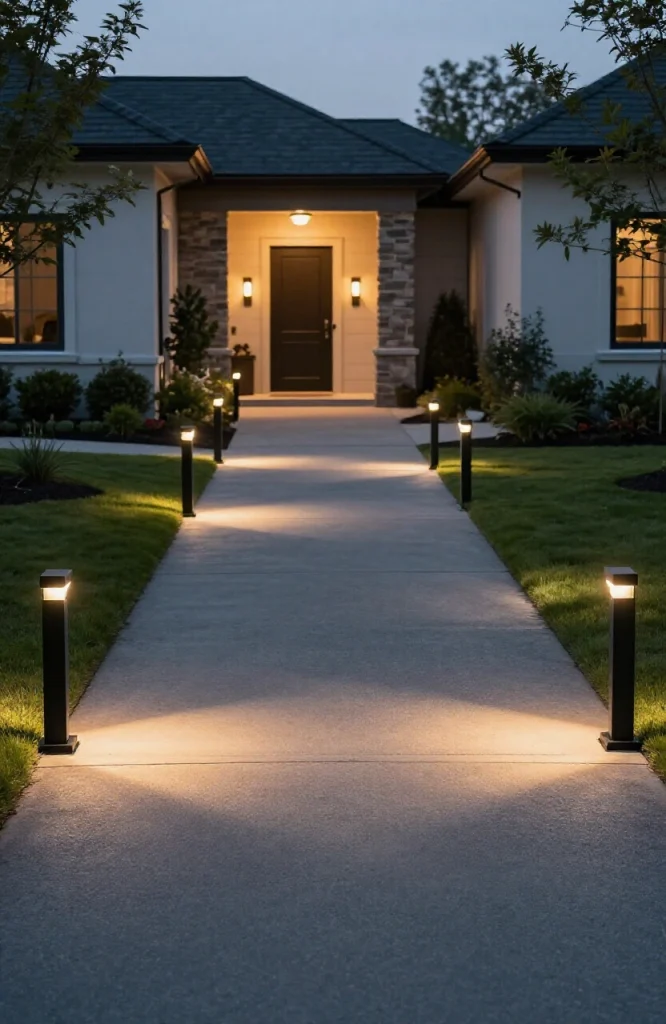
Bollard lights are tall enough to be visible from a car but low enough not to create glare at eye level. They define the edges of a driveway cleanly and give your property a structured, well-maintained appearance after dark. Stainless steel or powder-coated aluminum bollards hold up best in wet climates. Space them evenly, no more than 10 feet apart, and connect them to a dusk-to-dawn sensor so they activate automatically.
11. Frame an Entrance With Wall Lanterns
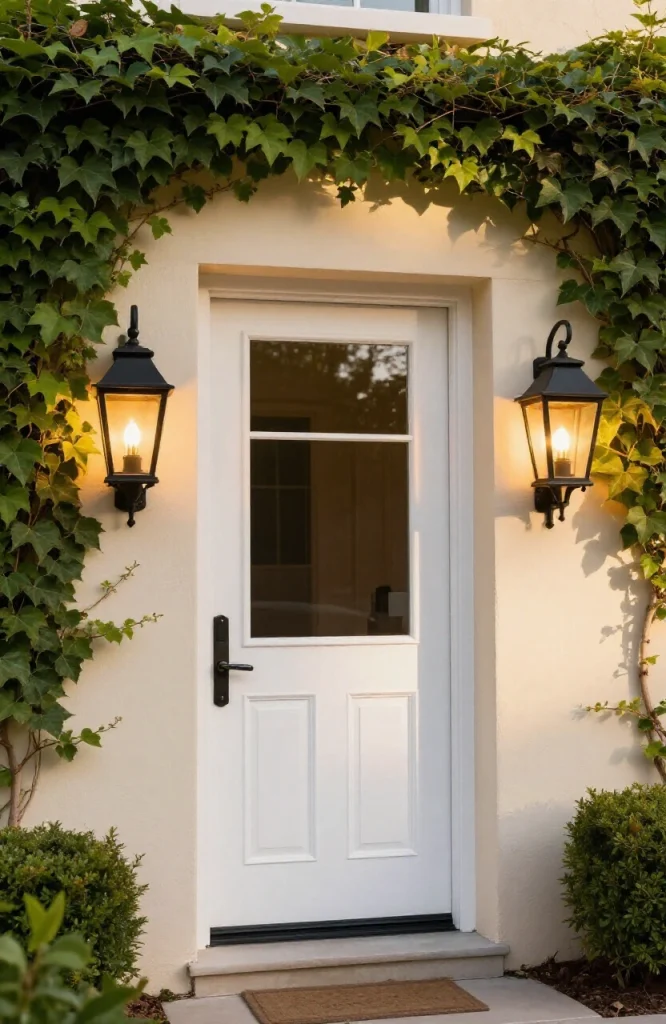
A pair of wall-mounted lanterns flanking your front door is one of the fastest ways to add presence and security lighting at the same time. Choose a scale that matches the door width: a narrow door suits smaller lanterns, while a wider entrance can handle something with real visual weight. Warm white LED bulbs inside a lantern housing give the appearance of a traditional flame without the energy cost.
12. Create a Focal Point With a Statement Post Light
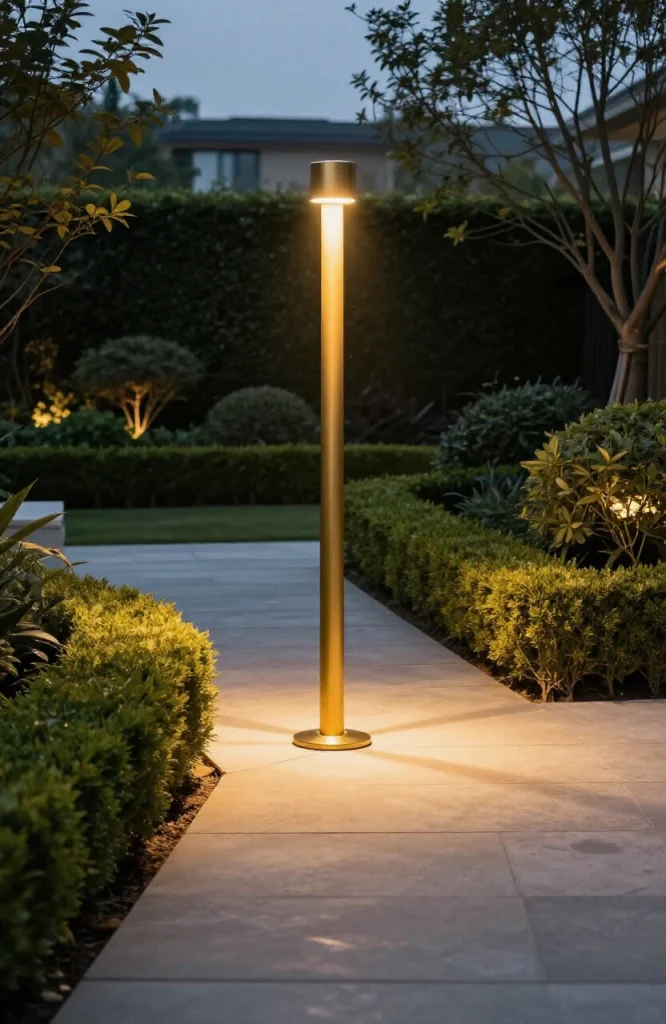
A single post light at the end of a garden path or at the center of a formal layout acts as an anchor point for the entire design. It’s the first thing the eye finds when looking out from inside the house. Lantern-style post lights work in traditional and cottage gardens, while simple cylindrical posts with frosted diffusers suit more contemporary spaces. Check local planning rules before installing anything taller than 1.2 meters.
13. Layer Lights on a Pergola
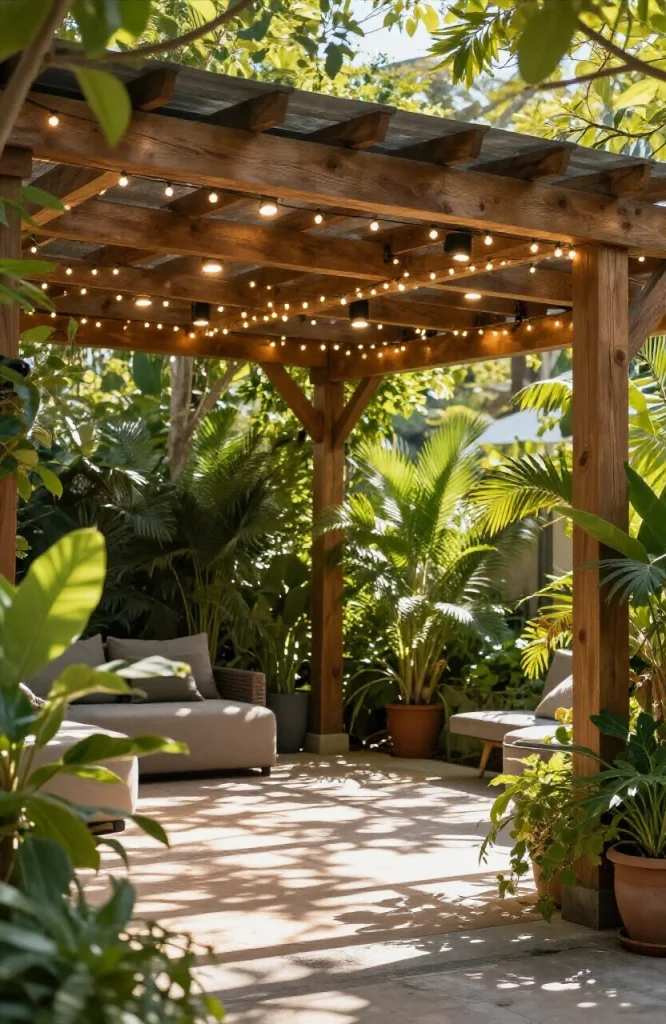
A pergola offers multiple fixing points at different heights, making it ideal for layered lighting. Start with string lights or festoon lights threaded through the roof structure for ambient overhead light. Add wall-mounted downlights at the corners for task light at a lower level. Finally, place small uplights at the base of each post to ground the structure. When all three layers work together, the pergola functions as a properly lit outdoor room. For more on outdoor structures, see our guide to poolside bar ideas.
14. Use Festoon Lights for a Relaxed Outdoor Dining Feel
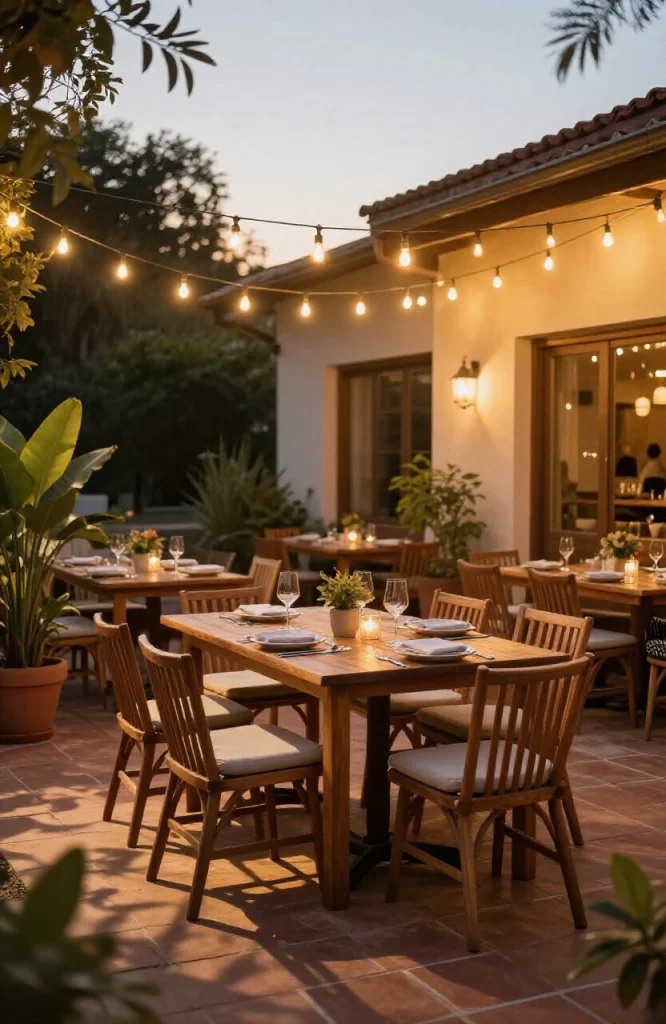
Festoon lights use larger, spaced-out bulbs on a single cable and produce a different quality of light to string lights. The gaps between bulbs let more darkness in, which paradoxically makes the space feel more atmospheric and intimate. They work particularly well over a long dining table or along a garden wall. For outdoor dining specifically, festoon lights with 2W to 4W LED filament bulbs strike the right balance between character and practicality.
15. Fit LED Strip Lights Under Deck Boards
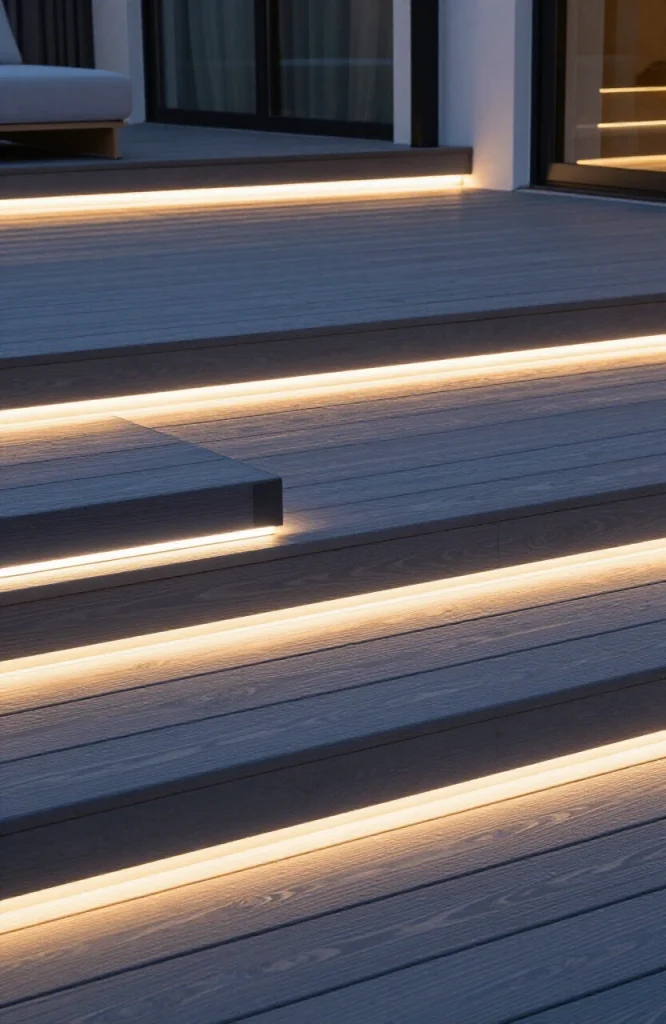
LED strip lights fixed to the underside of decking boards or along the edges of raised platforms cast a low horizontal wash of light across the surface. This technique defines the deck boundary at night while keeping the fixtures completely hidden. Choose a warm white or amber color temperature to complement natural timber, and select a strip rated IP65 or above for outdoor use. Connect the strip to a dimmer so you can reduce intensity for evening relaxation.
16. Backlight a Garden Wall or Fence
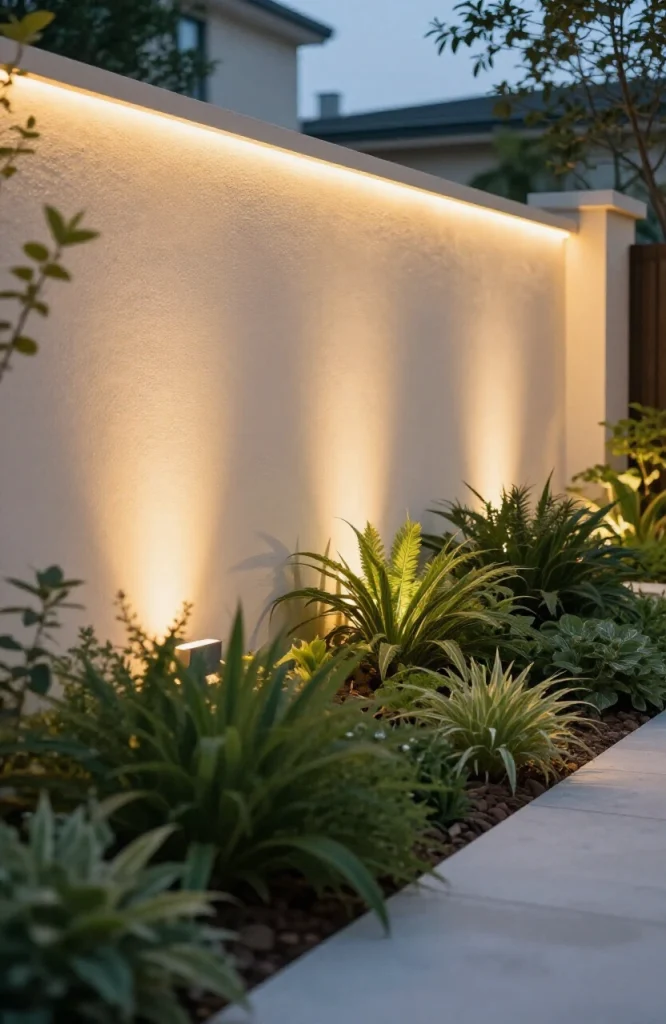
Placing a row of uplights or a continuous LED strip along the base of a wall, with light aimed upward against the surface, creates a backlit glow that adds depth to the garden. Light-colored walls work especially well, reflecting the beam broadly. This is a useful technique when the garden itself has limited planting, as the lit wall becomes the visual backdrop. Keep the color temperature consistent with other fixtures in the same area.
17. Highlight Architectural Features of Your Home
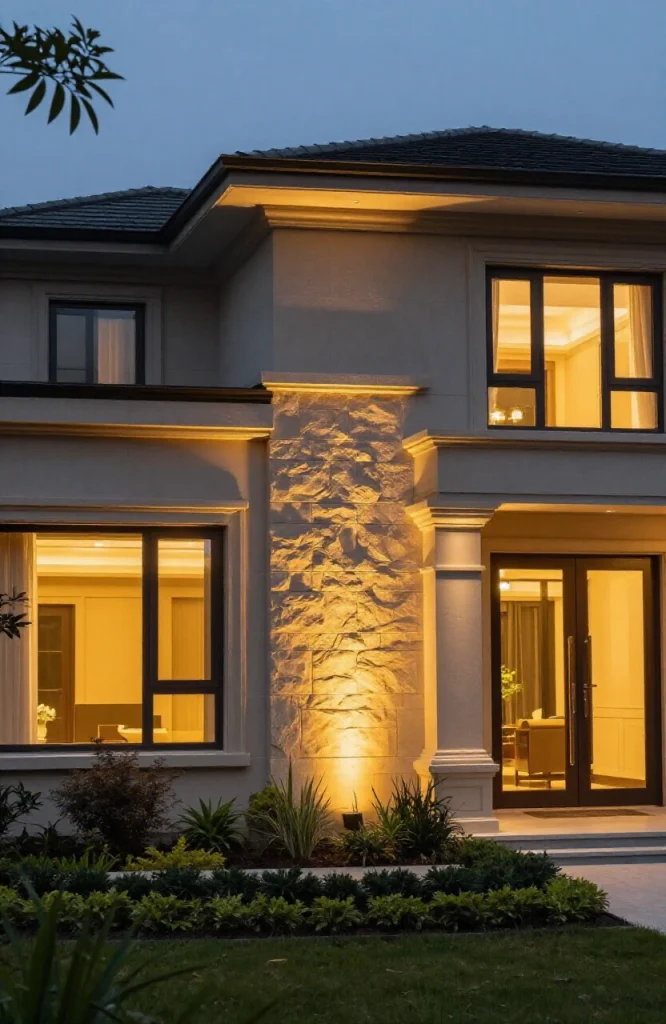
The exterior walls, columns, and window surrounds of your house are part of the garden view from inside and from the street. Grazing a wall with light angled parallel to the surface picks out texture in brick, stone, or render in a way that flat-on illumination never achieves. Use narrow-beam wall washers for this effect, and position them close to the base of the wall so the angle stays acute enough to produce real texture.
18. Add Lanterns to Garden Tables and Surfaces
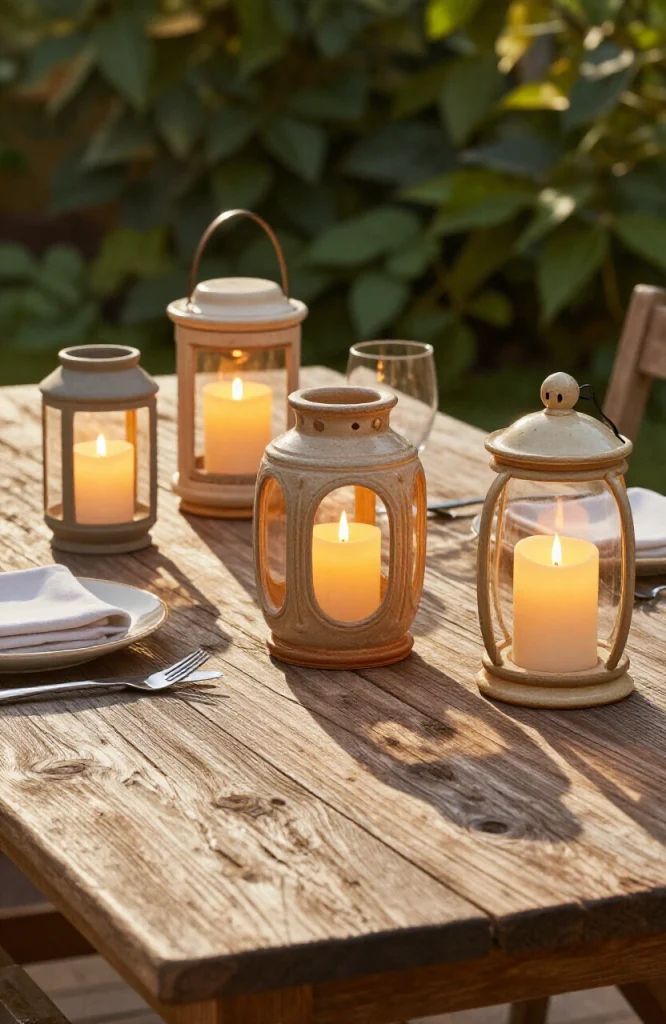
Tabletop lanterns, hurricane lanterns, or storm lanterns filled with pillar candles or LED candles bring light down to the human scale in a way that overhead fixtures cannot. They create intimacy for evening meals or drinks on a terrace. Group lanterns in odd numbers of varying heights, and mix in a few real candles where safety permits. For a garden table, two medium lanterns and one tall lantern at the center reads as considered rather than random.
19. Use Color-Changing Smart Lights for Seasonal Flexibility
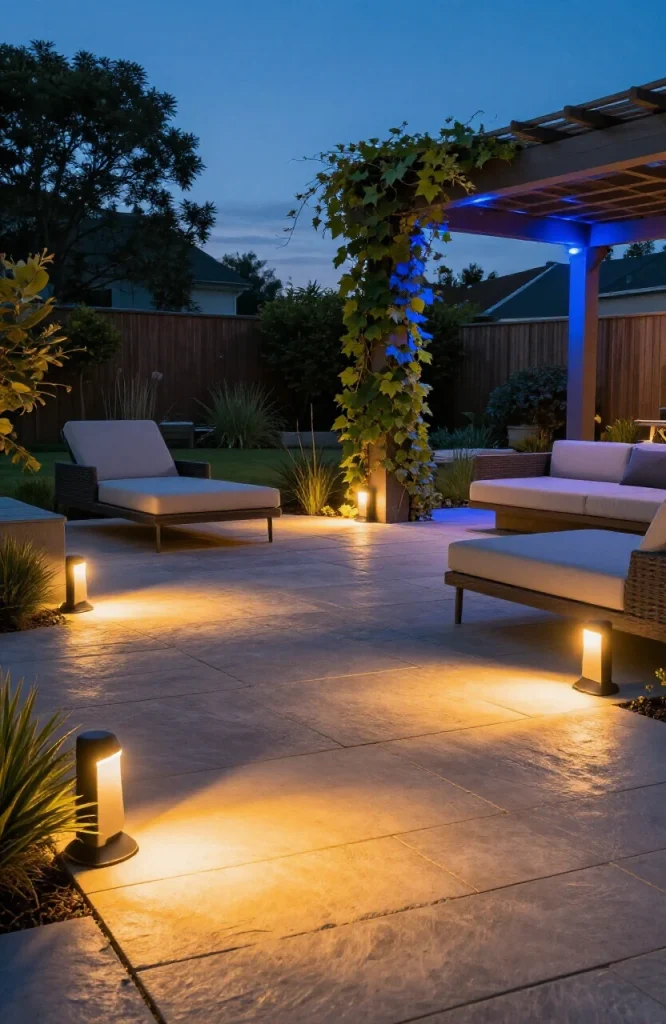
Smart RGB LED fixtures allow you to adjust color temperature and hue from a phone app, so the same set of garden lights can shift from warm white for a dinner party to cool blue for a summer evening to amber for autumn. This flexibility means you don’t need to buy seasonal lighting separately. Connect them to a smart home system if you have one, or use a standalone app-based controller. For seasonal decor inspiration, see our article on outdoor Christmas lights ideas.
20. Light Garden Steps From the Side
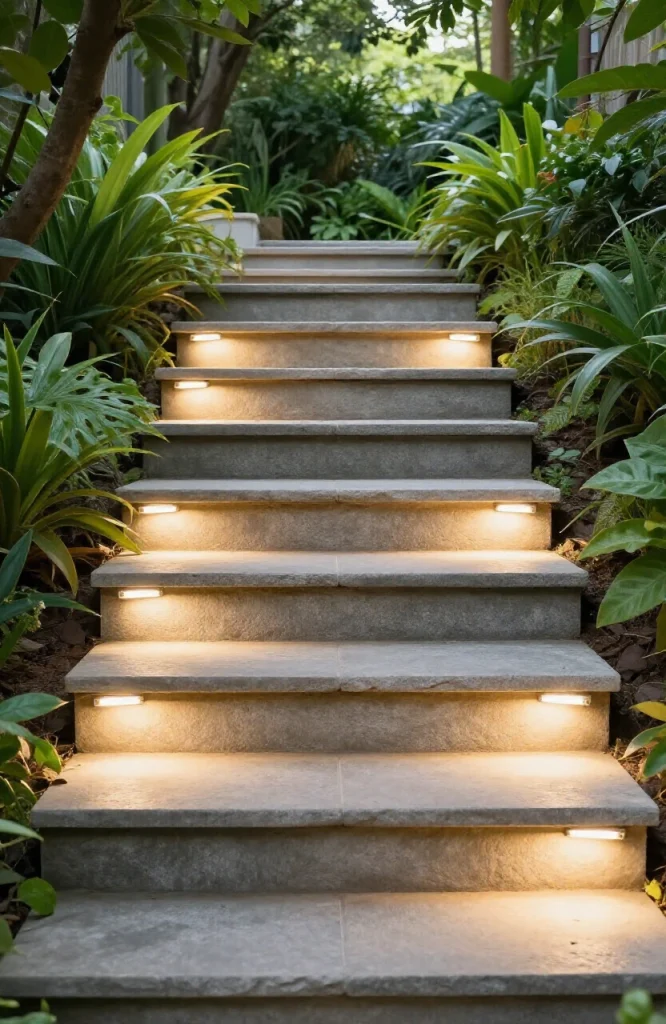
Rather than lighting steps from above or below, a side-lit approach places a low-profile fixture in the wall of a retaining edge or raised bed beside the step. The light spreads horizontally across each tread. This keeps the fixture out of direct sightlines and eliminates the harsh shadow that top-down lighting often creates on stair risers. Use a warm white tone that matches the surrounding path lights.
21. Install Low-Voltage Landscape Lighting for Accent Work
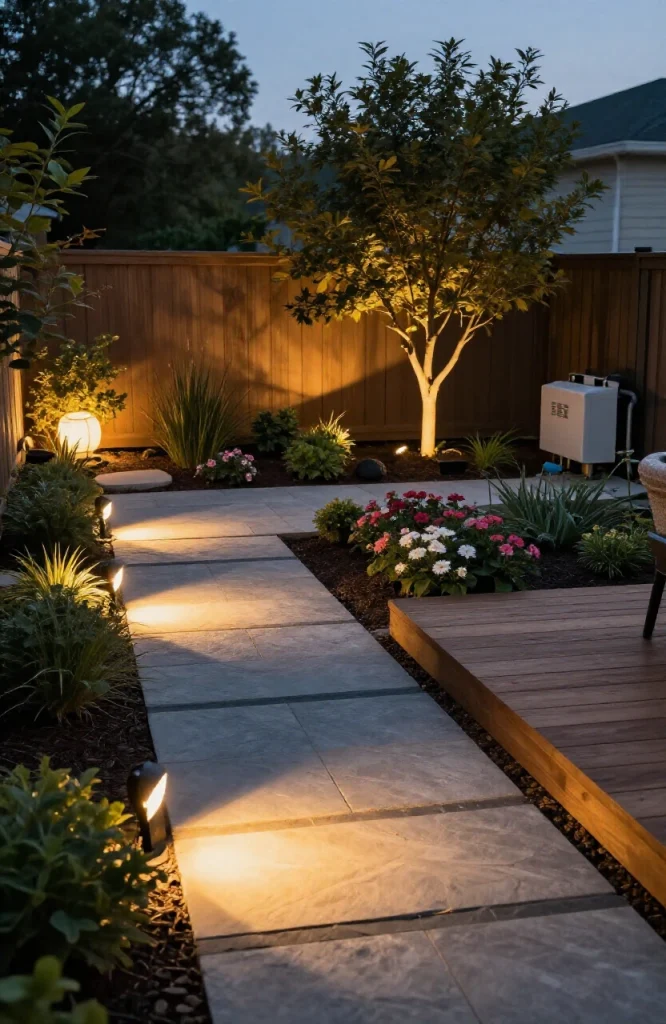
Low-voltage systems run at 12 volts rather than mains voltage, which makes them significantly safer to install yourself and much cheaper to run. A transformer steps the power down from the mains, and cables run from it to individual fixtures throughout the garden. Most standard path lights, uplights, and spotlights are available in low-voltage versions. According to landscape designer Amber Freda, low-voltage landscape lighting is one of the best ways to add ambient lighting that highlights focal points while setting the mood of a space.
22. Try Rope Lights Along Garden Edges
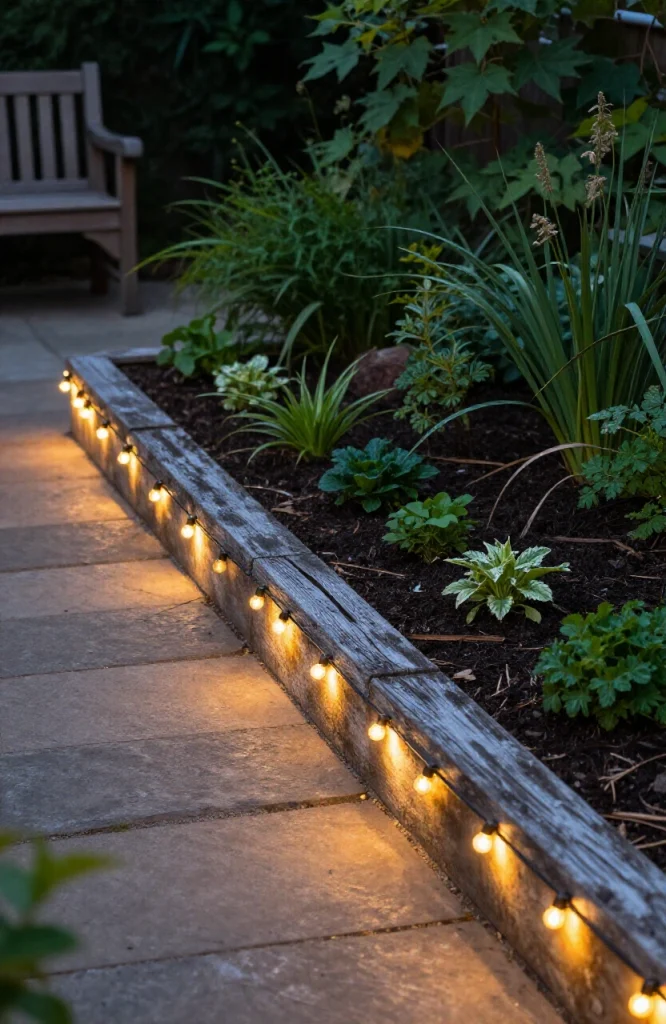
Rope lights are flexible tubes of small LEDs encased in a weather-resistant sleeve. They can follow curved paths, wrap around raised bed edges, or run along the base of a boundary wall. Because the light output is diffuse rather than focused, rope lights work best as decorative border definition rather than as a primary light source. Use them to trace the outline of a geometric pattern in a formal garden or to follow the curve of an informal path.
23. Introduce Stake Spotlights Into Planting Beds
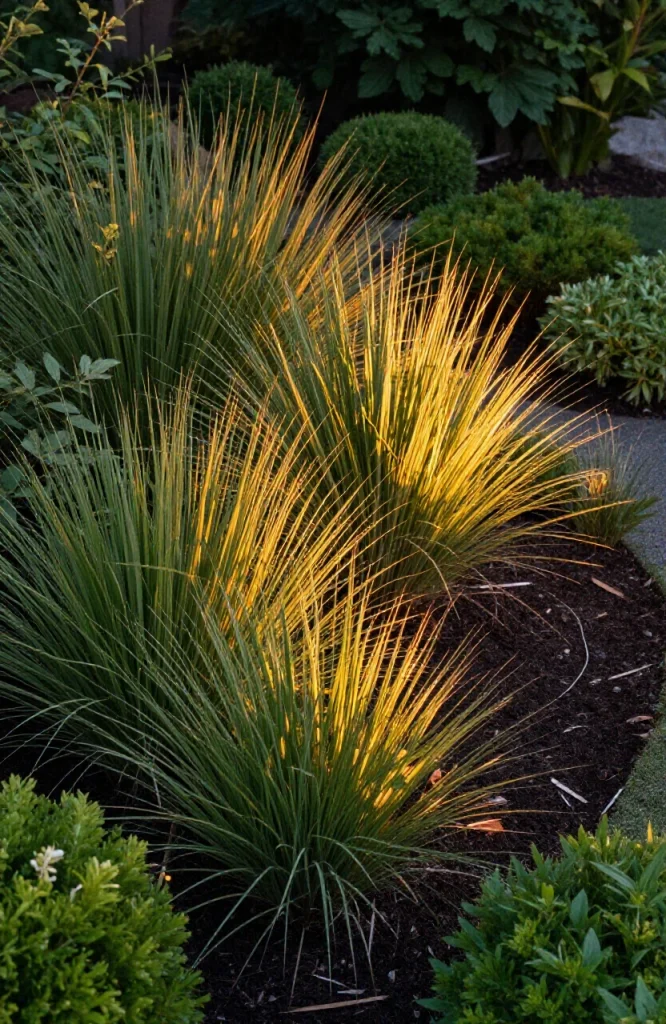
Spike-mounted spotlights press directly into soil and can be repositioned any time the planting changes. Point them toward a feature shrub, an ornamental grass clump, or a structural plant like an agave or bamboo. The spike format keeps the cable management simple, with just a low-voltage lead running back to the transformer along the bed edge. Mix narrow-beam and wide-beam versions to give variety to the lit planting.
24. Install Security Floodlights With Motion Sensors
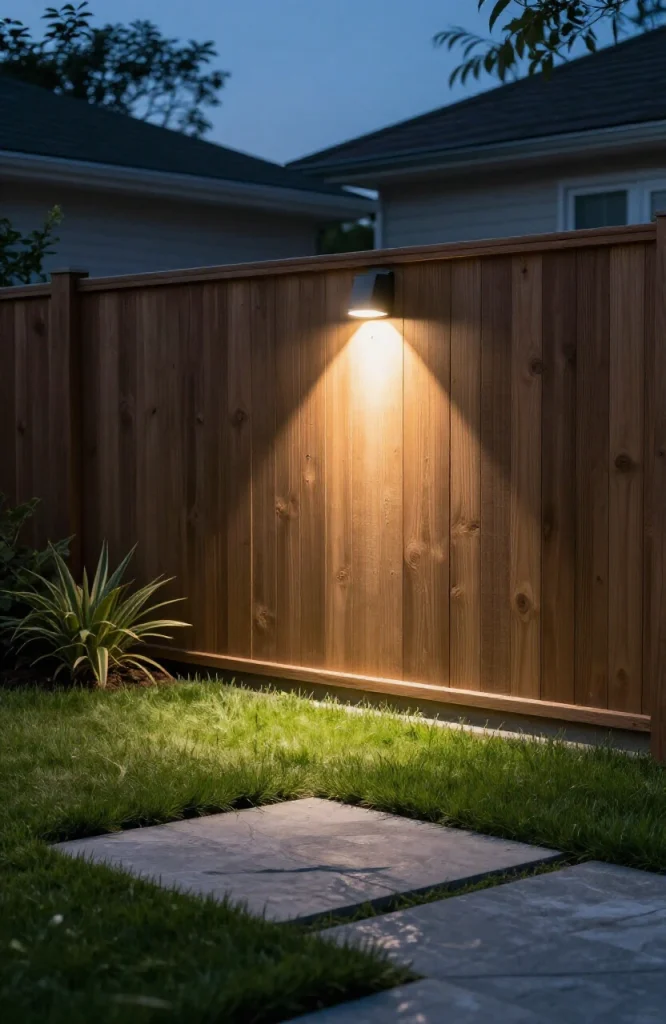
Motion-activated floodlights serve a practical function but can also be integrated into a broader lighting scheme without looking purely utilitarian. Position them at the back of the property or above garage doors where their bright output doesn’t compete with the more atmospheric accent lights elsewhere. LED floodlights with adjustable sensitivity settings let you reduce false triggers from cats, branches, or large insects.
25. Add Fairy Lights to Hedges and Topiary
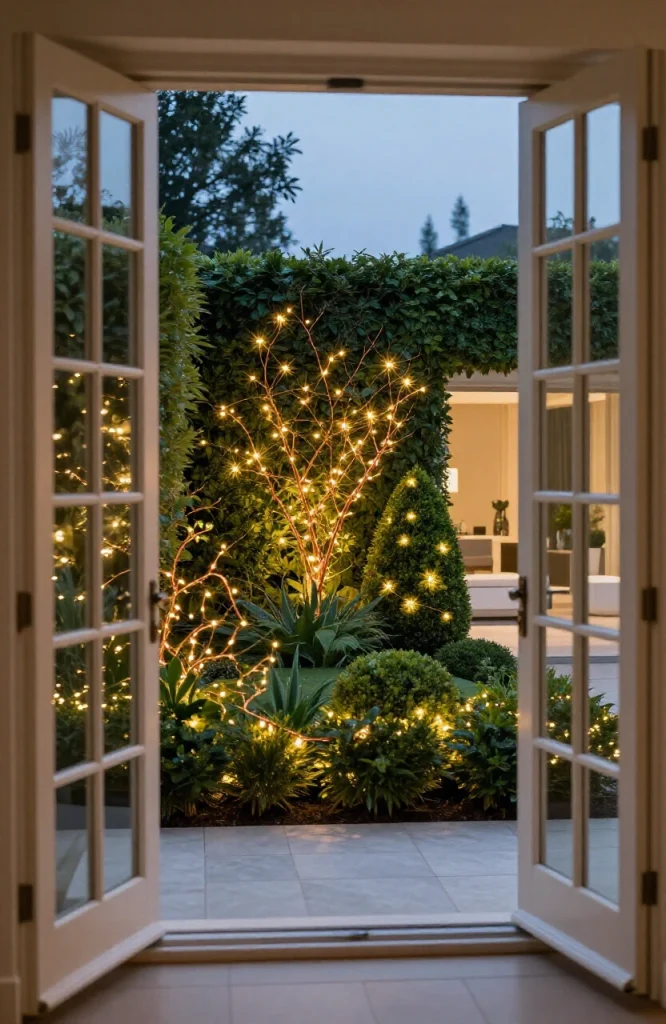
Winding fine-wire fairy lights through a dense hedge or over shaped topiary creates a twinkling texture that reads well from both inside the house and from the garden itself. Choose copper-wire micro LED lights, which disappear into the foliage during the day. For topiary spheres or cones, wrap the cable in a loose spiral from the base upward, then tuck the excess into the center. Battery-powered versions with a timer function remove the need for any wiring.
26. Light a Greenhouse or Garden Building Interior
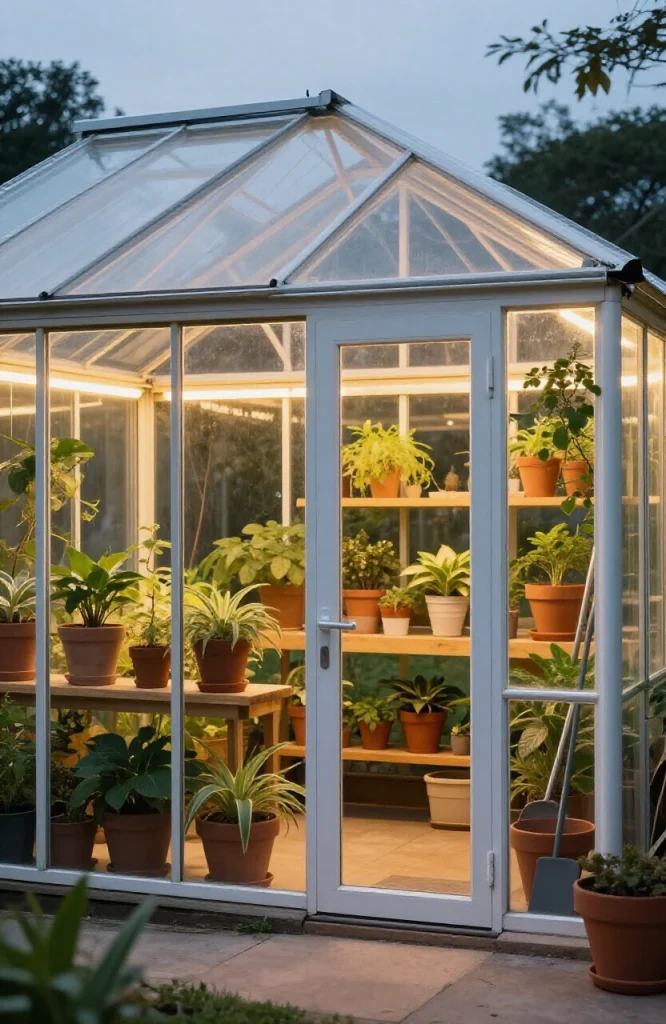
If your garden has a greenhouse, summerhouse, or studio, lighting the interior so it glows from the outside adds depth to the garden view at night. From inside the house, a lit garden building becomes a visual destination. Use warm bulkhead lights on the interior walls or run LED strip along the ridge of a greenhouse to light the whole structure evenly. Keep the color temperature the same as your exterior accent lights.
27. Use In-Ground Uplights to Avoid Visible Fixtures
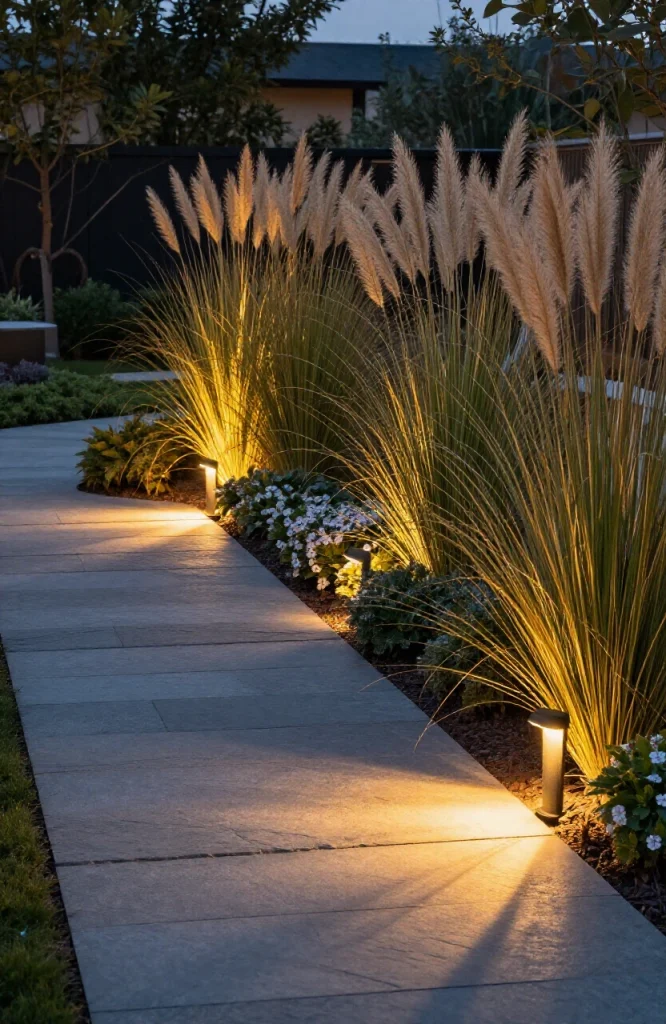
In-ground uplights are set flush with a hard surface such as paving or gravel, with the beam directed upward. Because the fixture sits at or below grade, it disappears almost entirely into the surface. This suits contemporary and minimalist garden designs where visible spike lights or post lights would look out of place. Use them to uplight a specimen tree from below its canopy, or to create a line of vertical light beams rising from a paved terrace.
28. Mix Warm and Cool White for Visual Interest
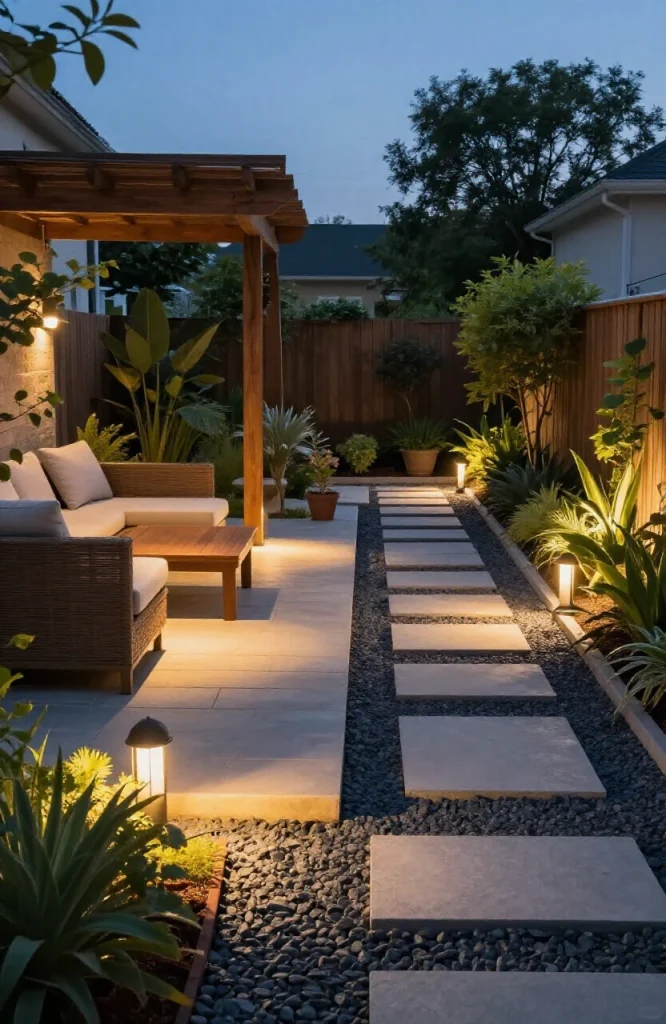
Most gardens benefit from a single consistent color temperature, but a deliberate mix of warm white (2700K to 3000K) for soft areas and neutral white (3500K to 4000K) for functional zones can work well. For example, warm festoon lights over a dining area combined with a cooler path light along a utility route create clear visual hierarchy. The warmer zone reads as social and relaxed; the cooler zone reads as practical and safe.
“The best garden lighting makes the garden, not the fixtures, the star. If you can see the source of the light before you see what it’s illuminating, the design needs to go back a step.”
29. Light a Raised Vegetable Bed for Evening Harvesting
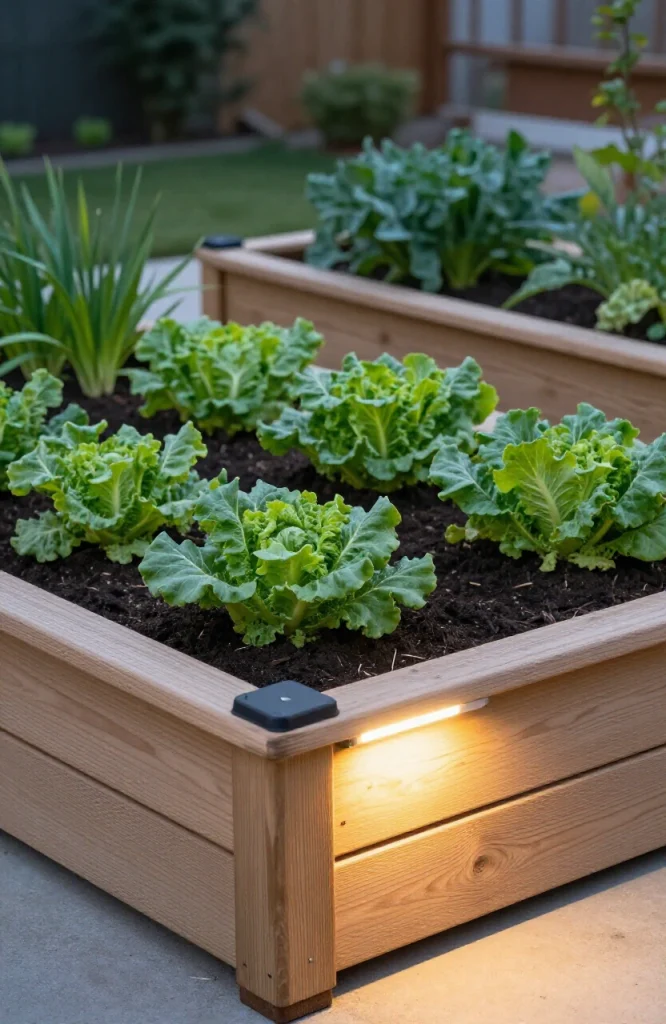
Practical garden lighting isn’t only about aesthetics. A simple LED strip or two small downlights fitted to a raised bed surround let you harvest or tend plants after work in winter when daylight has gone. Waterproof LED strip tape is inexpensive, requires no specialist installation, and makes a real difference to the usability of a kitchen garden. Run the cable along the inside of the top rail so it’s protected from direct rain.
30. Create Ambiance With Hanging Lanterns at Different Heights
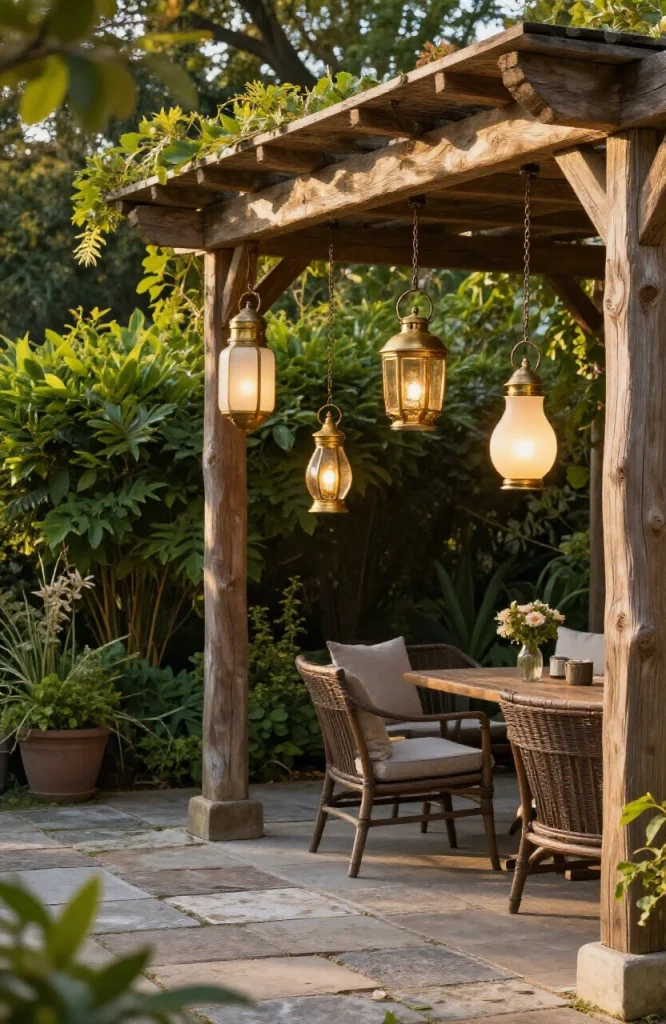
Suspend lanterns from a tree branch, pergola beam, or a purpose-built hanging point at varying heights to create a more organic, lived-in atmosphere than a single overhead fixture provides. The variation in height mimics the way light falls naturally and feels less regimented than a uniform installation. Use lanterns with matching finishes but different sizes for a cohesive look that still has visual movement.
31. Fit Outdoor Wall Lights Along a Side Passage
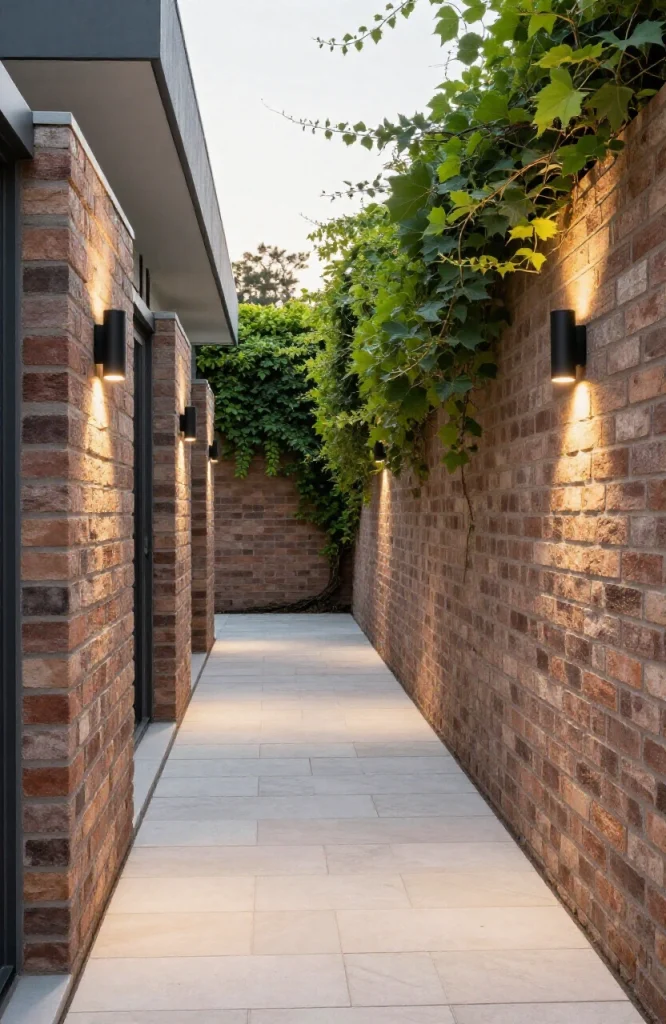
A narrow passage between house and boundary wall is a practical area that often gets no lighting at all. A series of small wall-mounted downlights spaced along the passage solves this while adding a considered detail to an otherwise forgotten space. Compact bulkhead lights are the most weather-resistant option for a tight space with limited overhead protection. Wire them to a motion sensor so they activate on approach.
32. Use a Timer or Smart Controller for the Whole System
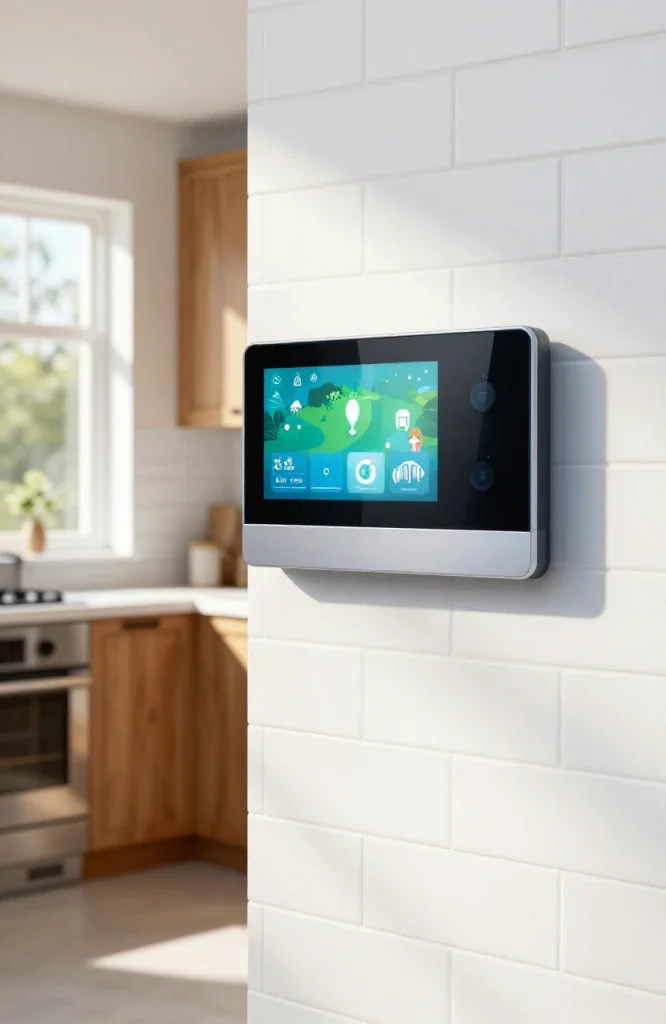
No garden lighting scheme performs well if it requires manual switching every evening. A simple plug-in timer or, for a permanent installation, a smart switch connected to your home system lets you set on and off times once and forget them. Dusk-to-dawn sensors adjust automatically as the seasons change. This also extends the life of fixtures by preventing them running through the night when they’re not needed.
33. Illuminate a Fire Pit Area With Low Perimeter Lighting
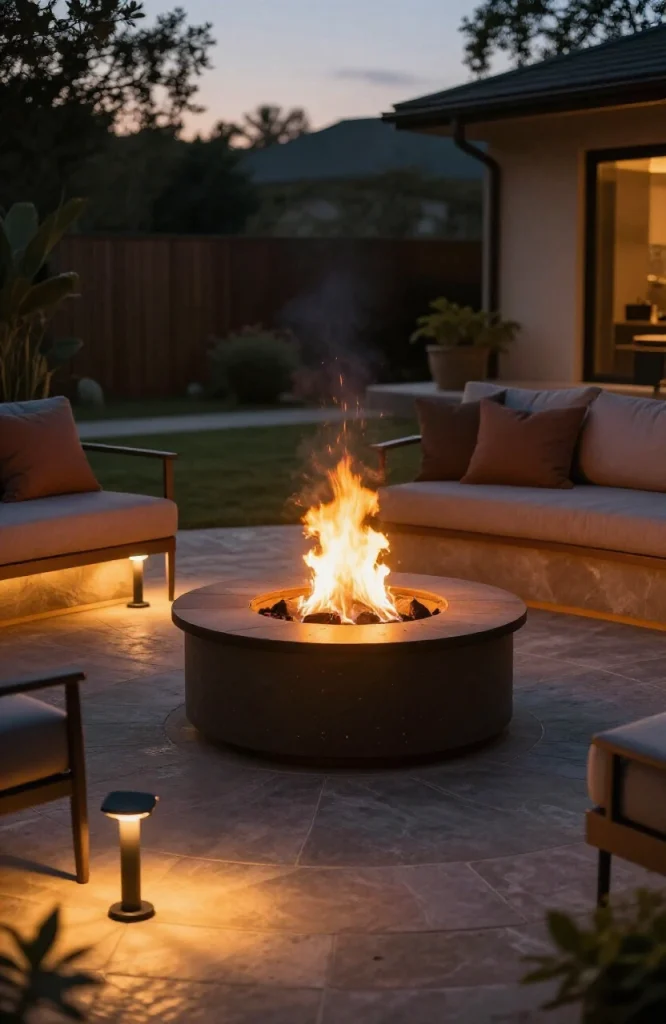
A fire pit already provides its own central light source, so surrounding it with bright fixtures would kill the atmosphere. Instead, place low spike lights or solar lanterns around the perimeter of the seating area to define the space without competing with the fire. Ground-level lights keep the glow below sitting height, which reinforces the intimate, enclosing feel of a fire pit gathering.
34. Try Copper or Brass Finish Fixtures for a Warm Patina
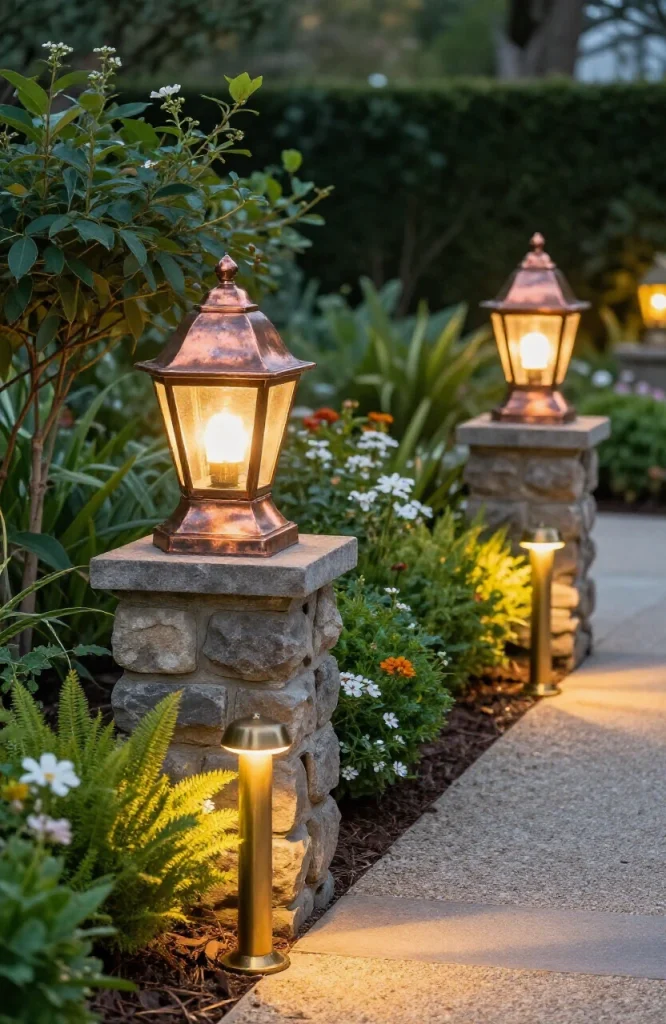
Fixture material and finish affect how the garden looks during the day as much as at night. Copper and brass-finish outdoor lights develop a natural patina over time that many gardens benefit from, particularly cottage, traditional, and Mediterranean-style spaces. These finishes age gracefully rather than showing wear, and their warm tone complements terracotta pots, timber structures, and natural stone surfaces.
35. Add Underwater Lighting to a Swimming Pool or Plunge Pool
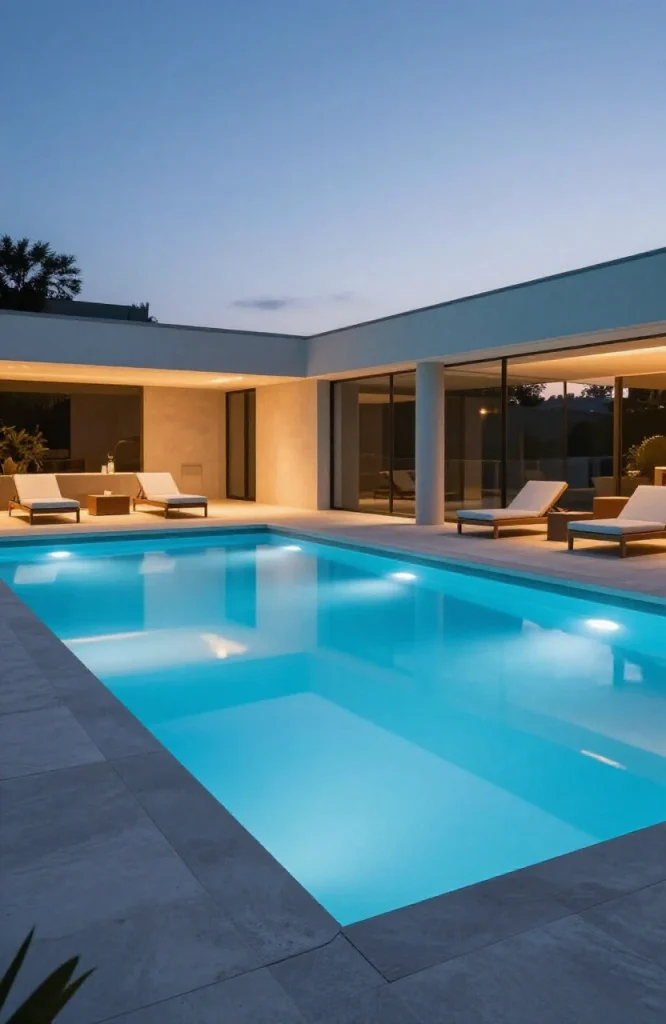
Pool lighting is both a safety requirement and a design opportunity. Recessed underwater LEDs built into the pool wall light the water from within, making the depth visible and giving the pool a luminous color at night. For a plunge pool with a simple rectangular shape, two or four wall-mounted submersible lights are usually sufficient. Choose a color temperature that complements the pool tile color: warm white suits cream or sand tiles; cooler white suits dark grey or black tiles. See our plunge pool ideas for more on outdoor pool design.
36. Light a Pergola or Gazebo With Pendant Lights
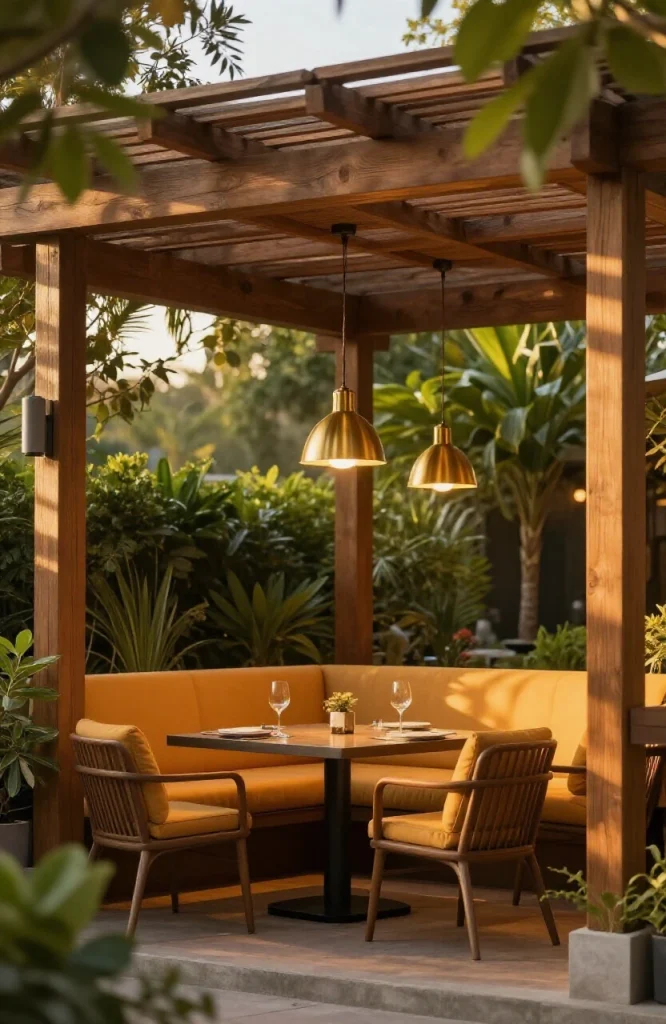
Pendant lights hung from the ceiling of a covered pergola or gazebo bring the light source down to a comfortable height for conversation and dining. They work best in a protected space where wind won’t swing them excessively. Choose weather-resistant pendants with IP44 or above ratings. A single large pendant over a table is the simplest approach; for a longer pergola, three pendants in a row at consistent heights read as intentional and considered.
37. Illuminate Plant Silhouettes Against a Wall
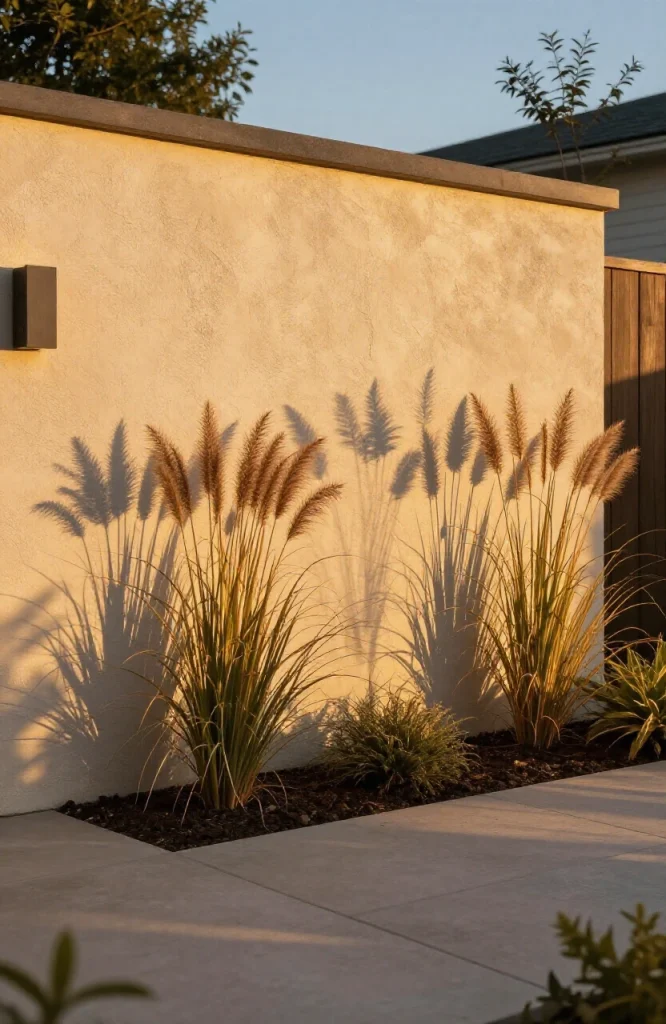
Placing an uplight between a plant and a wall behind it projects the silhouette of branches, leaves, or flower heads onto the wall surface. Ornamental grasses, phormiums, bamboo, and olive trees all produce excellent shadow silhouettes. The closer the plant is to the wall, the sharper the shadow; the farther away, the more diffuse and painterly the effect. This technique works even in a small garden because it uses vertical rather than horizontal space.
38. Use Garden String Lights in a Pergola or Arch
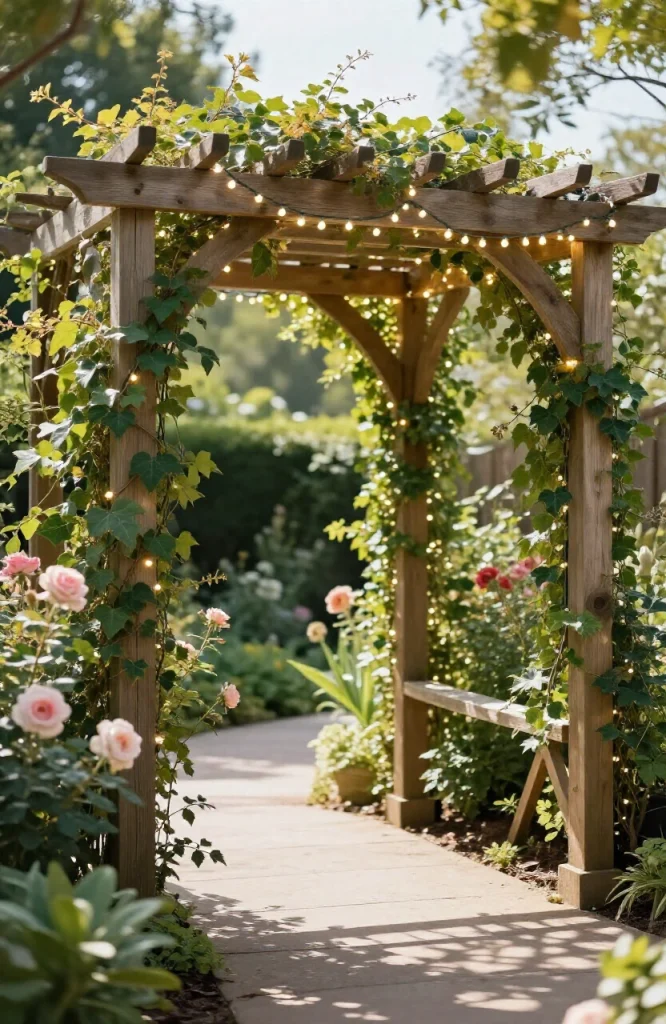
A freestanding arch or gateway in a garden, whether made of metal, timber, or trained climbing plants, becomes a theatrical moment when fitted with small LED string lights or micro fairy lights along its structure. The lit arch frames a view or marks a transition between garden rooms in a way that no other single element can. Keep the light output low and the color temperature warm so the arch glows rather than blazes.
39. Add Spotlights to Highlight Seasonal Planting
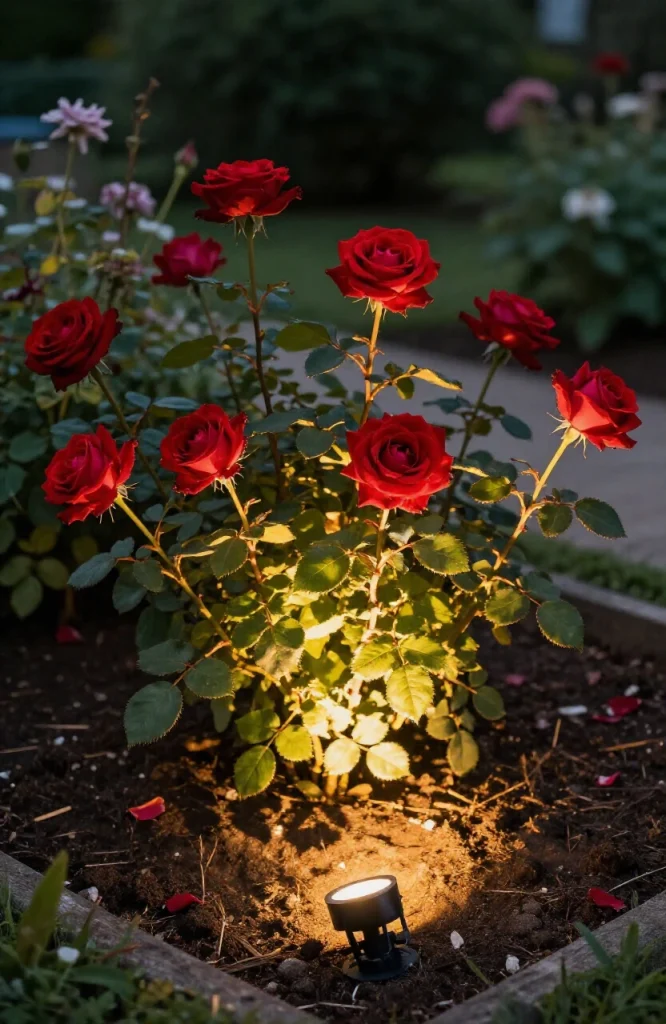
Feature beds change through the year, and your lighting can reflect that. Adjustable spike spotlights allow you to redirect the beam toward whatever is in peak season: tulips in spring, roses in early summer, dahlias in late summer, and ornamental stems in winter. This keeps the garden feeling relevant after dark through every season rather than only looking its best when a particular permanent structure is lit.
40. Create Zones With Different Lighting Intensities
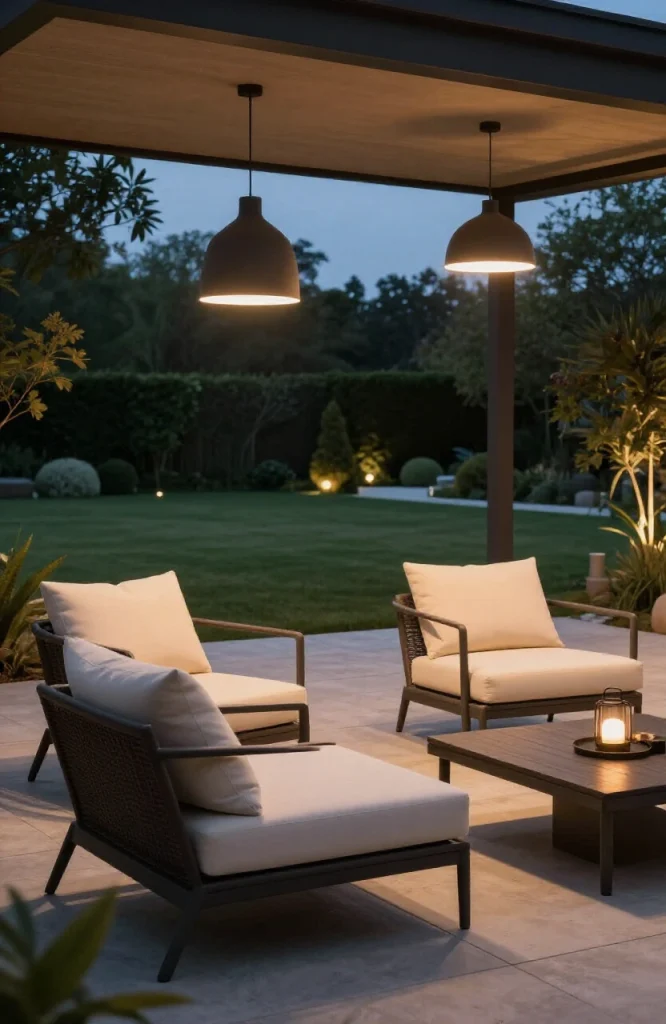
Not every area of a garden needs the same light level. A seating terrace benefits from enough light to see faces clearly, while a lawn beyond it can remain much dimmer. Using dimmable fixtures and grouping them on separate circuits gives you real control. A bright terrace with a dimly lit lawn behind it creates depth and perspective, making the garden feel larger than it is. This mirrors how lighting zones work in interior design. For more on creating defined zones, see our open floor plan decoration ideas.
41. Install Recessed Ground Lights in Paving
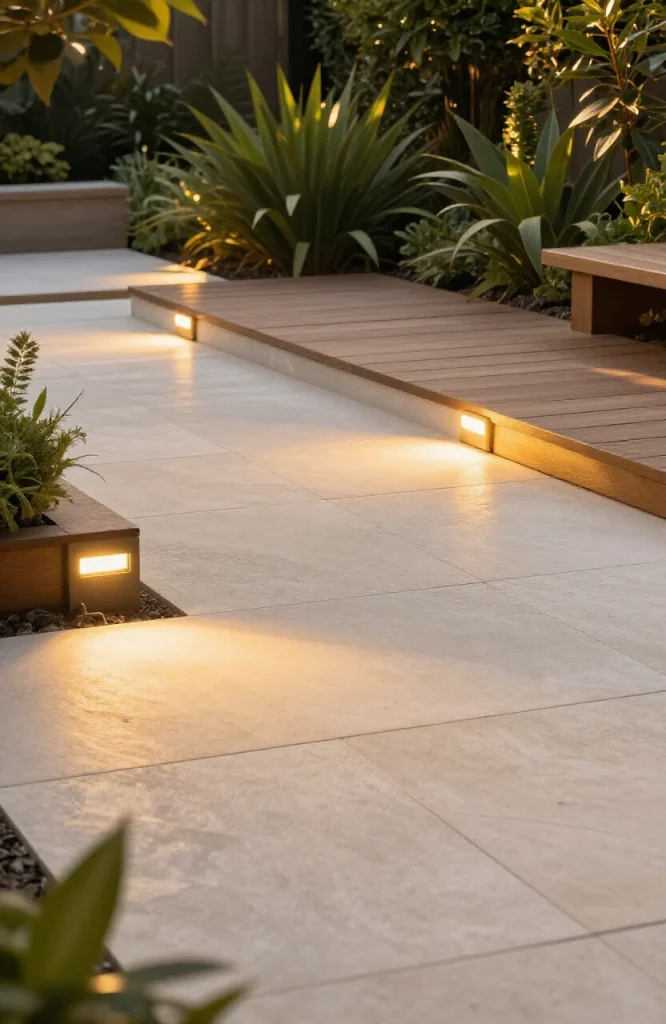
Recessed ground lights set into paving slabs or decking boards cast light upward through a protective lens. At grade level, the lens sits flush with the surface, making them invisible during the day. At night they produce a clean, contemporary pool of light from below. Use them to define the boundaries of a seating area, mark the corners of a terrace, or create a row of dots along a wide path. Choose a version with a stainless steel bezel to handle foot traffic without damage.
42. Light a Kitchen Garden or Herb Bed at Night
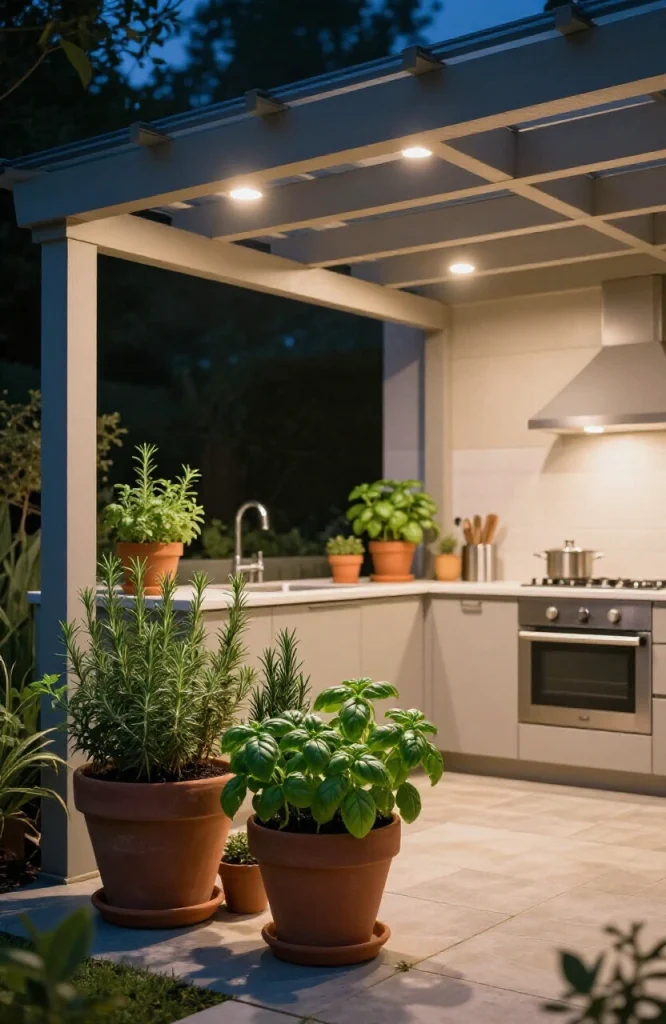
A dedicated culinary garden deserves its own practical lighting, especially in winter when early darkness cuts short the growing day. A simple pair of downlights on a pergola or overhead structure above the beds gives even light for planting, weeding, and harvesting. If no structure exists, two stake-mounted spotlights on either side of the bed provide similar coverage. Use a cool white temperature here since the goal is visibility rather than atmosphere.
43. Use Solar Lanterns on Fences and Posts
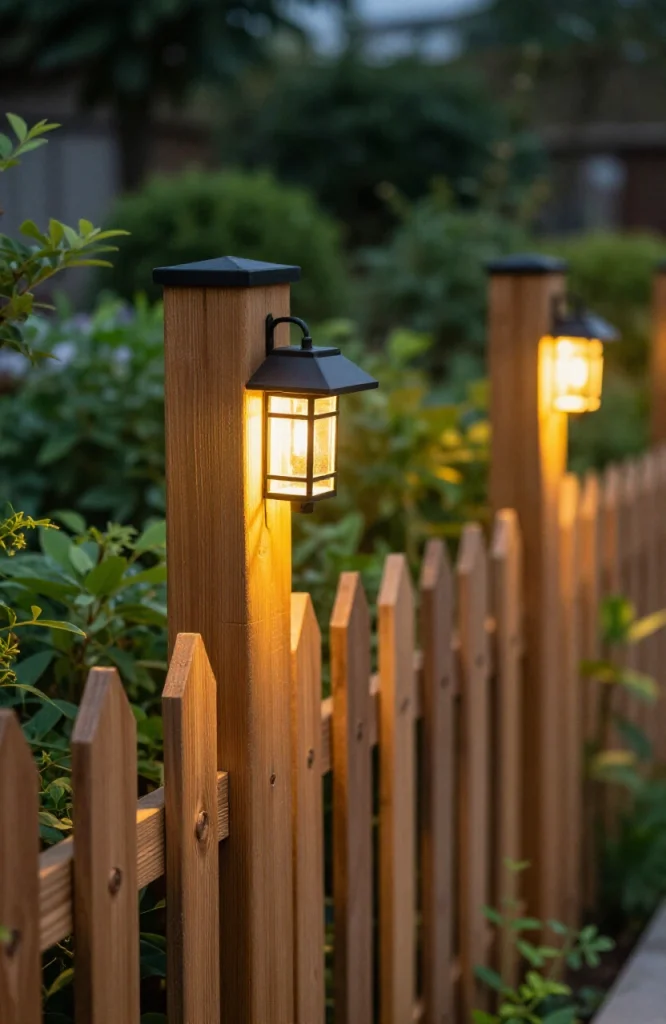
Solar lanterns hung on fence posts or wall hooks require no wiring at all, making them the simplest possible addition to a garden. They charge during the day and activate automatically at dusk. Modern versions use high-quality LED panels and last four to eight hours on a full charge. Group two or three at the same height along a fence run to create a consistent rhythm of light without any electrical work.
44. Try Low-Glare Fixtures for a Neighbor-Friendly Scheme
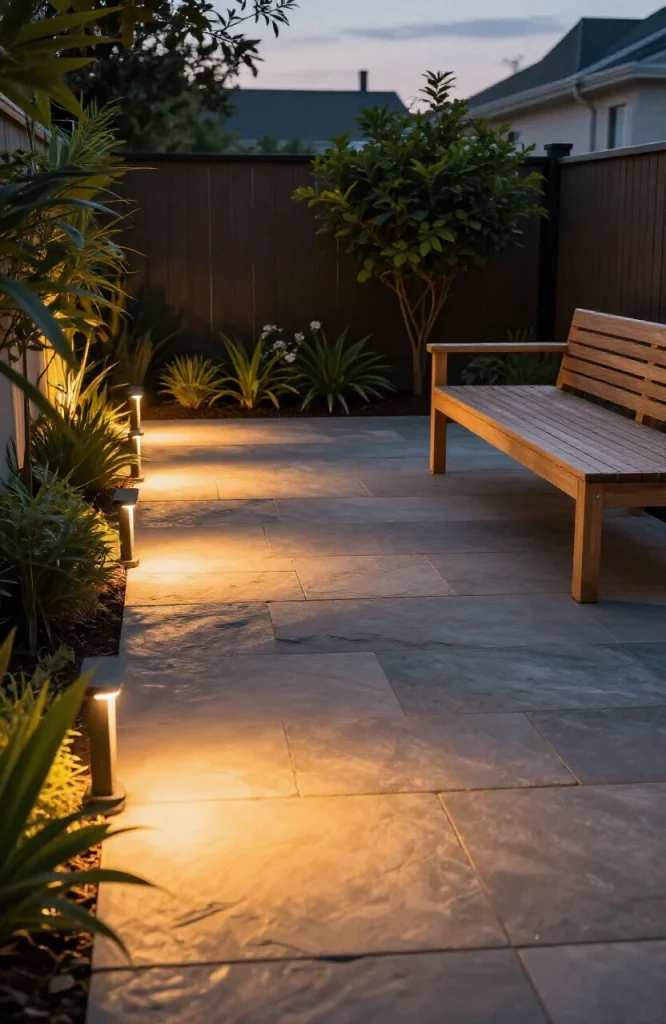
Poorly aimed garden lights that spill into adjacent gardens or upward into the sky are a common source of neighborhood friction. Full-cutoff fixtures direct light precisely downward, with no upward scatter. Shielded uplights prevent side scatter. When planning the scheme, check beam angles from your neighbor’s side of the boundary, especially for any lights mounted high on a wall or in a tree. A lighting scheme that considers its surroundings is one that stays where you want it.
45. Consider a Professional Lighting Survey for Large Gardens

For a garden larger than about 100 square meters, a one-hour consultation with a qualified garden lighting designer is worth the cost. They will identify the correct cable routing, transformer sizing, lumen levels for each zone, and fixture placements that would take a homeowner much longer to work out independently. Many suppliers offer a free survey as part of a purchase package. The resulting scheme will be safer, more efficient, and better balanced than most self-planned systems.
Garden Lighting Types: Quick Reference
| Lighting Type | Best Used For | Power Option | Typical Lumen Range |
|---|---|---|---|
| Path lights | Walkways, borders | Mains, solar, low-voltage | 50–100 lm |
| Uplights | Trees, shrubs, walls | Mains, low-voltage | 100–300 lm |
| Spotlights | Sculptures, focal plants | Mains, low-voltage | 100–400 lm |
| String / festoon lights | Patios, pergolas, trees | Mains, solar, battery | 10–40 lm per bulb |
| Recessed in-ground lights | Paving, decks | Mains, low-voltage | 50–150 lm |
| Bollard lights | Driveways, wide paths | Mains, solar | 100–300 lm |
| Submersible LED lights | Ponds, pools, fountains | Mains (transformer) | 100–400 lm |
| LED strip lights | Deck edges, steps, under-structures | Mains, low-voltage | Variable |
| Wall lights | Entrances, passages, patios | Mains | 200–600 lm |
| Solar stake lights | Borders, informal paths | Solar | 30–80 lm |
Conclusion
These 45 garden lighting ideas cover the full range of what outdoor lighting can do, from basic safety on a path to dramatic tree uplighting to fully automated smart systems. The most effective schemes share a few common principles: they start with a plan rather than impulse purchases, they use layers rather than a single type of light, and they choose fixture quality over quantity.
LED technology has made garden lighting more affordable to run than it’s ever been, and solar reliability has improved enough to be a genuine option for low-demand positions. Whichever mix of ideas you apply from this list, the result should be a garden that earns time outside after dark, not one that goes dark the moment the sun sets.
For more outdoor living inspiration, explore our articles on plunge pool ideas and poolside bar ideas.