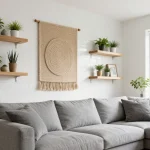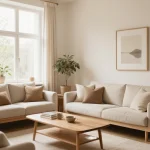

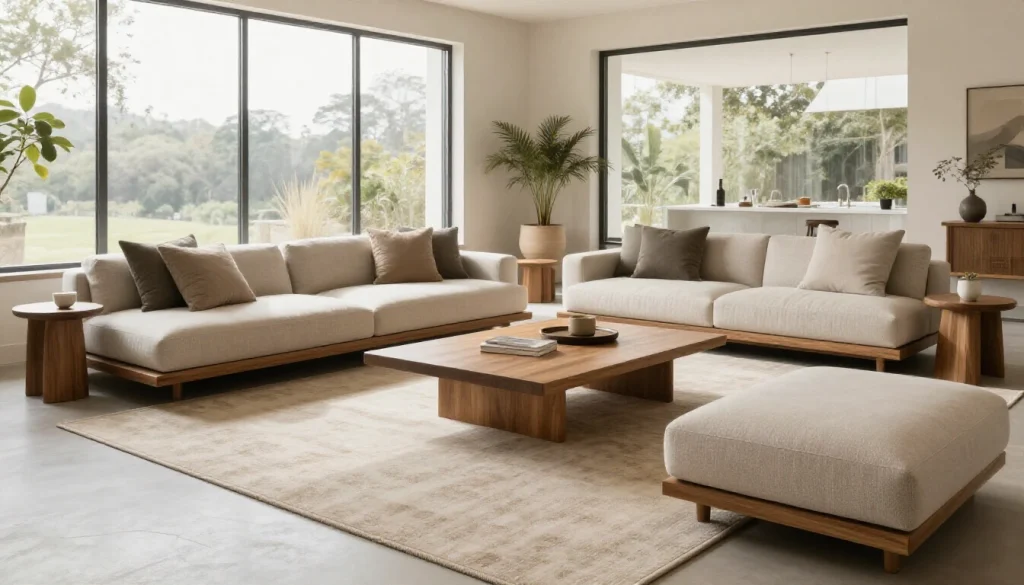
Most living rooms are built around a sofa. It takes up the most floor space, anchors the furniture arrangement, and sets the tone for everything else. But sofas are not a design requirement, and living room without sofas ideas are becoming a real approach for people who want more flexibility, more space, or just a different look. Whether you are working with a small apartment, a studio, or a large open-plan room where a bulky couch feels wrong, the ideas below cover practical seating alternatives, layout strategies, and styling tips that actually work.
1. Cluster of Accent Chairs Instead of One Large Sofa

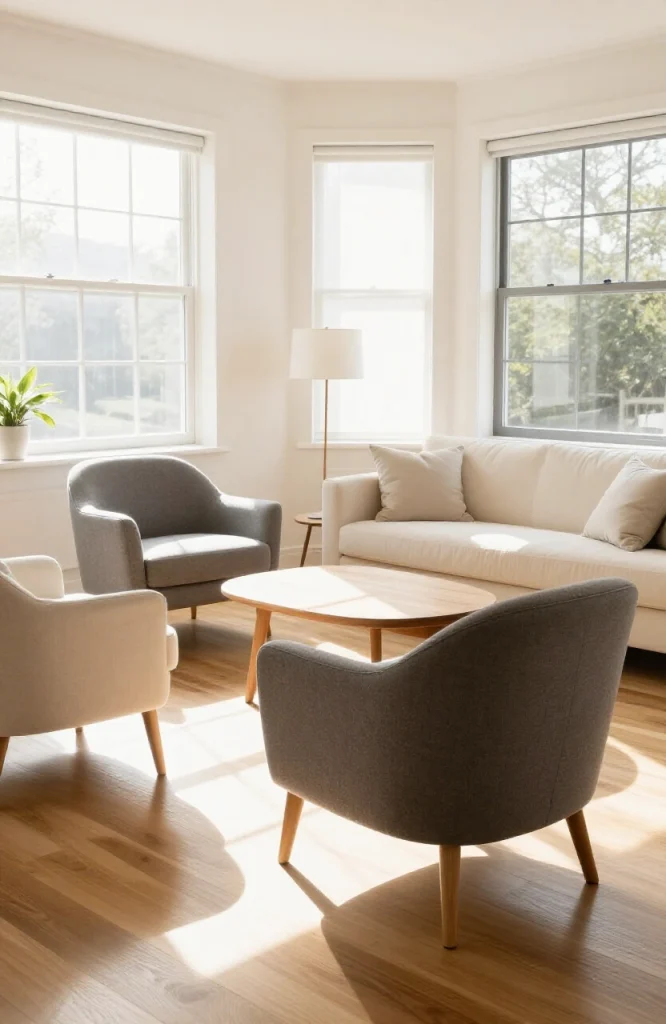
Replacing a sofa with two to four accent chairs arranged around a coffee table gives you more seating flexibility and a more conversational layout. Guests can pull chairs in or push them out as needed. Mixing chair styles, a wingback with a rattan chair or a low slipper chair alongside a tub chair, adds visual interest that a matching sofa and loveseat set rarely achieves. This works especially well in rectangular rooms where a sofa would cut the flow of the space.
2. Chaise Longue as a Solo Seating Anchor
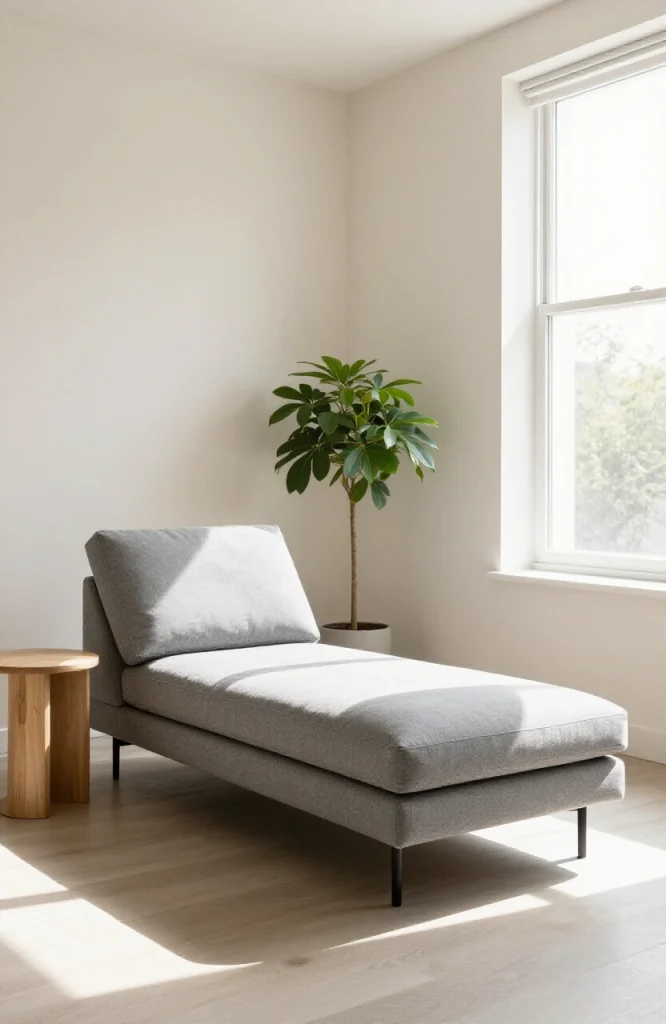
A chaise longue works as a full seating anchor for a living room used mostly by one or two people. It gives you the ability to fully recline, which a standard armchair cannot, without occupying the wall-to-wall footprint of a three-seater sofa. Position it at an angle to the room rather than flush against a wall, add a small side table and a floor lamp, and the arrangement reads as a complete, considered setup rather than a missing piece.
3. Floor Cushions and Low Poufs for a Relaxed Layout
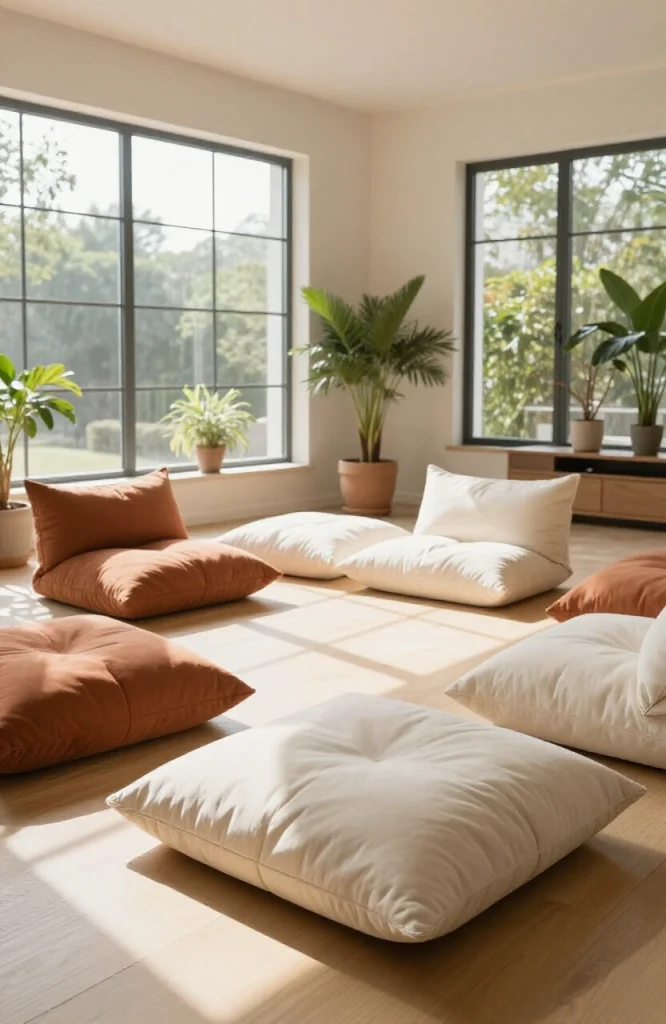
Floor cushions and large poufs create a low-to-the-ground seating zone that suits informal living rooms and spaces used for media watching, reading, or casual gatherings. Oversized floor cushions in a sturdy cotton or boucle fabric hold their shape better than cheap versions. Pair them with a low coffee table or a large wooden tray placed directly on the floor to give the arrangement a finished look. This setup works particularly well with the boho, Japanese, or Moroccan-inspired interiors that are consistently popular.
4. Built-In Window Seat as Primary Seating
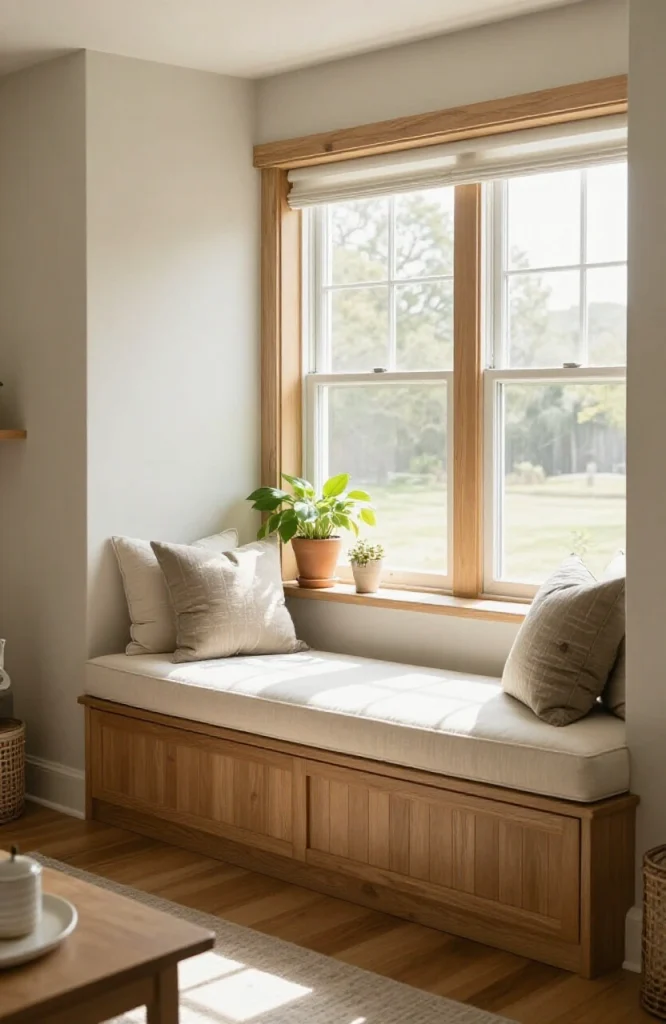
If your living room has a bay window or a deep wall, a built-in window seat with a padded cushion covers seating and storage in one piece of fixed furniture. The seat depth should be at least 18 inches for comfortable sitting, and 22 to 24 inches for lounging. Add storage drawers underneath and it replaces both the sofa and a separate storage unit. A row of cushions along the back wall turns it into a daybed-style seat that accommodates two to three people.
5. Loveseat Pairs for a Symmetrical Layout
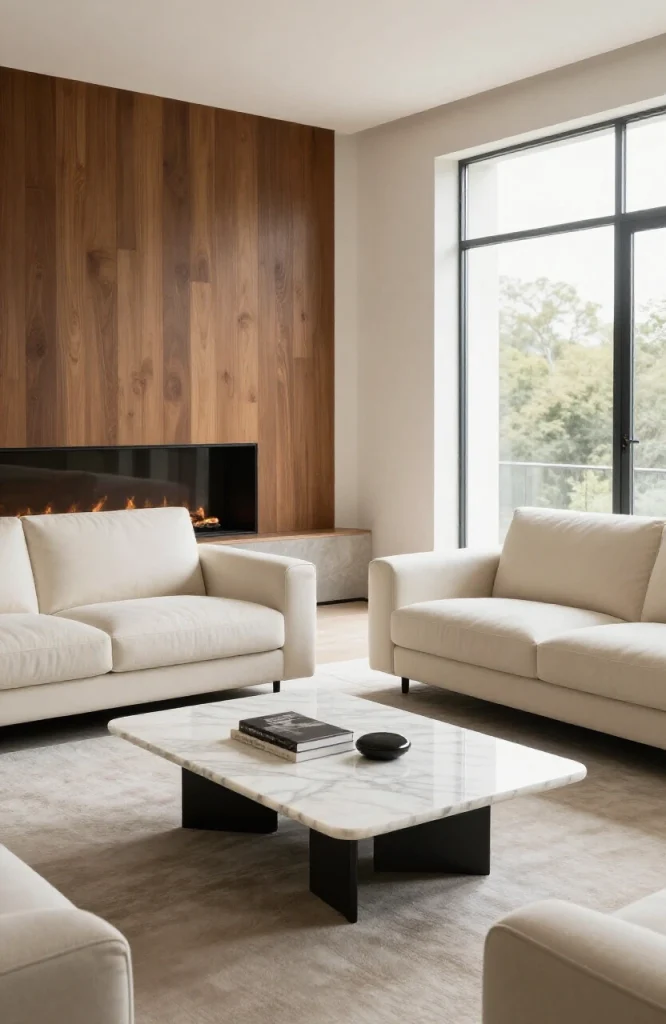
Two loveseats facing each other create a symmetrical arrangement that works better than a standard sofa in some rooms, particularly those with a fireplace or focal point at one end. Because each loveseat seats two, the total seating capacity matches a standard three-seater, and the balanced layout makes the room feel more considered. This is a good option if you want the familiarity of upholstered seating without committing to a large sectional.
6. Daybed in Place of a Sofa
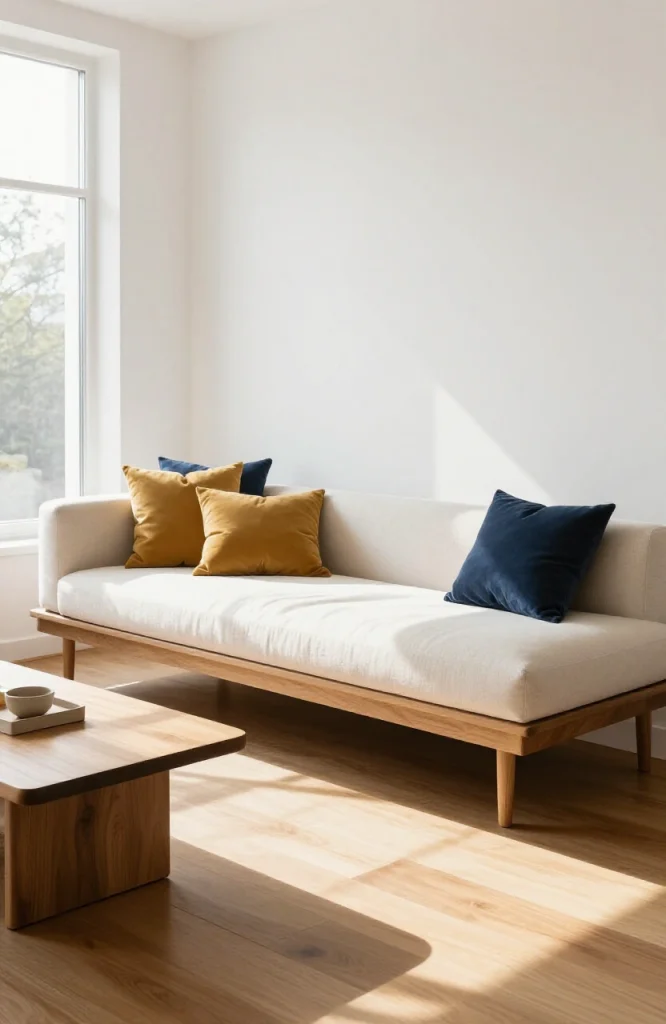
A daybed serves as seating during the day and a sleeping surface for guests overnight. In a living room without a sofa, a daybed pushed against a wall and styled with throw pillows along the back reads more like a deep sofa than a bed. Choose a daybed with a metal or wood frame that has a distinct living room look rather than a bedroom one. Linen and cotton covers in neutral tones keep the space from looking too casual.
7. Ottomans as the Main Seating Surface
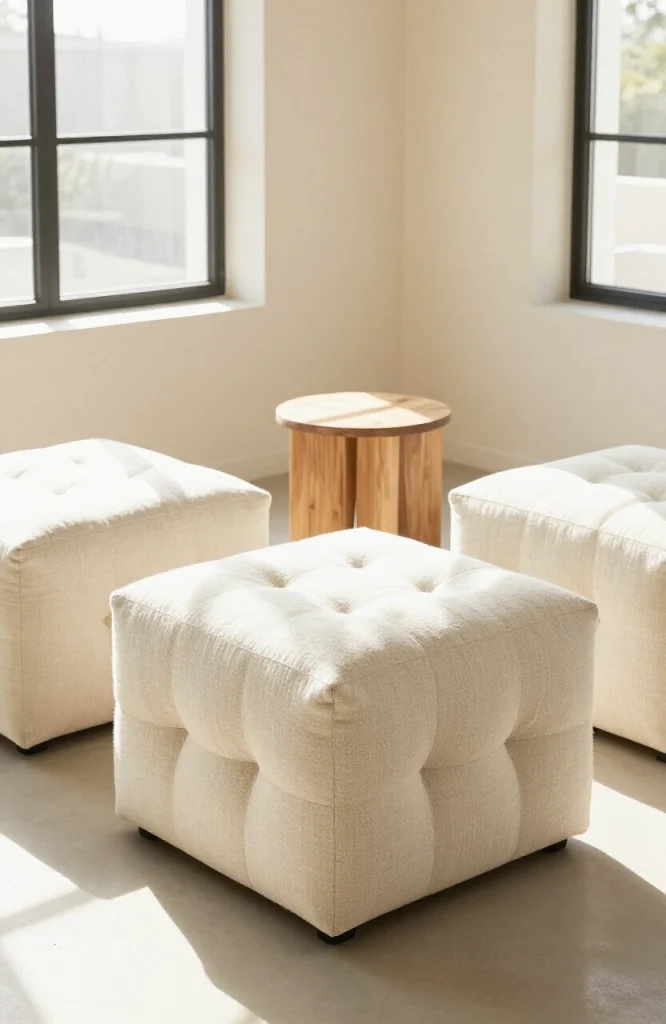
Large ottomans, particularly tufted or upholstered cube designs, can replace a sofa when arranged in a cluster. A set of four cube ottomans pulled together forms a surface that seats people on all sides, which works well around a square coffee table. Individual ottomans are easy to move, stack when not in use, and work well in smaller living rooms where a fixed sofa would dominate. Add a large tray on top of two adjacent ottomans to create a stable surface for drinks or a laptop.
8. Modular Seating That Rearranges as Needed
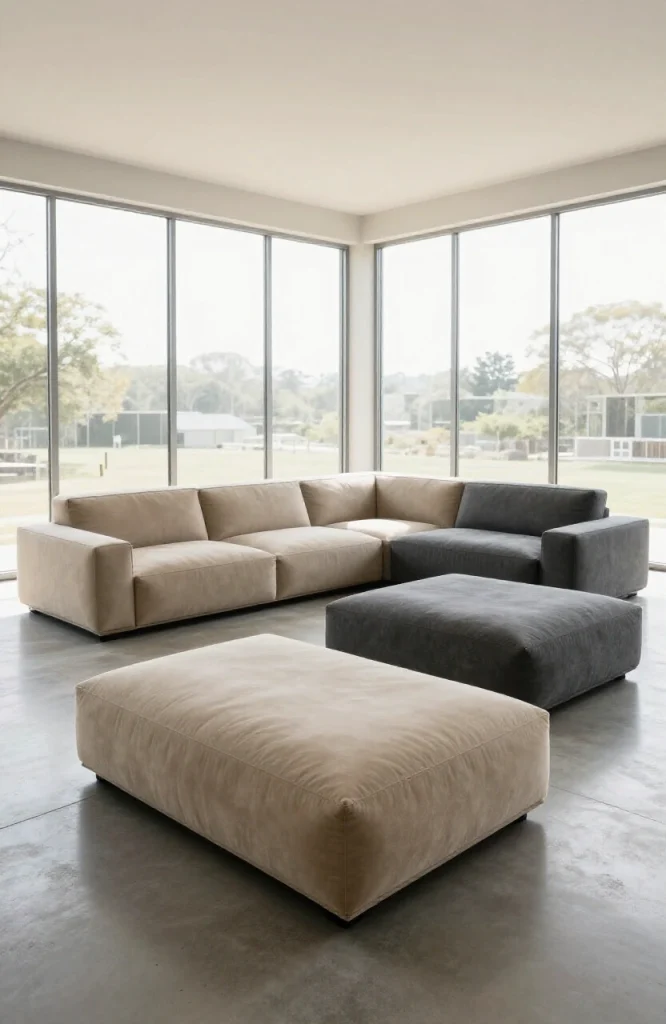
Modular seating systems let you build the configuration you need today and change it for tomorrow. Single modular units connect or separate, so you can line them up for a movie night or spread them out for a party. Unlike a traditional sofa, modular pieces can move with you if you change apartments, and individual units are easier to get through narrow doors and stairwells. Look for modular systems with removable, washable covers if you have kids or pets.
9. Bench Seating Along One Wall
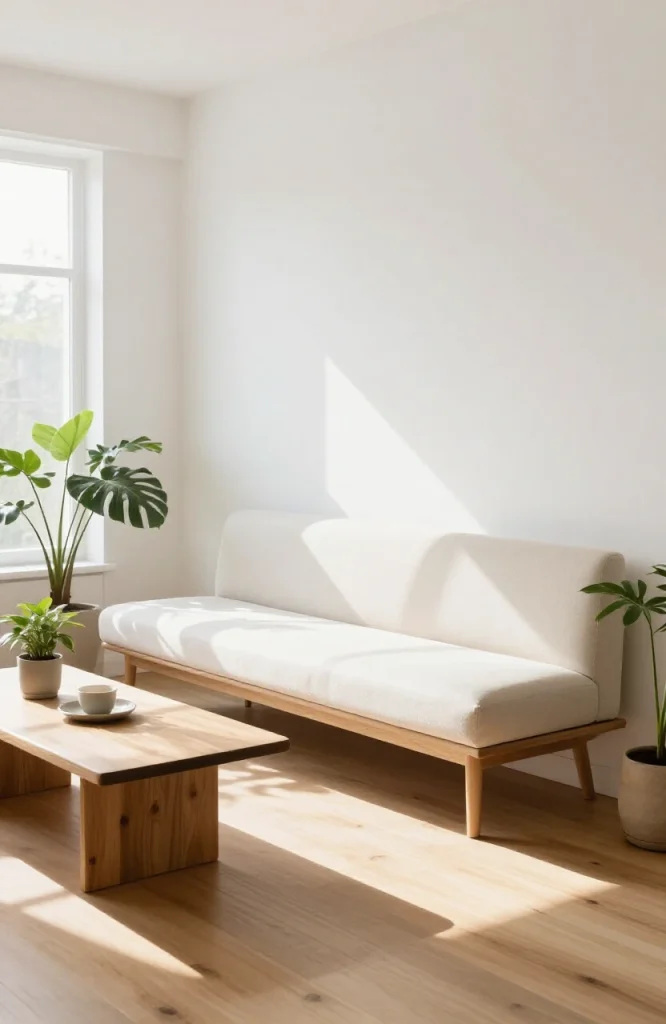
A long upholstered bench or a solid wood bench placed against a wall gives you a clean, minimal look with real seating capacity. A bench 60 to 72 inches long can seat three adults comfortably. Pair it with two freestanding chairs to form a complete seating area. Benches work especially well in modern, Scandinavian, and industrial-style living rooms where the clean lines suit the aesthetic. Add a row of cushions along the wall behind the bench to make it more comfortable for longer sitting.
10. Hanging Chair or Swing Chair as a Statement Piece
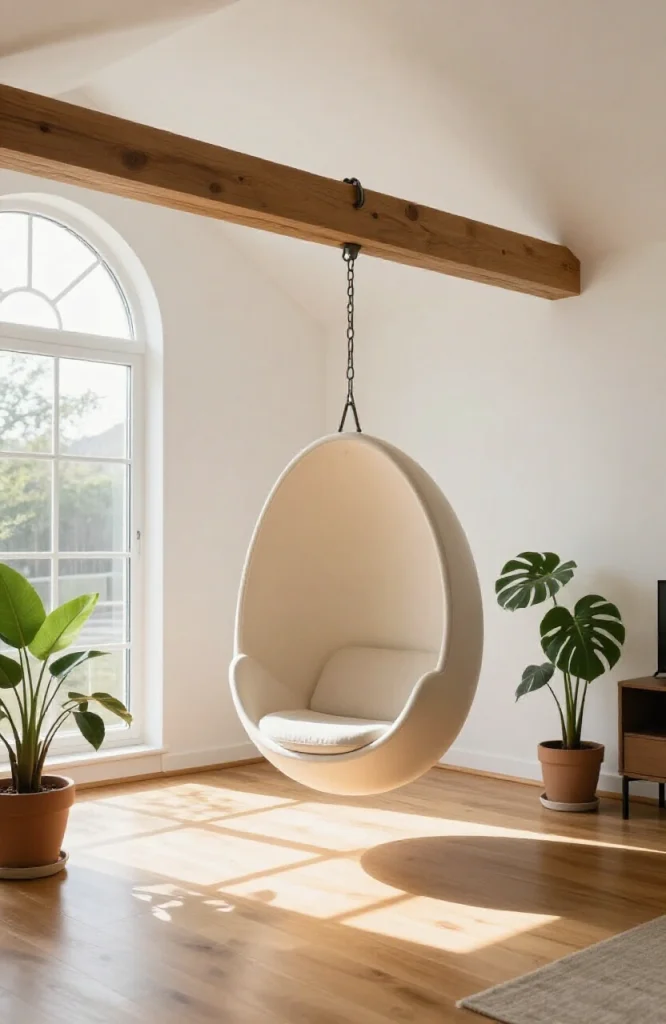
A hanging egg chair or swing chair mounted to the ceiling or a freestanding frame adds a seating option that also functions as a room focal point. It works best in living rooms with higher ceilings and an eclectic or bohemian style. One hanging chair paired with two or three other seats gives you a full seating arrangement. Make sure the ceiling mount is rated for at least 250 lbs and fixed into a joist, not just drywall.
11. Bean Bags for a Kids-Friendly Living Room
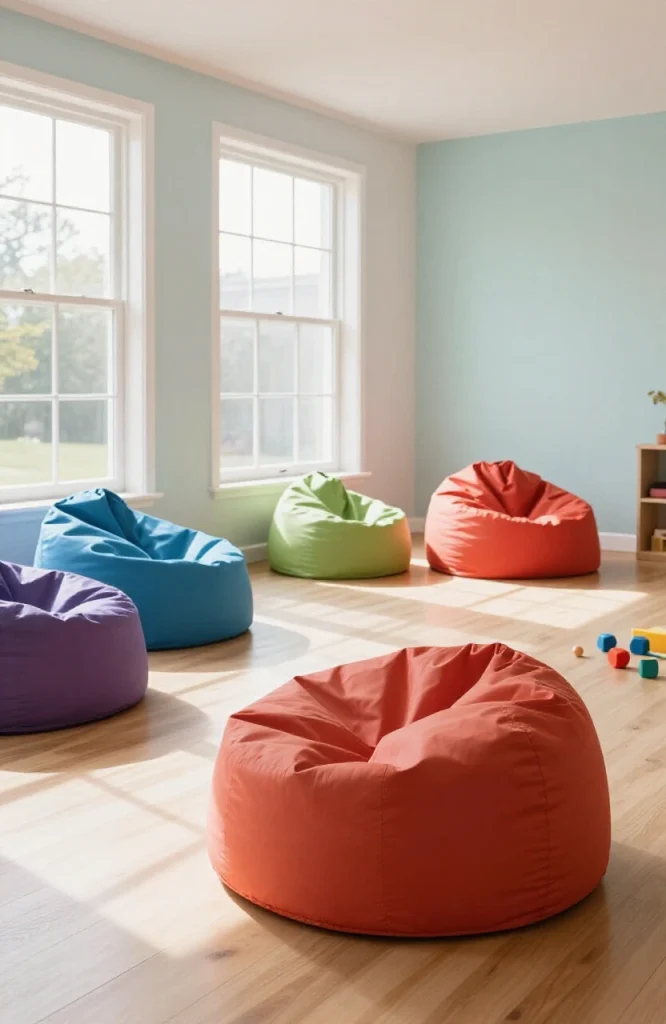
Bean bags are a practical sofa alternative in living rooms that double as playrooms. They are lightweight, easy to move, and come in sizes ranging from small children’s versions to large adult loungers. For a room that works for both adults and children, a combination of one or two adult-sized bean bags alongside low slipper chairs or accent chairs gives everyone a comfortable seat without turning the space into a purely juvenile setup.
12. Hammock Chair for Small Spaces
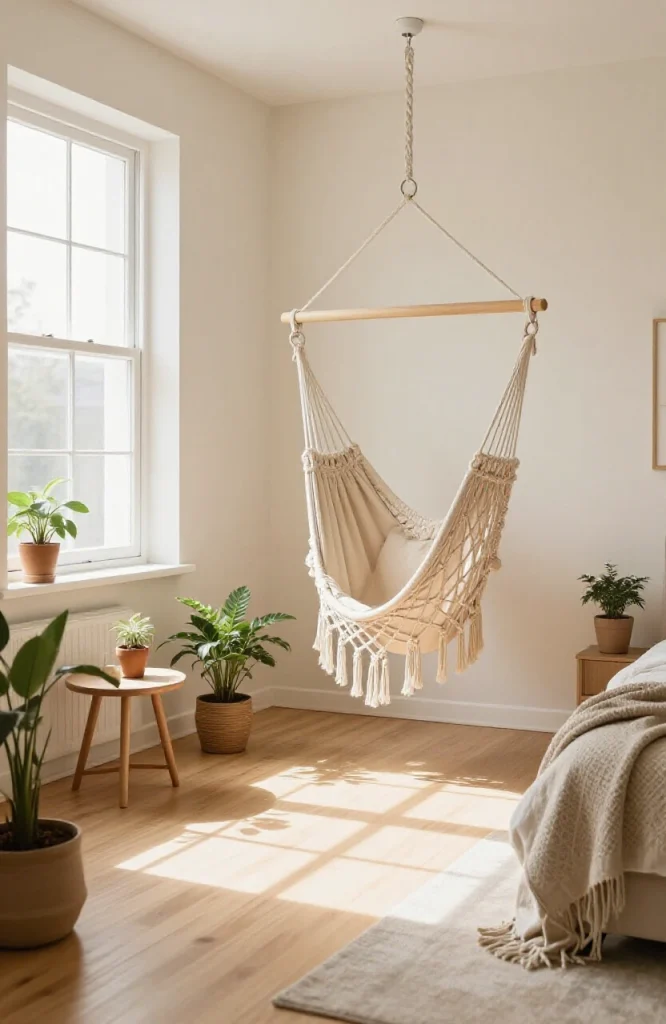
A hammock chair or hanging rope chair takes up very little floor space while providing a comfortable, supportive seat. It suits small living rooms, studios, and apartments where square footage is limited. A single hammock chair in a corner, paired with a floor cushion or small accent chair nearby, forms a functional seating area without a bulky sofa eating up most of the floor. Choose a cotton or canvas hammock chair rather than a lightweight mesh version for indoor use.
13. Banquette or Built-In Bench Seating
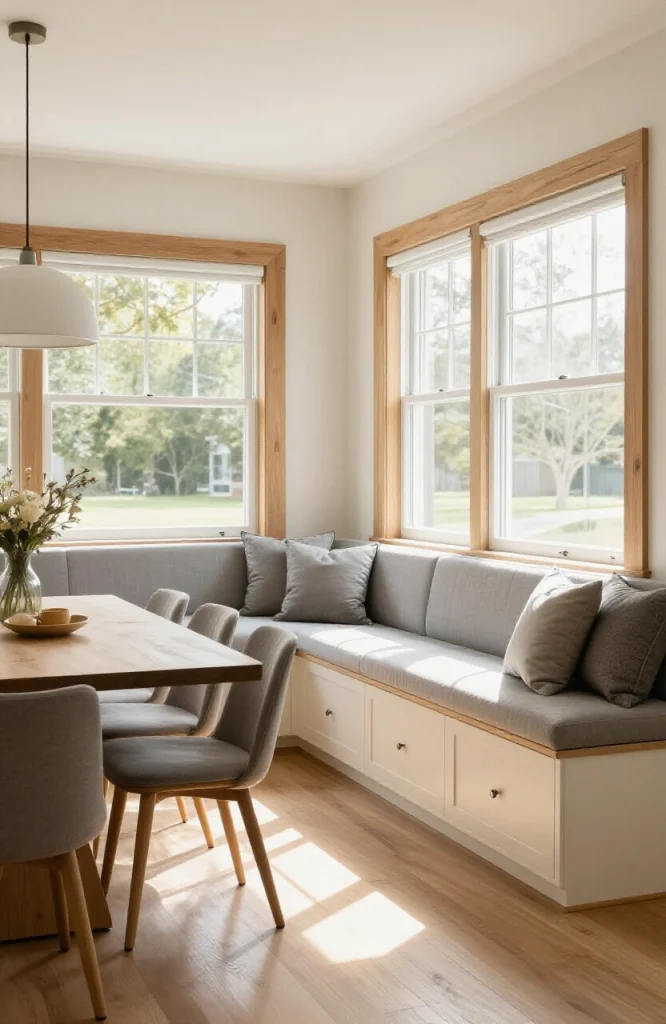
In open-plan homes where the living area sits near the dining space, a built-in banquette can serve both zones. L-shaped banquette seating with upholstered cushions provides sofa-level comfort and storage underneath. This is a fixed solution that works best in spaces where you are renovating or building, but the payoff is a seamless, high-capacity seating arrangement that fits the specific dimensions of your room rather than approximating them.
14. Low Platform Seating Inspired by Japanese Design
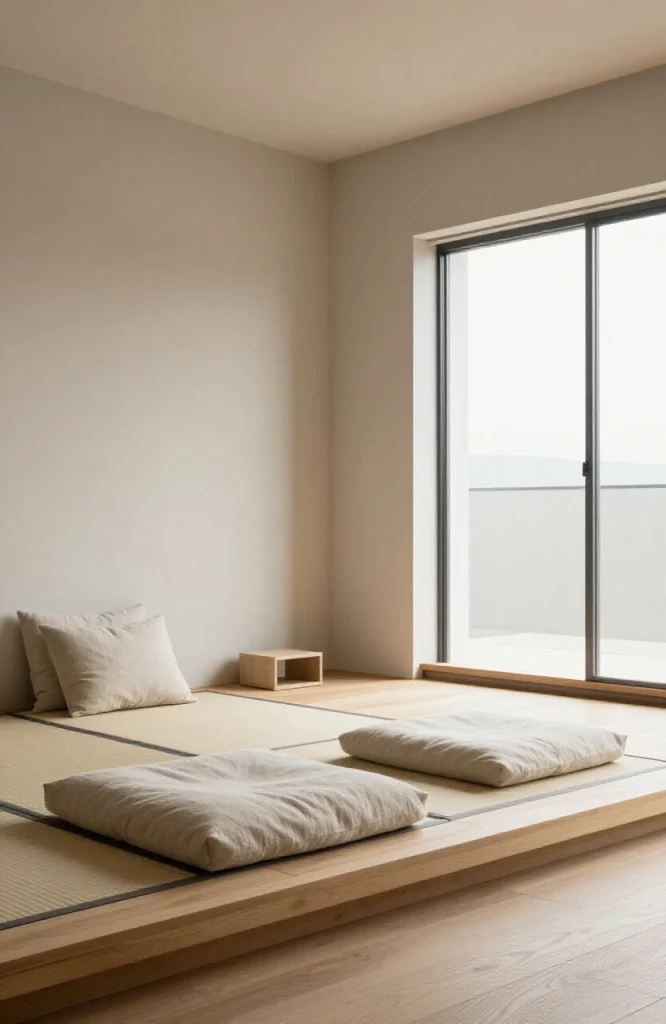
Low platform seating, a style common in Japanese interior design, uses wide, low upholstered platforms or tatami-style cushioned bases that sit close to the floor. The result is a living room that feels open and airy because the furniture does not interrupt the sightlines across the room. Platform seats work well with minimalist, Japandi, and zen-inspired interiors. They are particularly effective in small living rooms where standard furniture height makes the space feel cramped.
15. Mix of Stools and Small Chairs Around a Central Table
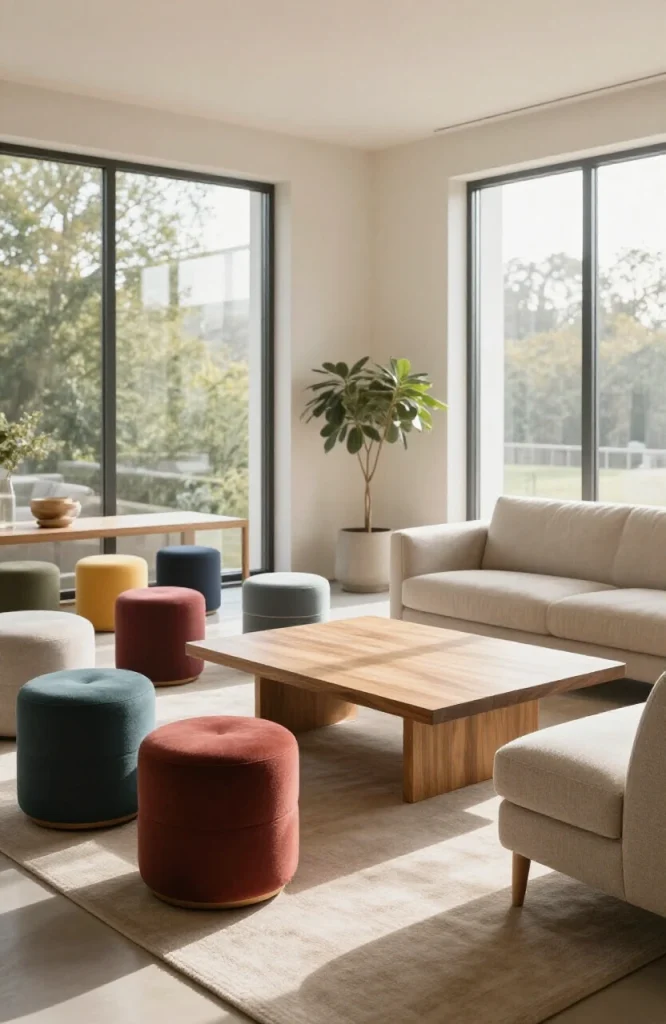
A cluster of stools, whether bar stools, counter stools, or low decorative stools, arranged around a large central coffee table or low dining table creates a casual, flexible seating area. This works well in open-plan homes where the living room doubles as an entertaining space. Stools are easy to tuck under the table when not in use, which keeps the floor area clear. Designer Marie Flanigan has noted the usefulness of stools near fireplaces specifically: they add symmetry and function, and you can move them easily to suit the situation.
16. Reading Nook with Armchair and Side Table
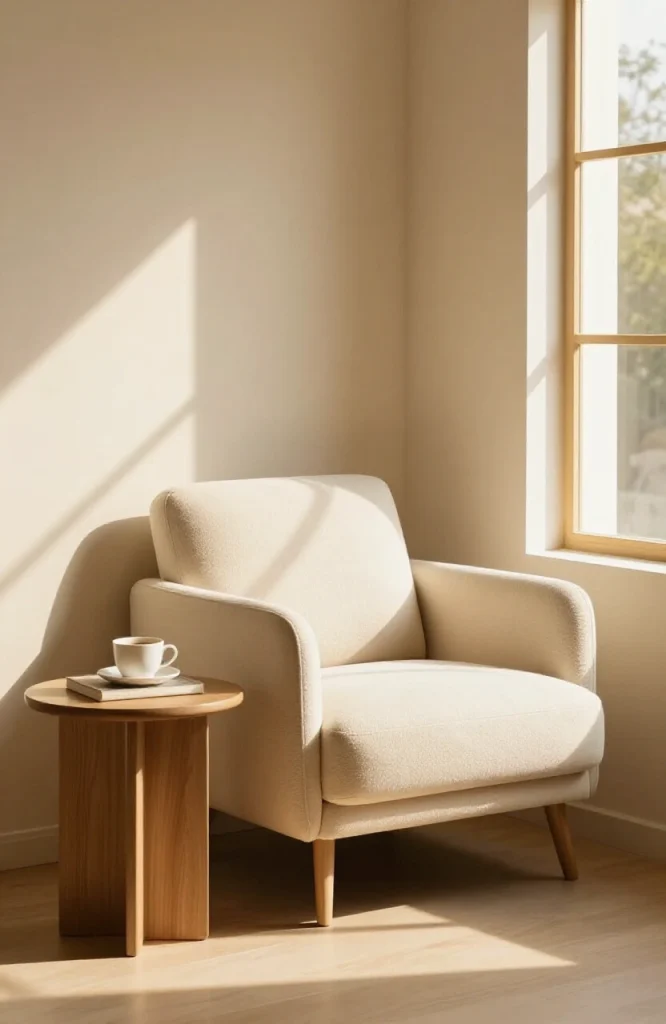
A reading nook built around a single comfortable armchair with good lighting and a side table can serve as a complete living area in a studio or small apartment. The key is choosing a chair with enough seat depth and back support for extended sitting, typically 20 to 22 inches of seat depth. A well-chosen armchair with a matching footstool rivals the comfort of most two-seater sofas for a single occupant, at a fraction of the floor space.
17. Sectional Replaced by Individual Chairs in an L-Shape
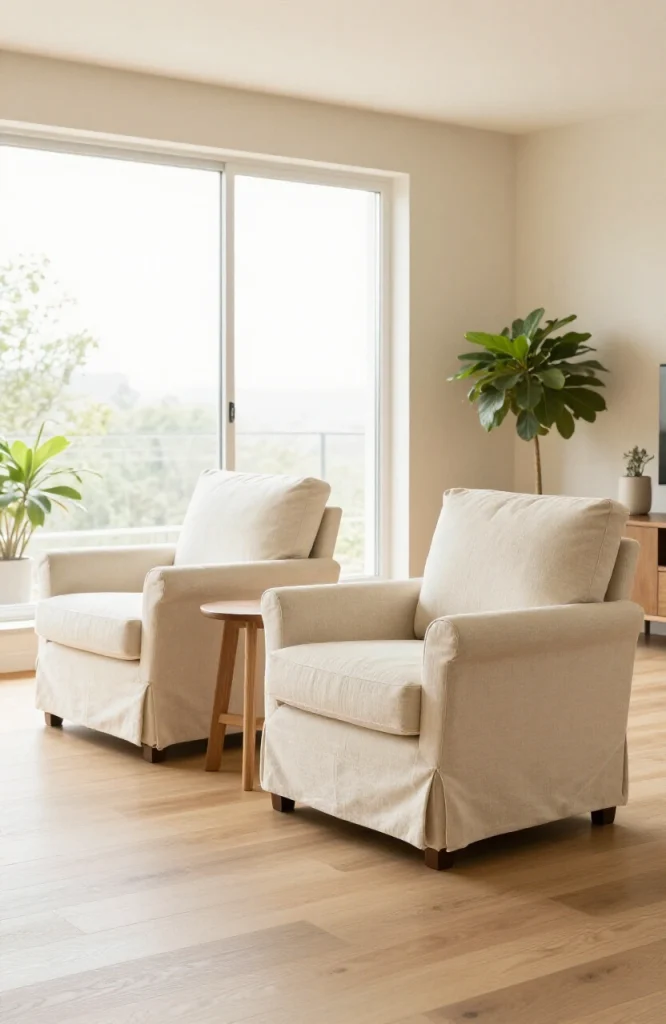
If you liked the L-shaped seating arrangement of a sectional sofa but not the sofa itself, you can replicate the shape using individual chairs. Two armchairs placed at a 90-degree angle with a small corner table between them mirrors the sectional format. Add a third chair on the opposite side of the coffee table to complete the arrangement. The individual pieces are easier to move, reupholster, or replace independently, and the room looks less dominated by a single large piece of furniture.
18. Futon for a Dual-Purpose Living Room
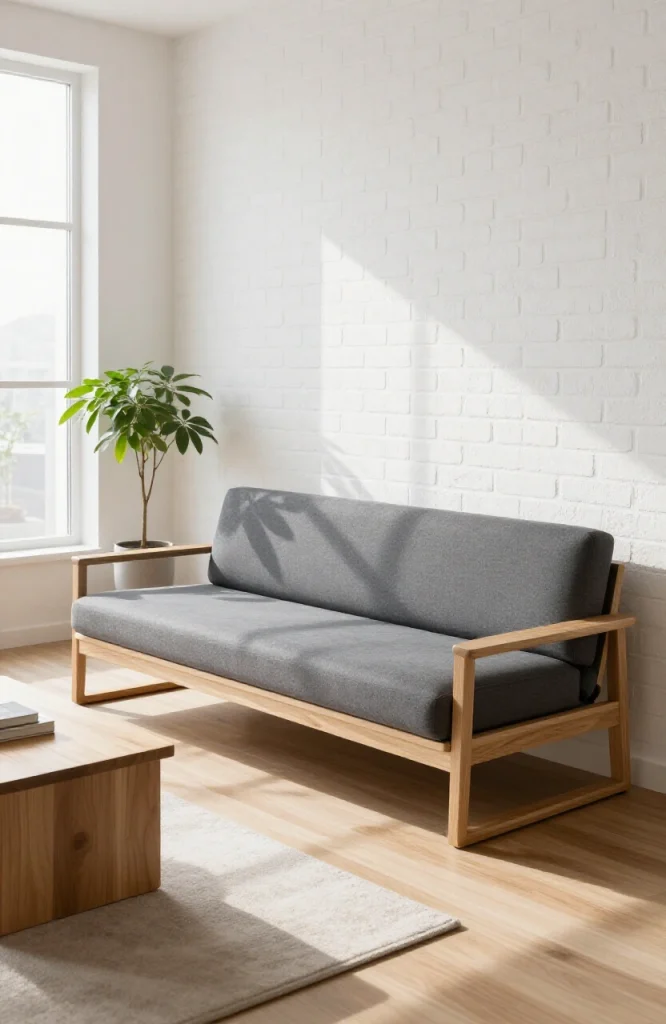
A futon, particularly a higher-quality Japanese-style futon with a solid frame, functions as a sofa during the day and a bed at night. This makes it a practical choice for studio apartments or guest rooms that double as living spaces. Choose a futon with a wood or metal frame in a simple design and a thick, quality mattress rather than a thin budget version. A good futon cover in a solid or textured fabric helps it read as intentional living room furniture rather than a temporary solution.
19. Rattan and Wicker Chairs for a Relaxed Tropical Look
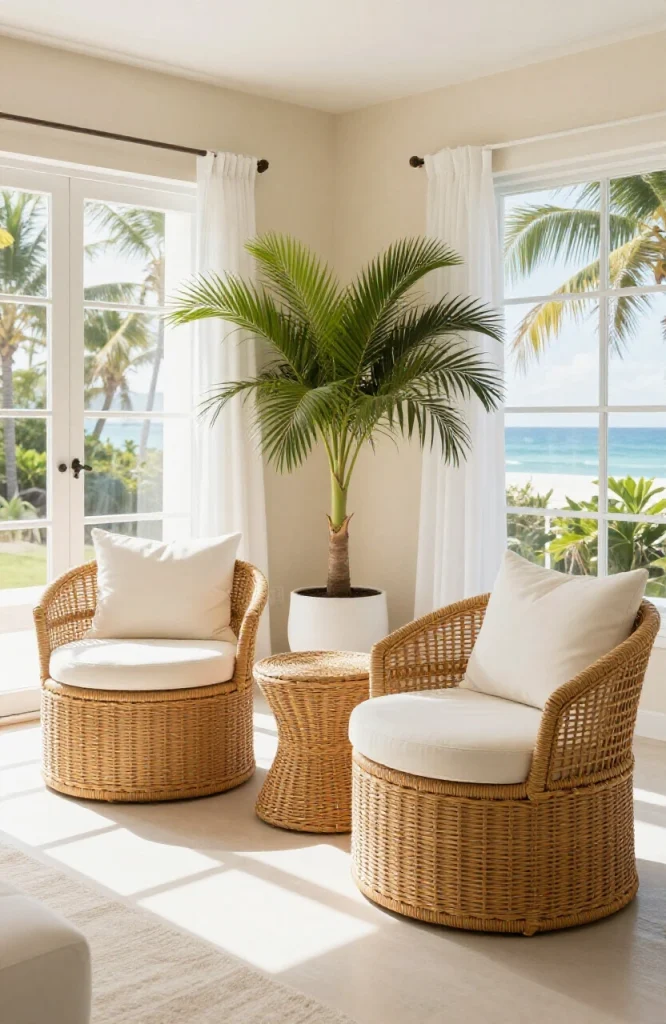
Rattan and wicker chairs work well in living rooms that lean toward a natural, coastal, or tropical aesthetic. A pair of rattan bucket chairs or papasan chairs with thick cushions provides comfortable seating that feels distinct from the upholstered sofa standard. Rattan furniture is lighter than most upholstered pieces, making it easier to rearrange. It also works well on covered patios or sun rooms, giving it versatility beyond the living room.
20. Velvet Armchairs for a Formal Living Room Look
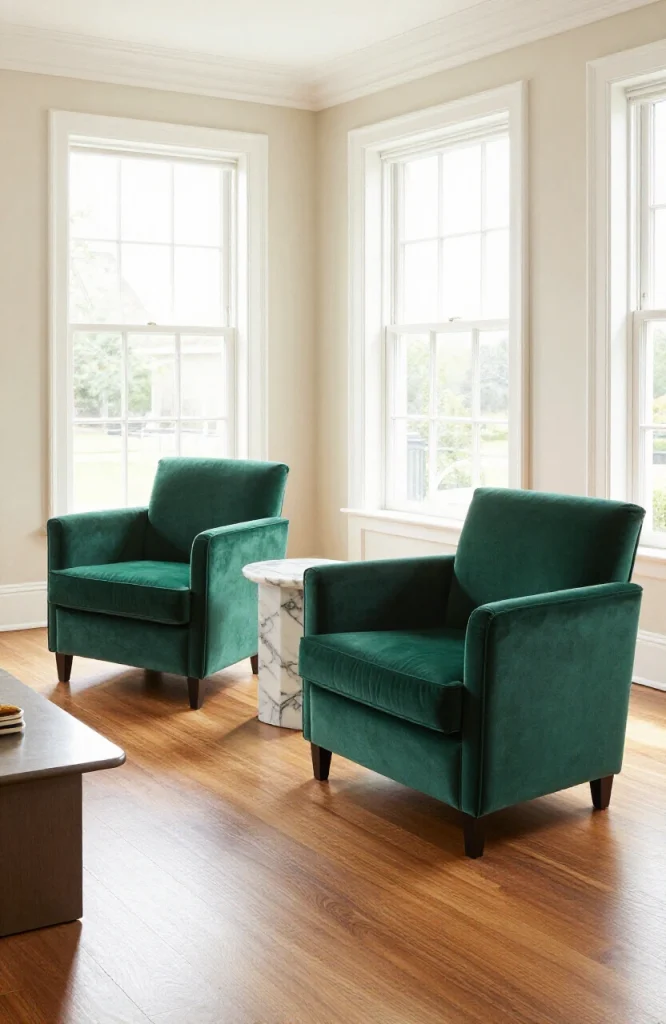
If the reason for skipping the sofa is style rather than space, a pair of velvet armchairs in a jewel tone, deep green, navy, rust, or burgundy can make a living room feel more deliberate and editorial than a standard sofa arrangement. This approach is common in formal sitting rooms, living rooms in older or period homes, and spaces that lean toward maximalist or eclectic design. Balance the chairs with a large area rug, a substantial coffee table, and artwork at the correct height to keep the arrangement grounded.
21. Floor-Level Moroccan Seating
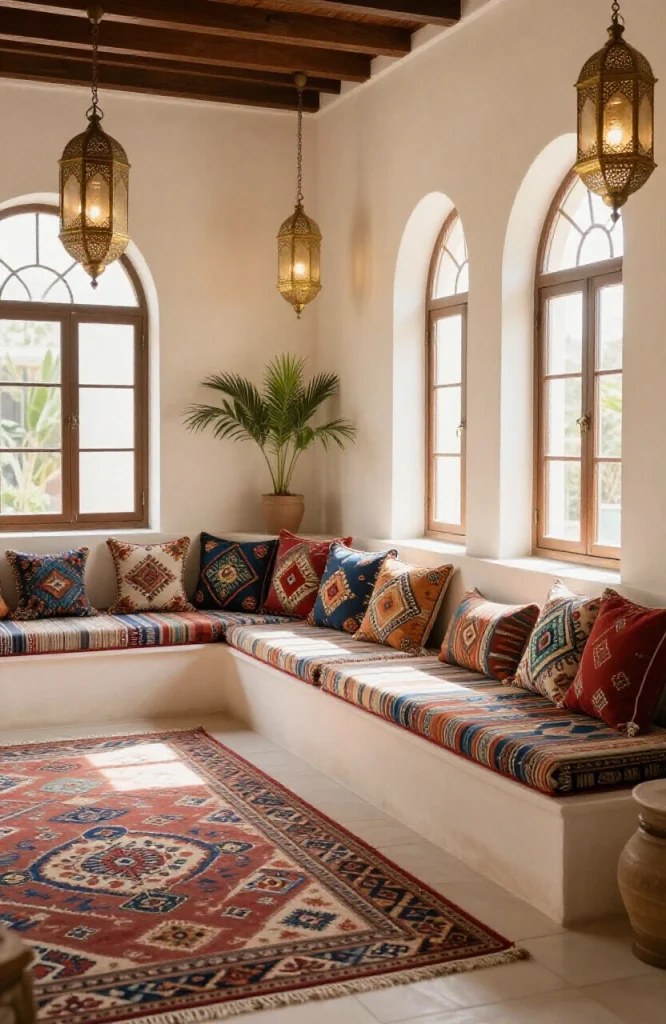
Moroccan-style living rooms are traditionally organized around low seating, often built-in banquettes along the walls called “jloud,” covered in cushions and textiles rather than upholstered in a fixed fabric. Replicating this approach with low benches, large floor cushions, and a central low table creates a communal seating arrangement where everyone sits at the same level. This style suits homes with patterned tiles, layered textiles, and warm ambient lighting.
22. Accent Chairs Paired with a Large Area Rug
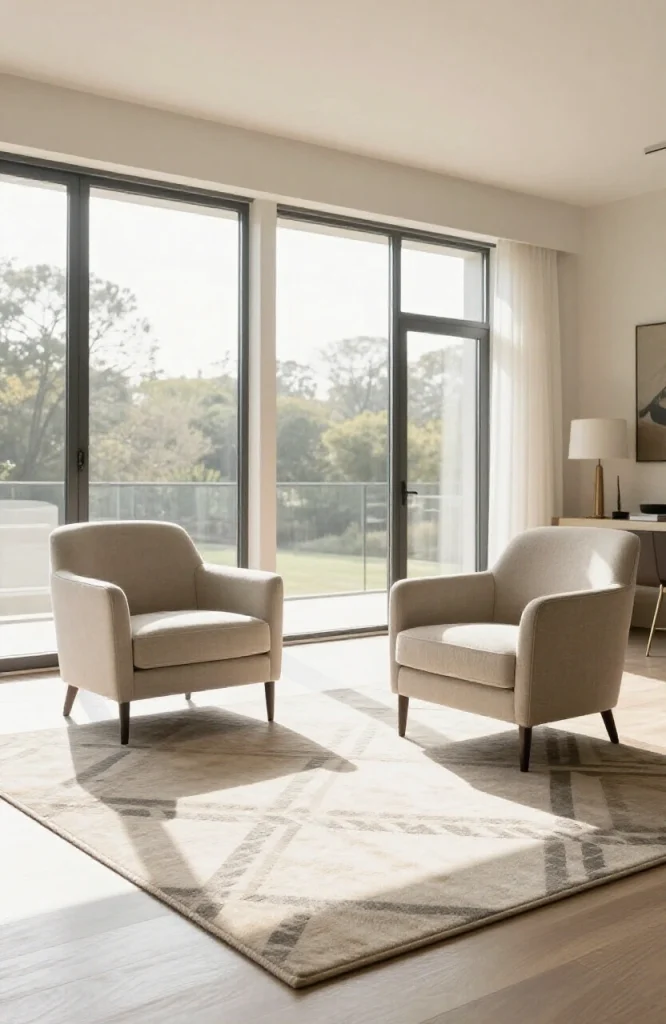
The area rug does a significant amount of work in a living room without sofas. Without a sofa to anchor the seating zone, the rug defines the space and holds the arrangement together visually. In a living room with only chairs and ottomans, a rug that is large enough for all four legs of every chair to sit on its surface creates the same grounding effect a sofa would. A rug that is too small makes chairs look like they are floating around the room without a purpose. See our open floor plan decoration ideas for more on how rugs define zones in open spaces.
23. Convertible Sofa-Free Furniture for Small Apartments
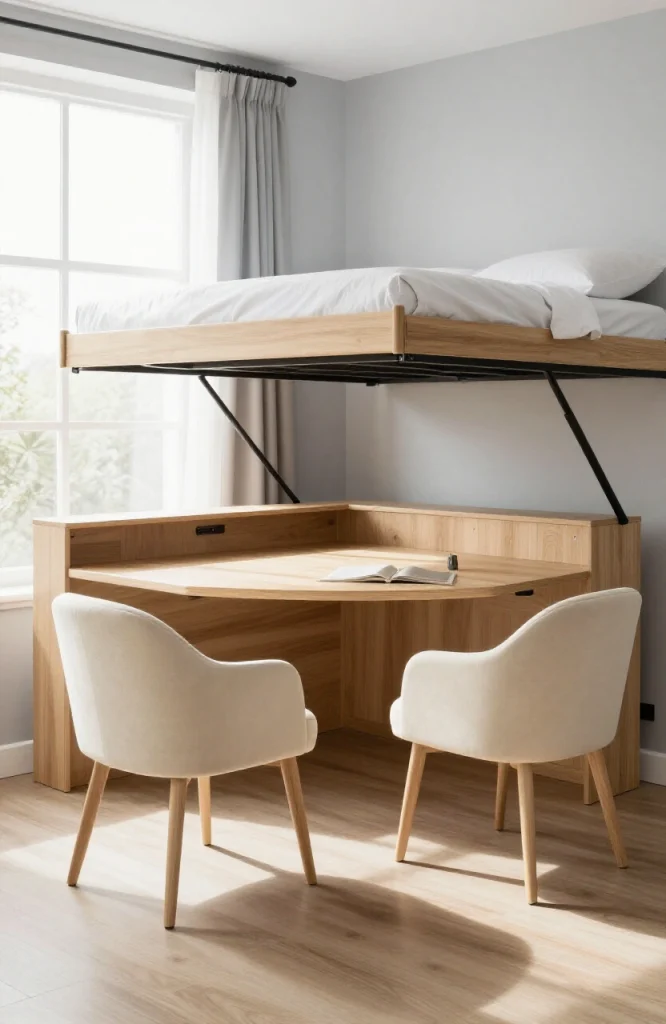
Some furniture pieces are designed to do multiple jobs without requiring a sofa. A Murphy bed with a fold-out desk, paired with two accent chairs in the open position, gives a studio apartment a complete living and sleeping layout that disappears when not needed. Wall-mounted fold-down seats are another option for very tight spaces. The goal is to make every piece of furniture justify its floor space, which a traditional sofa often does not in a small room used for many purposes.
24. Curved Chairs and Round Layouts for a Social Space
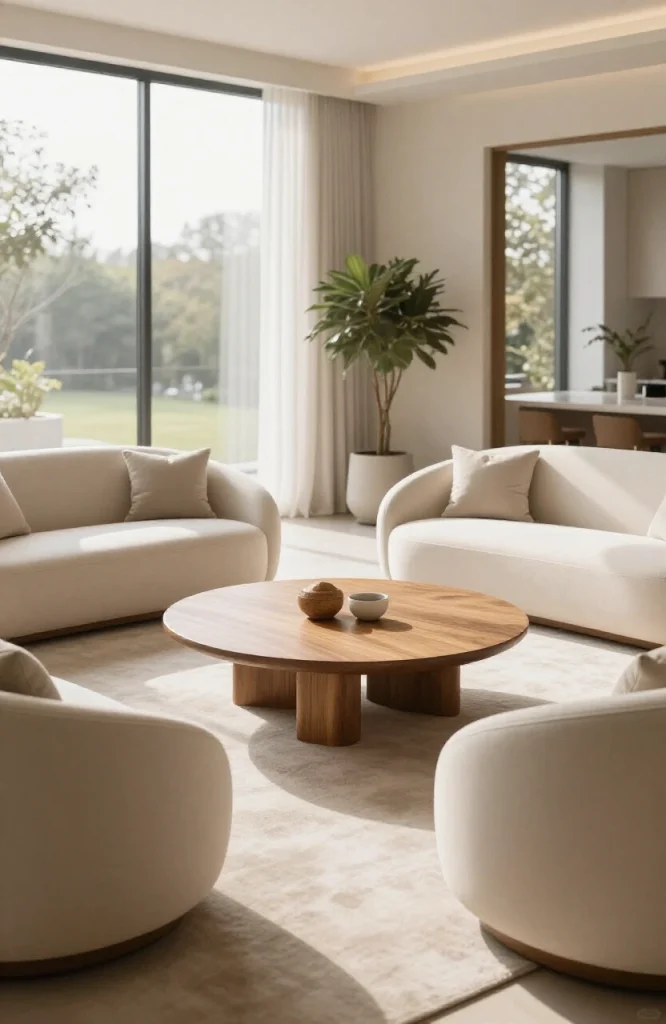
Curved and round chairs arranged in a circular or semicircular layout make conversation more natural because everyone faces inward. This is one reason designers increasingly recommend circular layouts in living rooms used for entertaining. A set of four curved lounge chairs arranged around a round coffee table creates a social focal point without needing a sofa. Curved furniture also softens the room visually, which is useful in boxy or angular spaces.
25. Gallery-Style Living Room with Minimal Seating
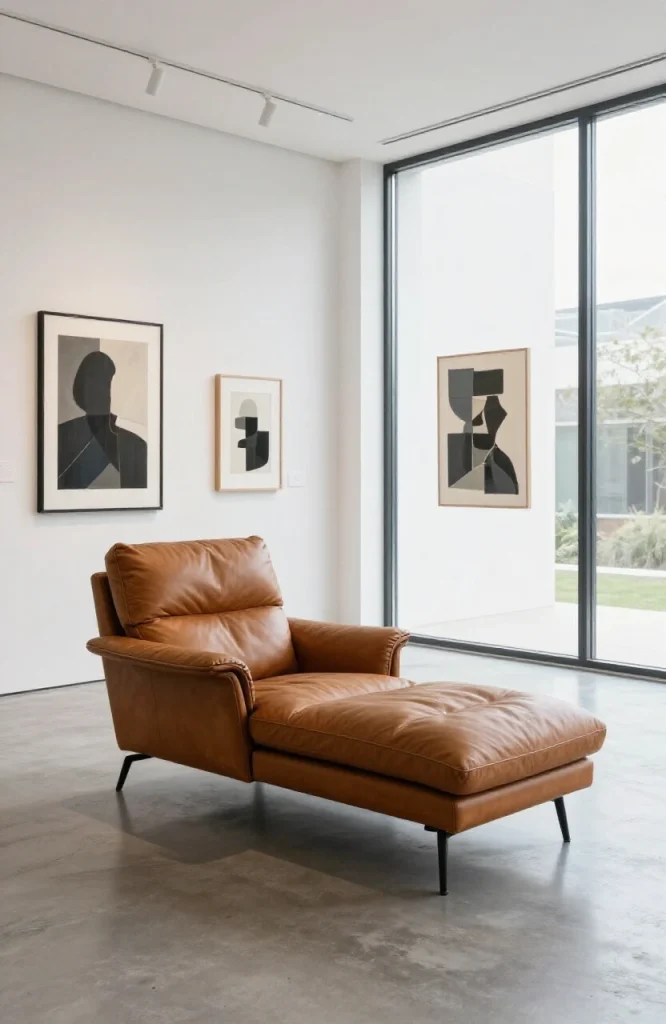
Some living rooms function as display spaces as much as sitting rooms. In a gallery-style living room, a single comfortable armchair or chaise positioned to face the main wall of artwork, or a sculptural centerpiece, is all the seating the room needs. The focus is on the visual experience of the space rather than maximizing seating capacity. This approach suits collectors, creative professionals, and anyone who uses their living room primarily as a visual environment rather than a gathering space. For more ways to style a room with intention, see our open floor plan decoration ideas.
Quick Comparison: Sofa Alternatives at a Glance
| Seating Option | Best For | Seat Capacity | Space Required | Style Fit |
|---|---|---|---|---|
| Accent chair cluster | Most living rooms | 2 to 6 | Medium | Universal |
| Chaise longue | 1 to 2 person use | 1 to 2 | Medium | Modern, classic |
| Floor cushions / poufs | Casual, boho spaces | 4+ | Small | Boho, Moroccan, minimal |
| Built-in window seat | Rooms with bay windows | 2 to 3 | Minimal floor | Cottage, Scandi, classic |
| Daybed | Dual living / guest rooms | 1 to 2 (sleep) | Medium | Modern, classic, boho |
| Ottomans (cube cluster) | Flexible entertaining | 4+ | Small to medium | Modern, minimal |
| Modular seating | Changing needs | 2 to 8 | Medium to large | Contemporary |
| Built-in banquette | Open-plan homes | 4 to 6 | None (built-in) | Modern, farmhouse |
| Platform seating | Minimalist, Japandi | 2 to 4 | Medium | Japandi, minimal |
| Hammock or swing chair | Small spaces, bohemian | 1 | Very small | Boho, eclectic |
| Futon | Studio apartments | 2 (seat + sleep) | Small | Modern, simple |
| Rattan / wicker chairs | Coastal, tropical styles | 2 to 4 | Small to medium | Coastal, boho, natural |
Conclusion: Choosing the Right Living Room Without Sofas Setup
Living room without sofas ideas range from a simple swap of accent chairs for a bulky couch to fully rethinking the seating format with built-ins, floor cushions, or modular units. The right choice depends on how you use the room, how many people need to sit in it, and the overall style you are working toward. If you host often, a cluster of chairs or a built-in banquette keeps seating capacity high. If you live alone or with one other person, a chaise longue, a daybed, or a pair of armchairs gives you everything a sofa would without the floor space cost.
The most common mistake in sofa-free living rooms is choosing seating that is too small for the space. A room that holds a three-seater sofa needs an equivalent mass of seating to feel balanced, even if that mass comes from four chairs rather than one large piece. Use a large area rug to hold the arrangement together and give every seating piece a defined place within the layout. For more on planning furniture zones in open spaces, see our open floor plan decoration ideas.
The shift away from sofa-centered living rooms is one of the more practical design moves you can make. Smaller individual pieces are easier to move, reupholster, and replace. They fit through narrow doors without requiring the balcony route. And they give you a living room that looks considered rather than defaulted into.