
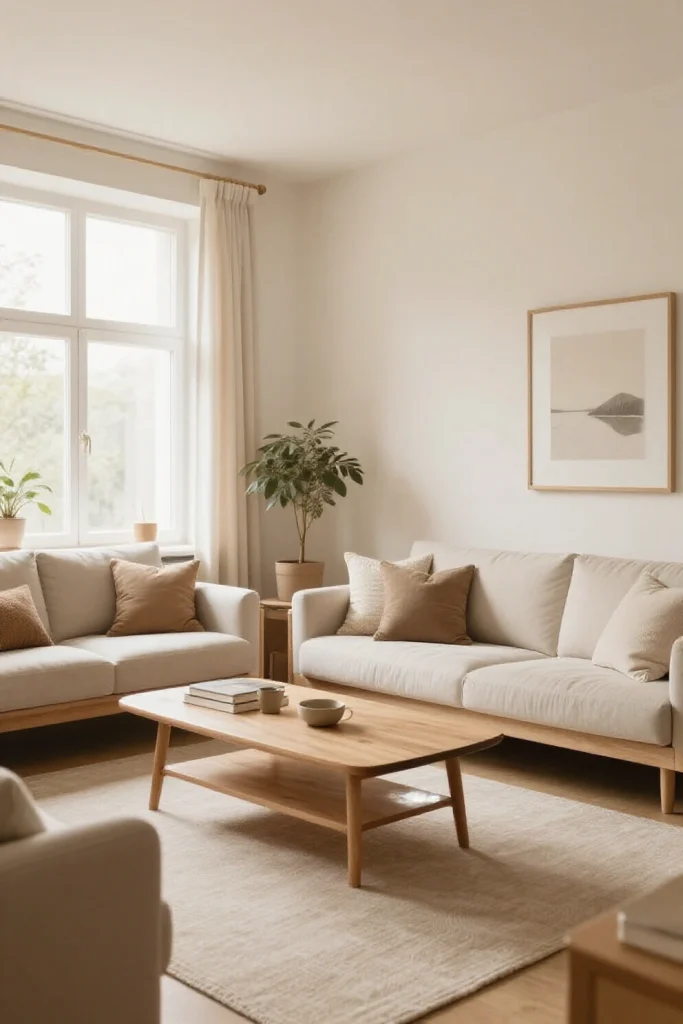
Scandinavian paint colors draw inspiration from the natural Nordic landscape and the need for comfort during long winters. These hues balance lightness with warmth, creating spaces that feel both airy and cozy.
The key principle behind Nordic color palettes is their connection to nature. Think soft whites reminiscent of snow, warm grays like winter skies, and earthy tones that echo forest floors and rocky coastlines.
Unlike stark minimalist white schemes, warm Scandinavian paint colors invite you to relax and unwind. They create the perfect backdrop for hygge – that Danish concept of comfortable contentment that makes a house feel like home.
1. The Foundation: Warm White Paint Colors
Warm whites form the backbone of Scandinavian interior design. These aren’t the cool, clinical whites you might find in modern minimalist spaces – they have subtle undertones that create depth and warmth.
Consider shades like ‘String’ by Farrow & Ball or ‘Cloud White’ by Benjamin Moore. These colors have gentle cream or gray undertones that prevent your walls from feeling cold or sterile.
Warm whites work beautifully as main wall colors because they reflect light while maintaining coziness. They pair perfectly with natural wood tones and create a clean canvas for adding colorful accents through textiles and artwork.

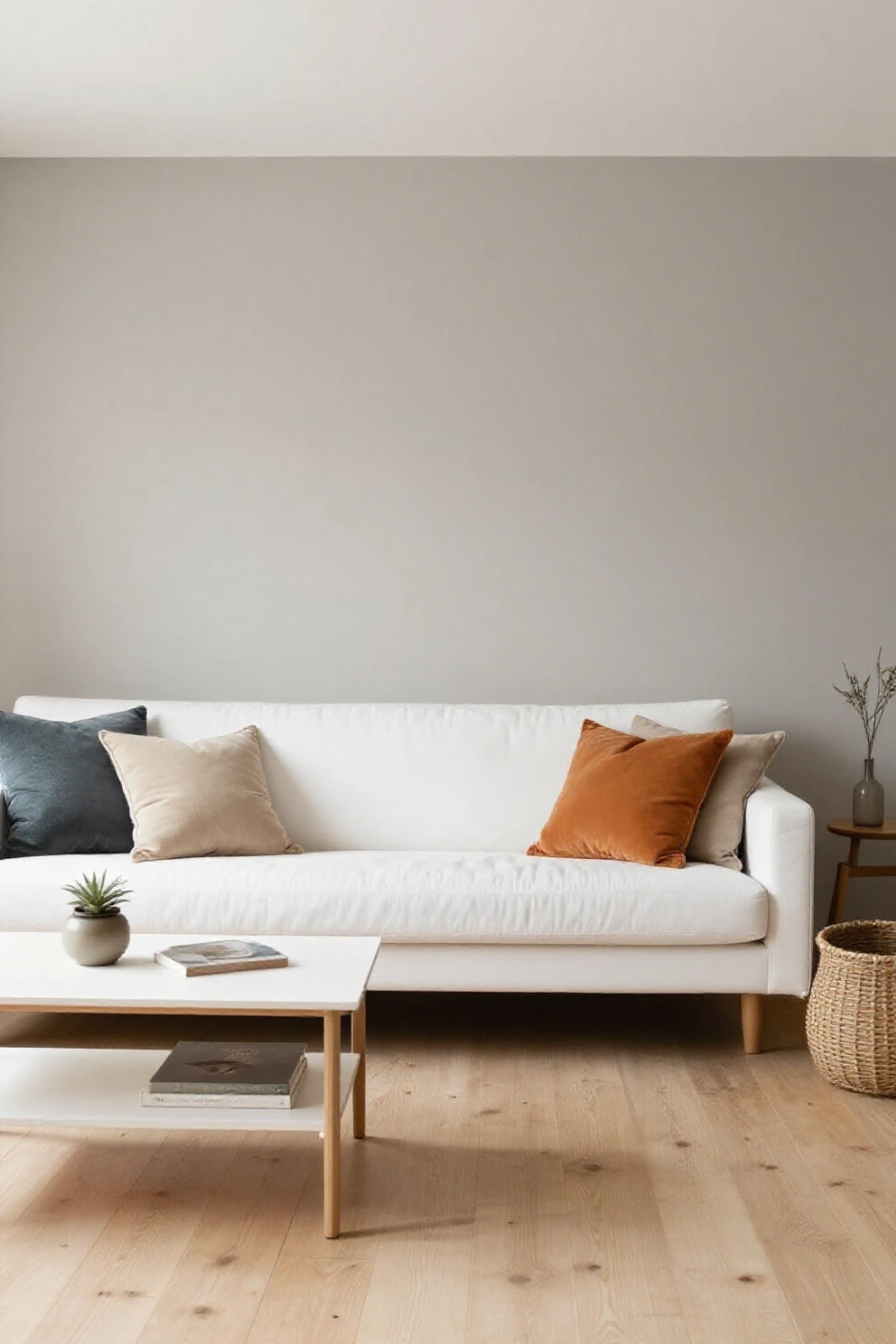
2. Soft Gray Tones for Nordic Elegance
Soft grays capture the essence of Scandinavian skies and create sophisticated, calming environments. These aren’t harsh or cold grays – they lean toward warmer undertones that complement natural materials.
Shades like ‘Elephant’s Breath’ by Farrow & Ball or ‘Classic Gray’ by Benjamin Moore bring depth without overwhelming the space. These colors work especially well on accent walls or in rooms with plenty of natural light.
Gray paint colors provide the perfect neutral backdrop for colorful textiles and artwork. They allow your furniture and decorative pieces to stand out while maintaining that serene, Nordic atmosphere that makes Scandinavian design so appealing.
3. Earthy Beige and Taupe Shades
Beige and taupe bring warmth and earthiness to Scandinavian interiors. These colors connect your living space to the natural world, creating a grounding effect that feels both sophisticated and comfortable.
Look for shades with pink or yellow undertones rather than cool grays. Colors like ‘Accessible Beige’ by Sherwin Williams or ‘Mushroom’ by Benjamin Moore provide warmth without feeling heavy or dark.
These earth-toned paint colors work beautifully in living rooms with limited natural light. They create a cocoon-like feeling that’s perfect for curling up with a good book or enjoying intimate conversations with friends.
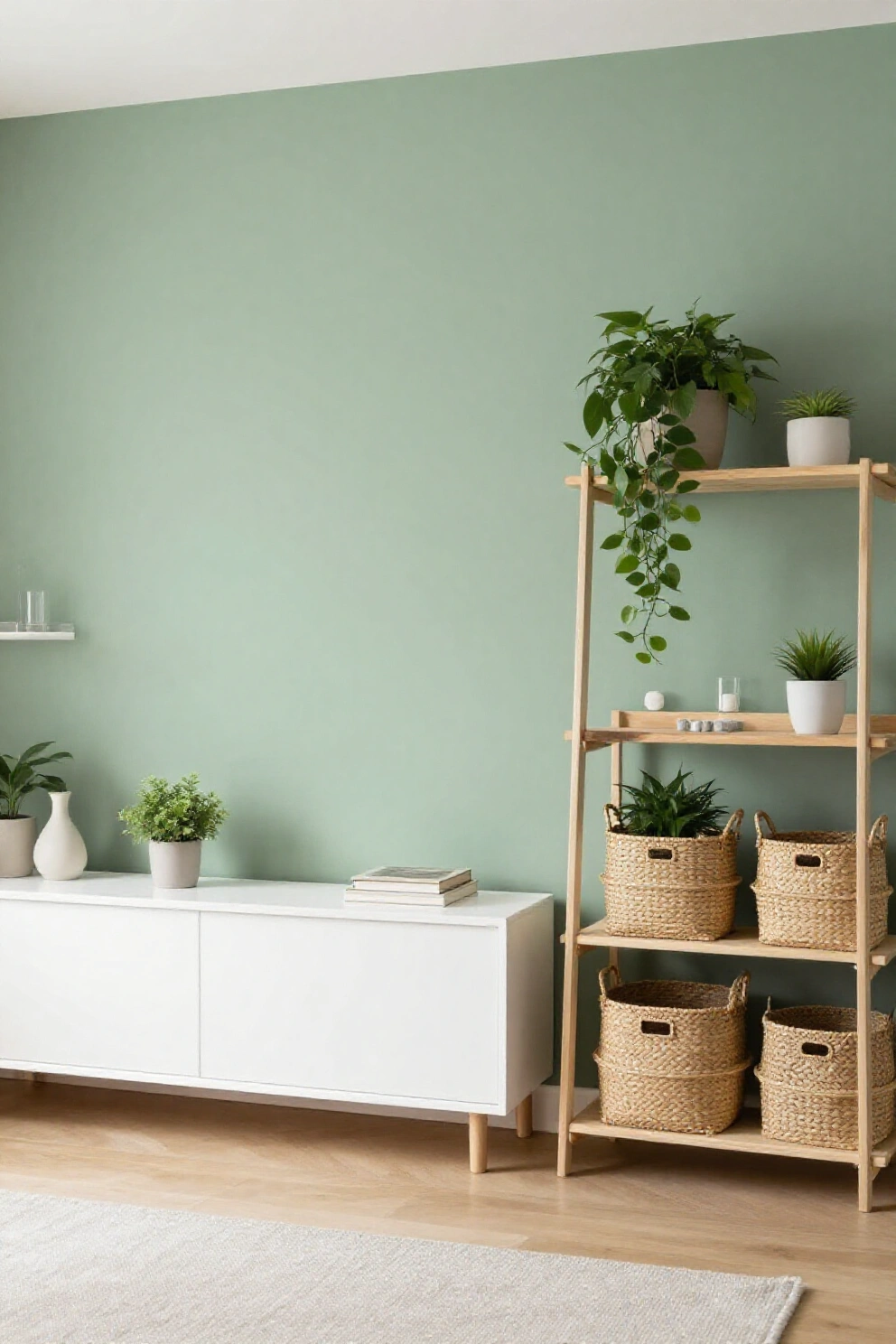
4. Sage Green: Nature-Inspired Warmth
Sage green brings the outdoors inside and adds a fresh, natural element to your color palette. This muted green works beautifully in Scandinavian interiors because it’s soft enough to feel neutral while adding character.
This color pairs wonderfully with warm whites and natural wood tones. It creates a calming atmosphere that’s perfect for relaxation and brings a subtle pop of color without being overwhelming.
Use sage green on an accent wall behind your sofa or throughout a smaller living space. It works especially well in rooms that get morning light, where the green undertones can really shine and create that connection to nature.
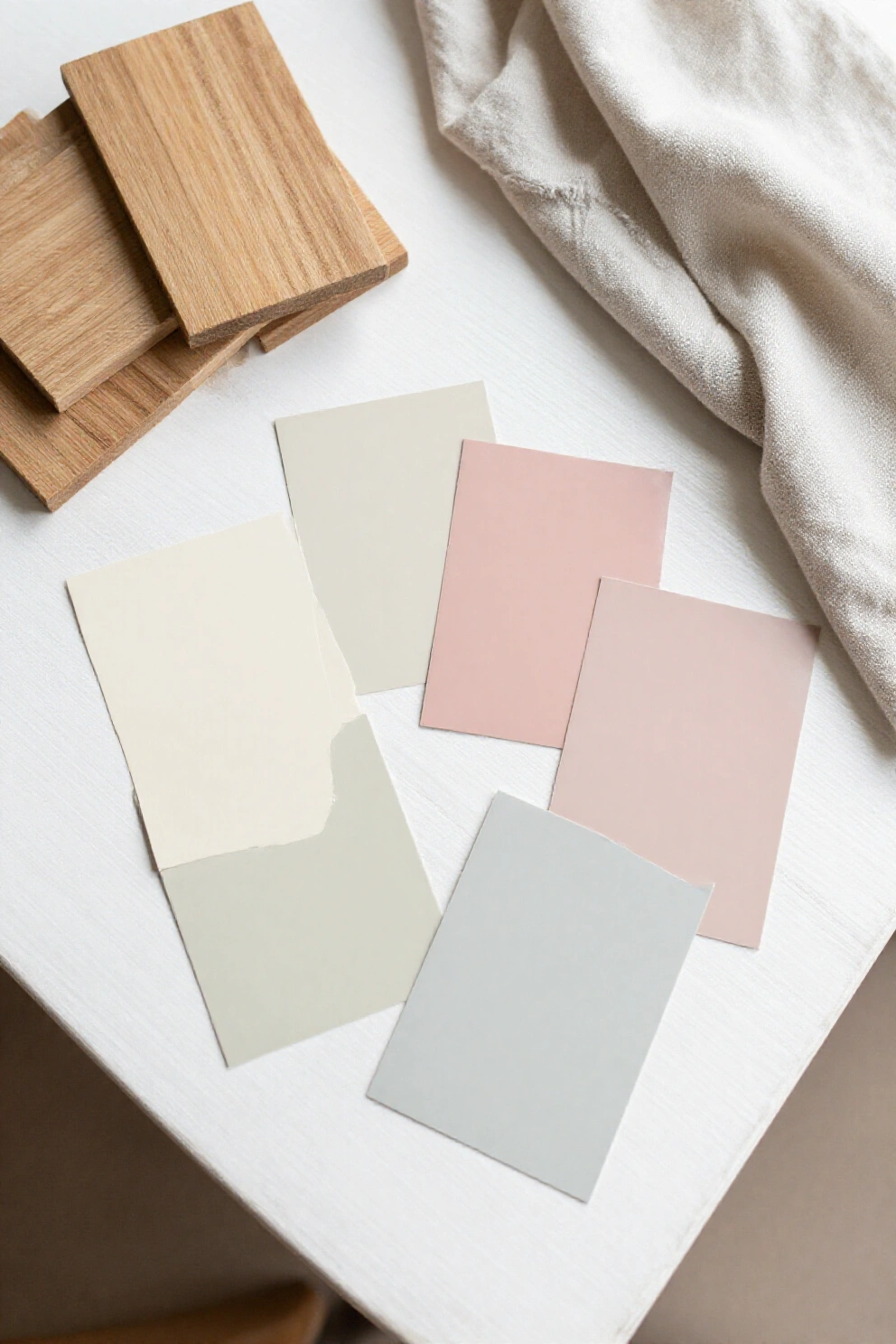
5. Dusty Pink: Unexpected Scandinavian Charm
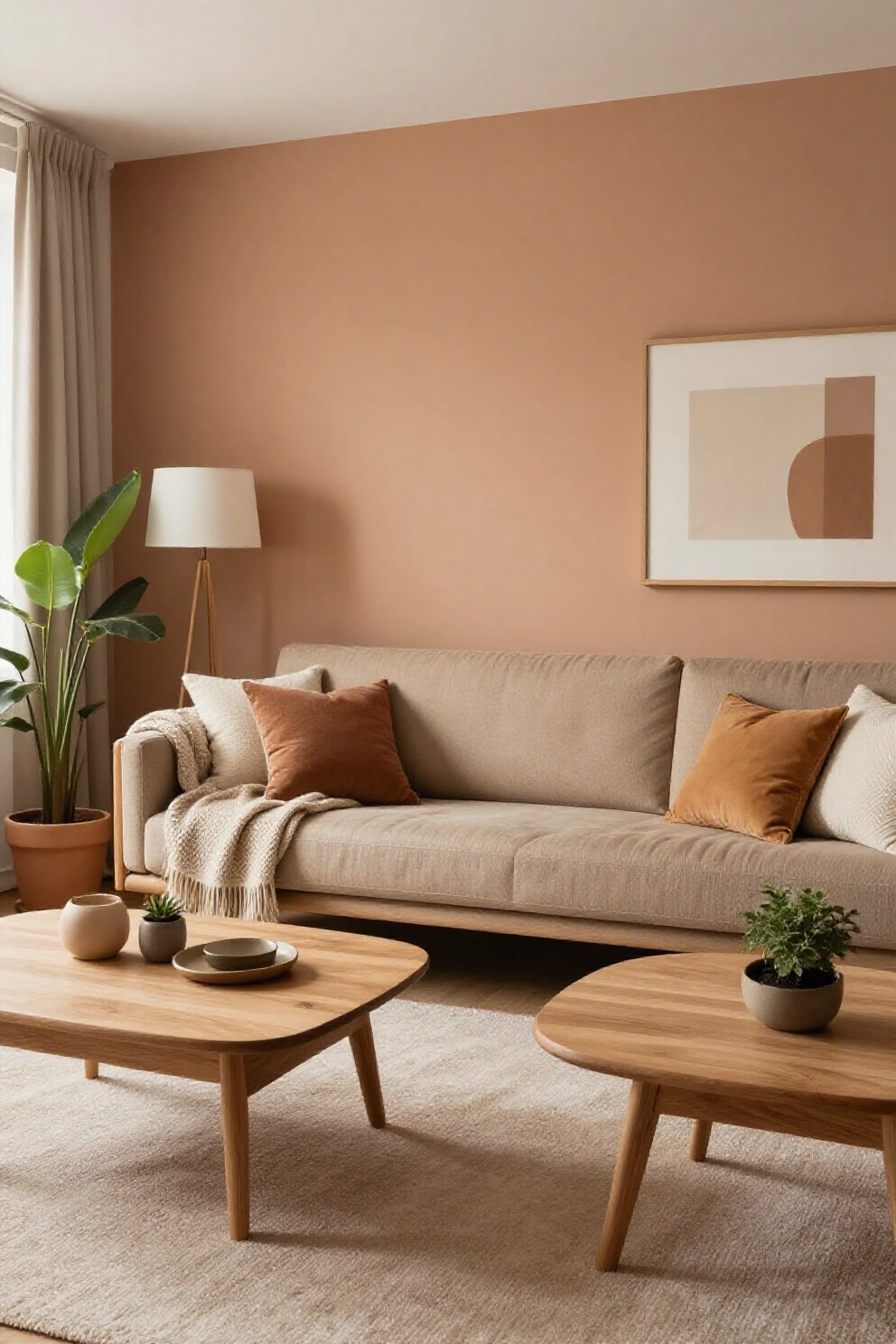
Dusty pink might surprise you as a Scandinavian color choice, but this muted, sophisticated shade adds warmth and personality to Nordic-inspired spaces. It’s far from bright or feminine – think more like sunset clouds or dried roses.
This color works particularly well in spaces with lots of natural light, where it can shift throughout the day from barely-there blush to warm rose. It pairs beautifully with grays, whites, and natural wood tones.
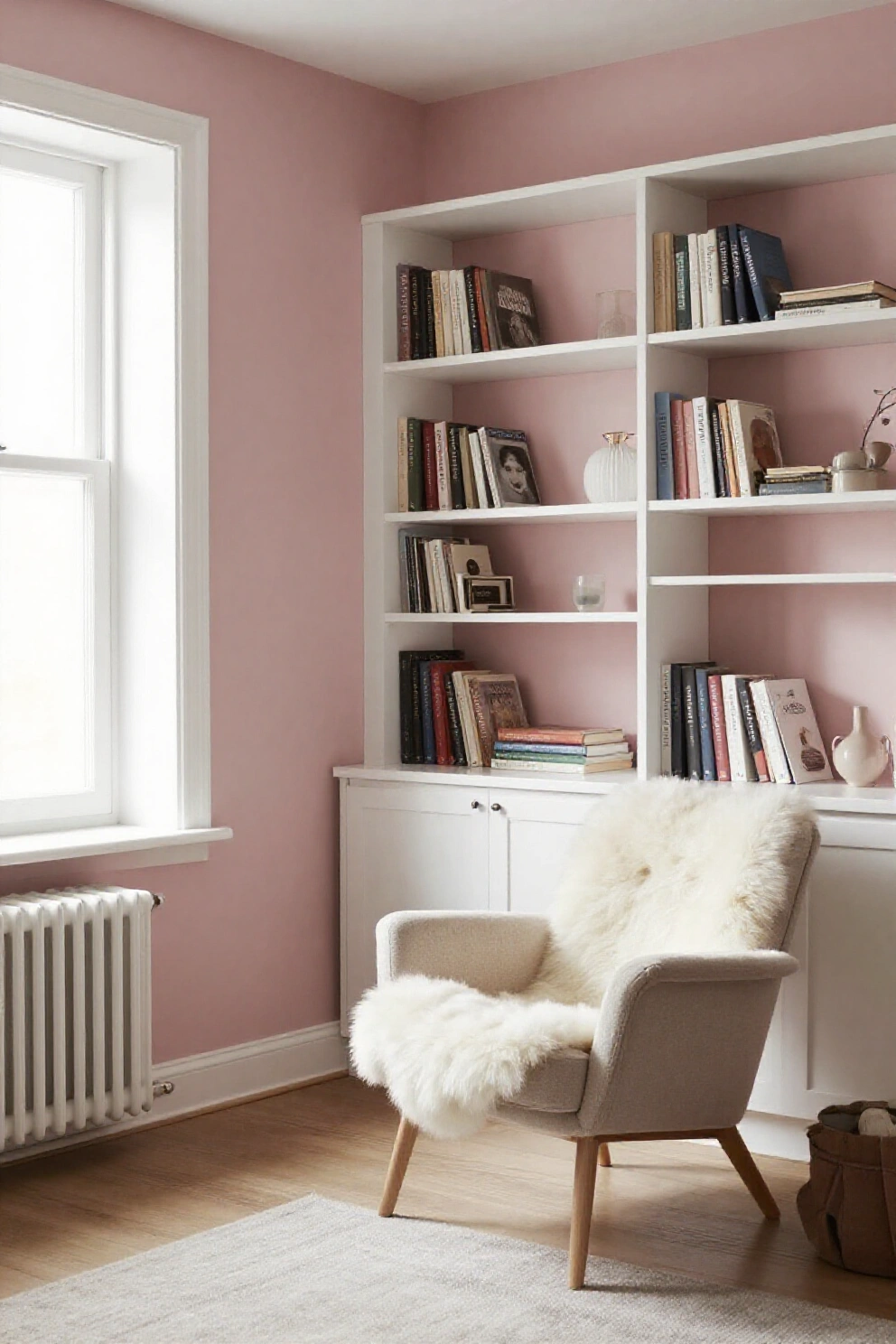
Consider using dusty pink in a reading nook or as an accent wall in your living room. It creates visual interest while maintaining the calm, understated feeling that defines Scandinavian design.
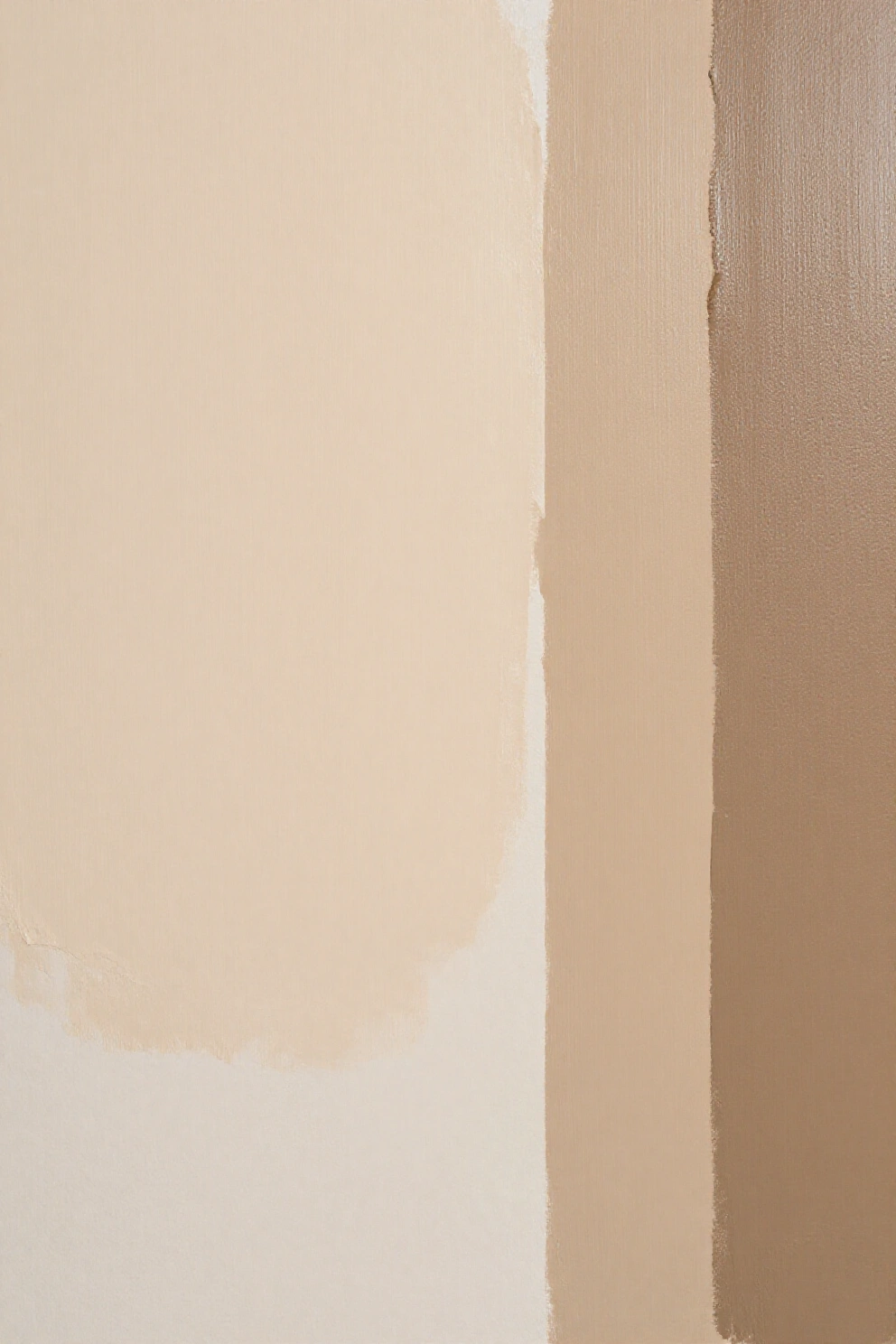
6. How to Choose the Right Warm Paint Color
Start by considering your room’s natural light exposure. North-facing rooms benefit from warmer colors like soft beiges or dusty pinks, while south-facing spaces can handle cooler warm whites or soft grays.
Test paint samples on your walls and observe them at different times of day. Natural light changes throughout the day, and you want to make sure you love your color choice in both morning sunlight and evening lamplight.
Consider your existing furniture and decor. If you have cool-toned metals like chrome or silver, warmer paint colors will create nice contrast. If your furniture leans toward warm wood tones, you have more flexibility in your color choices.
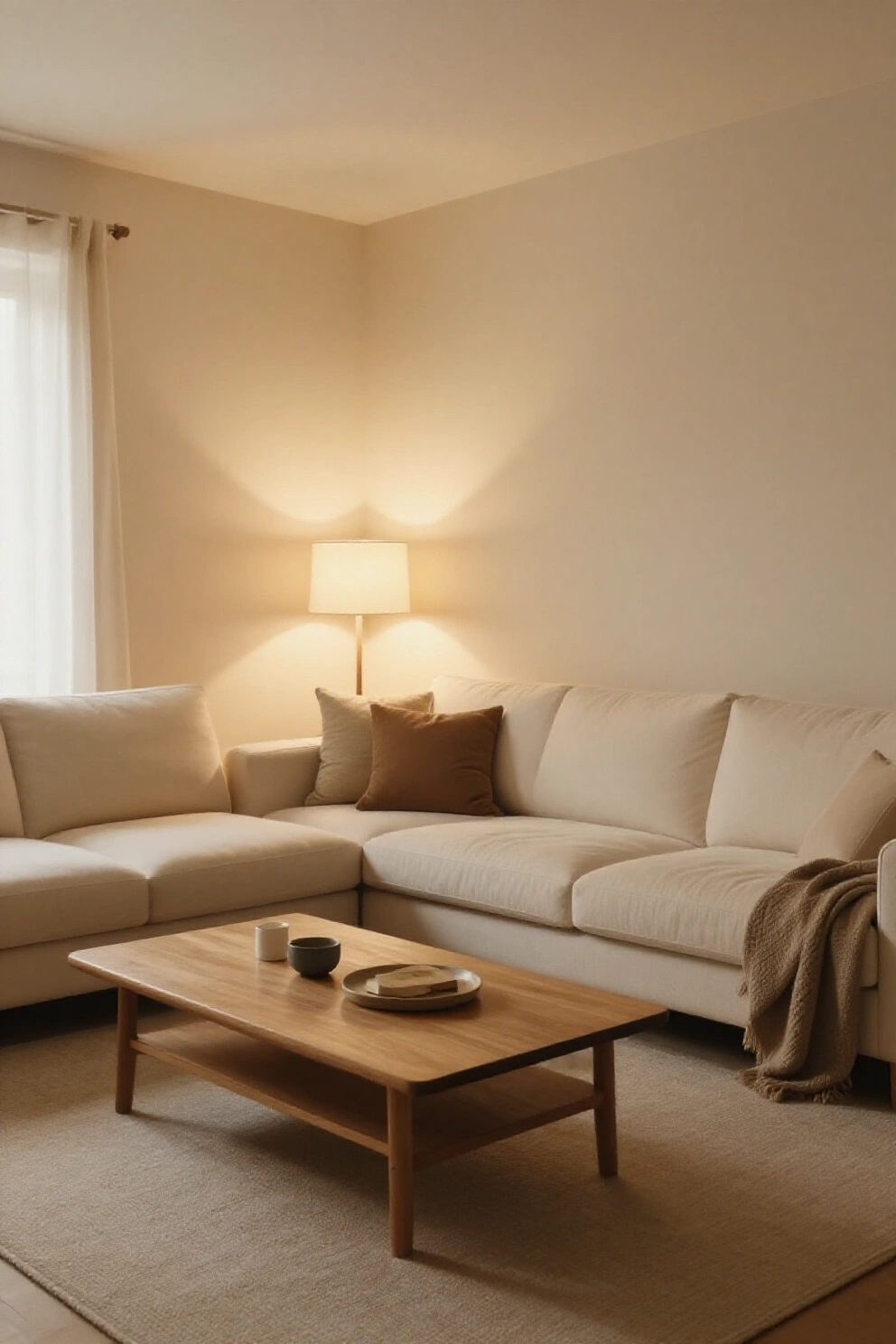
7. Color Combinations That Work
Successful Scandinavian color schemes often combine 2-3 colors maximum. A classic combination might include warm white walls, one soft gray accent wall, and natural wood tones throughout the space.
Another winning combination pairs sage green with cream and natural wood. This creates a fresh, organic feeling that’s perfect for living rooms where you want to feel connected to nature.
For something more sophisticated, try dusty pink with soft gray and white. This combination feels modern and calm while adding just enough color to keep things interesting without overwhelming the space.
8. Paint Finish Recommendations
Choose paint finishes that support the Scandinavian aesthetic of natural, understated beauty. Matte or eggshell finishes work best because they don’t create harsh reflections or shine that can feel artificial.
Matte finishes are perfect for creating that soft, velvety look that’s characteristic of Scandinavian interiors. They hide imperfections well and create depth in your wall color.
Eggshell finishes offer slightly more durability while still maintaining a soft appearance. This makes them a good choice for high-traffic living rooms where walls might need occasional cleaning.
9. Styling Tips for Your Newly Painted Space
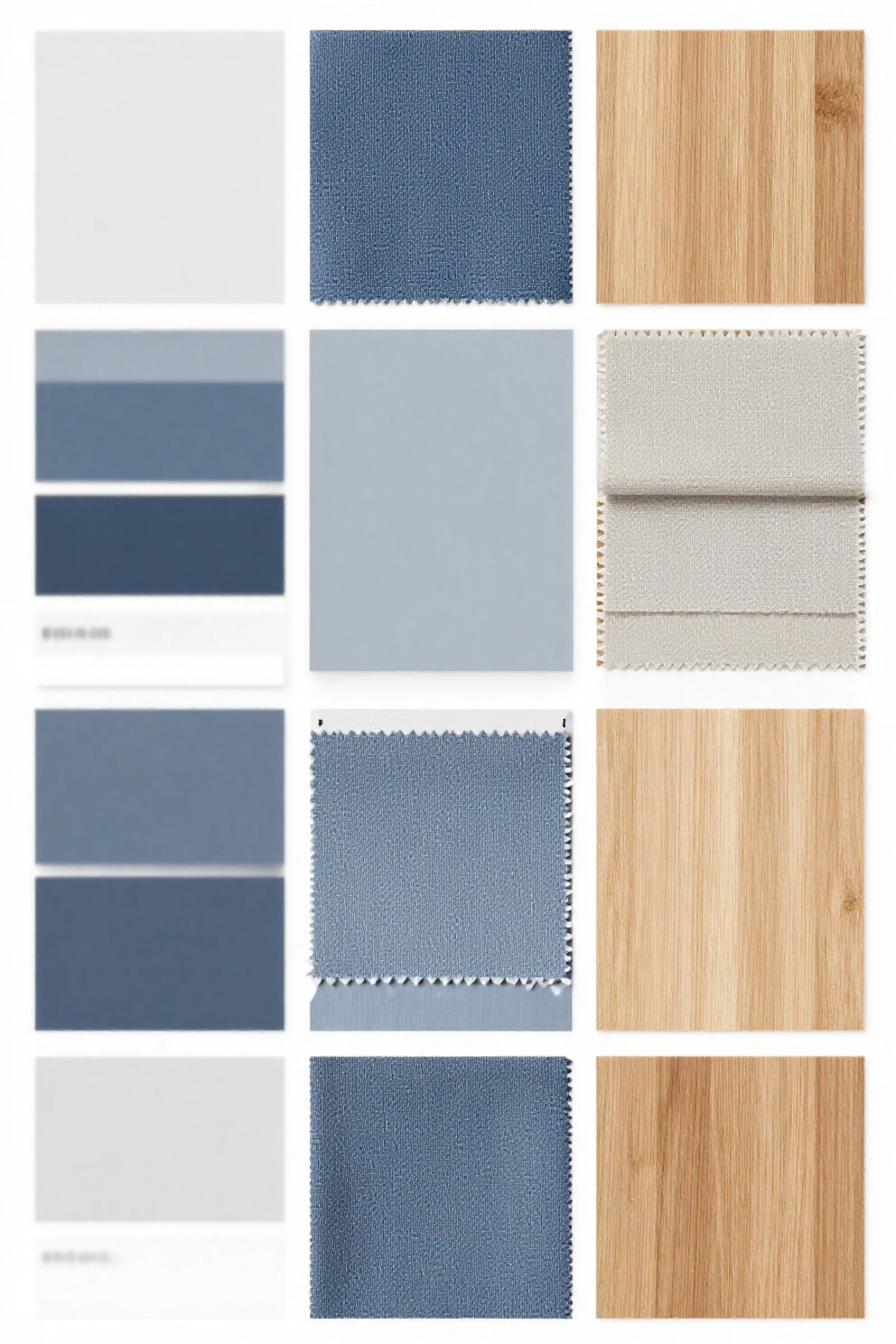
Once you’ve painted your living room, focus on adding texture through natural materials. Wool throws, linen cushions, and jute rugs all enhance the warm, cozy feeling of your new paint color.
Incorporate plenty of natural wood elements – whether through furniture, picture frames, or decorative objects. The warm tones in wood complement most Scandinavian paint colors beautifully.
Add greenery through plants or fresh flowers. Even with sage green walls, live plants bring energy and life to your space while reinforcing that connection to nature that’s central to Scandinavian design philosophy.
Frequently Asked Questions
What are the most popular warm Scandinavian paint colors?
The most popular warm Scandinavian paint colors include warm whites with cream undertones, soft grays with pink or beige hints, sage green, dusty pink, and earthy beige tones. These colors create the cozy, hygge atmosphere that defines Nordic design.
Can I use warm colors in a small Scandinavian living room?
Yes, warm colors actually work well in small spaces because they create a cozy, intimate feeling. Stick to lighter warm tones like cream whites or soft beiges to keep the space feeling open while adding warmth.
How do I make cool gray walls feel warmer in my living room?
Add warm undertones through textiles, lighting, and wood elements. Cream or beige throw pillows, warm-toned wooden furniture, and soft amber lighting can make cool gray walls feel much warmer and more inviting.
Should I paint all walls the same color in a Scandinavian living room?
Most Scandinavian living rooms use one main color with the option of a single accent wall. This creates visual interest while maintaining the clean, uncluttered look that’s essential to Nordic design.
What paint finish works best for Scandinavian wall colors?
Matte or eggshell finishes work best for Scandinavian paint colors. These finishes create the soft, natural look that’s characteristic of Nordic design while avoiding harsh shine or reflections that can feel artificial.