
If you’re searching for alternative ways to decorate walls without paint, you’re not alone. Whether you’re renting and can’t touch the walls, avoiding the fumes, or simply want a change that doesn’t require a full weekend of prep and cleanup, there are dozens of approaches that deliver real visual impact. I’ve spent years helping homeowners and renters refresh their spaces, and the options below range from quick no-drill fixes to more committed transformations, all without a drop of paint.
Quick Comparison: Wall Decorating Methods at a Glance
| Method | Renter-Friendly | Cost Range | DIY Difficulty | Reversible |
|---|---|---|---|---|
| Peel-and-stick wallpaper | ✅ Yes | $30–$150/roll | Easy | Yes |
| Fabric panels | ✅ Yes | $20–$80 | Easy | Yes |
| Washi tape designs | ✅ Yes | $5–$30 | Easy | Yes |
| Gallery wall (frames) | ✅ Yes | $50–$300+ | Moderate | Yes |
| Floating shelves | ⚠️ Needs holes | $25–$150 | Moderate | Mostly |
| Wall murals (pre-pasted) | ✅ Yes | $40–$200 | Moderate | Yes |
| Tile stickers | ✅ Yes | $15–$60 | Easy | Yes |
| Wood paneling strips | ⚠️ Needs adhesive | $60–$250 | Moderate | Mostly |
| Tapestries | ✅ Yes | $20–$120 | Easy | Yes |
| Mirror arrangements | ⚠️ Needs anchoring | $30–$200 | Moderate | Yes |
| 3D wall panels | ⚠️ Adhesive req. | $40–$180 | Moderate | Varies |
| Stone veneer panels | ❌ No | $80–$400 | Hard | No |
| Pegboards | ⚠️ Minimal holes | $20–$80 | Easy-Moderate | Yes |
| Macramé wall hangings | ✅ Yes | $20–$100 | Easy | Yes |
| Cork tiles | ✅ Yes | $20–$70 | Easy | Yes |
| Plate wall displays | ⚠️ Minimal holes | $30–$150 | Easy | Yes |
| Curtain walls | ✅ Yes | $30–$120 | Easy | Yes |
| Reclaimed wood accent wall | ❌ No | $100–$500 | Hard | No |
| Printed canvas art | ✅ Yes | $30–$200 | Easy | Yes |
| LED neon signs | ✅ Yes | $40–$200 | Easy | Yes |
| Chalkboard contact paper | ✅ Yes | $15–$40 | Easy | Yes |
| Hanging plants | ✅ Yes | $20–$80 | Easy | Yes |
1. Peel-and-Stick Wallpaper

Peel-and-stick wallpaper is the most popular no-paint alternative for a reason. Modern versions use a dry adhesive that grips flat walls securely but releases cleanly when you’re ready to remove it. You can cover an entire wall or create a single accent panel behind a sofa or bed headboard. Brands now offer patterns ranging from subtle linen textures to bold maximalist prints, botanical motifs, and geometric designs.
Before ordering, measure your wall and account for pattern repeats. Apply slowly from the top down using a smoothing tool to press out air bubbles. On textured walls, results are less reliable, so test a small strip first.
2. Fabric Wall Panels
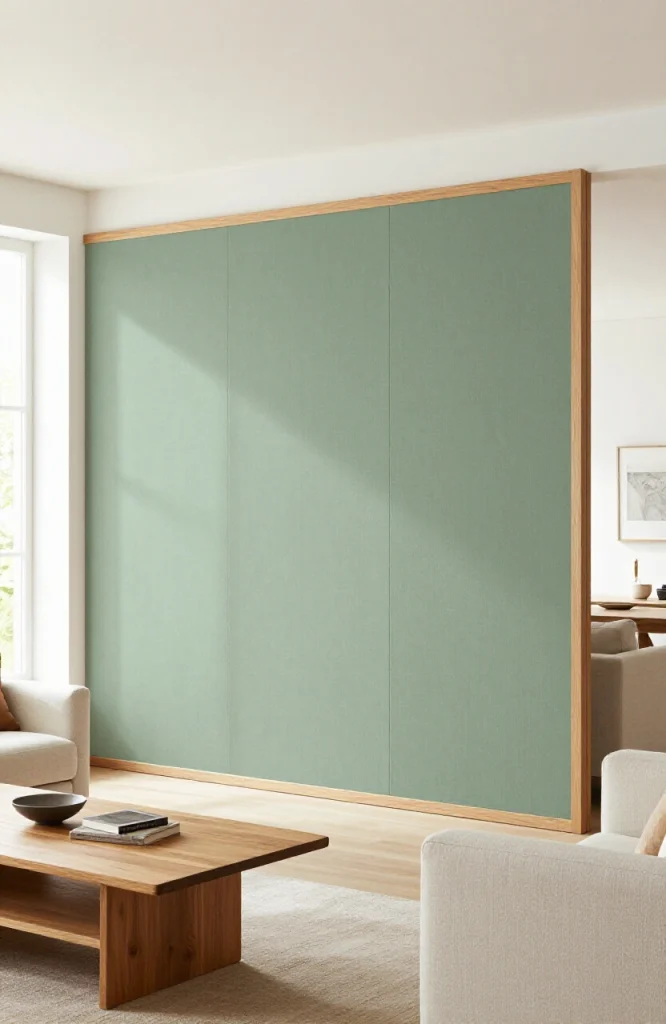
Hanging large fabric panels is one of the most underrated ways to cover bare walls. A piece of fabric stretched over a wooden frame, or simply clipped to a curtain rod and hung flat, functions exactly like a piece of art but at a fraction of the cost. Upholstery fabric, canvas drop cloths, printed cotton, or even a length of vintage sari fabric all work well.
For renters, this method requires only two Command hooks or a single tension rod depending on the width. You can swap panels seasonally, which makes this more versatile than many permanent options.
3. Washi Tape Wall Designs
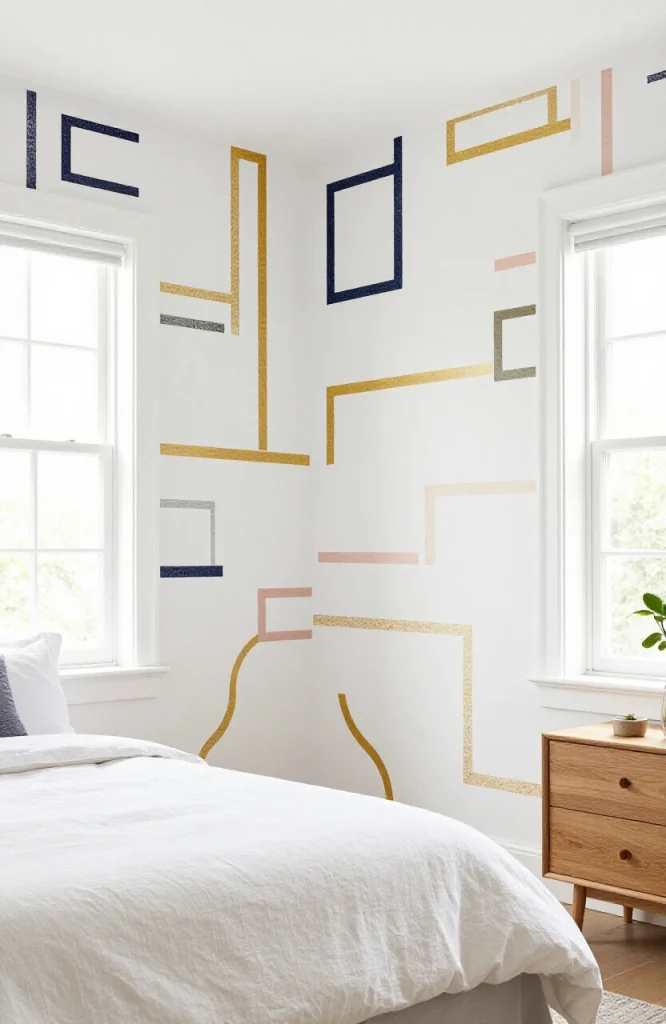
Washi tape is low-tack Japanese masking tape that peels off without pulling paint or leaving residue on most surfaces. It comes in hundreds of colors and patterns and costs almost nothing per roll. You can use it to create geometric shapes, frame a doorway, mimic picture rail molding, outline a headboard shape directly on the wall, or build a large-scale pattern across an entire feature wall.
The key is using a level and measuring tape to keep lines straight. On smooth walls, washi tape stays put for months without lifting.
4. Gallery Wall with Framed Art and Photos
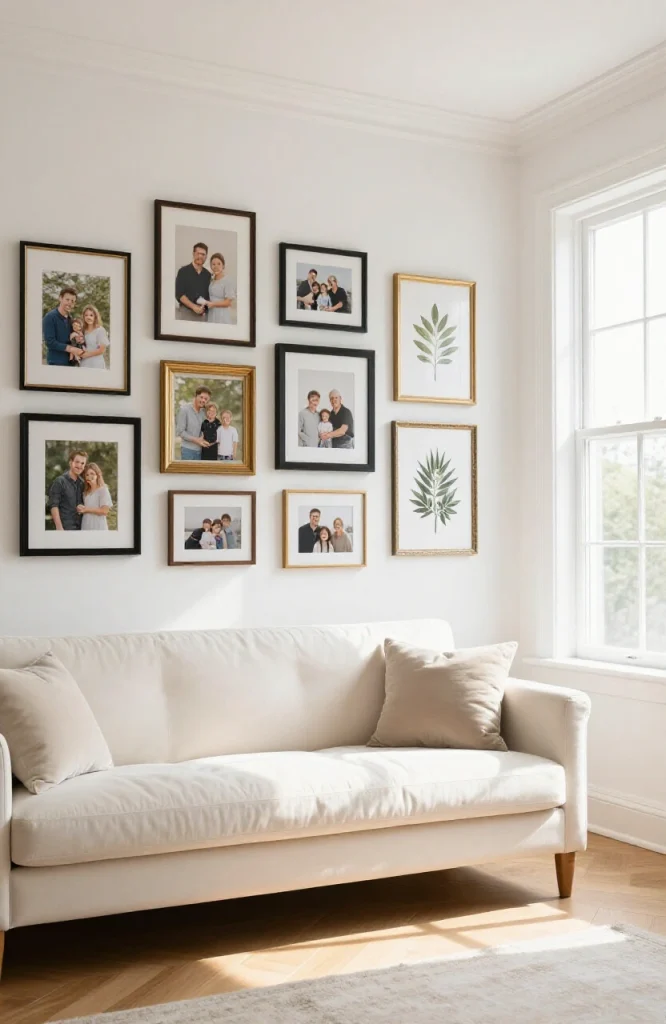
A gallery wall transforms a blank wall into a personal statement without touching the surface color. The arrangement is what matters most. Group frames in a grid for a formal look, or go asymmetric with different sizes for something more collected and lived-in. You can mix framed photos, printed quotes, pressed botanical illustrations, fabric swatches, or children’s drawings.
For a renter-friendly setup, use removable picture hanging strips designed for up to 16 lbs per pair. Lay your arrangement on the floor first to finalize placement before committing to the wall.
5. Peel-and-Stick Tile Stickers
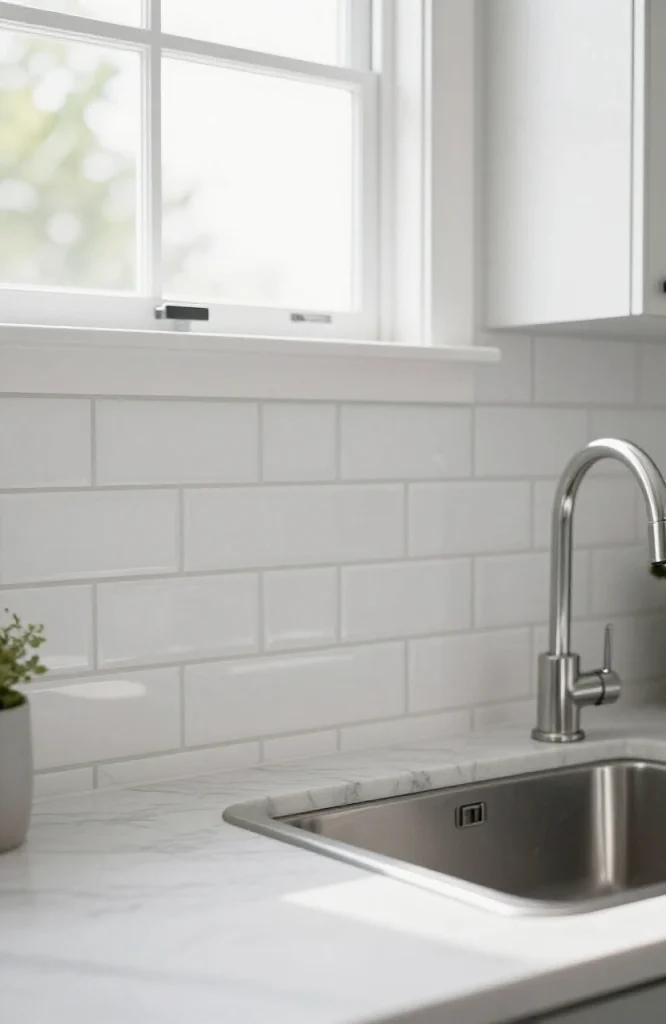
Tile stickers apply directly over existing tiles in kitchens and bathrooms, giving the appearance of a full retile without the cost or mess. They also work on smooth walls to create faux tile backsplash effects. Moroccan zellige-style patterns and subway tile designs are especially popular choices.
Heat and steam can affect adhesion in wet areas over time, so look for vinyl tile stickers specifically rated for bathroom use. Most brands allow clean removal with a hair dryer to warm the adhesive.
6. Wall Murals (Pre-Pasted or Self-Adhesive)
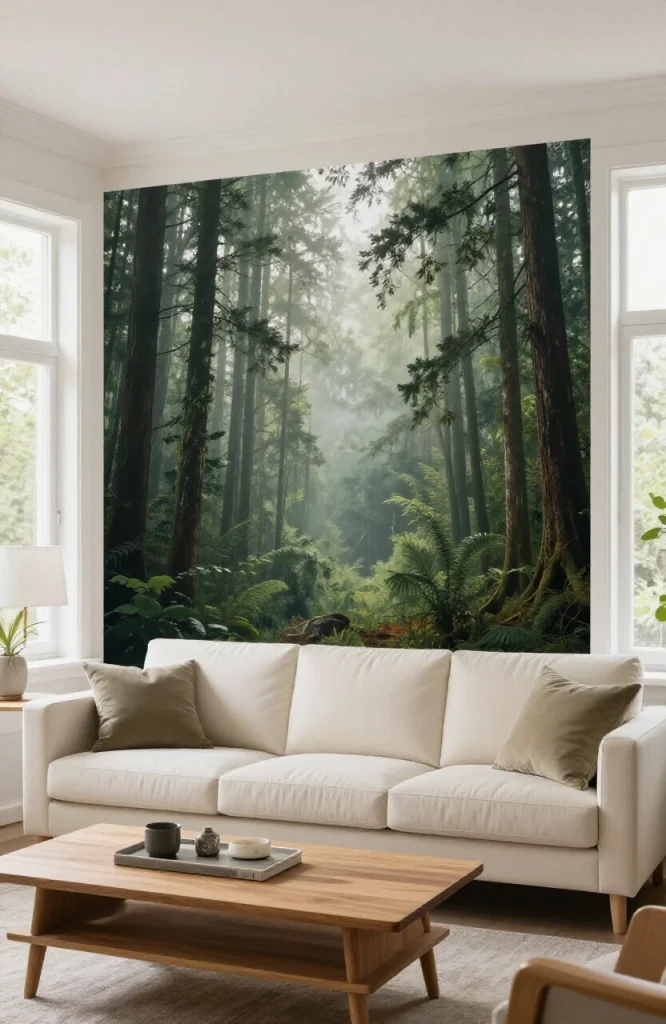
Pre-pasted and self-adhesive wall murals are sold in panel sets that tile together to form one large image. Forest scenes, architectural trompe-l’oeil effects, abstract gradients, and vintage maps are among the most searched styles. A single mural panel covering one wall changes the entire feel of a room more dramatically than almost any other single intervention.
Measure carefully and plan which panels go where before peeling anything. Murals work best on smooth, clean, flat walls. If your walls have texture, pre-pasted murals that need water activation often adhere better than dry peel-and-stick versions.
7. Floating Shelves
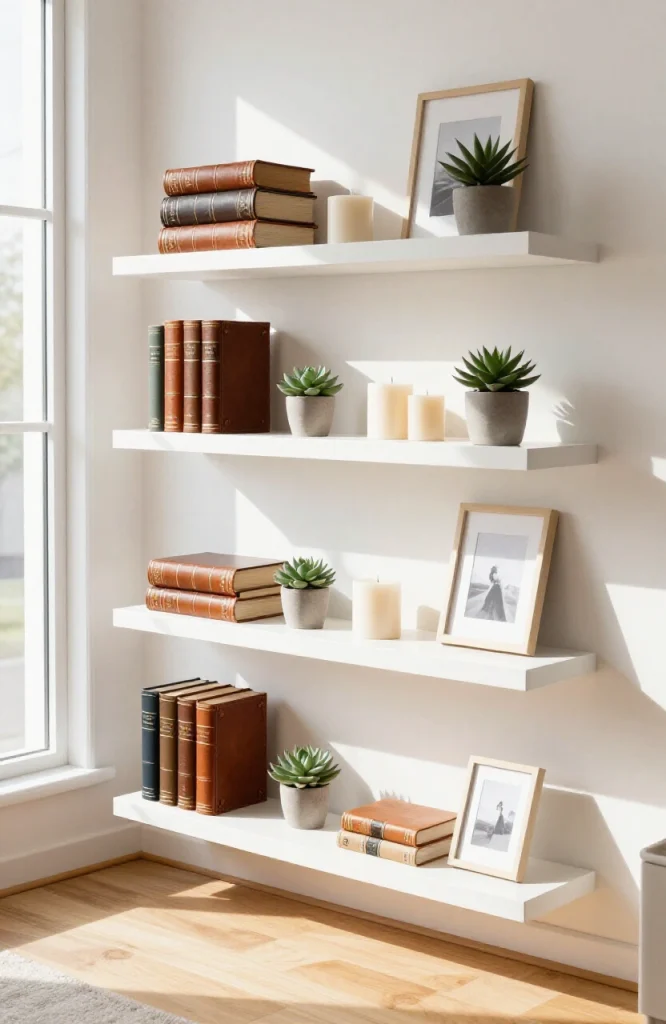
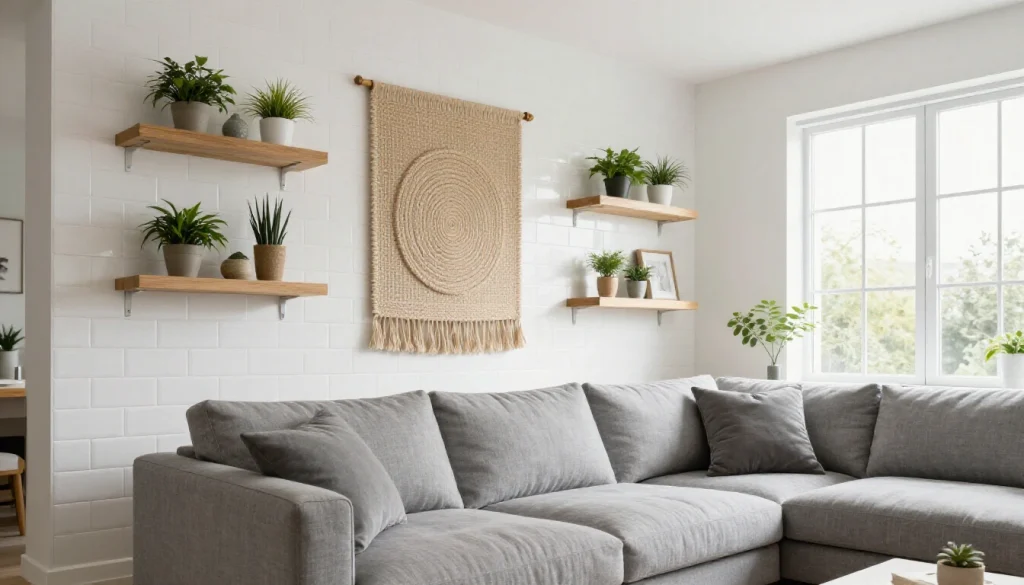
Floating shelves do double duty: they display objects while filling blank wall space. A row of three shelves at staggered heights can hold books, plants, candles, framed photos, and small ceramics, turning an empty wall into a functional display. For styling, follow the principle of grouping items in odd numbers and varying heights within each shelf.
“Shelving is the only wall treatment that actually gives back,” says interior designer Lucie Ayres of 22 Interiors. “You get the visual weight of a decorated wall plus storage, without ever touching a paint can.”
Floating shelves require wall anchors, so they’re best in owned homes or with landlord approval. For renters who need a completely no-drill option, freestanding ladder shelves leaning against the wall achieve a very similar visual result.
8. Tapestries and Textile Hangings
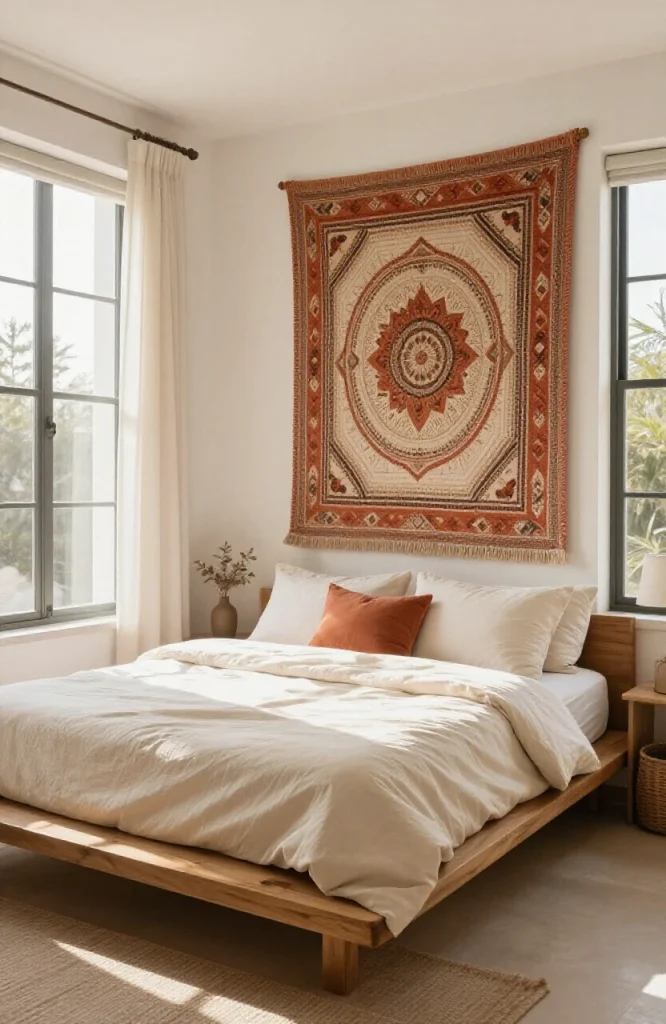
A large tapestry can fill an entire wall the way a painting would, but with softness and texture that paint and framed art can’t match. Woven, printed, or macramé tapestries all work well. In a bedroom, they also add acoustic softness, which reduces echo in rooms with hard floors.
Hanging options include a single curtain rod mounted with Command hooks, a wooden dowel threaded through a fabric sleeve sewn or hemmed along the top edge, or Velcro adhesive strips for lighter pieces. See more open floor plan decoration ideas for how textiles work as visual zone dividers in larger spaces too.
9. Reclaimed Wood or Wood Plank Panels
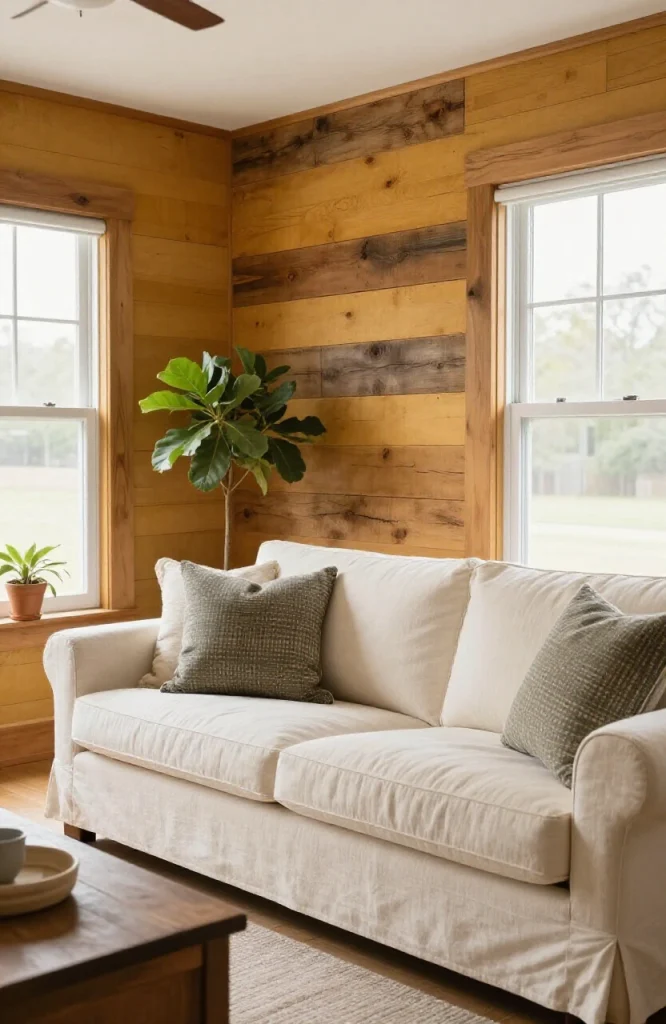
Wood plank accent walls bring warmth and texture that no painted finish can fully replicate. You can buy thin wood shiplap panels, tongue-and-groove strips, or individual reclaimed planks and install them horizontally, vertically, or in a herringbone pattern. Wood wall panels are a permanent or semi-permanent option, typically installed with construction adhesive and finishing nails.
For a lighter commitment, some brands sell self-adhesive wood-look peel-and-stick panels that don’t require nails at all. These work best when the wall is clean and primed, and they’re not suitable for humid rooms.
10. Stone Veneer Panels
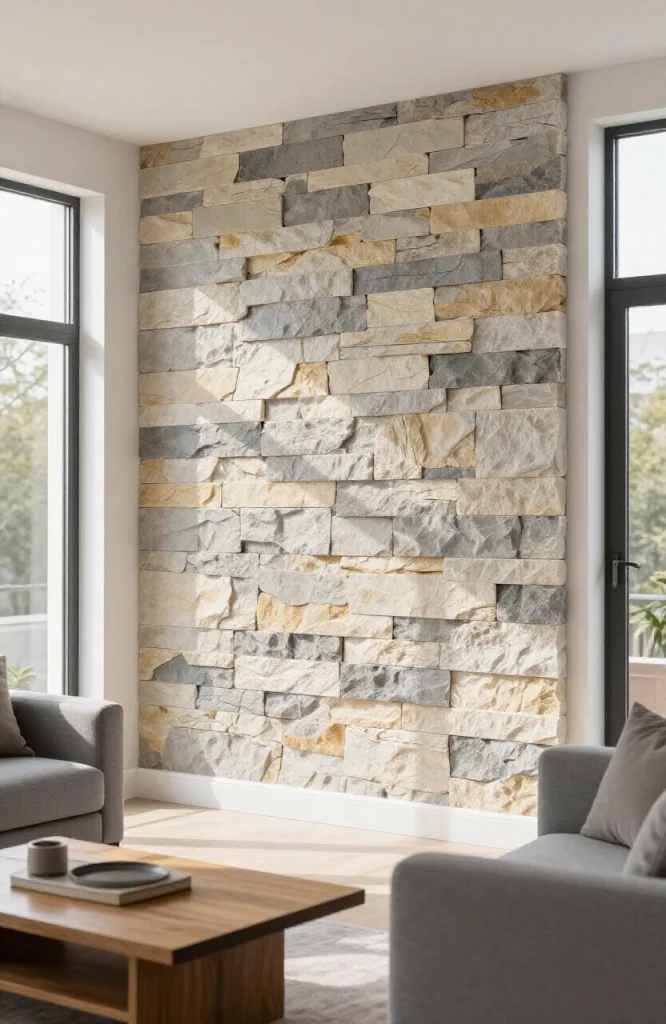
Stone veneer panels are thin slices of real or manufactured stone bonded to a lightweight backing sheet. They install directly onto drywall using panel adhesive and create the look of a stacked stone fireplace surround, a feature wall, or a kitchen backsplash. Because they’re a permanent structural addition, stone veneer is only appropriate for homeowners.
Ledger stone panels in slate, quartzite, or limestone are common choices. The result is substantially more textured and three-dimensional than any painted faux finish could achieve. If you’re interested in comparing surface materials across the home, the guide to marble countertop alternatives covers similar material trade-offs for kitchen and bath surfaces.
11. Mirrors and Mirror Arrangements
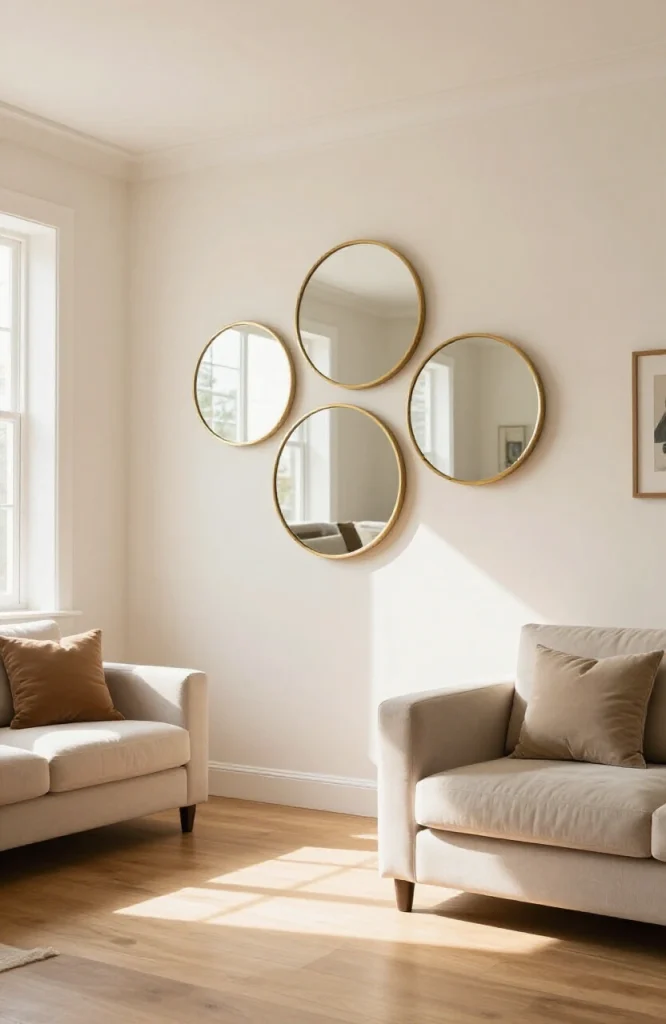
A grouping of mirrors does two things: it adds visual decoration and it reflects light to make a room feel larger and brighter. Round mirrors in a cluster, a row of identically framed mirrors above a console, or a single oversized arch mirror leaning against the wall all work as strong visual anchors.
For a no-drill approach, lean larger mirrors against the wall and use furniture to hold them in place. Smaller mirrors can be mounted with adhesive picture strips rated for the weight. Avoid hanging anything heavy on hollow wall sections without a proper anchor or stud.
12. 3D Wall Panels
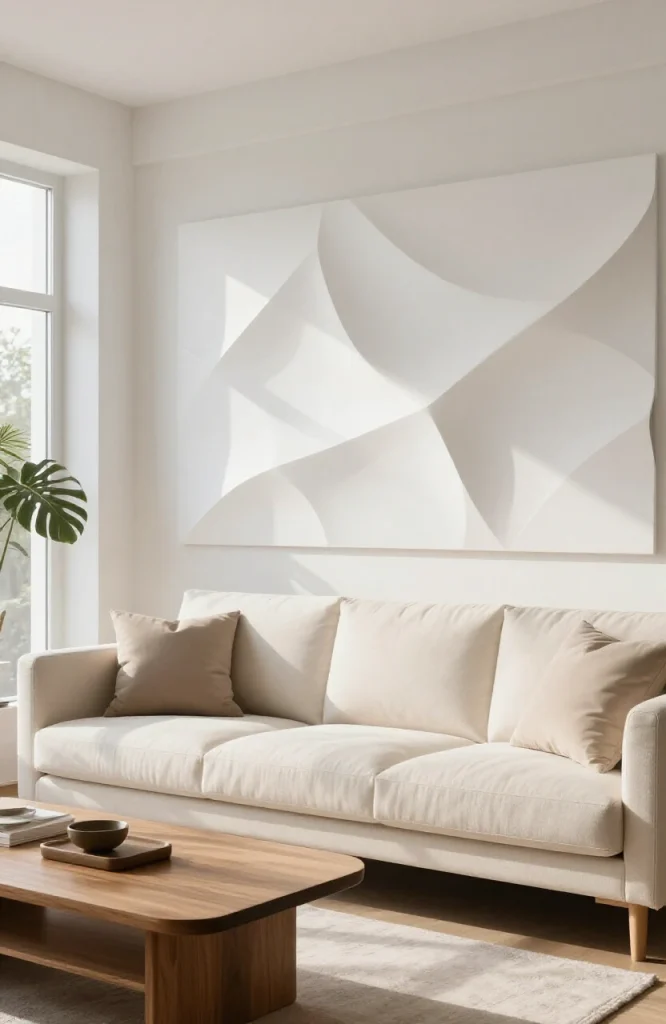
Three-dimensional wall panels made from PVC, MDF, or bamboo pulp create sculpted surface texture that catches light differently throughout the day. Common patterns include geometric waves, hexagons, diamonds, and abstract organic forms. They install with panel adhesive or double-sided tape depending on the material and weight.
Painting over 3D panels is an option if you want to unify the color with the room, but the panels themselves add significant texture even in white or neutral tones. This sits in the middle ground between a paint-free and a painted approach.
13. Pegboards
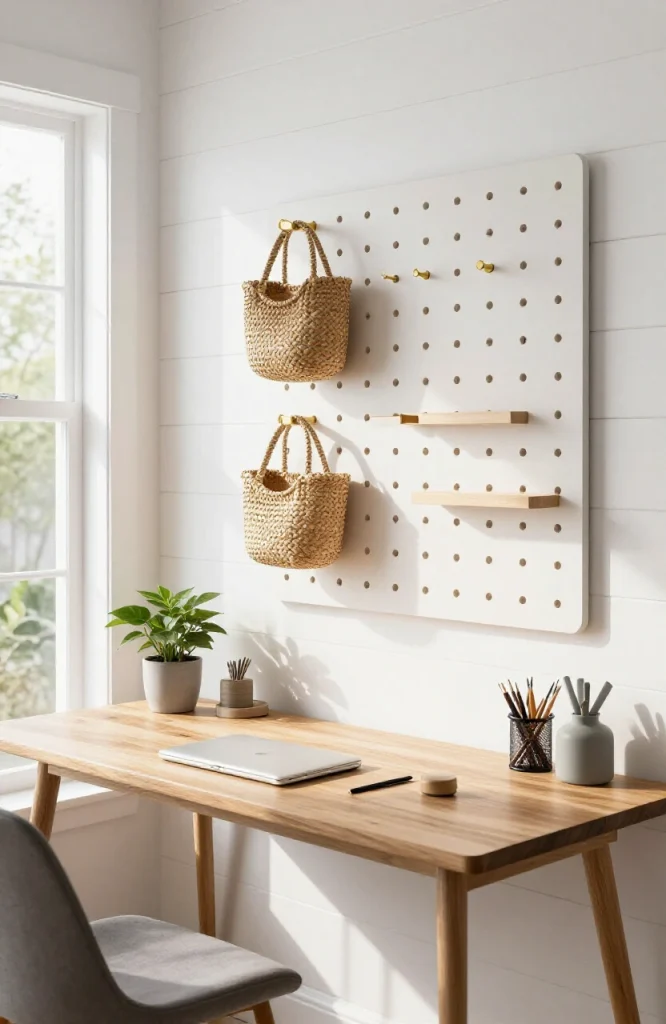
A pegboard is a perforated hardboard panel that mounts to the wall and accepts hooks, shelves, baskets, and holders of all sizes. Originally used in garages and craft rooms, styled pegboards have become a popular feature in home offices, kitchens, and entryways. You can mount accessories anywhere in the grid and rearrange them at any time.
Natural plywood, painted MDF, and white or black pegboard panels are all available. The panel mounts to the wall with spacers that create a small gap behind it, allowing hooks to pass through. This is ideal for rental-friendly home office setups where you need flexible organization without permanent changes.
14. Macramé Wall Hangings
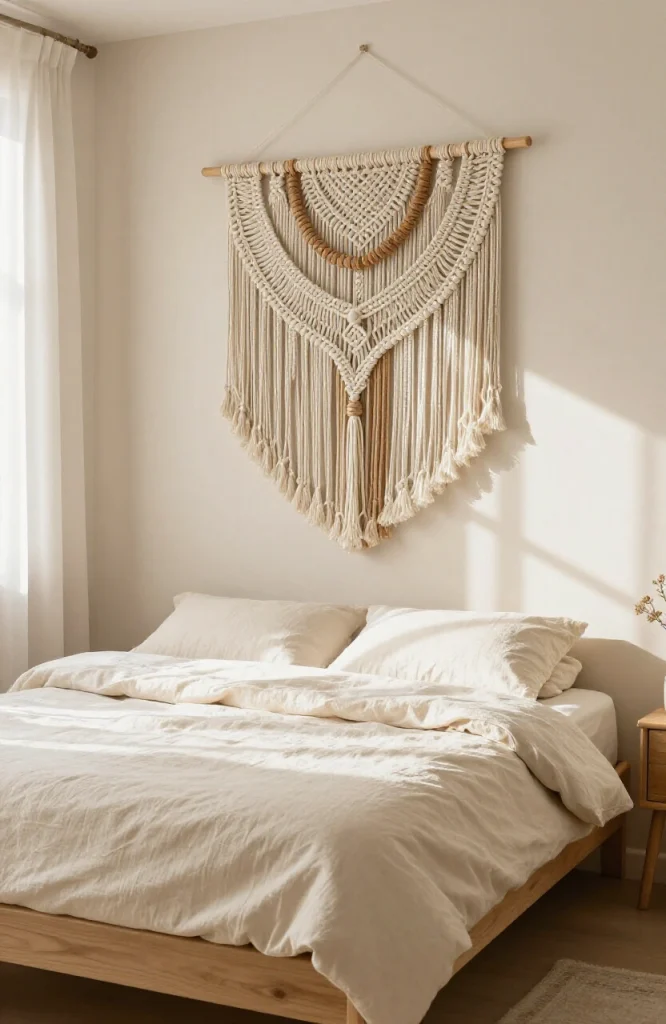
Macramé is knotted fiber art that functions as wall décor with real visual texture. A large piece above a bed or sofa reads as a headboard alternative or a statement art piece. Smaller pieces work in bathrooms, entryways, or as a complement to a gallery wall. Natural cotton cord in off-white or beige suits most neutral interiors, while dyed macramé adds color without painting.
Macramé hangs from a wooden dowel or copper pipe using a single nail or adhesive hook, making it one of the most renter-friendly and lowest-effort wall decoration options available.
15. Cork Tiles and Cork Boards
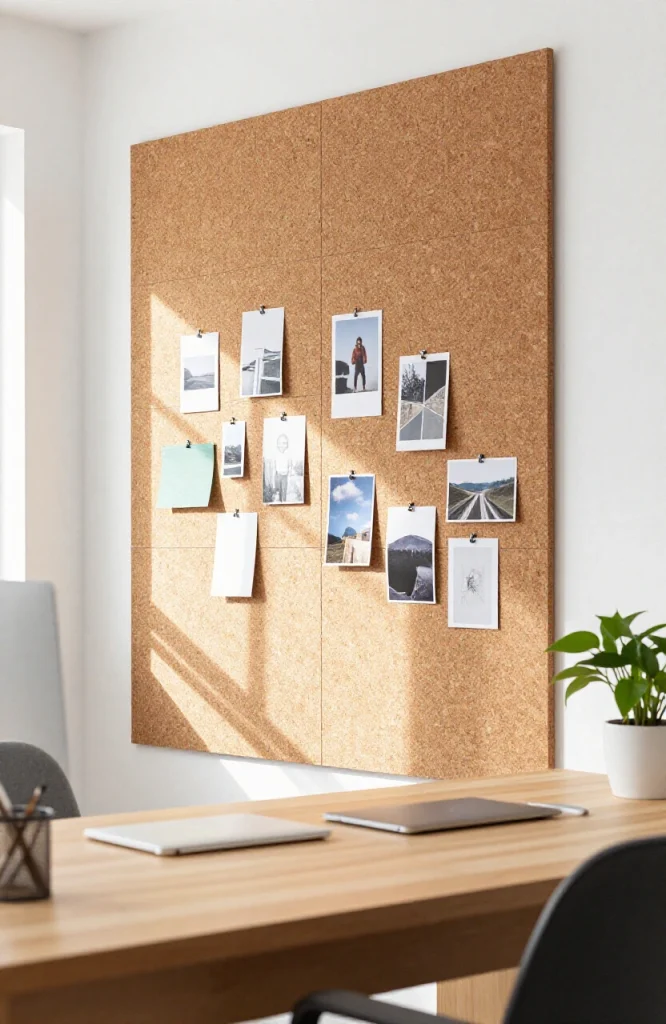
Self-adhesive cork tiles stick directly to the wall and create a functional bulletin board surface that covers a section of wall entirely. You can pin notes, photos, fabric swatches, invitations, and anything else without damaging the underlying wall. Cork also absorbs sound, which is a bonus in home offices or children’s rooms.
Full cork tile walls in home offices and studios are appearing more frequently in interior design content because the texture reads warmly and the function is obvious. Interlocking cork panel systems can cover large sections of wall and remove in one piece.
16. Plate Walls
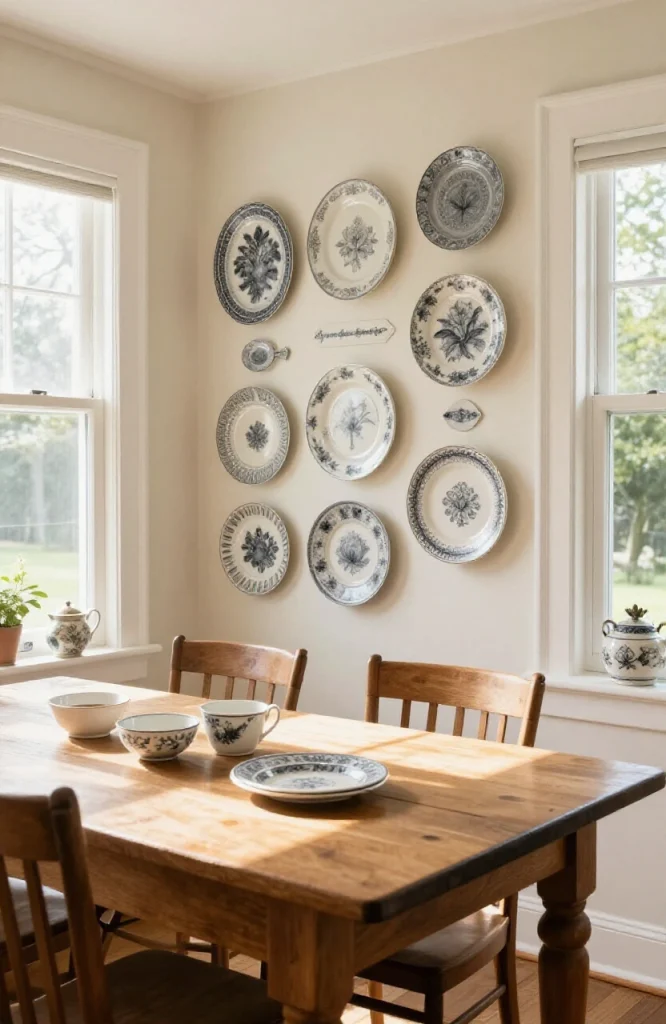
Arranging decorative plates on a wall creates a collected, artful display that works in dining rooms, kitchens, and hallways. Vintage transferware, hand-painted ceramics, solid-color bisque, or graphic modern designs all work depending on your style. Plate hangers with spring tension grip the plate from the back and mount to a single small nail or picture hook.
Plan the arrangement on the floor first, then use paper templates taped to the wall to finalize positions before hanging. A mix of sizes in a loose asymmetric arrangement feels more considered than a rigid grid.
17. Curtain Walls
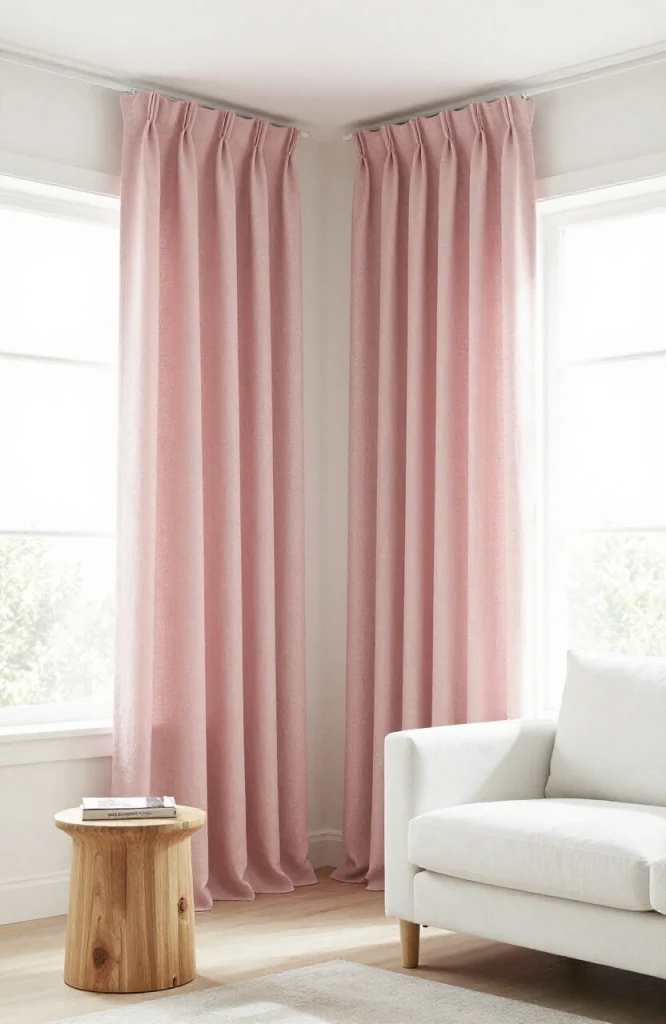
Hanging floor-to-ceiling curtains along a wall, rather than just across windows, adds softness, height, and color to a room in a way that functions almost like a painted accent wall. This works especially well in bedrooms and living rooms. Use a ceiling-mounted or tension rod system for a no-drill option.
Velvet, linen, and cotton canvas all create different effects. A rich velvet panel behind a bed reads as a dramatic headboard backdrop; a linen panel in a living room adds texture without weight. For kitchen window treatment ideas that follow similar principles, the guide to kitchen window treatment ideas covers fabric selections in more detail.
18. Printed Canvas Art and Large-Format Prints
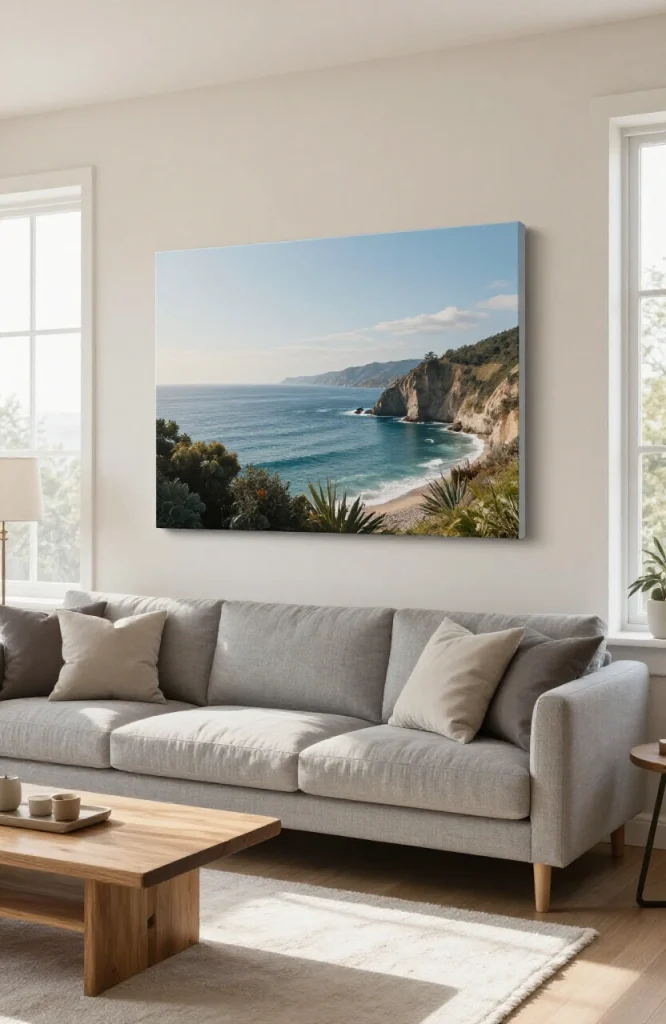
A single oversized canvas print, whether a photograph, an abstract painting, or a graphic illustration, can anchor an entire wall without anything else. Sizes of 40×60 inches or larger have the visual weight to stand alone. Services like Fracture, Printful, and local print shops allow custom printing from personal photos or digital downloads at accessible price points.
Canvas stretcher bars make for easy hanging with a single nail, and the canvas itself adds slight texture. For a more minimal approach, unframed paper prints in large format pinned or clipped from a wooden dowel avoid the rigidity of a traditional frame.
19. LED Neon Signs
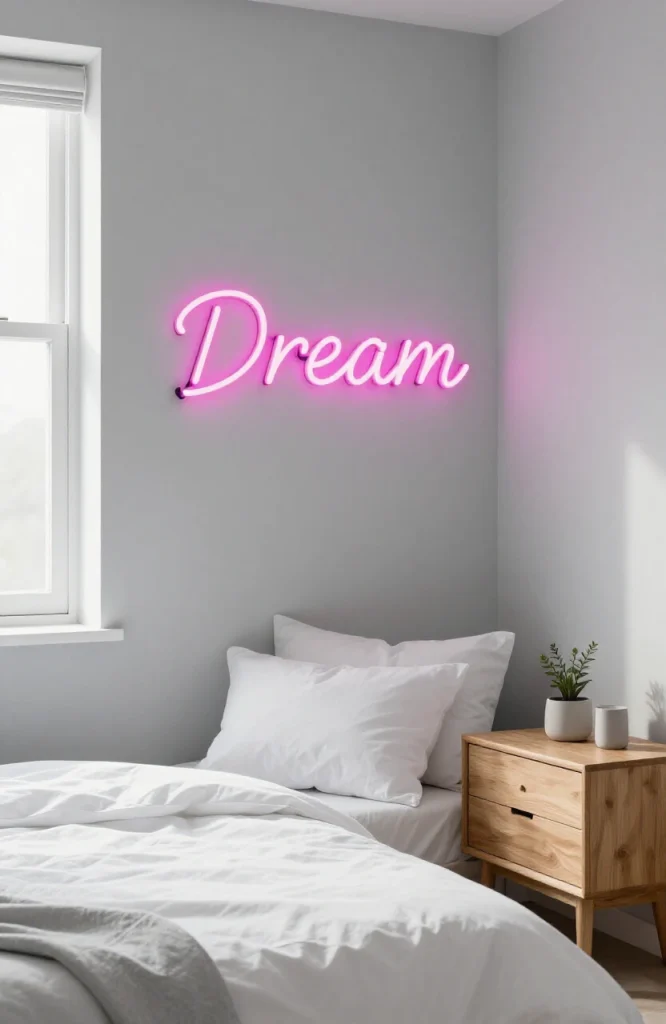
LED neon signs, available in custom text or preset designs, have become a genuine interior design element rather than just a novelty. A word, phrase, or simple shape glowing against a white or dark wall creates a focal point that changes the entire atmosphere of a room, especially in the evening. Modern LED neon is flexible silicone tubing, not glass, making it lightweight and safe for home use.
Signs hang from a single hook or mount with adhesive-backed clips. Custom versions are available through Etsy sellers and dedicated neon sign retailers. This works particularly well in bedrooms, home bars, and dining areas.
20. Chalkboard Contact Paper
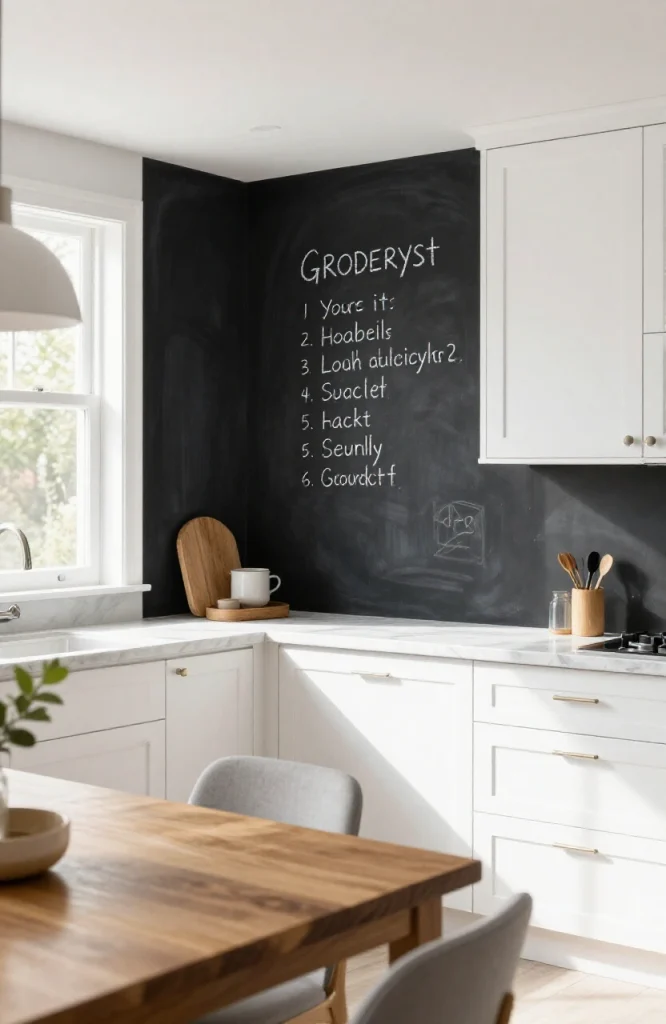
Chalkboard contact paper sticks to the wall and creates a writable surface that can be wiped clean repeatedly. In kitchens, it works as a menu board or grocery list space. In children’s rooms, it gives kids a designated drawing wall. In home offices, it functions as a large brainstorming surface.
Chalkboard contact paper peels off cleanly from smooth surfaces and costs a fraction of chalkboard paint. Apply with a squeegee to prevent bubbles. Condition the surface before first use by rubbing a piece of chalk sideways across the entire area and then erasing it.
21. Hanging Plants and Vertical Gardens
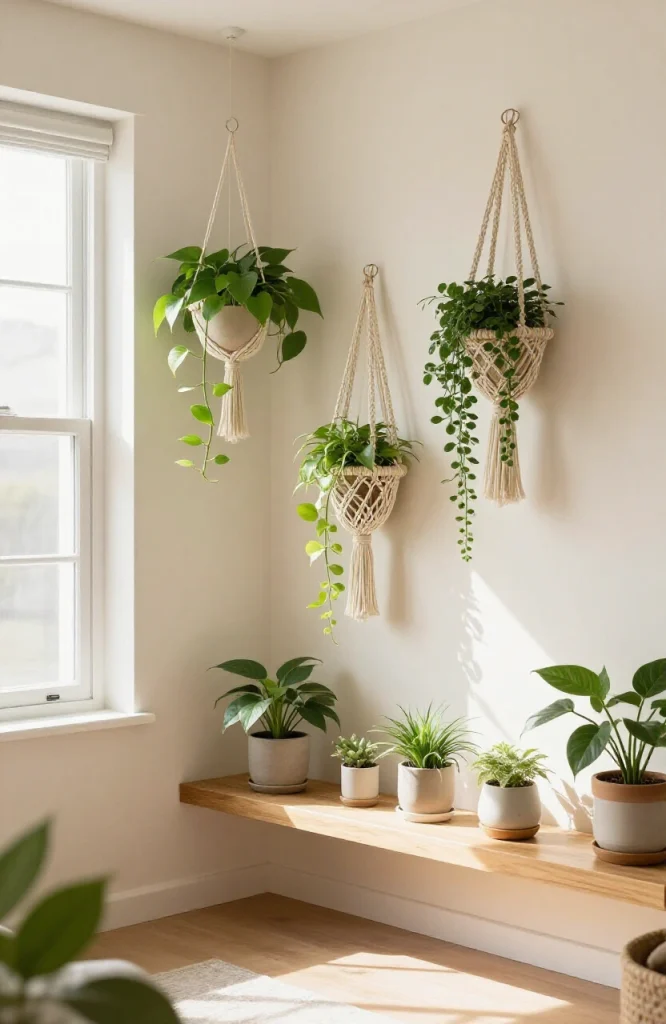
Plants mounted on or against a wall bring color, texture, and life without any permanent changes to the surface. Individual hanging planters in macramé slings, wall-mounted ceramic or wooden holders, or a modular grid-mounted planter system all create the effect of a living wall at various levels of commitment.
For a lightweight no-drill option, over-door hooks or adhesive hooks rated for the planter weight work on most surfaces. Trailing plants like pothos, string of pearls, or tradescantia create the most visual impact. See more about how plants work in outdoor areas and pool spaces for how vertical greenery extends to exterior walls as well.
22. Removable Wall Decals and Stickers
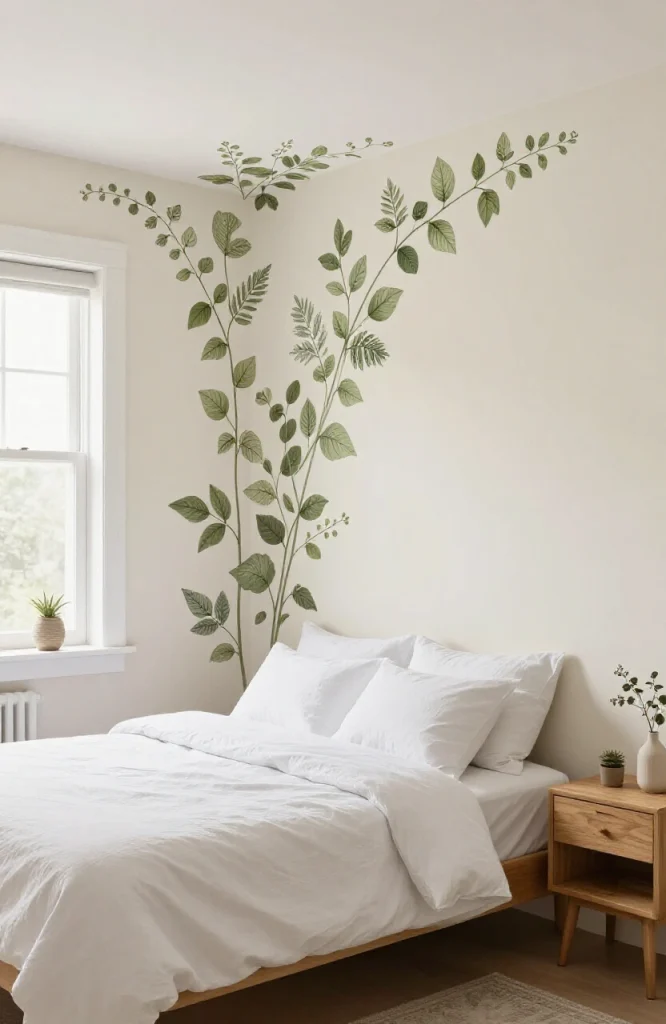
Removable wall decals are pre-cut vinyl designs that stick to the wall and peel off without residue. They range from large botanical illustrations spanning multiple feet to small individual shapes that can be scattered across a surface. Children’s room murals, inspirational quotes, geometric borders, and botanical line drawings are among the most popular options.
Application takes minutes and requires no tools. On textured walls, edges may lift over time, so this method works best on smooth painted drywall. Most decals can be repositioned during application but not reliably reused after full removal.
How to Choose the Right Method for Your Space
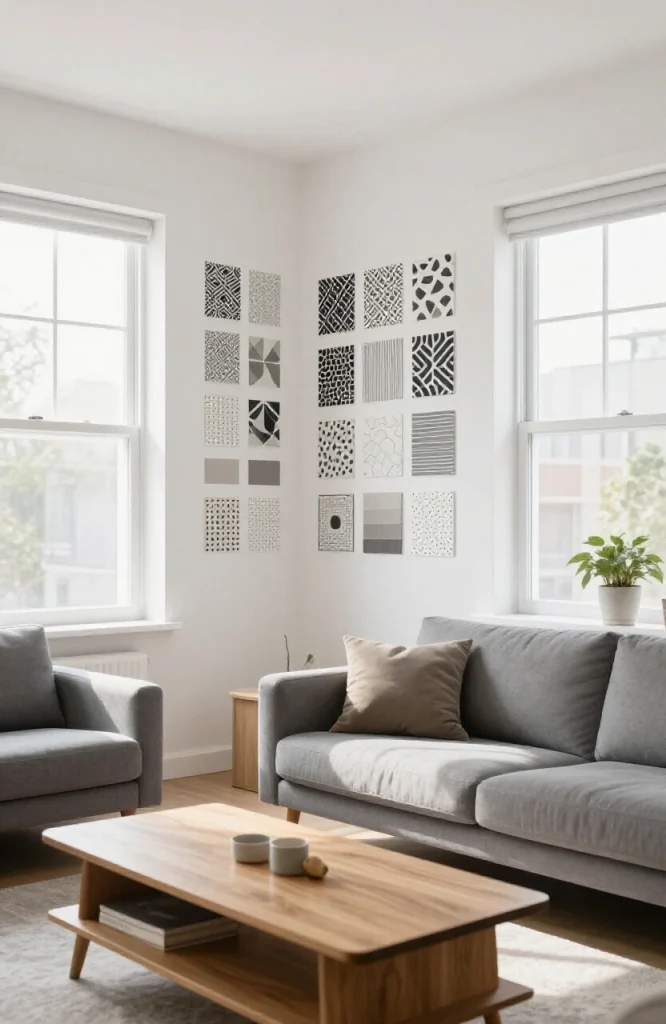
The right approach depends on three factors: your wall surface, your tenancy situation, and how long you want the change to last. Renters on short leases do best with peel-and-stick products, fabric hangings, and adhesive-mounted pieces. Homeowners with more flexibility can invest in wood panels, stone veneer, or built-in shelving. For quick visual impact at low cost, washi tape, large canvas prints, and tapestries deliver the highest return for the effort involved.
When in doubt, start with one wall. A single well-decorated surface changes how an entire room reads, and it’s far easier to add more later than to undo something you rushed into.
Conclusion
There are 22 proven alternative ways to decorate walls without paint, and most of them work well in rental spaces, are reversible, and cost less than a professional paint job. From peel-and-stick wallpaper and wood planks to tapestries, gallery walls, LED neon, and living plant arrangements, the options cover every budget, skill level, and design style. The best results come from choosing a method that matches your wall surface and your timeline, rather than defaulting to the most obvious choice. Use the comparison table above as your starting reference, then pick one method and commit to it fully before moving on to the next wall.