
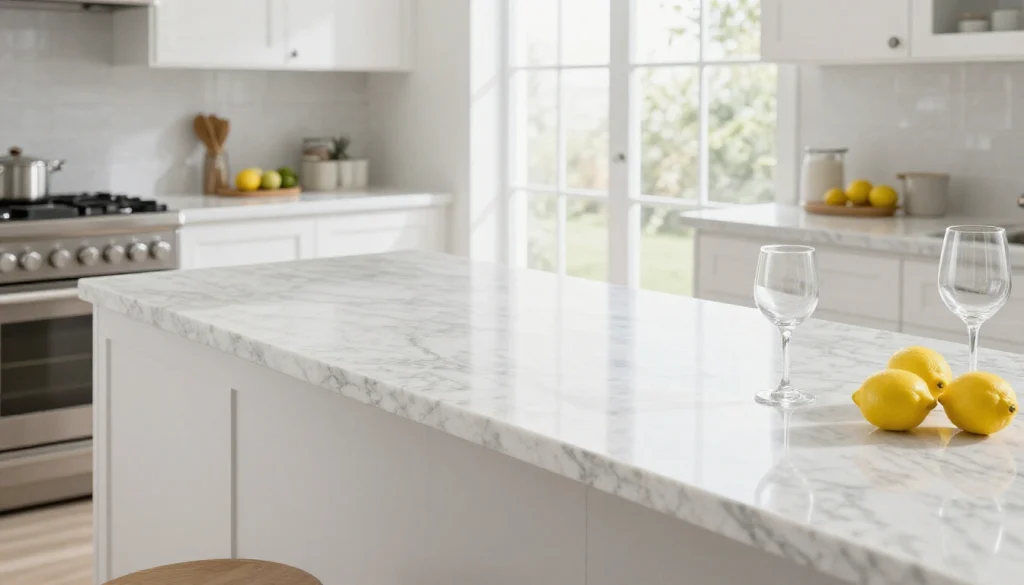
Marble is one of those surfaces that everyone seems to want until they actually live with it. The veining is gorgeous, the cool surface is great for rolling dough, and there’s no question it looks expensive. But marble stains from a glass of wine left too long, etches from a splash of lemon juice, and needs sealing at least once a year. On top of all that, installing real marble can run anywhere from $50 to over $200 per square foot, depending on the type.
That gap between “wanting marble” and “wanting to deal with marble” is why so many homeowners go looking for alternatives, and there are genuinely good ones. Some come very close to the real thing in appearance. Others take a completely different direction but look just as polished in a finished kitchen or bathroom.
This guide covers 16 marble countertop alternatives, with honest notes on cost, maintenance, how close they actually look to marble, and which spaces they work best in. A comparison table at the end makes it easy to narrow down your options quickly.
Why Real Marble Gives So Many Homeowners Second Thoughts
Before jumping into the alternatives, it helps to understand what you’re actually trying to avoid, because not everyone has the same concern.
The Cost Adds Up Fast
Entry-level marble starts around $50 per square foot installed. That sounds manageable until you price out a full kitchen. Premium varieties like Calacatta, which comes from a single quarry in Italy, can cost $180 or more per square foot. For an average-sized kitchen, your total can land anywhere between $1,750 and $7,000, and that doesn’t account for ongoing sealing costs.
Maintenance Is a Ongoing Commitment
Marble is porous, which means it absorbs liquids if you don’t move fast. Acidic foods and cleaners, including everyday things like coffee, vinegar, and citrus juice, etch the surface and leave dull marks that can’t simply be wiped away. You’ll also need to reseal it every one to two years to maintain protection, and in sun-filled kitchens, consider applying a UV-blocking coat to prevent yellowing.
When Marble Still Makes Sense
Real marble does have strong arguments in its favor. No two slabs are identical. It has a natural translucency and depth that engineered materials still haven’t perfectly replicated. It also adds measurable resale value, since buyers consistently rank natural stone as a premium feature. If your kitchen sees light use and you’re committed to the upkeep, marble can be a worthwhile investment.
For everyone else, the options below are worth a close look.
The 16 Best Marble Countertop Alternatives
1. Quartz

Quartz is the most popular alternative to marble for a reason. It’s made from roughly 90% ground natural quartz combined with about 10% resin binders, which makes it non-porous and completely maintenance-free in terms of sealing. The manufacturing process also lets producers replicate marble’s characteristic veining with impressive accuracy, and the quality of that mimicry has improved significantly over the past decade.
Cost: $80 to $200+ per square foot installed.
Maintenance: Very low. No sealing, just regular cleaning with mild soap and water.
Marble resemblance: Very high, especially Calacatta and Statuario-style options from brands like Caesarstone, Cambria, and Silestone.
Best for: Kitchens and bathrooms where durability and easy upkeep matter. Not recommended for outdoor use, as colors can fade in direct sunlight.
One thing to know: quartz is harder than marble, so it handles scratching better. It’s also more consistent in pattern, which is a plus if you’re matching multiple sections across a large island.
2. Quartzite
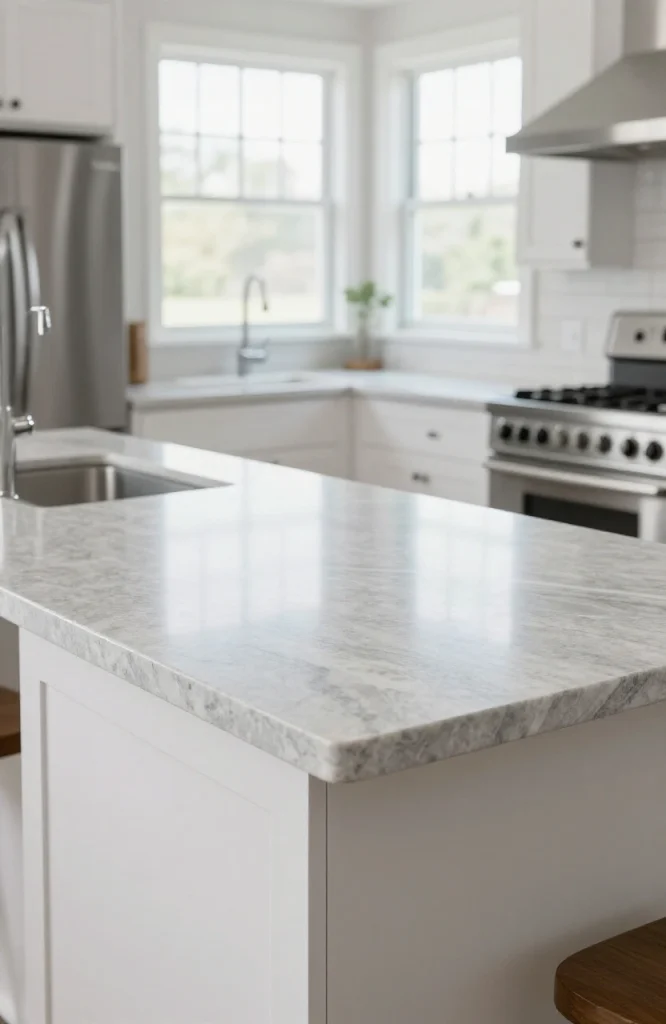
Quartzite is a natural stone, not to be confused with quartz, formed when sandstone undergoes extreme heat and pressure deep underground. The result is one of the hardest natural stones available, and some varieties look so similar to marble that even fabricators occasionally do a double take.
Cost: $80 to $200+ per square foot installed.
Maintenance: Medium. Requires sealing every one to two years, but performs far better in busy kitchens than marble.
Marble resemblance: Very high. Varieties like Taj Mahal Quartzite, with its warm white base and golden veining, and White Macaubas come remarkably close to premium marble.
Best for: Homeowners who want the authenticity of natural stone but need something tougher than marble for daily kitchen use.
The main distinction between quartzite and marble, besides hardness, is that quartzite resists etching much better. Acids are less likely to leave permanent marks, making it a stronger practical choice for kitchens where cooking actually happens.
3. Granite
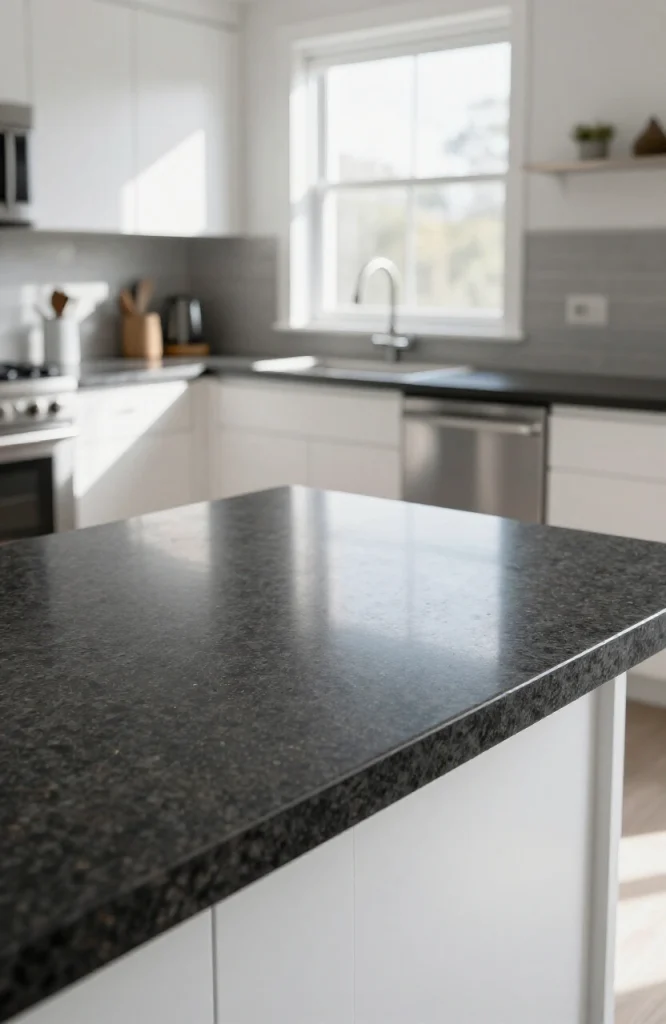
Granite has been a kitchen countertop staple for decades, and while its popularity has shifted toward lighter, more minimal aesthetics, it still offers real advantages. It’s one of the hardest natural stones available, holds up exceptionally well to heat and scratching, and lighter varieties, particularly white and light gray granites, can work in spaces that would otherwise call for marble.
Cost: Starting around $50 per square foot installed, making it generally less expensive than marble.
Maintenance: Medium. Needs sealing every one to two years.
Marble resemblance: Moderate. Works better in design schemes that don’t require the fine veining of marble, but lighter options like White Ice or Colonial White granite can feel similar in tone.
Best for: High-traffic kitchens, families with kids, buyers who want natural stone on a controlled budget.
Each granite slab is completely unique, which can be a genuine advantage or a sourcing challenge when trying to match sections.
4. Porcelain Slabs
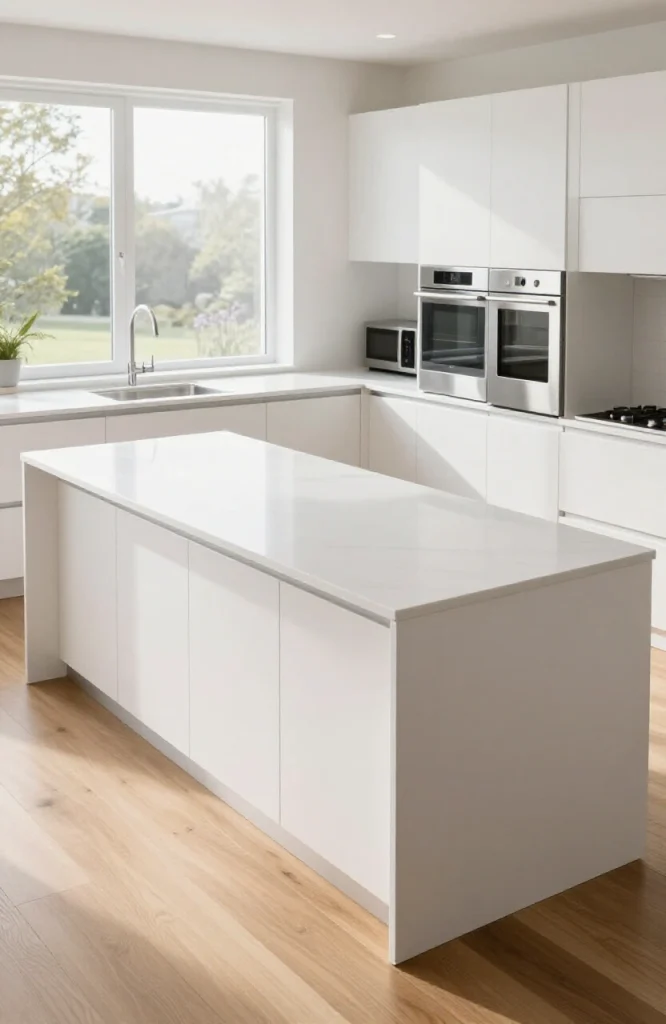
Large-format porcelain slabs have become one of the more talked-about countertop materials in recent years, and the quality has gotten good enough that it’s worth serious consideration. Made from refined clay and minerals fired at extremely high temperatures, porcelain slabs are non-porous, require no sealing, and resist heat, scratches, and stains with very little effort from the homeowner.
Cost: $55 to $120 per square foot installed.
Maintenance: Very low. Soap and water is all you need.
Marble resemblance: Very high with premium brands. Lower-end options can look printed and flat; higher-end slabs capture depth and subtle veining that reads as convincingly real.
Best for: Kitchens, bathrooms, outdoor countertops, and anyone who wants marble aesthetics with near-zero maintenance. One of the few countertop materials that works outdoors.
The one thing to verify before buying is slab quality. Ask to see the actual slab rather than a catalog photo, and check how the veining transitions at cut lines.
5. Dolomite
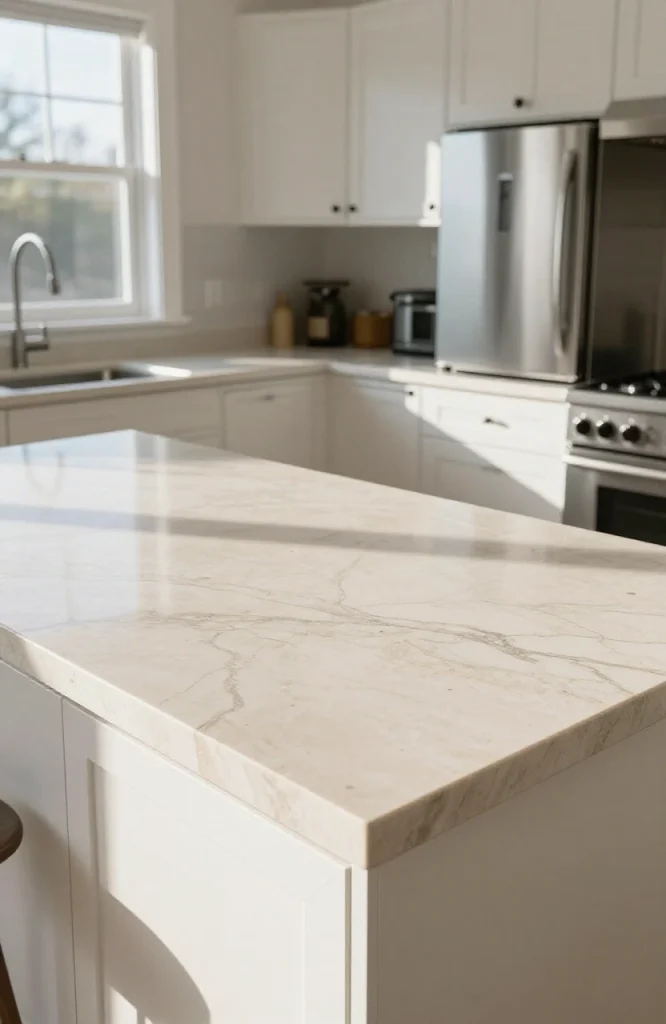
Dolomite sits between marble and quartzite in terms of hardness and appearance. It’s a natural stone with a similar soft, creamy look to marble, fine veining, and a cool surface, but it’s denser and generally performs better under the conditions of an active kitchen.
Cost: $60 to $140 per square foot installed.
Maintenance: Medium. Sealing every one to two years is recommended.
Marble resemblance: High. Super White Dolomite in particular is often sold alongside marble in showrooms and can be difficult to distinguish at a glance.
Best for: Transitional or classic kitchens where visual similarity to marble matters, with better durability than the real thing.
Worth noting: dolomite is still a natural stone with some porosity, so it’s not as forgiving as quartz or porcelain. Avoid leaving acidic liquids on the surface for extended periods.
6. Sintered Stone (Neolith, Dekton)
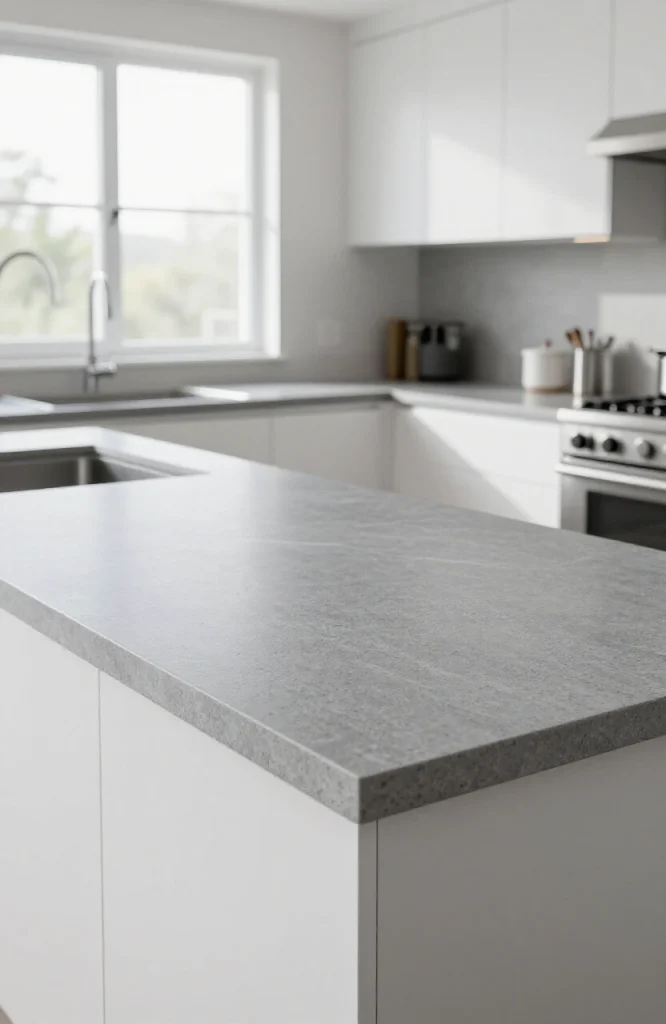
Sintered stone is made by compressing and heating natural minerals under intense pressure, mimicking the geological process that forms stone in the earth, but in a controlled manufacturing environment. The result is an extremely dense, non-porous surface that resists heat, UV exposure, scratches, and stains at a level that most other countertop materials can’t match.
Cost: $70 to $180 per square foot installed.
Maintenance: Very low. No sealing required.
Marble resemblance: High, particularly in large-format slabs with marble-inspired patterns from brands like Neolith and Dekton by Cosentino.
Best for: Outdoor kitchens, heavy-use residential kitchens, modern design aesthetics. One of very few countertop materials rated for exterior use.
If you regularly place hot pans directly on countertops or cook outdoors, sintered stone handles those conditions better than any other material on this list.
7. Solid Surface (Corian and similar)
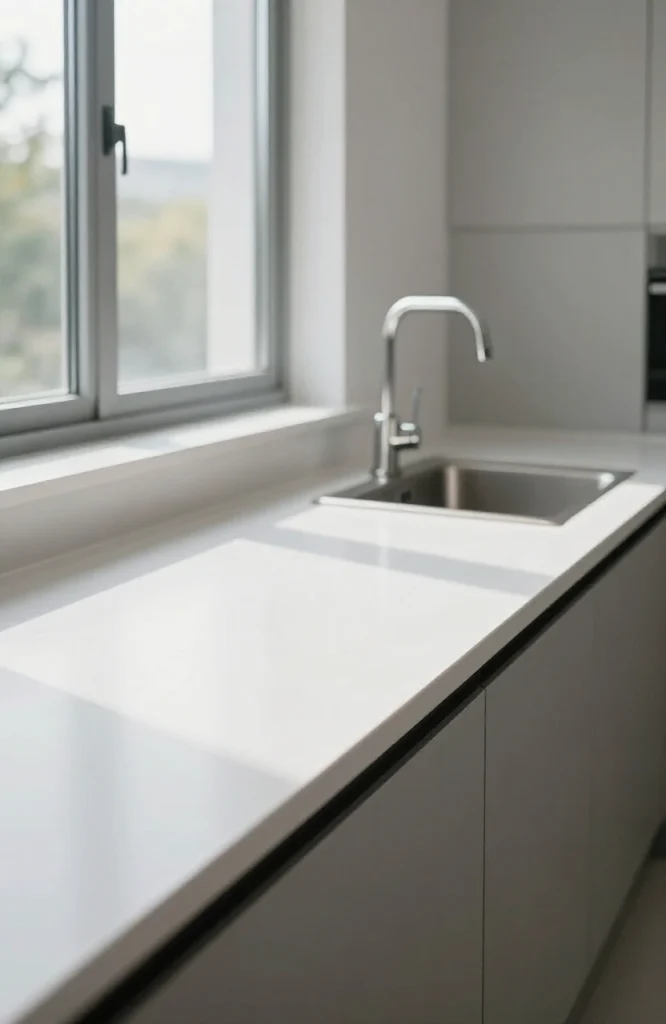
Solid surface countertops are an acrylic or polyester composite material that installs without visible seams, since joints are fused and polished smooth. The result is a surface that’s hygienic, non-porous, and repairable. Minor scratches and burns can be sanded out and repolished, which no stone countertop can offer.
Cost: $40 to $80 per square foot installed.
Maintenance: Low. No sealing needed. Minor damage is fixable.
Marble resemblance: Low to moderate. More limited in its ability to replicate fine marble veining, but some cultured-marble-inspired patterns come close.
Best for: Bathrooms, utility kitchens, rental properties, buyers who prioritize easy repairs and consistent color over natural stone aesthetics.
Solid surface is a strong choice for bathrooms where undermount sinks and continuous countertop-to-backsplash transitions look clean and modern. For more bathroom ideas that work with this kind of surface, see our guide to simple ways to reinvent your bathroom.
8. Laminate (High-Pressure Laminate / Formica)
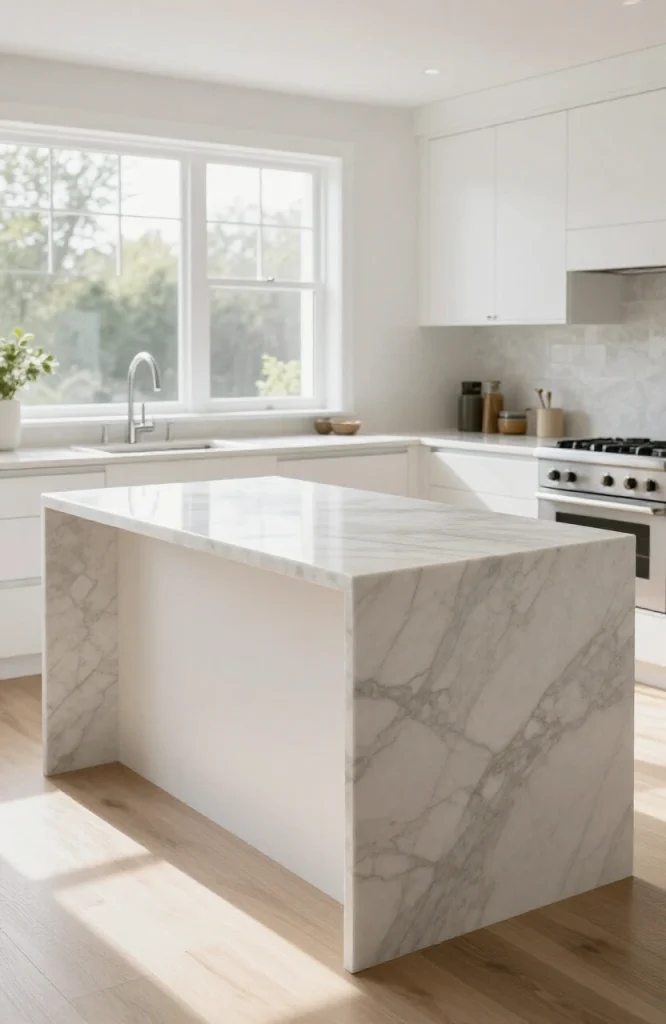
Laminate has come a long way from the dated versions found in 1980s kitchens. Modern high-pressure laminate, including options from Formica’s 180fx line, uses photographic printing technology to produce stone-look surfaces that genuinely fool people at a glance.
Cost: $20 to $60 per square foot installed. A full kitchen plus multiple bathrooms can often be completed for under $5,000 total, a fraction of what quartz or quartzite would cost for the same square footage.
Maintenance: Very low. No sealing, easy cleaning.
Marble resemblance: Good for budget applications. Won’t convince anyone up close or when touched, but at normal viewing distance in a finished room, it reads well.
Best for: Rental properties, budget-conscious remodels, quick flips, secondary spaces.
The key limitation is durability. Laminate is not heat resistant, so trivets are mandatory, and deep cuts or chips cannot be repaired. Consider it a smart short-term or budget solution rather than a forever countertop.
9. Concrete
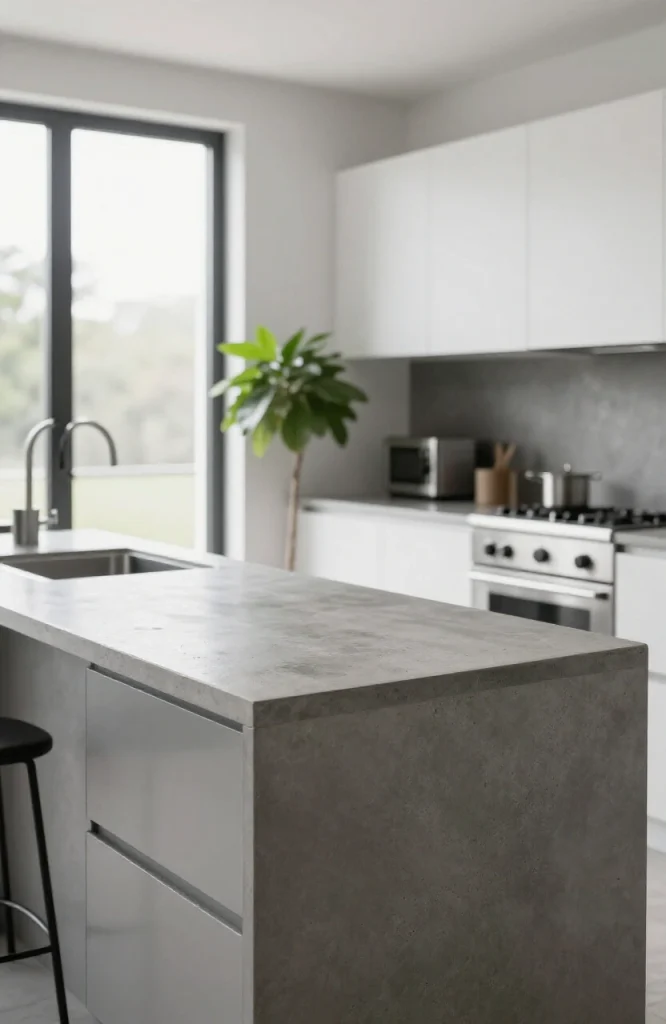
Poured concrete countertops occupy a different design category from everything else on this list. They don’t look like marble, but they share a certain handcrafted, high-end character that appeals to many homeowners doing more design-forward kitchens.
Cost: $65 to $135 per square foot installed.
Maintenance: Medium to high. Concrete requires sealing and is prone to staining if that sealer isn’t maintained. It can also crack over time with movement. Marble resemblance: Low. Concrete has its own aesthetic, typically matte and industrial.
Best for: Modern, industrial, or design-forward kitchens where uniqueness is the priority. Completely custom in terms of color, texture, and embedded objects.
If you want something that no one else has and you’re comfortable with the upkeep commitment, concrete is worth the conversation with a fabricator.
10. Butcher Block (Wood)
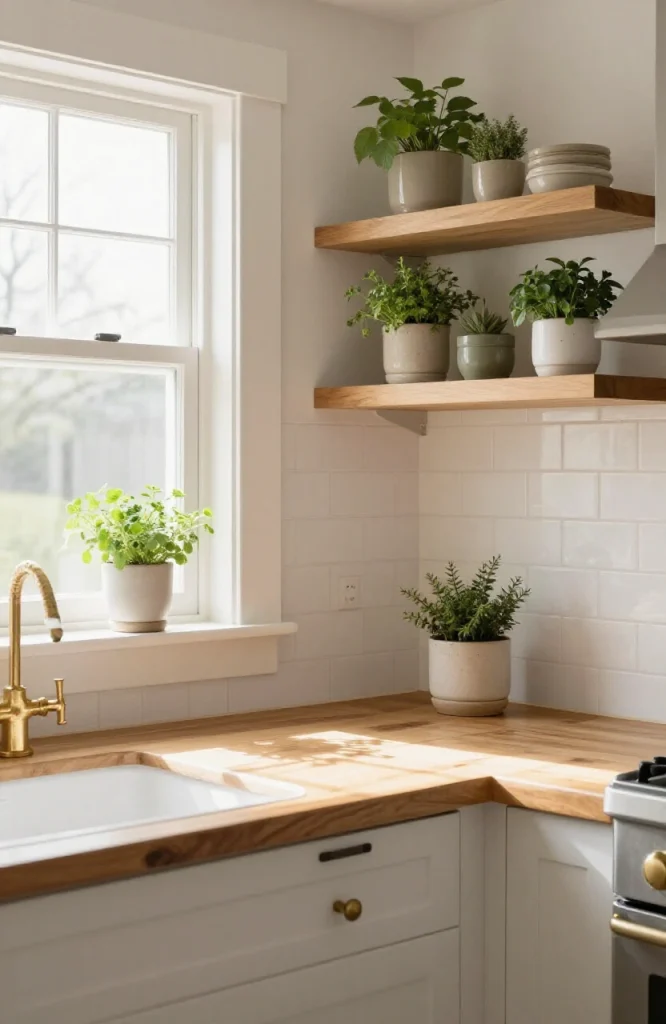
Butcher block doesn’t try to replicate marble at all. It brings warmth and texture to a kitchen in a way stone can’t, and it works particularly well in farmhouse, cottage, and transitional kitchen styles. Many homeowners use butcher block for a prep section of the kitchen while using a harder material on the main countertop run.
Cost: $40 to $100 per square foot installed.
Maintenance: Medium. Requires oiling every few months and careful management of standing water. Can show knife marks over time, though these can be sanded out.
Marble resemblance: None. A completely different aesthetic.
Best for: Farmhouse or cottage kitchens, prep zones, island surfaces, homeowners who want to add warmth to a space that might otherwise feel cold or clinical.
If you’re working on a Victorian-style kitchen, butcher block pairs well with period-appropriate hardware and cabinetry without competing with the detailed surfaces elsewhere in the room.
11. Soapstone
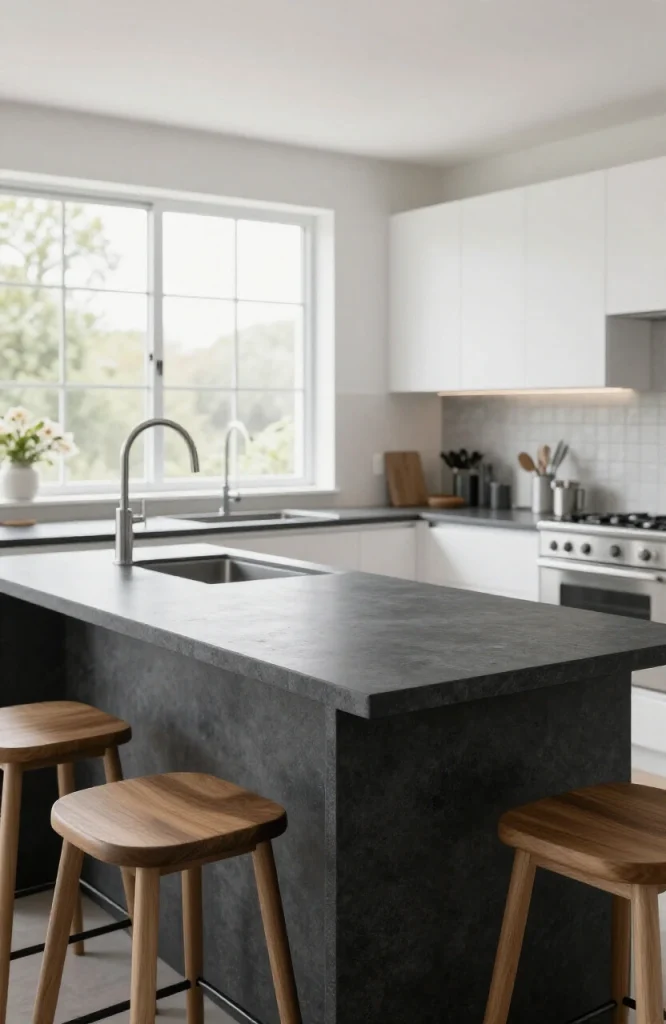
Soapstone has a distinctive matte finish and a velvety texture that sets it apart from every other material on this list. It’s a dense, non-porous natural stone, so it needs no sealing and develops a natural patina over time that many homeowners find appealing rather than problematic.
Cost: $70 to $150 per square foot installed.
Maintenance: Low overall, but soapstone scratches relatively easily. Scratches tend to blend in as the patina develops, and applying mineral oil periodically speeds that process and enriches the color.
Marble resemblance: Low. Typically a dark gray with subtle veining, not a visual substitute for white marble.
Best for: Farmhouse, period, or science lab-inspired kitchens. Works particularly well in homes with a historic character.
12. Recycled Glass
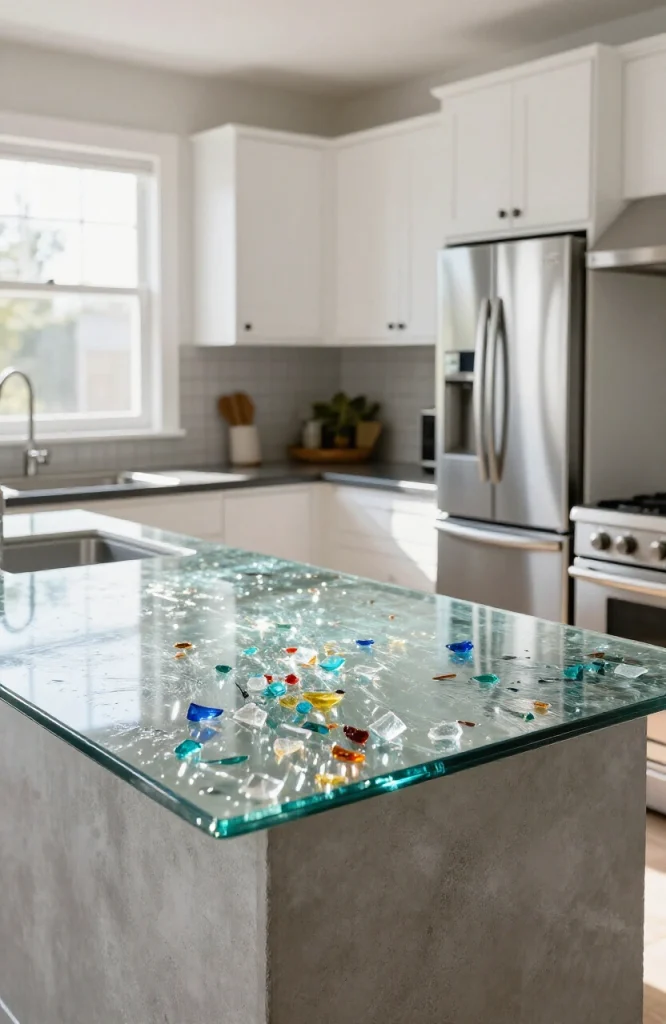
Recycled glass countertops are made from post-consumer glass, including wine bottles, windows, and industrial glass, suspended in a concrete or resin base. The surface is dense, non-porous, and visually striking, with a depth and color range no other countertop material offers.
Cost: $50 to $125 per square foot installed.
Maintenance: Low. Non-porous, no sealing required for most resin-based versions.
Marble resemblance: Low. Visually distinct from marble, but the reflective quality of glass gives it its own kind of luxury character.
Best for: Eco-conscious homeowners, kitchens or bathrooms where a statement surface is the priority, spaces that want color and individuality.
13. Cultured Marble
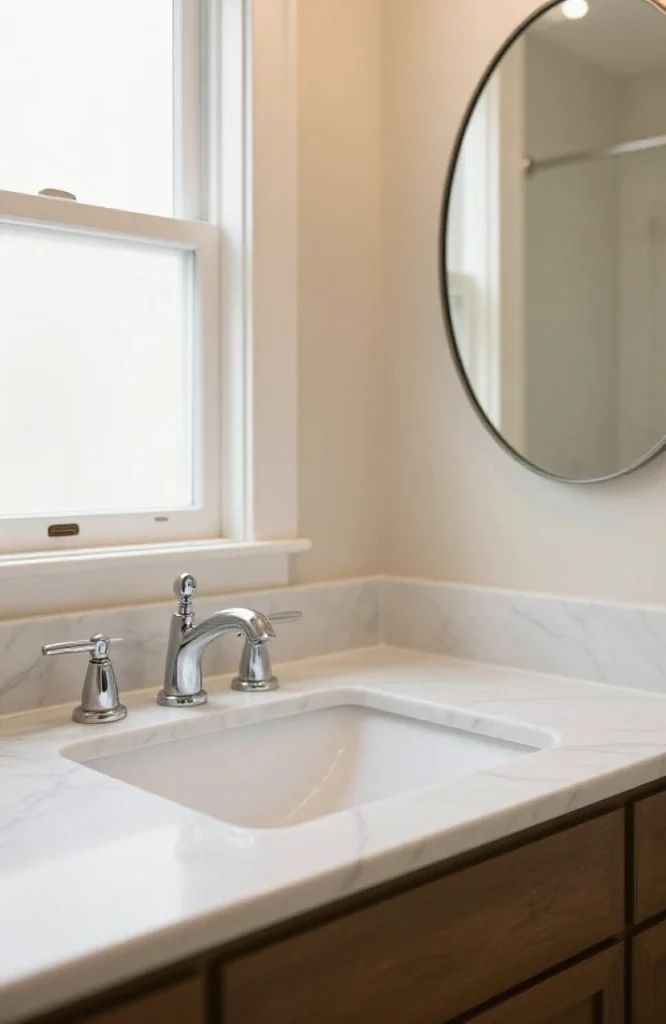
Cultured marble is made from a blend of marble dust and resin binders, molded into countertop shapes with an integrated gel coat finish. It’s been the standard for bathroom vanity tops for decades and remains one of the most affordable ways to get a marble-adjacent look.
Cost: $25 to $65 per square foot, one of the most affordable options on this list.
Maintenance: Low. Non-porous and easy to clean, though the gel coat surface can scratch and is difficult to repair if deeply damaged.
Marble resemblance: Moderate. Best suited to bathrooms where visual similarity to marble at an affordable price matters more than raw durability.
Best for: Bathrooms, vanity tops, tub surrounds, budget-conscious buyers who want the look without the natural stone price tag.
For more ideas on getting a polished bathroom look without major expenditure, our bathroom decorating ideas guide covers options across a range of budgets.
14. Stainless Steel
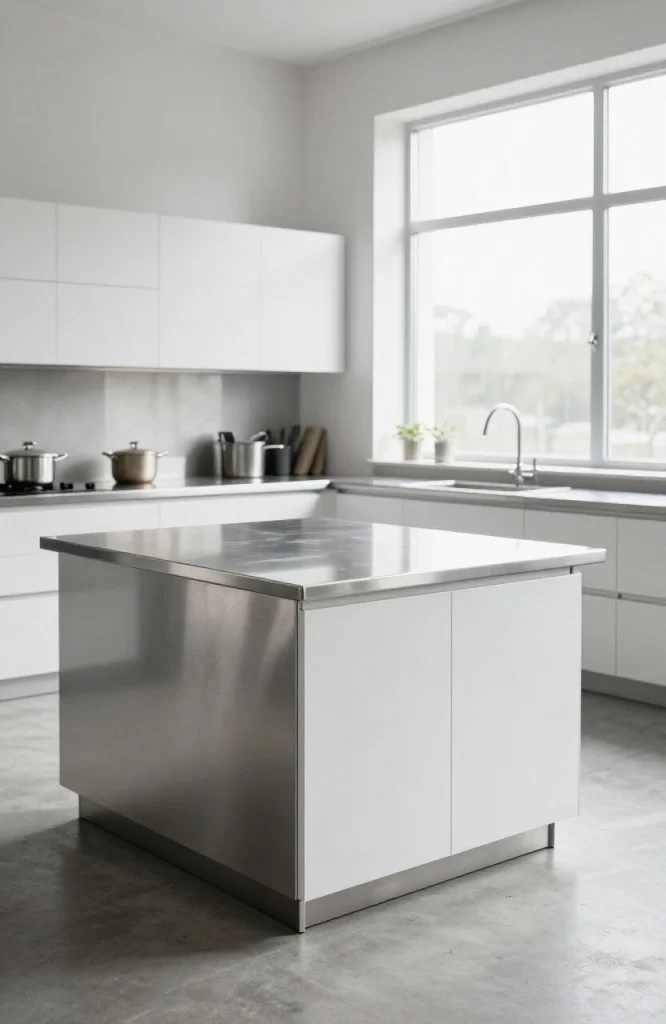
Stainless steel is the countertop material of professional kitchens, and it works in residential spaces when the design intent leans modern, industrial, or Scandinavian. It’s completely non-porous, hygienic, heat resistant, and nearly indestructible under normal kitchen use.
Cost: $75 to $150 per square foot installed.
Maintenance: Low functionally, but high visually. Stainless shows fingerprints and develops light surface scratches over time, which either bothers you or doesn’t.
Marble resemblance: None. This is a completely different aesthetic direction.
Best for: Professional-inspired kitchens, homeowners who want an uncompromising food-prep surface, modern or industrial design schemes.
Stainless works well as a section within a mixed-material kitchen, pairing a stainless prep area with a wood or stone surface elsewhere in the room.
15. Compact Surface Countertops
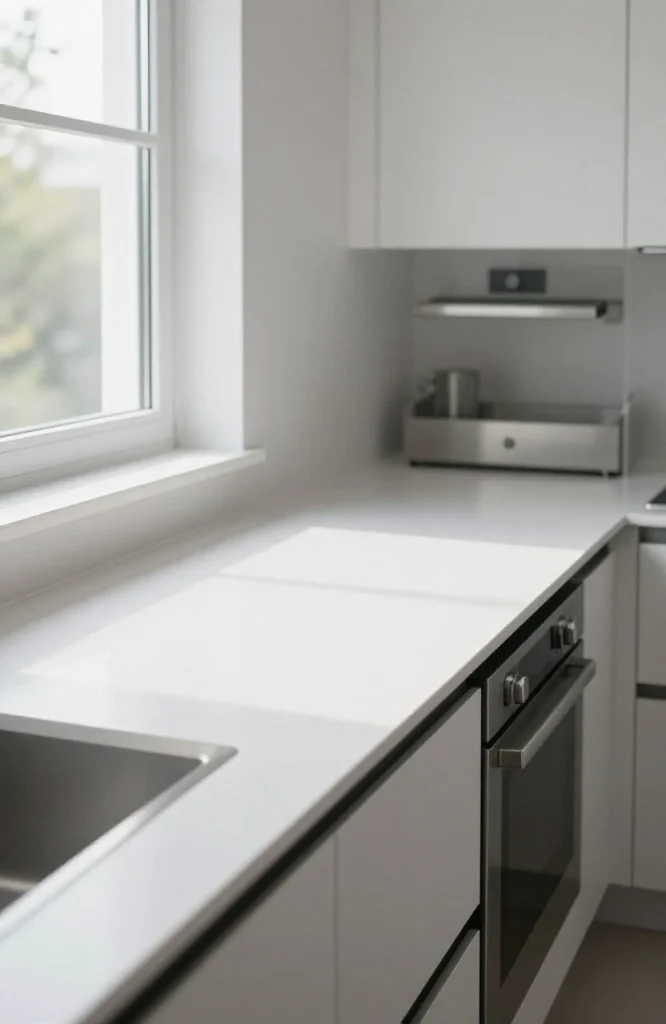
Compact surface is a thinner-format engineered panel, typically 12mm rather than 20mm for standard stone slabs, that has gained traction over the past decade as a modern alternative to traditional countertop materials. The thinner profile looks particularly clean on waterfall edges and vertical cladding applications.
Cost: $50 to $110 per square foot installed.
Maintenance: Low. Non-porous, no sealing required.
Marble resemblance: High. The manufacturing process produces white veining that reads very similarly to natural marble, and the thinner format can make slabs feel more refined and less chunky than full-thickness stone.
Best for: Modern or contemporary kitchens, waterfall island edges, vertical surfaces, homeowners who want a polished look without the maintenance of natural stone.
16. Large-Format Porcelain Tile
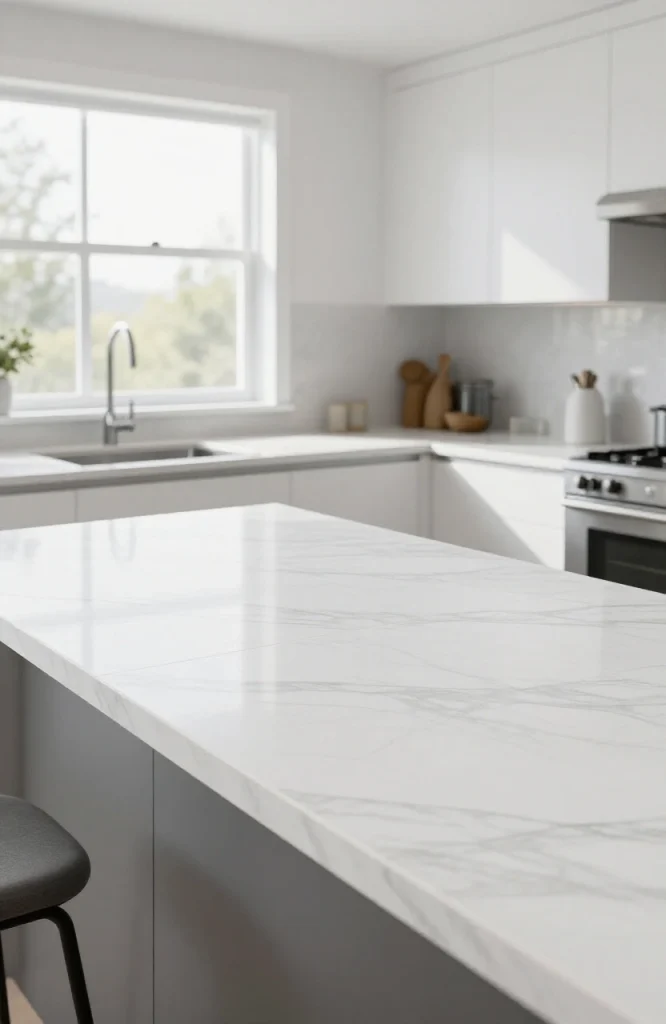
Large-format porcelain tile, typically 24×48 inches or larger, bridges the gap between the porcelain slab options at the top of this list and the more accessible tile end of the market. With thin grout lines and a marble-look glaze, a well-installed run of large-format tile can look surprisingly close to a full slab in a finished bathroom or kitchen.
Cost: $15 to $50 per square foot for tile, plus $5 to $15 per square foot for installation.
Maintenance: Very low. Non-porous, no sealing required.
Marble resemblance: High, particularly with premium marble-look glazes and minimal grout lines.
Best for: Bathrooms, backsplashes, budget kitchens, homeowners who want the flexibility of tile sizing and patterns without the cost of a full slab.
The grout lines are the main visual difference from a full porcelain slab. Keeping them thin with the right grout color is important. For backsplash ideas that work with this kind of tile, see our kitchen backsplash color ideas article.
Side-by-Side Comparison Table
| Material | Cost (per sq. ft. installed) | Sealing Required | Heat Resistant | Marble Resemblance | Maintenance | Best For |
|---|---|---|---|---|---|---|
| Real Marble | $50–$200+ | Yes (annually) | Yes | Reference | High | Luxury, low-traffic |
| Quartz | $80–$200+ | No | Moderate | Very High | Low | Busy kitchens |
| Quartzite | $80–$200+ | Yes (1–2 yrs) | Yes | Very High | Medium | Natural stone lovers |
| Granite | $50–$150 | Yes (1–2 yrs) | Yes | Moderate | Medium | High-traffic kitchens |
| Porcelain Slab | $55–$120 | No | Yes | Very High | Very Low | Kitchens, outdoors |
| Dolomite | $60–$140 | Yes (1–2 yrs) | Yes | High | Medium | Classic kitchens |
| Sintered Stone | $70–$180 | No | Yes | High | Very Low | Outdoor, modern |
| Solid Surface | $40–$80 | No | No | Moderate | Low | Bathrooms, rentals |
| Laminate | $20–$60 | No | No | Good | Very Low | Budget remodels |
| Concrete | $65–$135 | Yes | Yes | Low | Medium-High | Industrial kitchens |
| Butcher Block | $40–$100 | Oiling | No | None | Medium | Farmhouse kitchens |
| Soapstone | $70–$150 | No | Yes | Low | Low | Period-style homes |
| Recycled Glass | $50–$125 | No | Moderate | Low | Low | Eco-conscious buyers |
| Cultured Marble | $25–$65 | No | No | Moderate | Low | Bathrooms, vanities |
| Stainless Steel | $75–$150 | No | Yes | None | Low | Pro kitchens |
| Compact Surface | $50–$110 | No | Moderate | High | Low | Modern kitchens |
| Porcelain Tile | $15–$65 | No | Yes | High | Very Low | Bathrooms, budgets |
How to Choose the Right Material for Your Space
Kitchen vs. Bathroom: Different Priorities
Kitchens take more abuse. Heat from pans, acidic ingredients, heavy prep work, and constant cleaning all put more stress on a countertop surface than a bathroom ever will. For kitchens, prioritize heat resistance, scratch resistance, and ease of cleaning. Quartz, quartzite, porcelain slab, and sintered stone are the strongest options.
Bathrooms are more forgiving. Moisture resistance matters, but the surface doesn’t face the same chemical or thermal demands. Cultured marble, solid surface, porcelain tile, and quartz all perform well in bathrooms at various price points. For a broader bathroom update, our guide to simple ways to reinvent your bathroom covers surface updates alongside other quick-win changes.
Matching Your Budget
There’s a good option at every price range:
Under $50 per square foot installed: Laminate and large-format porcelain tile. Both have improved dramatically and can look convincing in a well-designed room.
$50 to $100 per square foot: Solid surface, compact surface, entry-level granite, porcelain slab, and cultured marble. This range covers most renovation budgets and includes some genuinely excellent performers.
$100 to $200+ per square foot: Quartz, quartzite, dolomite, sintered stone, and soapstone. These are the materials that hold up for decades and often increase home value.
If Visual Similarity to Marble Is Your Priority
Ranked from closest to marble in appearance: quartzite, quartz, porcelain slab, dolomite, compact surface, large-format porcelain tile.
For kitchens, quartz wins when you factor in both appearance and low maintenance together. For bathrooms, porcelain tile or cultured marble give you a lot of visual bang for a lower investment.
What to Do Before You Buy
Always order a physical sample and bring it home before committing. Showroom lighting flatters every material. The way a slab looks under your kitchen’s specific lighting, particularly if you have warm-toned bulbs or limited natural light, can be very different from what you saw in a display.
Visit a stone yard if you’re choosing quartzite, dolomite, granite, or any natural stone. Seeing the actual slab in person, rather than a catalog image, shows you how the veining runs across the full surface and whether the tones match your cabinetry and flooring. Budget an extra 15 to 20% above material cost for installation, cutouts, and edge finishing.
For inspiration on how countertops work within a full kitchen scheme, including open shelving and cabinet combinations, take a look at our open shelving kitchen ideas guide.
Conclusion
Real marble is one of the most beautiful natural materials available for kitchens and bathrooms. It’s also porous, prone to staining and etching, expensive to install, and requires consistent upkeep to stay looking its best. For many households, that trade-off doesn’t make sense.
The 16 alternatives covered here offer a range of solutions for different priorities. Quartz and quartzite come closest to the marble look while being more durable. Porcelain slabs and sintered stone add near-zero maintenance to that list. Laminate and cultured marble bring the aesthetic within reach for renovation budgets that don’t stretch to engineered stone. And materials like butcher block, soapstone, and stainless steel take a different direction entirely but create equally finished, considered kitchens and bathrooms.
The right choice depends on your specific kitchen or bathroom, how the space is used day to day, and what you’re comfortable spending. Order samples, visit a showroom, and compare your top two or three options under your actual lighting before making a final call.
Frequently Asked Questions
What is the most realistic marble-look countertop alternative?
Quartzite and premium quartz countertops come closest to real marble in appearance. Quartzite is a natural stone, so it has the same depth and organic quality as marble but with better hardness and scratch resistance. Premium quartz options, particularly Calacatta-style varieties from brands like Caesarstone and Cambria, replicate marble veining with impressive accuracy and have the added benefit of requiring no sealing. Large-format porcelain slabs from high-end manufacturers are also a convincing option, especially when installed with tight joints that minimize visible seams.
What is the cheapest countertop material that looks like marble?
Large-format porcelain tile and high-pressure laminate like Formica 180fx are the most affordable options with a genuine marble-like appearance. Laminate is particularly cost-effective, with full kitchens and multiple bathrooms often completed for a fraction of what quartz or quartzite would cost for the same surface area. The trade-off is durability: laminate can’t be repaired if deeply scratched or chipped, and it isn’t heat resistant. Porcelain tile is a stronger long-term choice at a similar price point and holds up to heat, moisture, and daily cleaning with no issues.
Is quartzite better than quartz for kitchen countertops?
It depends on what you value most. Quartzite is natural stone, so each slab has an organic quality and depth of veining that engineered quartz hasn’t fully replicated. It also handles heat better than quartz. The downside is that quartzite still requires sealing every one to two years and is more susceptible to etching than quartz, though significantly less so than marble. Quartz is fully non-porous, requires no sealing at all, and is more consistent in pattern, which matters when matching multiple sections across a large island. For busy family kitchens where maintenance time is limited, quartz usually wins on practicality. For homeowners who want the authenticity of natural stone with better performance than marble, quartzite is the stronger choice.