
Open shelving in the kitchen is one of those design choices that looks effortless in photos and raises a hundred practical questions once you actually live with it. Some people install it and never look back. Others regret ripping out those upper cabinets within six months.
The truth is, open shelving kitchen setups work really well for some homes and lifestyles, and not at all for others. This guide walks you through 17 real ideas with the honest pros and cons, so you can decide with confidence rather than guesswork.
What Is Open Shelving in a Kitchen?
Open shelving is exactly what it sounds like: shelves mounted on the wall without cabinet doors or side panels. You can see everything on them at a glance, and everything is within arm’s reach.
It falls under what builders call millwork, specifically the type of carpentry that includes custom shelving and trim. You can build open shelves from wood, metal, or glass, and install them yourself or hire a carpenter to do it properly.
They can replace upper cabinets entirely, sit alongside existing cabinetry, or fill in awkward gaps and corners where a standard cabinet would never fit.
17 Open Shelving Kitchen Ideas
1. Floating Wood Shelves for a Farmhouse Feel

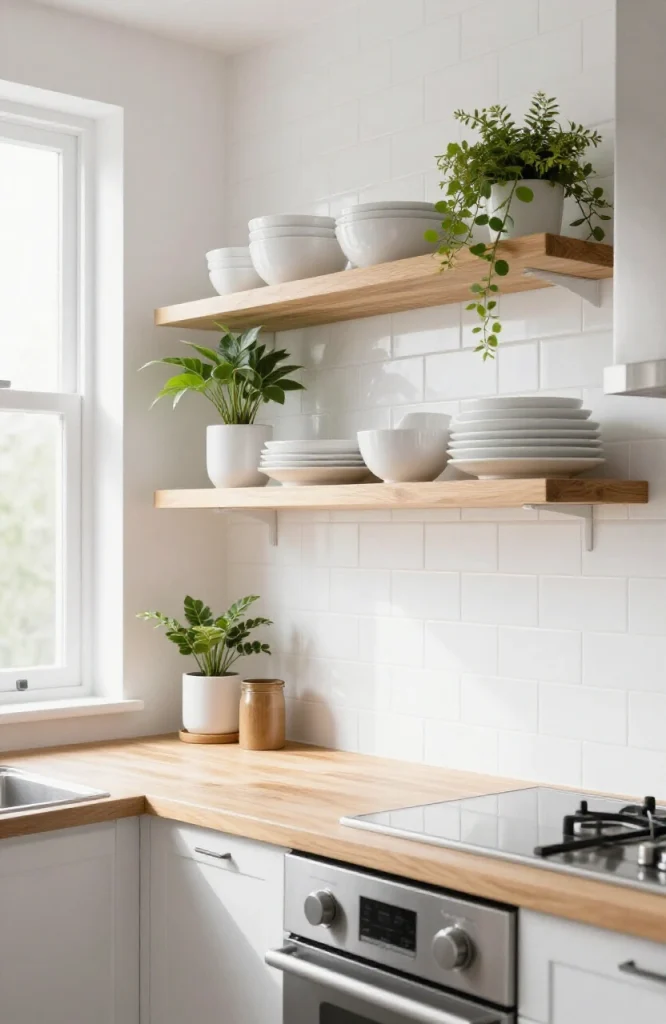
Solid wood floating shelves are the most popular option and for good reason. They add warmth to a kitchen, work in both modern and rustic spaces, and look expensive even when they’re not.
A thick oak or walnut shelf with hidden brackets is the cleanest version of this look. Style it with white ceramics and a few plants, and it fits in almost any kitchen.
Best for: Farmhouse, transitional, and Scandi-style kitchens.
2. White Painted Shelves on White Walls
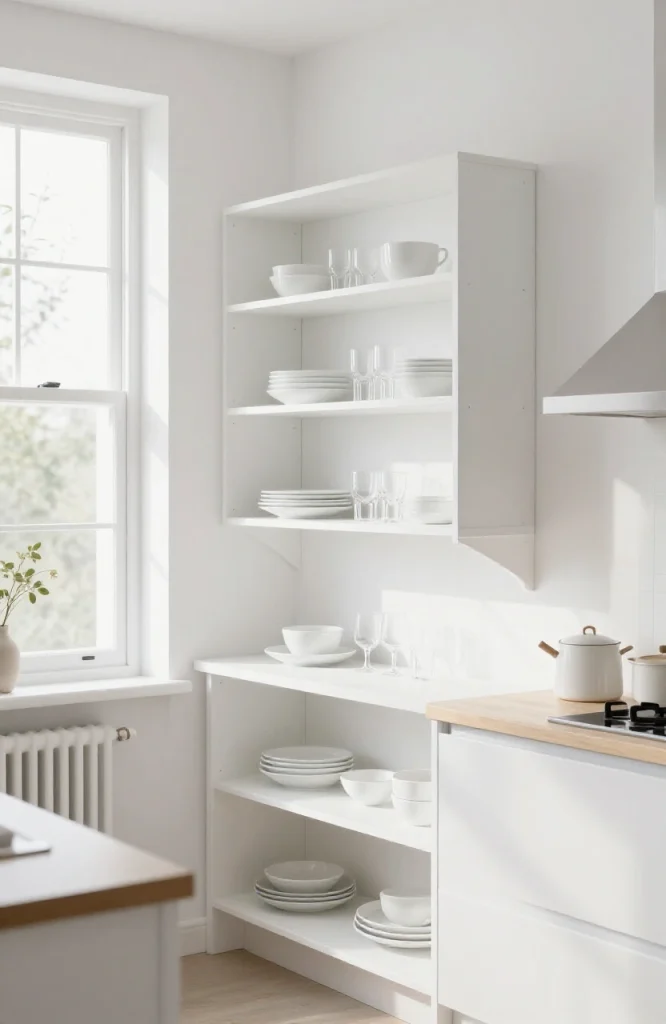
When the shelf color matches the wall, the storage almost disappears visually. This approach is a good option for small kitchens where you want to keep things open and light without making the space feel busy.
It works especially well if you display items with color, like terracotta bowls, blue pottery, or bright cookbooks, because the items become the focal point rather than the shelf itself.
Best for: Minimalist kitchens, small spaces, white or light-painted kitchens.
3. Black Metal Bracket Shelves
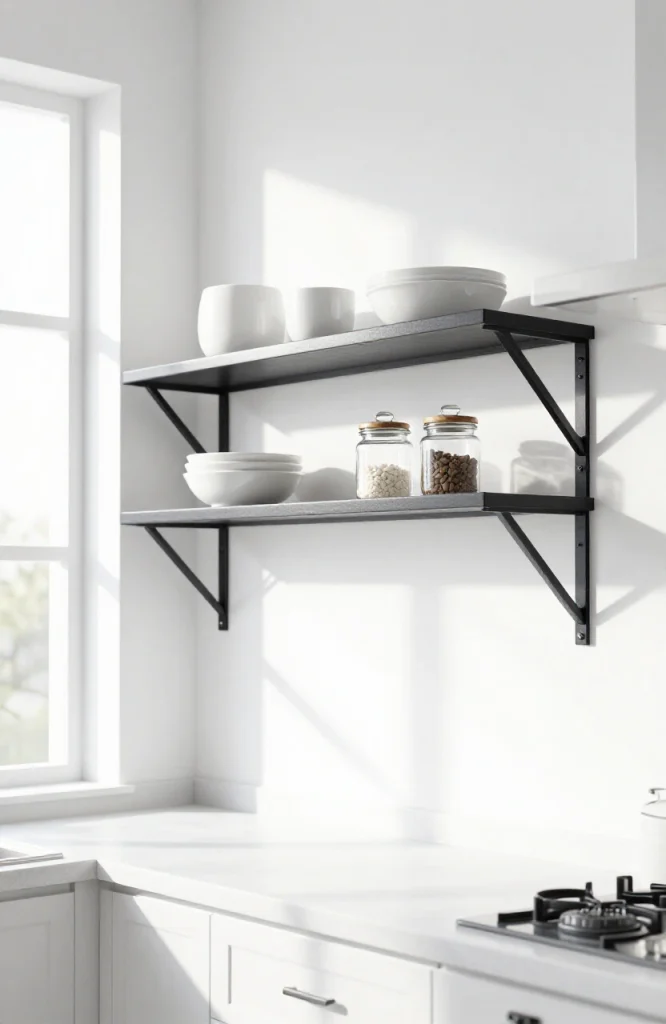
Black shelving with visible industrial brackets has a bold, confident look. The contrast against a white or light-colored wall is strong, and it adds an edge that solid wood alone rarely delivers.
You can pair it with black hardware on lower cabinets to tie the kitchen together. Just keep the items on the shelf relatively simple, because the shelf already does a lot of the visual work.
Best for: Industrial, modern, and black-and-white kitchens.
4. Corner Open Shelving
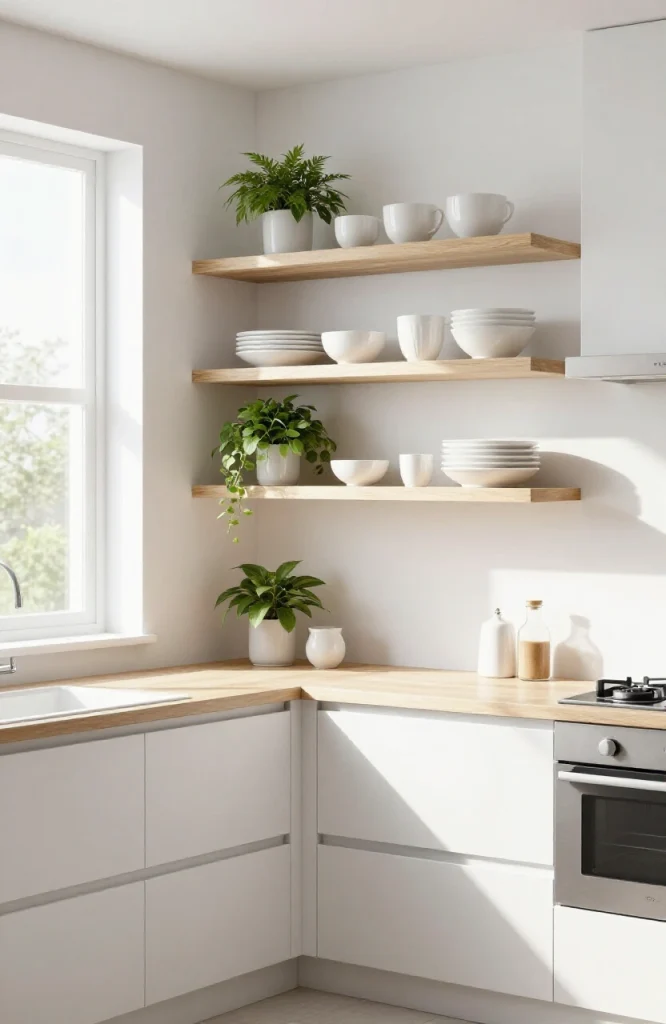
Corner spaces in kitchens are notoriously awkward. A standard cabinet in a corner either wastes space or becomes a cabinet nobody opens. Corner open shelves turn that dead space into something genuinely useful.
Wrap-around corner shelves work well for spices, small jars, and decorative items. They also prevent that corner-blind feeling that closed cabinetry often creates.
Best for: Kitchens with awkward layouts or unused corner walls.
5. Shelves Above the Sink
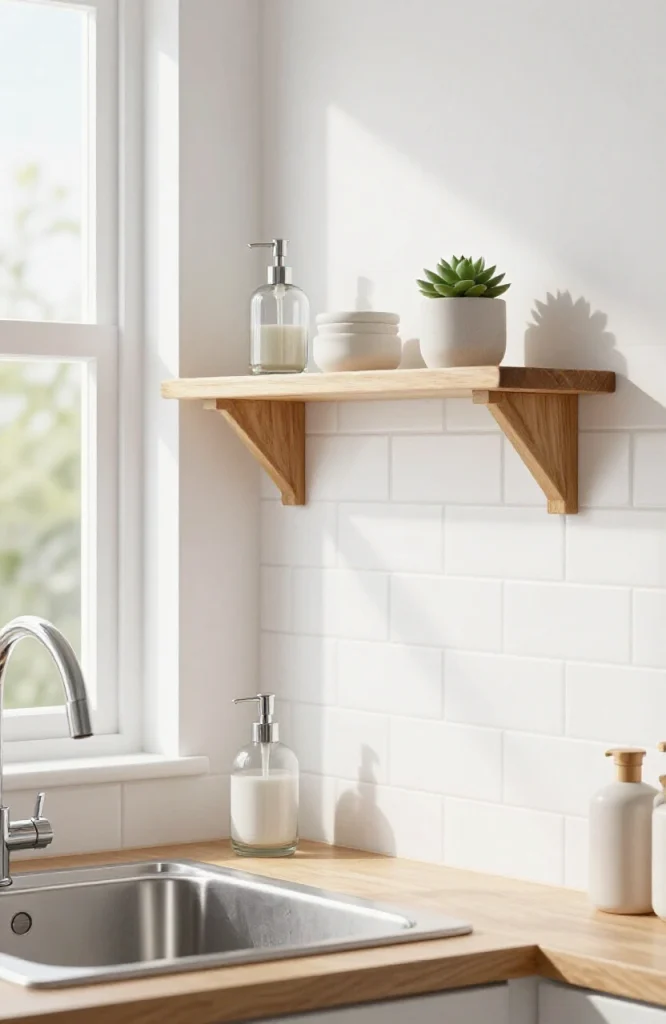
The wall above a kitchen sink is almost always underused. A single shelf there, placed just high enough to stay out of the way, holds dish soap, a small plant, hand cream, and a few frequently grabbed items.
It keeps the countertop cleaner and adds a bit of personality to the area of the kitchen you spend the most time standing at.
Best for: Any kitchen style, particularly small or galley kitchens.
6. Open Shelves Flanking the Range Hood
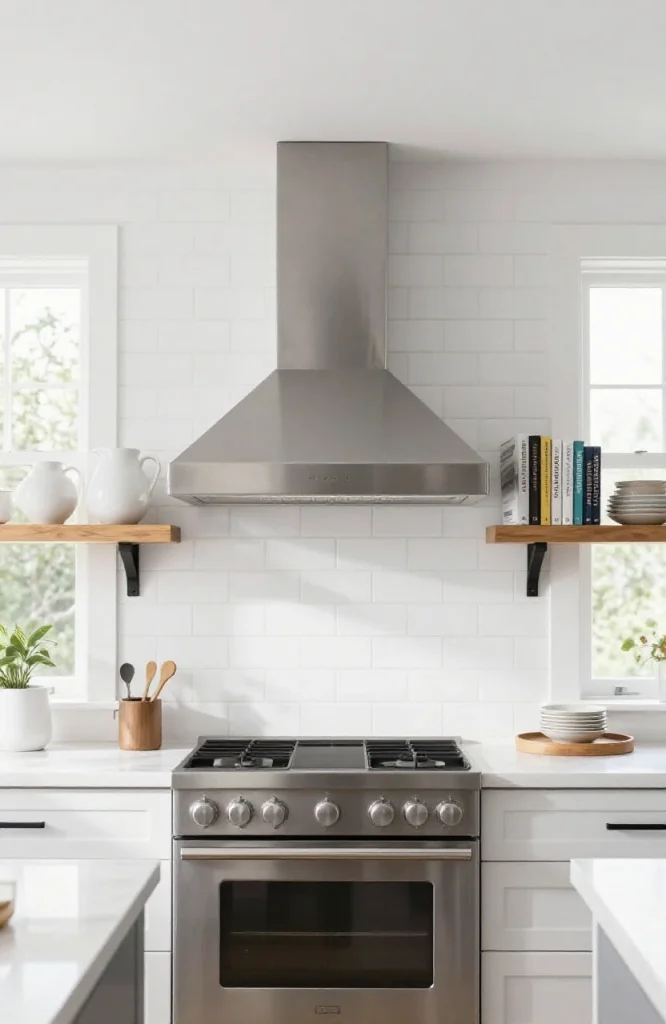
Placing open shelves on either side of the range hood is a popular choice with interior designers. It frames the cooking zone and turns it into a deliberate focal point.
This setup works best when you keep the shelves relatively sparse, a few pieces of cookware, some jars of spices, a wooden spoon or two. Cluttering them up next to the stove defeats the effect entirely.
Best for: Statement kitchens, modern farmhouse, Scandi-style spaces.
7. Wrap-Around Island Shelving
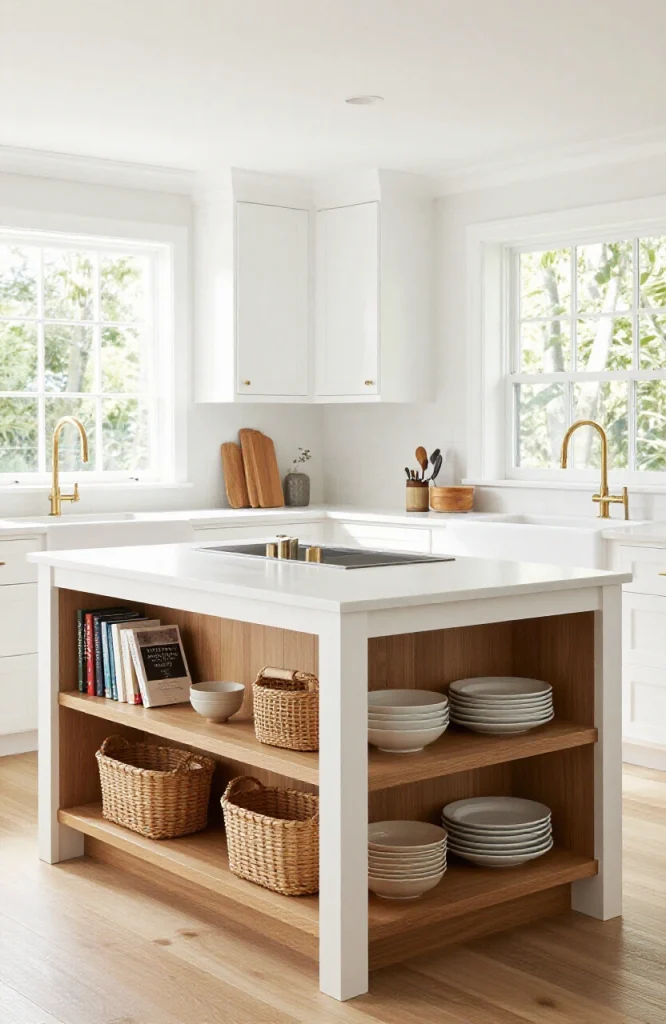
If your kitchen has an island, open shelves on the sides of it are a great way to add storage without adding visual weight. Cookbooks, baskets, and everyday plates all work well here.
It also breaks up what can otherwise feel like a heavy, boxy piece of furniture in the middle of the room.
Best for: Open-plan kitchens with a large or custom-built island.
8. Glass Shelves with Under-Shelf Lighting
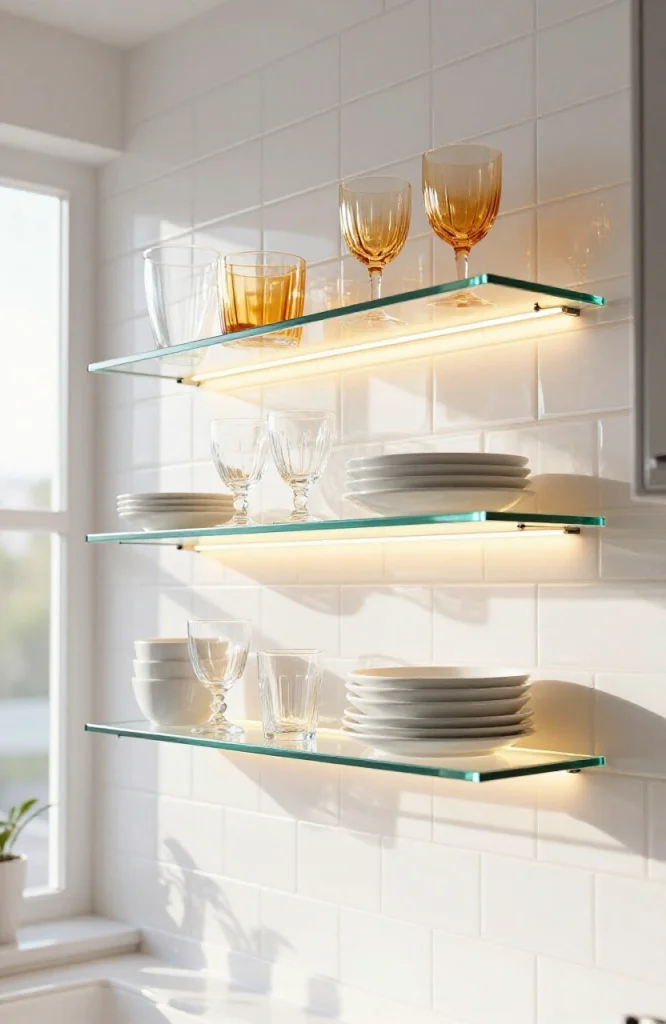
Glass shelves with LED strips underneath have a polished, high-end look. The light reflects through the glassware and dishes displayed on them, which creates a warm glow in the kitchen in the evenings.
They do require more careful styling than wood shelves, since glass is unforgiving with clutter. But if you keep them tidy, the result looks genuinely impressive.
Best for: Contemporary, transitional, and high-spec kitchen renovations.
9. Reclaimed Wood Shelves
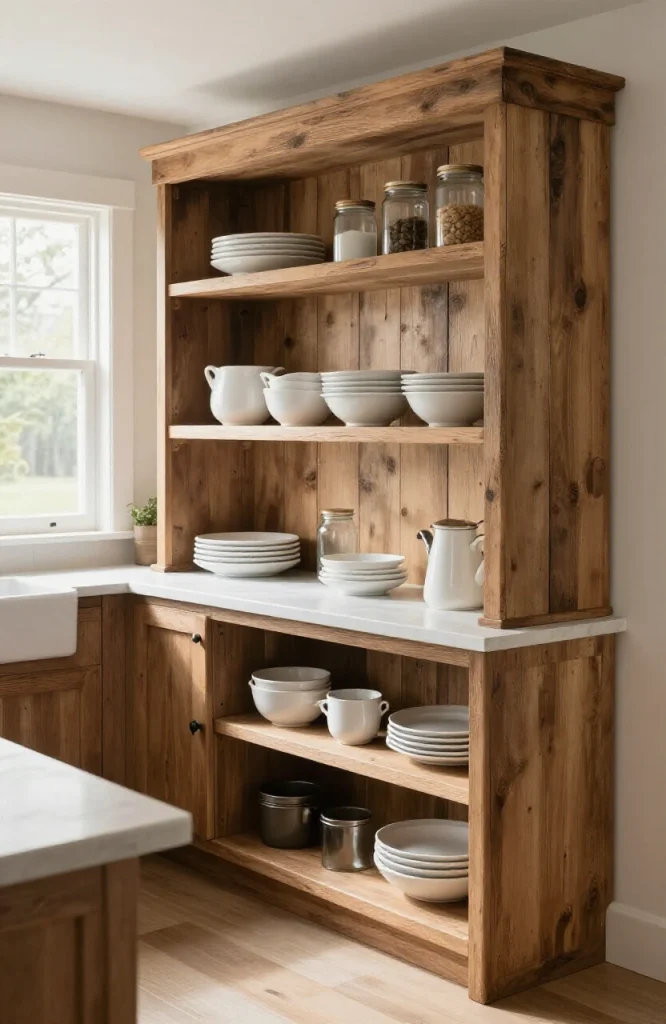
If you want shelves with real character, reclaimed wood is hard to beat. Every shelf looks different, with its own grain, knots, and natural imperfections. No two kitchens will look exactly the same.
The key is finishing the wood properly so it doesn’t absorb grease and moisture over time. A few coats of a food-safe sealer makes it both practical and durable.
Best for: Rustic, eclectic, and bohemian kitchen styles.
10. Stainless Steel Commercial Shelves
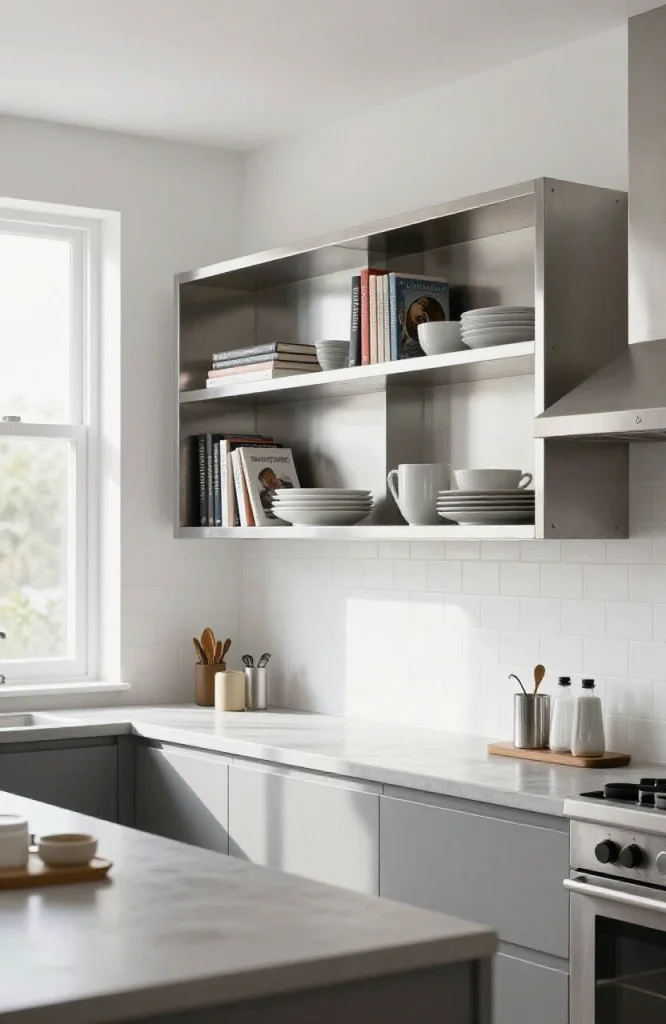
If you cook a lot and prioritize function over aesthetics, stainless steel open shelving gives you the same setup professional kitchens use. It’s easy to wipe down, incredibly durable, and actually gets better with a little patina.
It won’t suit every home, but in the right kitchen, a full wall of stainless shelving looks intentional and serious rather than cold or industrial.
Best for: Chef-style kitchens, loft apartments, heavily used cooking spaces.
11. Replacing Upper Cabinets Entirely with Open Shelves
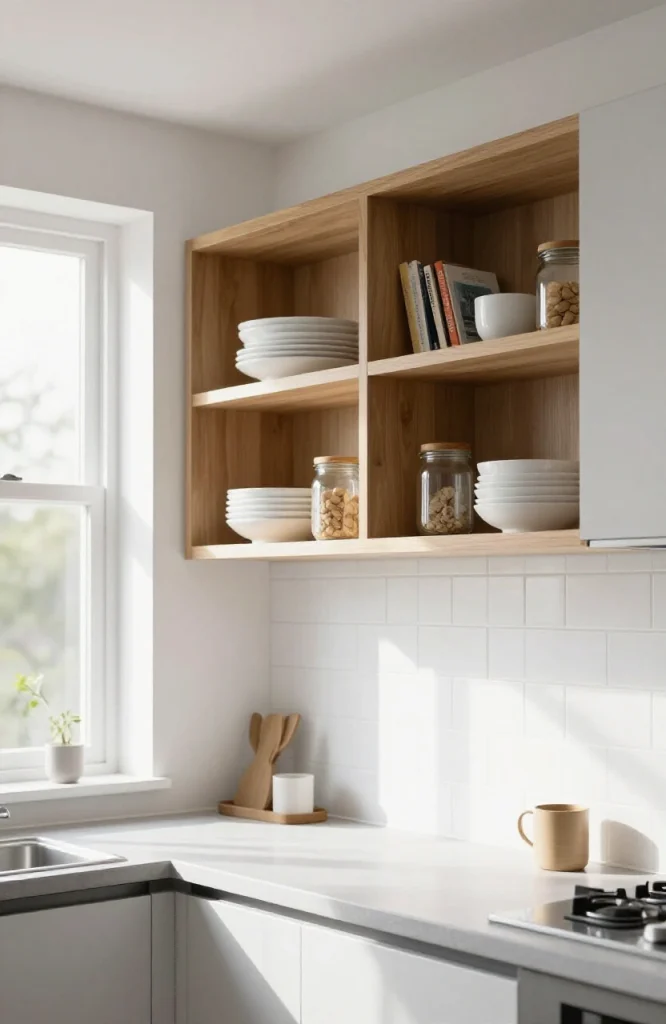
This is the boldest version of open shelving and also the most polarizing. Removing every upper cabinet and switching to open shelves completely changes the feel of a kitchen. The room immediately looks bigger and airier.
The downside is that you lose the ability to hide anything. Everything you own needs to look reasonably good on display, or the whole kitchen will look messy. It’s a commitment to staying organized.
Best for: Small kitchens, people who cook often and like to keep things tidy, minimalist design lovers.
12. A Mix of Open Shelves and Closed Cabinets
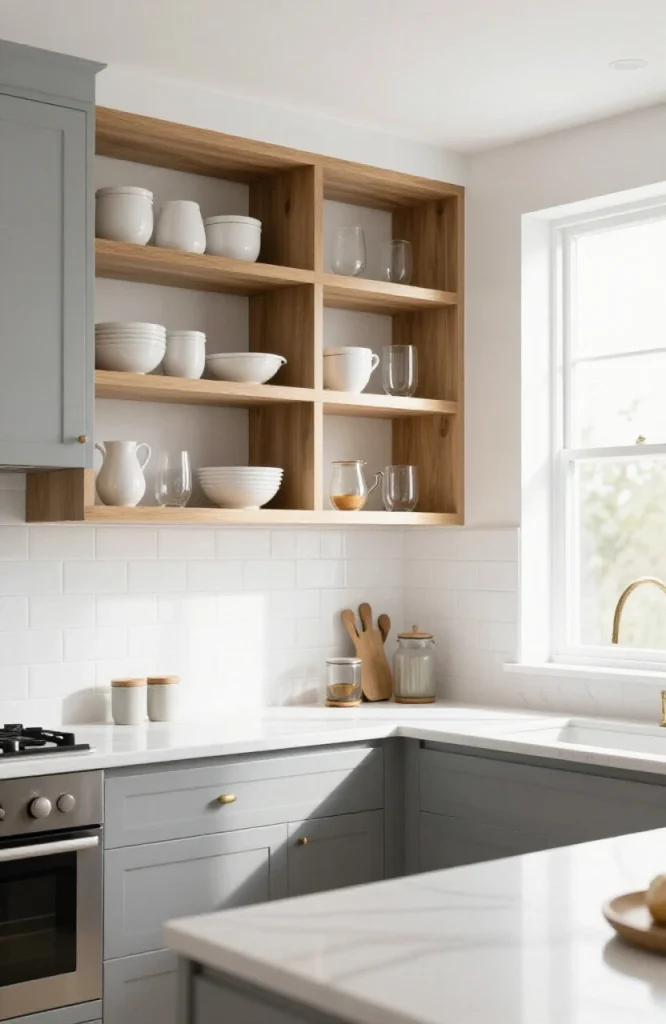
Most designers and homeowners who’ve lived with open shelving will tell you the same thing: a mix is almost always the best approach. Keep one or two walls open for display and everyday items, and use closed cabinets for everything else.
This gives you the visual benefit of open shelving without the pressure of having every single item on display. The practical items stay hidden, and the shelves hold the pieces you actually want to show off.
Best for: Most kitchens, most lifestyles. This is the most practical option for the majority of homes.
13. Shelves Over a Window
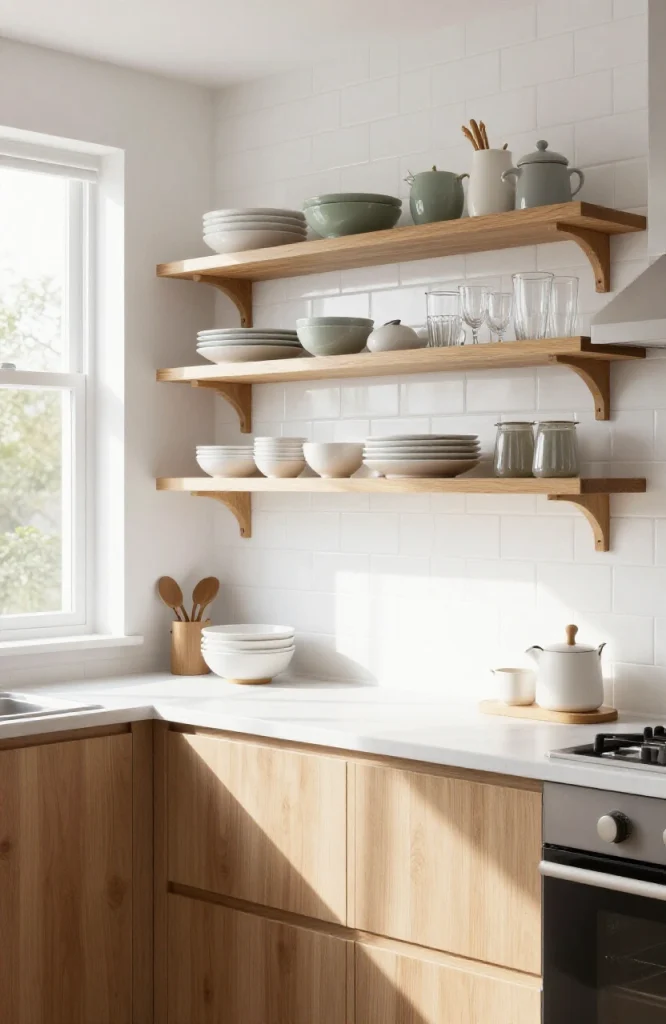
Instead of blocking a window with an upper cabinet, run a shelf or two above it. The light still comes through, and you get functional storage without losing that brightness.
This works particularly well in galley kitchens where every wall is valuable. A few small plants on these shelves thrive with the natural light, too.
Best for: Narrow kitchens, galley-style kitchens, kitchens with good natural light.
14. Built-In Niche Shelves
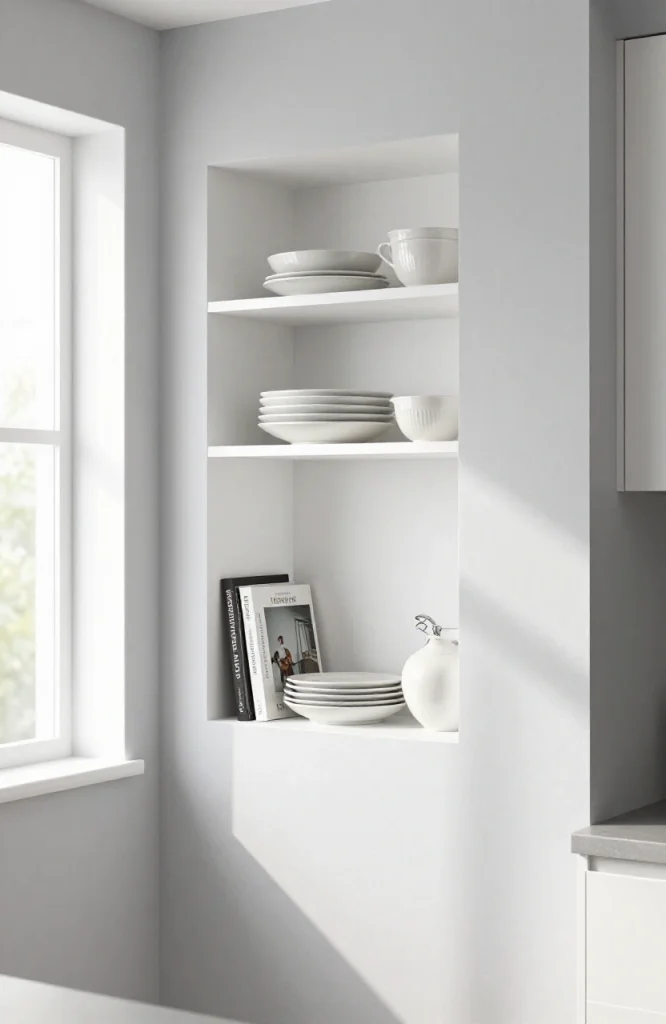
If your kitchen has a recessed niche or you’re doing a full renovation, building open shelving directly into the wall is the cleanest possible look. There are no brackets, no visible hardware, just a shelf that looks like it was always meant to be there.
It’s more expensive and requires planning from the beginning, but the result is seamless and adds a custom feel that’s hard to replicate any other way.
Best for: Full kitchen renovations, high-spec builds, anyone working with an architect or designer.
15. DIY Pipe and Wood Shelves
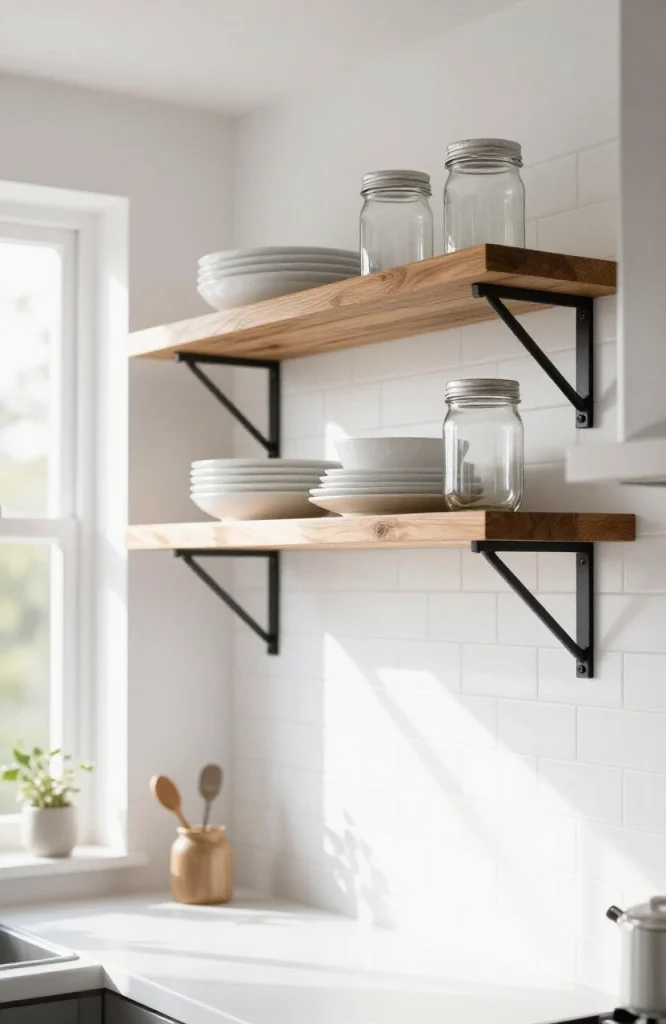
Black plumbing pipe brackets with a wood plank shelf on top became popular a few years ago and remains a genuinely affordable, DIY-friendly option. The materials are inexpensive, the installation is straightforward, and the result looks intentional rather than cheap.
It fits especially well in industrial or urban kitchens. The pipe hardware is also very forgiving if your walls aren’t perfectly level.
Best for: Budget renovations, renters who want to DIY, industrial-style kitchens.
16. Colorful Painted Shelves
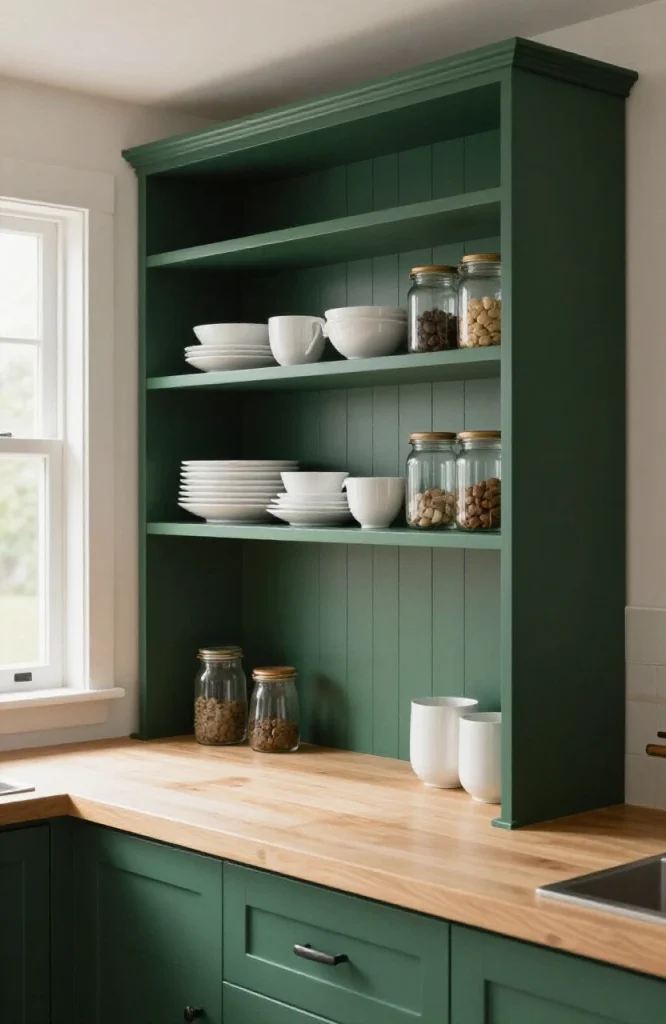
Most open shelving content defaults to wood tones and white paint. But painting shelves in a bold color, deep green, navy blue, terracotta, brick red, can completely transform a kitchen with relatively little effort.
The shelf itself becomes a design feature rather than a backdrop. This works particularly well when the rest of the kitchen is fairly neutral, so the shelves have room to stand out.
Best for: Eclectic, maximalist, and bold kitchens. Great for renters wanting to add personality without major changes.
17. Open Pantry Wall Shelving
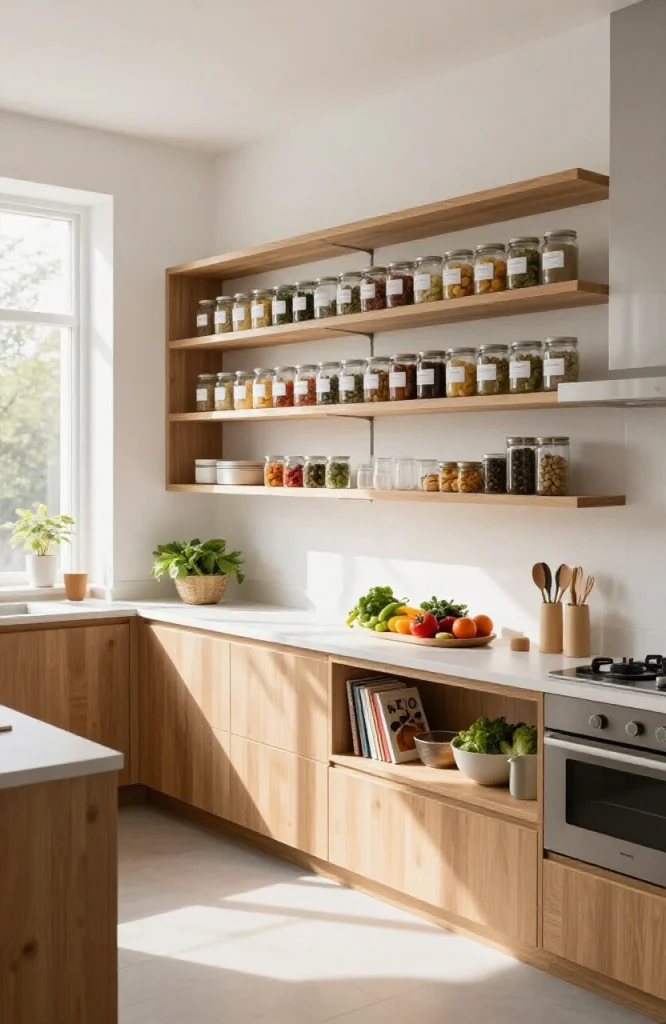
A full wall of open shelving, floor to ceiling, used as an open pantry, is a different kind of statement. It’s functional, high-storage, and looks incredible when styled well with uniform jars, labeled containers, and grouped categories.
It requires real commitment to organization, more than any other setup on this list. But if you cook frequently and enjoy having everything visible and accessible, it’s one of the most satisfying kitchen setups you can have.
Best for: Large kitchens, avid home cooks, people who like to keep everything organized and visible.
Open Shelving Kitchen Pros and Cons
Before you make a decision, here’s a clear breakdown of what you’re actually signing up for.
The Pros
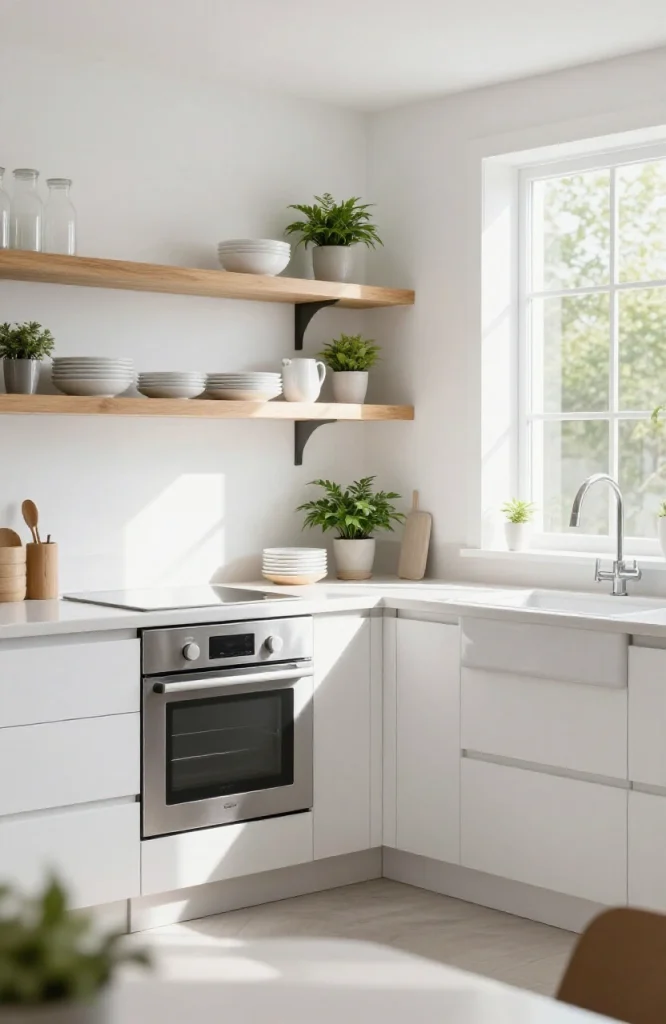
It makes small kitchens feel bigger. Upper cabinets close in a room, especially in narrow or dark kitchens. Open shelves let the eye travel further and allow light to move around the space more freely. If your kitchen already feels tight, this is one of the most noticeable changes you can make.
Everything is easy to grab. No more opening three doors to find the right pan. Dishes, glasses, and spices at eye level are accessible in a second. For people who cook daily, this is a genuine improvement to their routine rather than just a visual one.
It costs less than full cabinetry. Open shelves need fewer materials, less hardware, and a simpler installation process. If you’re renovating on a budget, shelves over upper cabinets is a smart way to save money and still get a good-looking result.
Styling is flexible. You can rearrange, add seasonal pieces, and refresh the look without touching a cabinet or spending anything. This kind of flexibility is something closed cabinetry simply can’t offer.
It works in almost any kitchen style. Wood suits farmhouse and rustic kitchens. Metal fits industrial and modern spaces. Painted shelves adapt to almost anything. Open shelving doesn’t lock you into one aesthetic the way heavy cabinetry sometimes does.
It encourages you to stay organized. When everything is on display, you tend to care more about keeping it tidy. Many people who switch to open shelving mention this as a surprise benefit. The visibility creates a kind of light accountability.
The Cons
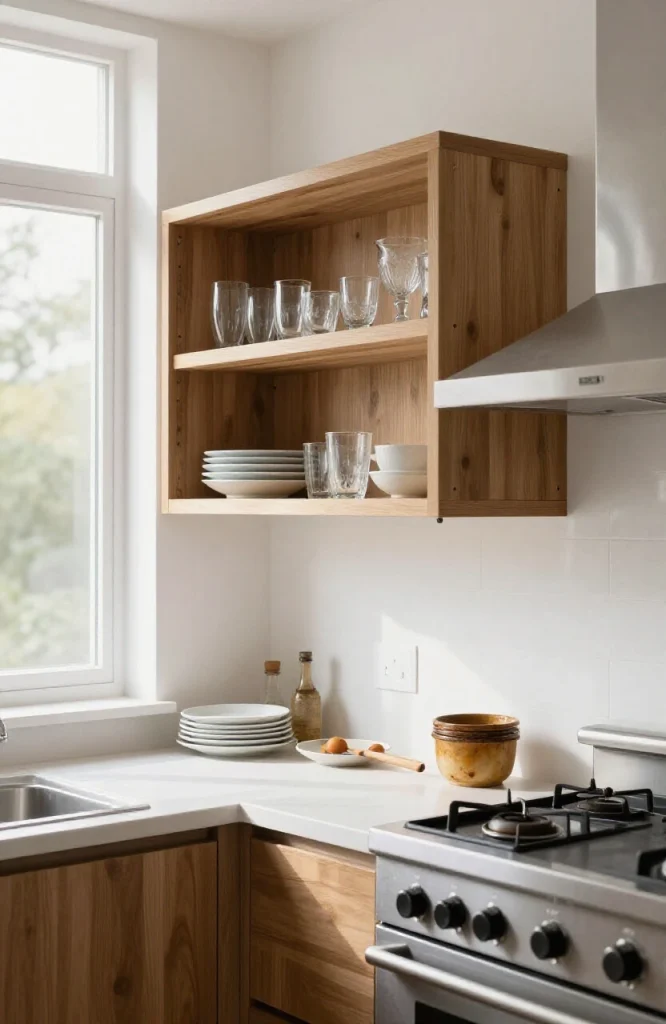
Dust and grease build up fast. Everything on the shelf is exposed. Items near the stove pick up grease splatter, and everything else collects dust. You’ll clean the shelves and the items on them more often than you would with closed cabinets. This is the most common complaint from people who live with open shelving daily.
Clutter is fully visible. There’s no door to close on a bad week. If your kitchen tends to get busy and disorganized, open shelves will show it. The look only holds up when things are reasonably tidy.
It’s not ideal for bulk storage. Large pots, bulky appliances, and pantry staples can look heavy and awkward on open shelves. In most cases, you’ll still need some closed cabinets for the items that don’t photograph well.
It requires curation. You can’t just put things up there without thinking about how they look together. Mismatched containers, random packaging, and clashing colors will make even beautiful shelves look chaotic. Some people love this aspect of open shelving. Others find it exhausting to maintain.
It may affect resale appeal. Traditional buyers often prefer the tidy, concealed look of full cabinetry. Open shelving appeals to a specific kind of buyer. If you’re renovating to sell soon, it’s worth keeping this in mind.
Quick Comparison: Open Shelving vs Closed Cabinets
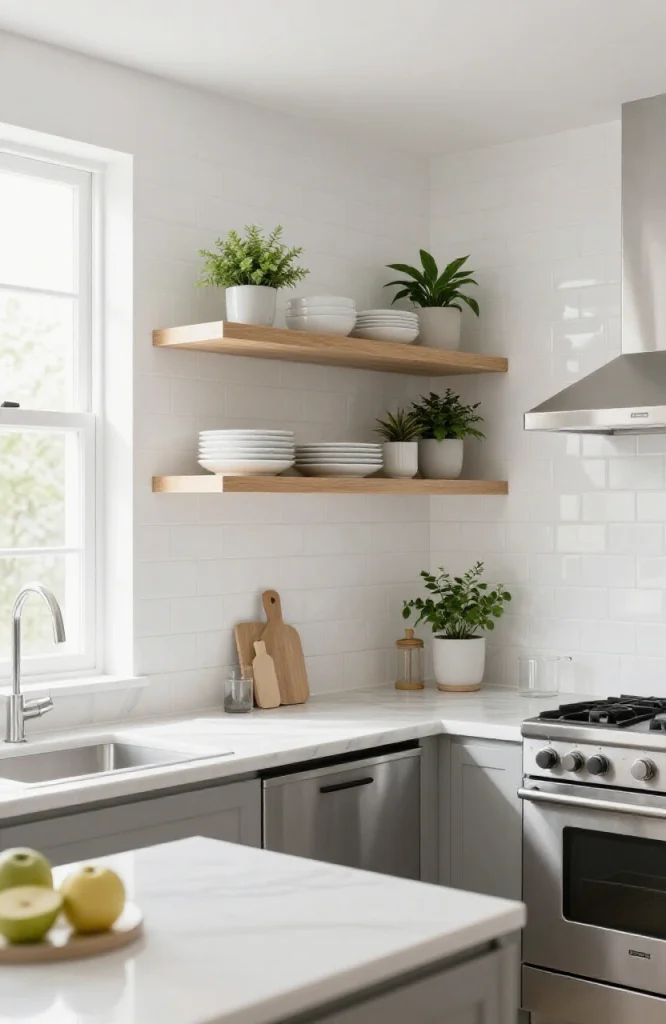
| Factor | Open Shelving | Closed Cabinets |
|---|---|---|
| Visual feel | Open, airy, spacious | Enclosed, neat, uniform |
| Cleaning effort | Higher, more frequent | Lower, less often |
| Installation cost | Lower | Higher |
| Storage capacity | Limited | More flexible |
| Clutter visibility | High | Hidden |
| Styling flexibility | Very high | Lower |
| Best for | Display items, everyday use | Bulk storage, low-maintenance homes |
| Resale appeal | Mixed | Broadly preferred |
Who Should Choose Open Shelving?
Open shelving is a genuinely good fit if you:
- Cook regularly and want quick access to what you use every day
- Like decorating and enjoy curating how your kitchen looks
- Have a small kitchen that needs more visual breathing room
- Are renovating on a budget and want to cut costs on upper cabinetry
- Already own attractive dishware, ceramics, or glassware worth displaying
It’s probably not the right choice if you:
- Dislike dusting or frequent cleaning
- Have a large amount of kitchen gear that doesn’t look good on display
- Prefer a low-maintenance kitchen you don’t have to think about
- Are planning to sell your home in the near future
If you’re unsure, the mixed approach described in idea #12 above gives you most of the benefits with far fewer of the downsides.
How to Style Open Kitchen Shelves Without the Mess
The difference between open shelves that look intentional and open shelves that look cluttered usually comes down to a few simple habits.
Stick to a limited color palette. Two or three tones across all displayed items keeps things cohesive. Mixing too many colors, even attractive ones, creates visual noise.
Use matching containers for dry goods. Decanting pasta, rice, and spices into matching glass jars immediately elevates the look and makes the shelves easier to scan when you’re cooking.
Leave breathing room. Not every inch needs to be filled. Empty space on a shelf makes the items around it look more deliberate.
Mix textures, not chaos. A wooden cutting board, a few ceramic bowls, a small plant, and some glassware work together because each one has a different texture. That variety reads as intentional rather than random.
Put the ugly stuff in closed cabinets. Cleaning products, mismatched storage containers, and half-empty bags of snacks belong behind a door. Open shelves are for the items that earn their place visually.
Open Shelving Materials: A Quick Comparison
| Material | Look | Durability | Cost | Best For |
|---|---|---|---|---|
| Solid wood | Warm, classic | High | Medium to high | Farmhouse, rustic, transitional |
| Reclaimed wood | Rustic, unique | Medium | Medium | Eclectic, bohemian |
| MDF (painted) | Clean, modern | Medium | Low | Budget builds, painted finishes |
| Metal or steel | Industrial, bold | Very high | Medium | Modern, industrial kitchens |
| Glass | Light, elegant | Medium | High | Contemporary, high-spec renovations |
| Plywood (sealed) | Casual, honest | Good | Low to medium | DIY builds, budget renovations |
Open Shelving vs Glass-Front Cabinets
If you love the idea of displaying your kitchenware but aren’t sure about fully open shelves, glass-front cabinets are a strong middle ground.
They let you see your dishes and ceramics while protecting them from dust and grease. The look is similar to open shelving from across the room but far more low-maintenance on a day-to-day basis.
The tradeoff is cost. Glass-front cabinets are more expensive than plain closed cabinets and much more expensive than open shelving. They also still require a tidy interior, since the glass makes everything visible anyway.
For kitchens that see a lot of cooking activity, glass-front cabinets are often the more practical choice. For kitchens that prioritize a light, airy look and don’t mind the upkeep, open shelving still wins on visual impact. If you’re thinking about the wider color direction for your kitchen, check out these kitchen backsplash color ideas to see how shelf materials pair with different tile and paint choices.
Open Shelving and Your Home’s Overall Style
Open shelving doesn’t exist in isolation. The way it looks depends heavily on what surrounds it, the wall color, the floor, the cabinet hardware, and the lighting.
If you’re working on a room-by-room refresh and want to see how individual design choices connect across a home, the bedroom paint color ideas guide covers how to build a color story that carries through multiple rooms. Similarly, the approach to home office lighting ideas shares useful thinking on how light direction and warmth affect how colors and materials read in a space, which applies directly to kitchen shelving decisions too.
Frequently Asked Questions
Is open shelving in the kitchen a good idea?
It depends on your lifestyle. If you cook often, enjoy organizing, and like to display your kitchenware, open shelving works really well. If you prefer low-maintenance storage and a tidier, more concealed look, a mix of open shelves and closed cabinets tends to be the better option.
What are the biggest downsides of open shelving in a kitchen?
Dust and grease accumulation is the most common complaint. Everything on the shelf is exposed, so you’ll clean the items and the shelf itself more frequently than you would with closed cabinets. Visible clutter is the other main issue. There’s nowhere to hide the mess on a busy week.
How do I keep open kitchen shelves looking neat?
Limit the color palette of displayed items, use matching containers for dry goods, leave some space between objects, and store anything that doesn’t look good out of sight in closed cabinets. Editing your shelves every few months also helps keep them from gradually becoming cluttered.
Are open shelves cheaper than kitchen cabinets?
Generally yes. Open shelves require fewer materials, simpler construction, and less hardware than full upper cabinetry. A DIY installation with basic brackets and a solid wood plank can be done for a fraction of the cost of custom cabinets.
What should I put on open kitchen shelves?
Everyday dishes, glasses, mugs, and small bowls work well since you use them often, so they won’t collect dust. Cookbooks, plants, and matching jars of dry goods add personality and practicality at the same time. Avoid putting anything on the shelves that you wouldn’t want guests to see.
Is open shelving still popular in 2026?
Yes. While some trend cycles have pushed open shelving in and out of favor, it remains a practical and widely used option in kitchen design. The conversation has shifted from “open vs closed” to how to combine the two well, which is actually a more useful way to think about it.
Can I mix open shelves with regular cabinets?
Absolutely, and most designers recommend it. Open shelves work best for items you use every day and want to display. Closed cabinets handle bulk storage, cleaning products, and anything that doesn’t look great on show. The combination gives you the best of both approaches without the downsides of either one alone.
Final Thoughts
Open shelving kitchen setups work really well for the right person in the right kitchen. They look great, cost less than full cabinetry, and make small spaces feel bigger. The downside is real: more cleaning, more curation, and more visible mess when life gets busy.
The 17 ideas above cover a range of styles, budgets, and kitchen sizes. Whether you want one simple floating shelf above the sink or a full open pantry wall, there’s a version of this that fits your home.
If you’re still deciding, the mixed approach is almost always the safest starting point. Add a few open shelves first, live with them for a few months, and then decide how far you want to go.