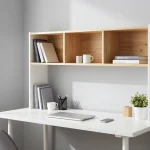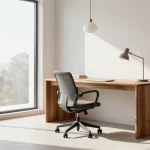

Working from home in a rental comes with a real constraint: no drilling, no painting, no permanent changes your landlord won’t approve. These 7 rental-friendly home office ideas cover exactly what renters need, from corner setups that require zero wall anchoring to clever dividers that create genuine separation between work and living space. Each idea here comes from real-world experience styling rented apartments and houses, with a focus on setups you can pack up and take with you when you leave.
1. Turn an Unused Corner Into a Focused Desk Zone

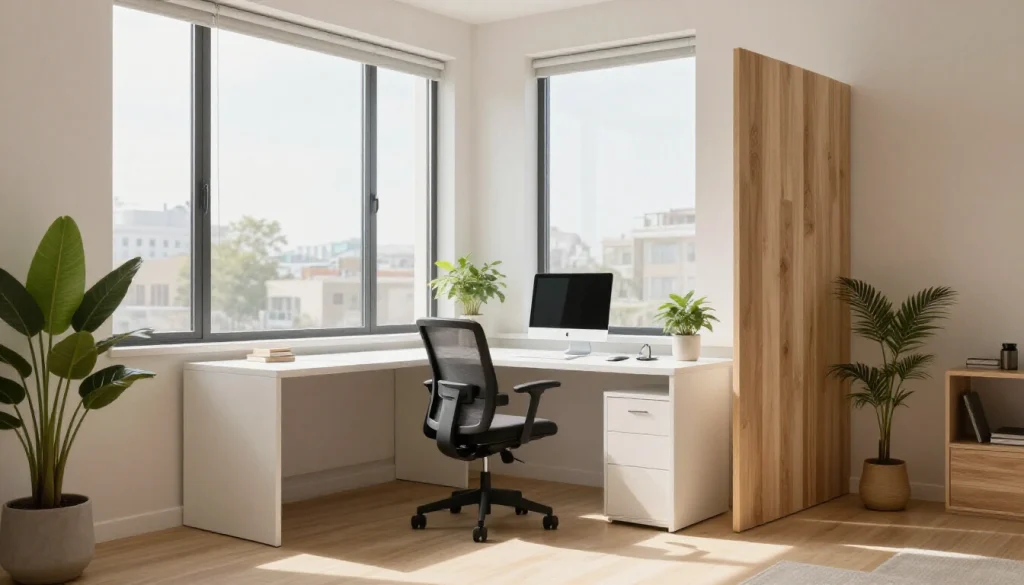
An unused corner is one of the most overlooked spaces in a rental. A freestanding L-shaped desk or a compact writing desk placed in a corner gives you a contained, dedicated work spot without touching a single wall.
The key to making a corner feel like a proper office is defining the zone. Place a rug underneath the desk to anchor the space visually and acoustically. Add a floor lamp behind the monitor for proper directional light, and position a small freestanding shelf beside the desk for storage.
Even in a shared room, this approach creates a mental boundary between work and home life. You sit down, you work. You walk away, the living area takes over. For zoning techniques that apply directly to this kind of setup, the open floor plan decoration ideas guide covers practical ways to define zones without walls.
2. Convert a Closet Into a Compact Home Office
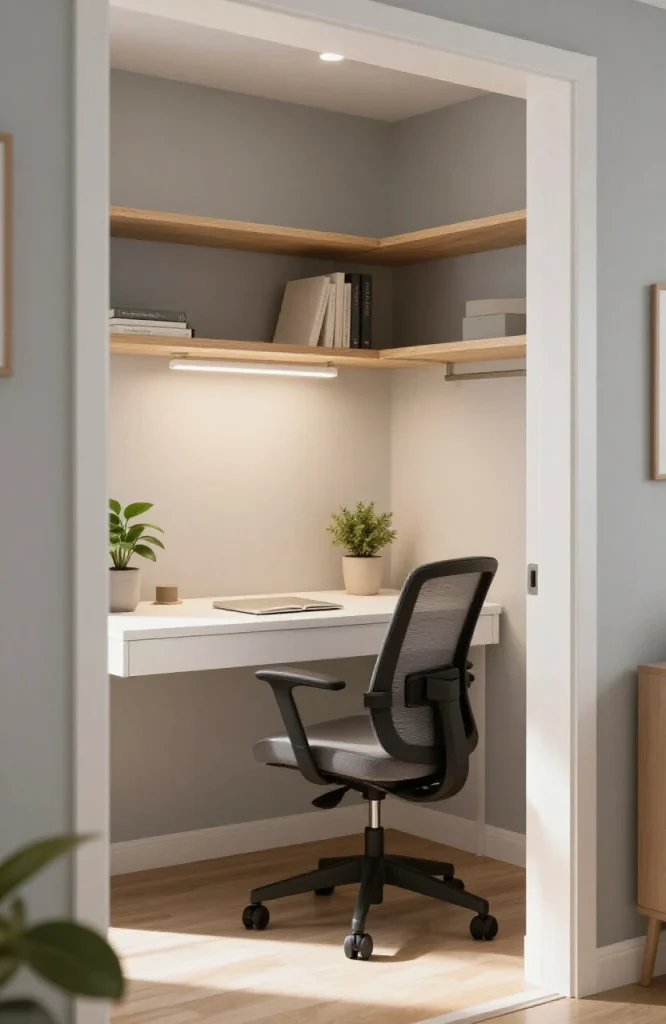
A closet office, often called a cloffice, is one of the smartest rental-friendly home office ideas if you have a spare closet you’re not fully using. You don’t need to do any permanent work to make it functional.
Remove the hanging bar by unscrewing it from the brackets. Most brackets come out cleanly, leaving only small screw holes. Slide a wooden board across the existing shelf brackets to create a desk surface, or buy a narrow desktop that fits the closet’s width. A power strip and a USB-powered task light handle all the electrical needs without hardwiring anything.
The biggest advantage of a cloffice is the video call background. You get a clean, controlled frame instead of a busy room behind you. Close the doors at the end of the day and the office disappears entirely, which matters a lot in studio apartments where every square foot carries double duty.
3. Use a Freestanding Room Divider to Define Your Work Area
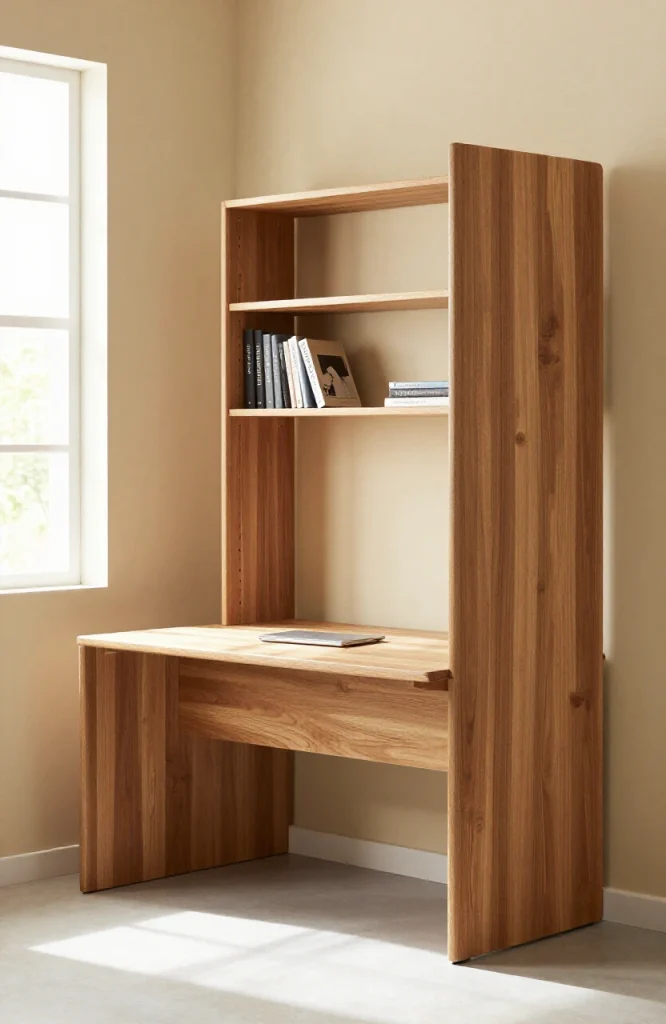
A freestanding room divider creates a visual boundary between your desk and the rest of the room without anchoring anything to the walls. The two best options are a folding screen or a tall open bookshelf.
A folding screen with three to four panels stands independently and adds visual texture to the space. A tall open shelving unit, like a cube grid or a narrow ladder shelf, doubles as a divider and provides storage on the office side. Books, files, and small plants fill the shelves while absorbing some ambient noise.
Position the divider directly behind the desk chair so your back is to it, mimicking the feel of a walled-in office. This works well in bedrooms and living rooms where you need psychological separation from work more than physical enclosure.
4. Add a Peel-and-Stick Accent Wall Behind the Desk
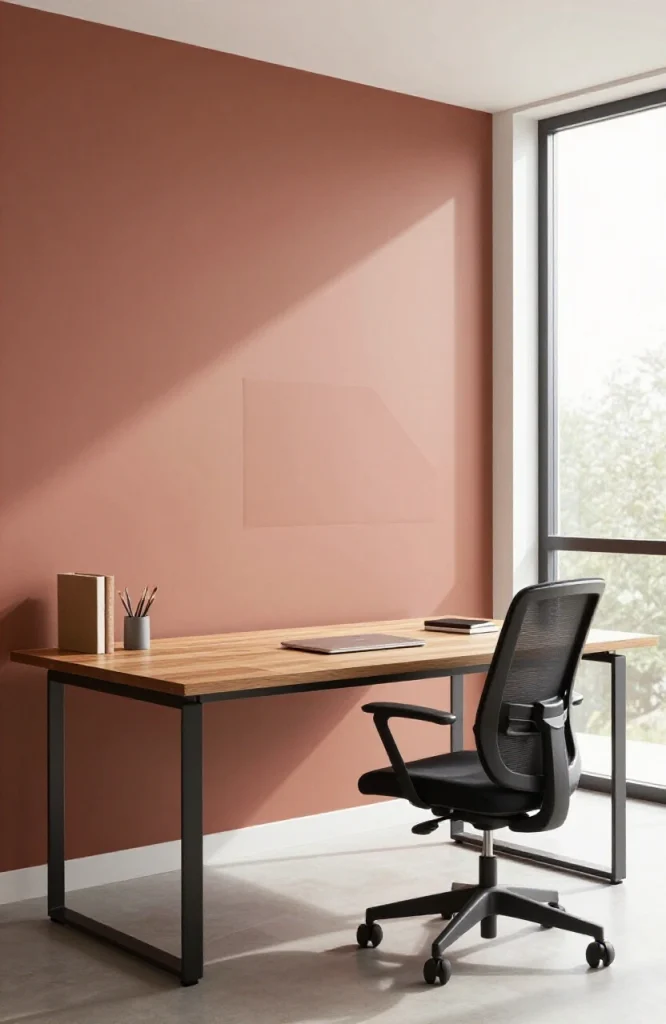
A removable accent wall behind your desk does two things at once: it marks out the office zone visually, and it gives you a far better video call background than a blank rental wall.
Removable wallpaper is designed specifically for renters. Most products use a dry adhesive that peels cleanly from painted drywall without leaving residue or pulling the paint. Textured options like grasscloth, linen-look, or subtle geometric prints work best in a home office because they read as intentional on camera without being distracting.
You don’t need to cover the entire wall. A strip roughly three to four feet wide and floor-to-ceiling directly behind the desk creates the effect. Pair it with lightweight shelves mounted using Command strips above the desk for small plants or a framed print. This is the same no-damage approach used in rental kitchen updates, where removable tile and peel-and-stick products do the visual work without the commitment.
5. Choose Freestanding Shelves Over Wall-Mounted Storage
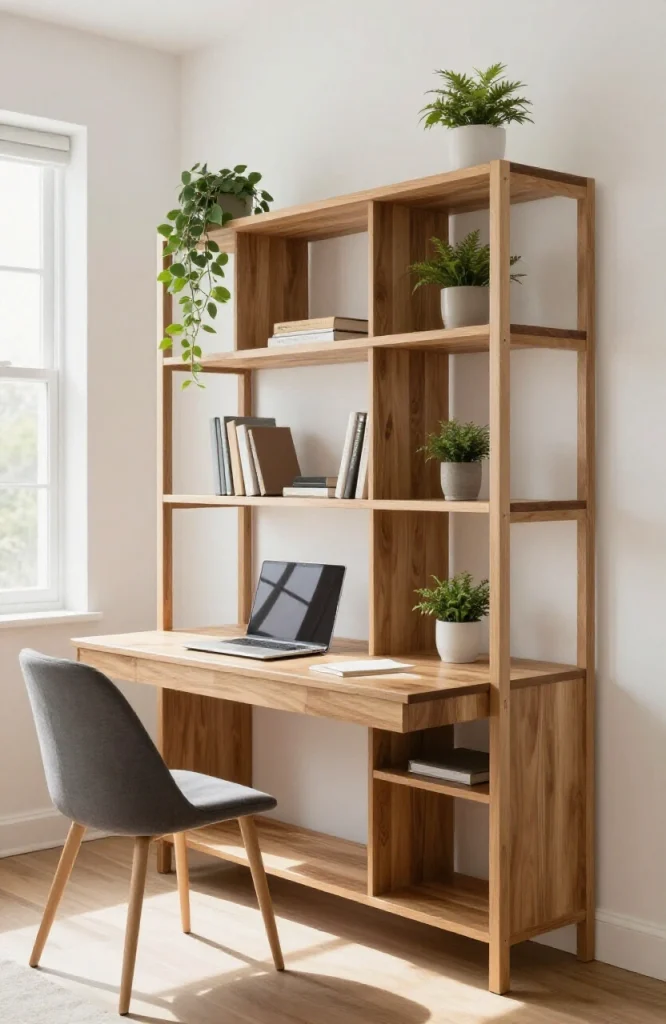
Wall-mounted shelving is off limits in most rentals, but freestanding options carry the same storage load without a single anchor bolt. A tall unit in the 70-to-80-inch range gives you vertical storage that rivals built-in shelving.
Ladder shelves lean against the wall and hold monitors, books, and decor without drilling. Open cube shelving units sit independently and can be repositioned as your setup changes. Use wicker or fabric storage baskets in the lower cubbies to hide cables, chargers, and files, keeping the visible surfaces clean.
Watch for top-heaviness with tall freestanding units. Load lighter items on the upper shelves and heavier things at the base to keep the unit stable. If a shelf feels unsteady, an anti-tip strap attached using Command strips adds a safety margin without damaging the wall.
6. Handle Lighting Without Touching the Wiring
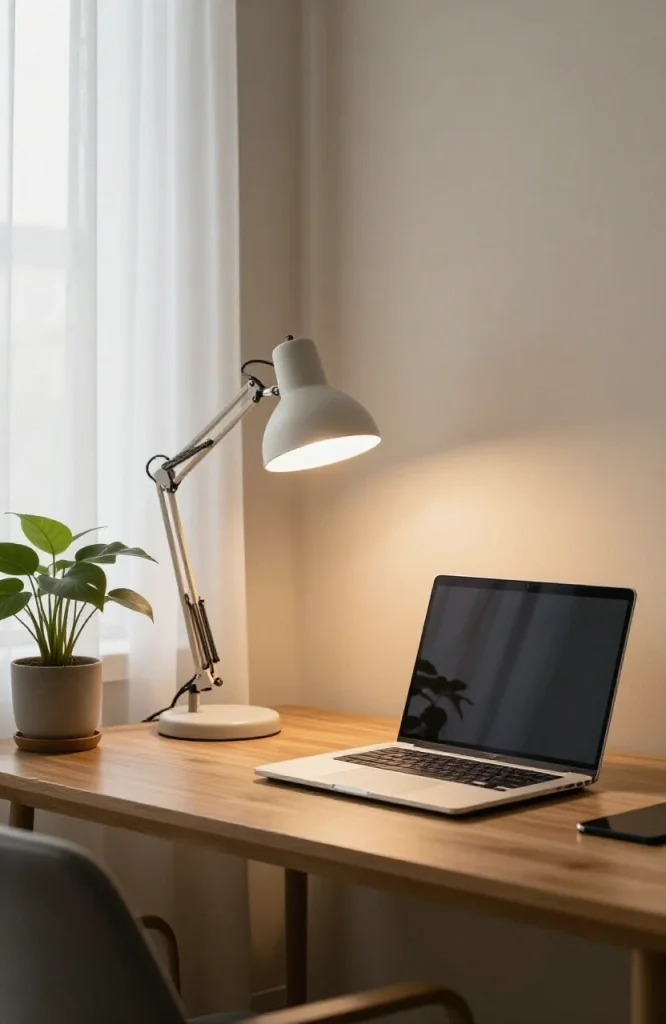
Good lighting makes a bigger difference to a home office than most people expect. The problem in rentals is that existing overhead fixtures are often too harsh for focused work or video calls, and you can’t swap out the wiring.
A floor lamp positioned to the side and slightly behind the monitor removes screen glare and fills the space with warm, directional light. An arc lamp works particularly well in a corner setup because it can reach directly over the desk from a floor-level base, giving you overhead-style coverage without a ceiling fixture.
For task lighting directly on the desk, clip-on LED lights mount to the back of a monitor or to a shelf edge without tools. USB-powered bias lighting strips placed behind the monitor reduce eye strain during long sessions. None of these require modifying the rental’s electrical system in any way.
7. Keep Cables Tidy Without Drilling
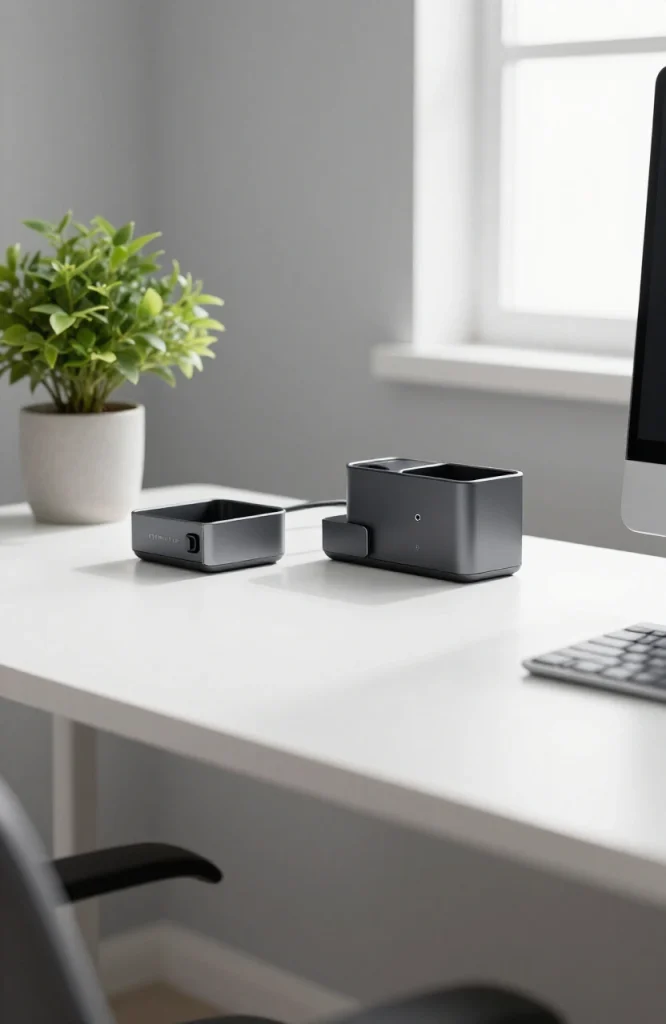
Visible cables make a home office look unfinished fast. Several no-drill cable management options exist specifically for renters, and they work just as well as anything permanent.
A cable management box sits on the desk or floor and houses a power strip, keeping the tangle of cords inside a single closed unit. Removable cord clips, specifically the 3M Command wire clip range, stick to baseboards or desk legs and guide cables in straight runs. They peel off cleanly when you leave.
Velcro ties bundle cables behind the desk and are repositionable at any time. For runs along the floor, a cable cover channel sits flat and lifts off without adhesive when you move out. A clean cable setup also reads better on video calls, where visible cords in the background undercut an otherwise professional-looking space.
Frequently Asked Questions
Can I really have a functional home office in a rental without drilling?
Yes. A freestanding desk, no-drill shelving, floor lamps, and removable wallpaper cover the core needs of a home office without any permanent modifications. The main adjustment is choosing freestanding furniture over anything wall-mounted.
What is the best rental home office idea for a studio apartment?
The cloffice, or closet conversion, is the most effective option for studio apartments because it lets you close the office off completely at the end of the day. A corner desk with a freestanding room divider is the best alternative when a spare closet isn’t available.
Does removable wallpaper actually come off cleanly?
Most quality peel-and-stick brands, including Chasing Paper, Tempaper, and Walls Need Love, remove cleanly from standard painted drywall. Always test a small section first and avoid using it on freshly painted or heavily textured walls where adhesion and removal can be unpredictable.
How do I make my rental home office look professional on video calls?
A peel-and-stick accent wall, a tidy bookshelf behind the desk, and proper side lighting make the biggest difference. Avoid sitting with a window directly behind you, as it creates a silhouette effect on camera that’s difficult to correct.
A Home Office That Moves With You
Every one of these rental-friendly home office ideas works without a single hole in the wall or a conversation with your landlord. Start with the desk and divider that fit your floor plan, then build the lighting and storage around them. A rug, a floor lamp, and a peel-and-stick accent wall are enough to turn almost any corner or closet into a workspace that feels intentional and looks the part.
If your rental has a larger open living space you’re working around, flexible workspace setups covers additional strategies for splitting a shared room into productive zones without permanent changes.