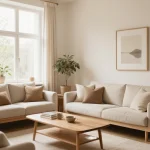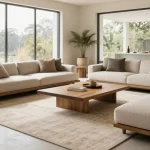

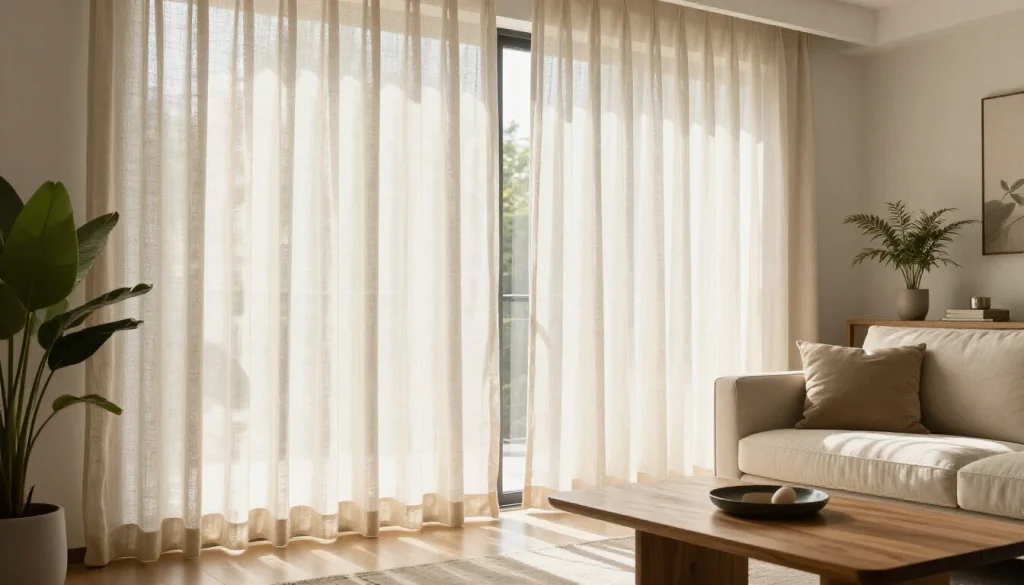
Picking curtains for a living room is not just about covering a window. The right curtains control how much light enters, add privacy when needed, and tie color and texture into the rest of the room. After working with curtains in real homes, testing different fabrics under direct sun and testing blackout linings against street noise, the list below collects living room curtain ideas that hold up beyond a single season. Each idea explains the fabric, the hanging style, or the design trick involved, along with where it works best, so you can match a curtain choice to your window size, light needs, and existing furniture.
1. Sheer Curtains for Soft Natural Light

Sheer curtains use lightweight, semi-transparent fabric such as voile or chiffon. They let daylight filter through while softening direct sun and reducing glare on screens. In a living room, sheers work well on windows that need privacy without blocking the view entirely, such as windows facing a quiet street or garden. Hang them close to the glass on a separate rod from heavier drapes so they layer cleanly. White or off-white sheers reflect the most light, while pale gray or beige sheers add a slight tint without darkening the room.
2. Blackout Curtains for Movie Nights
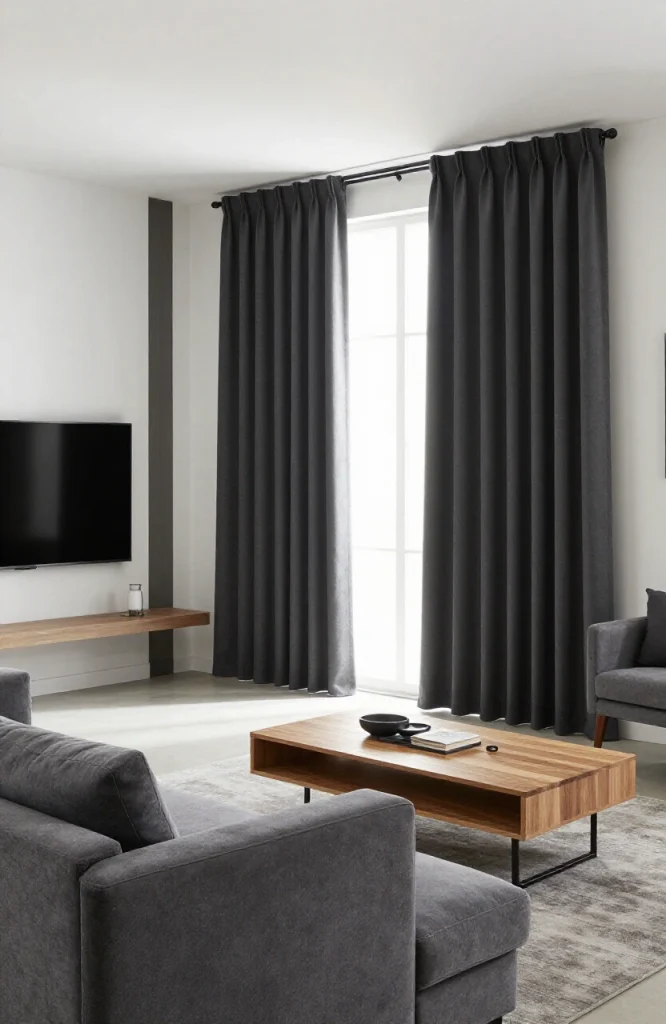
Blackout curtains use a tightly woven face fabric backed with a foam or acrylic lining that blocks nearly all outside light. They suit living rooms used for watching movies, gaming, or daytime naps, since they remove glare from screens and keep afternoon sun from washing out a projector image. Look for a lining rated to block at least 99 percent of light if the room doubles as a home theater. Pair blackout panels with a TV wall design that already accounts for screen glare, so the curtains finish a setup planned around light control from the start.
3. Linen Curtains for a Relaxed Texture
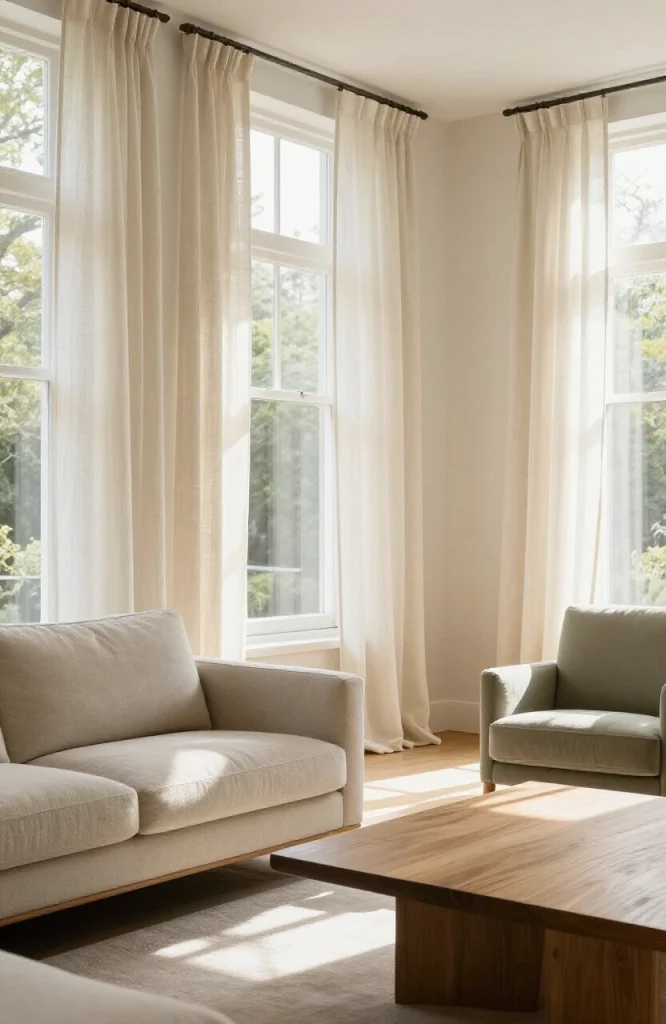
Linen curtains bring a slightly rumpled, lived-in texture that softens a room without looking overly formal. The fiber breathes well, drapes loosely, and takes dye in muted, slightly faded tones that suit farmhouse, coastal, and transitional living rooms. Pure linen wrinkles easily and fades faster in direct sun, so a linen blend with a small percentage of polyester holds its shape longer while keeping the same texture. Wash linen curtains on a gentle cycle or have them steamed in place to avoid shrinking the panel below the floor.
4. Velvet Curtains for a Formal Living Room
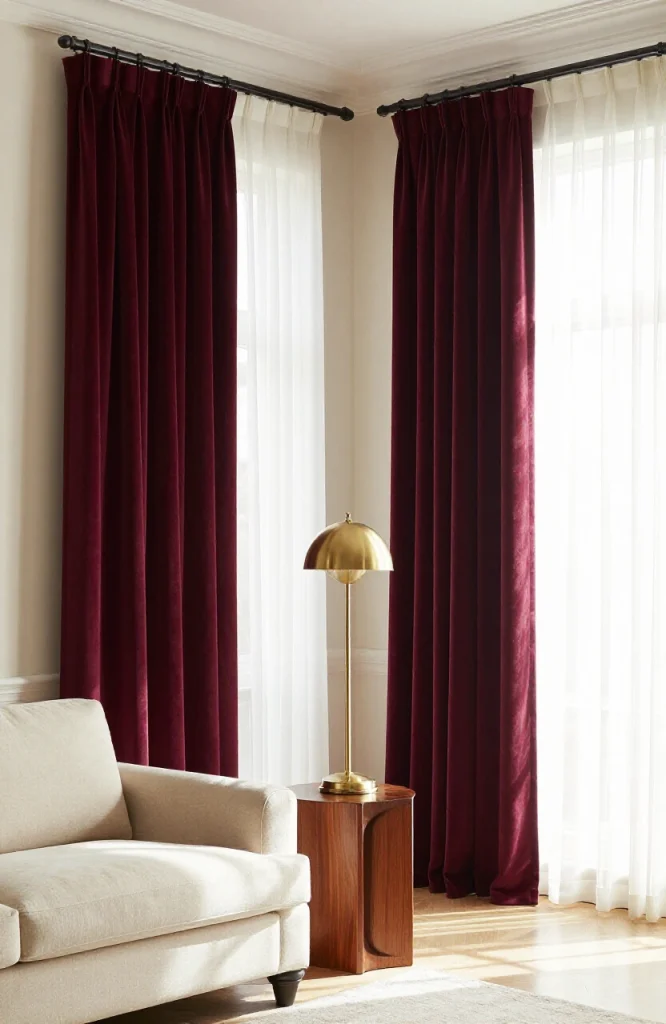
Velvet curtains add weight, depth of color, and a soft light-absorbing texture that reads as formal. The dense pile blocks a meaningful amount of light and sound on its own, even without a separate blackout lining, making velvet a practical choice for living rooms near a busy street. Deep jewel tones such as emerald, navy, or burgundy show velvet’s texture best, while pale velvet can look flat under bright light. Velvet panels are heavy, so use a sturdy rod rated for the extra weight rather than a lightweight tension rod.
5. Curtain Fabric and Light Control Comparison
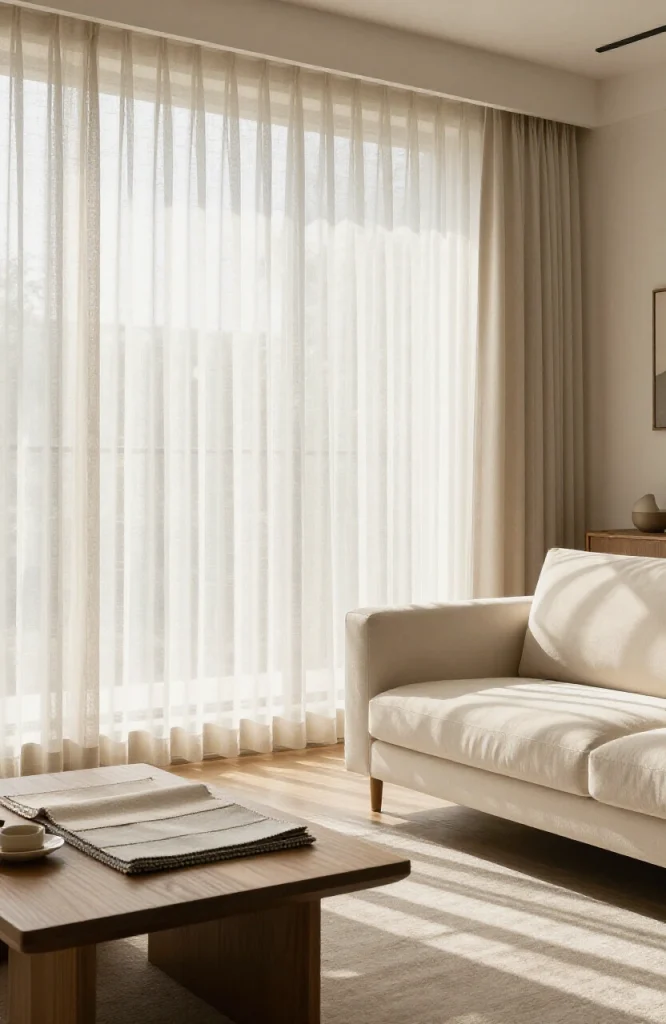
Choosing between fabrics gets easier once light control, privacy, and weight are compared side by side. The table below summarizes how the main living room curtain fabrics perform, based on typical weave density and lining options.
| Fabric | Light Control | Privacy Level | Best For |
|---|---|---|---|
| Sheer (voile, chiffon) | Low | Low | Soft daylight, layering |
| Linen | Medium | Medium | Relaxed, textured rooms |
| Cotton | Medium | Medium | Everyday, washable use |
| Velvet | High | High | Formal rooms, noise reduction |
| Blackout-lined | Very High | Very High | Media rooms, shift workers |
Use this as a starting point, then adjust for the specific window size and the amount of direct sun the room receives during the day.
6. Floor-to-Ceiling Curtains for Added Height
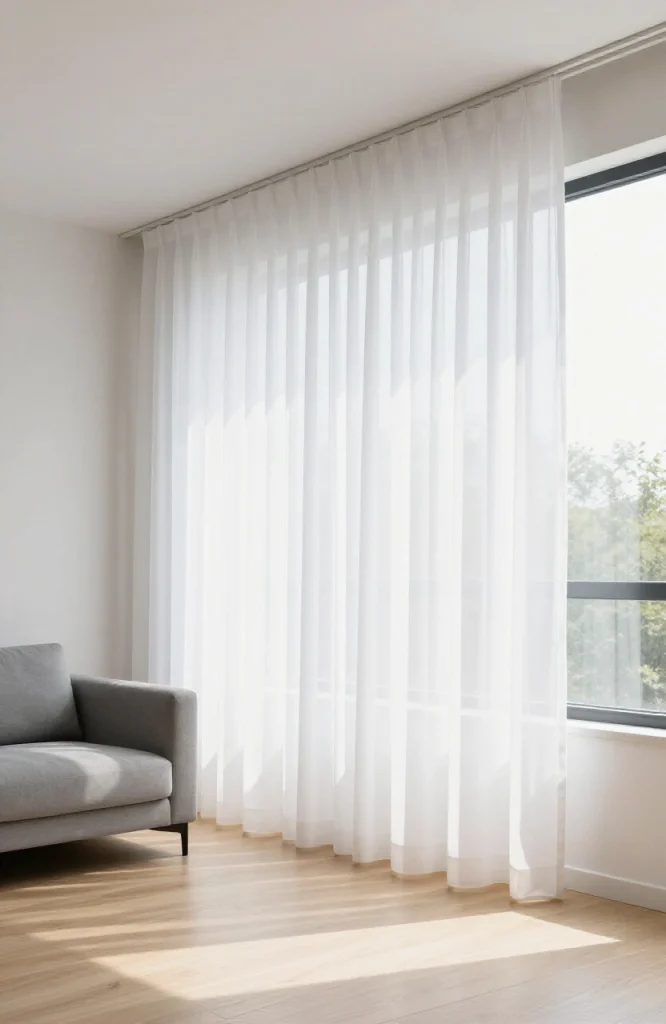
Mounting curtain rods close to the ceiling rather than directly above the window frame draws the eye upward and makes a standard 8-foot ceiling read taller. Panels should run from just below the rod to the floor, brushing the carpet or hovering half an inch above hard flooring. This trick works on any window size, including small windows, since the height comes from the rod placement rather than the window itself. It remains one of the simplest, lowest-cost ways to change how a living room feels without moving furniture.
7. Layered Curtains Combining Sheer and Blackout
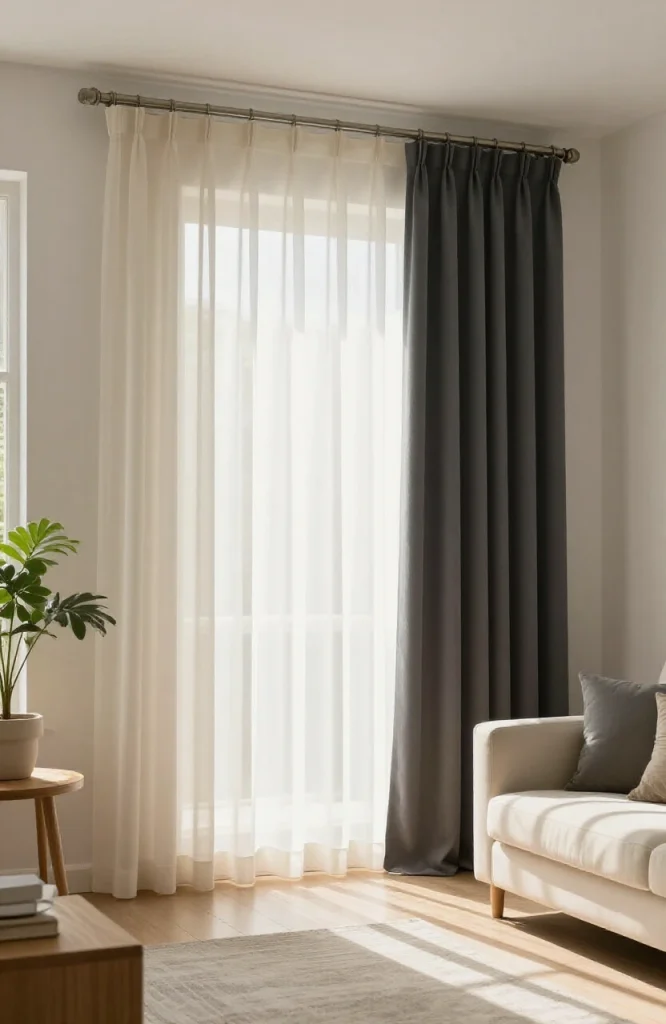
Layering puts a sheer panel on an inner rod, closest to the glass, with a heavier blackout or thermal panel on an outer rod. During the day, the sheer panel filters light while the heavier panel stays open at the sides. At night, both close together for full privacy and light control. This setup suits living rooms that need daytime brightness and evening privacy in the same space, such as ground-floor rooms facing a street or a neighbor’s window.
8. Double Curtain Rods for a Layered Effect
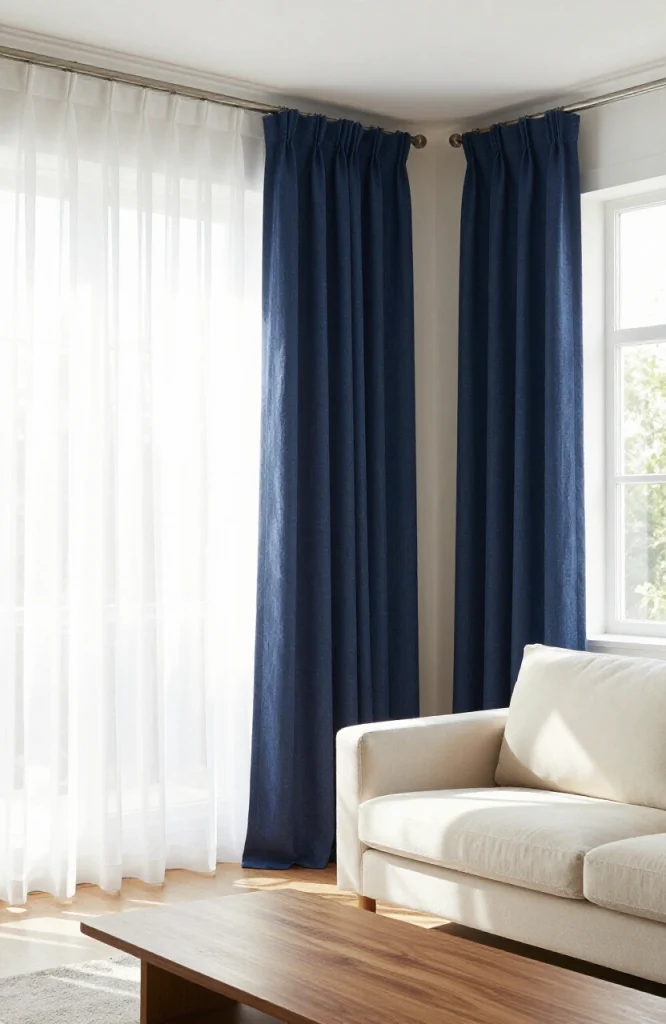
A double rod bracket holds two rods at slightly different depths from the wall, letting two curtain styles hang side by side without tangling. Install the inner rod a few inches from the glass and the outer rod a few inches further out, with brackets long enough to keep both rods from touching when open. Double rods support the sheer-and-blackout layering described above, and they also let a patterned panel sit behind a plain one for a two-tone look without sewing two fabrics together.
9. Grommet Top Curtains for a Modern Look
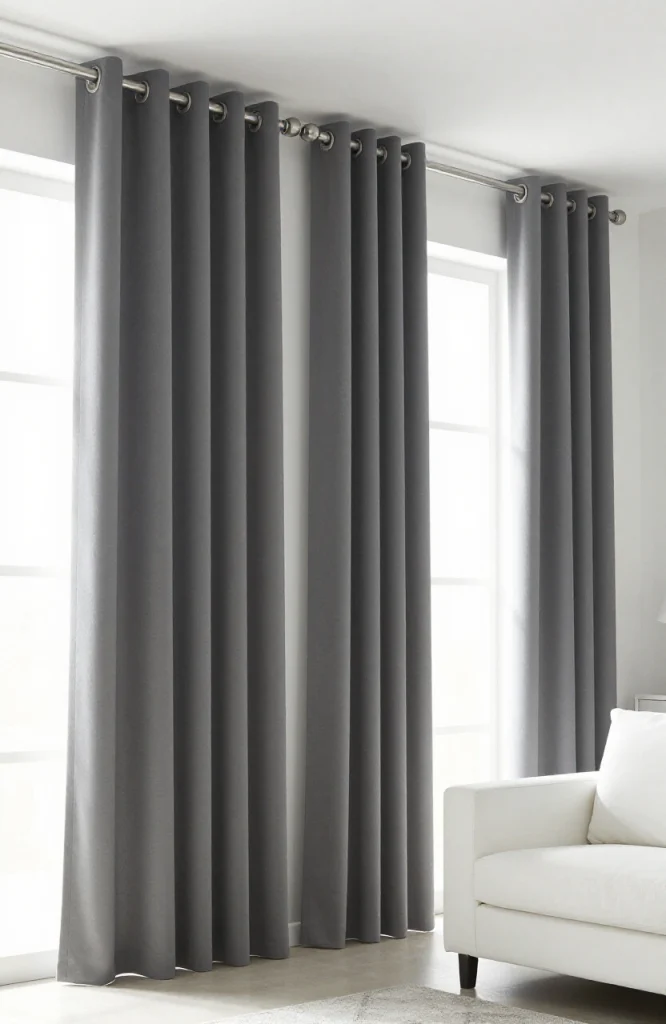
Grommet curtains have metal rings sewn directly into the fabric top, which slide onto a rod and form soft, even folds when open. The look reads as clean and modern, and the rings make the panels easy to open and close with one hand. Grommet headers work best with rods between 1 and 1.5 inches in diameter, since wider rods can make the folds sit too far apart. This style suits living rooms with a minimal or contemporary design direction.
10. Pinch Pleat Curtains for a Structured, Formal Finish
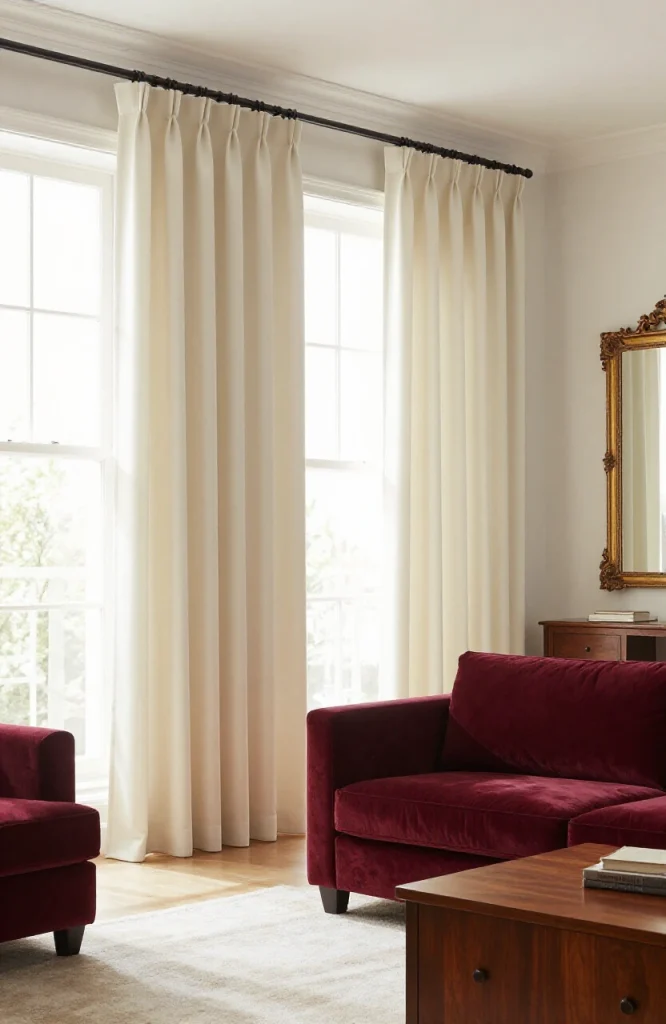
Pinch pleats gather the top of the curtain into small, stitched clusters that create structured, even folds down the length of the panel. The style looks formal and finished, closer to what is used in traditional or transitional living rooms than in casual ones. Pinch pleat panels usually hang from rings or hooks rather than sliding directly on the rod, which adds a small gap between the fabric and the rod for a cleaner line. This header style pairs well with velvet or heavier linen.
11. Tab Top Curtains for a Casual Style
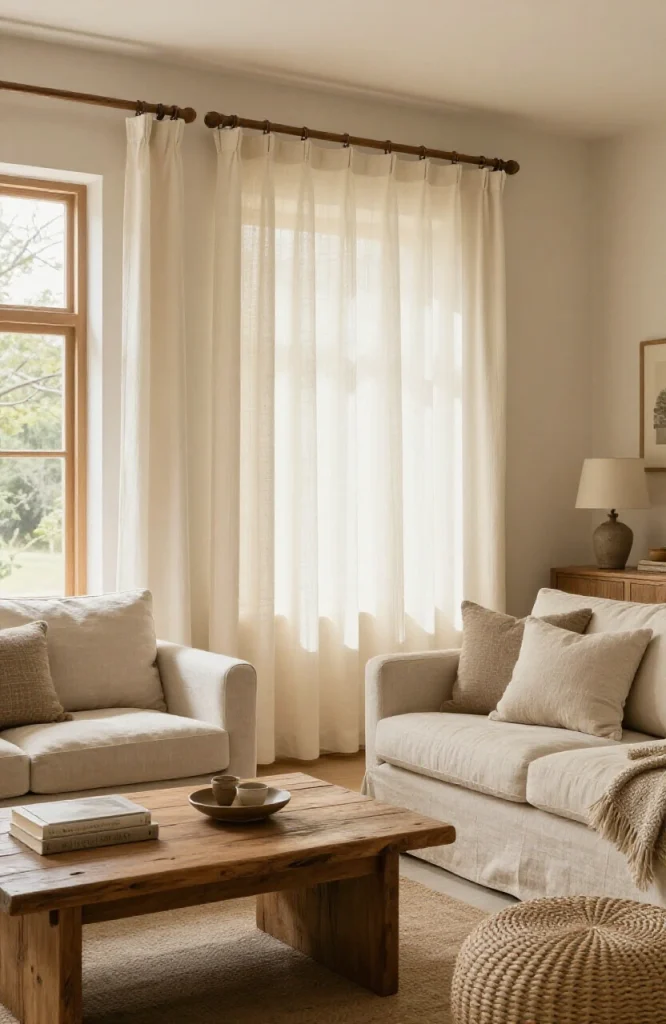
Tab top curtains have fabric loops stitched along the top edge that the rod threads through, creating a relaxed, slightly stacked fold when closed. The style suits cabin, farmhouse, or casual coastal living rooms more than formal ones, since the folds are looser and less uniform than pleated headers. Tab tops can stick or bunch on a textured rod, so a smooth metal or wood rod opens and closes more easily than a rough or carved one.
12. Rod Pocket Curtains for a Classic Gather
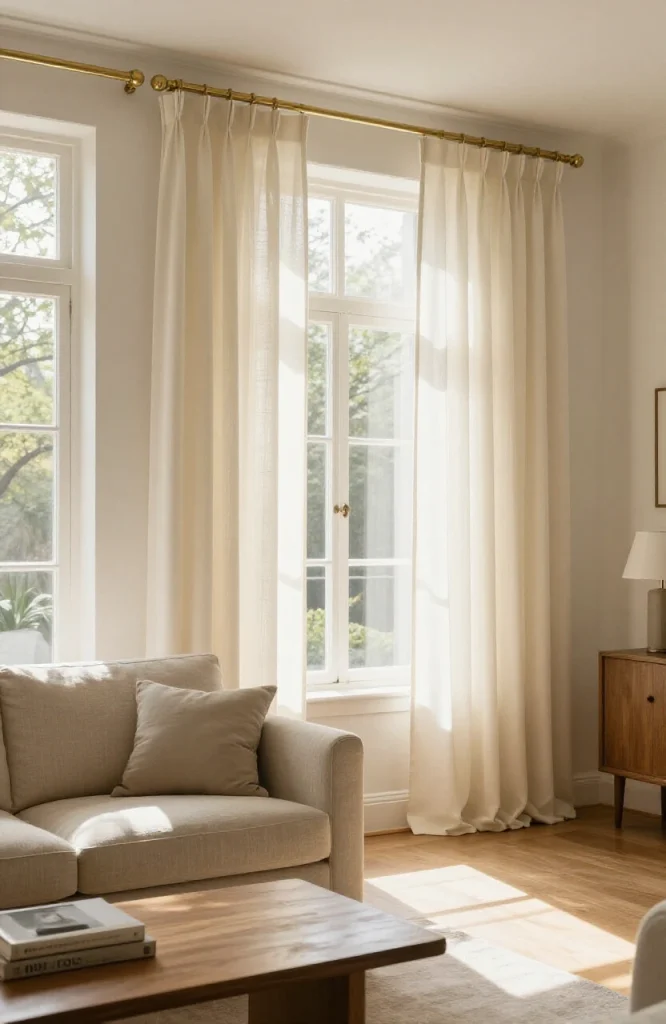
Rod pocket curtains have a sewn channel along the top that the rod slides through directly, gathering the fabric into soft, even ruffles. This is one of the simplest and least expensive headers to sew or buy, and it works on tension rods as well as standard mounted rods. The tradeoff is that rod pocket panels are harder to slide open and closed, since the fabric bunches against the rod rather than moving on rings or grommets. They suit windows that stay mostly closed for privacy.
13. Wave Fold Curtains for a Smooth, Modern Look
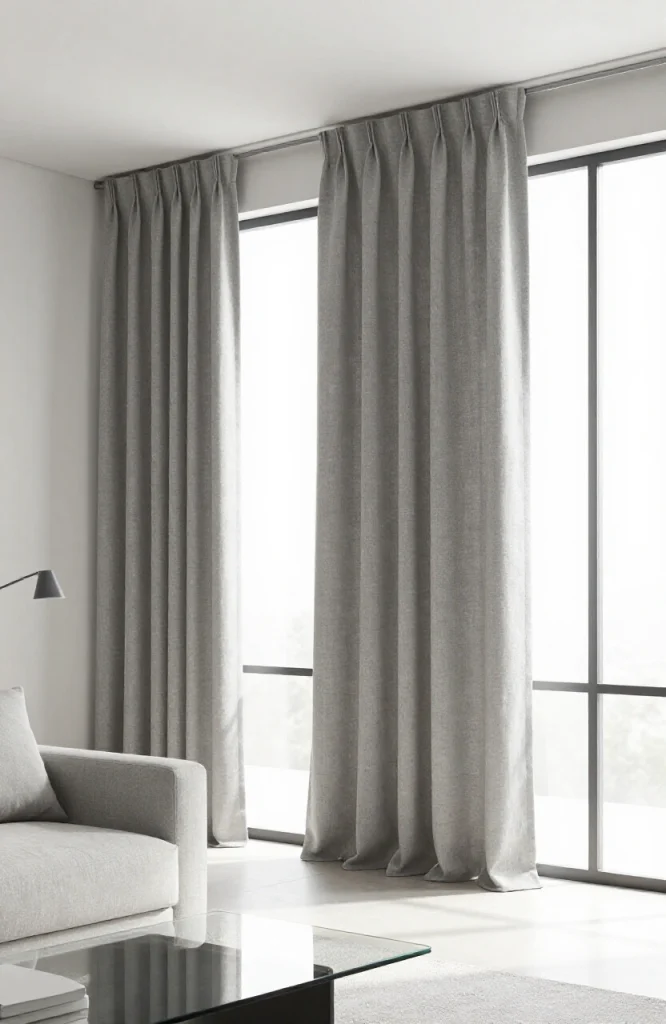
Wave fold curtains use a special carrier track and evenly spaced fabric tape to create consistent, rolling waves across the entire panel width, with no visible gaps even when fully open. The look is closer to what is used in hotels and architectural projects than in standard home curtains, and it requires a dedicated wave track rather than a round rod. Wave fold curtains suit wide, uninterrupted windows in contemporary living rooms where a flat, gathered look would compete with clean architectural lines.
14. Tie-Top Curtains for an Easygoing Feel
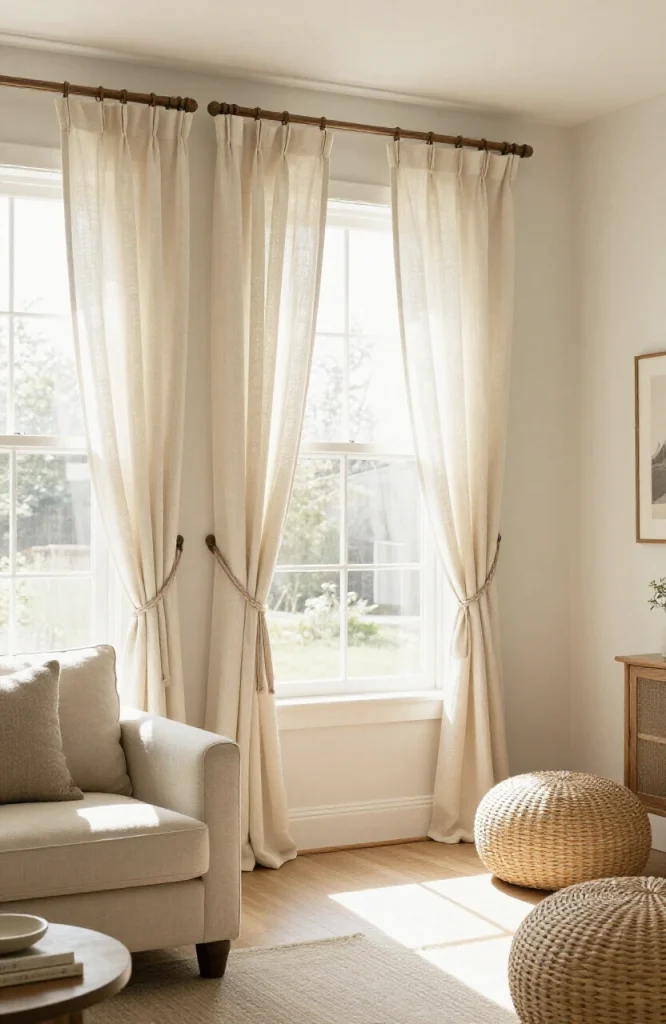
Tie-top curtains use fabric strips knotted directly around the rod, which gives a relaxed, handmade look similar to tab tops but slightly looser and more textured. The ties can be the same fabric as the panel for a uniform look, or a contrasting fabric or ribbon for a small design detail. This header suits cottage, beach, or kids’ living rooms where a slightly imperfect, casual finish fits the rest of the room better than a tailor-made pleat.
15. Bay Window Curtain Ideas
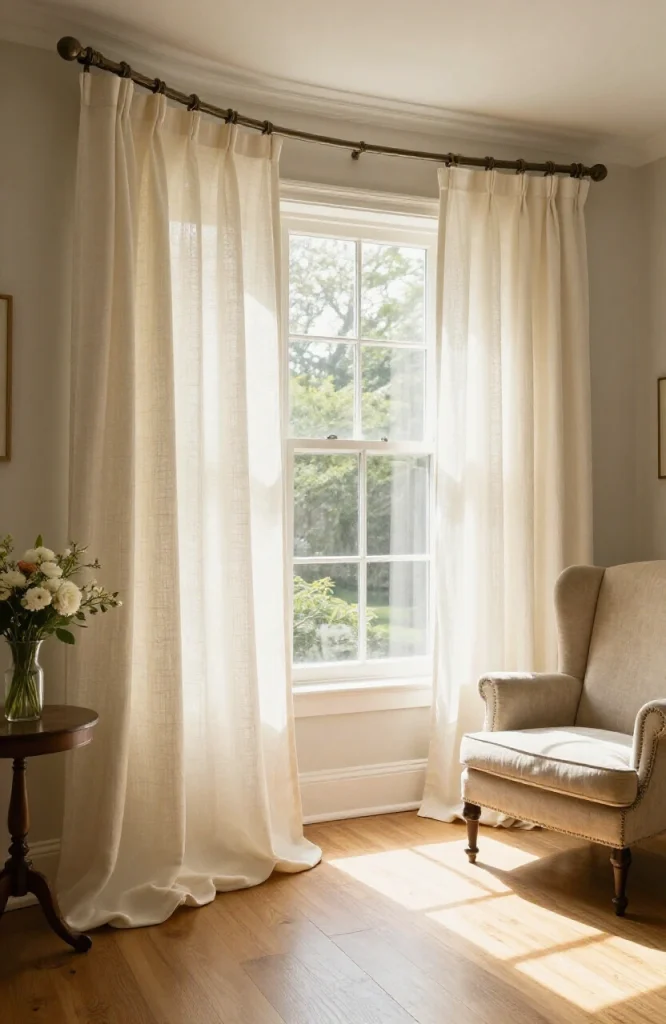
Bay windows angle outward in two or three sections, which makes a single straight rod impractical. A curved or angled track that follows the bay’s shape lets curtains move around each corner without bunching. For a simpler approach, hang one rod per window section and use separate panels that meet at each corner, which also makes it easier to open just the center section while keeping the side panels closed for privacy.
16. Picture Window Curtain Treatments
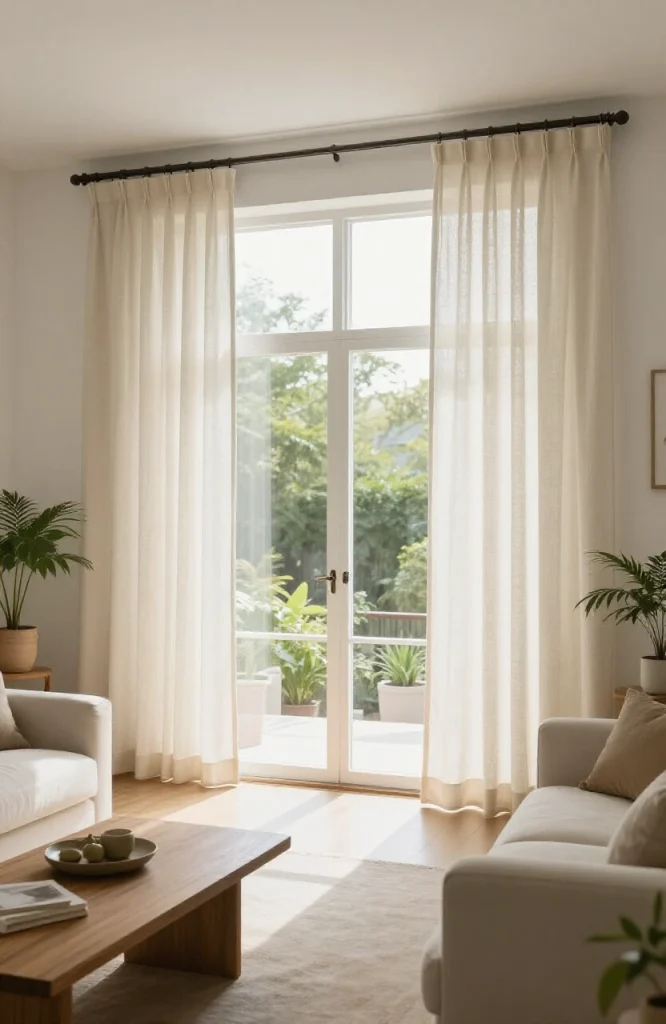
Large picture windows often look better with curtains positioned to frame the view rather than cover it completely. Mount the rod 6 to 12 inches wider than the window frame on each side, so panels can stack fully open and clear the glass. Lightweight linen or sheer fabric keeps a large window from feeling weighed down, while a thin blackout lining behind a decorative panel adds light control without changing the visible color or pattern.
17. Sliding Glass Door Curtain Ideas
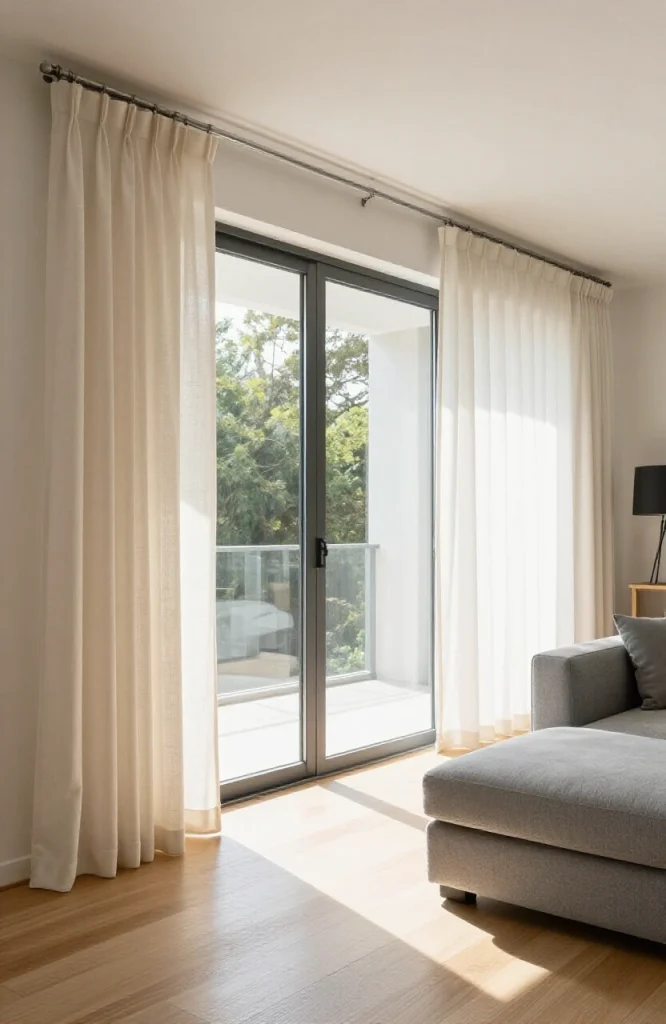
Sliding glass doors need curtains that move out of the way completely on the side that opens. A single panel covering the fixed side, paired with a wider panel on a track over the sliding side, lets the door open fully without curtains in the way. Floor-length panels in a sturdy fabric such as cotton or linen blend stand up to the daily movement of opening and closing the door better than delicate sheers, which can catch or tear over time.
18. Curtains for Small Living Rooms
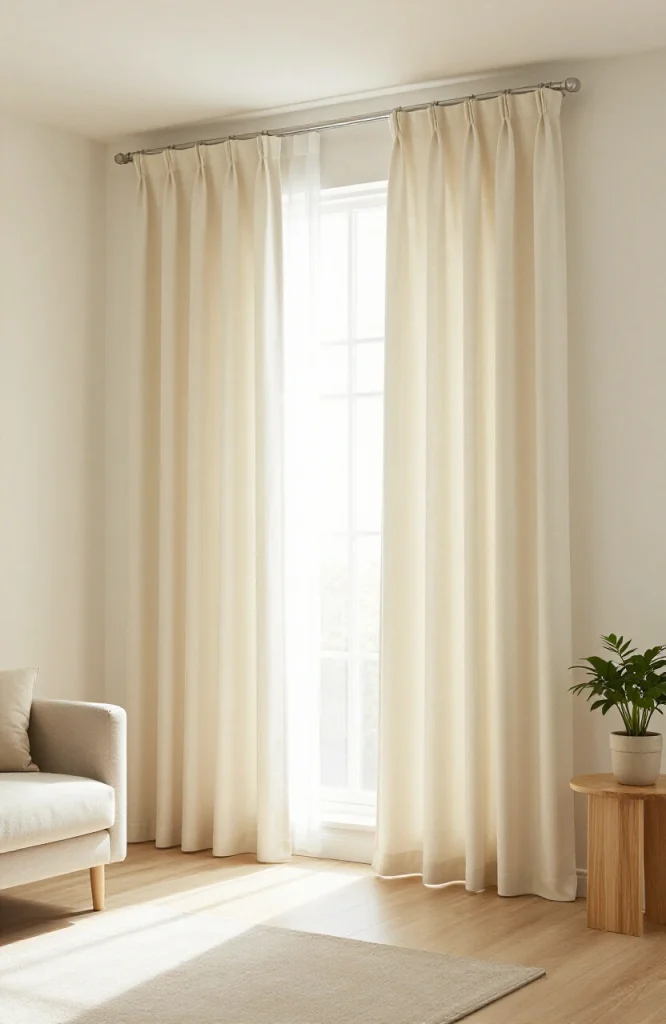
In a small living room, curtains that match the wall color closely make the window blend into the wall rather than break it up visually. Avoid bulky, heavily layered treatments, since they reduce visible floor space and make the window feel smaller than it is. A single panel per side in a light, unpatterned fabric, hung from ceiling to floor, keeps the room looking open. For more ways to make a compact room work harder, this guide on living rooms without sofas covers seating choices that pair well with a minimal curtain approach.
19. Curtains for Floor-to-Ceiling Glass Walls
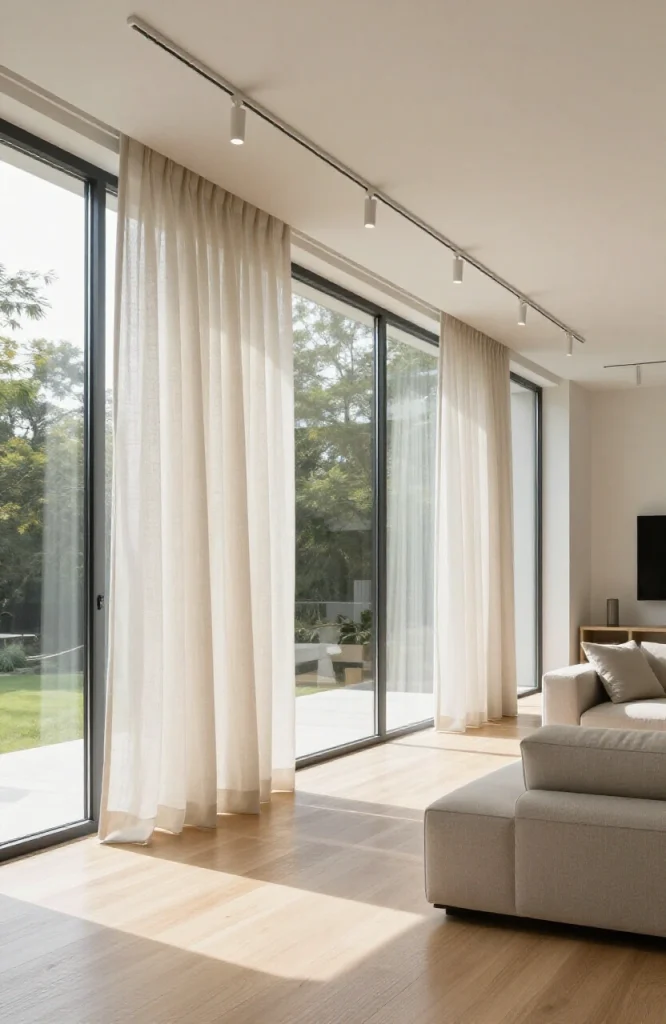
Full glass walls need a continuous track system rather than several short rods, so panels can travel the full width without a visible break at each window section. A ceiling-mounted track keeps the hardware out of sight and lets fabric run uninterrupted from one end of the wall to the other. Choose a fabric with enough weight to hang straight without curling at the edges, since lightweight sheers can look messy across a long unbroken span.
20. Curtains for High Ceilings
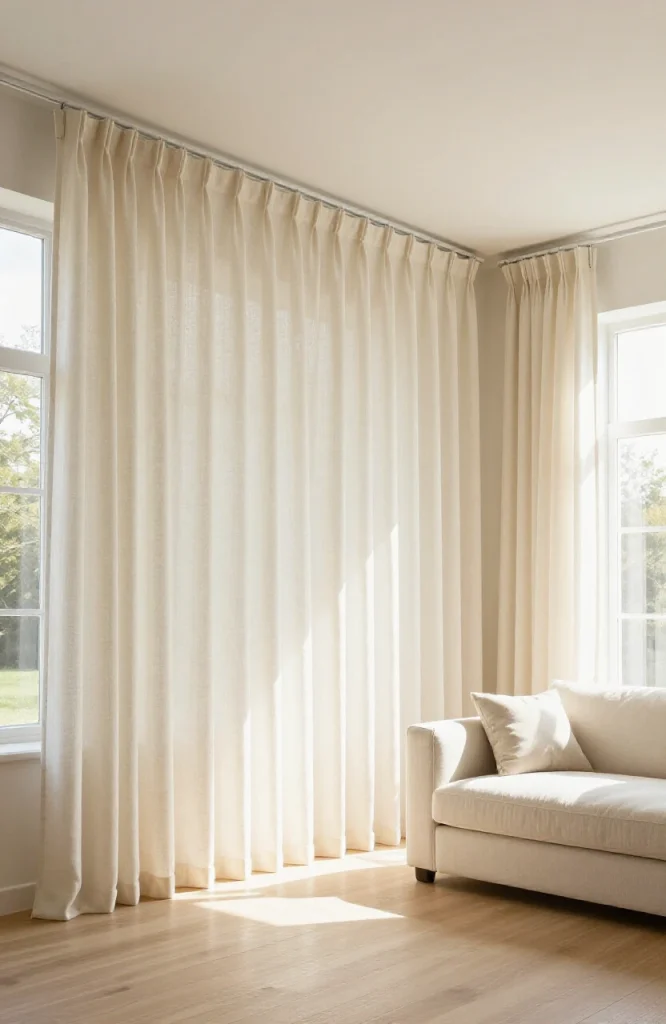
In rooms with ceilings above the standard 8 feet, curtains hung from a point closer to the ceiling than the window frame keep the proportions balanced rather than leaving a large gap of bare wall above the panel. Extra-long curtain panels, often made past the standard 84, 96, or 108-inch lengths, are usually needed to reach the floor from a rod mounted that high. Vertical stripes or a solid, deep color reinforce the height rather than competing with it.
21. Neutral Curtains for a Versatile Base
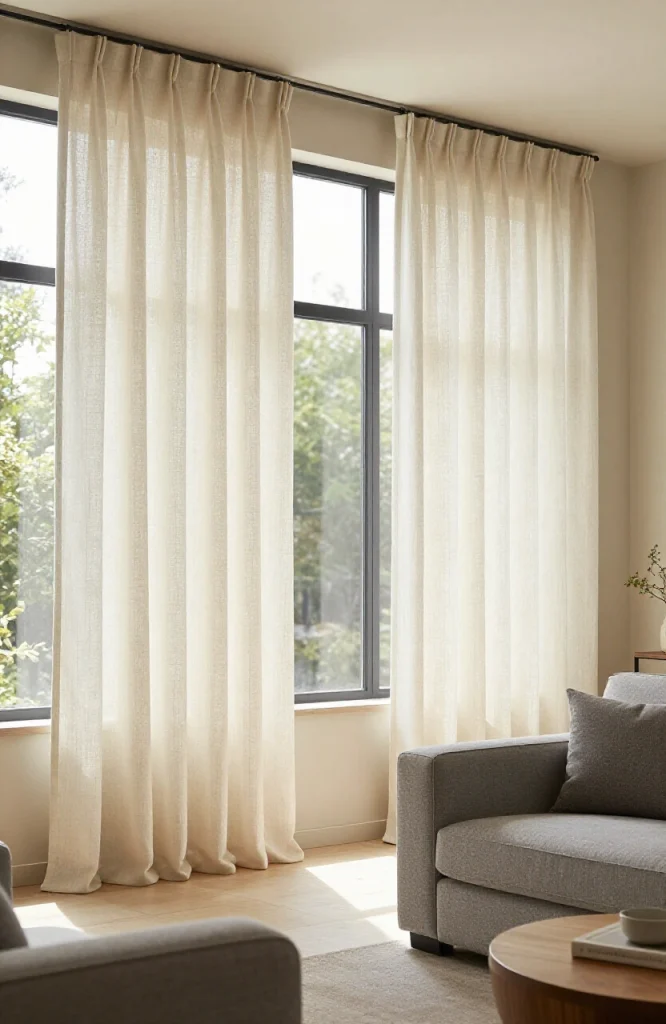
Neutral curtains in white, cream, gray, or soft taupe work with almost any wall color, furniture style, or future room update, since they read as background rather than a focal point. This makes them a practical choice for rental living rooms or rooms expected to change style over time. Neutral fabric also tends to be easier to find in extra-long or extra-wide sizes than bold patterns, since it stays in production longer.
22. Bold Pattern Curtains as a Statement Piece
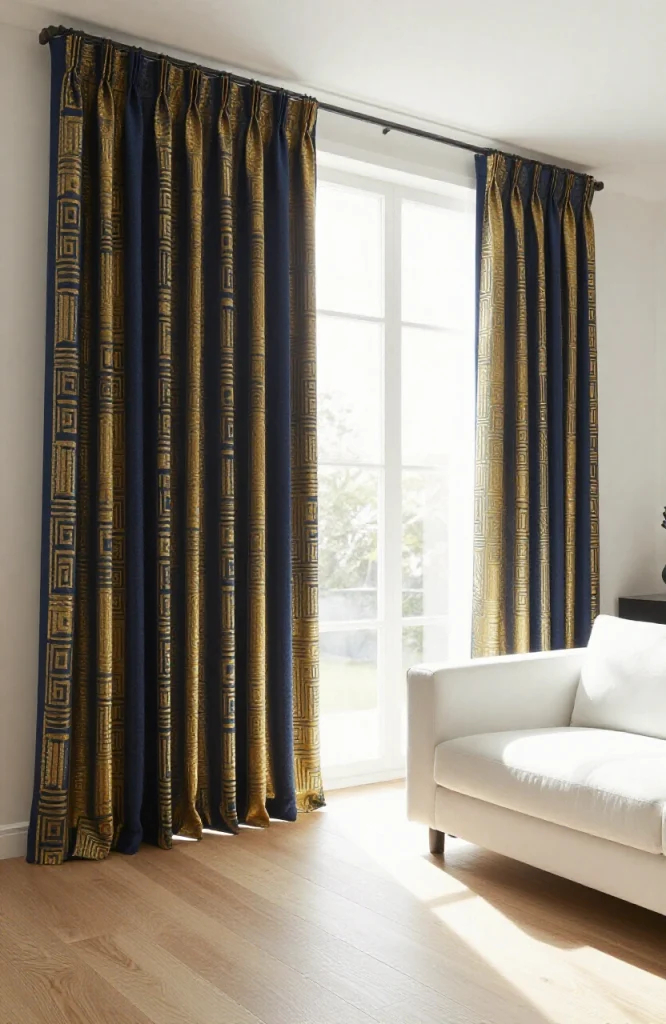
A bold pattern, floral, abstract, or geometric, can act as the main visual focus of a living room when the rest of the furniture and walls stay simple. Patterned curtains work best when no other element in the room competes for attention, such as a patterned rug or a heavily decorated accent wall. Pull one color from the pattern into a cushion or throw to tie the curtain choice into the rest of the room.
23. Striped Curtains to Add Visual Height
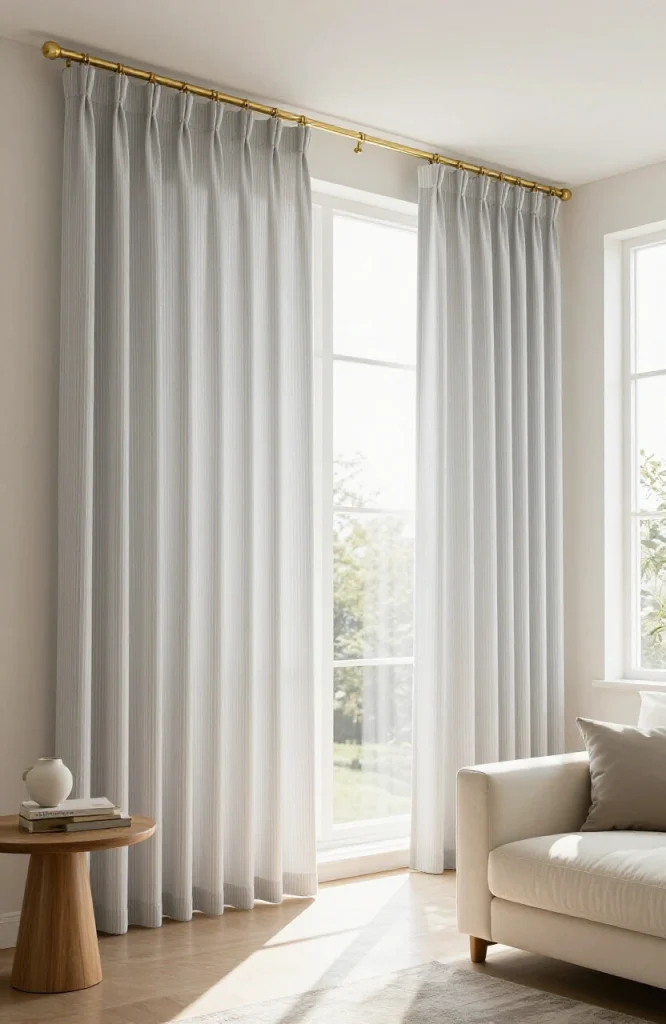
Vertical stripes on curtain panels reinforce the upward line created by a high-mounted rod, making a room feel taller without any structural change. Thin, closely spaced stripes give a subtler effect than wide, high-contrast stripes, which read as more graphic and modern. Horizontal stripes, by contrast, widen a window visually, which suits a narrow window that needs to look broader rather than taller.
24. Color Block Curtains for a Graphic Edge
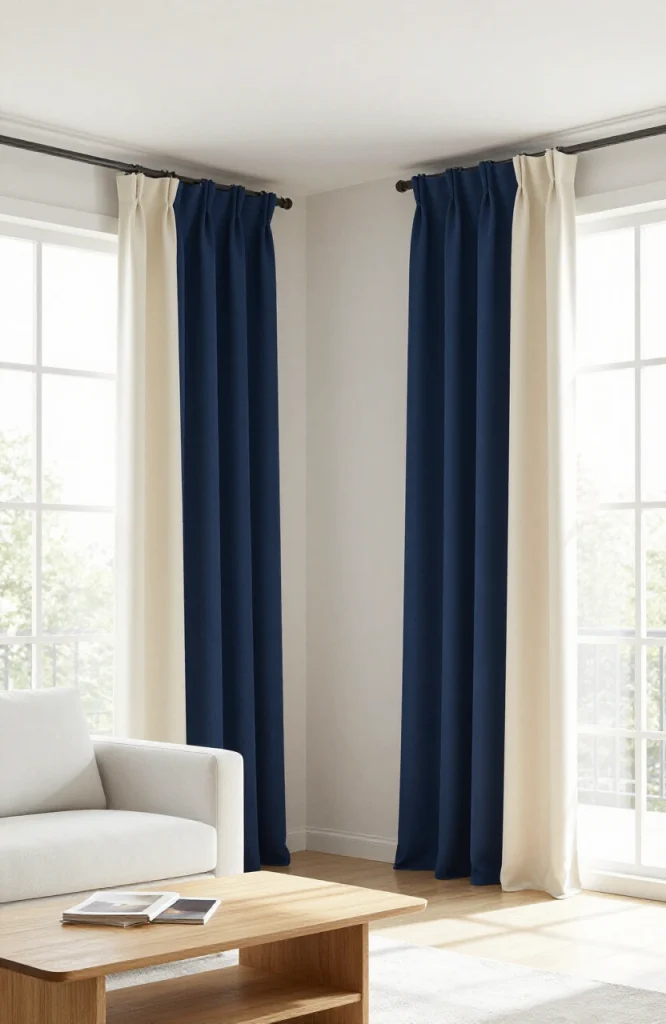
Color block curtains split a single panel into two or three solid color sections, usually divided by a clean horizontal or diagonal seam. The look gives a custom, designer feel without a full pattern, and it works particularly well in living rooms with a strong existing color scheme that the curtain can echo. Color blocking is easier to find in custom or made-to-order curtains than off-the-shelf panels, since most retailers stock solid or fully patterned designs.
25. Ombre Curtains for a Gradient Effect
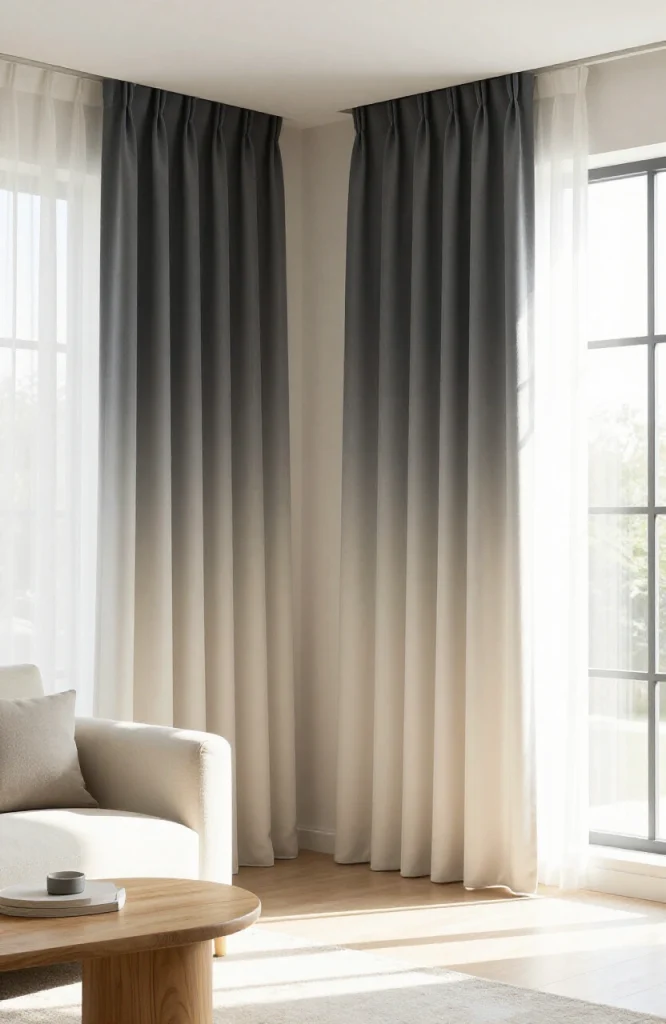
Ombre curtains shift gradually from a deep color at the top or bottom to a lighter shade at the opposite end, creating a soft gradient rather than a hard line. A dark-to-light gradient from floor to ceiling can make a room feel grounded while still letting light through the paler section near the top. Ombre panels suit living rooms with a single dominant accent color, since the gradient naturally pulls focus toward the window.
26. Textured Curtains for Depth and Warmth
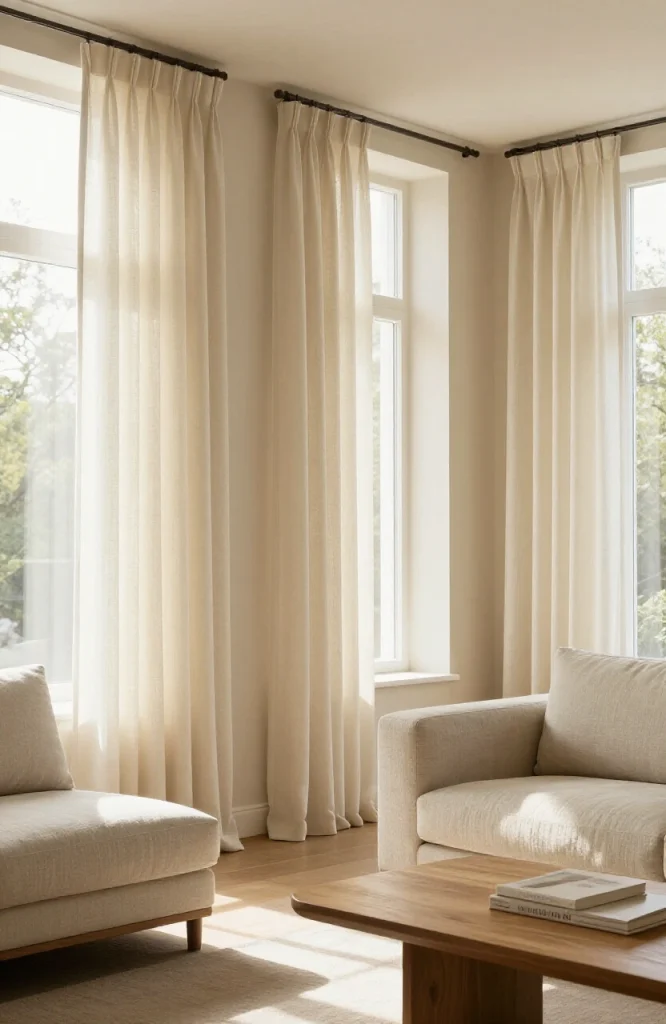
Textured fabrics such as boucle, slub linen, or basket weave cotton add visual depth without introducing color or pattern, which keeps a neutral palette from feeling flat. Texture reads differently under daylight than under lamp light, so it is worth viewing a fabric swatch in the room at different times of day before committing to a full set of panels. Textured curtains pair well in rooms that already use texture through a wool rug or a wood coffee table.
27. Curtains with Contrasting Trim or Borders
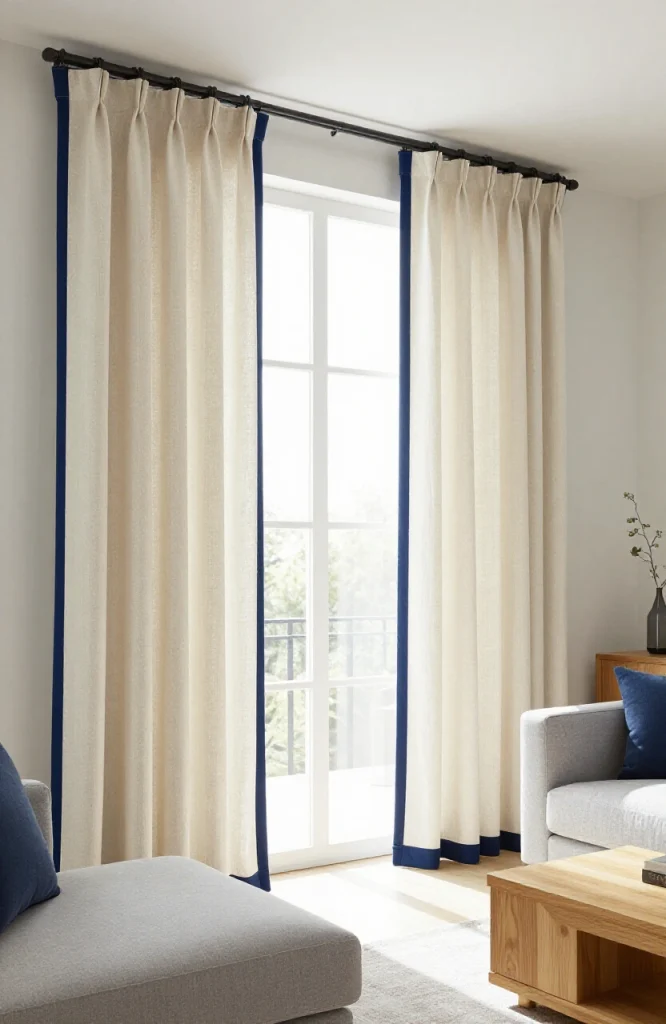
A contrasting trim, usually a band of fabric or ribbon along the leading edge or bottom hem, adds a finished detail to an otherwise plain curtain panel without the cost of a fully patterned fabric. Trim in a color pulled from the room’s existing palette ties the curtain into the rest of the space more directly than a plain hem. This detail is easiest to add when ordering custom curtains, though pre-made trim tape can be sewn onto existing panels.
28. Black Curtains for a Modern Minimalist Look
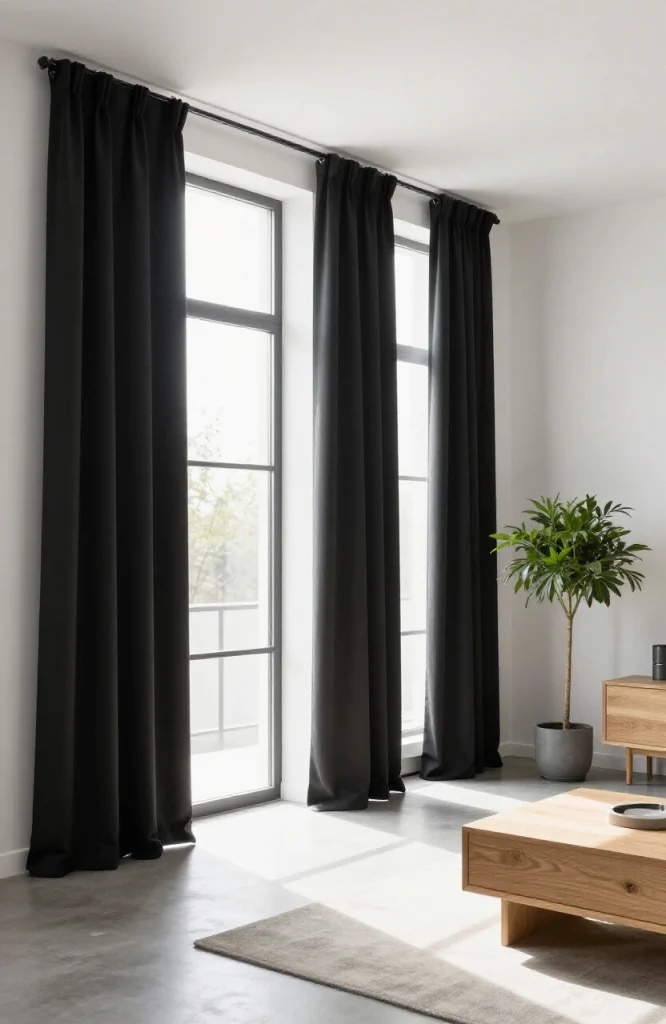
Black curtains create strong contrast against light walls and read as deliberate rather than somber when paired with enough white space and natural materials elsewhere in the room. The dark color also tends to block more light than the average light-colored fabric of the same weight, even without a blackout lining. Black curtains suit living rooms built around a minimal, monochrome, or industrial design direction rather than a soft or traditional one.
29. White Curtains for a Bright, Airy Feel
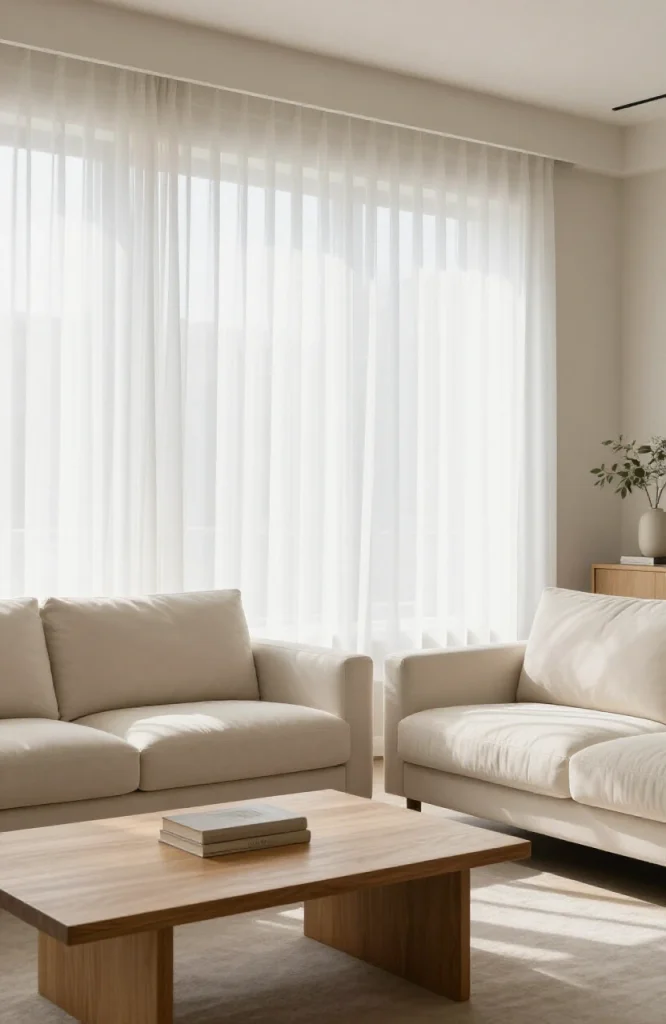
White curtains reflect the most available light back into a room, which makes them a practical choice for living rooms that already run on the darker side or face away from direct sun. A crisp white cotton or linen blend keeps the look clean rather than stark, while an off-white or ivory tone softens the contrast against white walls. White panels show dust and stains more visibly than darker fabric, so a washable blend holds up better over time.
30. Jewel Tone Curtains for Dramatic Color
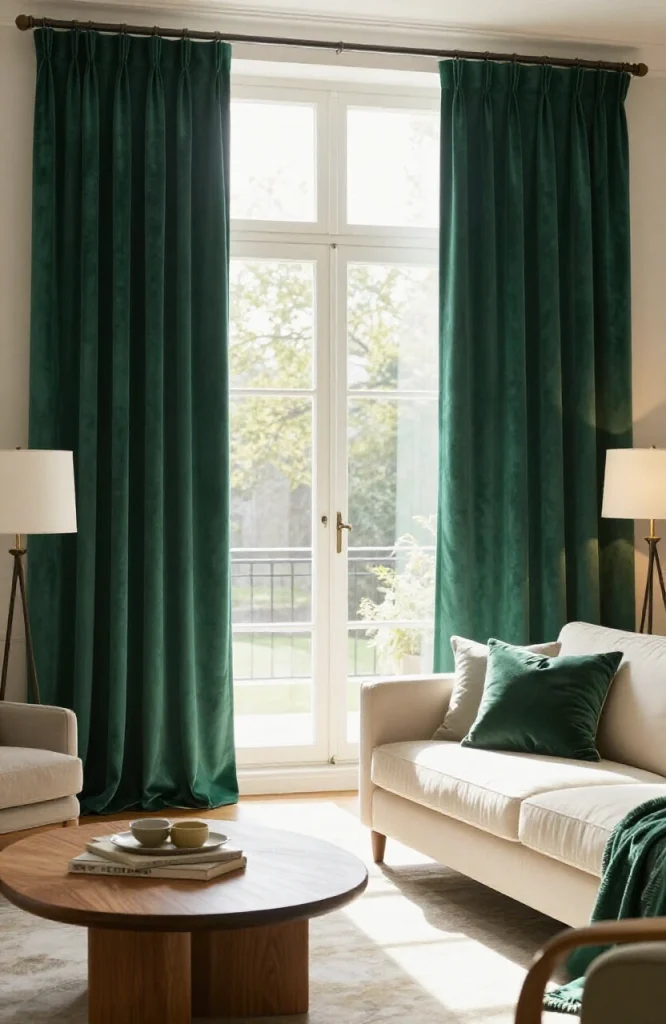
Jewel tones such as emerald, sapphire, amethyst, and ruby bring saturated color into a living room without the flatness of a single pastel shade. These colors read well in both natural and lamp light, since the depth of the color holds up under different light temperatures. Jewel tone curtains suit rooms with warm wood tones, brass hardware, or velvet upholstery, since the richness of the color matches the richness of those other materials.
31. Pastel Curtains for a Soft Palette
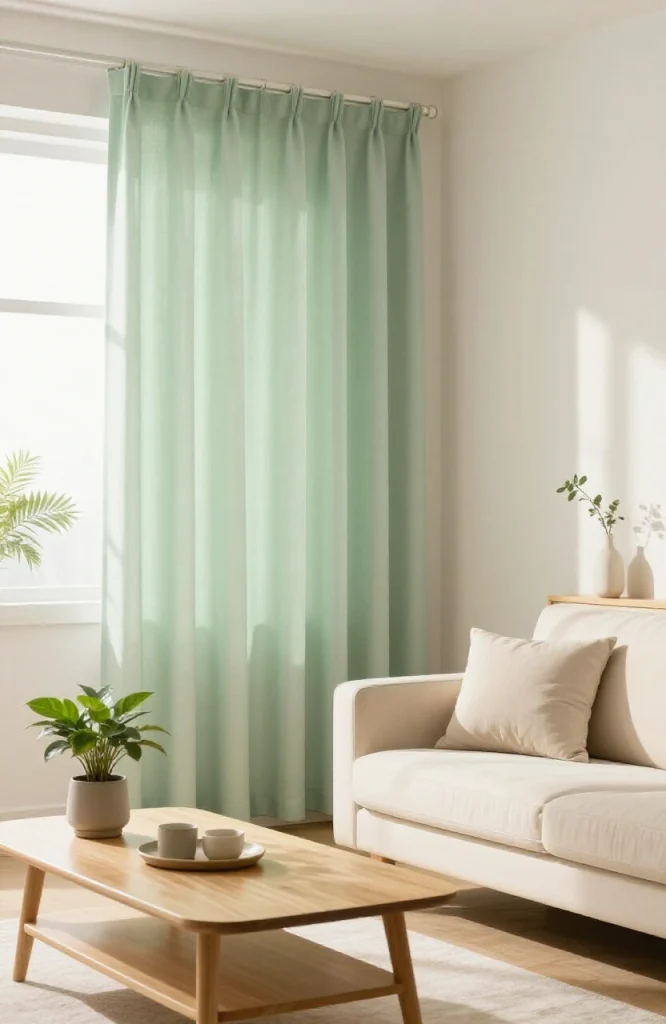
Pastel curtains in dusty pink, sage green, or pale blue bring color into a room without the visual weight of a fully saturated shade. They suit living rooms aiming for a soft, calm feel rather than a bold or dramatic one, and they tend to work well in rooms with a lot of natural light, since pastel tones can look washed out under dim or artificial lighting alone. Pair pastel curtains with warm wood tones to avoid the room feeling cold.
32. Geometric Pattern Curtains for Pattern Play
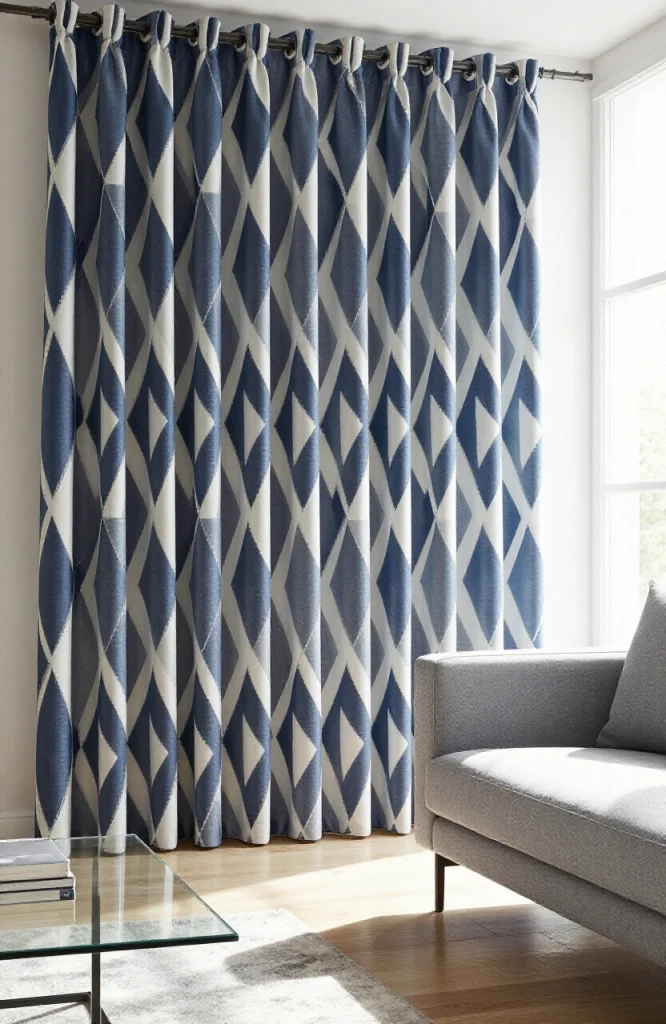
Geometric patterns, from simple diamonds to more complex tile-inspired repeats, add structure and rhythm to a window without the softness of a floral or organic print. These patterns suit modern, Scandinavian, or mid-century living rooms, where clean lines already define the rest of the furniture. Keep the scale of the geometric repeat in proportion to the window size, since a very large repeat can look cut off on a narrow panel.
33. Curtains with Decorative Tiebacks
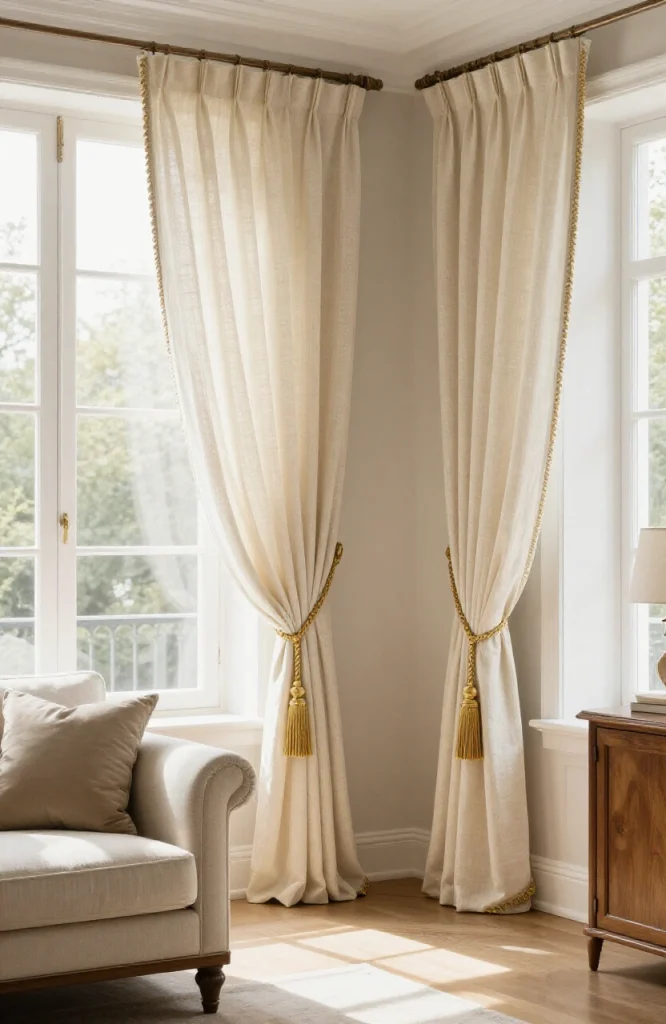
Tiebacks hold curtain panels open to the side, away from the window, using a fabric strap, cord, rope, or a fixed wall hook. Beyond their practical function, tiebacks shape how the fabric falls, creating a curved swag at the side of the panel rather than a flat vertical line. Metal hooks in a finish that matches the curtain rod give a coordinated look, while a fabric or tasseled tieback adds a softer, more traditional detail.
34. Curtains Paired with a Valance or Cornice
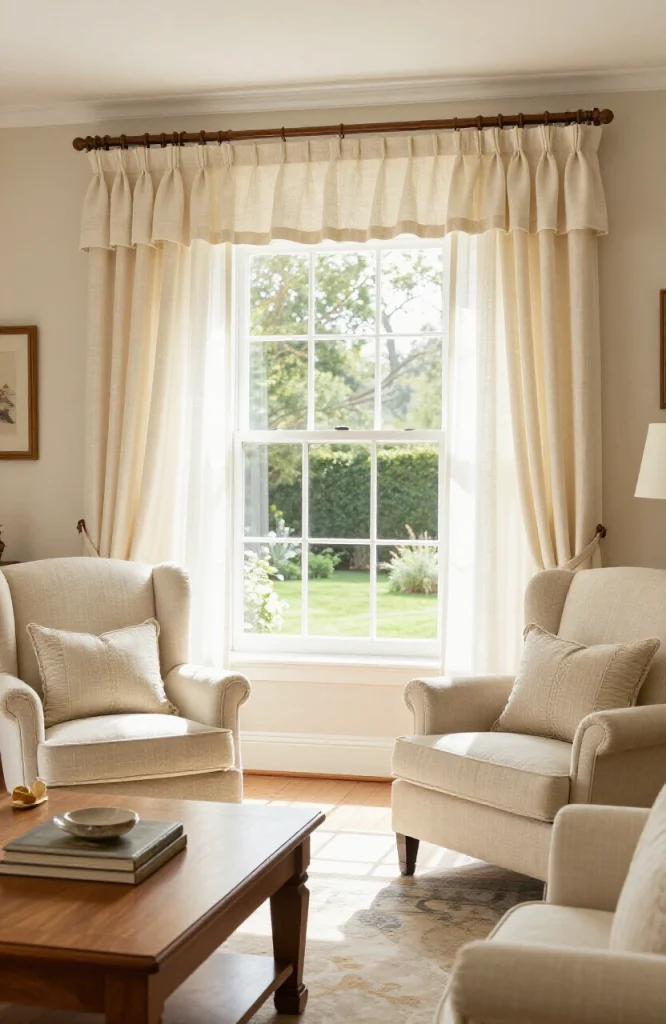
A valance is a short fabric topper that hangs above the main curtain panel, hiding the rod and hardware, while a cornice is a rigid, upholstered box version of the same idea. Both add a finished top edge to a window treatment and can introduce a second pattern or color without covering the full window. Cornices work well in formal living rooms, while a soft, gathered valance suits a more traditional or cottage style room.
35. Curtain Rods with Decorative Finials
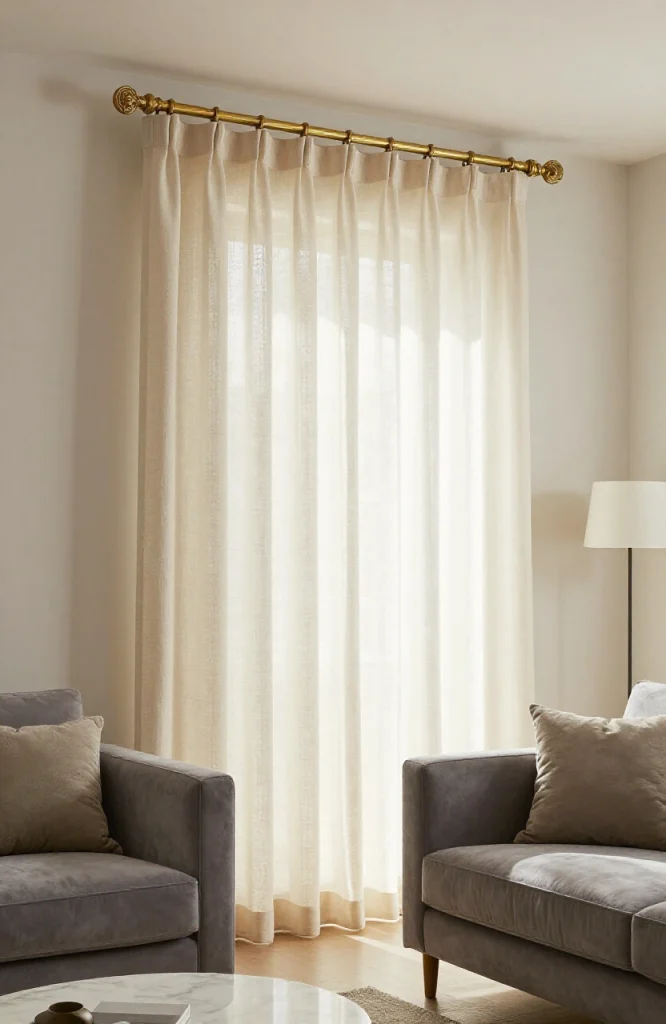
Finials are the decorative end caps on a curtain rod, available in shapes ranging from simple spheres to more ornate scrollwork or geometric designs. Beyond style, finials keep curtain rings or panels from sliding off the end of the rod. Matching the finial finish, such as brushed brass, matte black, or brushed nickel, to other hardware in the room, including door handles or light fixtures, keeps the room’s metal tones consistent throughout.
36. Motorized Curtains for Smart Convenience
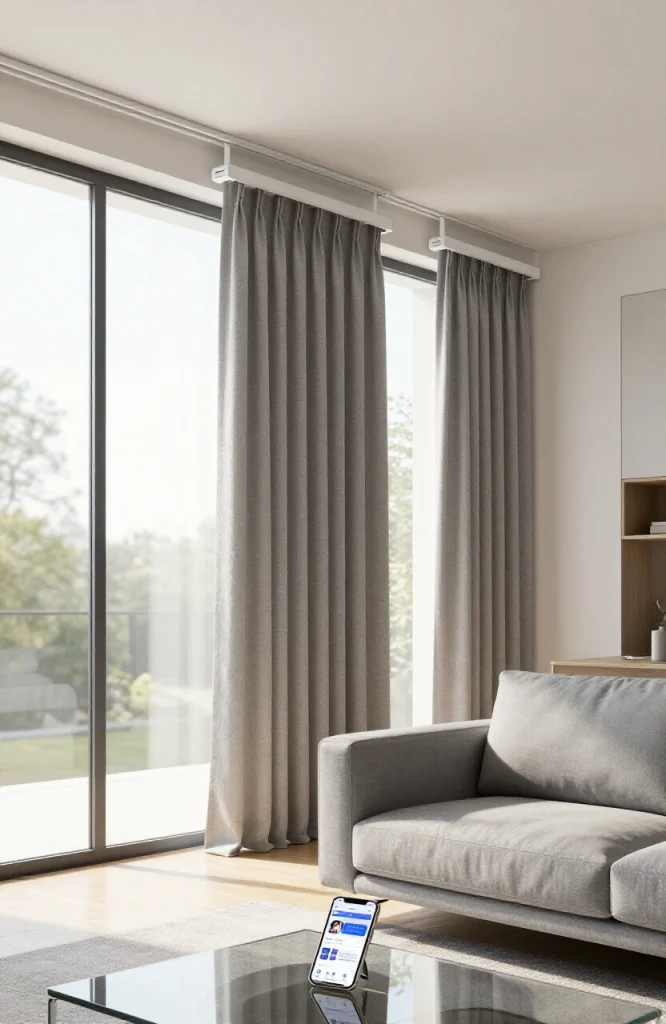
Motorized curtain tracks open and close panels using a small motor controlled by a remote, wall switch, or smartphone app, and many models connect to existing smart home systems for scheduling. This setup suits high or hard-to-reach windows, living rooms with very wide tracks that are heavy to pull by hand, or households that want curtains to open automatically at a set time each morning. Battery-powered motorized tracks avoid the need for an electrician to wire a new outlet near the window.
37. Thermal Curtains for Energy Efficiency
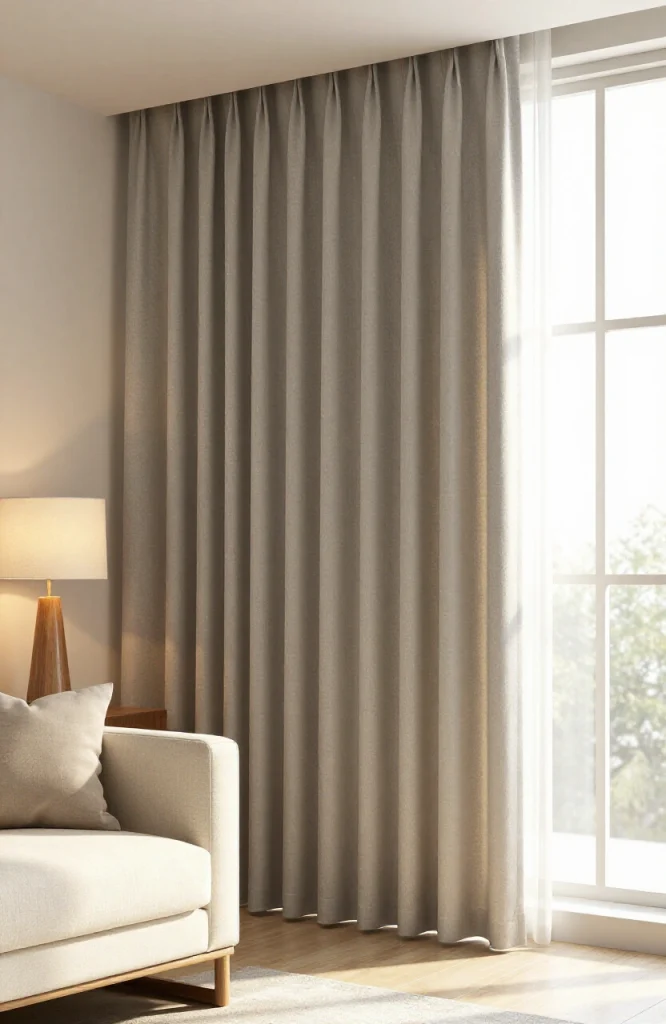
Thermal curtains use a multi-layer construction, often including a foam or napped lining, that slows heat transfer through the window in both winter and summer. Closing thermal curtains at night during cold months keeps warm air from escaping through the glass, while closing them during the hottest part of a summer day blocks solar heat gain. They suit living rooms with single-pane windows or large glass areas that lose or gain heat faster than the rest of the house.
38. Soundproof Curtains for a Quieter Room
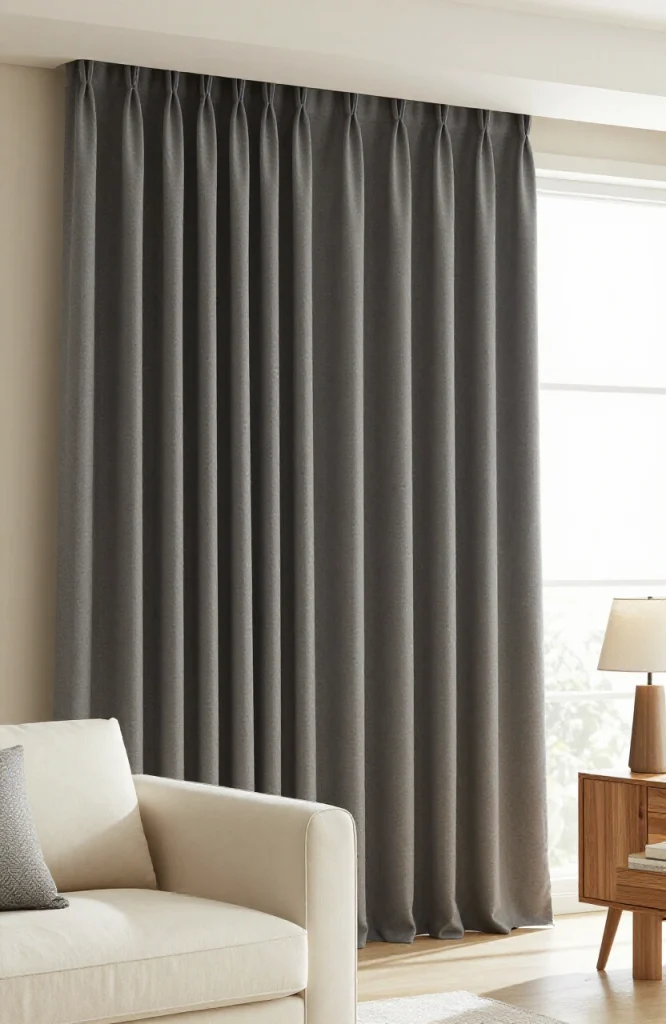
Soundproof curtains use a dense, tightly woven fabric, sometimes layered with a vinyl or foam barrier, to absorb and block a portion of outside noise rather than eliminate it completely. They help most with mid and high frequency sound, such as traffic or voices, and less with low frequency bass. Hanging the panel wider than the window frame, with minimal gaps at the sides and bottom, improves the noise reduction more than the fabric choice alone.
39. Curtains as a Room Divider in Open Floor Plans
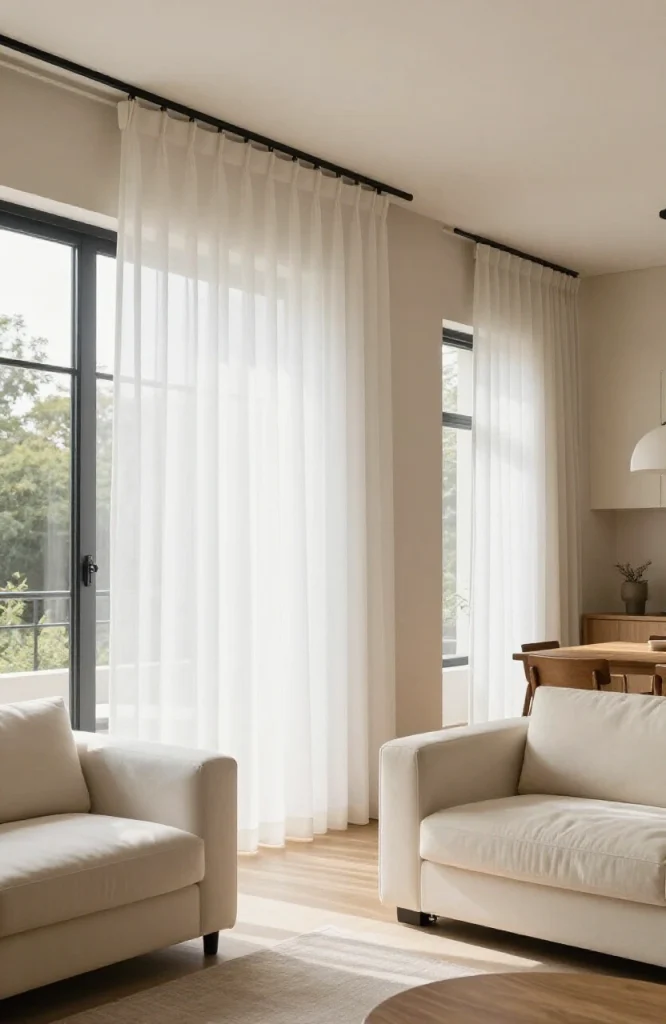
A ceiling-mounted track running between two zones of an open floor plan lets curtains close off a living area from a dining or work space without a permanent wall. This approach keeps the layout flexible, since the curtain can stay open most of the time and close only when privacy or a separate mood is needed. For more ways to define zones without construction, this open floor plan guide covers other divider options that pair well with a curtain track.
40. Curtains Used as Wall Decor Without a Window
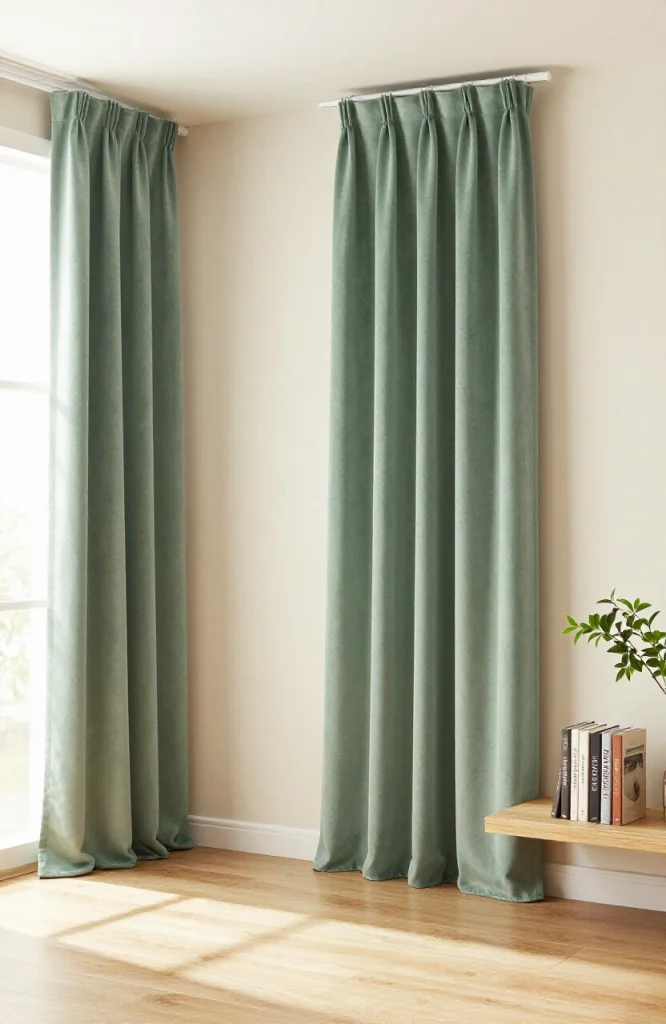
Curtain panels mounted on a blank wall, with no window behind them, add fabric texture and soften a hard wall surface in living rooms that lack enough windows for visual interest. This works particularly well behind a sofa or media console, where the fabric reads as a backdrop rather than a functional treatment. For other ways to dress up a wall without paint, this list of wall decoration ideas includes fabric panels alongside other textures.
41. Coastal Style Curtains for a Beachy Living Room
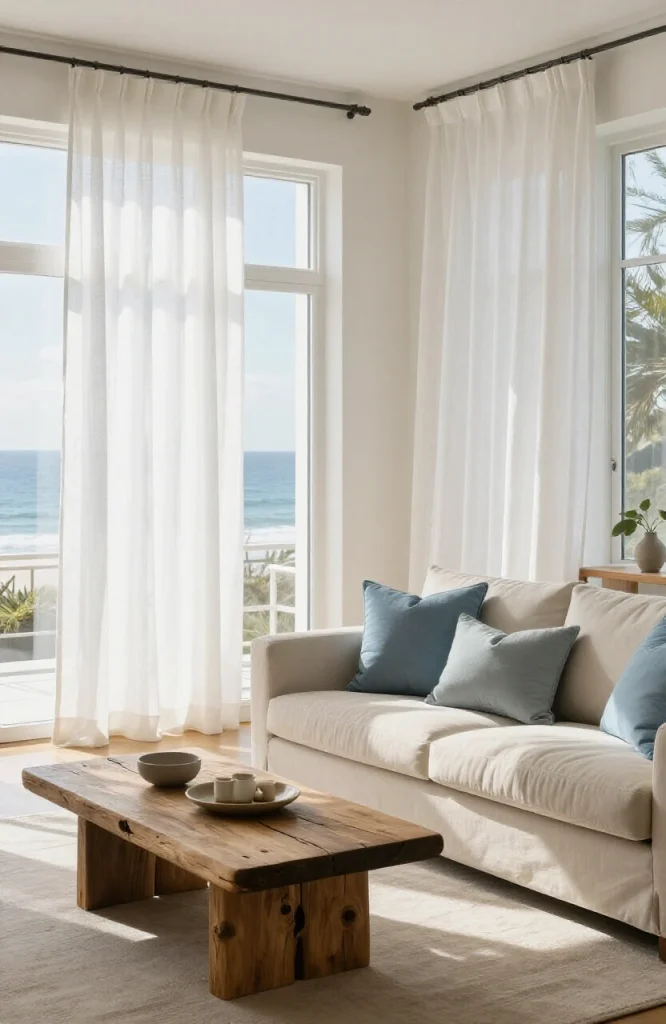
Coastal style curtains usually lean on light, breathable fabrics such as linen or cotton in white, sandy beige, or soft blue, often with a relaxed, slightly wrinkled finish rather than a crisp pressed look. Simple headers, such as tab top or rod pocket, fit the casual feel better than a heavily pleated, formal style. Sheer panels alone, without a heavier layer, work in coastal living rooms that get consistent natural light throughout the day.
42. Farmhouse Style Curtains for a Cozy Look
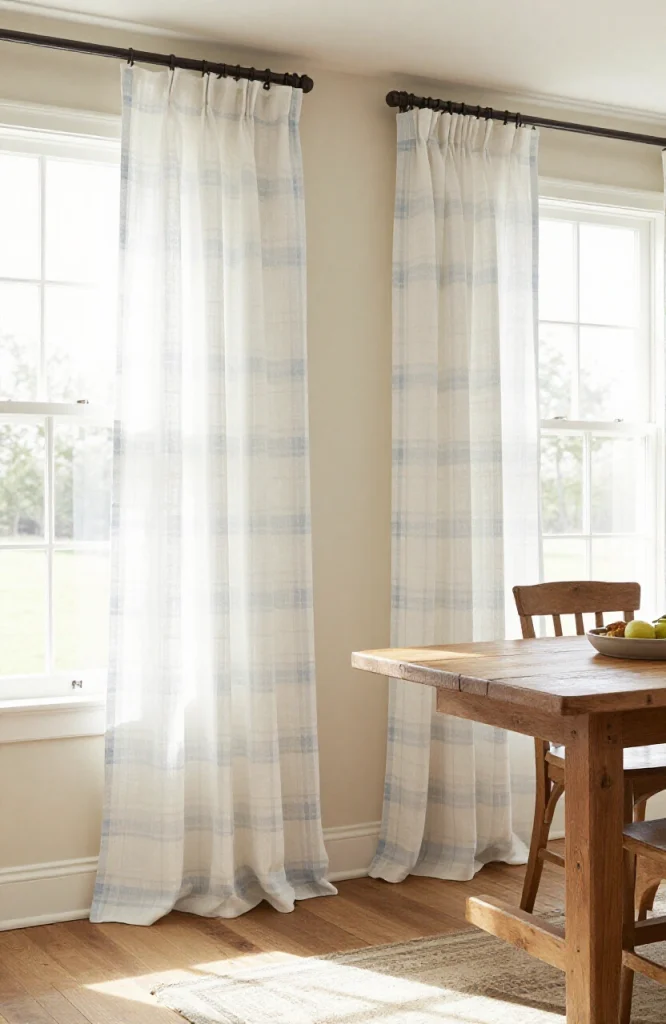
Farmhouse style curtains favor natural fibers, simple patterns such as small checks or stripes, and a slightly worn, washed finish over a glossy or formal fabric. Cotton and linen blends in white, cream, or muted plaid patterns suit this style most directly. Hardware tends toward simple wood or matte black rods rather than ornate finials, keeping the focus on the fabric and the room’s other natural materials, such as wood beams or woven baskets.
43. Boho Style Curtains for an Eclectic Vibe
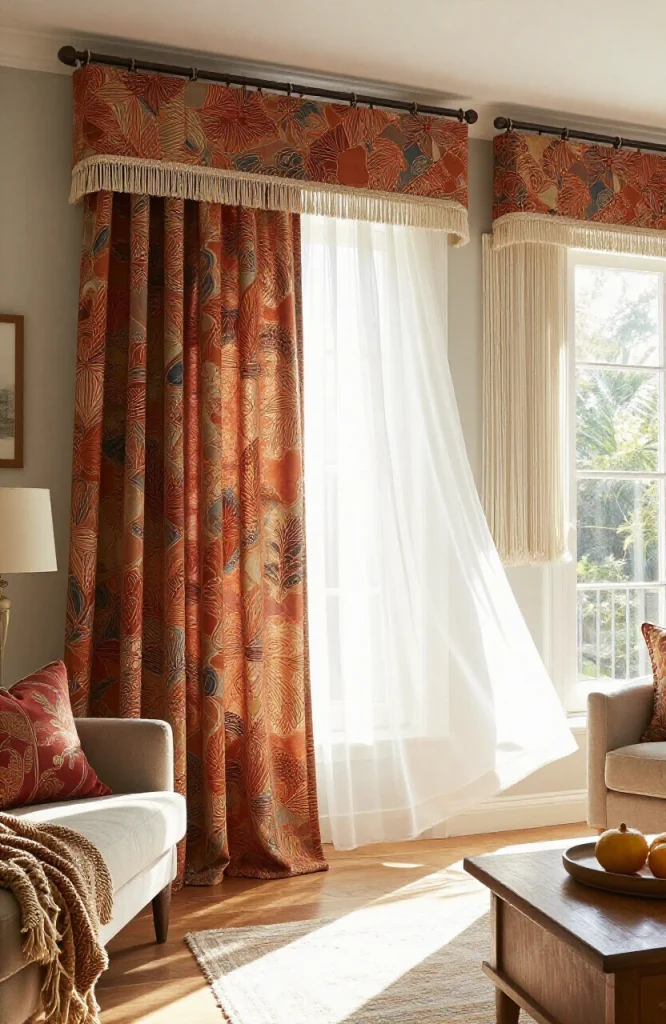
Boho style curtains often mix pattern, texture, and sometimes macrame or fringe detail along the hem, rather than relying on a single clean fabric. Layering two different patterned panels, or pairing a patterned curtain with a plain rug and solid furniture, keeps the eclectic look from becoming visually overwhelming. Natural fiber fabrics such as jute-blend or raw cotton support the handmade feel that defines boho style more than a synthetic, glossy fabric would.
44. Choosing the Right Curtain Length for Your Living Room
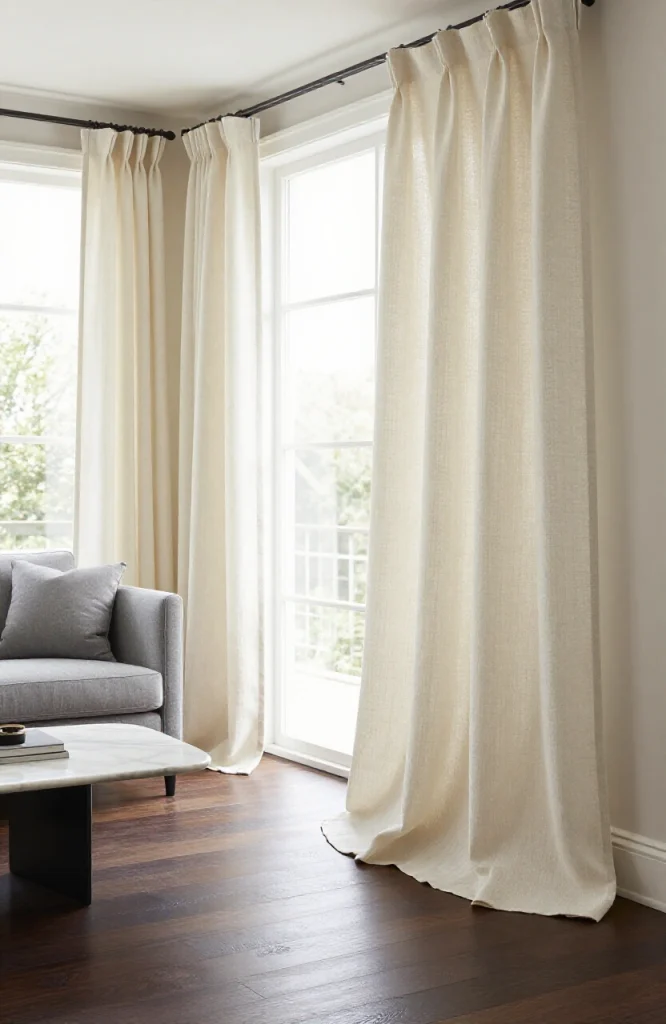
Curtain length changes how formal or casual a room feels. Panels that just clear the floor by half an inch look clean and finished, panels that puddle several inches onto the floor read as more formal and traditional, and panels that hover an inch or two above the floor suit a more casual room. Measure from the rod, not the window frame, since the rod is usually mounted several inches above the frame, and round up rather than down if the curtain will sit between two standard lengths.
Final Thoughts on Living Room Curtain Ideas
As one interior designer put it during a recent client consultation:
“Curtains are the fastest way to change how a room feels, without touching the walls, the floor, or a single piece of furniture.”
Choosing curtains for a living room comes down to matching fabric weight, header style, and color to how the room is actually used, not just how a single photo looks. The 44 living room curtain ideas above cover common window types, design styles, and functional needs, from blackout panels for a home theater corner to sheer layers for a sunlit reading nook. Start with the practical questions, light control, privacy, and noise, before moving to color and pattern, and the right combination for a specific living room becomes much easier to narrow down. Whichever direction the room takes, a curtain choice that fits the window’s proportions and the room’s daily use will outlast any single trend.