
Feeding backyard birds does not require a trip to the garden center or a big budget. After years of testing feeder designs in my own yard, swapping materials when squirrels chewed through plastic or rain rotted untreated wood, I have landed on dozens of builds that hold up outdoors and actually pull in chickadees, finches, cardinals, and woodpeckers. This list of 50 easy DIY bird feeders you can make at home covers bottle feeders, suet stations, hummingbird nectar setups, and platform designs built from things most households already have in a recycling bin or garage. Each idea includes the materials, the build steps, and a placement tip so the feeder survives weather and keeps birds coming back.
Before you start, keep three things in mind: hang feeders at least five feet off the ground and away from low shrubs where cats can hide, clean every feeder every one to two weeks with hot water and a stiff brush to stop mold and salmonella spread, and pick seed based on the birds in your region (black oil sunflower attracts the widest range, while nyjer seed pulls in finches specifically). With that out of the way, here are 50 builds organized from the simplest five-minute projects to slightly more involved weekend builds.
As gardeners have said for generations, feed the birds and the birds will feed your soul back tenfold in song.
1. Recycled Plastic Bottle Feeder

A two-liter soda bottle turns into a working feeder in under ten minutes. Cut two or three small holes around the bottle roughly four inches from the bottom, slide a wooden spoon or dowel through each hole so it sticks out as a perch, then fill the bottle with seed through the cap opening. Poke a few small drainage holes near the base so rainwater does not pool and spoil the seed. Hang the bottle by its cap using sturdy twine through a hole punched at the top, and position it under a roof overhang or tree canopy so the openings stay dry. This build attracts chickadees and house finches well, and it costs nothing beyond a bottle you would otherwise toss in recycling.
2. Mason Jar Bird Feeder
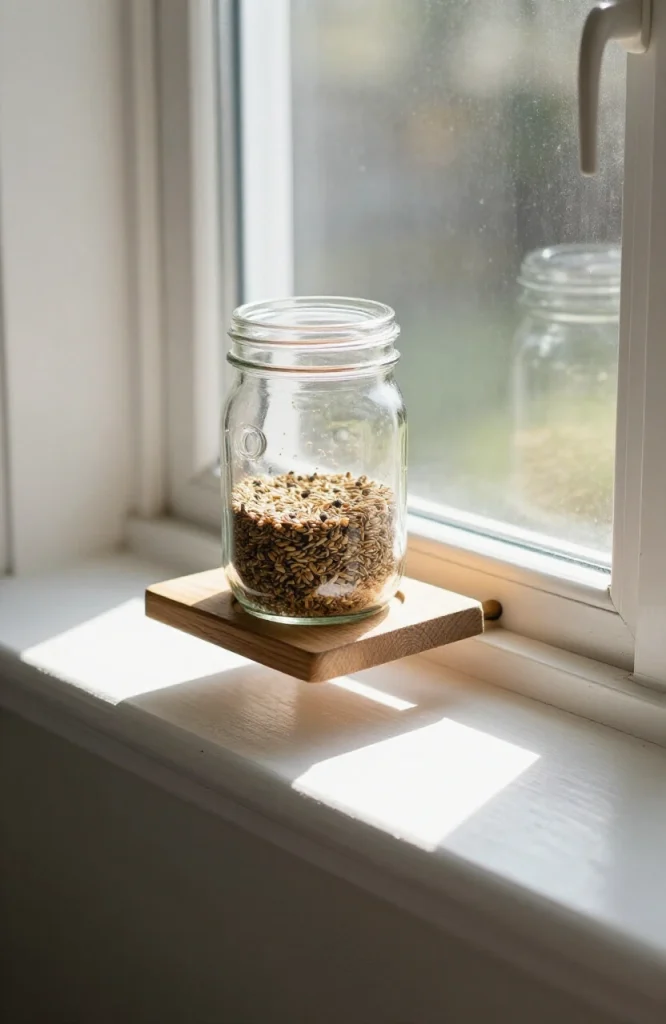
Pair a wide-mouth mason jar with a screw-on mason jar feeder base (sold separately at most hardware stores) or build your own base from a wood plate with a dowel perch glued through the center. Fill the jar with seed, screw it onto the base upside down, and the seed dispenses slowly through small slots as birds land on the perch ring. The glass keeps seed visible so you know when to refill, and the screw-top seal keeps moisture and pests out between fills. Hang it from a shepherd’s hook or bracket near a window for easy viewing, since cardinals and chickadees tend to use this style often.
3. Pinecone Peanut Butter Feeder
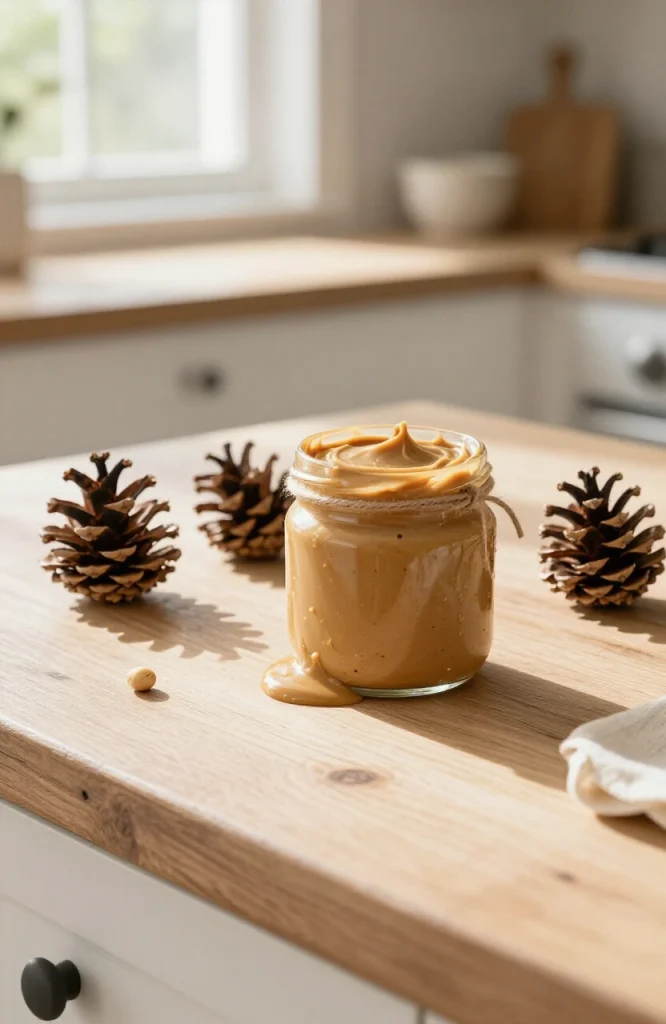
This is the classic kid-friendly project and it still works as well as ever. Tie a length of string or twine around the top of a large, fully opened pinecone, then spread natural peanut butter into the gaps between the scales using a butter knife or spatula. Roll the coated pinecone in birdseed or rolled oats so the seed sticks to the peanut butter, then hang it from a tree branch. Skip peanut butter with added sugar or xylitol, since xylitol is toxic to many animals. This feeder breaks down naturally over a few weeks, so it works best as a short-term treat rather than a permanent feeding station, and woodpeckers and nuthatches respond to it quickly.
4. Milk Carton Feeder
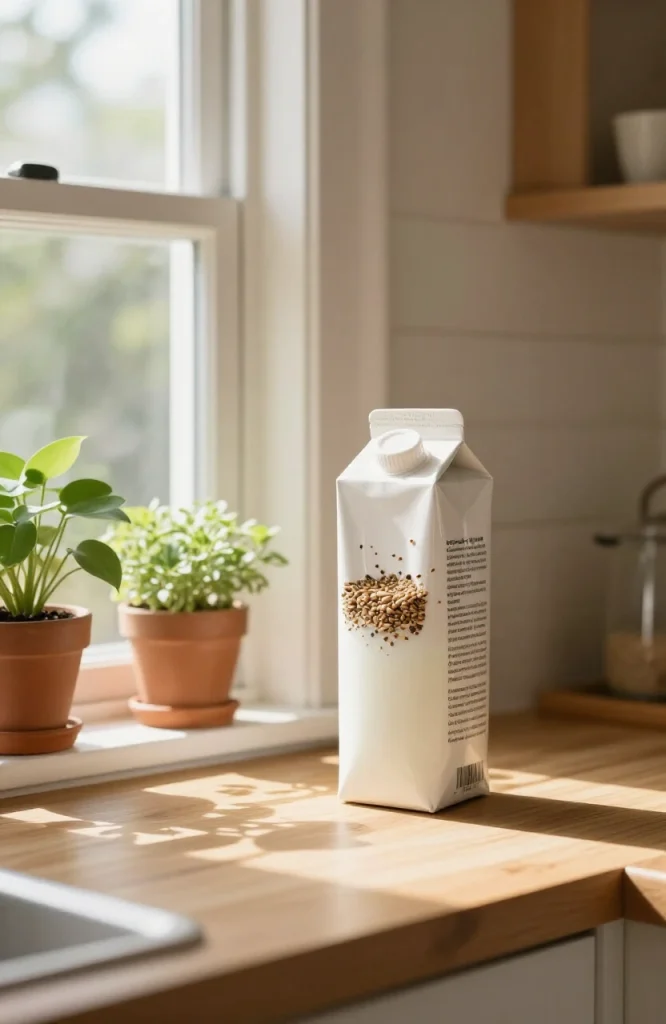
A clean, dry half-gallon or gallon milk carton makes a hopper-style feeder with almost no cutting. Cut a large rectangular opening on one of the wide side panels, leaving about an inch of carton at the bottom edge to hold seed in place, then cut a smaller hole on the opposite side if you want airflow and viewing from both sides. Push a wooden dowel through both sides below the opening to create a perch, seal any exposed cardboard edges with clear packing tape or a coat of waterproof varnish, and add a hanging loop punched through the handle or top peak. Because cardboard breaks down in wet weather, plan to replace this feeder every season or treat it with exterior sealant first.
5. Tin Can Feeder
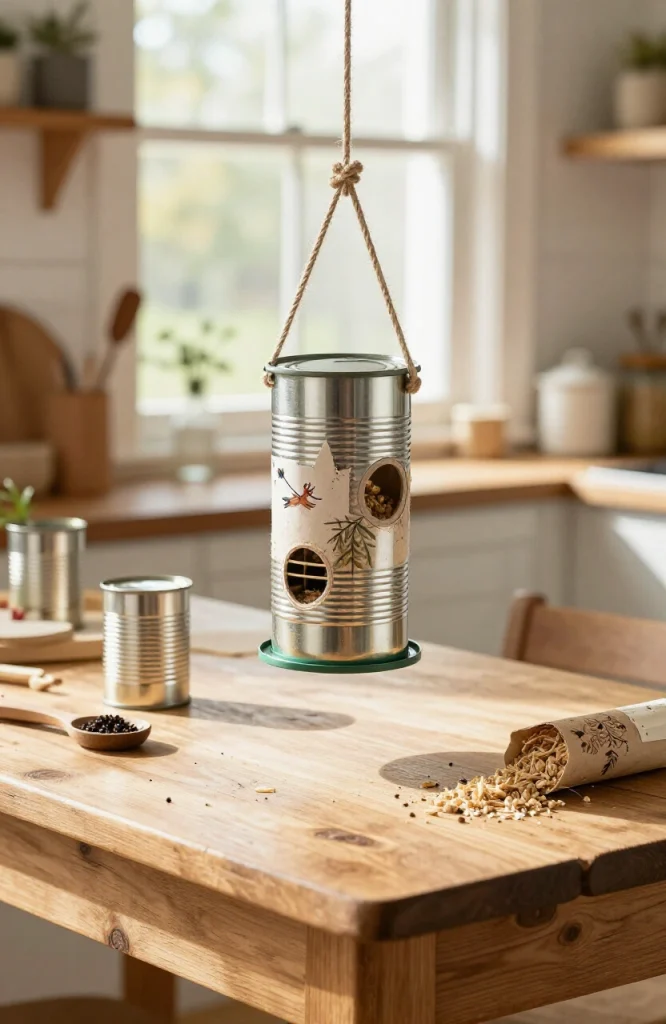
Rinse out a large coffee or vegetable can, sand down any sharp edges along the rim, and drill two holes near the top on opposite sides for a wire or rope hanger. Drill a few small drainage holes in the base, then drill two more holes lower on the sides for a dowel perch if you want birds to land while feeding rather than just pecking from above. Fill with seed and hang from a branch or hook. For a more finished look, wrap the outside in twine, paint it with a weatherproof outdoor paint, or wrap it in cork sheeting before hanging.
6. Wooden Platform Feeder
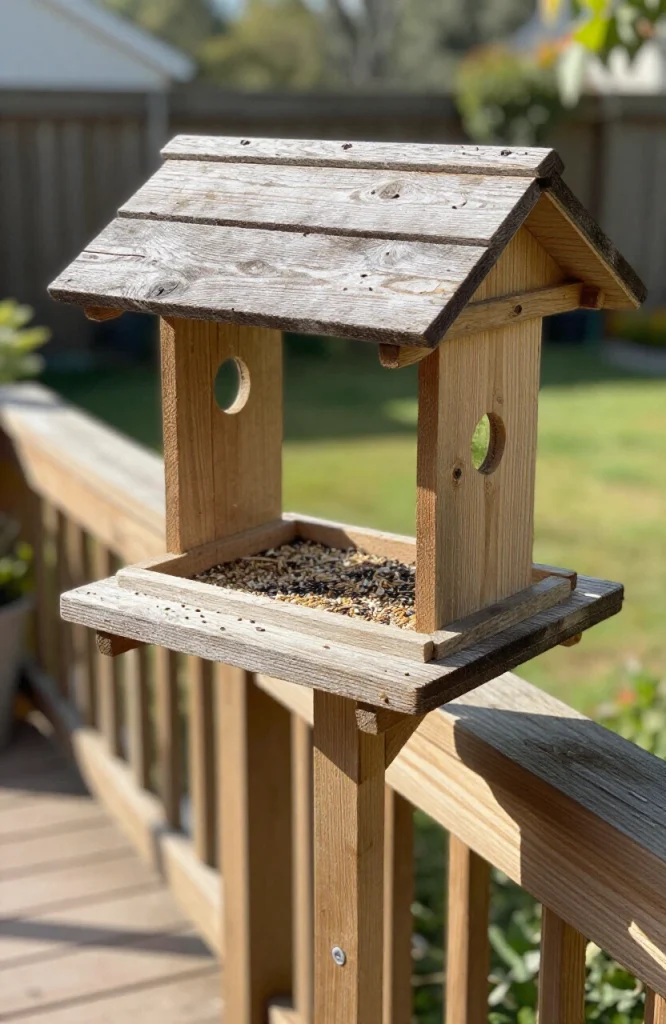
A platform feeder is the easiest design for attracting the widest range of species, including ground feeders like doves and juncos that will not use hanging feeders. Cut a piece of half-inch plywood or cedar board into a 12-by-12-inch square, add a half-inch raised lip of thin wood strips around all four edges to keep seed from blowing or rolling off, and drill a series of small holes in the base for drainage. Mount the platform on a single post sunk into the ground, set it on a stump, or suspend it from chains at each corner. Cedar holds up to weather better than pine without needing paint, which keeps the build low-maintenance for years.
7. Hanging Coconut Shell Feeder
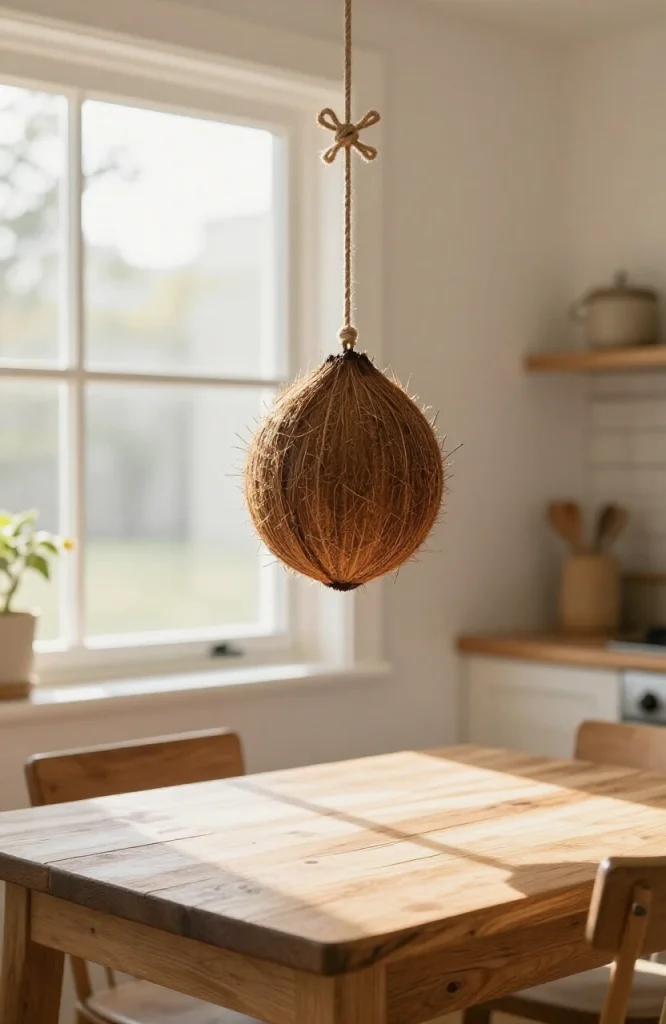
Cut a coconut in half, drain and scoop out the meat for cooking, then drill three small holes evenly spaced around the rim of one half. Thread cord or wire through the holes and knot them together above the shell so it hangs like a small bowl, then fill with seed or a homemade suet mix. The natural curve holds seed well in light wind, and the shell itself is durable enough to last more than one season outdoors. This style works particularly well in covered patio areas and pairs naturally with other tropical-leaning garden decor.
8. Wine Bottle Feeder
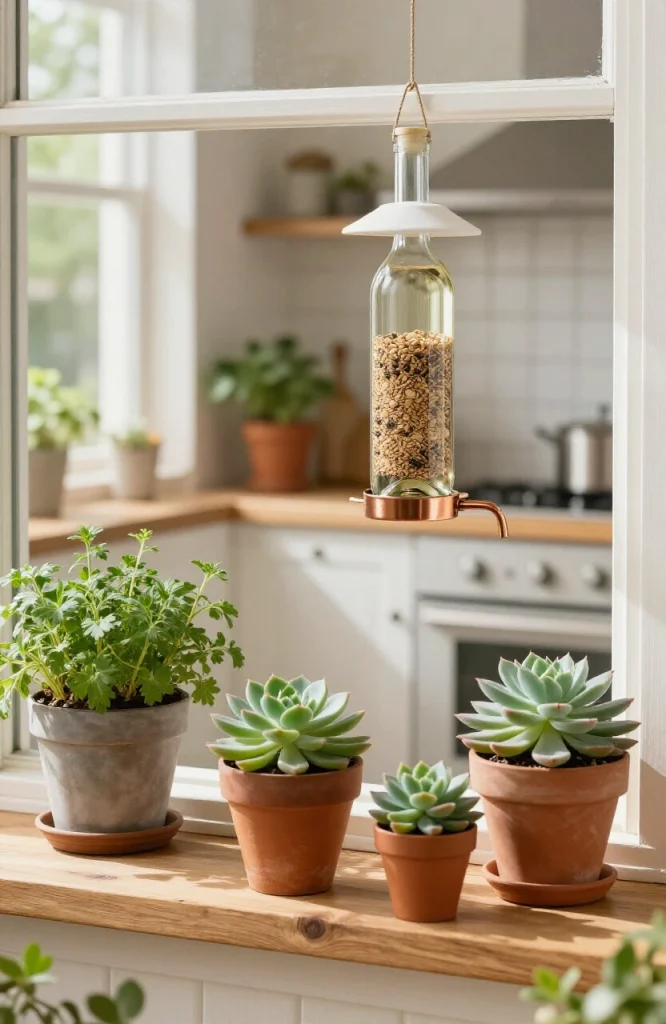
An empty wine bottle paired with a feeder spout adapter (widely available online and at garden stores) becomes a sturdy, weatherproof feeder that holds far more seed than a typical bottle feeder. Screw the spout adapter onto the bottle’s neck, flip it upside down into a wood or metal bracket sized to hold the bottle at an angle, and seed flows out slowly as birds feed from the small dish below the spout. Because glass will not degrade in sun or rain the way plastic and cardboard do, this is one of the longer-lasting builds on this list, and the bottle shape adds a decorative element if you are matching a patio or garden theme.
9. Teacup and Saucer Feeder
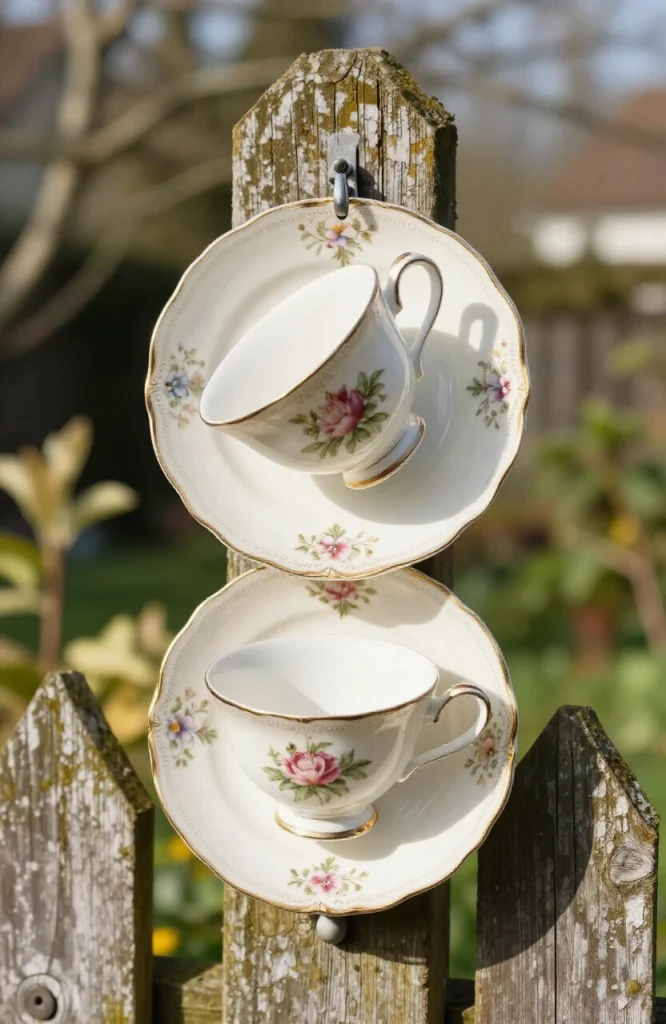
Glue the base of a teacup to the center of its matching saucer using a strong waterproof adhesive or outdoor-rated epoxy, let it cure fully, then attach a small eye hook or drilled hole with cord at the top of the cup handle for hanging. Fill the cup with seed and the wider saucer catches anything that spills, giving small birds room to perch and feed at the same time. Mismatched thrift store china works well here, and the design fits naturally into a cottage-style or vintage garden look without looking out of place next to other repurposed decor pieces.
10. PVC Pipe Feeder
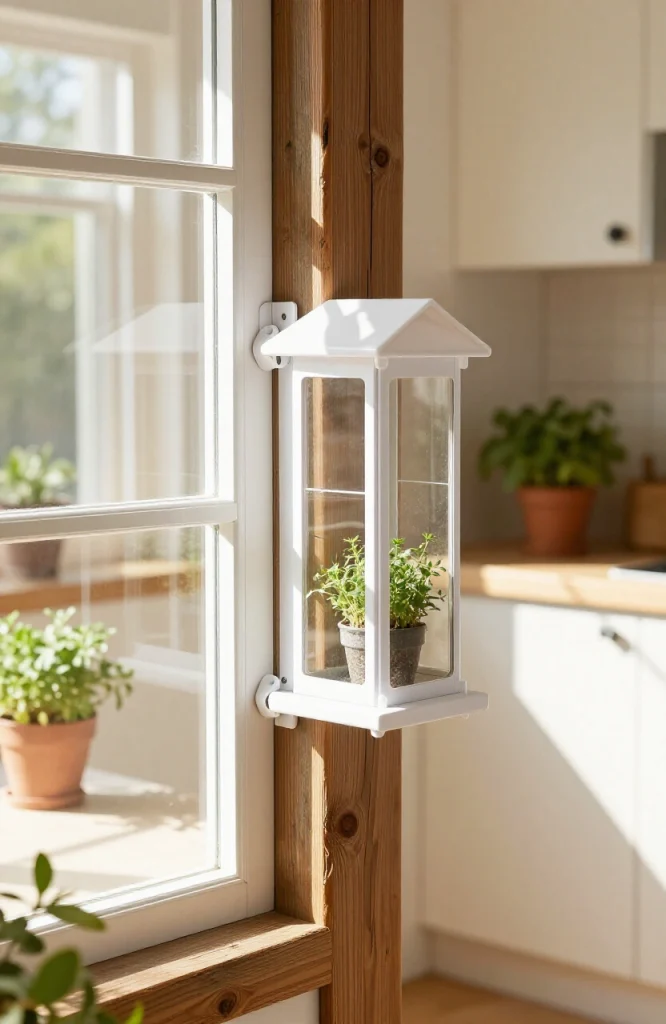
A length of four-inch PVC pipe, two end caps, and a few fittings build a tube feeder that survives weather far better than wood or cardboard. Drill several rows of small perch holes spaced about four inches apart down the length of the pipe, then drill a slightly larger feeding hole just below each perch hole. Cap one end permanently with PVC cement and leave the other end capped but removable for refilling. Mount it vertically using pipe brackets on a post or fence. This build holds up to rain and sun indefinitely and works well as a semi-permanent feeding station rather than a seasonal project.
11. Wood Frame Suet Cage Feeder
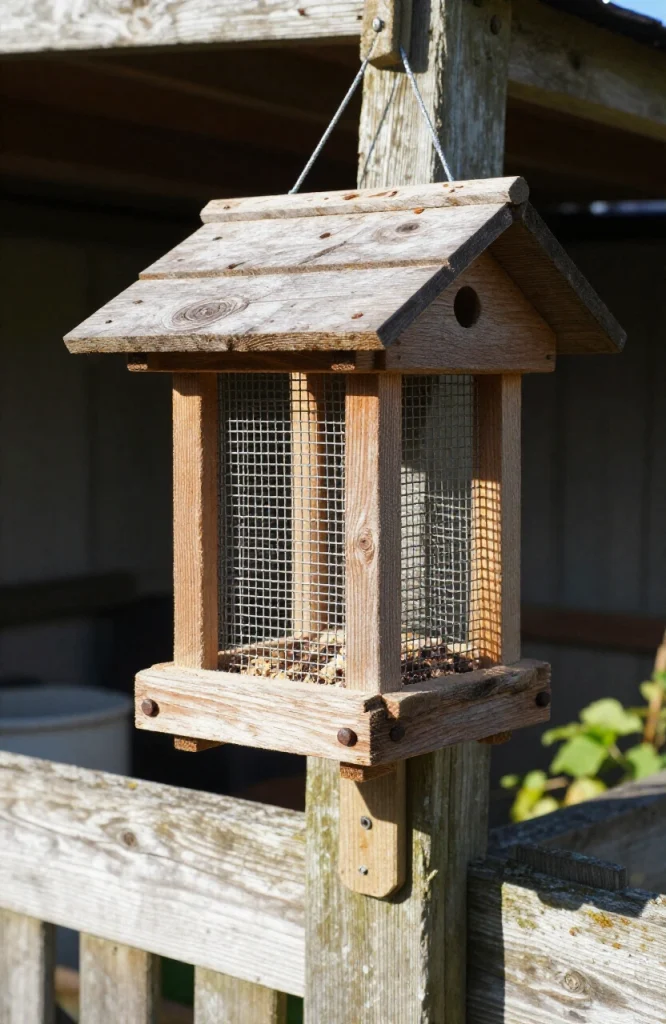
Build a simple open-faced box from scrap cedar or pine, roughly 5 by 5 by 2 inches deep, then staple a piece of half-inch hardware cloth or chicken wire across the open front to hold a suet cake in place while still letting birds peck through. Attach a small roof piece angled over the top to keep rain off the suet, and add a hanging hook at the top center. Suet feeders bring in woodpeckers, nuthatches, and wrens especially in colder months when birds need the extra fat content, and this design is sturdy enough to refill season after season.
12. Birdseed Wreath
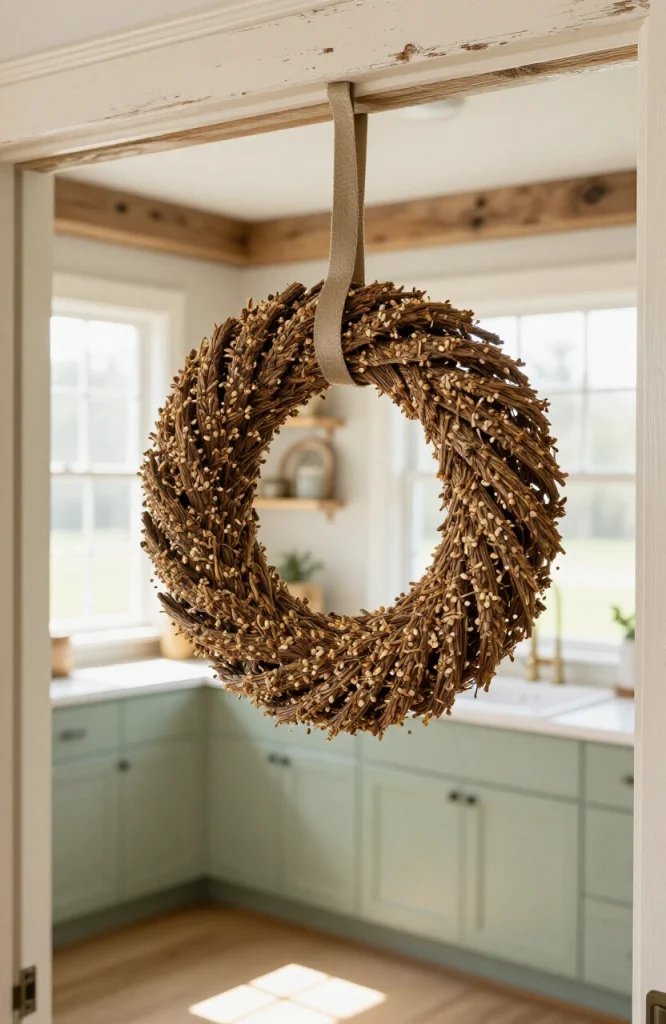
Mix unflavored gelatin, water, corn syrup, and birdseed into a thick paste, following a basic ratio of about one cup of seed to two tablespoons each of gelatin and corn syrup dissolved in warm water. Press the mixture into a greased bundt pan or a wreath-shaped silicone mold, refrigerate until firm, then pop it out and thread ribbon or twine through the center hole for hanging. This seasonal feeder doubles as outdoor decor on a porch or fence and breaks down naturally over a few weeks, so it works best as a temporary addition rather than a year-round fixture.
13. Window Suction Cup Feeder
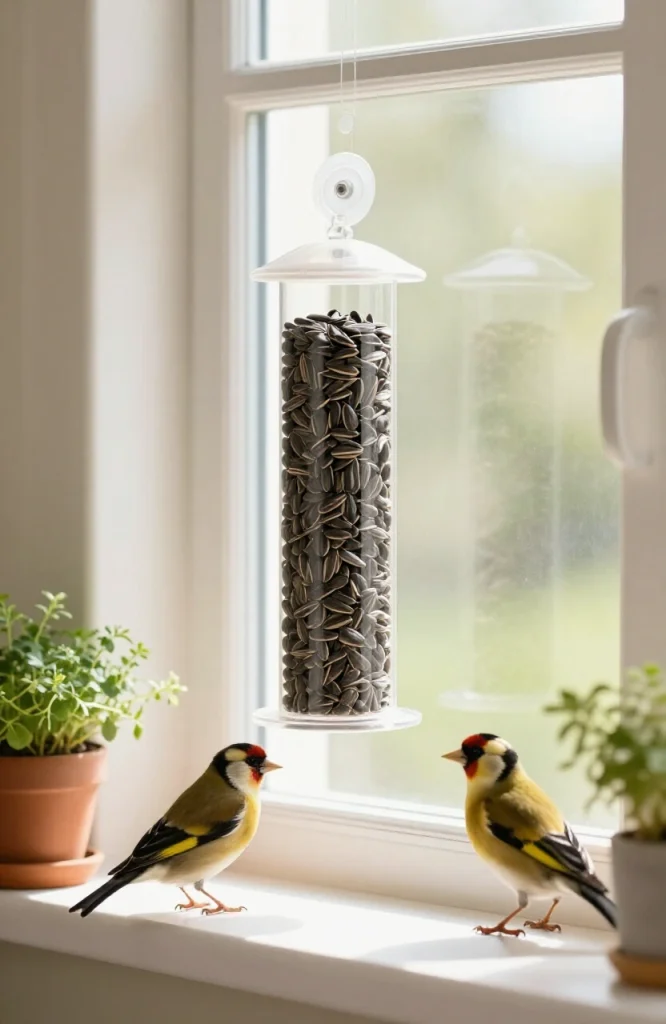
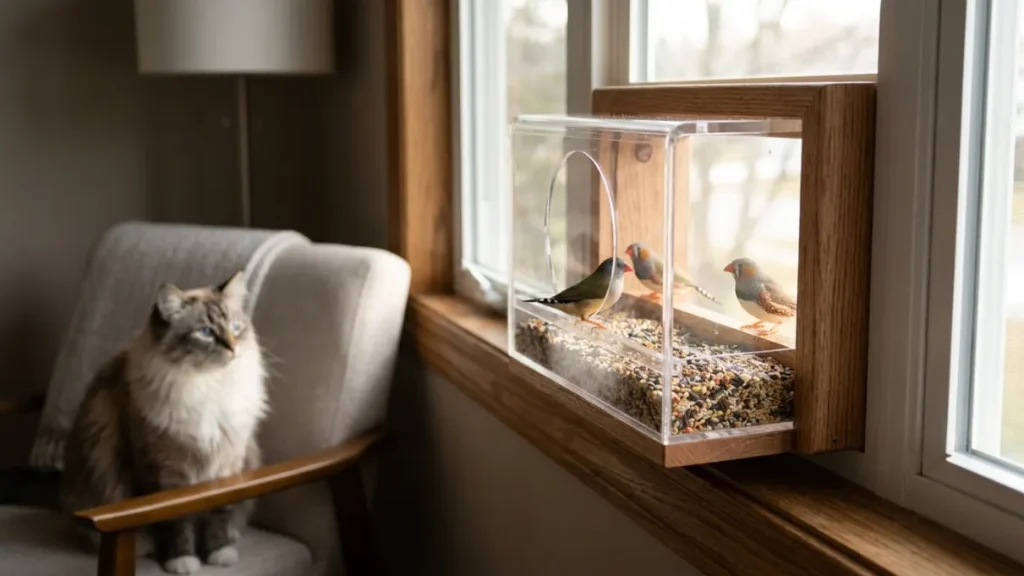
Buy or repurpose a small clear acrylic tray and attach two or three heavy-duty suction cups with hooks to the back using waterproof adhesive, then press the cups directly onto a clean, dry window. Fill the tray with seed and you get an up-close view of feeding birds from inside the house, which works well for kids or anyone who cannot easily access a yard. Clean the window glass and the suction cups regularly so they keep their grip, and avoid placing this feeder on a window that gets direct afternoon sun for hours, since seed can overheat and spoil faster in a hot glass-facing spot.
14. Gourd Bird Feeder
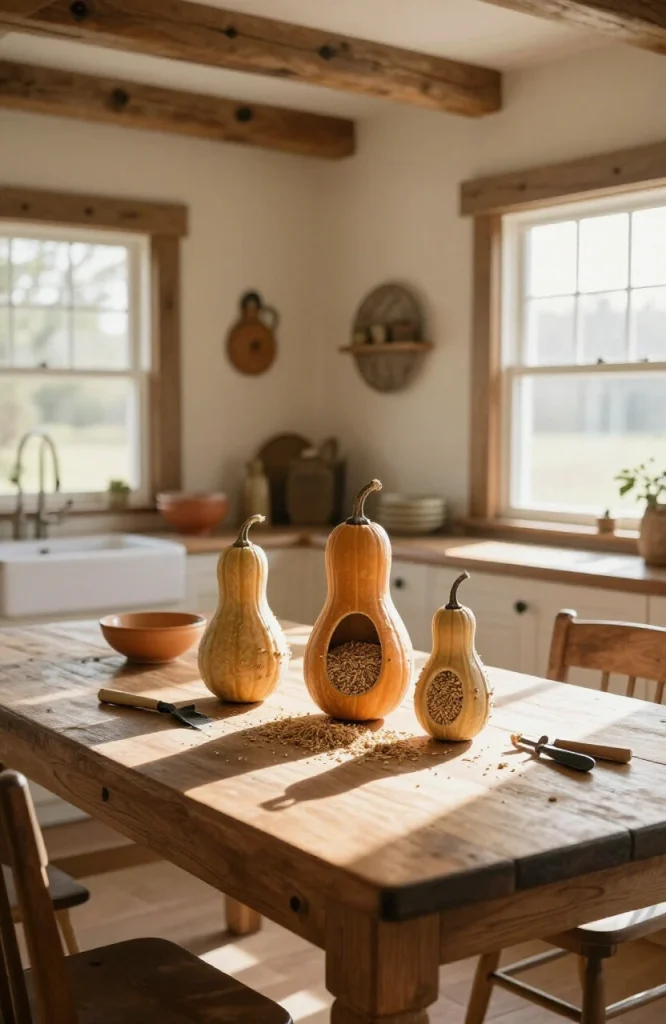
Dried hard-shell gourds, the same kind often used for birdhouses, work just as well as feeders. Cut an oval opening on one side roughly two inches wide, scoop out the dried seeds and pulp inside, and drill a small hole below the opening for a wooden perch dowel. Drill two holes near the top for a hanging cord. Treat the outside with a coat of clear exterior varnish to extend its life outdoors, since untreated gourds will eventually soften and break down faster than wood or plastic builds.
15. Cedar Shake Roof Hopper Feeder
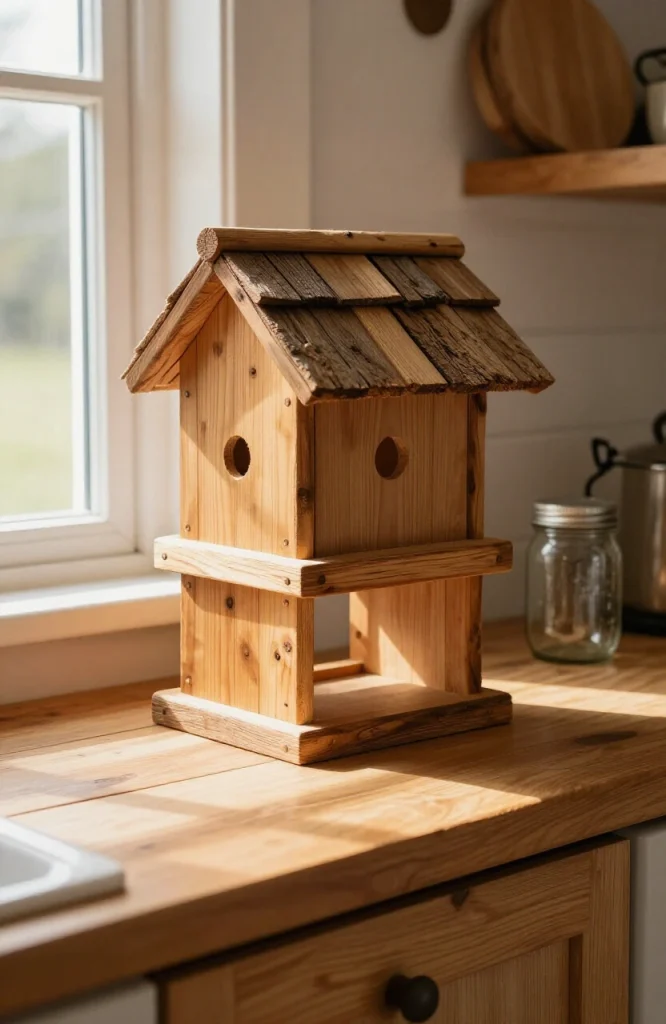
Build a basic hopper feeder using two angled cedar shakes (roof shingles) as the peaked roof over a simple wood base and seed reservoir made from four short side panels with a gap at the bottom for seed to flow out onto a small platform lip. Cedar shakes are pre-cut, weatherproof, and inexpensive at any hardware store, which cuts down on build time significantly compared to cutting your own roof pieces. This style holds a larger seed capacity than small tube or bottle feeders, so it needs refilling less often, making it a good option if you travel or cannot check feeders daily.
16. Tray Feeder from a Picture Frame
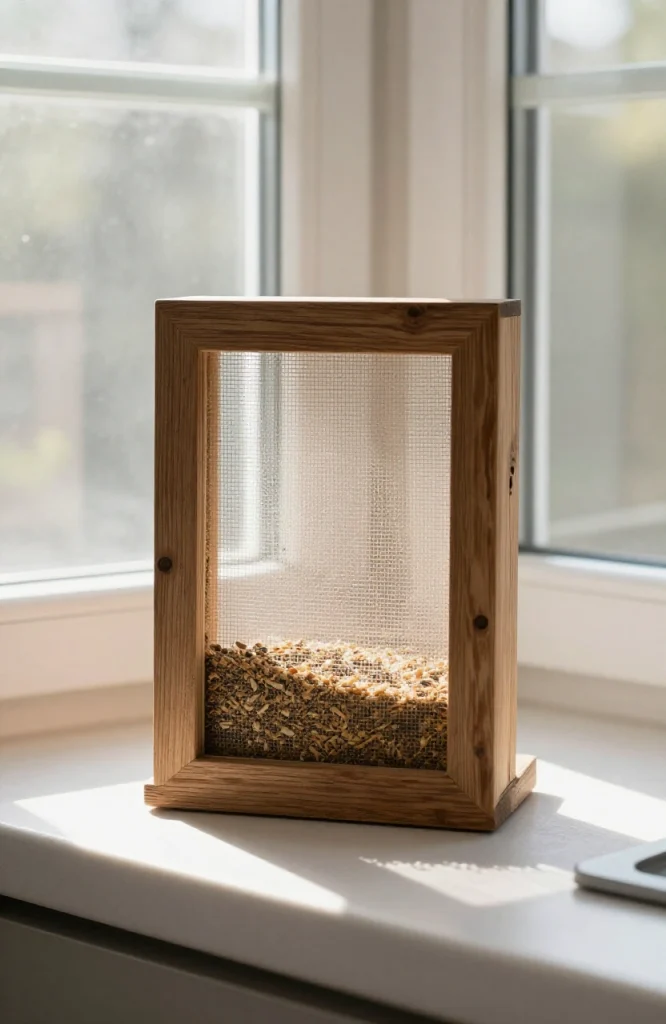
An old picture frame with the glass removed becomes the base of a simple tray feeder. Replace the missing backing with a piece of hardware cloth or thin plywood with drainage holes drilled through it, then add four small wood blocks as legs underneath each corner so the tray sits a few inches off whatever surface it rests on. Set it on a deck railing, a stump, or a dedicated post. The flat frame edge naturally holds seed in place, and repurposing a frame that would otherwise sit in storage keeps this build essentially free.
17. Toilet Paper Roll Feeder
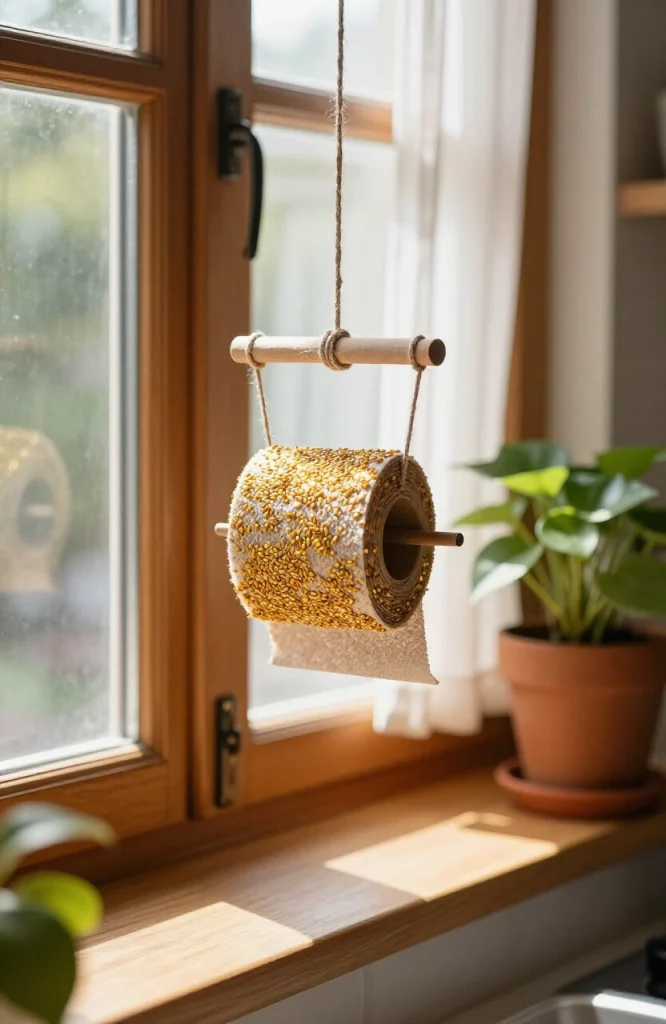
Spread peanut butter over the outside of a cardboard toilet paper or paper towel roll, then roll it in birdseed until fully coated, pressing gently so the seed sticks. Thread string through the center tube and tie it to a tree branch. Because the cardboard core softens quickly in wet weather, this works best as a short-term project for a single feeding session rather than something left outside for weeks, and it remains one of the simplest no-tool builds on this list for a quick afternoon activity with kids.
18. Orange Peel Feeder
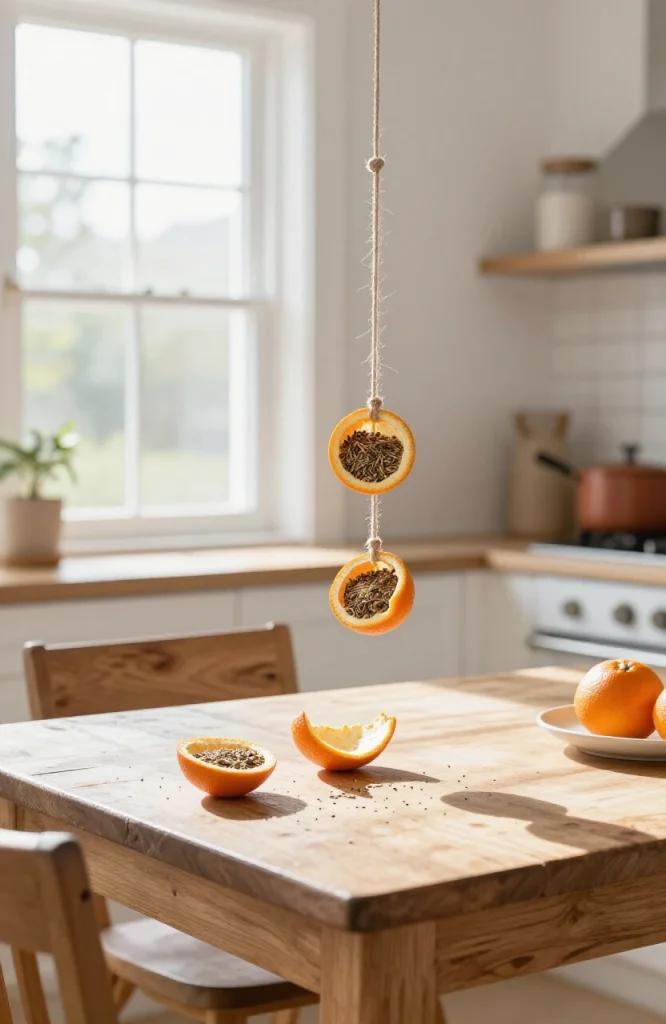
Cut an orange in half, carefully scoop out the fruit for eating separately, and you are left with two natural bowl-shaped feeder halves. Poke three holes evenly around the rim of each half, thread cord through, and tie the cords together above the peel so it hangs balanced. Fill with seed, or skip the seed entirely and leave the peel as-is since orioles and some warblers will feed directly on citrus. This feeder breaks down within days, so replace it often, but the near-zero cost and quick setup make it worth repeating through the season.
19. Cookie Cutter Suet Feeder
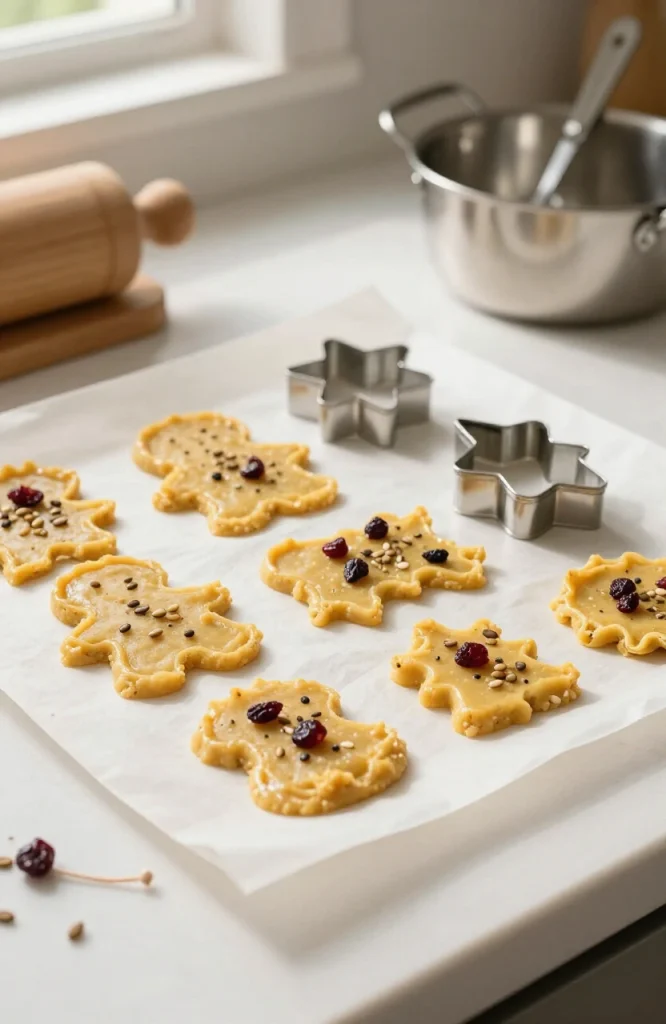
Mix melted suet or lard with birdseed, cornmeal, and dried fruit, pour the warm mixture into metal cookie cutters set on a parchment-lined tray, and press a loop of string into each shape before it hardens so you have a hanging point once it sets. Refrigerate until firm, then pop the shapes out of the cutters and hang them individually from branches or a multi-hook feeder stand. This is a good batch project since one mixing session produces several feeders at once, and the shapes make it an easy one to dress up for a specific season or holiday display in the yard.
20. Drilled Log Feeder
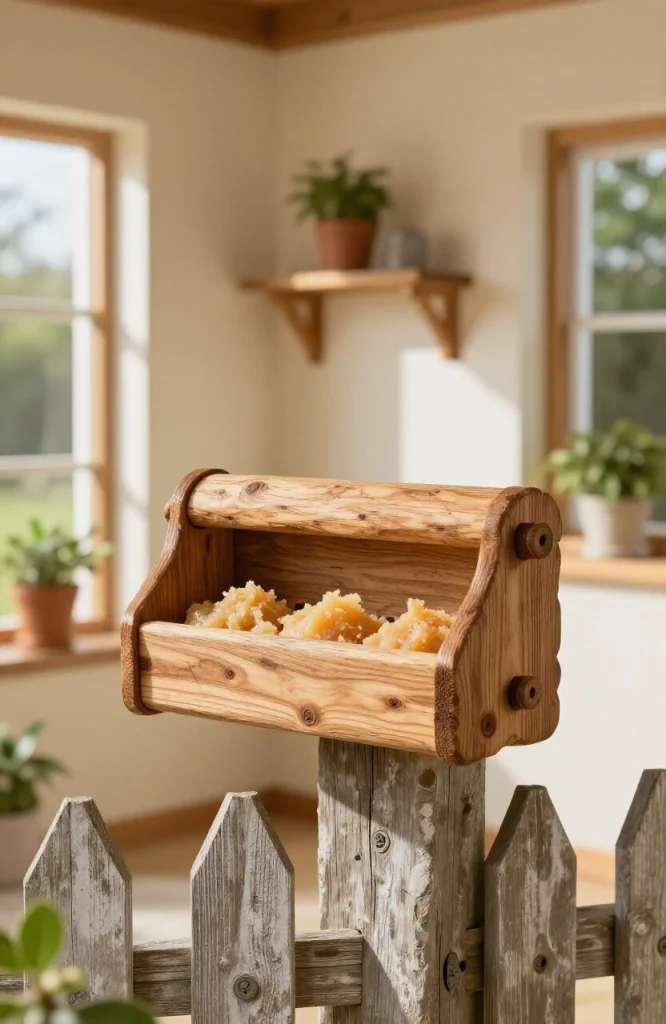
A section of fallen branch or log, six to twelve inches long and at least three inches thick, becomes a long-lasting suet feeder with just a drill. Bore several one-inch-deep holes around the log’s surface, spaced a few inches apart, then pack each hole with a peanut butter and seed mixture or rendered suet using a butter knife. Add a screw eye at the top for hanging, or simply lean the log in a tree crotch if it is heavy enough to stay put. Untreated wood like this holds suet well and lasts multiple seasons before it needs replacing, making it one of the more durable options on this list.
21. Hanging Basket Feeder
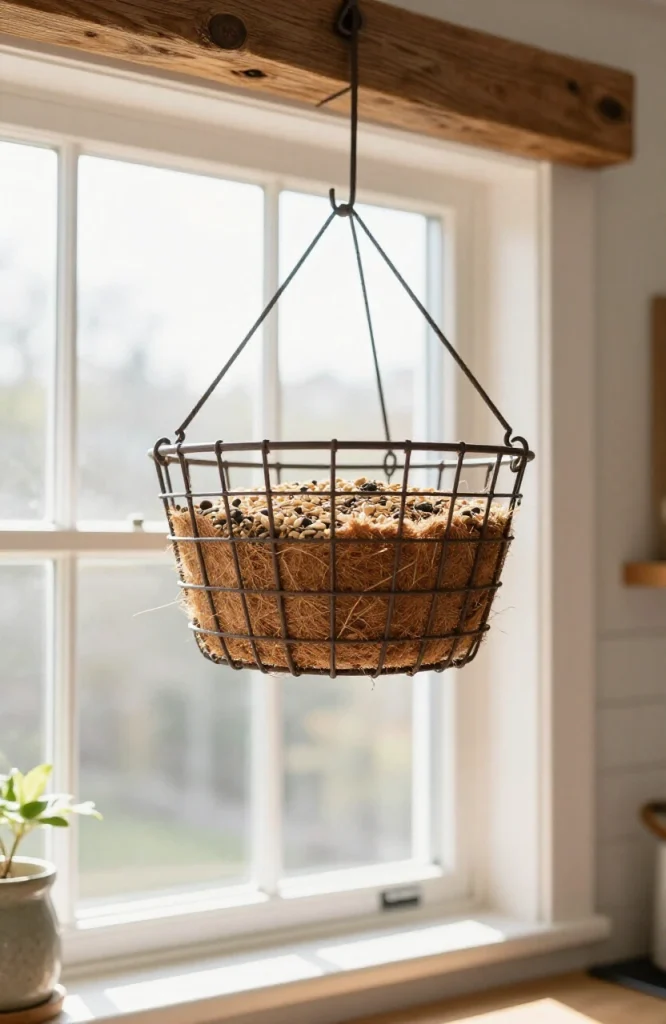
Line a small wire hanging basket, the kind typically used for flowering plants, with a coconut coir liner or a few layers of natural burlap, then fill the lined basket with seed mix. The wire structure already comes with a hanging chain, so no extra hardware is required. Mesh in the coir liner lets seed settle without spilling through while still draining excess moisture after rain. This is a fast option if you already have an unused hanging basket on hand, and it suits gardens that already favor a layered, textured outdoor look.
22. Bundt Pan Feeder
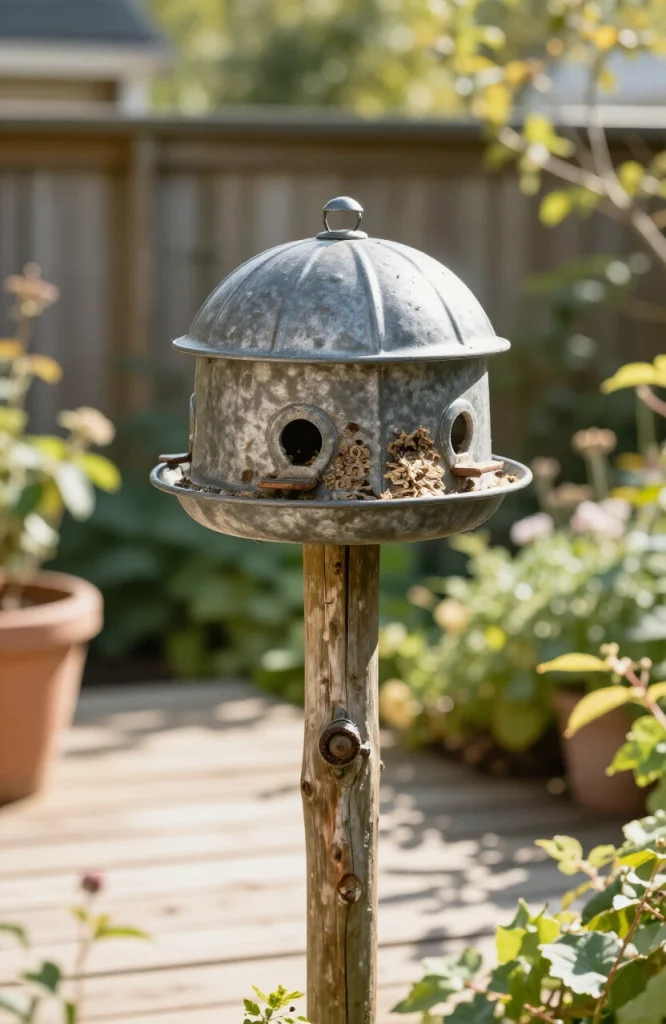
An old metal or silicone bundt pan, the kind no longer used for baking, makes a generous platform feeder once it is mounted upside down or right-side up on a post. Right-side up, the center tube and ridges create natural sections that keep different seed types separated. Drill three or four small drainage holes in the lowest points of the pan, then screw or bolt it onto a flat board mounted on a post at a comfortable height. This design holds a large volume of seed and gives several birds room to feed at once without crowding.
23. Birdhouse-Style Hopper Feeder
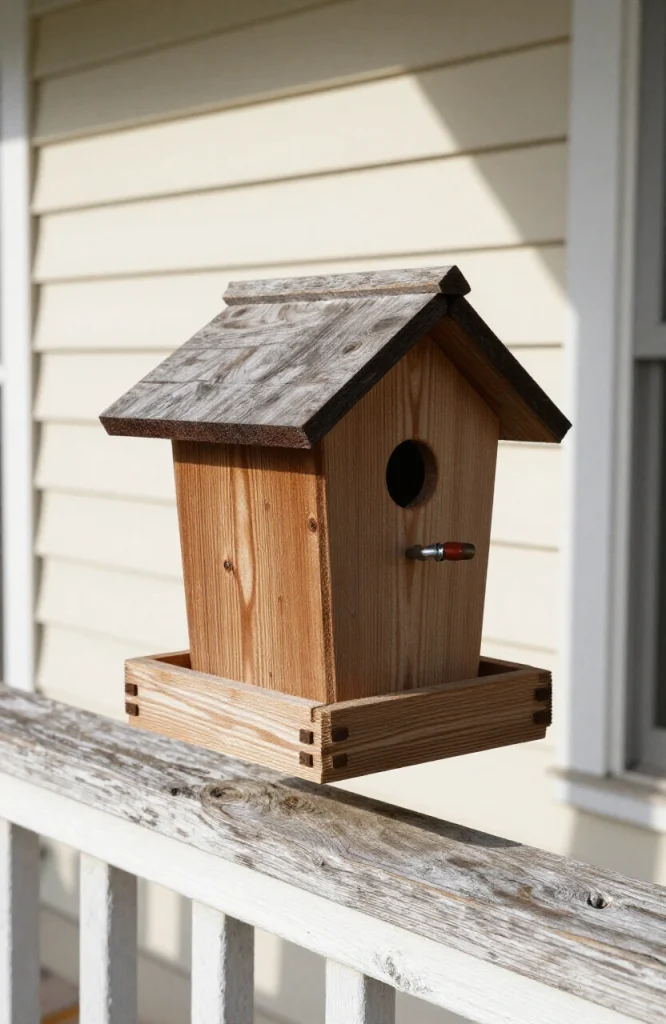
Build this like a small birdhouse but skip the enclosed nesting box and instead leave the front mostly open above a low lip, so it functions as a covered hopper feeder rather than a home. Use exterior-grade plywood for the four walls and a peaked roof, add a perch rail across the open front, and seal seams with exterior wood glue and a bead of caulk at the roofline to stop leaks. The peaked roof keeps rain and snow off the seed supply far better than flat platform designs, which makes this a solid choice for feeding through winter months in colder climates.
24. Repurposed Birdcage Feeder
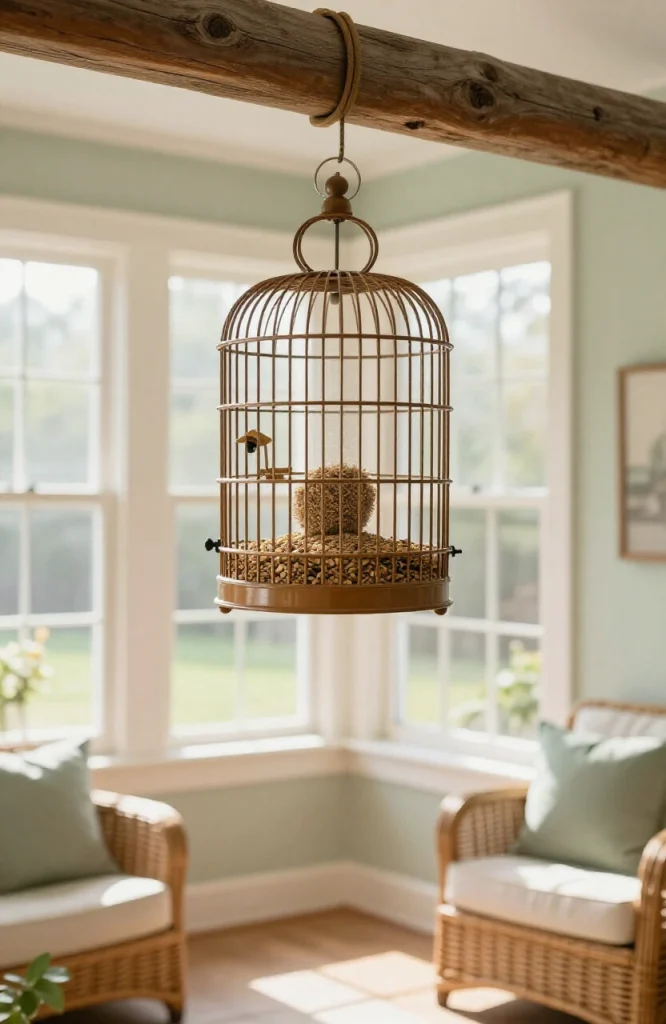
An old decorative birdcage, especially one with a removable bottom tray, converts easily into a feeding station. Remove or prop open one side of the cage door, fill the bottom tray with seed, and hang the whole cage from a shepherd’s hook or bracket. The cage bars naturally keep larger birds and most squirrels from accessing the seed quickly, while smaller songbirds can fit through the gaps without trouble. This build works particularly well if you already own a cage that is sitting unused in storage, and it adds a distinct decorative element to a porch or garden corner.
25. Bamboo Tube Feeder
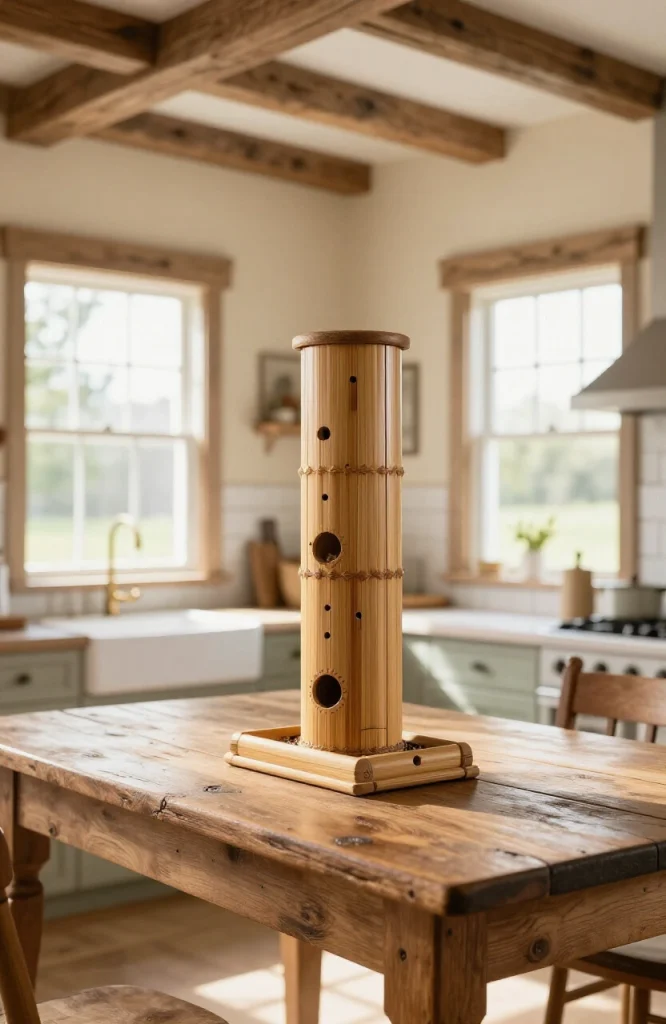
Cut a section of thick bamboo, about 12 to 18 inches long with the natural nodes intact at each end to act as built-in caps, then carve out two or three oval feeding ports along the side using a drill and a rounded file or rotary tool. Drill a small perch hole below each port and insert a short dowel. Hang the tube vertically from cord threaded through a hole near the top. Bamboo is naturally water-resistant and holds up outdoors for years without sealant, which makes this one of the lower-maintenance builds once it is finished.
26. Clay Pot Feeder
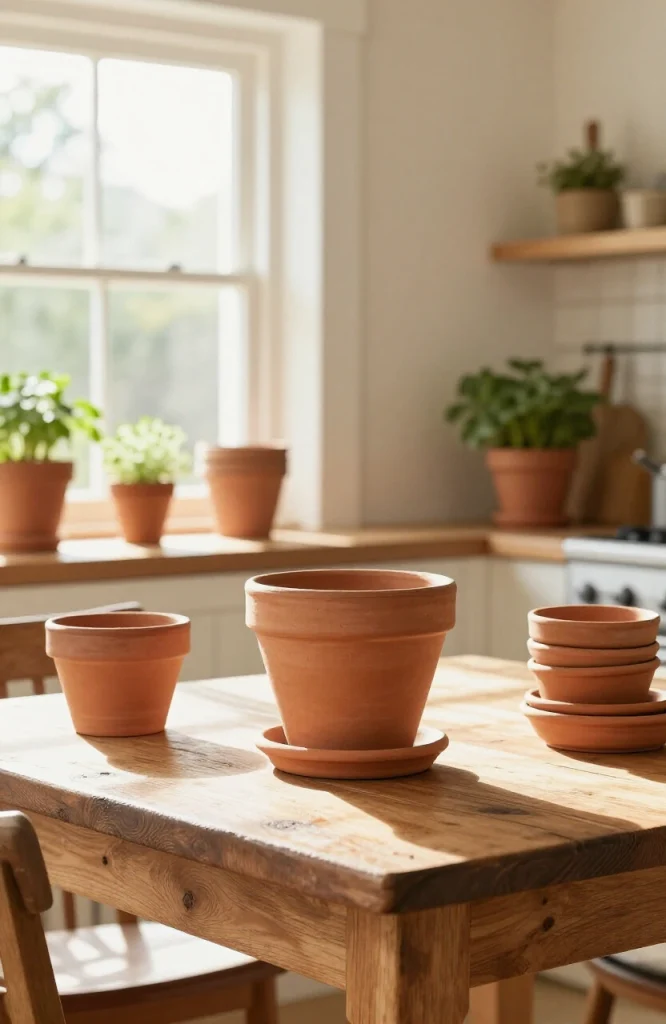
Stack a small terra cotta pot upside down over a slightly larger pot’s saucer, gluing the rim of the small pot to the center of the saucer with outdoor adhesive so it stands upright on its own. Fill the saucer with seed around the base of the inverted pot. The raised dome at the center sheds rain efficiently, keeping seed dry along the rim where birds actually feed. Terra cotta is heavy enough to resist tipping in wind, which makes this a good ground or pedestal feeder for windy yards.
27. Spoon Perch Tray Feeder
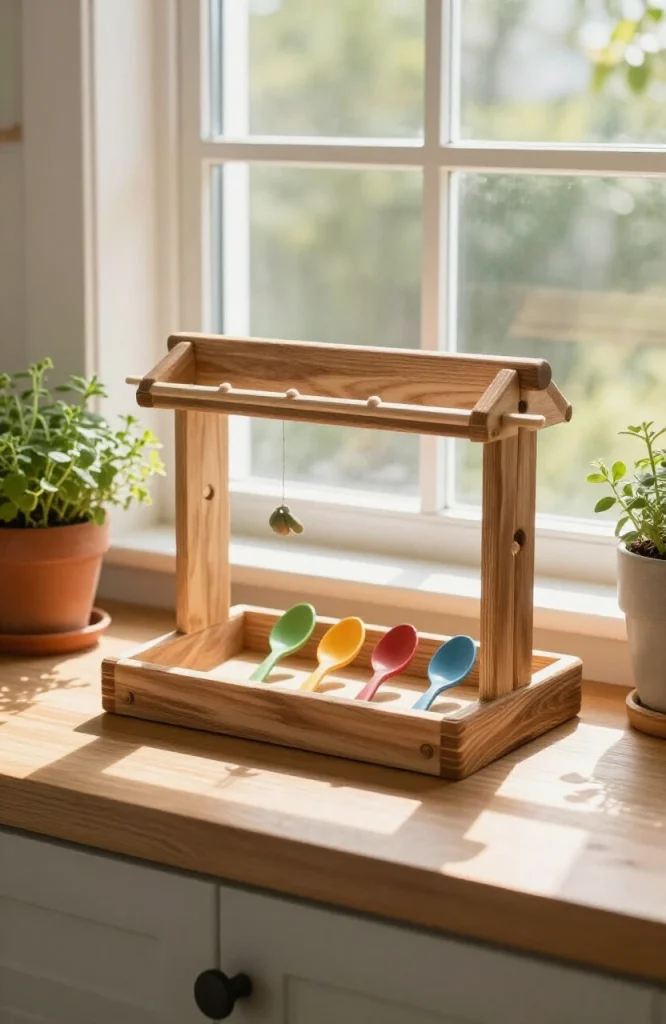
Take a shallow wooden box or tray, roughly 8 by 8 inches with low sides, and drill small holes around the perimeter just below the rim. Push the handle end of old metal or wooden spoons through each hole from the outside so the spoon bowls rest just inside the tray, angled slightly upward, giving birds individual perches to land on while reaching into the shared seed supply. This design adds a distinct decorative detail using mismatched flatware from a thrift store, and the spoon bowls also work well for holding small amounts of water or fruit alongside the main seed.
28. Soda Bottle Tube Tower
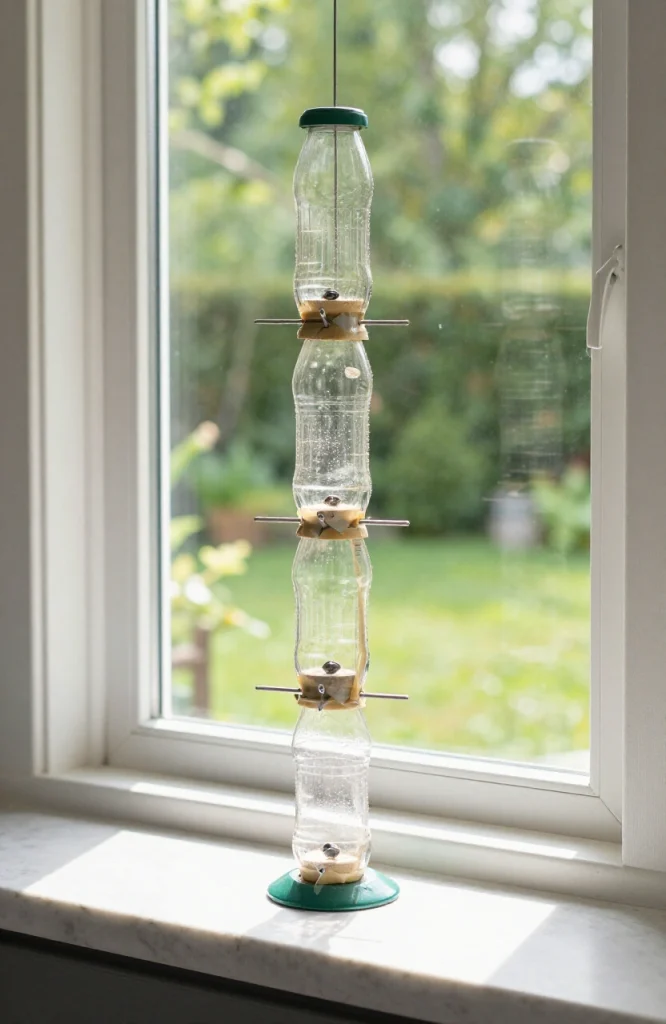
Stack two or three plastic bottles of the same size by cutting the bottom off one bottle and fitting it over the cap end of the bottle below it, securing the connection with waterproof tape or hot glue, to build a taller tube feeder with more total seed capacity than a single bottle. Add perch dowels and feeding holes at each segment as described in the basic bottle feeder build. The taller profile holds enough seed to last several days without refilling, which suits anyone feeding multiple bird species that prefer different vertical feeding heights along the same tower.
29. Plastic Container Hopper Feeder
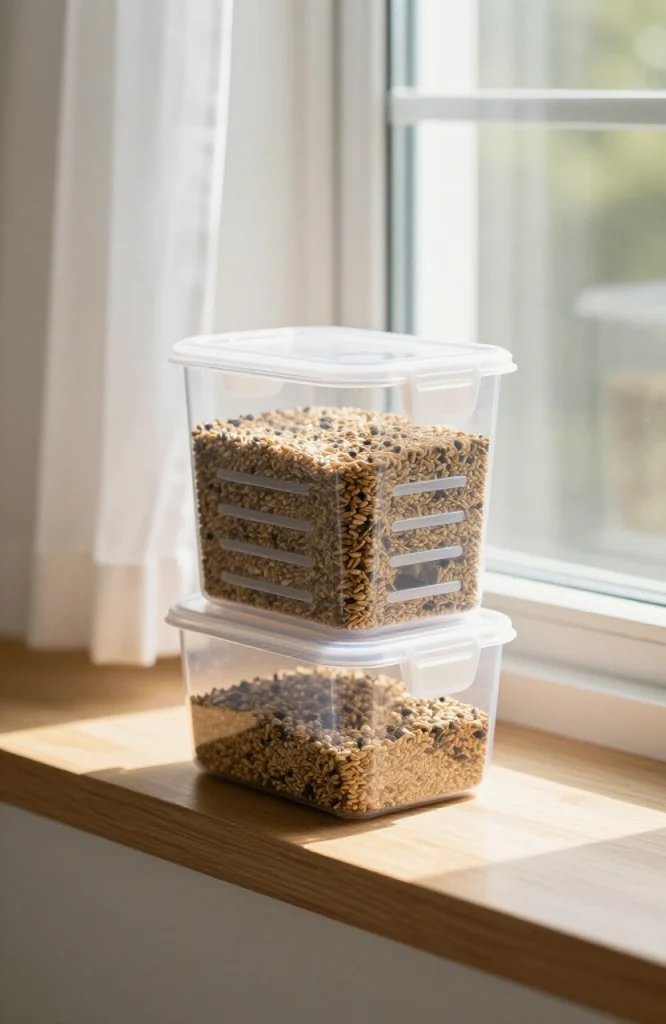
A clear plastic storage container with a lid, the kind sold for pantry organization, converts into a hopper feeder once you cut a wide horizontal slot near the bottom on one or two sides. Cut the slot tall enough for birds to reach seed but short enough that the remaining lip holds the bulk of the seed in place above it. Add a small perch ledge below the slot using a glued-on strip of wood, and drill a couple of drainage holes in the base. The clear plastic makes it easy to check seed levels from a distance without opening the container.
30. Driftwood Platform Feeder
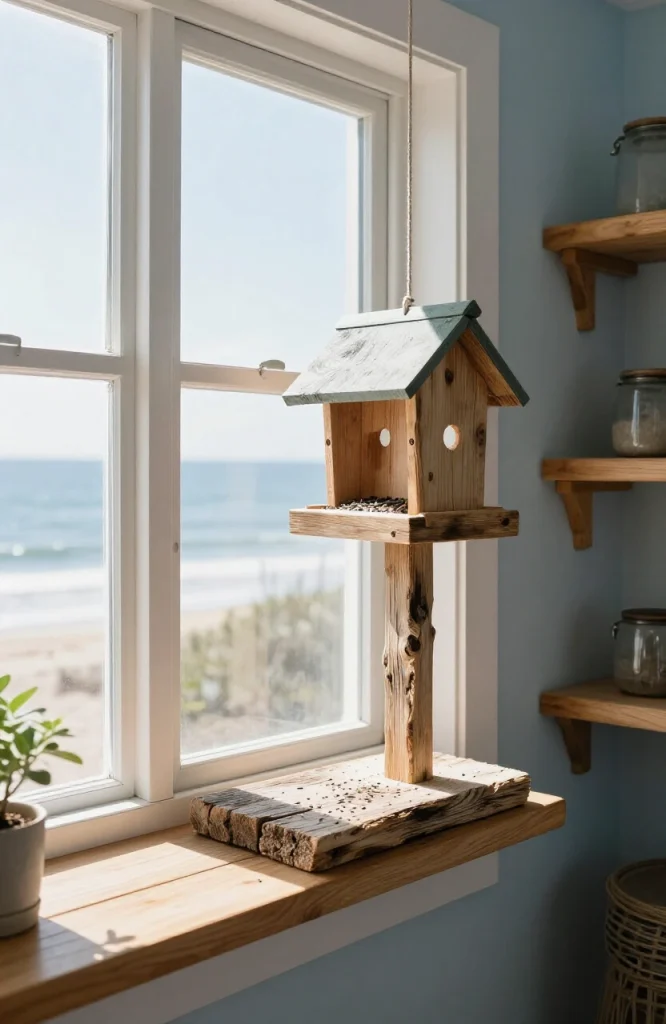
If you have access to a beach or lakeshore, a flat, sturdy piece of driftwood makes a naturally weathered platform feeder with almost no building required. Sand down any sharp splinters, drill a few drainage holes through the flattest section, and either set the wood directly on a post bracket or drill two holes at the ends for hanging chains. The wood’s existing texture and gray, weathered look fits naturally into coastal or rustic garden themes without any additional finishing needed.
31. Egg Carton Seed Tray
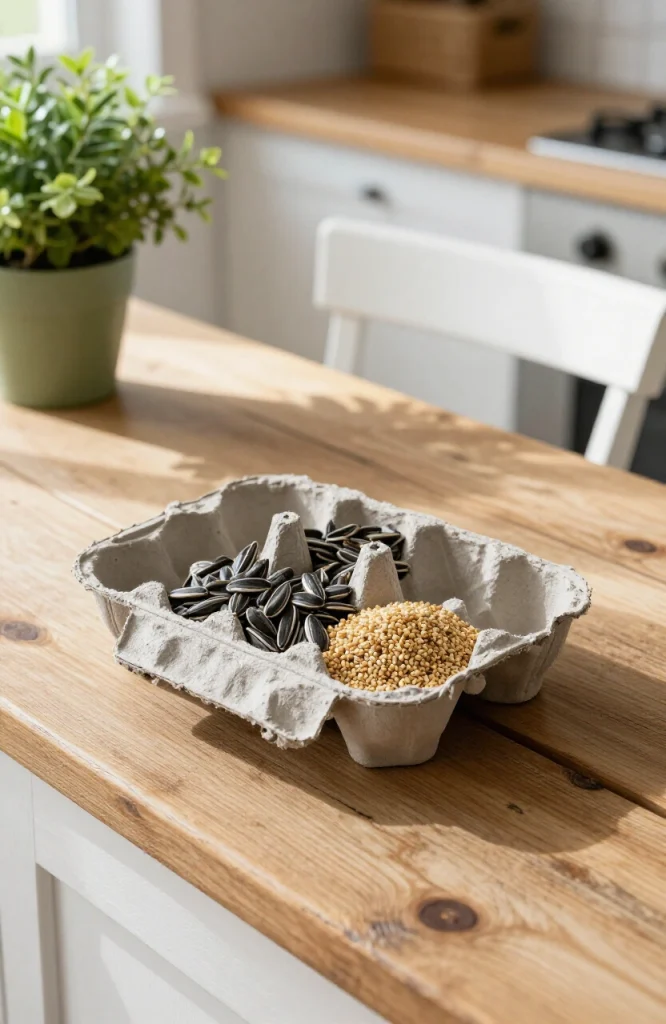
A cardboard egg carton, cut in half lengthwise to create two rows of cups, makes a basic multi-section seed tray for short-term outdoor use. Fill each cup with a different seed type, such as sunflower in one section and nyjer in another, so you can see which seed draws which species to your yard. Set the tray on a flat surface like a deck rail or stump rather than hanging it, since the cardboard will not hold up to swinging movement. Replace the carton every few days, since cardboard breaks down quickly once it gets wet.
32. Cracker Box Window Feeder
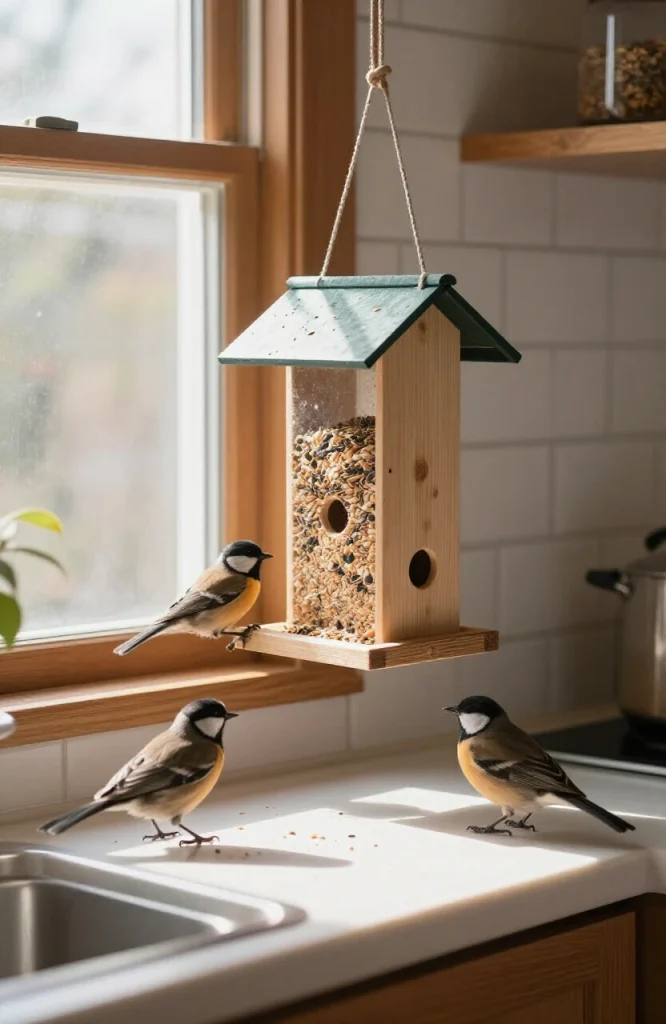
An empty cracker or cereal box, reinforced inside with a layer of packing tape along all seams, makes a quick disposable platform feeder for a windowsill ledge or porch rail. Cut the top flaps off entirely, cut the front panel down to about two inches high to act as a retaining lip, and fill the remaining box with seed. This is a same-day, zero-cost build that works well for a single trial feeding session before committing time to a more durable design, and it is a practical option for testing where birds in your yard prefer to feed before building something permanent in that same spot.
33. Fresh Fruit Skewer Feeder
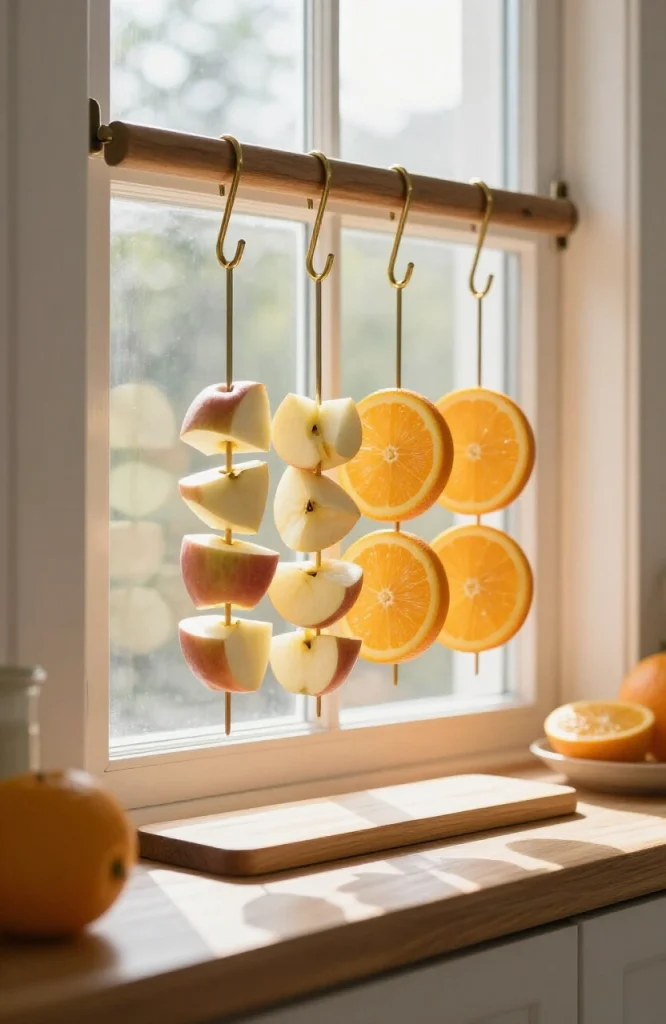
Thread chunks of apple, orange, or grape onto a long, sturdy wooden skewer or a length of thick wire, then secure both ends to two branches or hooks so the skewer sits horizontal and accessible. Fresh fruit draws orioles, catbirds, and waxwings, species that often skip seed feeders entirely. Replace the fruit every one to two days since it spoils and attracts insects quickly in warm weather, and avoid this build in very hot climates during peak summer unless you can refresh the fruit daily.
34. Hummingbird Nectar Jar Feeder
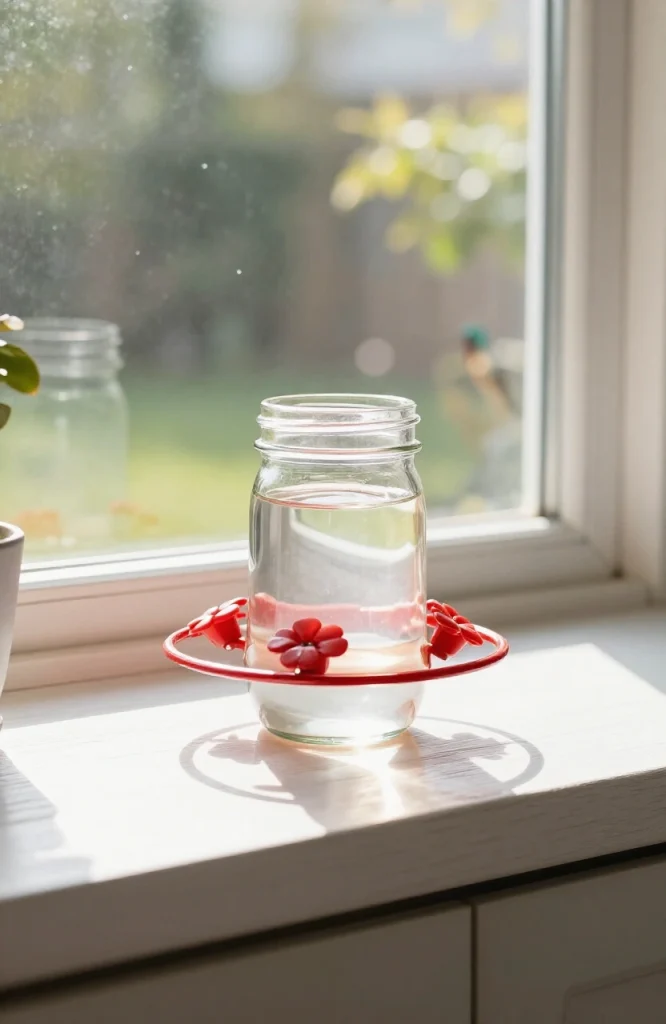
Mix a nectar solution of one part plain white sugar to four parts water, heated briefly until the sugar dissolves, then cooled completely before use. Fill a small mason jar with the cooled nectar and screw on a hummingbird feeder base designed for jar-style mounting, sold at most garden and hardware stores, which includes the red feeding ports hummingbirds key in on visually. Never use honey, artificial sweeteners, or red dye in the nectar itself, since all three can harm hummingbirds. Clean the jar and ports every three to four days in hot weather to stop fermentation and mold buildup.
35. Coconut Liner Hanging Basket Feeder
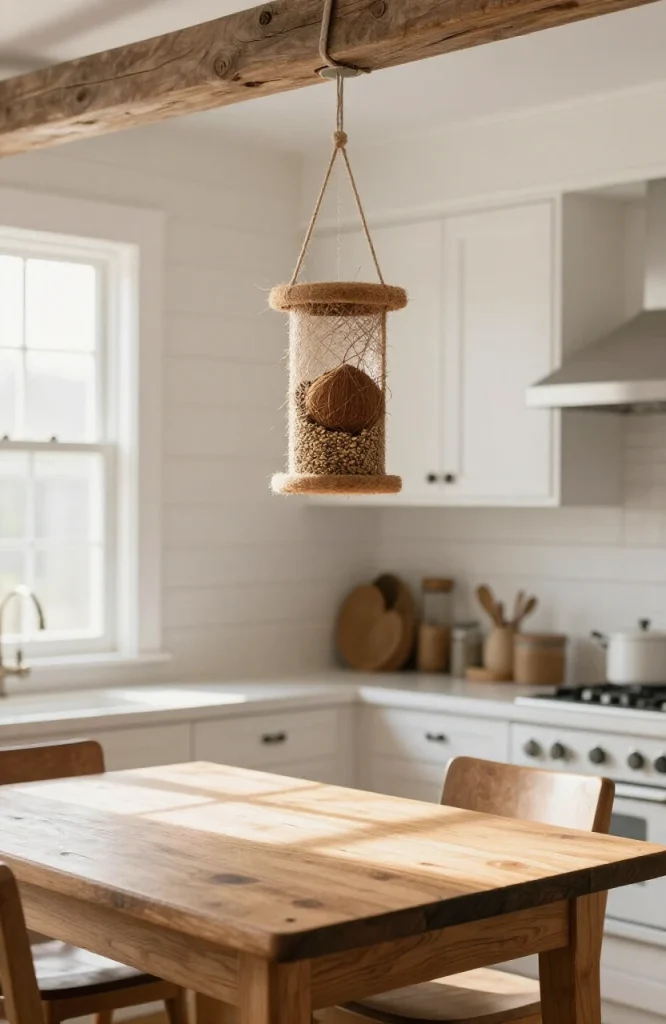
Similar to the wire basket build above but using a deeper hanging basket lined fully with a thick coconut coir liner, this version holds a larger seed volume and suits busier feeding spots with multiple birds at once. Fold the coir liner so it forms a deeper bowl shape before filling, which helps prevent wind from scattering lighter seed types like nyjer out of the basket. Hang from a bracket under roof cover where possible, since uncovered coir liners hold moisture longer than wood or plastic after rain.
36. Repurposed Colander Feeder
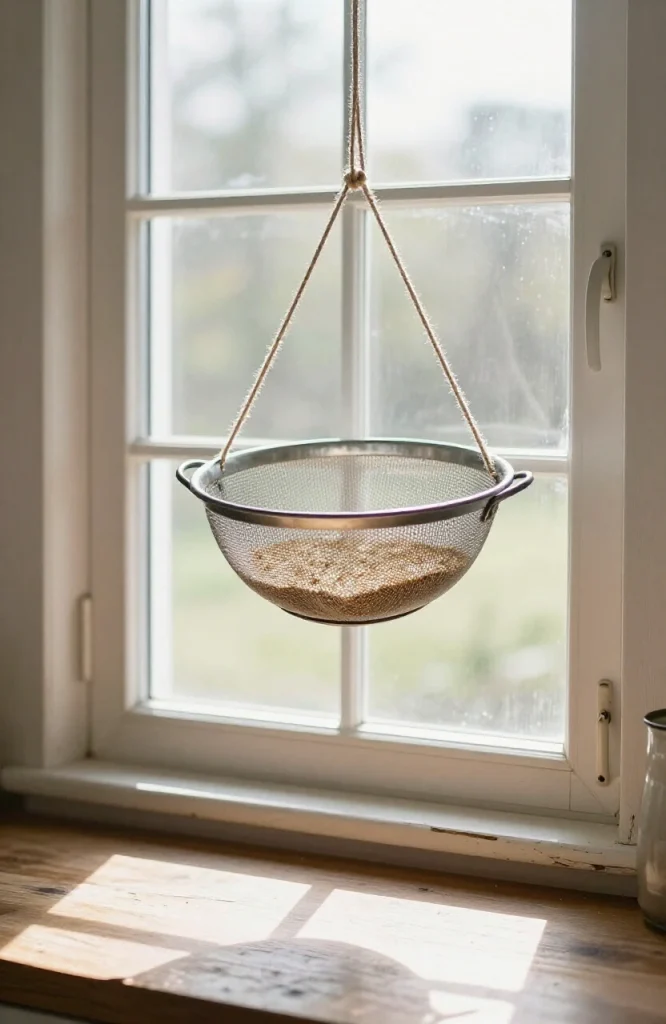
An old metal or plastic colander, the kind used for draining pasta, already has built-in drainage holes and often a stable base or hanging handles, making it nearly feeder-ready as-is. Fill it with seed and either set it on a flat surface for ground-feeding species or hang it by its handles from a hook or branch. The existing holes drain rain automatically without any extra drilling, which makes this one of the fastest no-tool conversions on the entire list.
37. Vinyl Record Platform Feeder
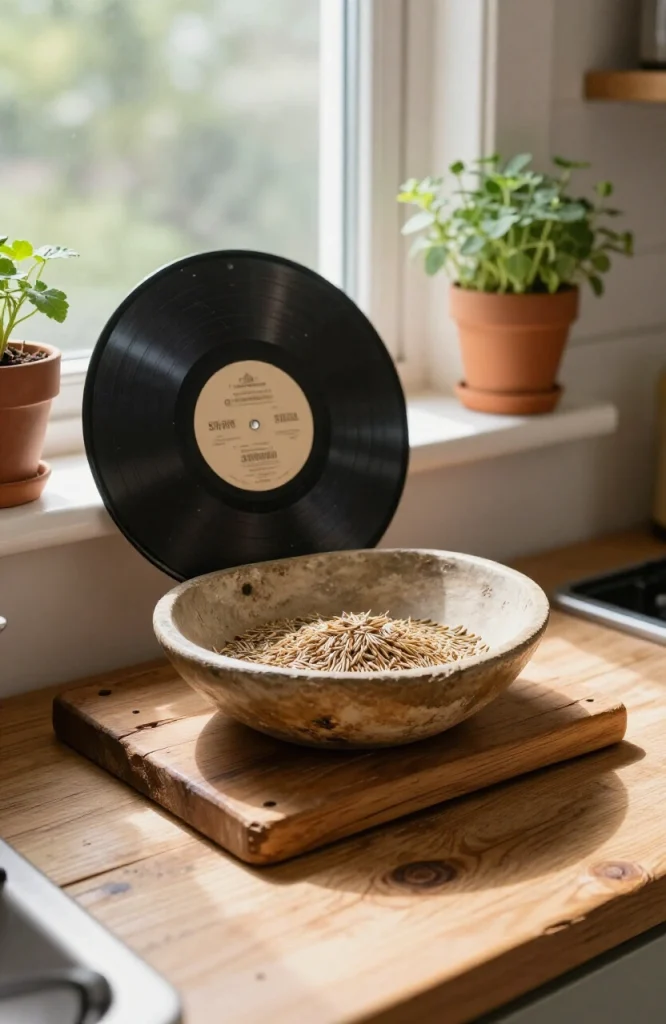
An old vinyl record, warped from heat into a shallow bowl shape (done by gently heating it in an oven at a low temperature over a bowl-shaped mold and watching closely so it does not melt past the point of holding shape), becomes a uniquely shaped platform feeder. Drill three small holes evenly around the warped record’s edge for hanging chains, or set it flat on a stand. This build appeals to anyone repurposing a damaged or duplicate record collection, and the warped shape naturally holds seed toward the center.
38. Cinder Block Feeder Station
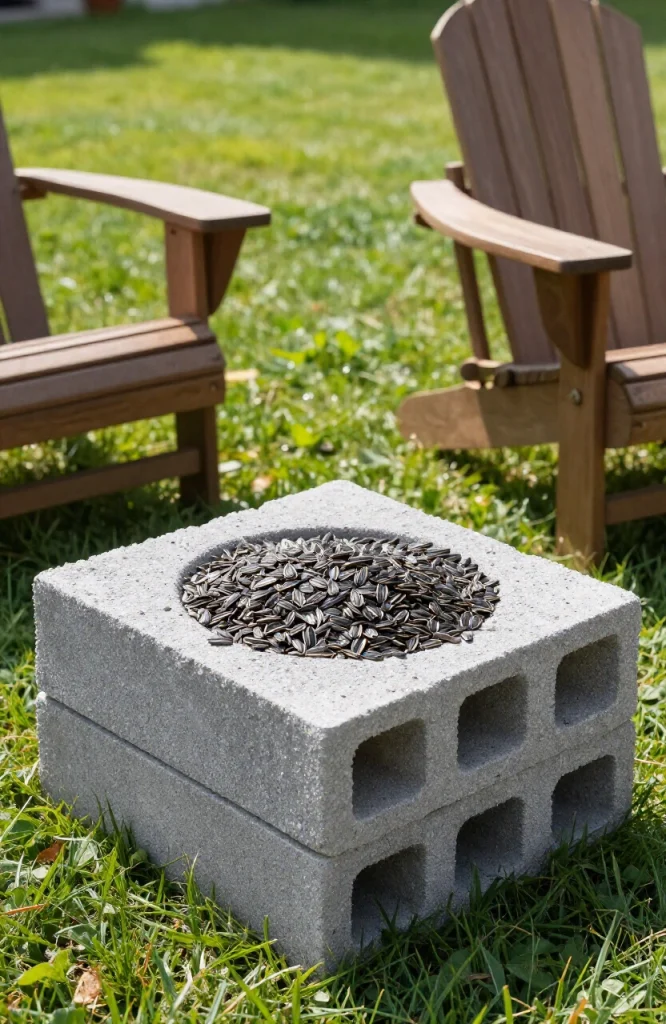
Stack two or three cinder blocks to create a low platform feeder station, using the open cores of the blocks as built-in seed wells. Fill the hollow centers with seed directly, or set a separate tray across the top of the stacked blocks for a flatter feeding surface. This is a heavy, stable, weatherproof option that will not tip in wind and needs no tools beyond stacking the blocks themselves, making it one of the simplest ground-level setups for feeding doves, juncos, and other birds that prefer feeding at lower heights.
39. Wine Cork Garland Feeder
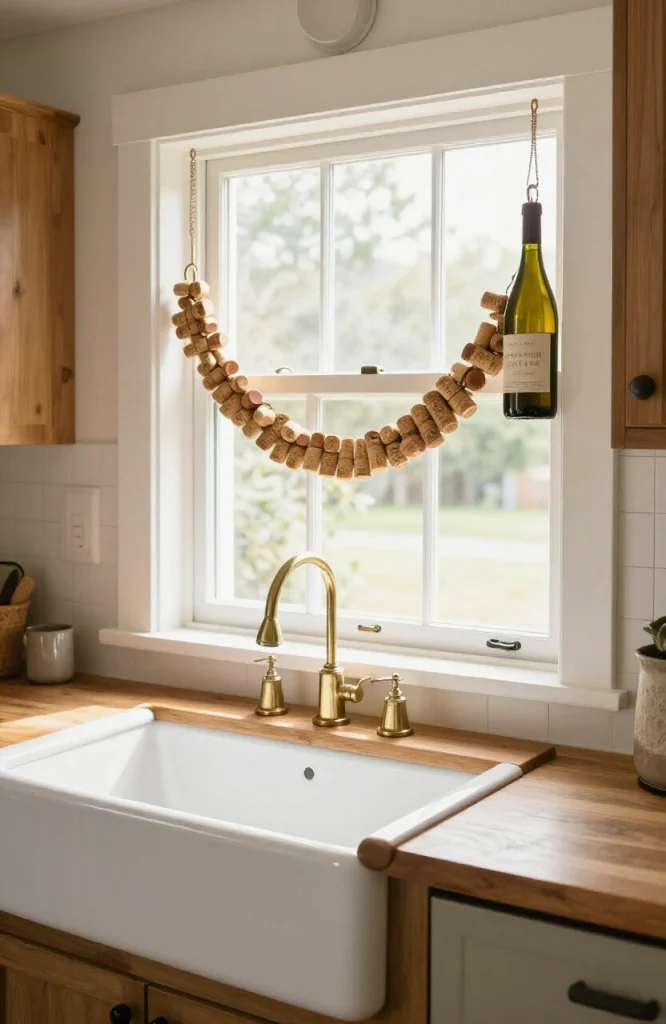
Drill a small hole through the center of a dozen or more wine corks, then thread them onto a length of wire or sturdy cord, spacing them with knots so they sit a few inches apart along the strand. Smear peanut butter on each cork and roll in seed before threading, or do this step after assembly. Hang the finished garland between two branches or posts. This is more of a decorative seasonal treat than a long-term feeder, since exposed peanut butter on cork dries out within a few days, but it works well for short feeding events or seasonal displays.
40. Branch and Rope Hanging Feeder
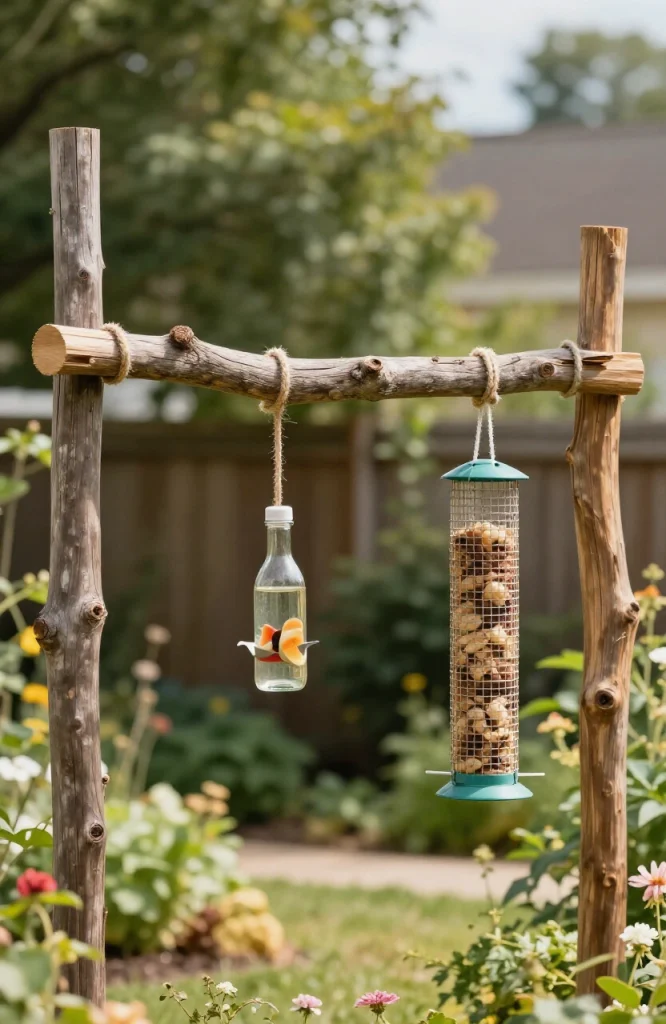
Lash a short, sturdy branch horizontally between two trees or posts using rope or paracord, then hang two or three smaller feeders, like bottle feeders or suet cages, from hooks along the branch. This setup turns a single hanging point into a small feeding station with multiple feeder types side by side, which spreads out birds that might otherwise compete at one feeder and reduces the mess concentrated in a single spot below.
41. Mesh Onion Bag Suet Feeder
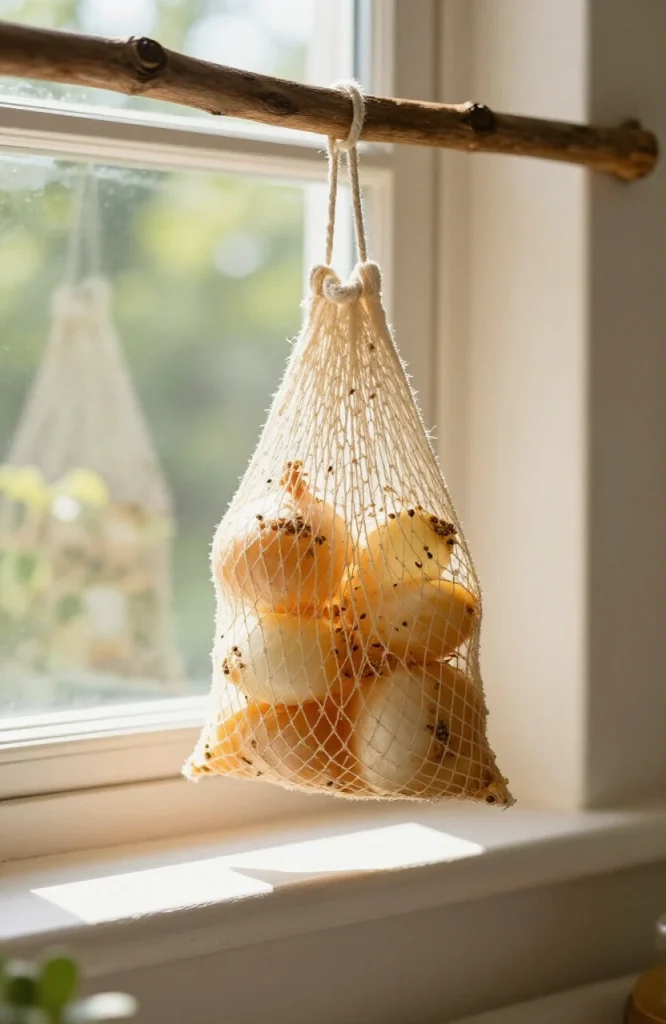
Save the net mesh bags that onions, citrus, or potatoes come in from the grocery store, fill one with a few suet cakes or a homemade suet and seed mixture, and tie the open end shut with the bag’s own drawstring or a separate piece of twine. Hang the bag from a branch or hook. The wide mesh holes let woodpeckers and nuthatches cling and peck through easily, and the bag itself costs nothing since it is something most households already throw away after grocery shopping.
42. Window Box Feeder Insert
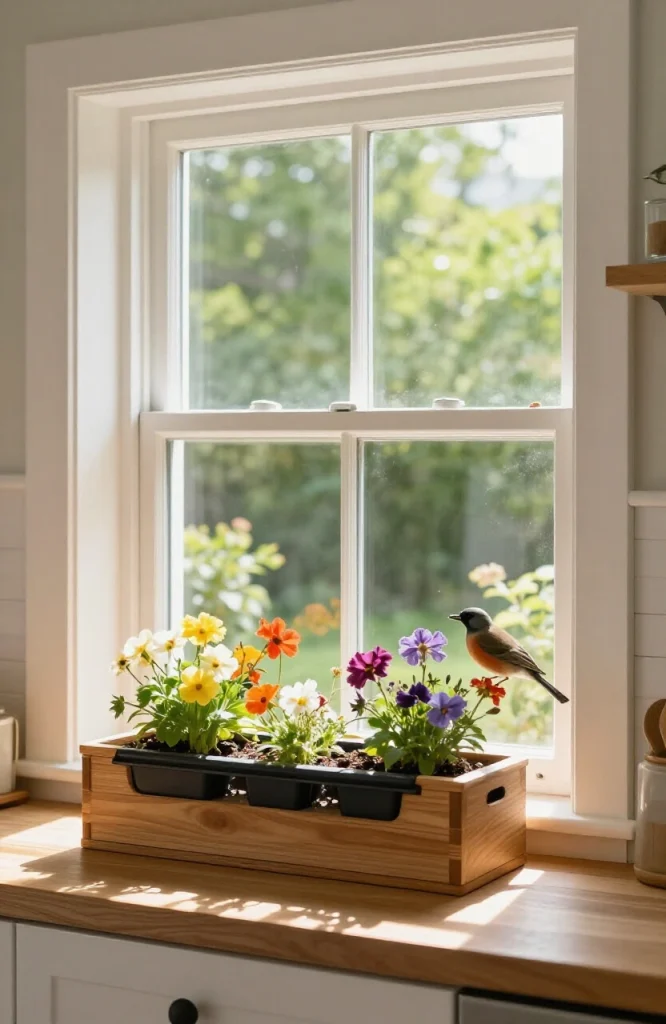
If you already have a window box planter mounted under a window, a removable insert tray filled with seed turns part of the box into a feeding station alongside flowers or greenery. Build a simple wood tray sized to fit inside the existing window box, drill drainage holes in the base, and fill with seed once it is set in place. This approach works well if your home already uses window boxes as part of its overall exterior look, since it adds bird feeding without introducing a separate hanging structure.
43. Old Drawer Platform Feeder
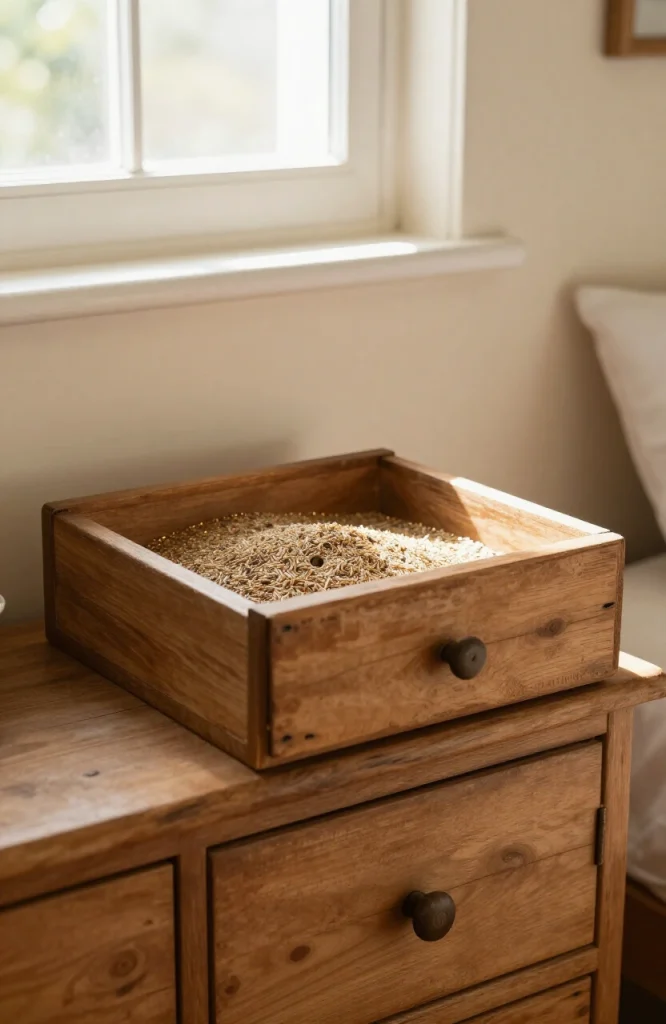
A drawer pulled from a dresser that is otherwise being discarded becomes an instant platform feeder, since the four sides already form a built-in lip that holds seed in place. Drill several drainage holes through the drawer’s base, sand down any rough or splintered edges, and either set the drawer on a stump or mount it on a post using L-brackets screwed into the underside. This is a strong option if you are already taking apart an old piece of furniture for other projects and want to put the leftover pieces to use rather than discarding them.
44. Wood Pallet Feeder Station
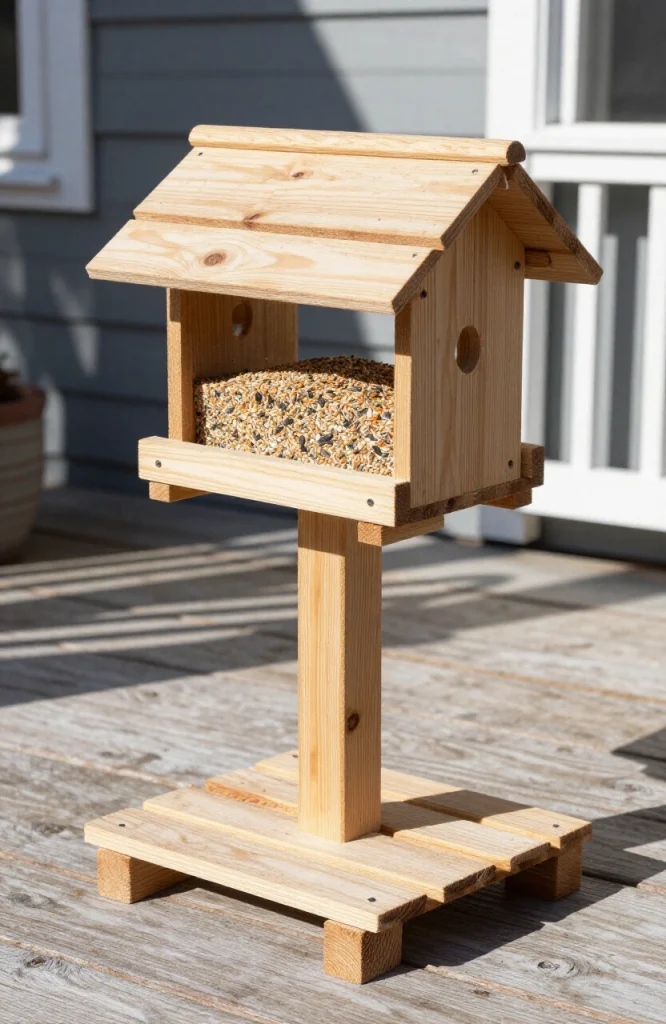
Disassemble a single wood pallet into its individual boards, then rebuild a simple platform feeder with raised edges using four or five of the slats, following the same basic build as the wooden platform feeder above. Pallet wood is free in most areas and already cut to manageable lengths, which cuts material costs to nearly zero. Sand down rough edges and check that the pallet was not chemically treated (look for an “HT” heat-treated stamp rather than “MB” methyl bromide treated) before using it for anything that will sit near food or seed.
45. Squirrel-Resistant Cage Feeder
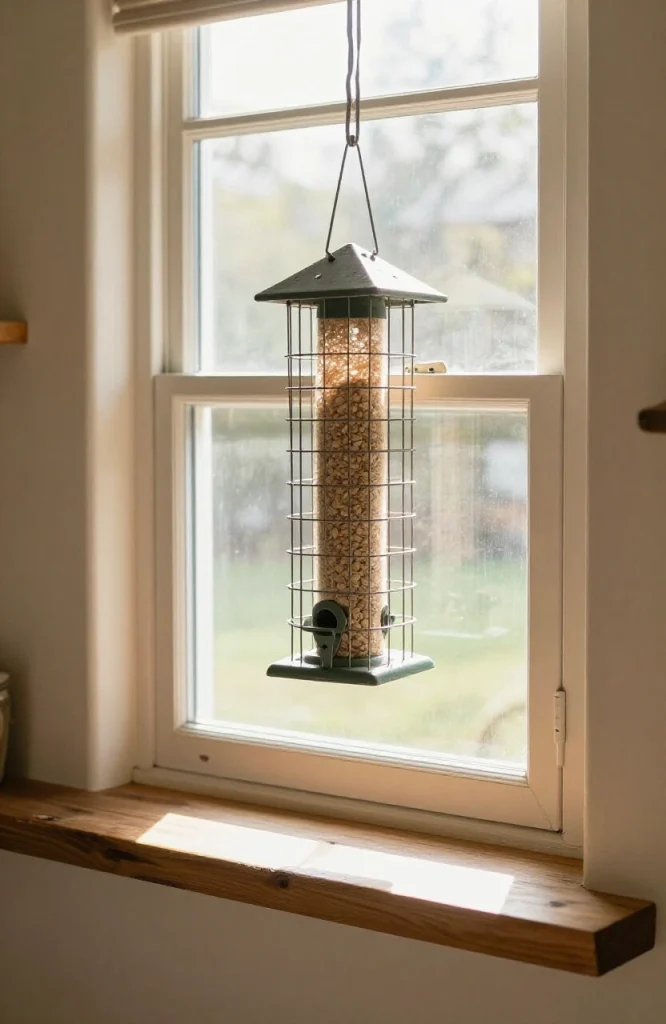
Build or buy a simple wire cage, roughly 2 inches larger on all sides than a standard tube feeder, and mount it around the tube feeder using brackets or wire ties so there is a gap between the cage and the feeder itself. Small songbirds pass through the wire gaps easily, while squirrels and larger birds like grackles cannot reach the seed ports inside. This addition extends the life of an existing tube feeder significantly in areas with a heavy squirrel population, since most seed loss at unprotected feeders comes from squirrels rather than the birds the feeder was built for.
46. Birdbath-Style Tray Feeder
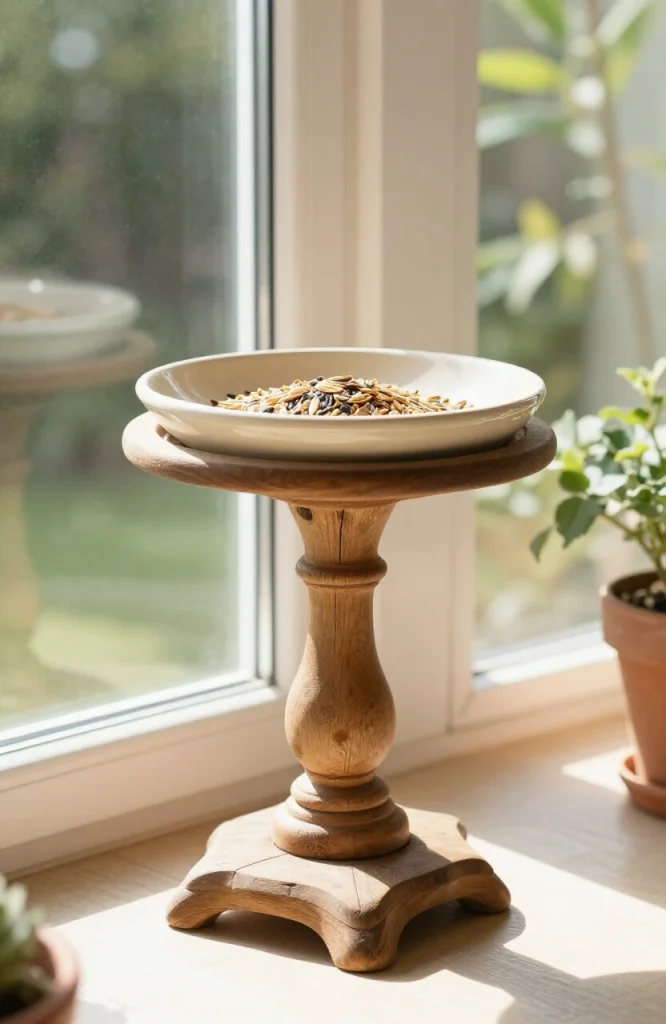
Mount a shallow, wide tray, similar in shape to a birdbath basin, on a single pedestal post at waist height. Drill several drainage holes through the base before mounting. The wide, open surface suits larger birds like cardinals and jays that prefer more landing space than narrow tube or bottle feeders provide, and the raised pedestal height keeps the feeder farther from ground-level predators than low platform builds sitting directly on stumps or blocks.
47. Tire Planter-Style Feeder
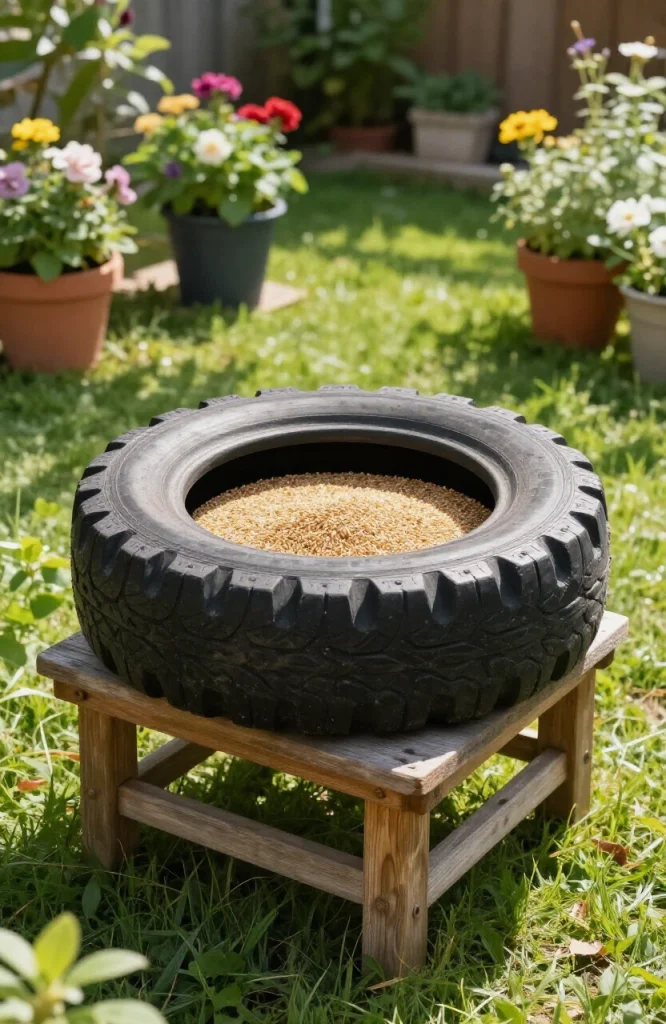
An old tire, cleaned and cut in half along its tread using a utility knife or jigsaw, becomes a deep, stable feeding bowl when one half is set flat-side down on the ground or a low stand. Fill the hollow center with seed. The rubber holds up to weather indefinitely and the heavy base resists tipping even in strong wind, which makes this a practical option for exposed yards where lighter feeders tend to blow over or slide off their stands.
48. Wreath Form Suet Feeder
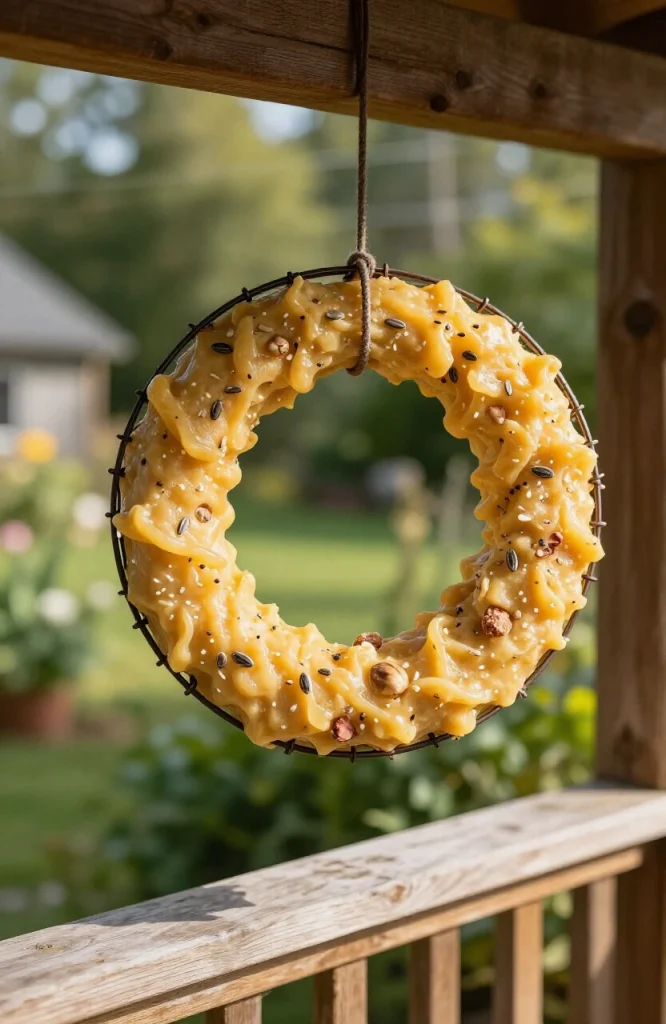
Take a plain wire wreath form, the kind sold for floral wreaths, and pack the wire frame with a thick homemade suet mixture pressed firmly into and around the wire ring so it holds together once it cools and hardens. Hang the finished wreath from a hook on a fence or door using its built-in wire loop. This doubles as a seasonal decoration on a porch while still functioning as a real feeding source, and the wire structure gives woodpeckers and chickadees plenty of grip points to cling to while feeding.
49. Bottle Cap Tray Mini Feeder
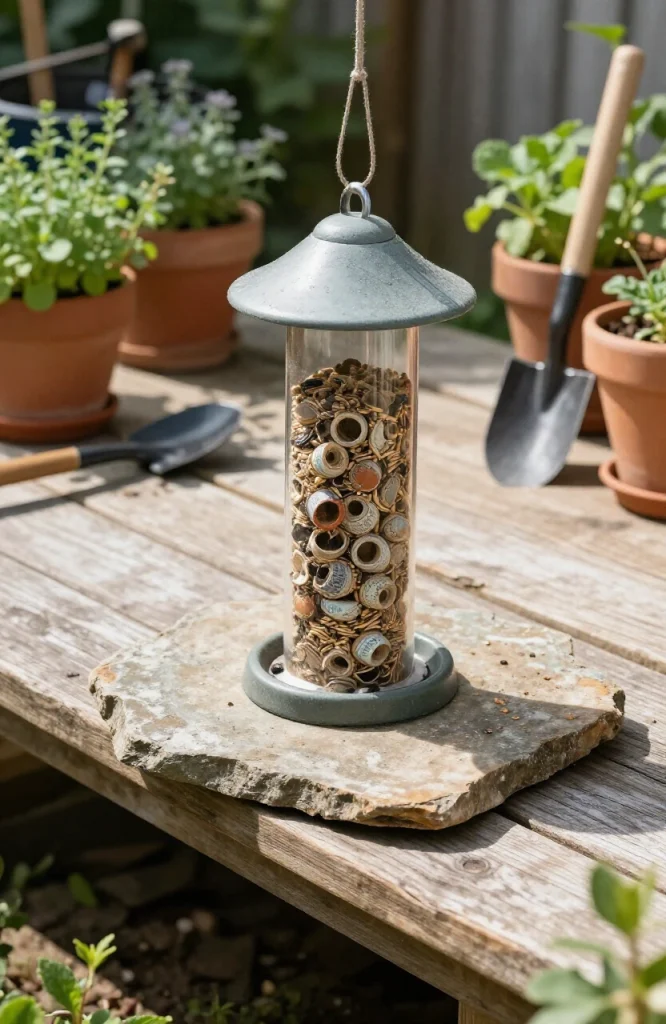
Glue a dozen or more plastic or metal bottle caps, open side up, in a flat grid pattern onto a piece of thin plywood or a flat stone using waterproof adhesive, then fill each cap individually with a small amount of seed. This works as a low, ground-level feeding option for very small songbirds and gives you a way to offer a few different seed types side by side in individual portions, which is useful for testing seed preferences in a small space like an apartment balcony or patio.
50. Multi-Tier Tower Feeder
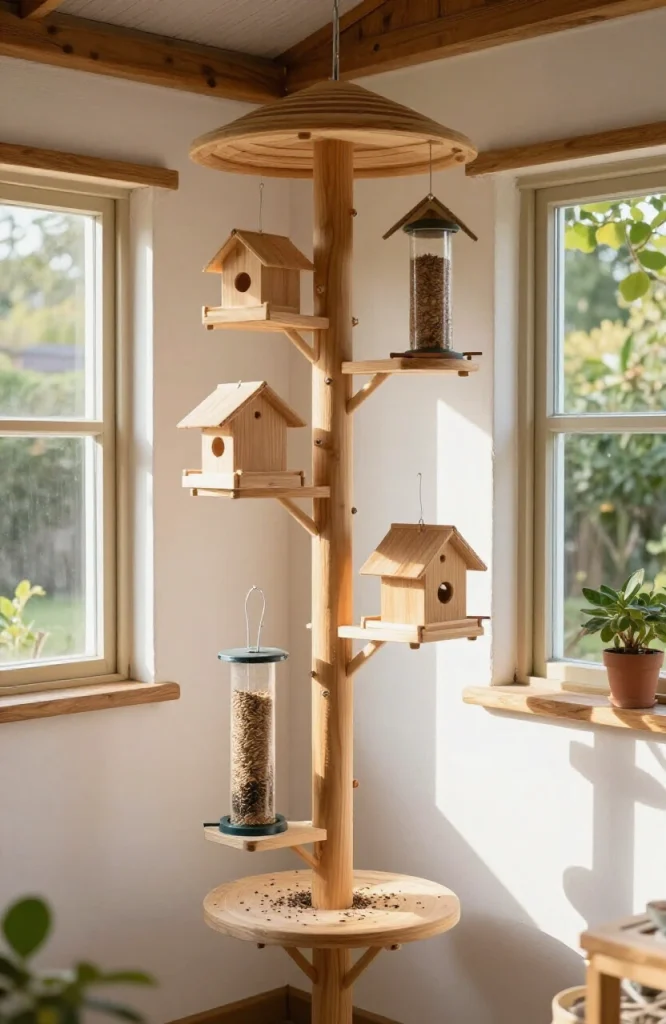
Combine several of the builds above into one tower by mounting a wooden platform feeder near the base of a post, a hopper-style feeder partway up, and a hanging tube or bottle feeder near the top, all on the same support post. This setup serves several species at different comfort heights at once, from ground-preferring juncos at the base to finches higher up on the hanging sections. It takes more time to assemble than any single feeder on this list, but it consolidates feeding into one visible spot in the yard, which also makes general upkeep, refilling, and cleaning more efficient since everything is in one location.
Conclusion
These 50 easy DIY bird feeders you can make at home prove that attracting backyard birds does not depend on store-bought equipment or advanced carpentry skills. Whatever materials you already have on hand, a plastic bottle, a coconut shell, a drawer pulled from an old dresser, can become a working feeder within an afternoon. Start with one or two builds that match the tools and scrap materials already available to you, place them away from dense ground cover where predators can hide, and clean them on a regular schedule to keep birds returning safely all season. Once you see which seed types and feeder styles draw the most activity in your specific yard, expanding into a few more builds from this list becomes an easy way to turn any outdoor space into a steady stop for local bird populations.
If you are already working on other outdoor upgrades, a garden lighting plan pairs naturally with new feeding stations so you can watch evening activity near dusk, and leftover materials from a kitchen update such as old jars and tins are often the same items repurposed in several builds above. For anyone building feeder stands or platforms from scrap wood, the framing techniques used in these DIY poolside bar ideas apply just as well to feeder posts and tray supports.