
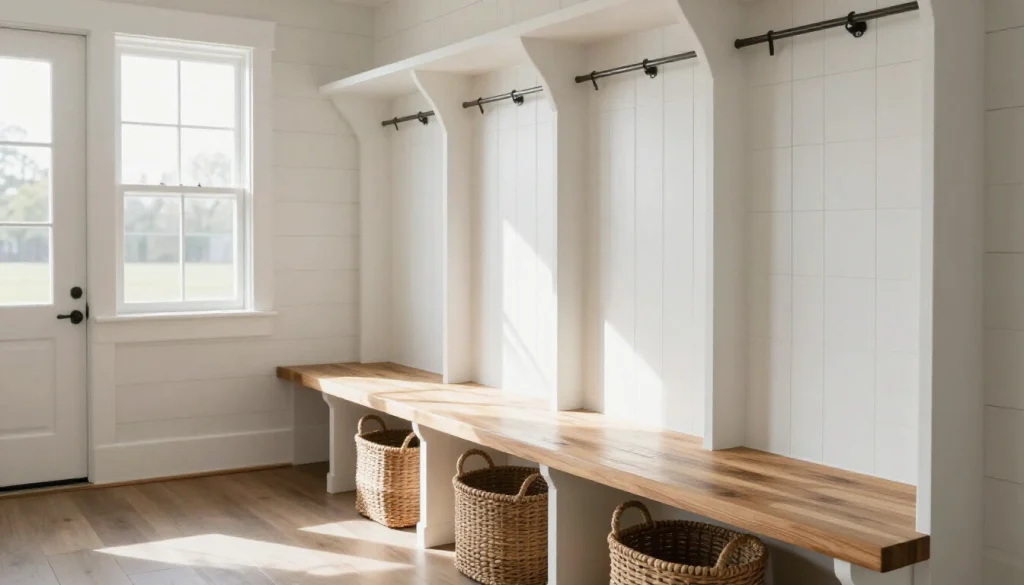
A backless bench looks fine for a quick perch, but it rarely gets used for long. Add a backrest and the same bench turns into a spot people actually want to sit in, whether that is a mudroom bench for tying shoes, a dining nook for Sunday breakfast, or a garden bench for evening coffee. These 28 DIY bench backrest ideas cover the full range of build methods, from a simple wall-mounted cleat to a fully upholstered, tufted panel, so you can match the project to your tools, your budget, and the room it lives in.
Every idea below reflects techniques used in real woodworking and upholstery builds, not guesswork. Where it matters, you will find the actual numbers builders rely on: a seat height of 17 to 20 inches, a seat depth of 15 to 19 inches, and a backrest angle of 100 to 110 degrees from the seat, which is the range most people find genuinely comfortable for sitting longer than a few minutes. Carpenters have a saying for a reason: “measure twice, cut once.” That habit matters more on a backrest than almost any other part of a bench, since the angle and height decide whether the finished piece gets used daily or shoved against a wall and forgotten.
1. Wall-Mounted Padded Backrest for a Banquette

If you already have a built-in or freestanding bench with no back, a wall-mounted backrest is the fastest fix. Cut a plywood backer board to the width of the bench, wrap it in batting and upholstery-grade fabric, then hang it on a French cleat screwed into wall studs. This method keeps the bench itself untouched, gives easy access to under-seat storage, and lets you remove the backrest later if your style changes. Builders who have tested this approach usually cut the bottom edge of the backer board at a slight angle so the panel leans back once it is hung, adding the ergonomic tilt without any extra framing.
2. Slanted Slat Backrest for Ergonomic Comfort
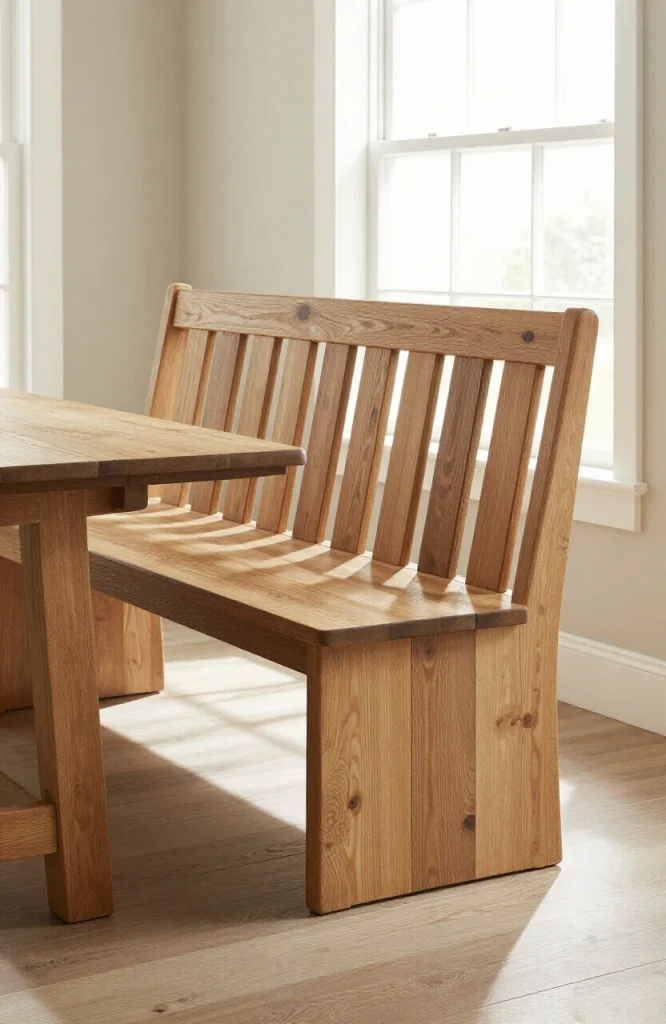
A straight, vertical backrest is simpler to build, but a slanted one is barely harder and far more comfortable for sitting through a meal. Cut your side supports at a 10 to 15 degree angle off vertical so the finished backrest sits closer to 100 to 110 degrees relative to the seat. Attach horizontal wood slats across these angled supports with pocket screws and glue. This idea works well for a dining bench along a long dining bench in an open floor plan, where the bench needs to hold up to daily use without feeling stiff.
3. Ladder-Style Slat Backrest
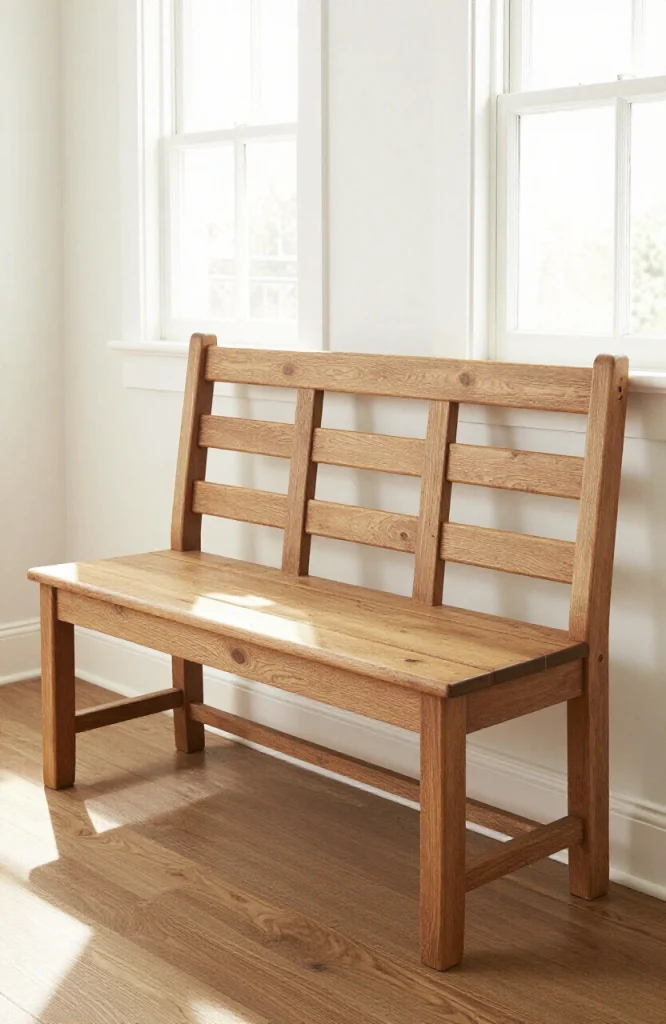
A ladder-style back uses several evenly spaced horizontal slats between two vertical side rails, similar to the back of a classic dining chair. Space the slats about 2 to 3 inches apart so the design reads as intentional rather than gappy, and round over the top edges with a router for comfort against the shoulder blades. This style suits a farmhouse or cottage kitchen and is sturdy enough for an entryway bench that takes daily abuse from bags, shoes, and kids climbing on and off.
4. Spindle Backrest with Turned Wood Accents
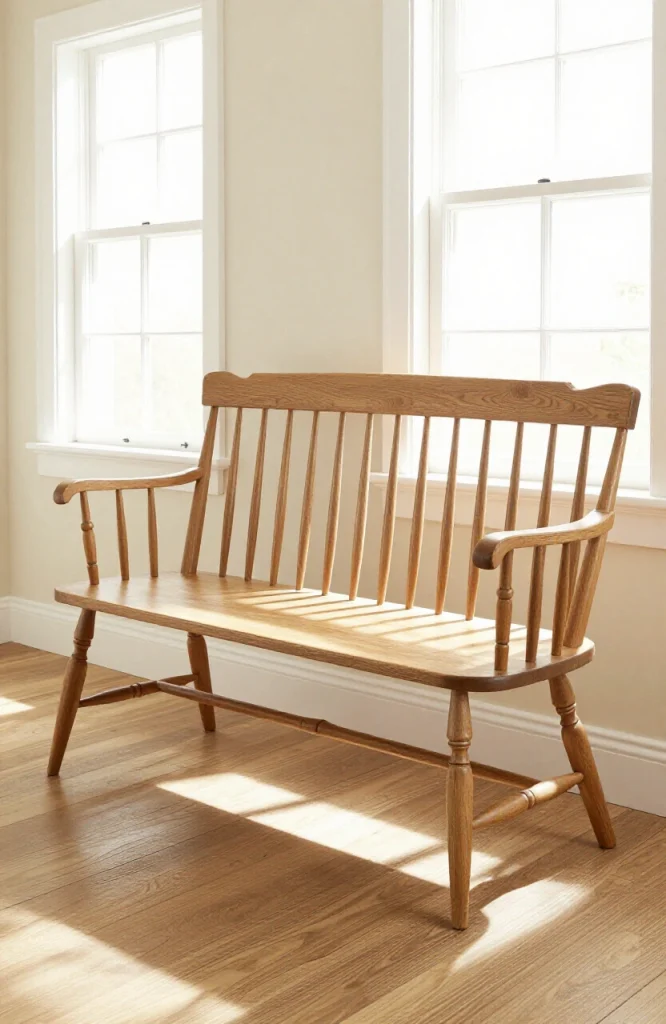
Spindle backs use narrow, evenly spaced dowels running vertically between the seat and a top rail, giving an airy, traditional look borrowed from Windsor chairs. Drill matching holes in the top rail and the seat rail with a doweling jig so every spindle lines up straight, then glue each one in place before adding the top rail. This idea takes more patience than a slat back, but it pairs naturally with a farmhouse dining set or a country-style entry bench.
5. Reclaimed Wood Backrest for a Rustic Farmhouse Look
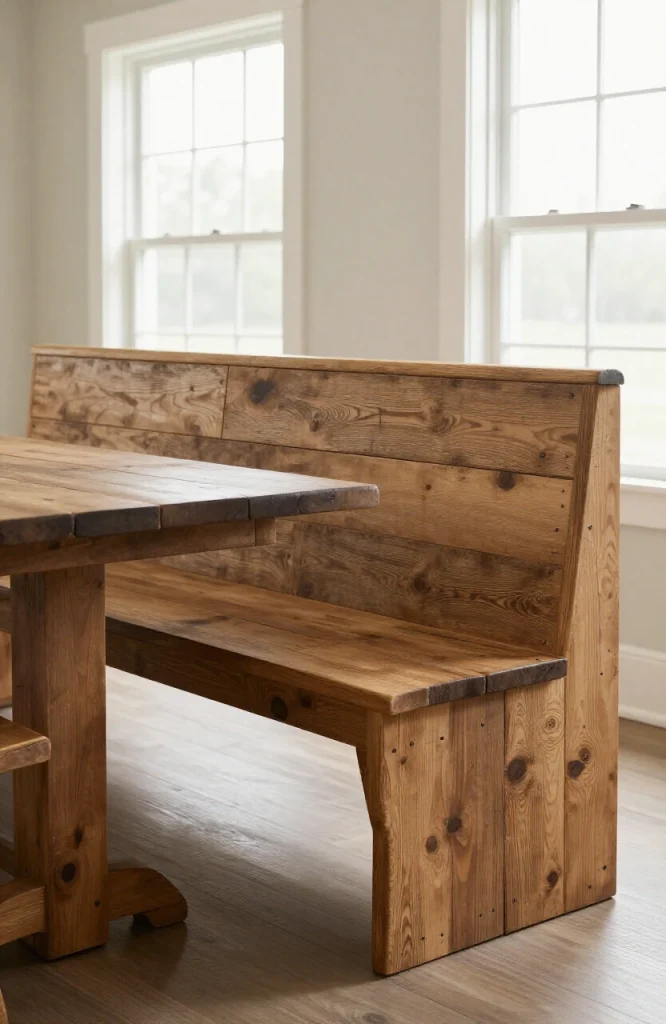
Salvaged fence boards, old barn wood, or shipping pallets stripped down to bare boards make a backrest with texture that new lumber cannot fake. Sand back any splinters and rough spots, but leave the nail holes, weathering, and color variation intact for character. Screw the boards to a simple frame from behind so no hardware shows on the front face. This is one of the most budget-friendly options on this list since reclaimed wood is often free or nearly free.
6. Pallet Wood Backrest on a Budget
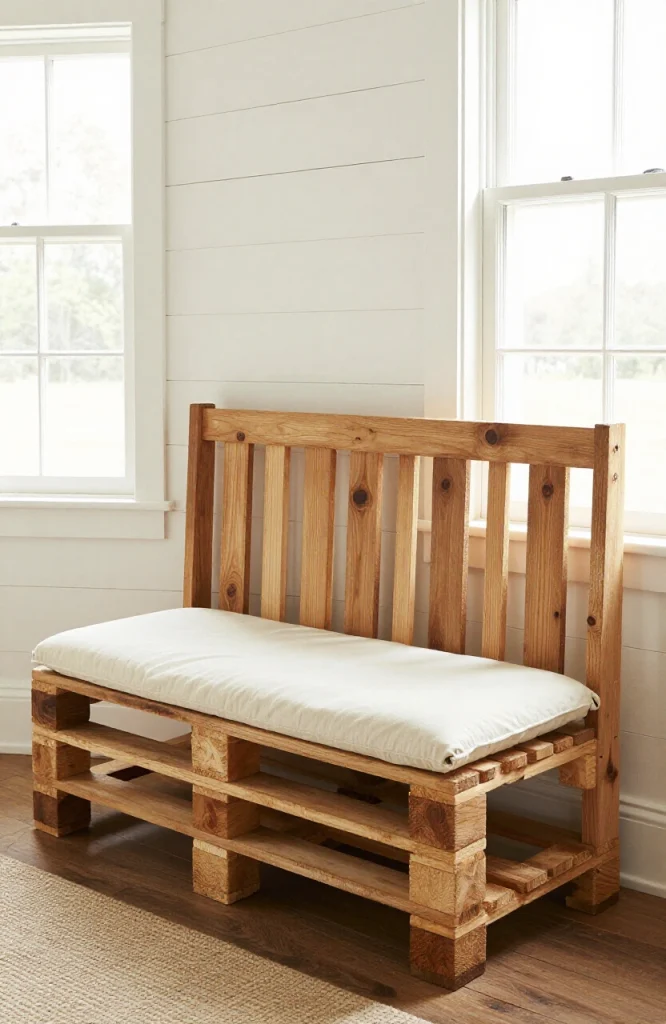
Pallet wood deserves its own entry because it is the most accessible material for a first bench project. Break down a pallet with a pry bar and a reciprocating saw, then plane or sand the boards to remove rough edges. Because pallet slats are thinner than standard lumber, back them with a plywood support panel before attaching them as a backrest, or the boards will flex and eventually crack at the screw points. Paint or stain to match existing furniture, since pallet wood species vary widely from board to board.
7. Woven Rope Backrest for Coastal Style
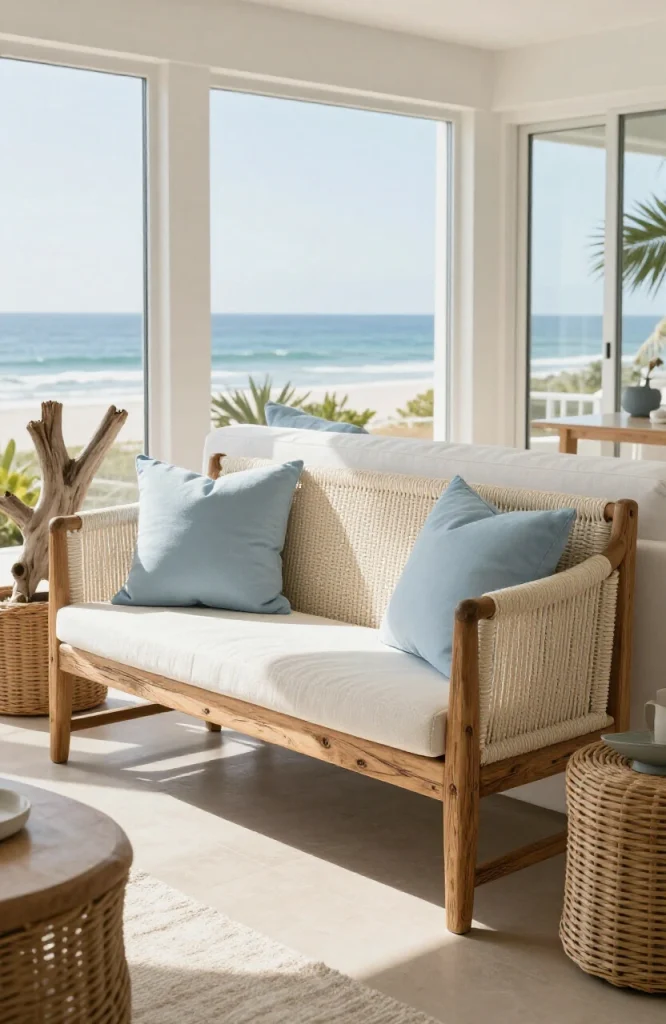
A backrest woven from cotton or paper rope adds texture without the bulk of upholstery, and it holds up well in humid climates where fabric can mildew. Drill a row of holes along the top and bottom rails of the backrest frame, then weave rope back and forth in a simple over-under pattern, keeping tension even as you go. This idea fits coastal, Scandinavian, and boho interiors, and it works equally well outdoors under a covered porch.
8. Cane Webbing Backrest for a Vintage Touch
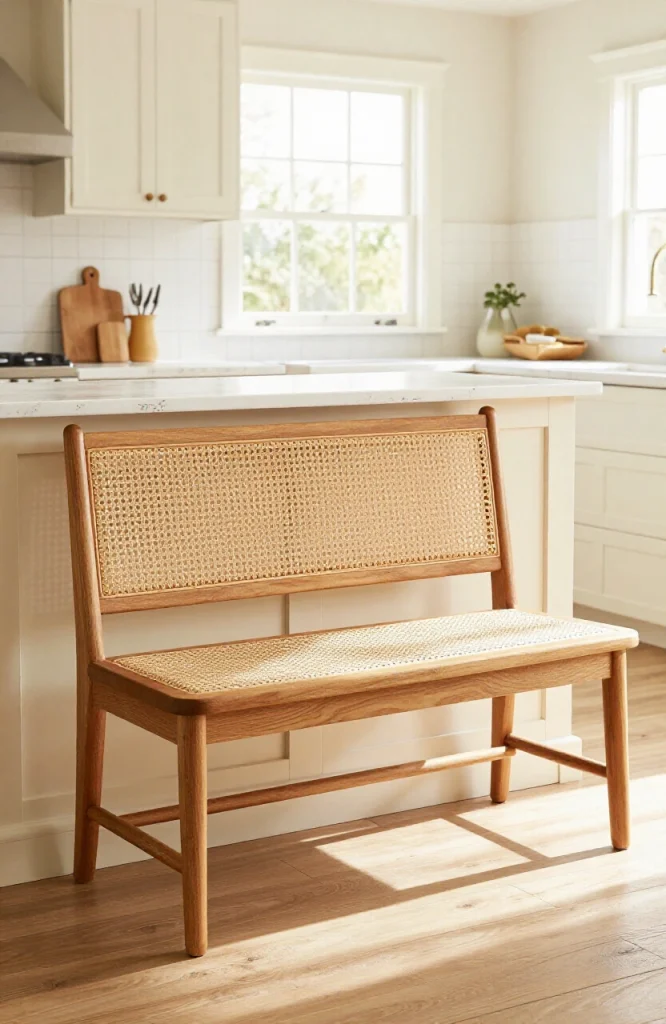
Pre-woven cane webbing, sold by the roll at woodworking suppliers, gives a bench backrest the look of a vintage French chair without hand-weaving each strand. Rout a groove around the inside edge of your backrest frame, soak the cane sheet in warm water until pliable, press it into the groove, then lock it in with a spline and wood glue. Trim the excess once dry. This idea suits a bedroom bench or a light, airy dining nook more than a heavy-use mudroom bench.
9. Curved Bent-Plywood Backrest for a Modern Silhouette
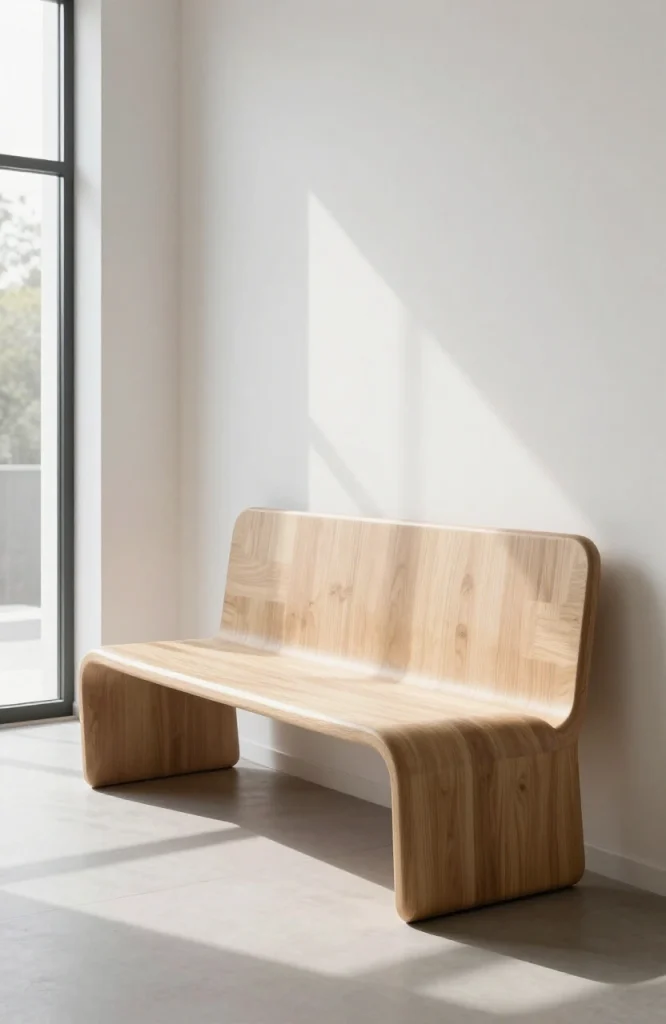
Bent plywood, built up from thin layers glued and clamped over a curved form, produces a smooth, continuous backrest with no visible joints. Building your own bending form from scrap MDF takes some setup time, but the result is a backrest that mimics mid-century designer furniture at a fraction of the cost. Finish with a clear oil or a bold paint color to let the curve stand as the focal point of the room.
10. Board-and-Batten Backrest to Match Wainscoting
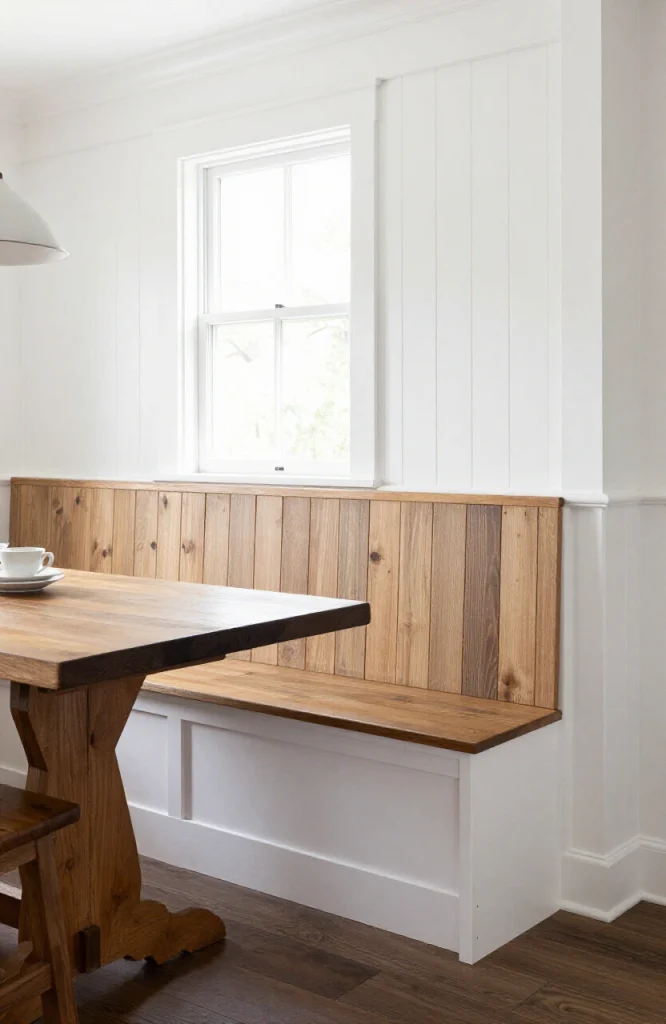
If your dining room or entryway already has board-and-batten wainscoting, extend the same detail up the back of a built-in bench for a backrest that looks like part of the architecture rather than an add-on. Attach flat panel boards to the wall, then nail thin battens over the seams at even intervals. Paint the whole assembly one color so the bench backrest and the wall trim read as a single, continuous feature.
11. Repurposed Headboard Backrest
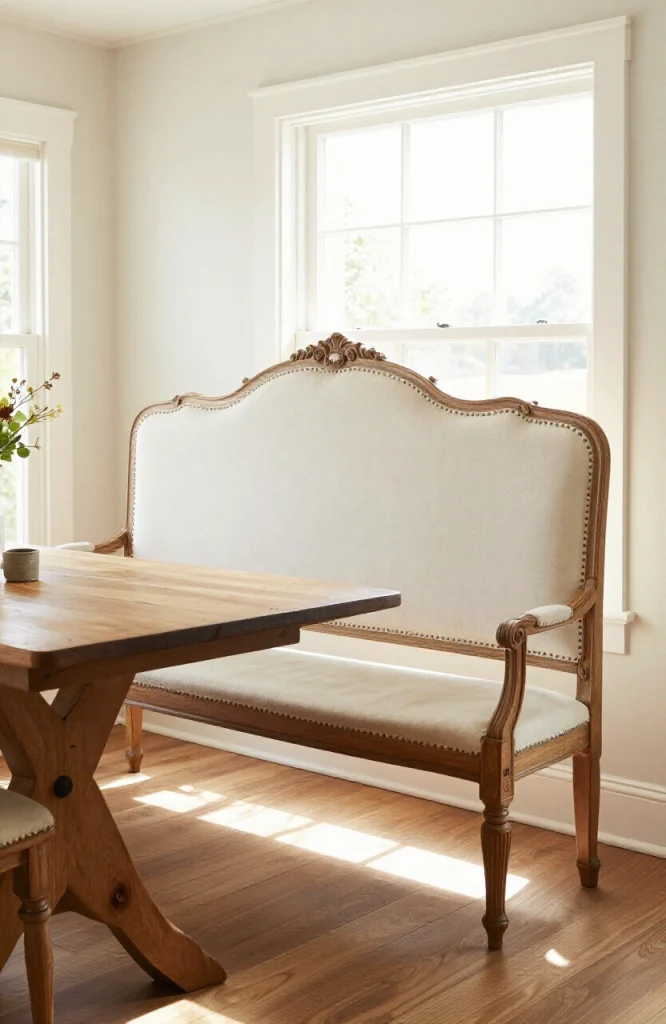
An old wood or upholstered headboard, cut down to bench width, makes an instant backrest with a shape and detail level that would take hours to build from scratch. Measure your bench width, trim the headboard with a circular saw and straightedge guide, then attach it to the back edge of the seat frame with L-brackets. This idea is a strong option if you already have a spare headboard in storage or find one secondhand, since it saves both material cost and build time.
12. Repurposed Door Panel Backrest
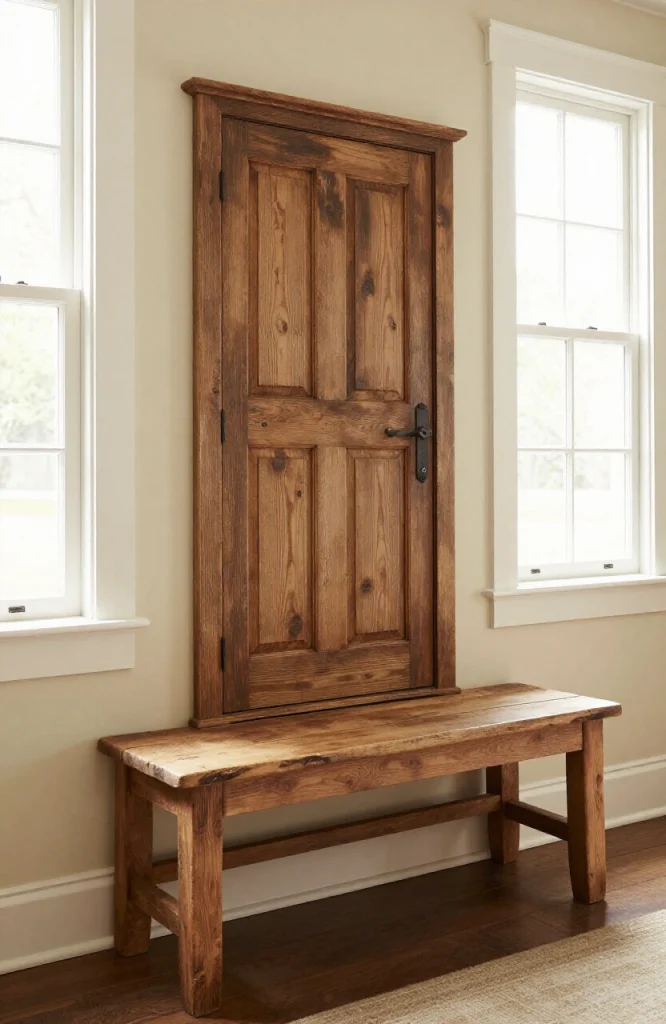
A salvaged panel door, laid on its side, has built-in structure, raised panel detail, and enough rigidity to work as a backrest without extra framing. Cut the door to the length of your bench, sand and refinish the surface, then mount it upright behind the seat using heavy-duty shelf brackets or a cleat system. The recessed panels on an old door catch light in a way flat lumber does not, which gives this idea more visual interest than its low cost would suggest.
13. X-Brace Backrest for an Industrial Look
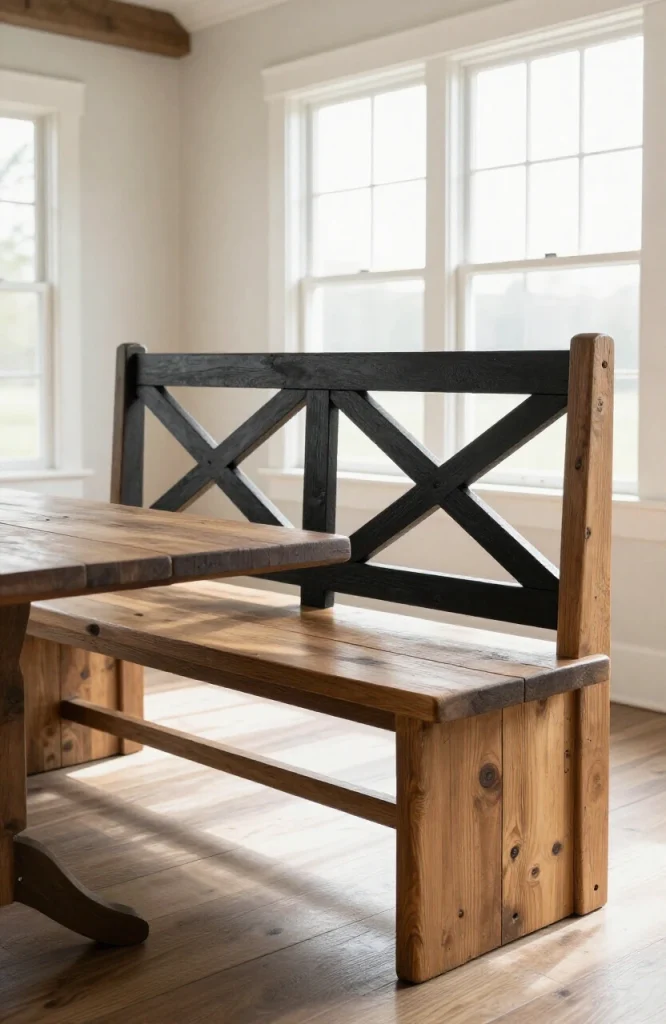
An X-shaped brace built from 1×4 or 1×6 lumber, mounted between two vertical posts, gives a backrest strength and an industrial look at the same time. Cut the two diagonal pieces to meet at a half-lap joint in the center so they sit flush against each other, then glue and screw the joint before attaching the assembly to the bench frame. Pair with black iron pipe legs for a look that matches steel-and-wood furniture trends.
14. Metal Bracket-Supported Backrest for Built-In Benches
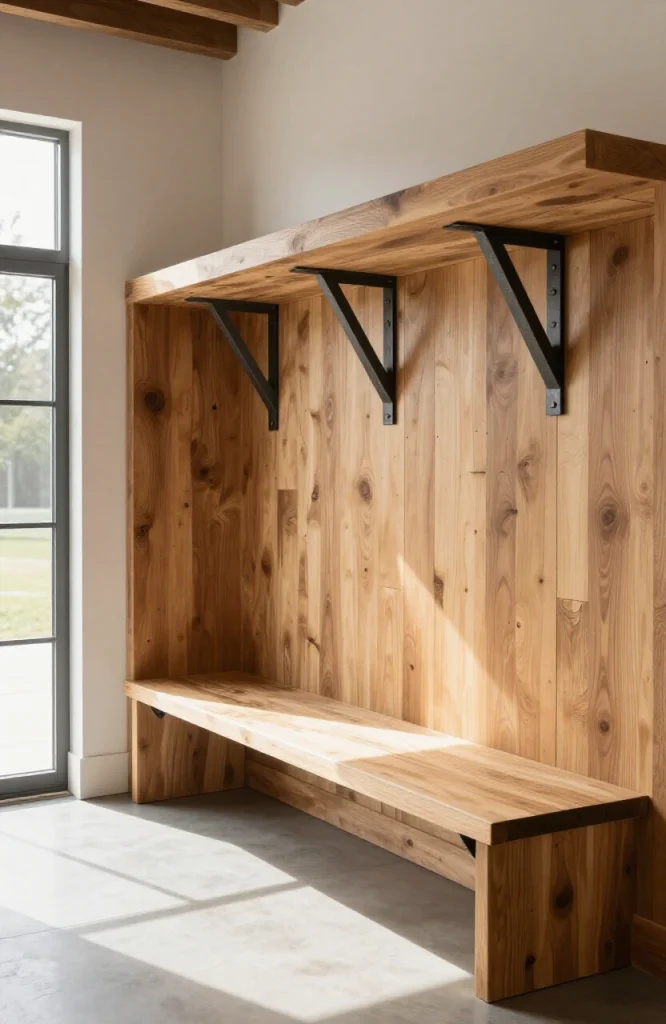
Raw or powder-coated steel brackets, cut at an angle and bolted to the bench frame, can support a wood slat or plywood backrest without any visible wood framing behind it. This method is common for built-in banquettes where a slim profile matters, since the metal brackets take up far less depth than a full wood support structure. Order brackets pre-cut to your angle from a metal fabricator, or bend your own from steel flat bar if you have access to a vise and torch.
15. Picket Fence-Style Backrest for a Cottage Garden Bench
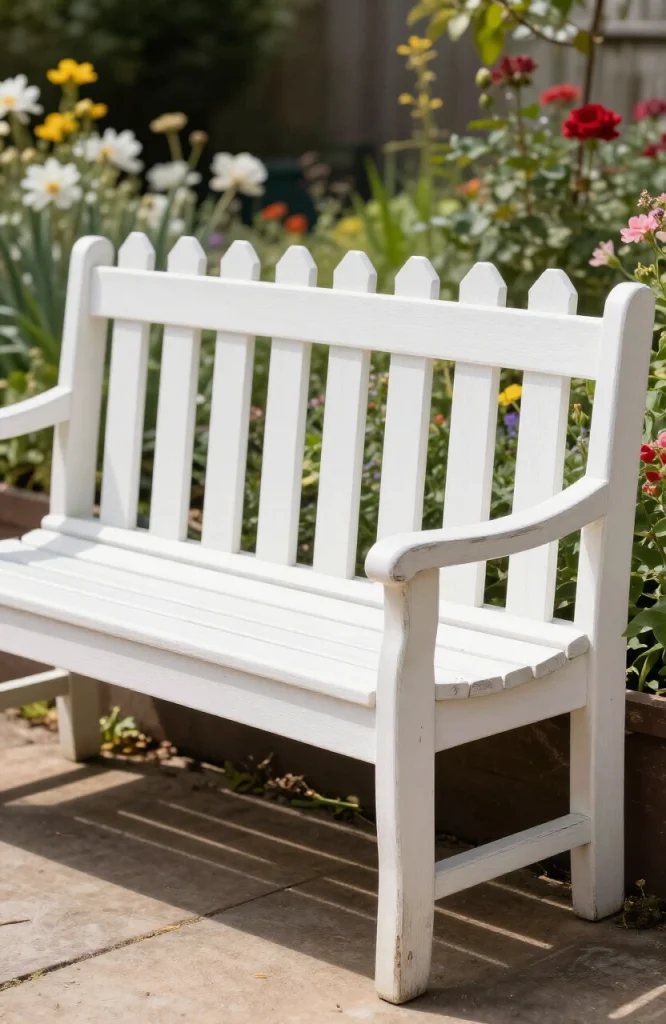
Cut fence pickets to matching heights with pointed or rounded tops, then attach them side by side across a simple frame for a backrest that looks at home in a cottage garden. Leave a small gap between each picket for a lighter, more open look, or butt them tight together for a solid privacy-style backrest. Seal with an exterior-grade finish since this idea is built for outdoor use.
16. Lattice Backrest for an Airy, Garden-Style Look
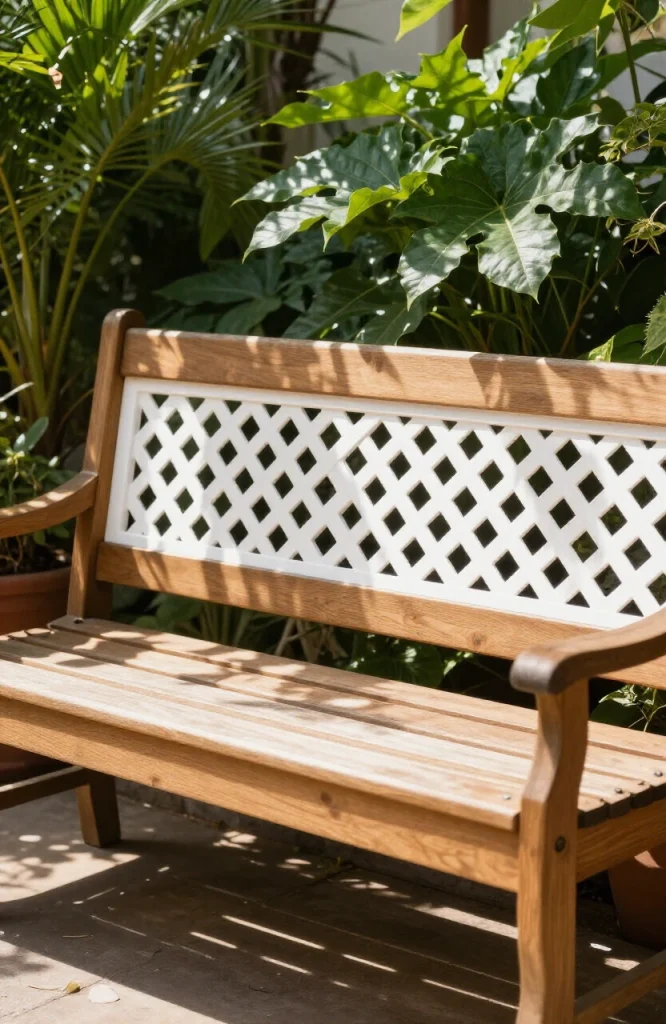
Pre-made wood or vinyl lattice panels, framed and mounted upright behind a garden bench seat, create a backrest that lets light and air pass through instead of blocking the view. This idea pairs naturally with a bench placed near a garden lighting setup, since string lights or lanterns hung on the lattice add depth once the sun goes down. Frame the lattice panel with 1×2 trim on all four sides before mounting for a finished edge.
17. Tall Vertical Slat Backrest for a Contemporary Look
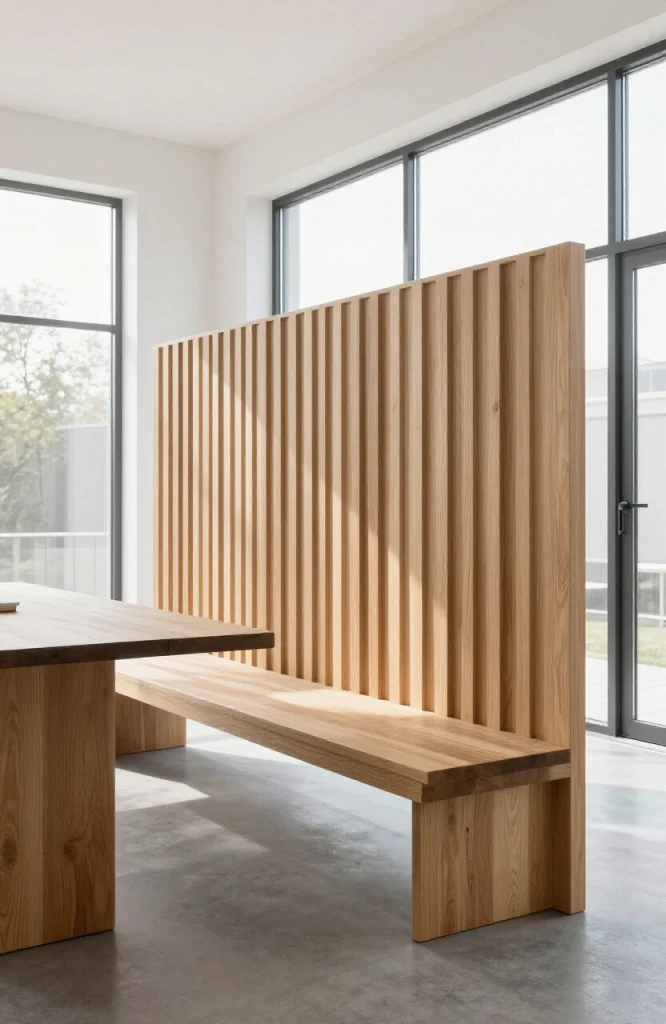
Instead of horizontal slats, run narrow boards vertically from the seat to a top rail, spaced with consistent gaps for a clean, contemporary look. This orientation makes a bench read taller and more architectural, which works well against a bare wall that needs visual height. Pre-drill every slat before attaching to avoid splitting, especially if you are working with narrower stock like 1×2 or 1×3 lumber.
18. Upholstered Channel-Tufted Backrest
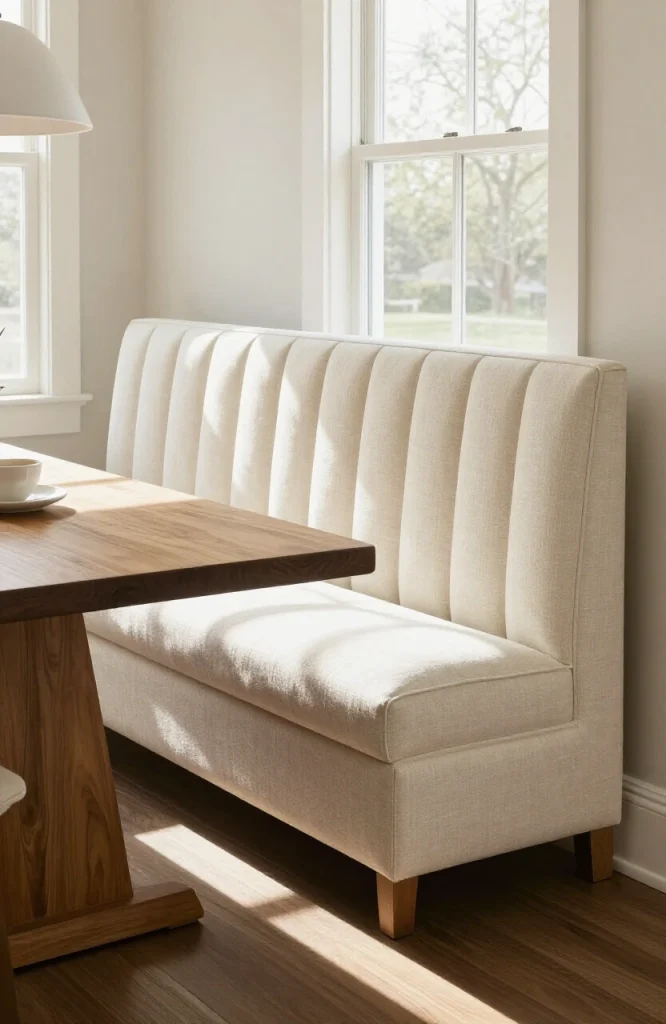
Channel tufting, a series of raised vertical or diagonal padded ridges, gives a backrest a tailored, upscale look without the hand-sewing that traditional button tufting requires. Cut foam strips to your channel width, glue them to a plywood backer in parallel rows, then wrap the whole panel in batting and fabric, stapling between each channel to define the ridges. This idea suits a formal dining bench or an entryway piece meant to double as a design statement.
19. Diamond-Tufted Backrest for a Traditional Look
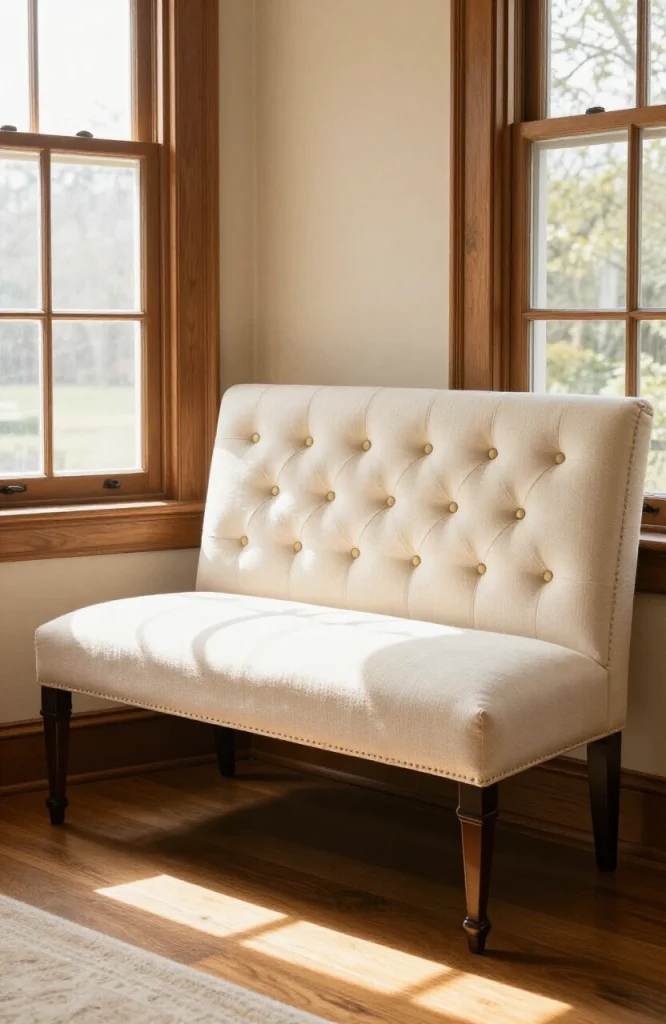
Diamond tufting uses buttons or knots pulled through the fabric at even intervals to create a repeating diamond pattern across the padded surface. Mark your button placement on the backer board first, drill through-holes at each mark, then pull upholstery twine through from the back after the foam and fabric are in place, tying off each button under tension. This method takes longer than channel tufting but produces a more traditional, formal result suited to a bench in a dining room or a bedroom.
20. Floating Ledge Backrest for a Minimal Look
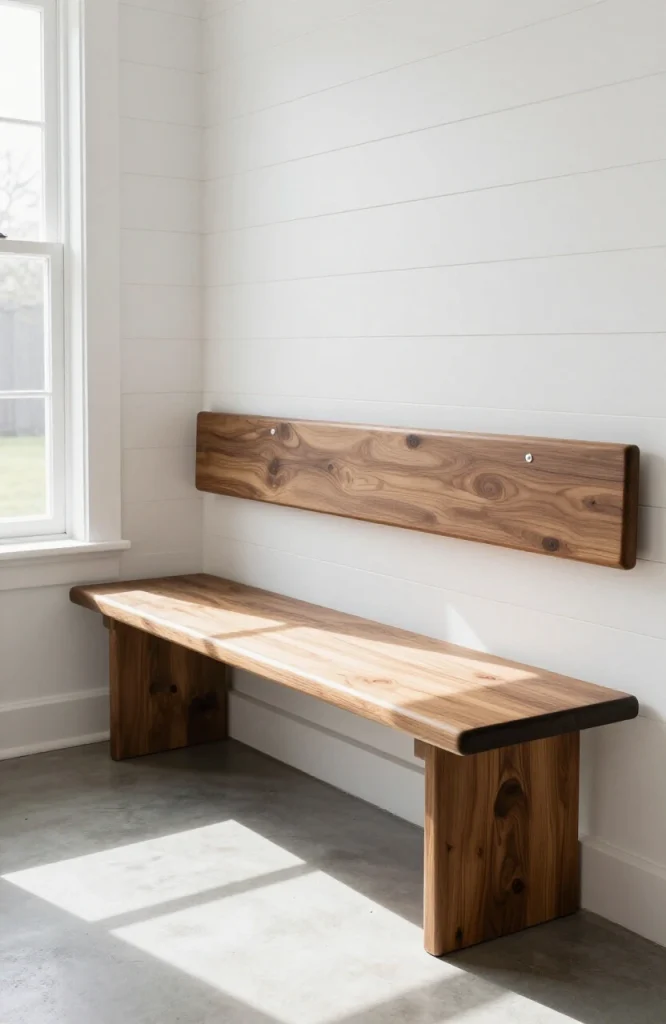
A single wide board mounted a few inches above the bench seat, without any additional framing or padding, works as a minimal backrest for a mudroom or a small entryway. Mount the ledge with concealed floating shelf brackets so no hardware is visible, and set the height around 14 to 16 inches above the seat for lower back support without the bulk of a full backrest. This idea works especially well in a small entryway similar to the layouts covered in rental-friendly home office ideas, where no-drill or low-impact mounting matters for a rented space.
21. Arched-Top Backrest for a Soft Silhouette
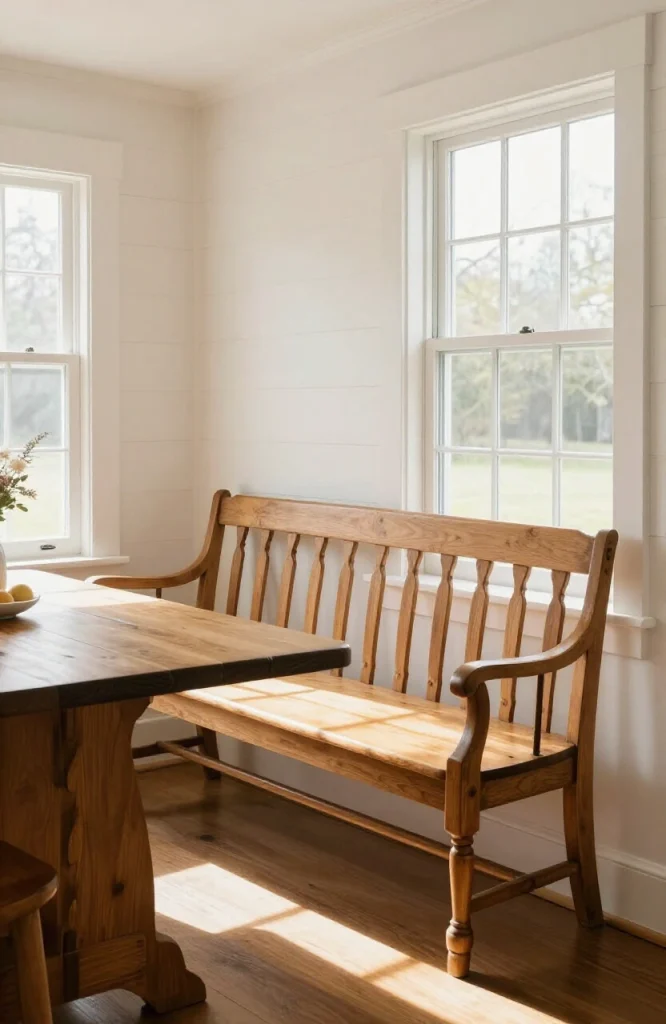
Cutting a gentle arch into the top edge of an otherwise simple backrest softens the whole bench and moves it away from a boxy, utilitarian look. Draw the arch with a long, flexible strip of wood bent between two points as a guide, trace the curve, then cut with a jigsaw and sand the edge smooth. This detail costs almost nothing in extra material and works on nearly any backrest style, from slats to a solid panel.
22. Chevron Slat Backrest for Visual Texture
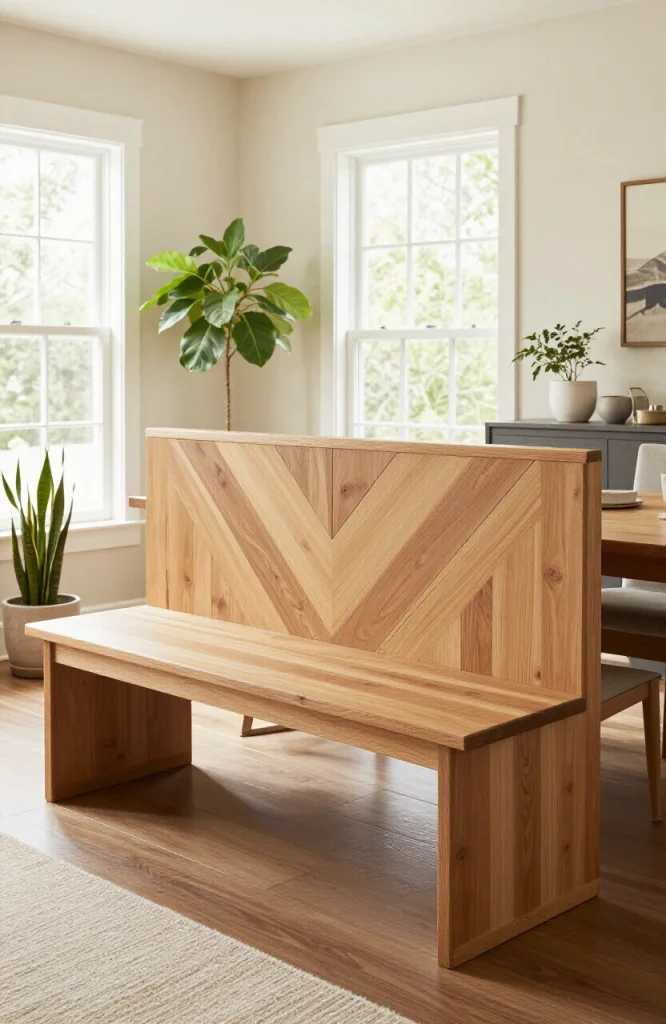
Cutting slats at matching angles and joining them at a center point creates a chevron, or V-shaped, pattern across the backrest that adds texture without any extra materials beyond what a standard slat back needs. Use a miter saw set to a consistent angle, typically 45 degrees, so every joint lines up cleanly at the centerline. This idea works particularly well when two wood tones or stain colors are used on alternating slats for added contrast.
23. Hinged Fold-Down Backrest for Multi-Purpose Benches
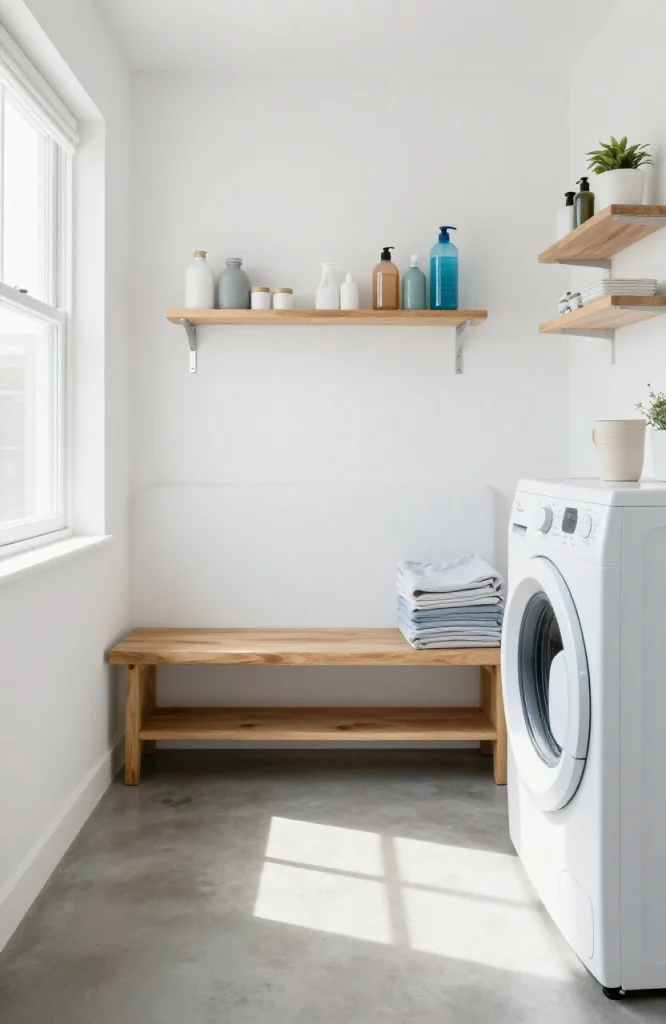
A backrest mounted on a piano hinge can fold flat against the wall when not needed, which suits a small laundry room, a garage mudroom, or any tight space where a fixed backrest would get in the way. Attach the hinge along the bottom edge of the backrest panel and the top edge of the seat back, then add a simple hook-and-eye latch to hold the panel upright during use. This idea trades some rigidity for flexibility, so keep the panel lightweight, plywood rather than solid slab lumber works best.
24. Rattan or Wicker Panel Backrest for a Boho Look
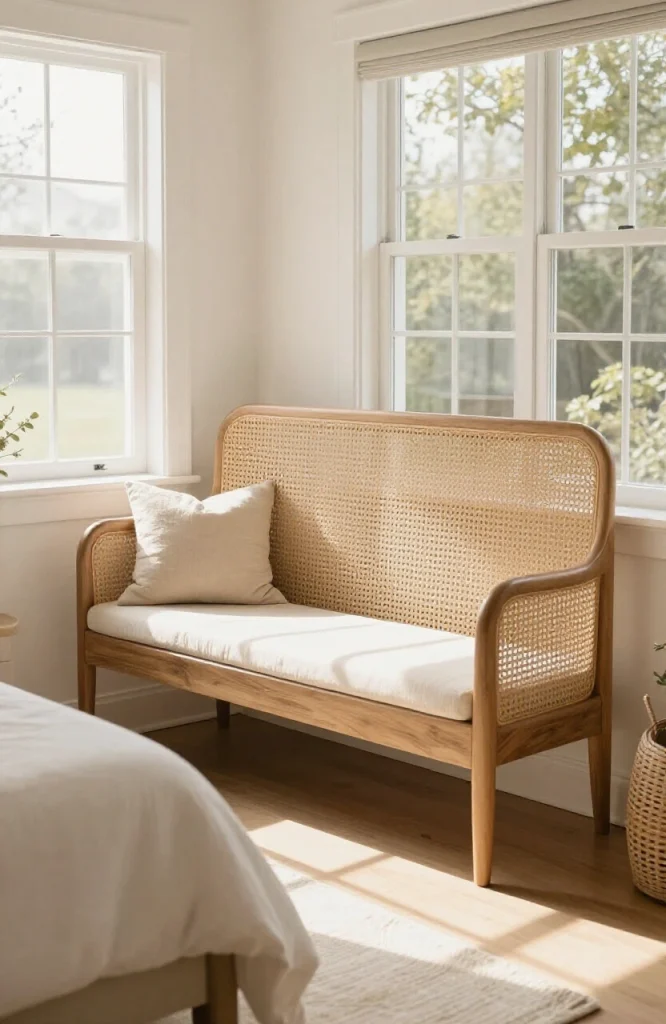
Pre-woven rattan or wicker panels, sold in sheets at craft and building supply stores, can be framed and mounted as a backrest for a boho or coastal-style bench. Cut the panel to size with tin snips, sandwich the edges between two thin strips of wood trim, then screw the assembled panel to the bench frame. This idea gives the woven texture of a much more expensive imported bench at a fraction of the cost.
25. Storage-Integrated Backrest for a Multi-Purpose Bench
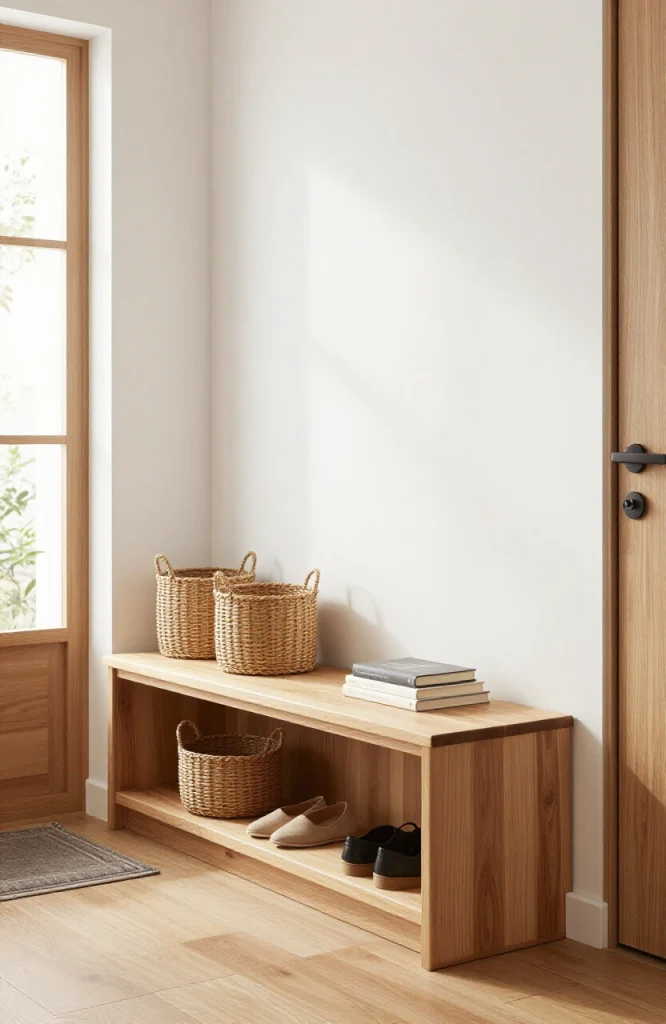
Building the backrest as a shallow cubby, with a recessed shelf running the width of the bench, adds storage for shoes, books, or mail without taking up floor space. Frame the cubby with 1×4 lumber, cap it with a thin plywood back, and leave the front open or add small doors for a cleaner look. This idea works well paired with the shelving logic used in small-space bookshelf ideas, since both projects solve the same problem of adding storage where floor space is limited.
26. Corbel-Supported Backrest for a Built-In Bench
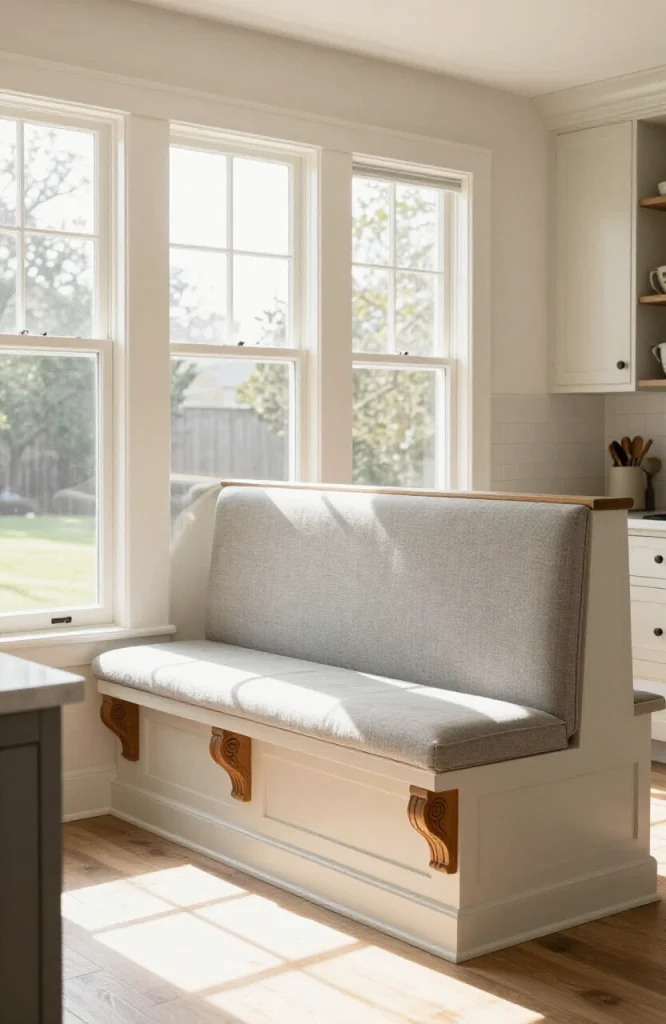
Decorative wood corbels, normally used under shelves or countertops, can support a backrest panel while adding a furniture-grade detail that plain brackets cannot match. Mount two or three corbels along the back edge of the bench, spaced evenly, then screw a solid backrest panel across the front faces of the corbels. This idea suits a built-in banquette in a kitchen or breakfast nook where the bench needs to look intentional rather than added on.
27. Two-Tone Painted Backrest for Contrast
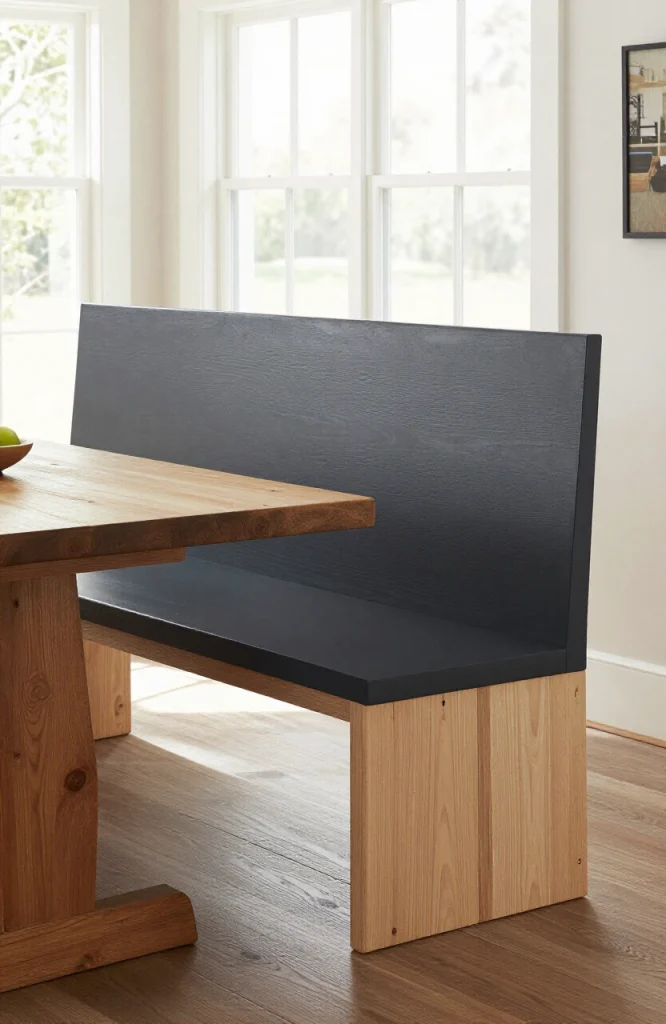
Painting the backrest a different color or finish from the bench base turns a basic build into a design feature, without changing anything about the construction itself. A dark backrest against a light-toned seat, or the reverse, draws the eye and makes the bench read as a considered piece of furniture rather than a plain box with a back attached. This idea works on nearly any style listed here, from slats to a solid panel, and it is the easiest way to update an existing plain backrest without rebuilding it.
28. Adjustable-Height Backrest for a Custom Fit
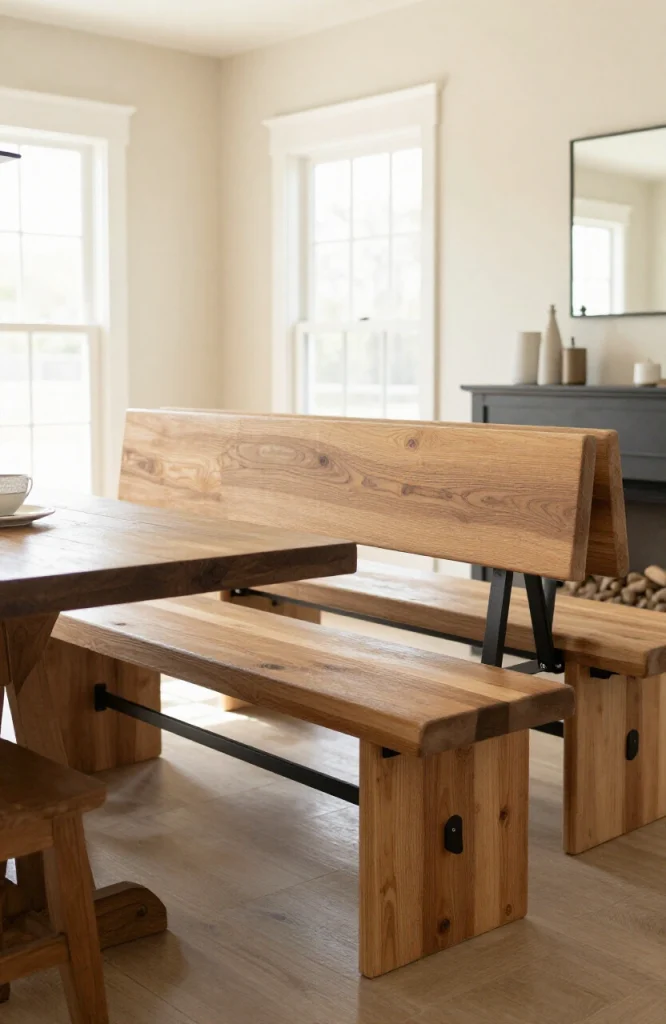
For a bench used by people of different heights, mounting the backrest on a track system with several pre-drilled height positions lets you move the panel up or down as needed. Attach a length of slotted steel track to the wall or bench frame, then bolt the backrest bracket through the slot at whichever height suits the current use. This idea takes more setup than a fixed backrest, but it pays off for a bench in a shared space, a family entryway, or a workshop seating area used by more than one person.
Conclusion
Twenty-eight bench backrest ideas cover a wide range of skill levels and styles, from a simple painted board to a fully upholstered, tufted panel. The detail that matters most across every version is the angle and height: a seat around 17 to 20 inches high, a backrest angled 100 to 110 degrees from the seat, and a backrest tall enough to support the shoulder blades will feel comfortable no matter which material or style you choose. Start with the bench you already have, or the space you are building for, then match the backrest style to the room. A bench people actually sit in for more than a minute is the real goal, and a well-planned backrest is what gets you there. If your bench sits in an open living area rather than a dining nook, a bench backrest is also one of the simplest ways to add seating to a living room without a traditional sofa.