
Moss mirrors have moved from niche maker fairs into mainstream home decor, and for good reason. A moss mirror for wall styling gives a room texture, color, and a sense of the outdoors without a single houseplant to water. I have tested several of these pieces in my own space over the past year, swapping frames, moss types, and placements to see which combinations actually hold up and which ones shed moss all over the floor within a week. This guide draws on that hands-on testing along with a close look at what’s currently trending in home decor circles, so every idea below is one you can act on with confidence.
Below are 21 moss mirror for wall ideas, covering shapes, materials, room placement, and the practical details of buying or making your own. Each section stands on its own, so feel free to jump to whatever matches your space.
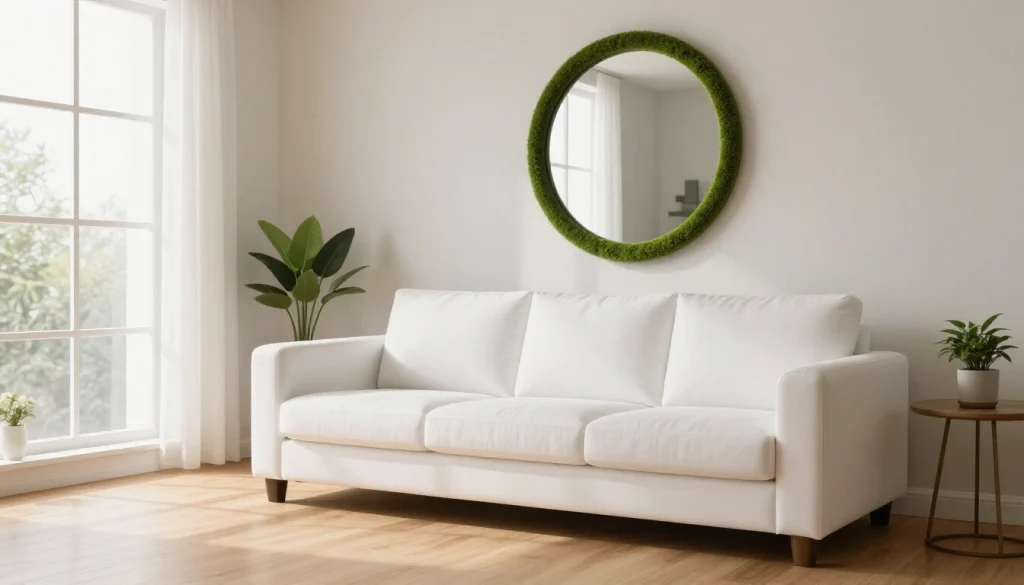
1. Round Reindeer Moss Mirror for a Soft Focal Point

A round mirror wrapped in reindeer moss softens a room in a way that square or rectangular frames rarely manage. Reindeer moss has a puffy, cloud-like texture that catches light differently depending on the angle, which gives the piece movement even though nothing about it is actually moving.
This shape works particularly well above a console table or on a wall where you want a single strong anchor rather than a cluster of smaller pieces. A 24 to 32 inch diameter mirror tends to read as a proper statement without overwhelming a standard-height wall.
2. Rectangular Wood-Framed Moss Mirror for a Bold Statement Wall
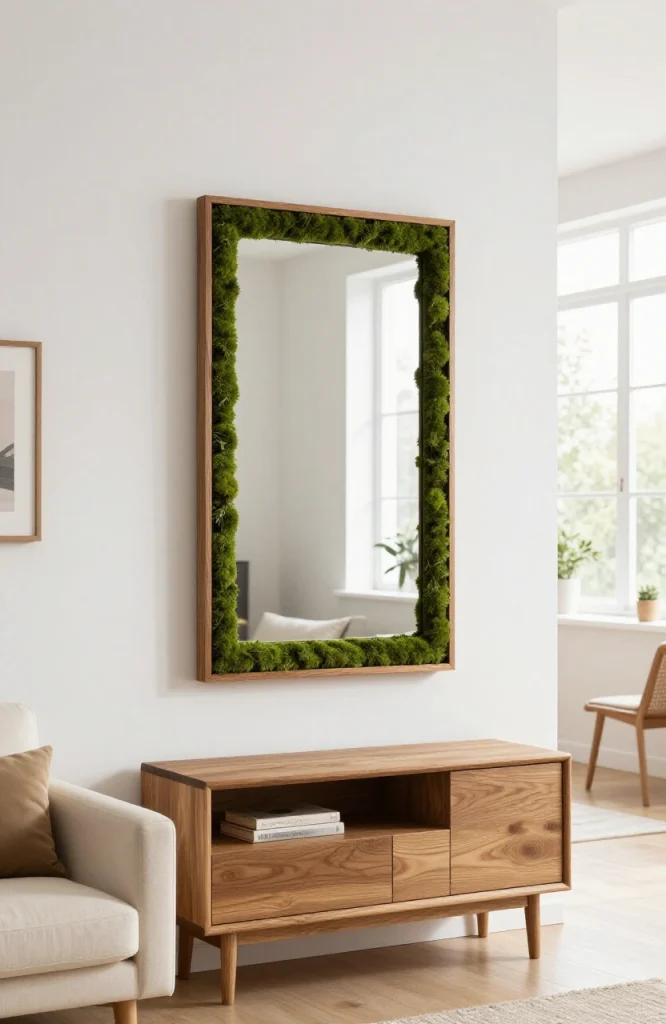
A rectangular frame gives moss a cleaner edge to grow along, and pairing it with a natural wood border keeps the look grounded rather than overly whimsical. This version suits living rooms and entryways where the wall itself already has strong horizontal or vertical lines, since the mirror can echo that structure.
If your home already leans toward a modern farmhouse or Scandinavian palette, a rectangular moss mirror slots in without fighting the rest of the room. For more ways to build out a wall like this one, our guide to decorating walls without paint covers several complementary options.
3. Oval Moss Mirror for a Gentle, Organic Silhouette
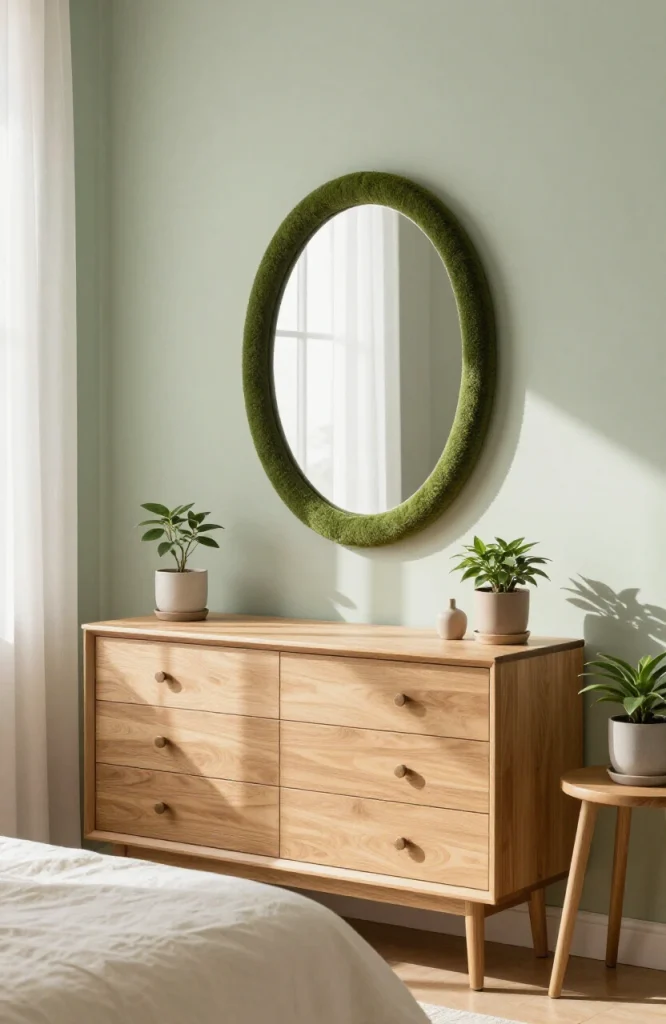
An oval shape splits the difference between the drama of a round mirror and the structure of a rectangle. It reads as slightly more formal than a circle while still keeping the soft, nature-inspired feel that moss brings to a wall.
Oval moss mirrors tend to suit bedrooms and hallways especially well, since the elongated shape draws the eye upward and can make a narrow wall feel taller. Hang it at eye level from the average standing height in the room rather than centering it on the wall itself, which keeps the reflection functional as well as decorative.
4. Full-Coverage Moss Mirror With No Visible Frame
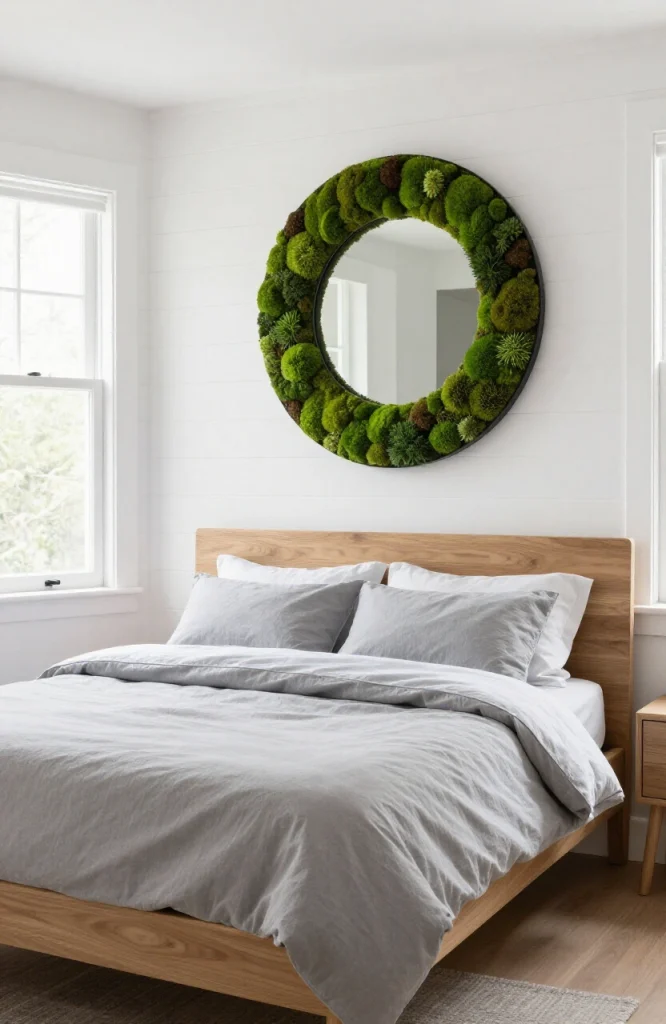
Some of the most striking versions skip the frame entirely. Moss covers the entire surface right up to the edge of the glass, so the piece reads as a floating patch of forest floor rather than a traditional mirror with decoration added on top.
This approach takes more moss than a framed design, since there is no wood or metal border to fill the visual gap. It rewards patience during the gluing stage, because any thin spots near the glass edge will show. The payoff is a piece that looks closer to a piece of botanical art than a typical mirror.
5. Moss and Wood Slat Mirror for a Rustic Cabin Look
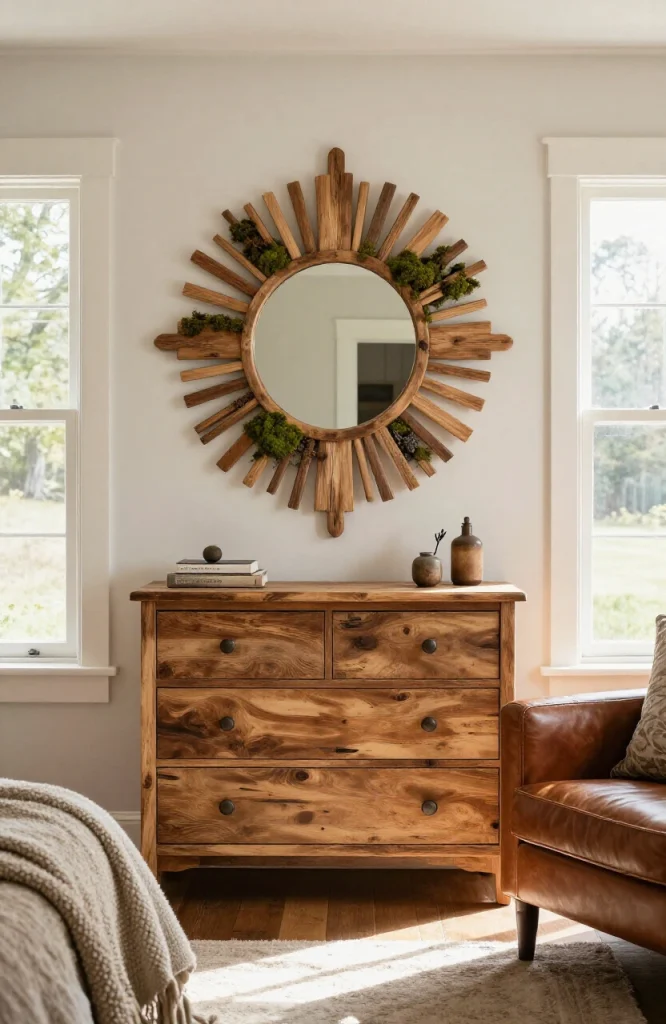
Wooden slats arranged in a sunburst or grid pattern around the mirror, with moss filling the gaps between them, gives a rustic cabin feel that pairs naturally with leather, wool, and reclaimed wood furniture. The slats also add real depth to the piece, since the moss sits at a different level than the wood.
This style suits mountain homes, lake houses, and any space built around natural materials. It can also work in a city apartment as a deliberate contrast, bringing warmth into a room dominated by sleek surfaces.
6. Moss Mirror Paired With Preserved Ferns and Greenery
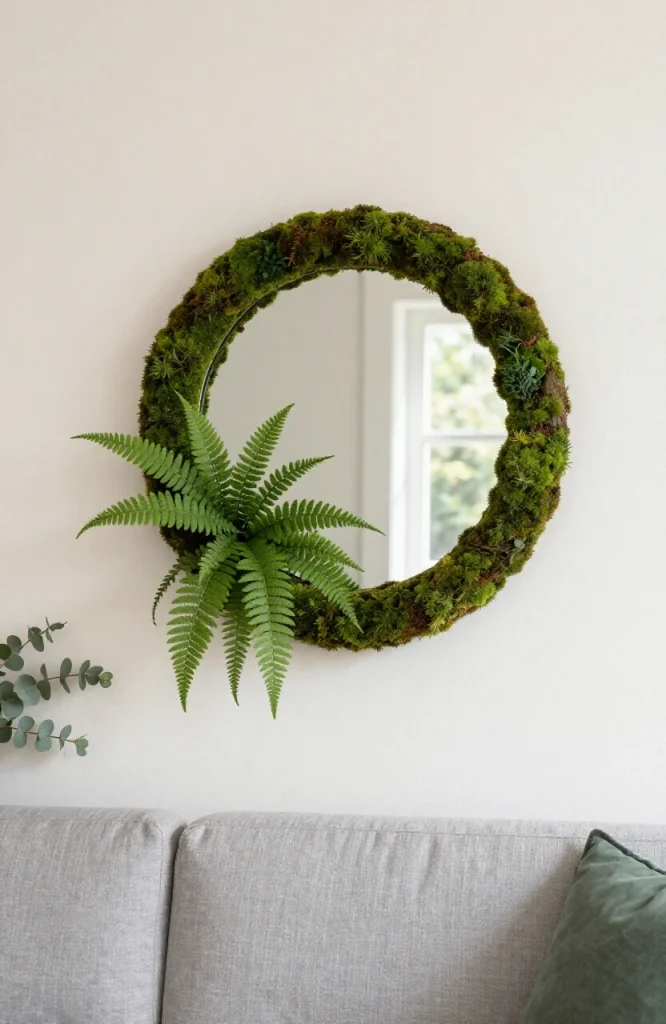
Adding small clusters of preserved ferns around the base or corners of a moss mirror gives the piece more dimension and a slightly wilder look. The ferns break up the flat texture of the moss and add height, which helps the mirror read as a small woodland scene rather than a single material applied to a frame.
Preserved ferns hold their shape and color for years under the same conditions as preserved moss, so the combination ages evenly. Keep the greenery concentrated at one or two points rather than spreading it evenly around the whole frame, since a slightly asymmetrical arrangement looks more like something that grew there naturally.
7. Fairycore Moss Mirror With Mushrooms and Butterflies
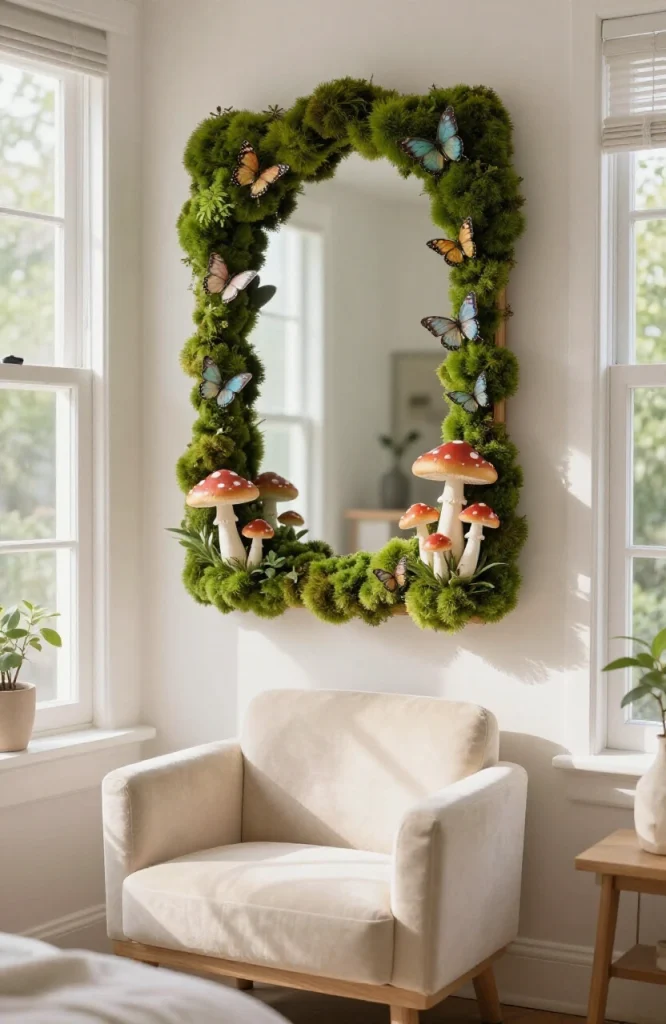
Small faux mushrooms tucked into the moss, paired with a few butterflies or dragonflies, push a moss mirror toward the fairycore aesthetic that has become popular in bedrooms and reading nooks. This version reads as playful rather than purely decorative, and it tends to be a favorite project for anyone making their first moss mirror.
Place the mushrooms near the bottom of the frame so they appear to be growing up out of the moss rather than floating in the middle. A few strands of Spanish moss tucked around them adds a slightly overgrown, storybook quality without much extra work.
8. Trailing Spanish Moss Mirror for Extra Texture
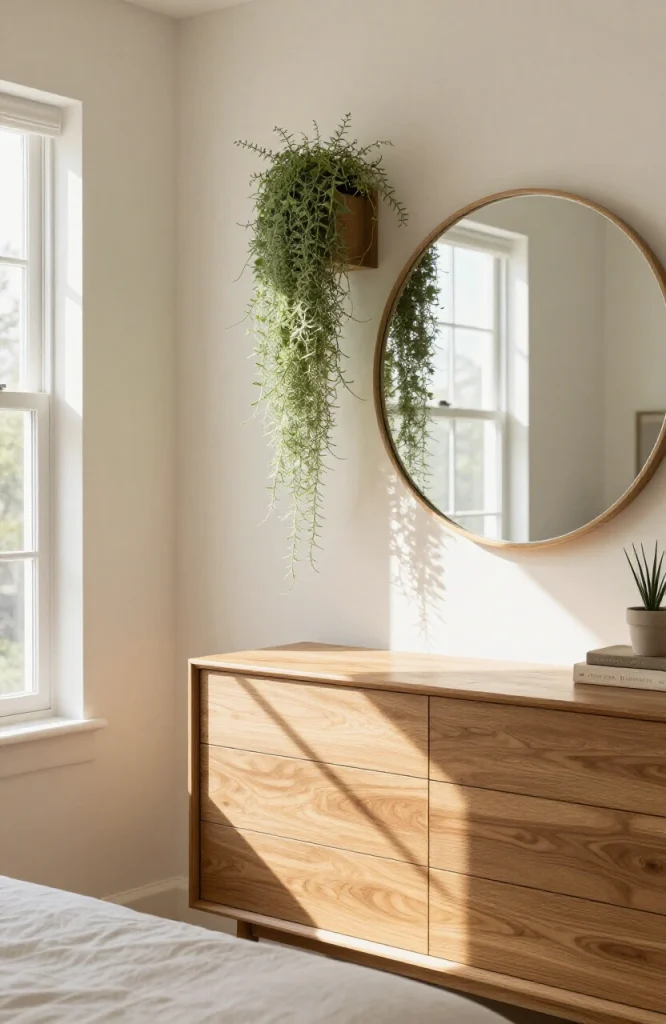
Spanish moss has a stringy, draping texture that contrasts well against the denser, rounder look of reindeer or sheet moss. Using it along the top or one side of the frame, so it trails downward past the edge of the mirror, gives the piece a looser, more organic silhouette than a mirror where the moss stays neatly contained inside the frame line.
This works especially well on frames with visible wood, since the trailing moss softens the hard edge of the wood without covering it completely. Keep the trailing sections light, since too much Spanish moss can start to look untidy rather than intentional.
9. Sunburst Moss Mirror for a Dramatic Entryway
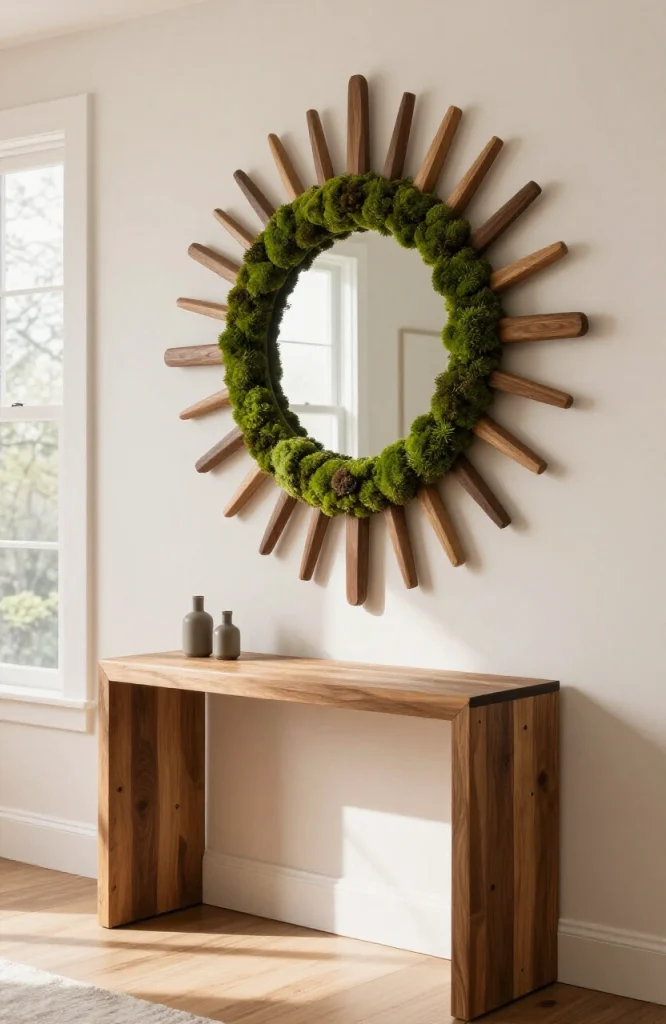
A sunburst frame, with moss-covered spokes radiating out from a central mirror, makes a strong first impression in an entryway. The repeated linear pattern gives the eye a clear path to follow, which is part of why sunburst mirrors have stayed popular in traditional mirror design long before moss versions existed.
Scale matters here more than with most other styles on this list. A small sunburst moss mirror can look underwhelming, so aim for something at least 28 inches across if the entryway wall has the space for it.
10. Black Metal Frame Moss Mirror for a Modern Contrast
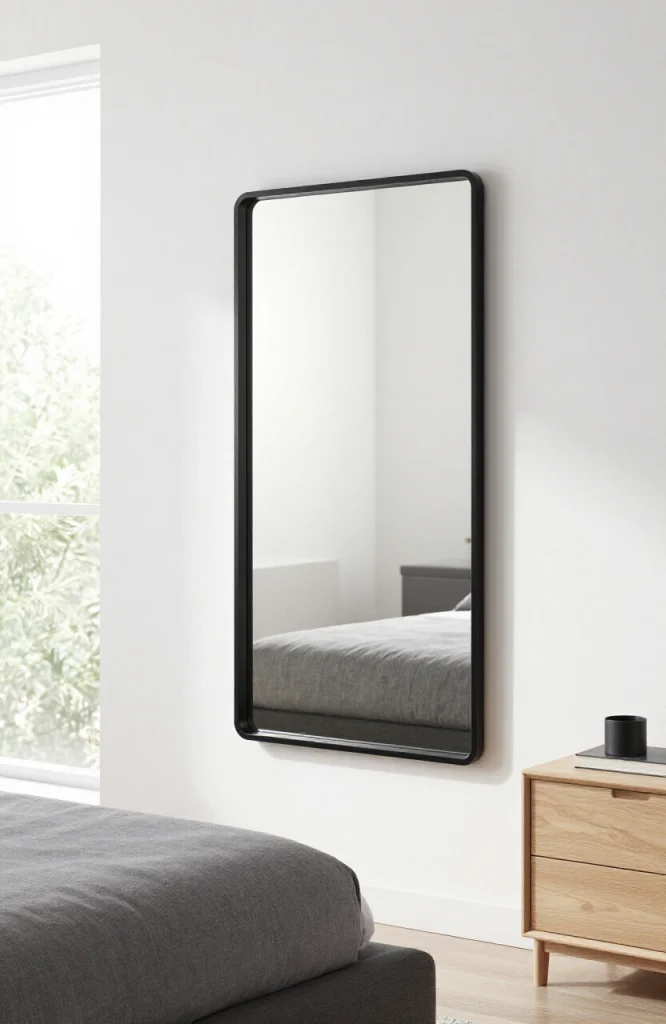
Pairing moss with a slim black metal frame creates a sharper, more contemporary look than the wood-framed versions common in rustic and cottage styles. The dark metal outlines the greenery clearly, which makes the moss itself the focal point rather than blending into a similarly toned wood border.
This version suits modern living rooms, home offices, and any space with black accents already in the lighting, hardware, or furniture. It also photographs well against light-colored walls, since the contrast reads clearly even in a small image.
11. Sheet Moss Mirror for a Flat, Minimalist Finish
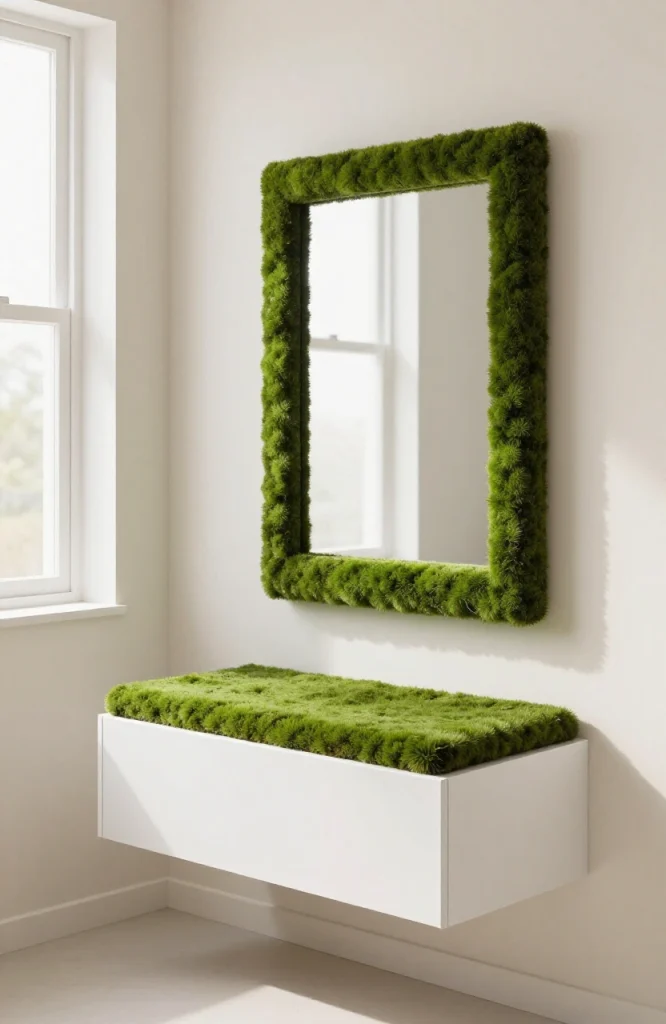
Sheet moss lies flatter than reindeer moss, which gives the finished mirror a smoother, more restrained texture. This suits homeowners who want the color and organic feel of moss without the bumpier, more textured look that reindeer moss produces.
Because sheet moss sits closer to the frame, it also uses less material for the same coverage, which can make it a more budget-friendly choice for a larger mirror. It pairs well with minimalist and Japandi interiors, where a quieter texture keeps the room feeling calm rather than busy.
12. Mixed Moss Mirror Combining Several Textures
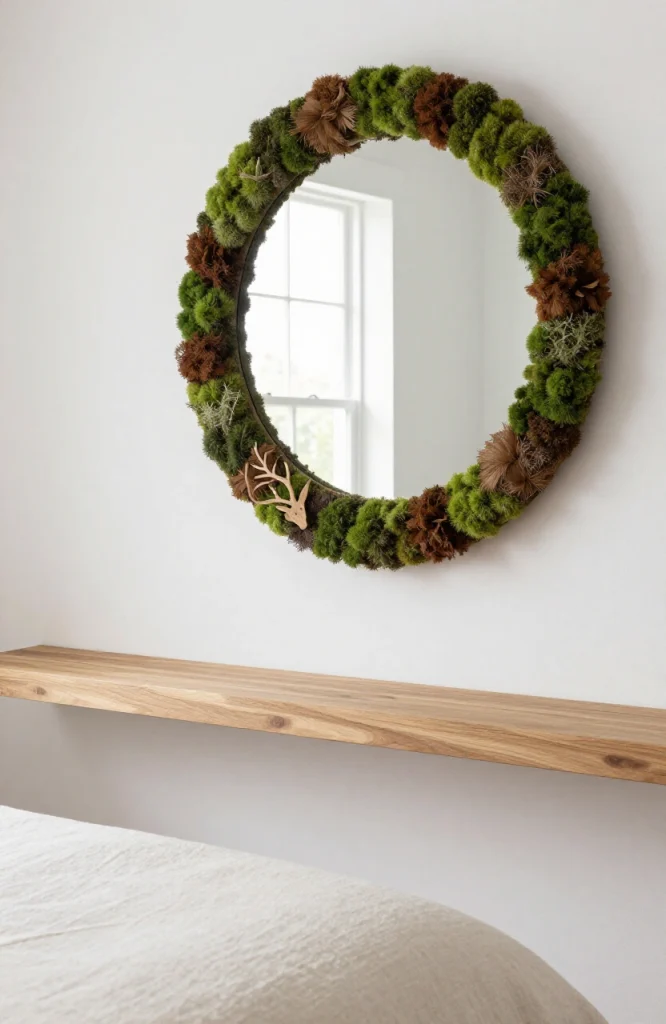
Combining two or three types of moss, such as reindeer, sheet, and mood moss, on a single frame gives a more realistic, forest-floor appearance than any single variety on its own. Different mosses catch light differently, so the mixed texture reads with more depth from across a room.
Group each moss type in its own section rather than scattering pieces evenly, since real moss grows in patches rather than a uniform blend. This small detail is what separates a mixed moss mirror that looks natural from one that looks like a hobby project glued together in a hurry.
13. Small Moss Mirror Cluster for a Gallery Wall
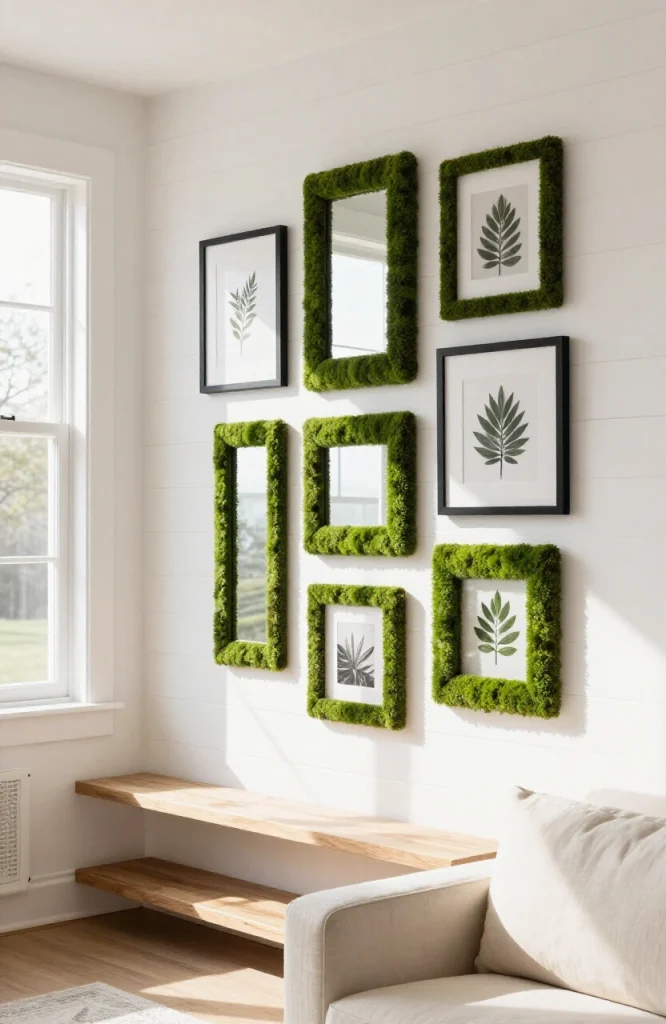
Instead of one large moss mirror, several small ones grouped together can work as part of a gallery wall alongside framed art, photographs, or other mirrors. The moss pieces add texture and break up what might otherwise be an all-flat arrangement of prints and photos.
Keep the moss mirrors to two or three pieces within a larger gallery rather than filling half the wall with them, so they read as an accent rather than competing with the rest of the display. Our living room layout guide has more ideas for building a wall arrangement around a room’s existing furniture.
14. Large Statement Moss Mirror for Small Rooms
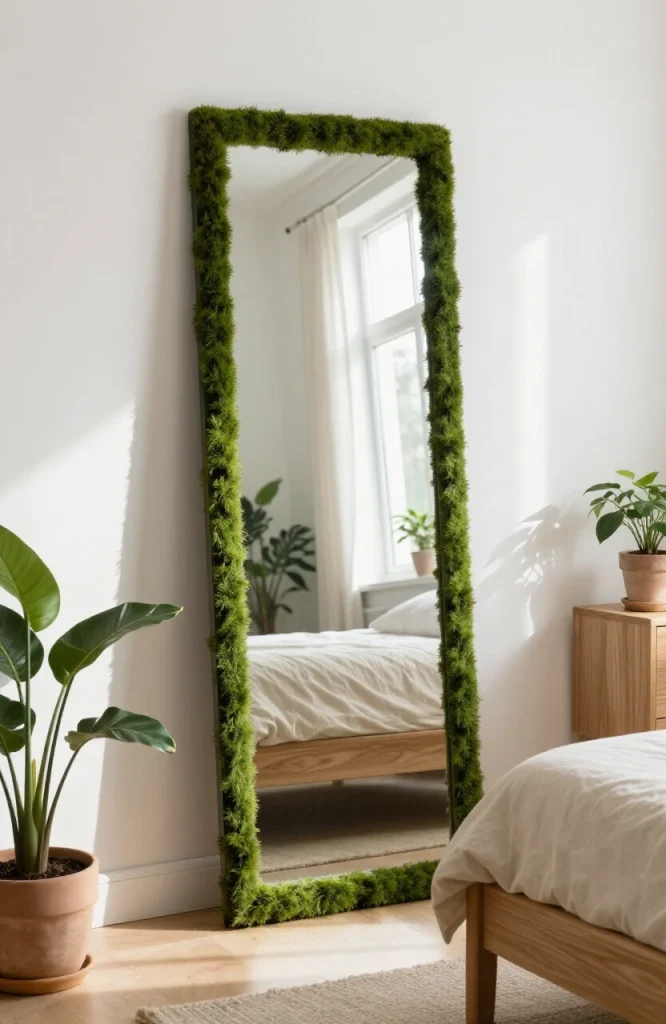
A single large moss mirror can do more for a small room than several smaller decorations, since it adds color and reflected light at the same time. The mirror portion bounces natural light around the space, while the moss border keeps the piece from feeling as stark as a plain mirror would.
This works especially well in small bathrooms, entryways, and studio apartments, where wall space runs short but the room still needs a strong visual anchor. Our piece on open floor plan decoration touches on how mirrored surfaces help visually separate zones in compact layouts.
15. Moss Mirror With Warm LED Fairy Lights
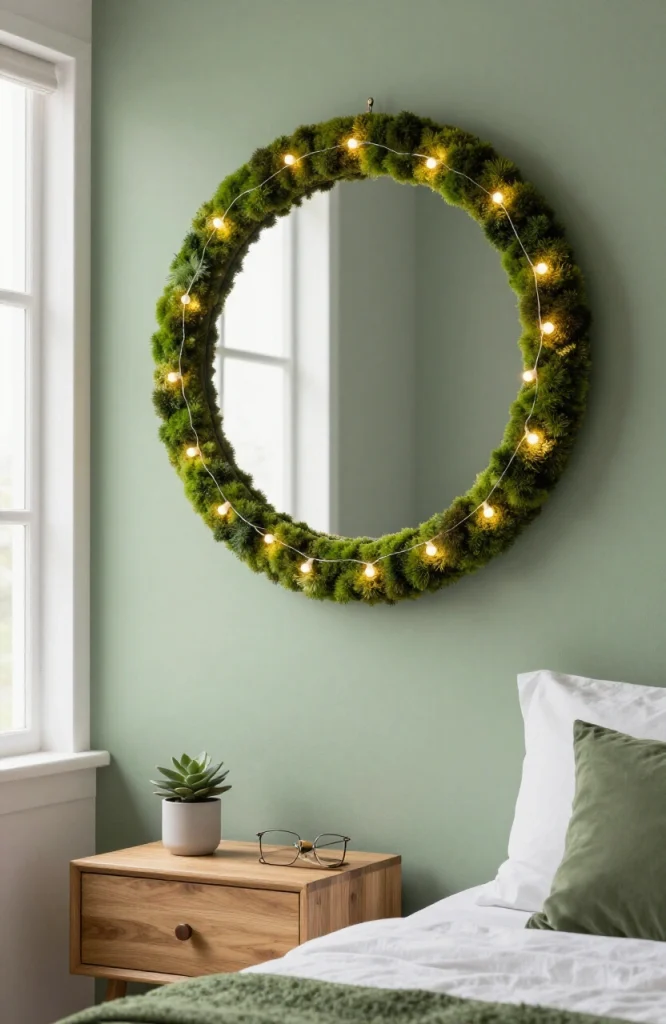
Threading a strand of battery-powered LED fairy lights through the moss adds a soft glow at night without any visible wiring during the day. The lights sit low in the moss texture, so they read as a subtle detail rather than an obvious string of bulbs.
This version works best in bedrooms and reading corners, where a low light source in the evening matters more than daytime brightness. Choose warm white lights rather than cool white, since warm tones match the natural green of the moss far better.
16. DIY Budget Moss Mirror From a Thrifted Frame
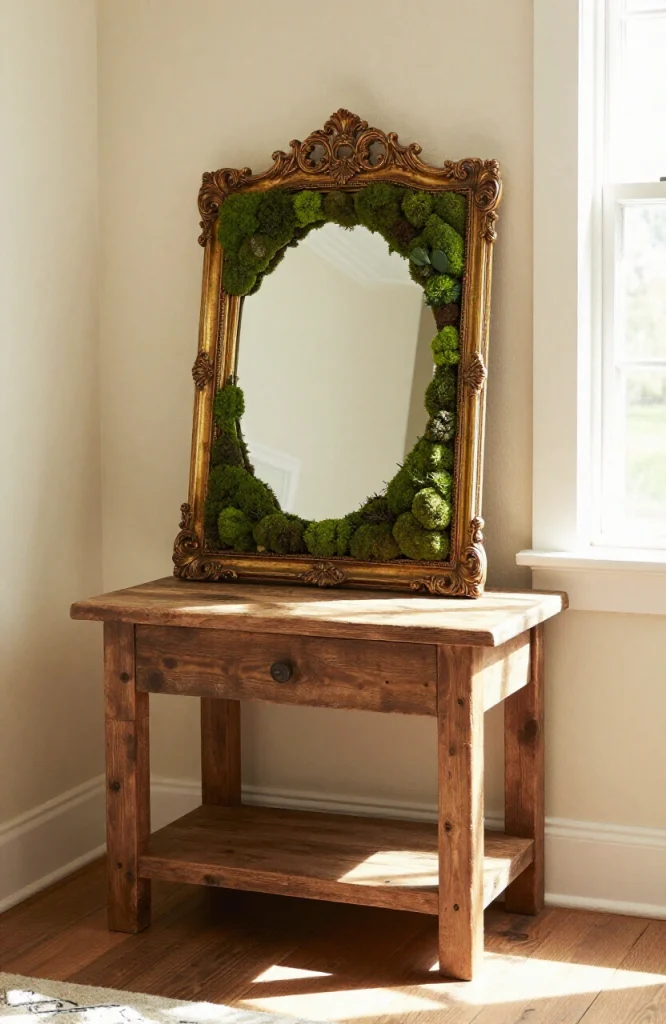
An old frame from a thrift store, garage sale, or clearance bin at a hobby store can become a moss mirror for a fraction of the cost of a finished piece. Damaged or scratched frames work fine for this project, since the moss covers most of the surface anyway.
Start by removing the glass and backing, then paint the visible frame edges a dark green to hide any small gaps in coverage. Apply hot glue in small sections and press the moss on firmly, working from the outer edge inward so any seams stay hidden near the center rather than along the visible border.
17. Moss Mirror for a Bathroom Vanity Wall
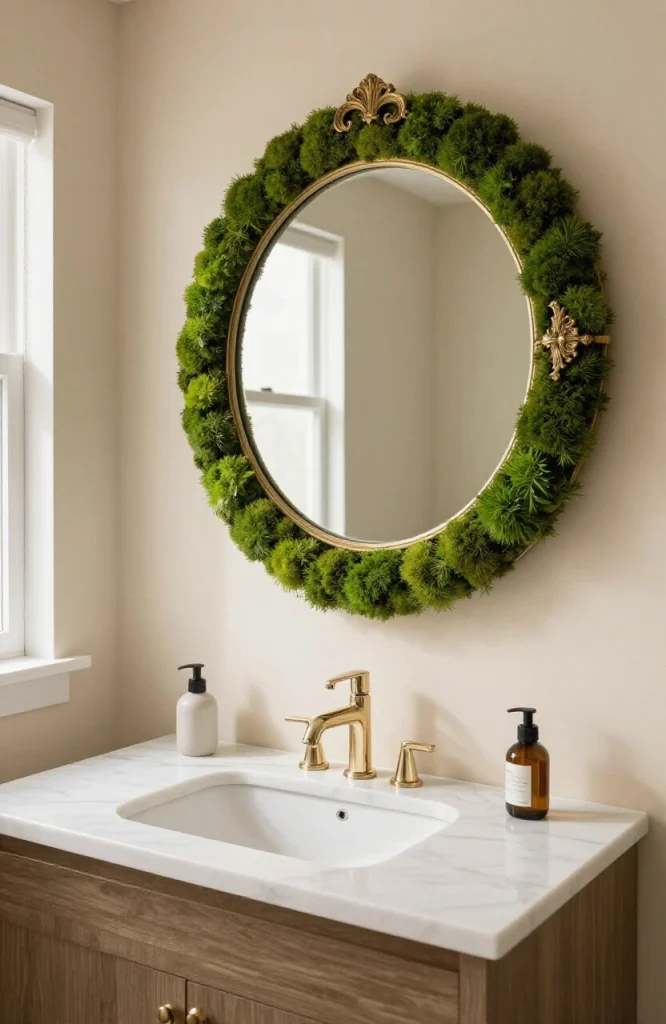
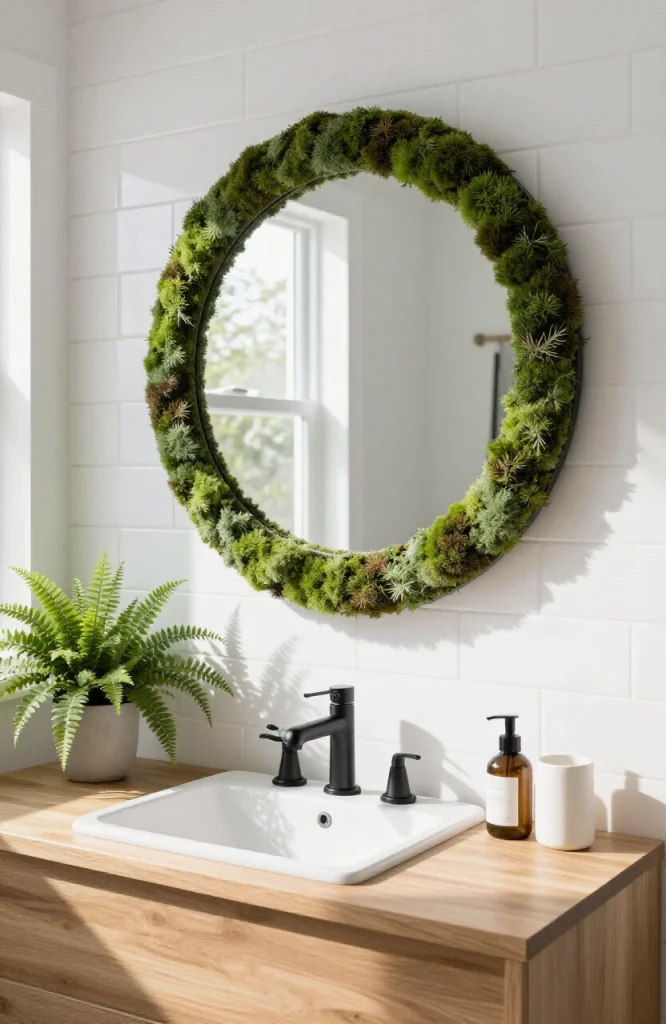
Preserved moss holds up well in a bathroom as long as it stays away from direct water and steam from a shower. A moss mirror above a vanity, away from the tub or shower enclosure, brings warmth into a room that often leans heavily on tile, glass, and metal fixtures.
For bathrooms with more direct moisture exposure, our guide to creating a timeless bathroom outlines which materials handle humidity best, which is worth checking before committing to any moss piece in a smaller, steamier space.
18. Moss Mirror for a Home Office Accent Wall
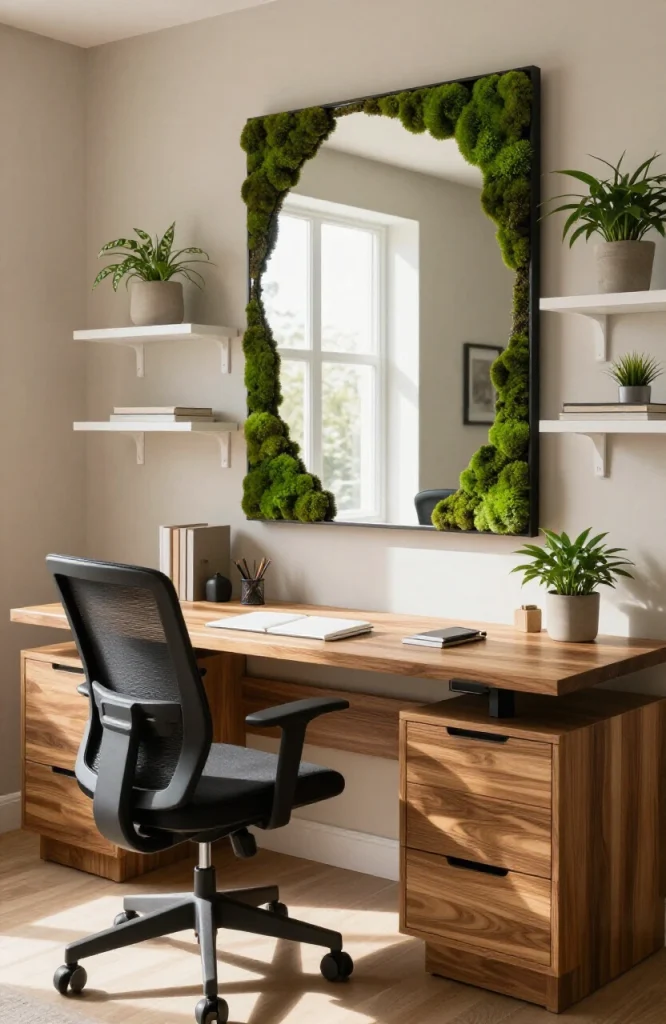
A moss mirror behind a desk or on the wall facing it adds a natural element to a room that otherwise tends to fill up with screens, cables, and paperwork. Because the piece requires no watering or sunlight, it holds up fine in windowless offices or rooms with only artificial light.
If you rent your space or move often, a moss mirror is also easy to relocate without leaving marks, since it hangs the same way a standard picture frame does. Our rental-friendly home office ideas cover more no-damage decorating options for a similar setup.
19. Moss Mirror for a Bedroom Reading Nook
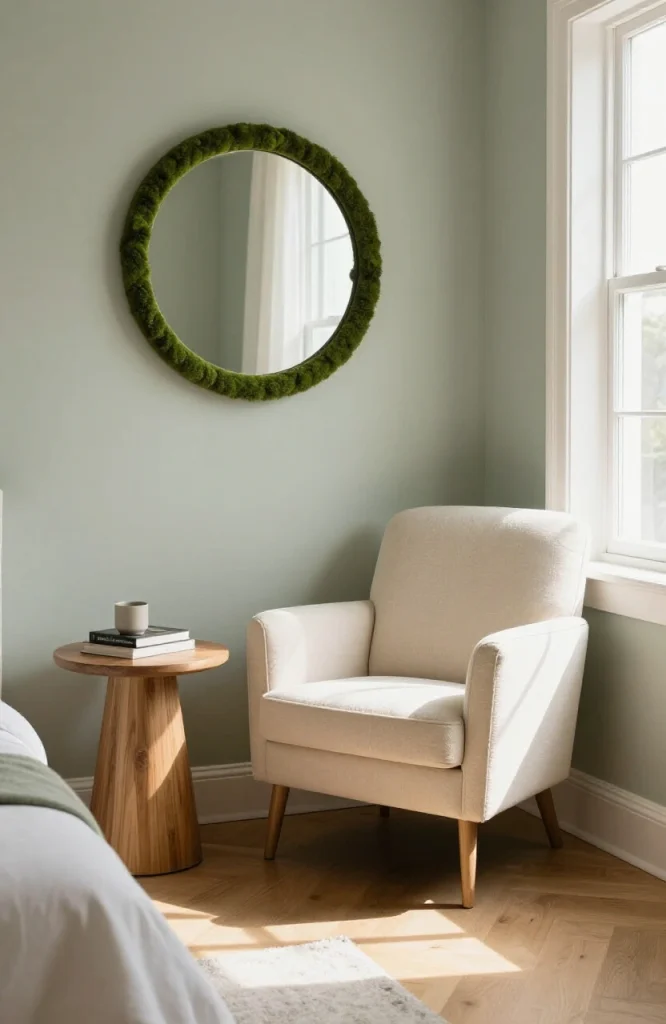
Placed beside a reading chair or above a small side table, a moss mirror gives a reading nook a calmer, more grounded feel than typical wall art. The green tones tend to read as restful rather than energetic, which suits a corner meant for winding down.
Pairing the mirror with a soft throw, a low lamp, and a small plant nearby extends the same natural feel through the rest of the nook. Keep the mirror at a height where it reflects the window or lamp light rather than a blank section of wall, so it still does some visual work beyond decoration.
20. Choosing Preserved Moss vs Live Moss for Your Mirror
Most moss mirrors sold commercially and made at home use preserved moss rather than live moss, and the difference matters for anyone deciding between the two.
| Feature | Preserved Moss | Live Moss |
|---|---|---|
| Maintenance | None required | Regular misting needed |
| Lifespan | Several years with no direct sunlight | Shorter unless conditions match its natural habitat |
| Best rooms | Any room, including offices and bedrooms | High-humidity rooms with indirect light |
| Color | Treated to stay vibrant long-term | Can fade or brown without proper care |
| Cost | Slightly higher per bag | Often cheaper but requires more upkeep |
Preserved moss suits nearly every household, since it needs no water, no sunlight, and no regular attention. Live moss can work for someone who already keeps a humid terrarium or greenhouse setup, but for a standard wall mirror, preserved moss is the more practical choice for almost everyone.
21. Caring for and Hanging Your Moss Mirror Long-Term
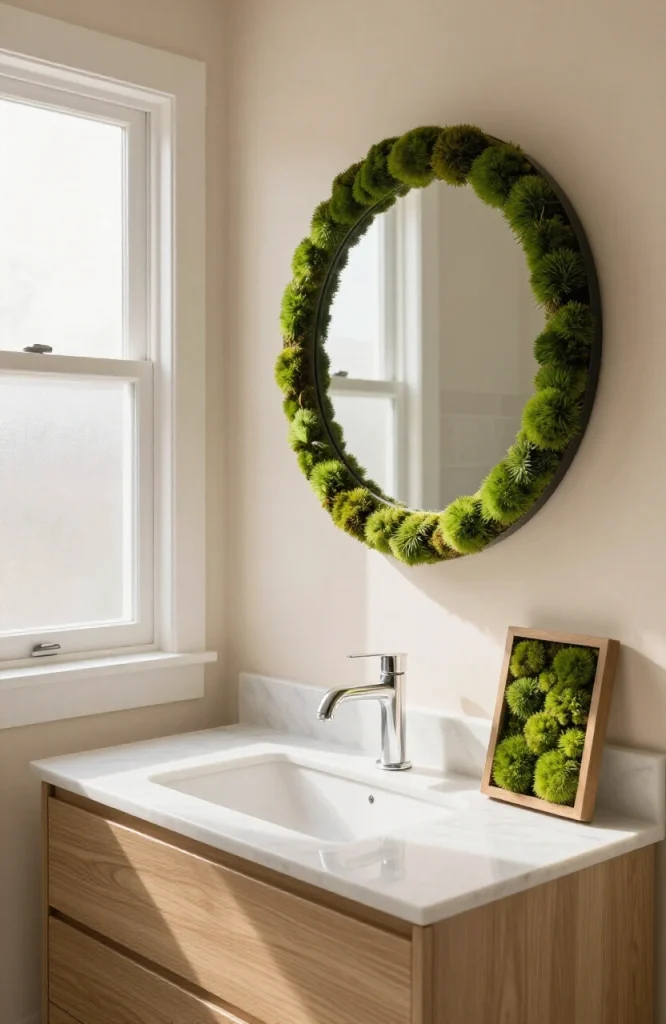
A moss mirror needs very little upkeep, but a few habits extend its life considerably. Direct sunlight is the biggest threat to preserved moss, since UV exposure fades the color faster than anything else. Hang the piece on a wall that gets indirect light, or at least out of a direct sun path during peak afternoon hours.
Dust the moss occasionally with a soft brush or the low setting on a hairdryer rather than a damp cloth, since moisture can loosen the glue holding individual pieces in place over time. As one plant stylist I consulted while researching this piece put it, “the biggest mistake people make with moss art is treating it like a houseplant, when really it behaves more like a piece of upholstery that just needs the occasional dusting.” For hanging hardware, standard picture wire or a sawtooth hanger works fine, since moss mirrors typically weigh less than a comparable mirror in solid wood or heavy metal.
Final Thoughts on Choosing a Moss Mirror for Your Wall
A moss mirror for wall decor works because it solves two problems at once: it adds color and texture the way a piece of art would, while still giving a room a working mirror. Whichever style from this list fits your space, the core decision comes down to preserved versus live moss, the shape that suits your wall, and how much texture you want the piece to carry.
Start with a smaller frame if this is your first attempt at either buying or making one, since it gives you a lower-cost way to see how the moss holds up in your specific lighting and humidity before committing to a larger statement piece. Once you know how it performs in your home, scaling up to a bigger mirror or adding a second piece elsewhere on the wall becomes a much easier decision.