
After years of testing furniture layouts in cramped apartments, rental bedrooms, and shared dorm rooms, one thing stands out: a small desk hutch either earns its keep or it becomes another surface for junk mail and loose cables. This list of the 16 best small desk hutch ideas ranks the styles that actually solve a storage problem, based on what shows up again and again in real small-space setups rather than what simply photographs well. No matter if you rent, own, or share a room, you will find an option here sized for a genuinely small footprint. Each idea below includes what it solves, who it fits best, and what to watch for before you build or buy.
1. Floating Wall-Mounted Hutch for Renters

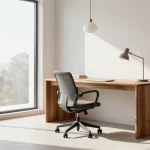
A floating hutch skips the base cabinet entirely and mounts straight to the wall above a narrow desktop. Because the shelf hangs at eye level instead of sitting on the desk, the work surface stays clear for a laptop, a notebook, and a mug, while books, files, and small plants live above. This style suits renters best because many versions attach with removable, weight-rated hooks rather than permanent brackets, so a lease deposit stays safe. Keep the shelf depth under eight inches so it does not crowd a monitor, and leave at least 14 inches between the desktop and the bottom of the shelf for lamp clearance. For more no-drill setups that fit a lease agreement, this guide to rental-friendly home office ideas covers wall anchors and mounting options that avoid damage deposits.
2. Corner Desk Hutch for Odd Angles
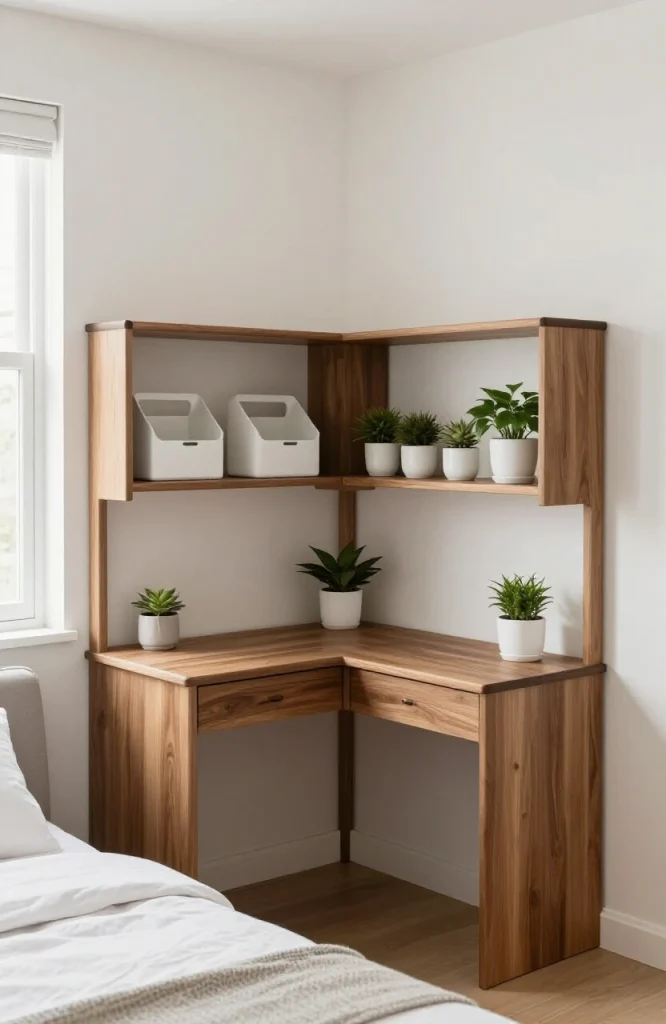
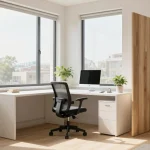
Corners in small bedrooms and home offices often sit unused because standard furniture cannot fill an angled gap. A corner hutch desk solves this by wrapping shelving around the inside angle of the room, which claims space that a straight desk would waste. Look for a design with staggered shelf depths, shallow near the front for a monitor and deeper toward the back corner for binders and supplies. Measure the wall length on both sides of the corner before ordering, since even a two-inch miscalculation can leave the unit crooked against the baseboard. This style works especially well in small bedrooms where the desk needs to share a wall with a bed frame or dresser.
3. Open Shelf Hutch for a Light, Airy Look
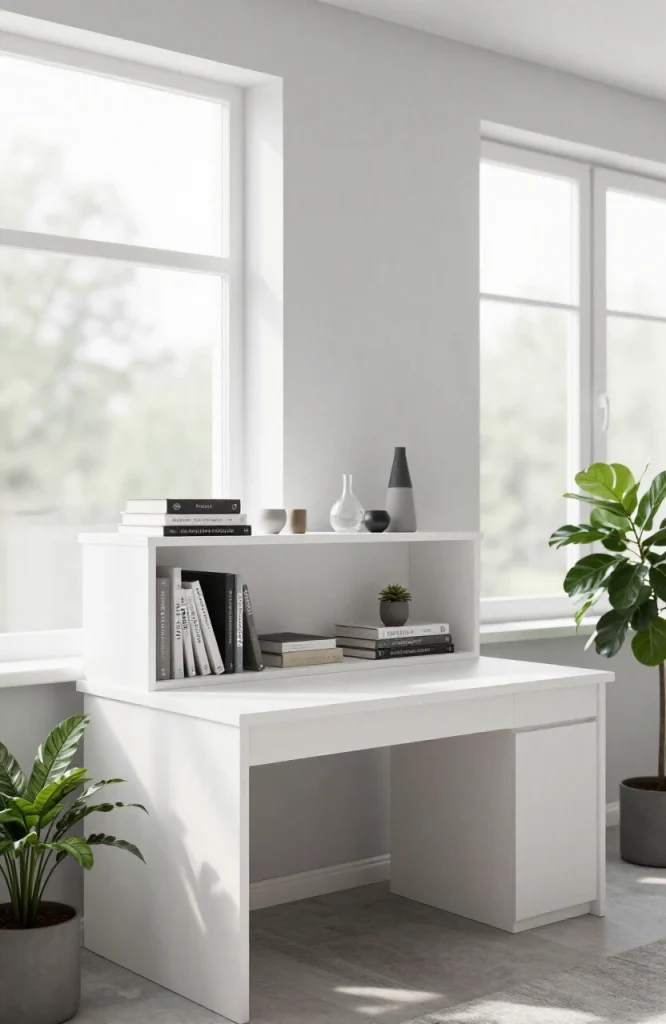
An open shelf hutch has no doors or drawers, just horizontal boards stacked above the desk surface. Because there is nothing to close, the eye reads the whole wall as one connected piece rather than a bulky cabinet, which makes a small room feel taller instead of tighter. This style rewards a bit of discipline, since every book, frame, and folder stays visible, so items need to stay tidy and grouped by color or size. Pair it with a few matching storage boxes on the lower shelf to hide smaller supplies without blocking the open feel. Anyone building a similar shelving wall elsewhere in the home can pull more layout ideas from this collection of bookshelf ideas for small rooms.
4. Closed-Cabinet Hutch for Hiding Clutter
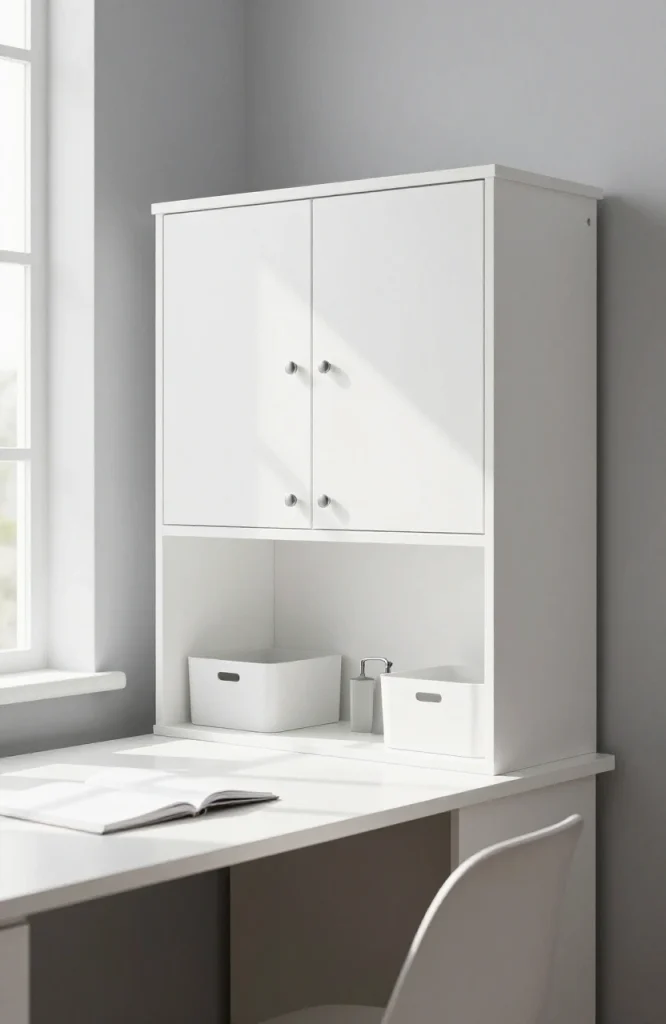
A closed-cabinet hutch swaps open shelves for small doors, which suits anyone who wants a tidy wall without sorting through supplies daily. As one professional organizer who works with small-space clients puts it, “a hutch only earns its spot if the top third holds what you touch every day and the rest stays out of sight.” That principle applies directly here: keep printer paper, chargers, and reference binders behind the doors, and reserve the open cubby or top shelf for the items used most, like a planner or a small lamp. Choose doors with a recessed pull rather than a protruding knob, since a small room has less margin for a knob catching a sleeve or bag strap while walking past.
5. Ladder-Style Hutch with a Leaning Frame
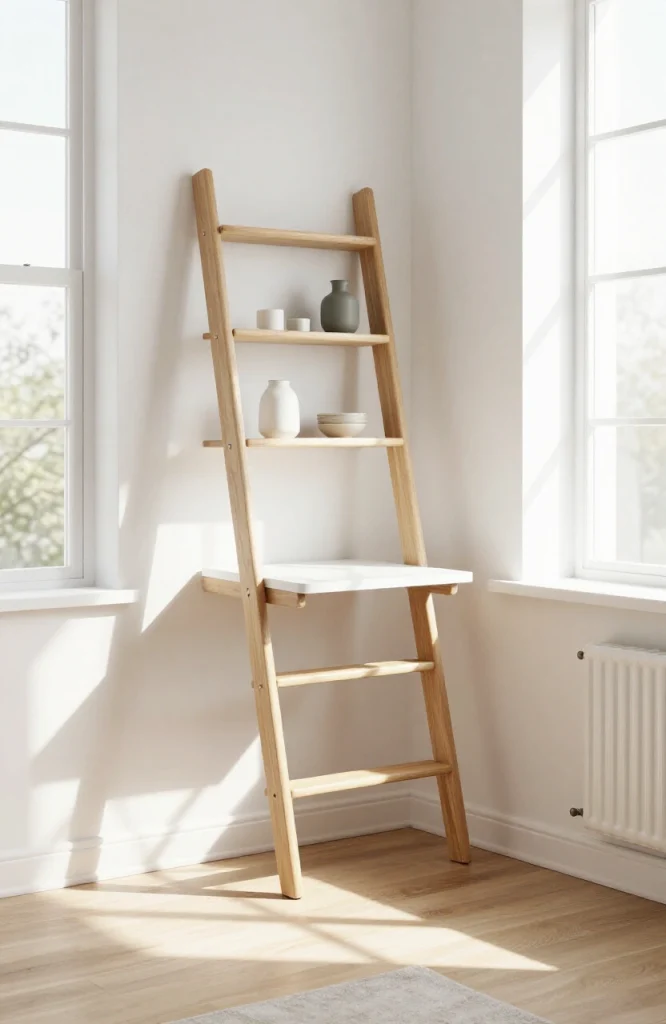
A ladder-style hutch leans against the wall rather than bolting to it, with a slim desktop built into one of the lower rungs. This design suits apartments where drilling is not allowed and floor space is tighter than wall space, since the frame takes up only the depth of the shelves themselves, often under 12 inches. The angled silhouette also reads as furniture rather than storage, which helps a small bedroom or studio feel less like an office. Check the manufacturer’s weight rating for the desktop rung specifically, since ladder frames distribute weight differently than a boxed cabinet and can flex under a heavy monitor arm.
6. Vintage Secretary Desk with a Drop-Leaf Hutch
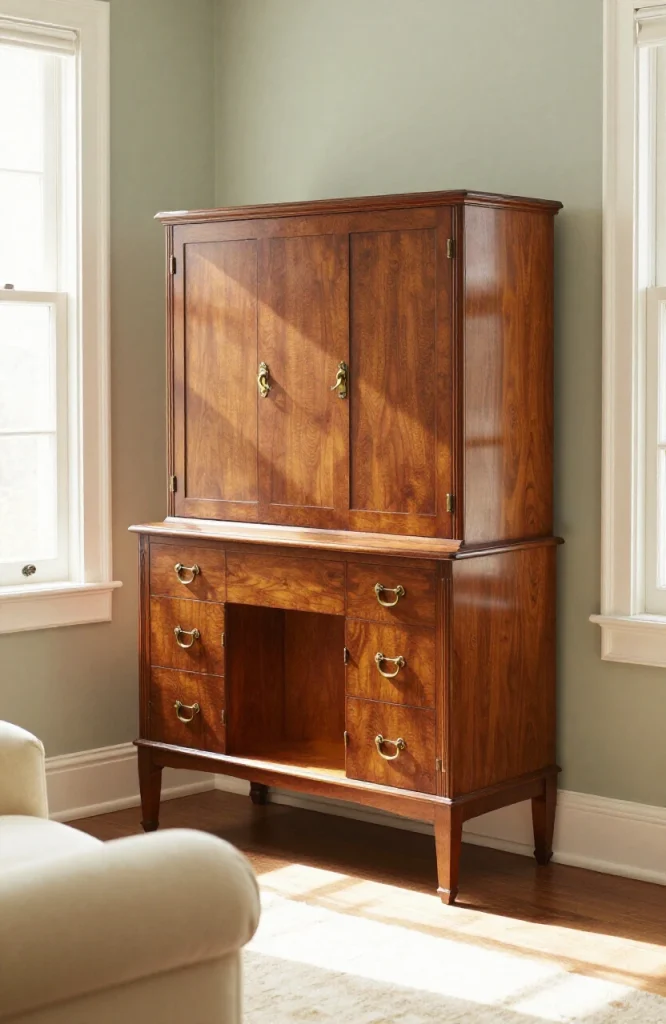
A secretary desk pairs a fold-down writing surface with a hutch of small drawers and cubbies above it, and the whole piece closes flat when not in use. This combination suits a shared living room or a guest bedroom that needs an occasional workspace without a permanent desk taking up floor area. The drop-leaf front hides pens, mail, and loose papers the moment the desk closes, so the room resets to its non-office look in seconds. Original antique versions often have narrower leg clearance than modern desks, so measure knee depth before buying if the desk needs to fit a laptop stand or an external keyboard.
7. Repurposed China Cabinet Turned Desk Hutch
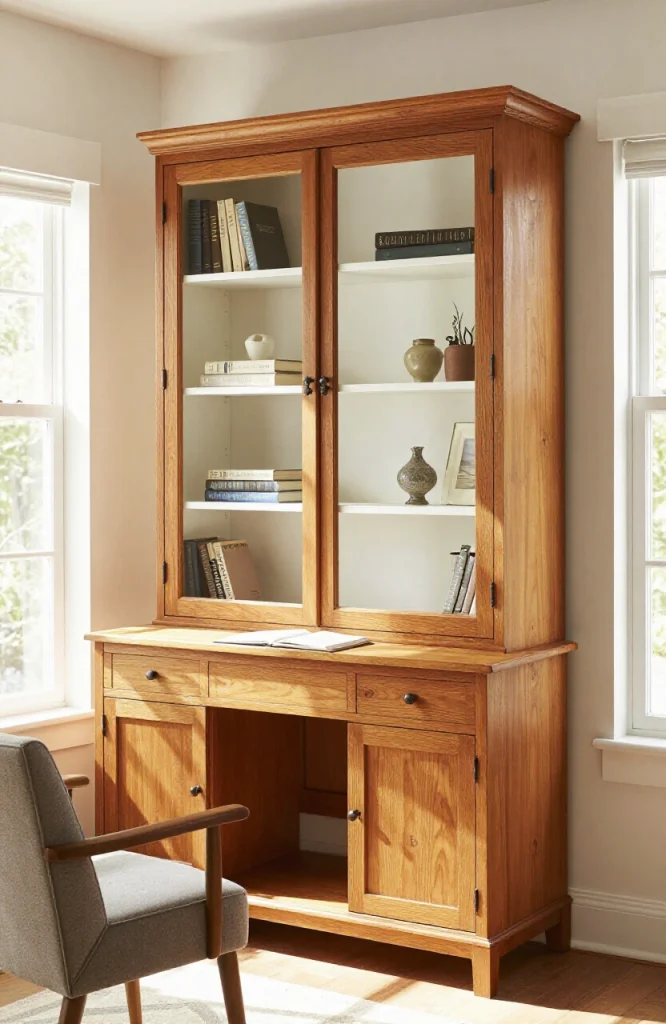
An old china cabinet or pantry hutch can convert into a compact desk by shortening the lower shelving and adding a cut desktop at seated height. This route works well for anyone who wants a piece with more visual character than a flat-pack desk, since the glass-front upper cabinets and molded trim already carry a finished look. Sand and refinish the interior shelves if the original paint or stain has worn thin, and confirm the depth allows at least 18 inches of knee room once the desktop sits at standard desk height, around 28 to 30 inches from the floor.
8. Stacked Two-Tier Hutch for Narrow Desks
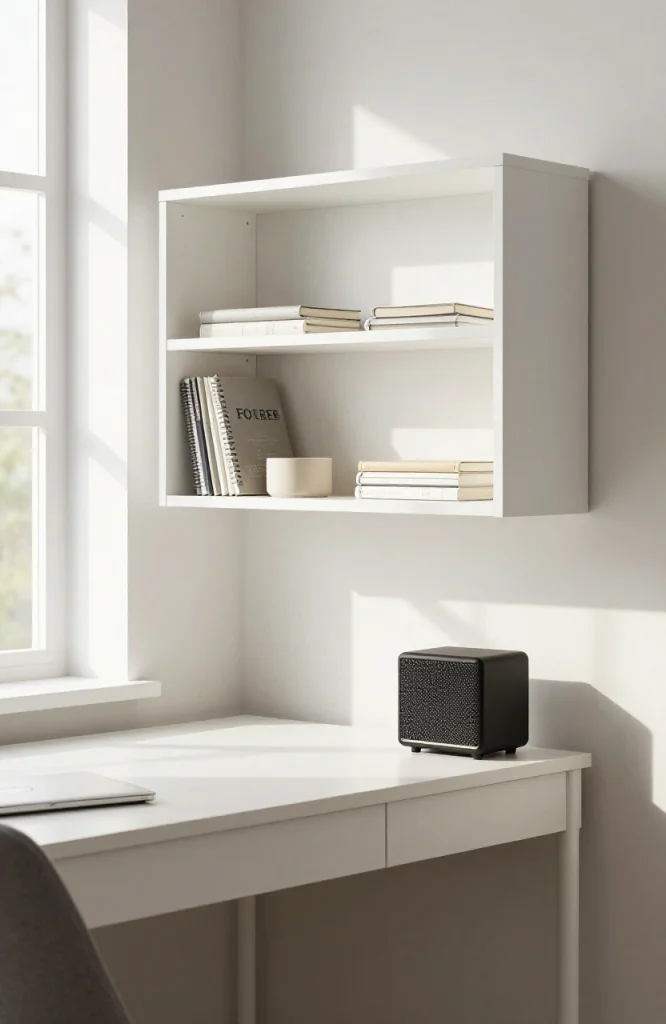
A two-tier hutch splits storage into a lower shelf just above the desktop and a second shelf higher up, rather than one tall block. This layout keeps daily items like a notebook or a small speaker within easy reach on the lower tier, while books and decor sit on the upper tier out of the way. Narrow desks under 36 inches wide benefit most from this split, since a single deep hutch on a narrow desk can feel like it is closing in on the work surface. Leave a visible gap of at least four inches between the two tiers so the wall still shows through and the stack does not read as one solid block.
9. Pigeonhole and Cubby Hutch for Paper Storage
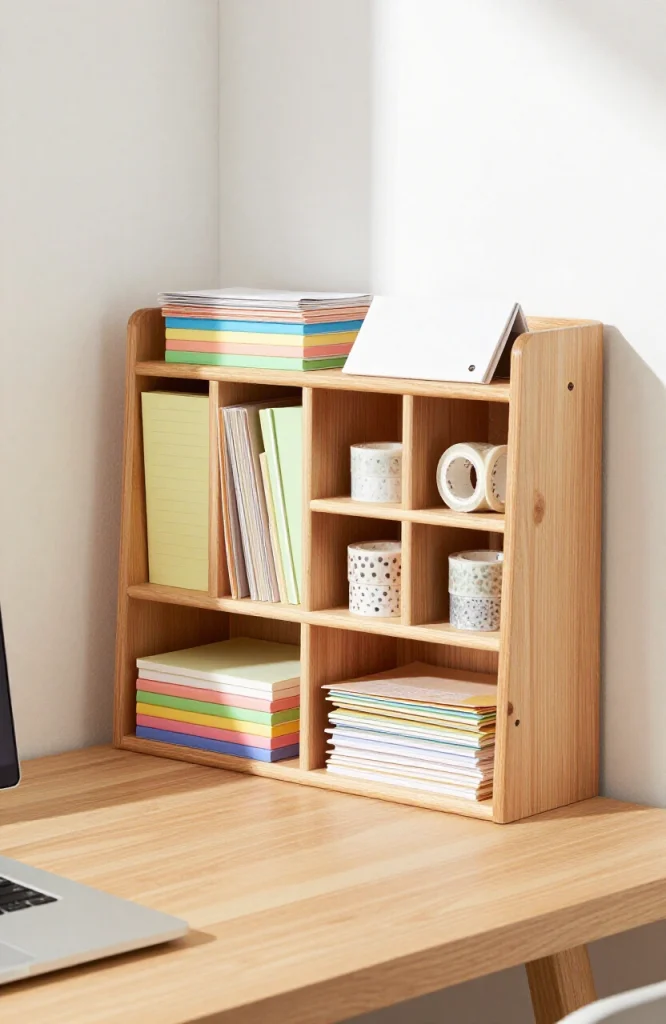
A pigeonhole hutch breaks the shelf area into a grid of small square or rectangular compartments, each one sized for a stack of mail, a notepad, or a roll of washi tape. This layout suits anyone who handles paper daily, since sorting by cubby beats a single open shelf where papers slide together into one pile. Label each cubby, even with a small removable tag, so the system stays sorted after a busy week instead of drifting back into a single mixed stack. Keep the largest cubbies at eye level for items pulled out often, and reserve the smaller top or bottom compartments for supplies used only occasionally.
10. Under-Shelf LED Hutch for Task Lighting
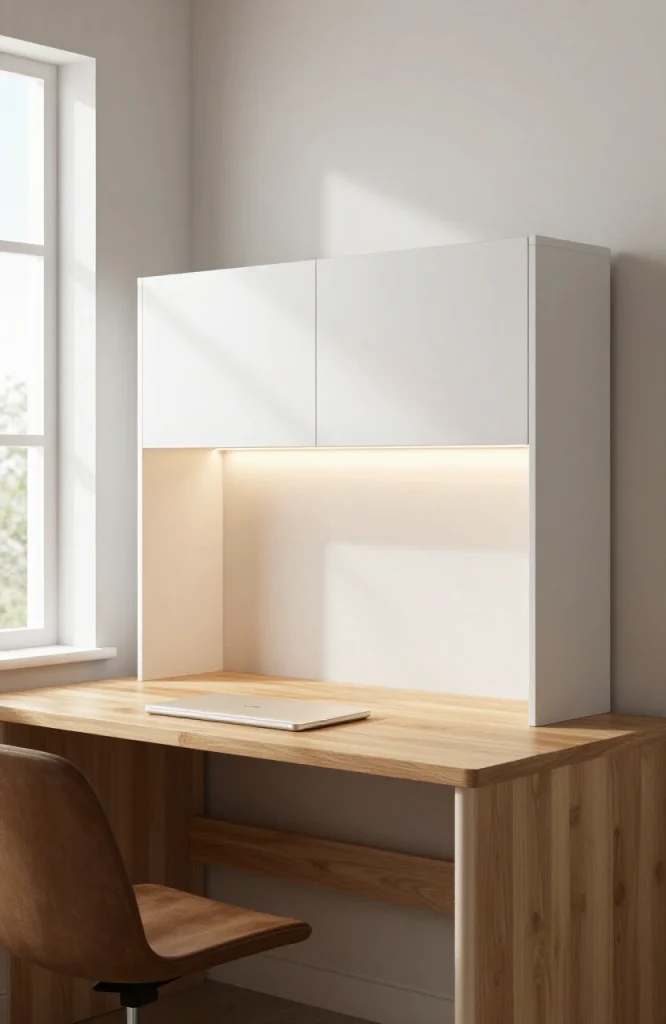
Adding a thin LED strip under the bottom shelf of a hutch puts even light directly on the desktop without the glare of an overhead fixture. This upgrade matters most in small rooms with only one window or a single ceiling light, since a hutch can otherwise cast a shadow over the exact spot where a laptop or notebook sits. Choose a warm white LED strip around 2700 to 3000 Kelvin for comfortable evening work, and run the cord along the inside edge of the shelf so it stays out of view. A plug-in strip with a small dimmer switch avoids any wiring work and suits rental rooms as well as owned homes.
11. DIY Add-On Hutch You Build Yourself
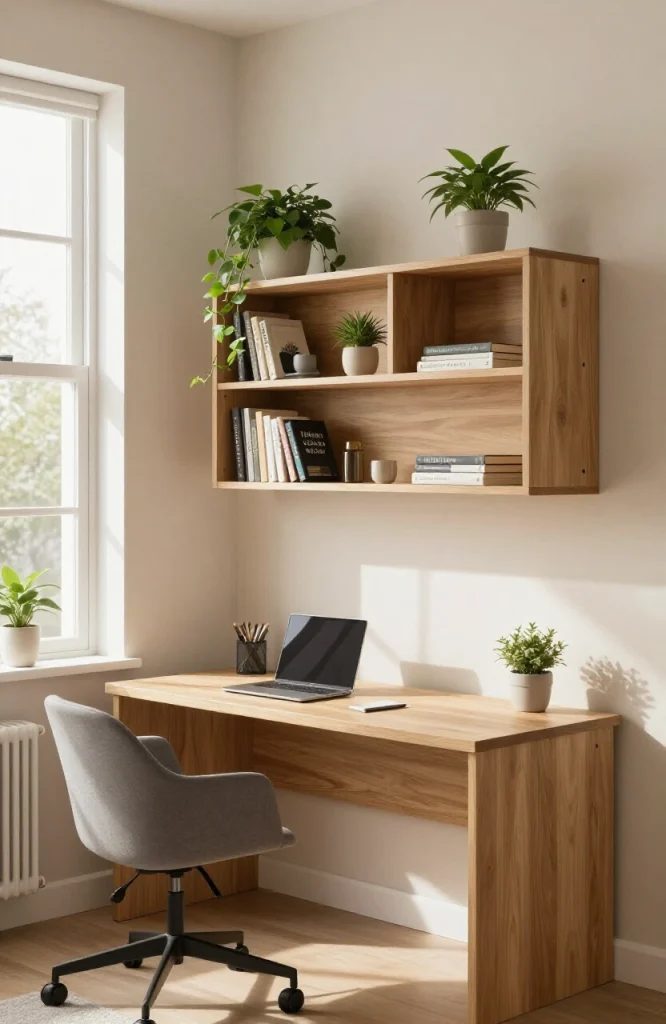
A simple add-on hutch built from a few boards can attach to almost any existing desk, which makes it one of the more budget-friendly ways to add storage without replacing furniture already in place. A basic version needs only two side boards, a top board, and a shelf, assembled with pocket screws or a brad nailer, then secured to the back edge of the desk. Building the frame first as a separate unit, then attaching it to the desktop afterward, makes it far easier to adjust the width for an odd-sized desk before committing to permanent screws. Sand and paint the boards to match the existing desk finish so the addition looks built-in rather than added on.
12. Pegboard-Back Hutch for Flexible Storage
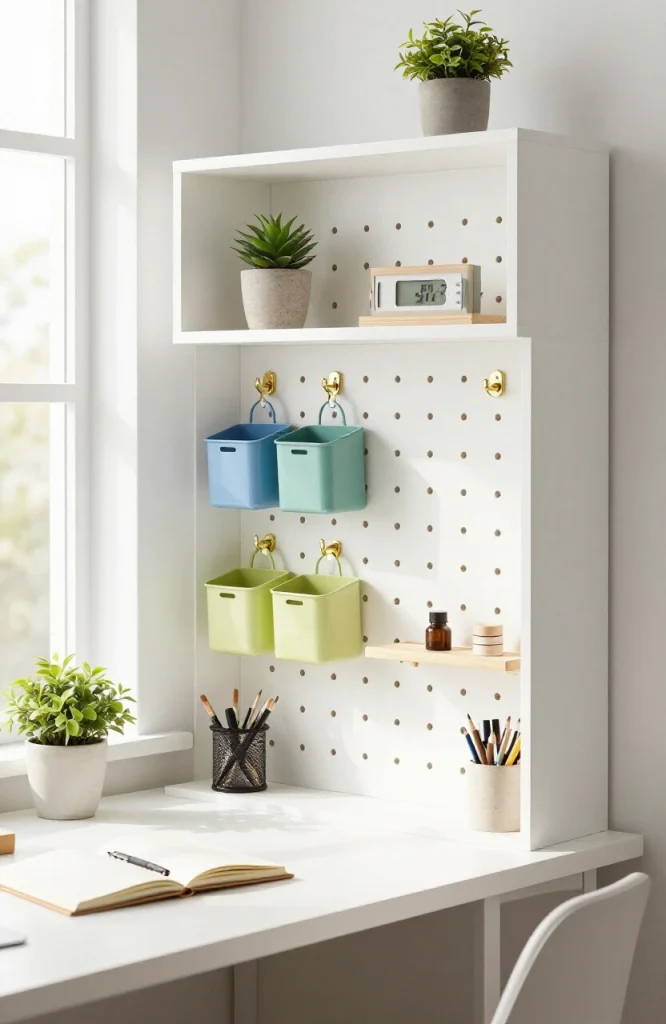
Swapping a solid back panel for a pegboard turns the hutch into a flexible grid where hooks, small shelves, and bins move around as needs change. This works especially well for anyone who switches projects often, since a pegboard adapts without new holes or hardware every time storage needs shift. Paint the pegboard to match the wall color so it reads as a design choice rather than a garage leftover, and space hook rows evenly so cords, scissors, and small containers hang without crowding each other. A pegboard back also keeps the desk surface clear, since supplies that would normally sit in a desk organizer can hang instead.
13. Tall Narrow Bookcase Hutch for Small Bedrooms
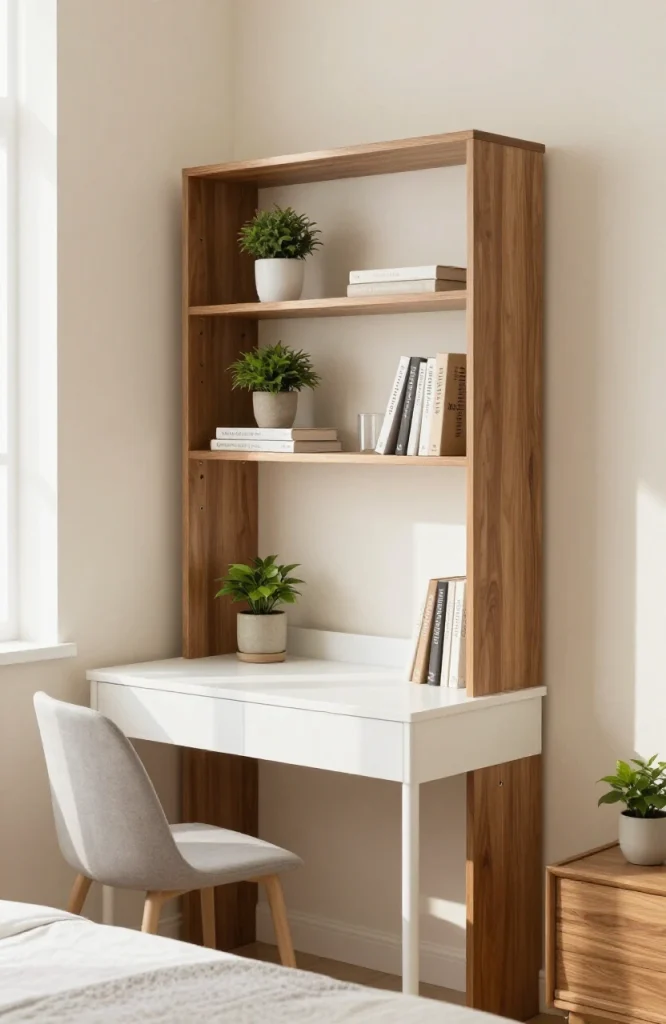
A tall, narrow bookcase placed directly beside or behind a small desk works as an informal hutch, especially in a bedroom where a built-in unit is not an option. This approach suits vertical rooms with high ceilings but a small floor footprint, since the bookcase climbs upward rather than spreading outward. Keep frequently used books and supplies on the middle shelves within easy reach, and reserve the top shelves for décor or items pulled out only a few times a year. A narrow depth of 10 to 12 inches keeps the piece from crowding a desk chair when pushed in.
14. Compact Dorm Desk Hutch
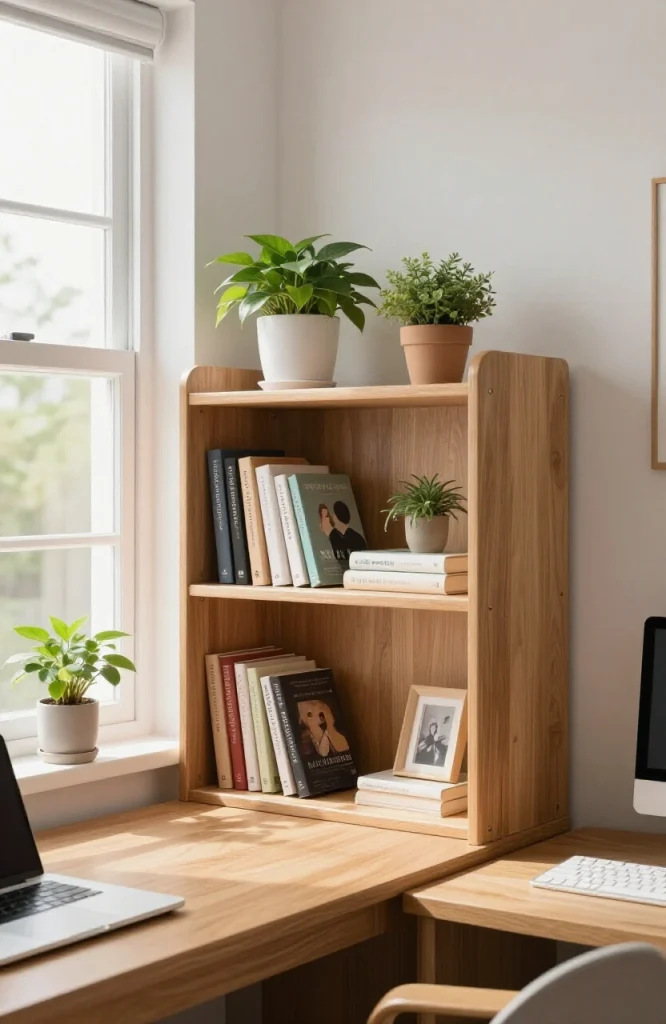
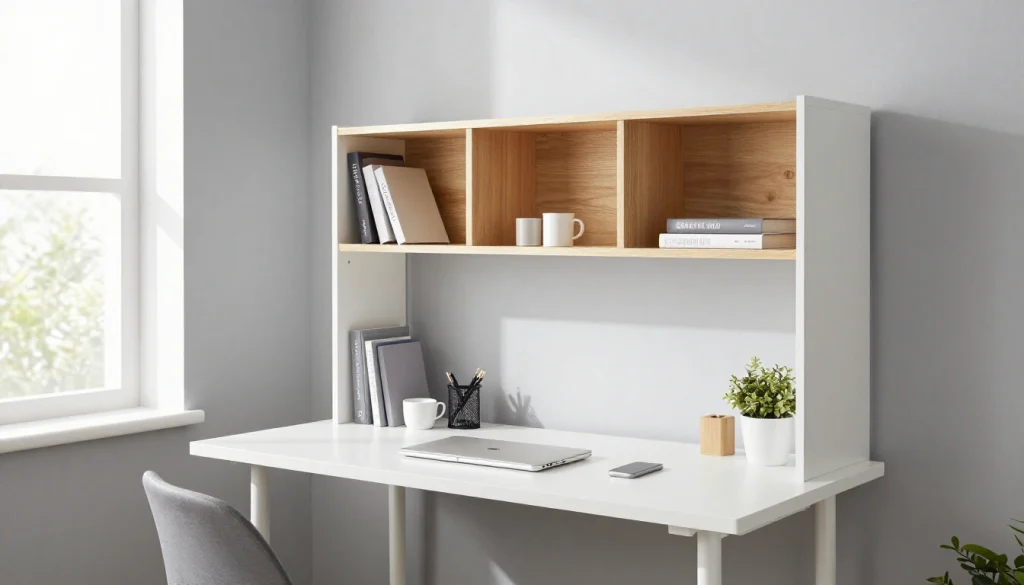
A dorm room desk usually comes with fixed dimensions and no option to swap the base furniture, so a compact hutch built to sit on top of the existing desk solves the storage gap without needing university approval for a new piece. A simple stacked-shelf design, often just five boards assembled into an open frame, adds book storage and a spot for a small desk organizer without taking over the whole desktop. This setup suits students who move every year, since a lightweight hutch can travel between rooms far more easily than a built-in unit. For more setups sized specifically for shared student housing, this guide to dorm room decorating ideas covers desk styling alongside other small-space solutions.
15. Cable-Management Hutch for a Clean Setup
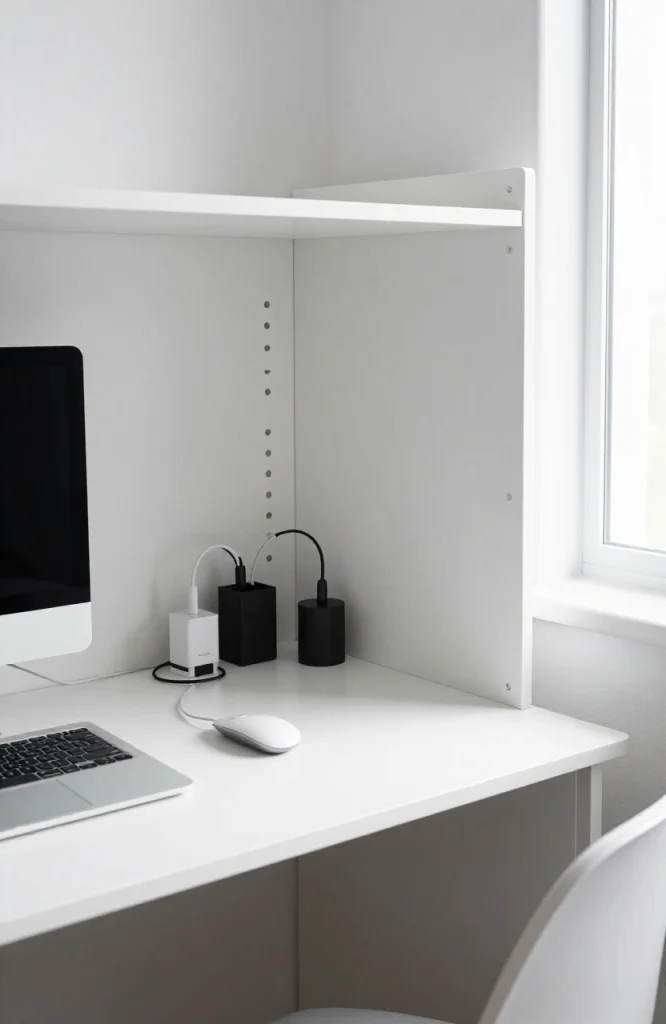
A hutch with a built-in channel or grommet hole for cords keeps a laptop charger, a monitor cable, and a desk lamp cord from tangling across the desktop. This detail matters more in small rooms, where visible cords are harder to hide behind furniture the way they might disappear in a larger office. Route cords through the back panel of the hutch and down to a small power strip mounted underneath the desk, rather than letting them run across the front of the shelf. A cable clip or two along the inside edge keeps everything in place even after the desk gets rearranged.
16. Fold-Down Murphy Hutch for Tiny Rooms
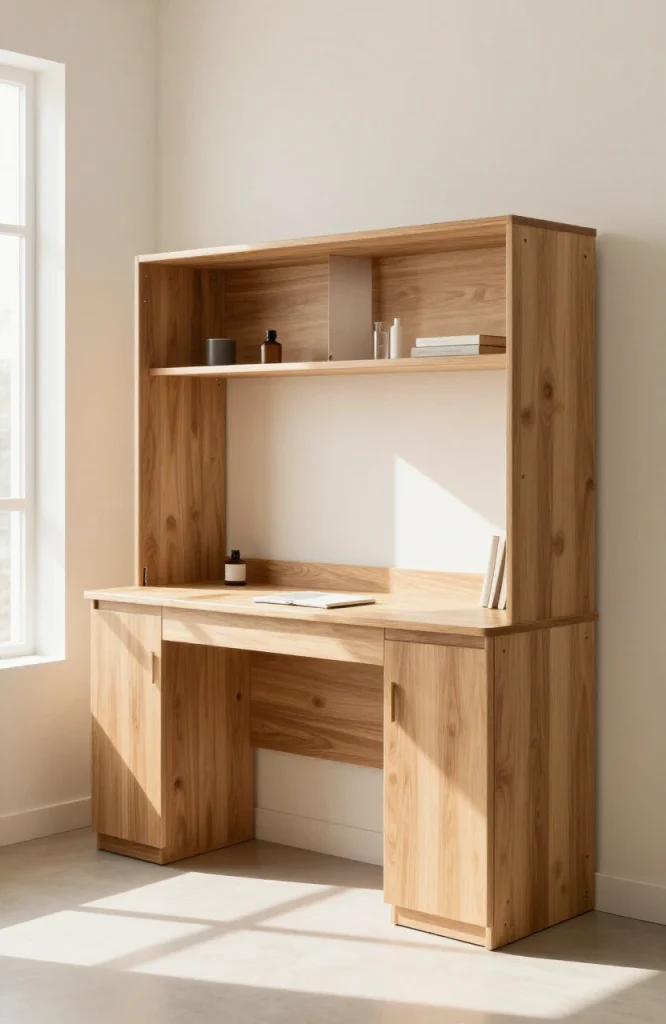
A fold-down or Murphy-style hutch folds flat against the wall when not in use, then opens into a full desk with a small shelf unit above it. This solves the biggest problem in a very small room, which is that a permanent desk and hutch can eat up floor space needed for other daily activities. Look for a unit with a soft-close hinge so the desktop does not slam when folding shut, and confirm the wall behind it can support the mounting hardware, since these units carry more weight than a simple floating shelf. This style suits studio apartments and multi-purpose rooms where the desk needs to disappear at the end of the workday, an idea that pairs well with the layout tips in this piece on defining a home office nook inside an open floor plan.
Conclusion
The best small desk hutch for one room rarely fits another, since a rental studio, a shared dorm room, and a fixed home office all come with different rules around drilling, floor space, and daily storage needs. Start by ruling out what will not work, no drilling for a rental, no floor space for a small bedroom, no permanent fixture for a shared room, and the list above narrows quickly to two or three realistic options. From there, measure the exact wall or desk width before ordering or building, since even a well-designed hutch feels wrong if it overhangs the desktop or crowds a doorway. Whichever option fits the room, the goal stays the same: more storage without losing the small amount of floor space a compact desk already works hard to save.