
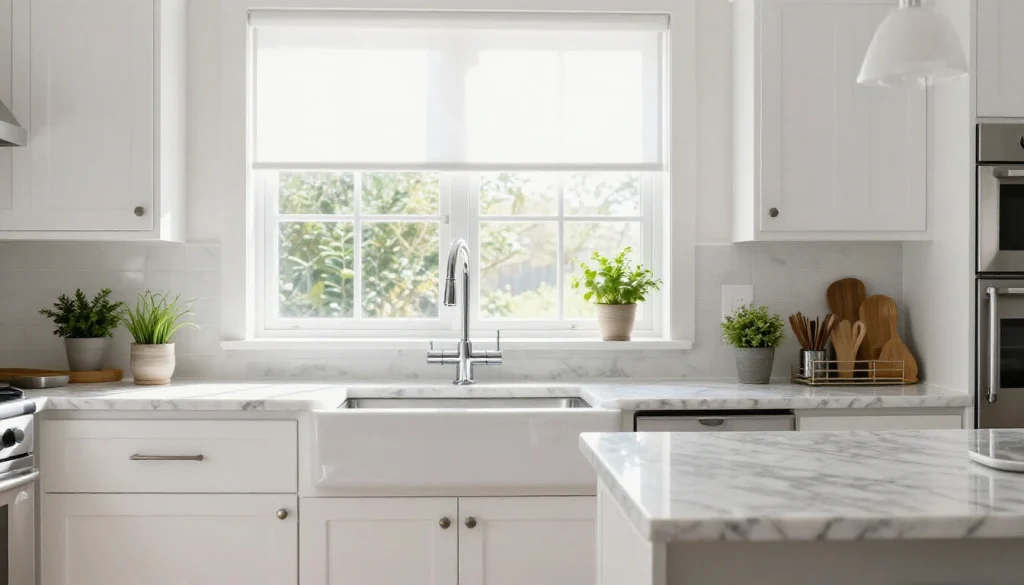
Kitchen windows work harder than almost any other window in the house. They face steam, grease splatter, direct sunlight, and the need for privacy, all at the same time. Choosing the right window treatment for a kitchen means balancing light control, moisture resistance, easy cleaning, and a style that fits the room. I’ve spent years helping homeowners with interior updates, and the 40 kitchen window treatment ideas below cover every kitchen style, window size, and budget, so you can find what actually works for your space.
1. Café Curtains

Café curtains cover only the lower half of the window, which gives you privacy at sink level while keeping the top open for natural light. They work particularly well above a kitchen sink, where you want to see outside without the neighbors seeing in. A simple cotton or linen fabric in a neutral tone keeps them easy to wash and fitting for most kitchen styles.
2. Roman Shades
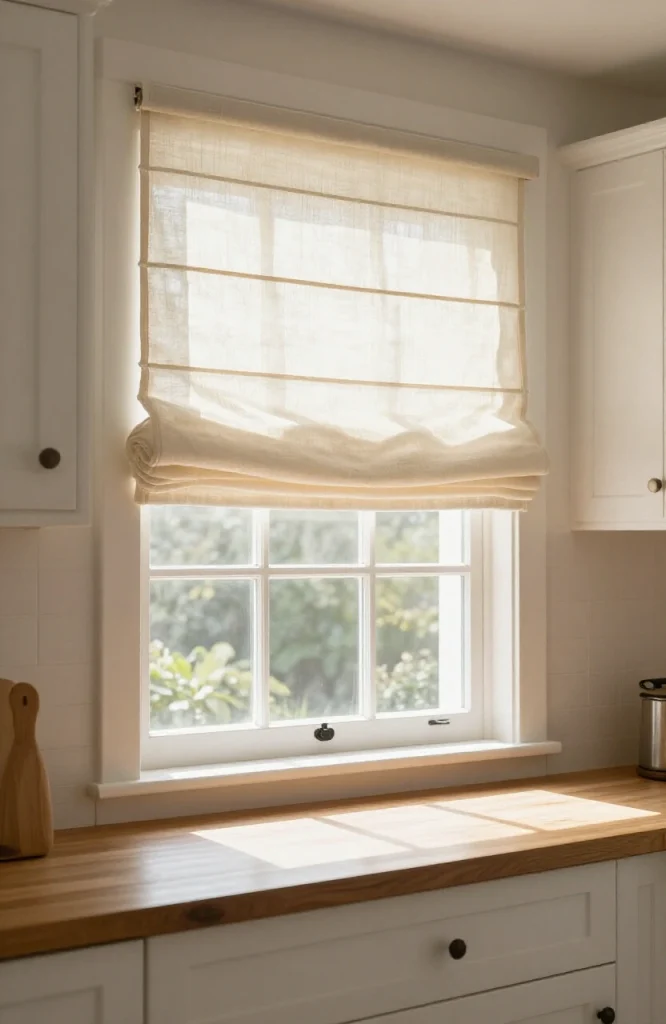
Roman shades fold neatly into horizontal pleats when raised and lie flat when lowered, making them one of the tidiest options for a kitchen. Lightweight fabrics like cotton or a linen blend work best here because they allow diffused light even when the shade is down. Mount them inside the window frame to keep the look clean, especially if your window trim is worth showing off. For more ways to work with your kitchen’s design details, see our guide to Victorian style kitchen ideas.
3. Roller Shades
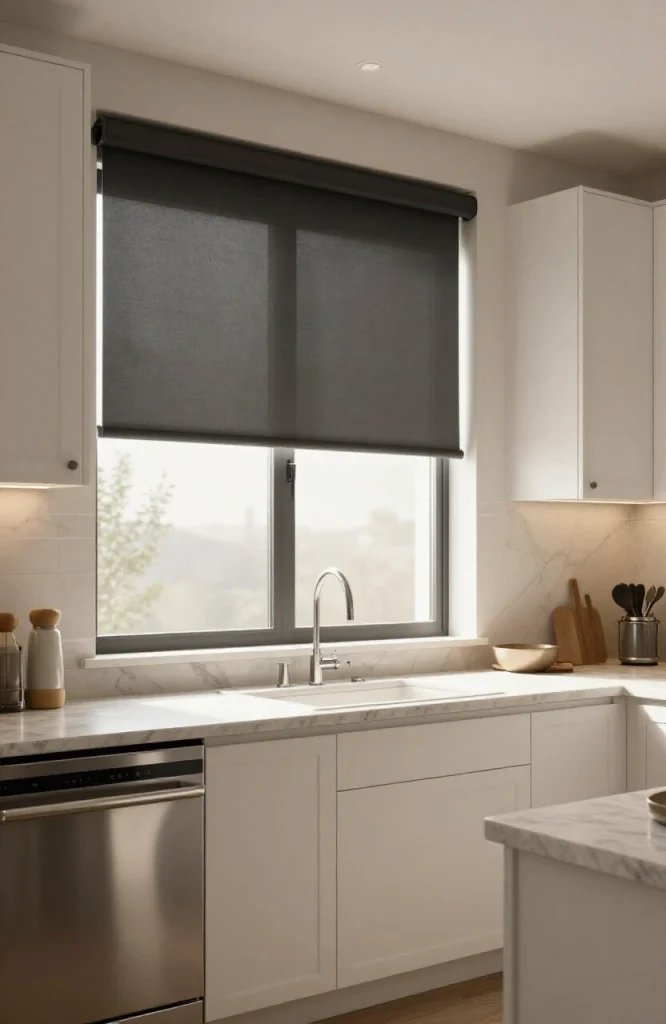
Roller shades are the most low-profile kitchen window treatment available. They sit flush with the window frame, take up minimal visual space, and wipe clean with a damp cloth. Solar roller shades filter UV light while still letting you see outside, which makes them a strong choice for a kitchen that faces direct afternoon sun. Blackout roller shades are available for any kitchen where light control at specific hours matters.
4. Faux Wood Blinds
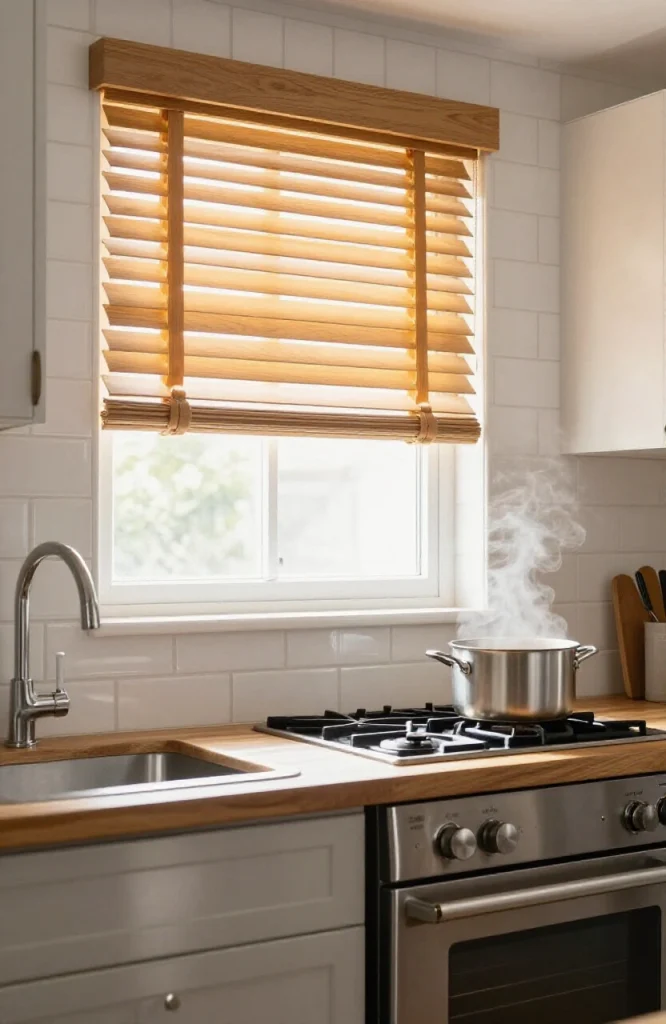
Real wood warps in humidity, which is why faux wood blinds are a smarter choice for the kitchen. They look nearly identical to real wood, clean easily, and hold their shape over years of steam and heat. White faux wood blinds are the most versatile because they suit both light and dark cabinet colors. Tilt the slats to control how much light enters without raising the blinds completely.
5. Plantation Shutters
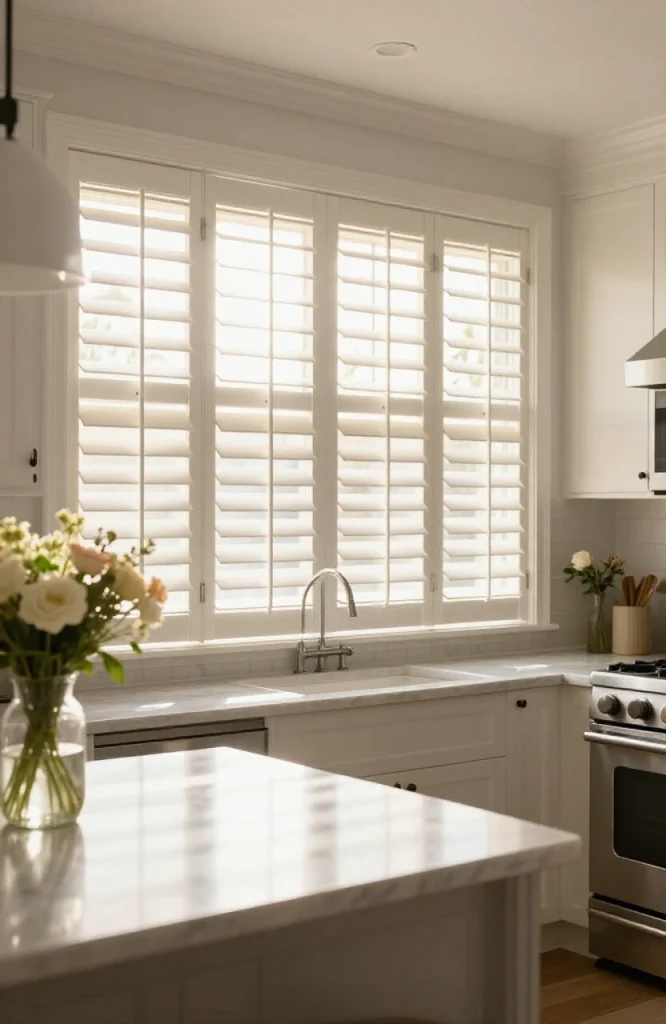
Plantation shutters are a long-term investment that adds both style and function. The wide louvers give precise light control, the solid panels provide real privacy, and the painted or stained finish holds up against kitchen conditions far better than fabric. They suit traditional, transitional, and coastal kitchen styles particularly well. If your kitchen has a window seat or bay window, shutters are one of the few treatments that fit those shapes cleanly.
6. Woven Wood Shades
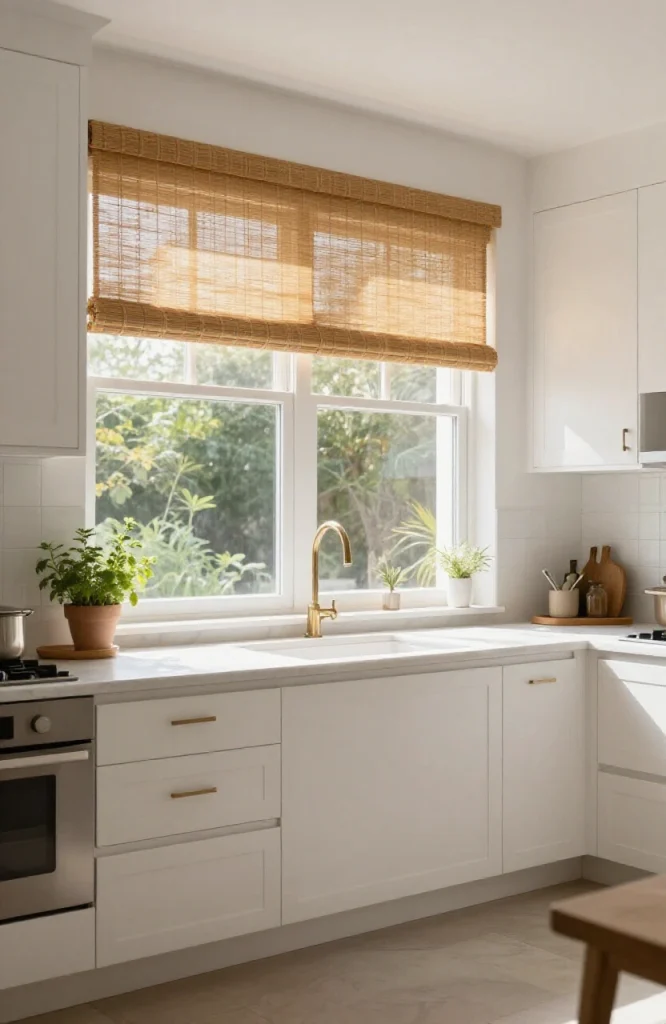
Woven wood shades, sometimes called bamboo or matchstick shades, bring natural texture into a kitchen without looking heavy. They filter light rather than blocking it, creating a warm, diffused glow in the room. They’re best suited for kitchens that don’t get direct water splashing on the window, since natural fiber shades don’t handle moisture as well as synthetic options.
7. Cellular Shades
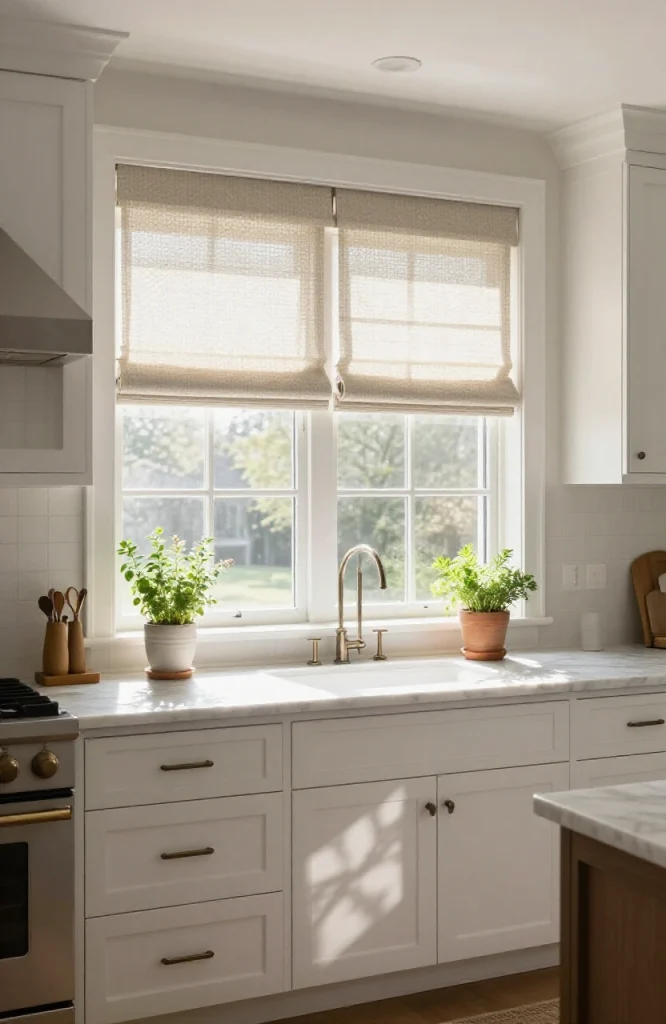
Cellular shades, also known as honeycomb shades, trap air in their pockets to provide insulation. For a kitchen with a drafty window or one that gets intense sun, cellular shades reduce heat gain in summer and heat loss in winter. They come in single-cell, double-cell, and triple-cell options, with double-cell being the best balance of insulation and price for most kitchens.
8. Sheer Curtain Panels
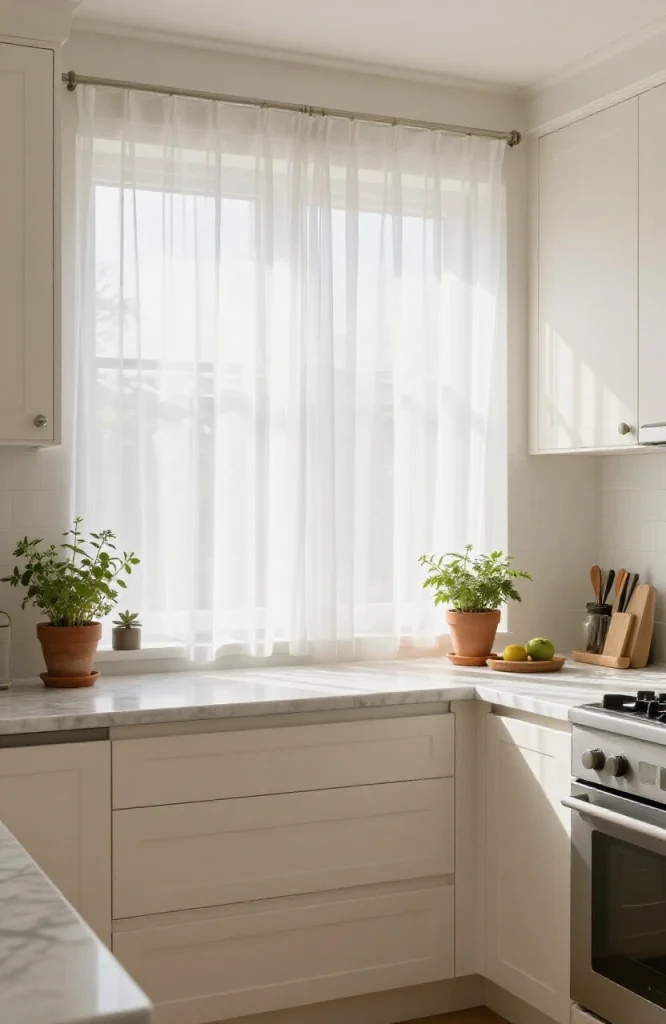
Sheer panels soften the look of a kitchen window while allowing diffused natural light to fill the room. They work well in kitchens where privacy is not a major concern, such as windows facing a backyard or garden. Pair sheer panels with a simple rod in a matte metal finish to keep the look from feeling too formal. White, ivory, and soft gray are the most practical colors for sheers in a kitchen because they are easy to bleach clean.
9. Valance Only
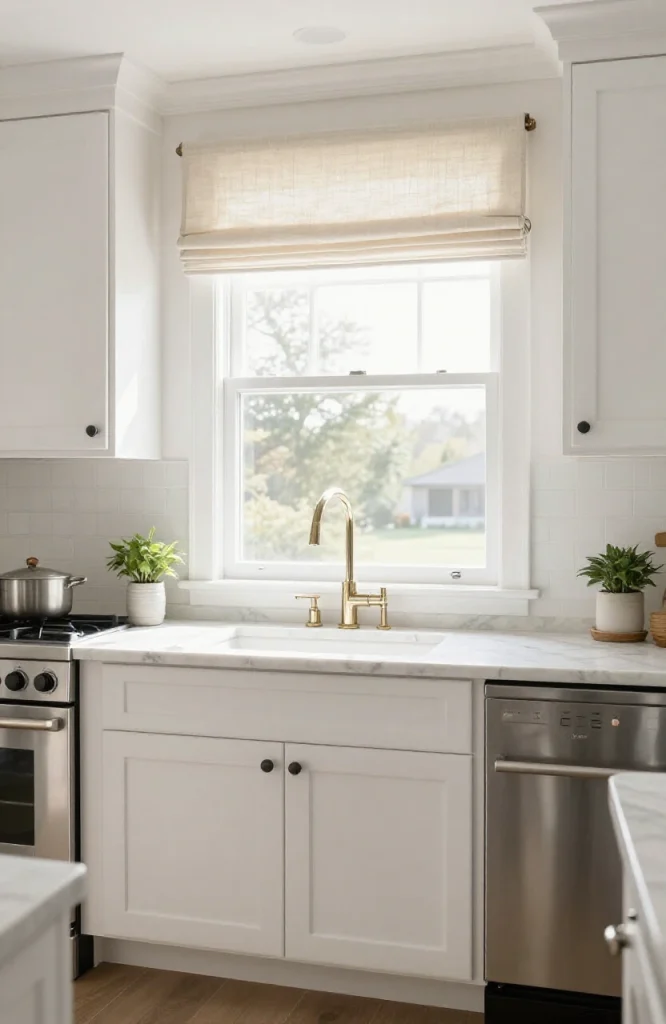
A valance covers just the top of the window and leaves the rest open. This works in kitchens where privacy is not needed and you want to let in as much light as possible, such as a window high on the wall or one facing a private yard. A box pleat valance in a solid fabric reads clean and modern. A gathered valance in a small print is more suited to a farmhouse or cottage kitchen style.
10. No Treatment (Bare Window)
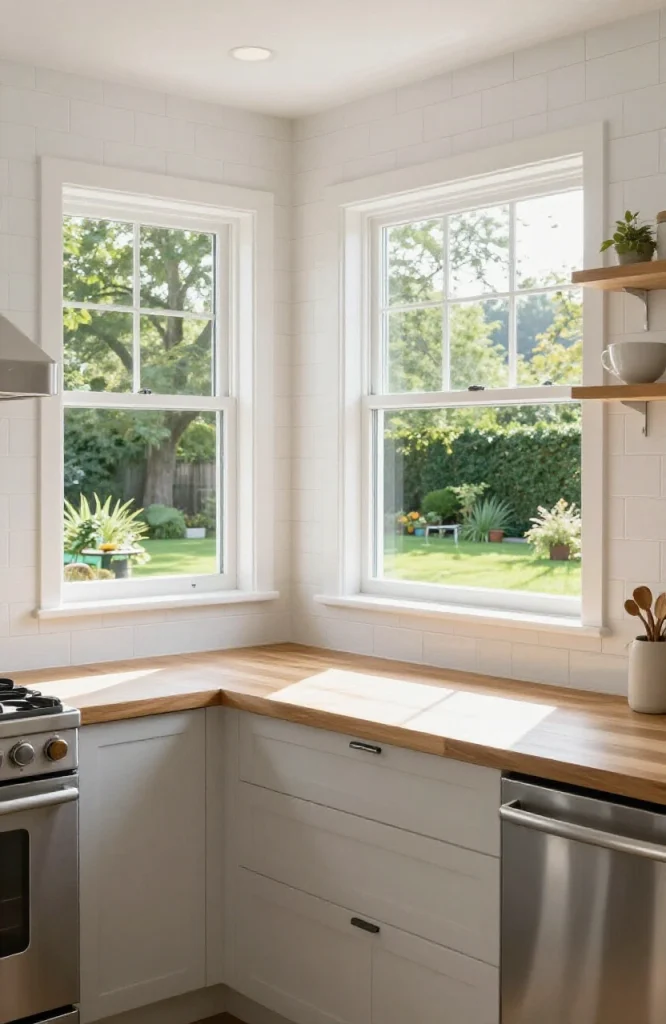
Leaving a kitchen window bare is a valid choice, particularly when the view is attractive or the window itself is a design feature. This works best for windows that face a private exterior and where natural light is prioritized over privacy. If your window hardware and trim are well finished, a bare window can look deliberate and polished rather than unfinished.
11. Linen Curtain Panels
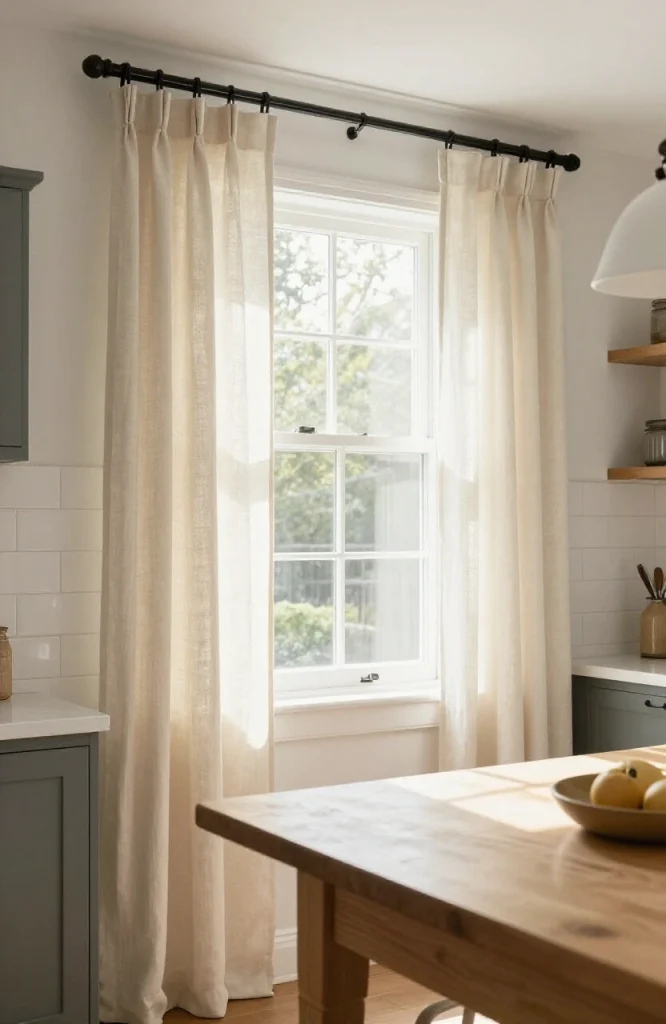
Full linen panels hung on a simple rod give a kitchen an easy, relaxed quality that suits farmhouse, Scandinavian, and transitional styles. Linen handles moisture and washing well, and it softens naturally over time in a way that looks intentional. Keep the rod mounted close to the ceiling to draw the eye upward and make the kitchen feel taller. For open-plan kitchens, linen panels can also help define the kitchen zone visually. See how other homeowners handle this in our open floor plan decoration ideas.
12. Tie-Top Curtains
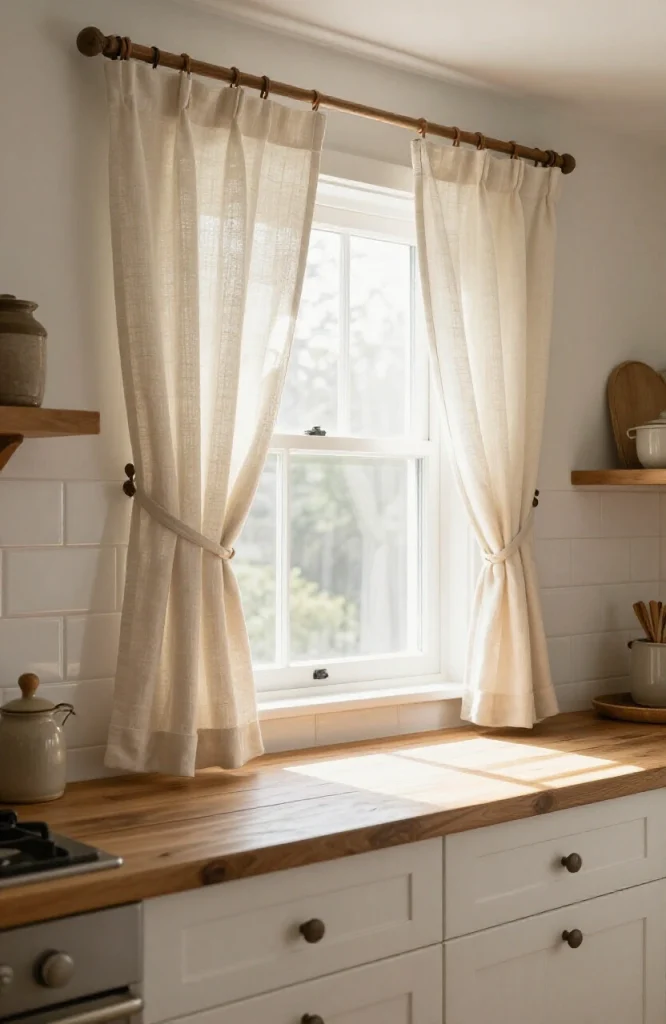
Tie-top curtains have fabric ties that loop directly over the rod, which creates a casual, relaxed header. They suit kitchens with a cottage, farmhouse, or rustic aesthetic. The fabric bunches slightly between the ties when hung, which adds texture without a heavy look. A medium-weight cotton or linen in a simple pattern holds its shape well in this style.
13. Tab-Top Curtains
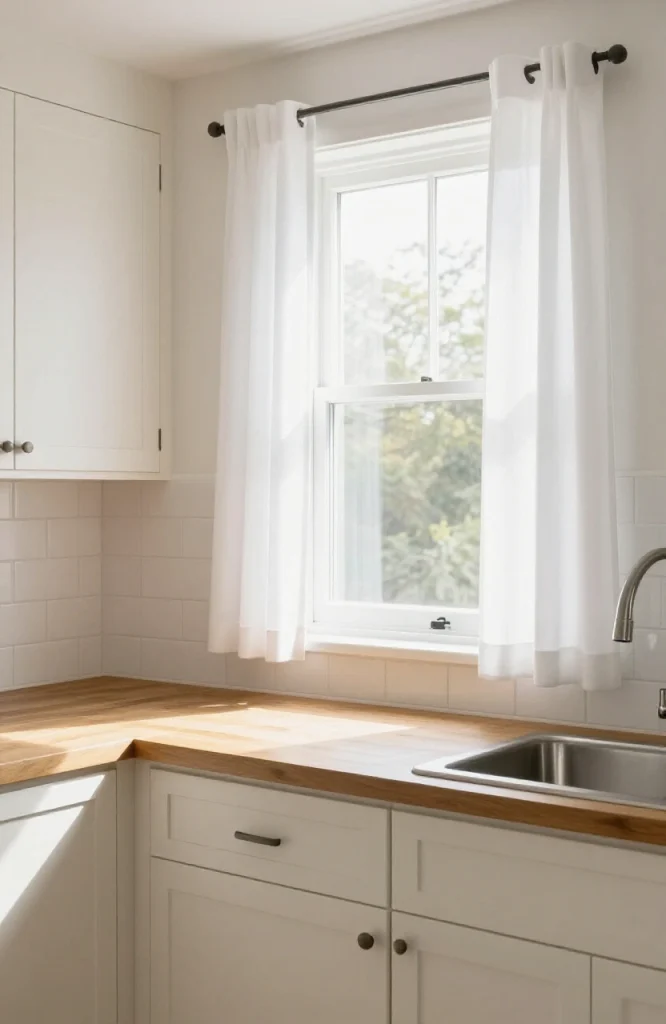
Tab-top curtains use fabric loops sewn directly onto the top of the panel. They have a slightly more structured look than tie-tops and slide along the rod easily for opening and closing. For a kitchen, choose a fabric that launders well, since kitchen curtains pick up grease and cooking smells faster than curtains in other rooms.
14. Grommet Curtains
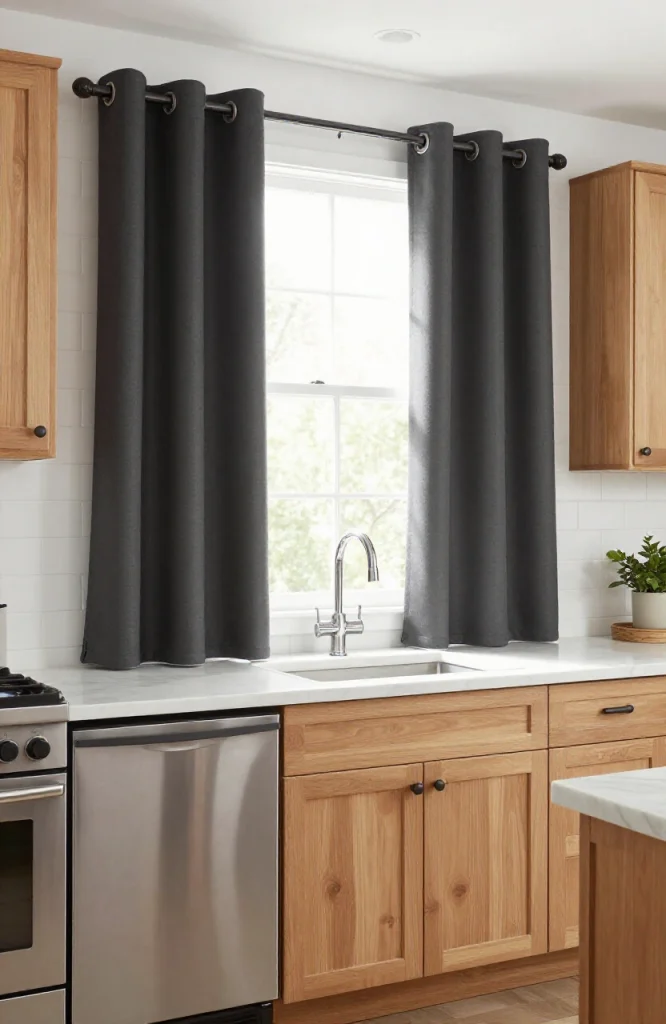
Grommet curtains have metal rings punched through the top of the fabric that slide directly over the curtain rod. They open and close smoothly and create uniform, even folds. For a kitchen, a medium-weight grommet curtain in a solid color or subtle pattern keeps the look clean. Brushed nickel or matte black grommets work with most kitchen hardware finishes.
15. Pinch Pleat Curtains
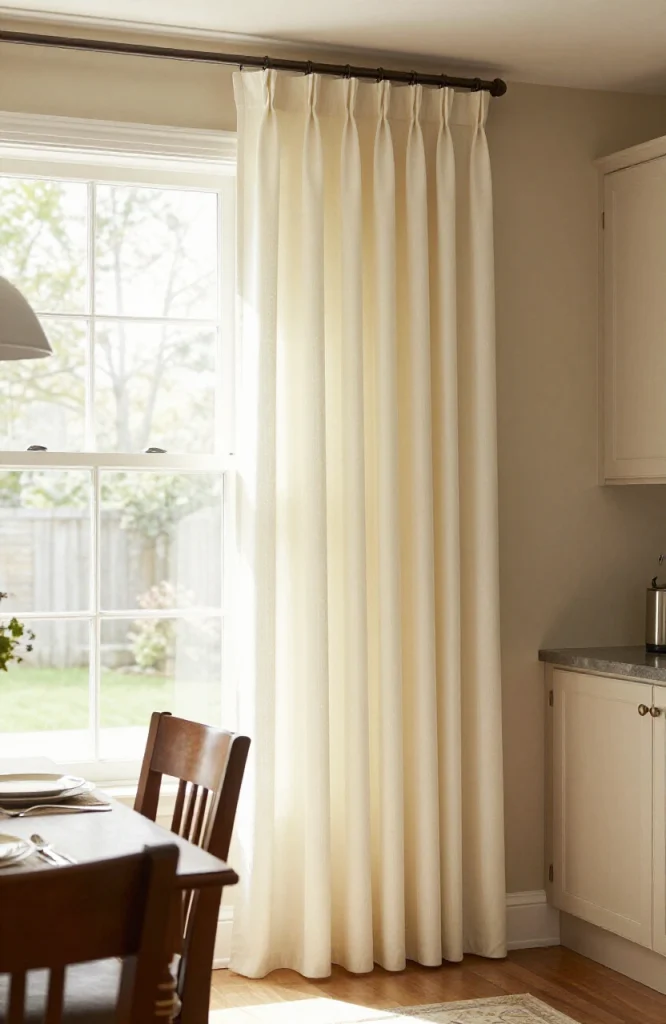
Pinch pleat curtains have a more tailored look than grommet or tab-top styles. The pleats are sewn at the top and hang in defined, even folds. They suit traditional or formal kitchen-dining spaces more than casual everyday kitchens. If your kitchen opens to a dining room with more formal decor, pinch pleat panels on the kitchen windows can help the two spaces feel connected.
16. Motorized Shades
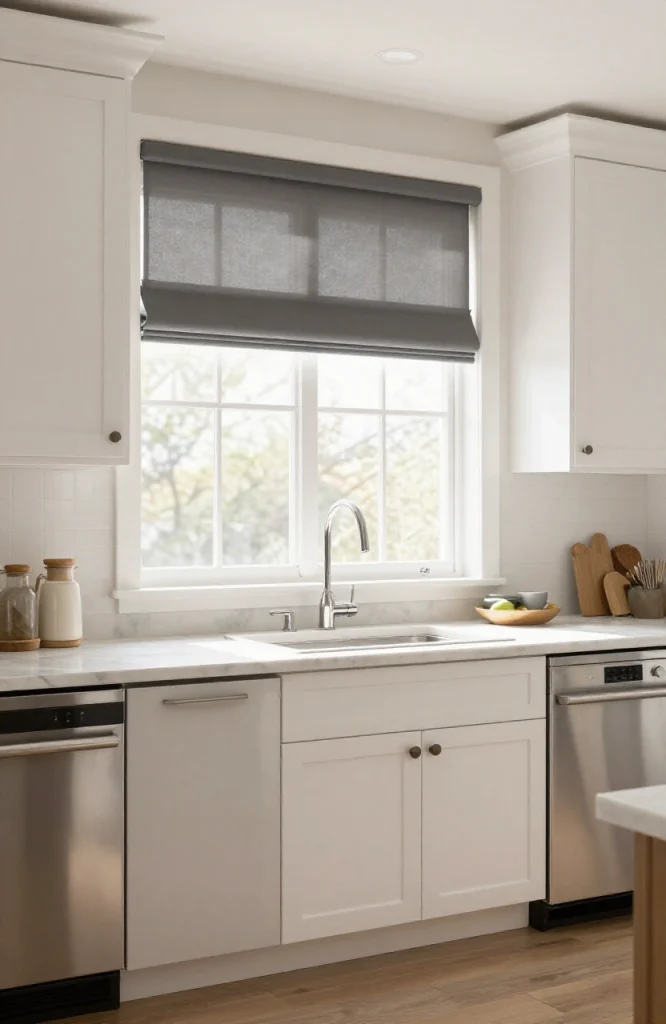
Motorized shades let you raise and lower window coverings with a remote, an app, or a voice command. This is particularly useful for kitchen windows that are difficult to reach, such as those above a deep countertop or a kitchen sink where you don’t want to lean forward over dishes to adjust the blind. Most roller shade and cellular shade brands now offer motorized versions at a range of price points.
17. Layered Shades and Curtains
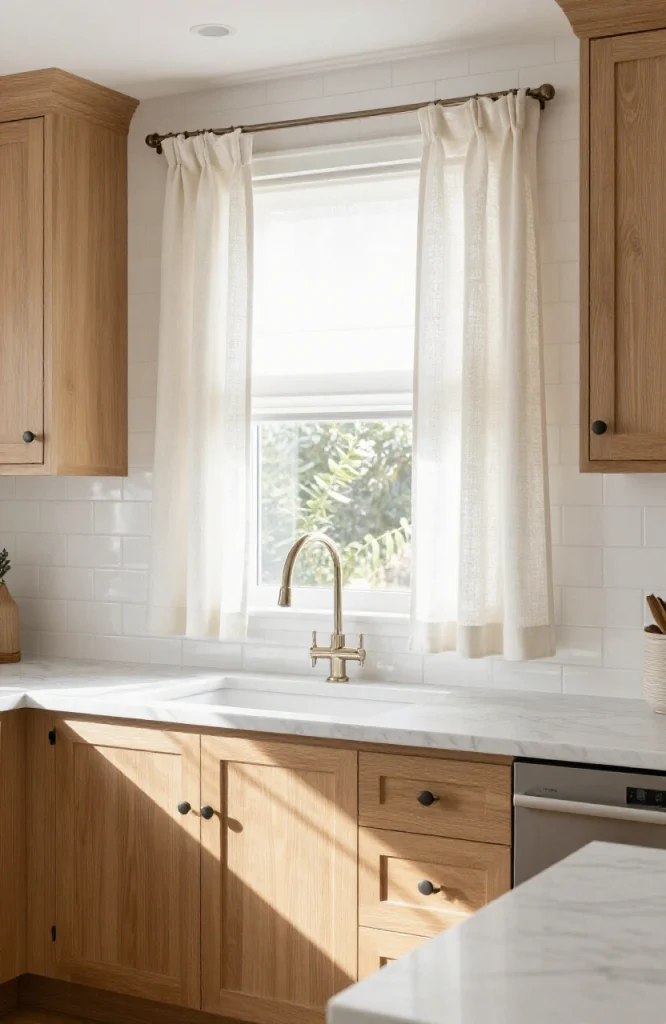
Layering a blind or shade underneath a curtain panel gives you both light control and style. A roller shade or cellular shade handles the functional job, while a linen or cotton panel on either side of the window frames it and adds softness. This works well in kitchen-dining areas where the window is a design feature as much as a practical element.
18. Inside Mount Blinds
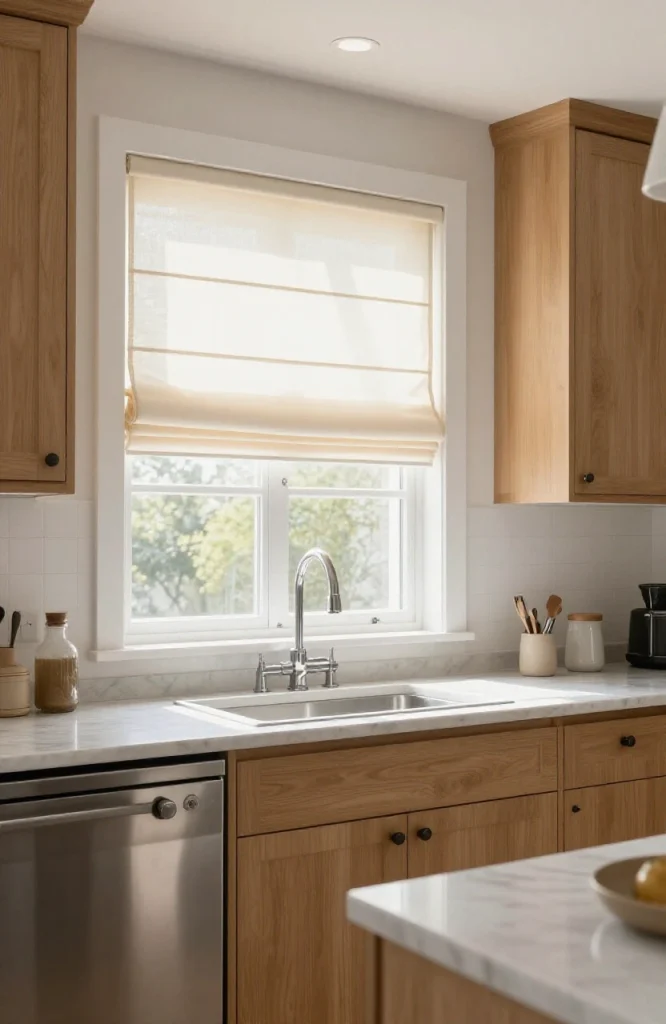
Mounting blinds inside the window frame gives a clean, fitted look that lets the window trim do its design work. Inside-mount blinds sit within the depth of the window casing, so the overall impression is neater than an outside mount. This works best when your window has at least 2 inches of depth inside the frame for the hardware to sit properly.
19. Outside Mount Blinds
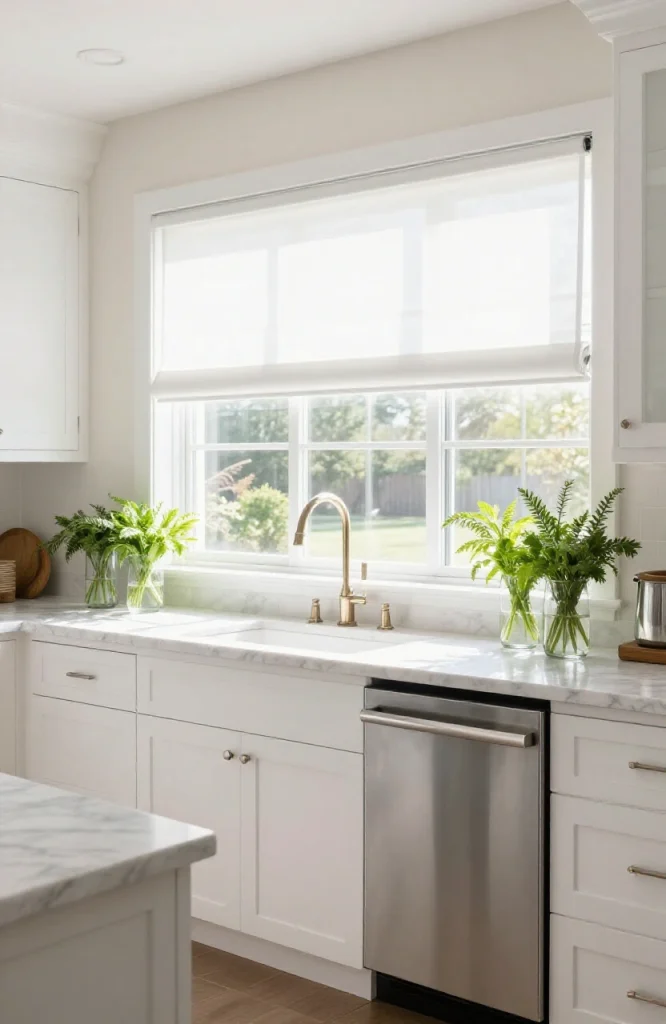
Outside-mount blinds attach to the wall or window trim above and outside the window frame. They work better than inside mounts when the window is shallow, when you want to cover more of the wall to make the window appear larger, or when you need to block light from the sides. For small kitchens with modest windows, outside mounting creates the appearance of a bigger window.
20. Frosted or Privacy Window Film
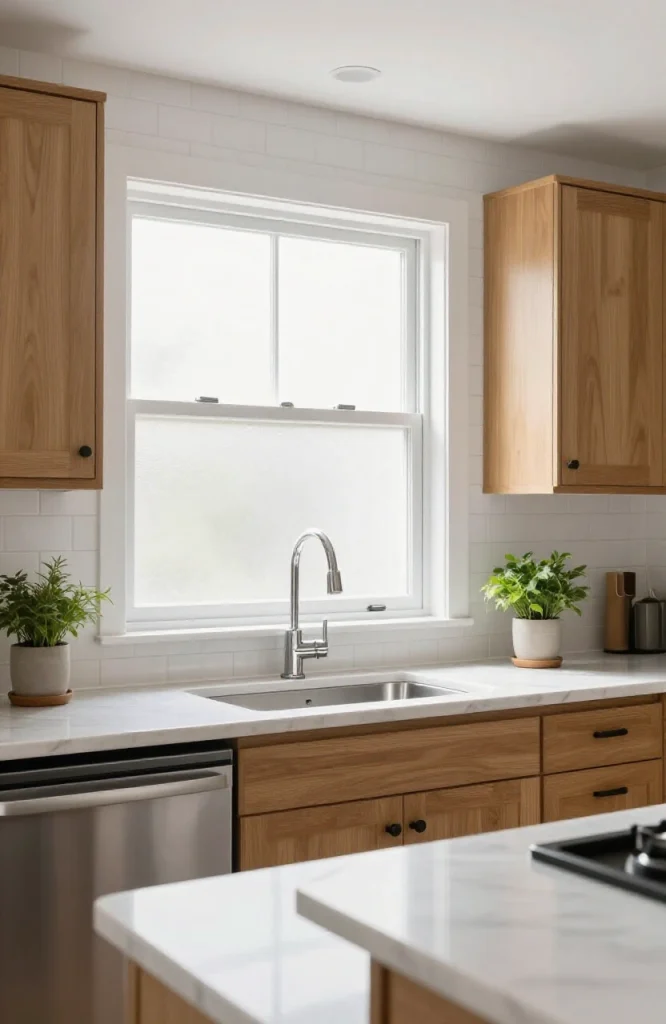
Window film is not a traditional window treatment, but it functions like one. Frosted film applied directly to the glass creates privacy without blocking light, and it requires no hardware, no rod, and no sewing. It works particularly well for kitchen windows that face a neighbor at close range. Frosted film comes in plain, etched, or decorative patterns, and it peels off cleanly if you want to remove it later.
21. Stained Glass Film
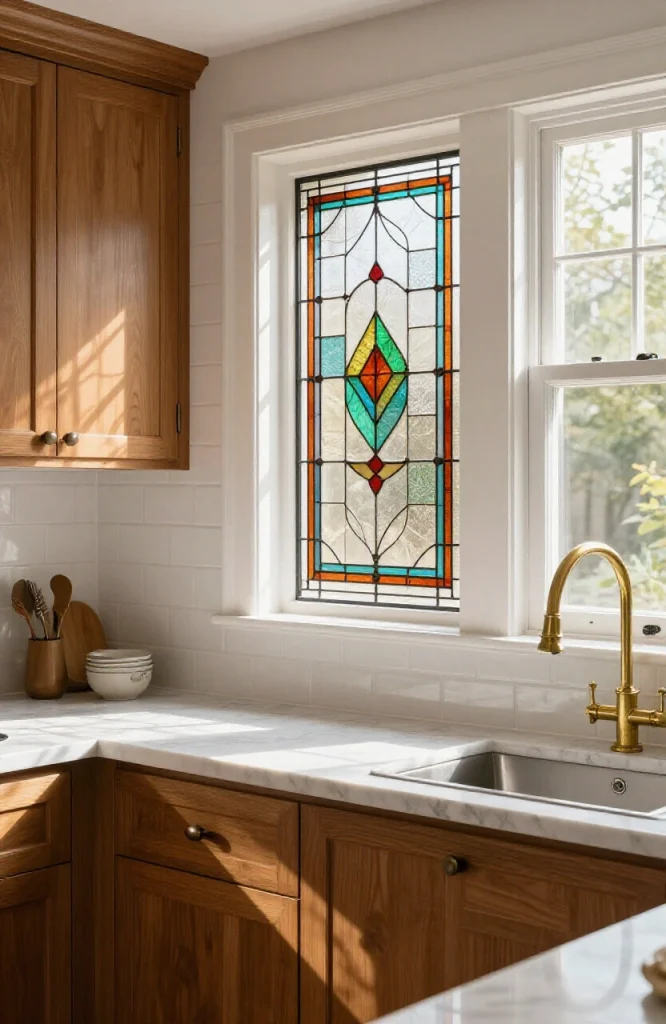
Decorative window film that mimics stained glass adds color and pattern to a kitchen window without replacing the glass itself. This suits kitchens with a vintage, eclectic, or artisan aesthetic. The film is applied directly to the glass, diffuses light in a colored pattern, and provides privacy because the pattern obscures the view from outside.
22. Top-Down Bottom-Up Shades
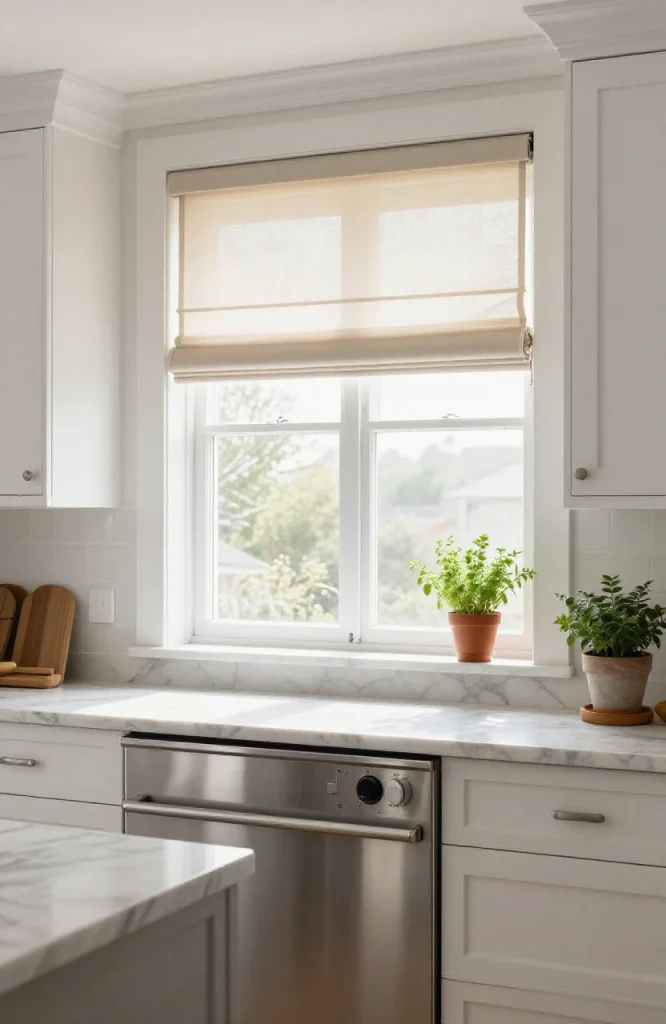
Top-down bottom-up shades lower from the top or raise from the bottom, which means you can expose the upper half of the window for light while keeping the lower half covered for privacy. This is one of the most practical options for a kitchen sink window, where you want natural light without people outside being able to see directly in.
23. Solar Shades
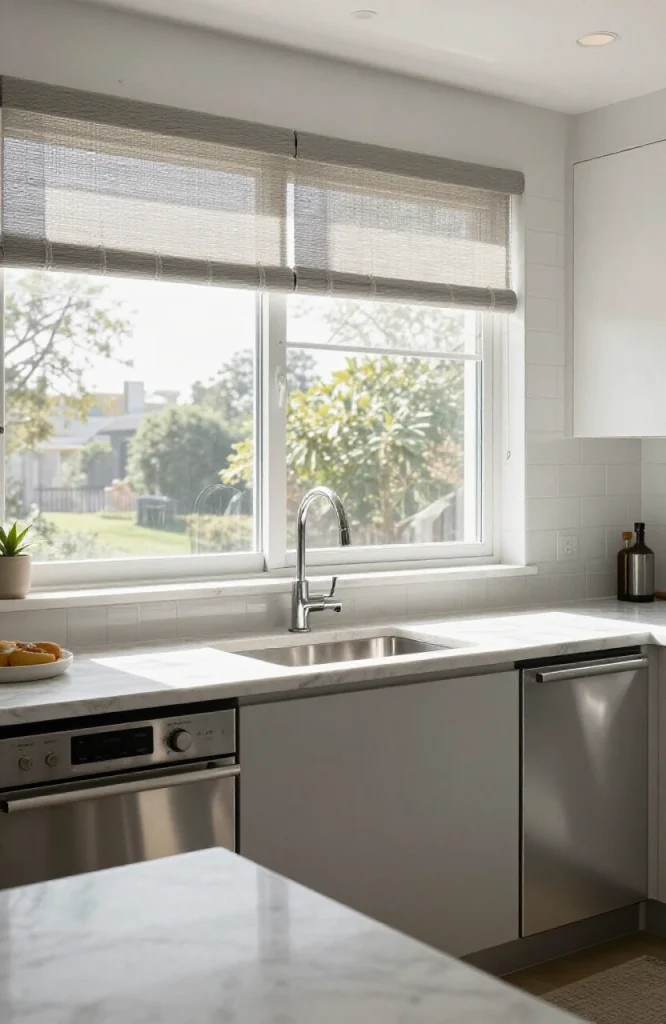
Solar shades are made from an open-weave fabric that blocks UV light and reduces glare while maintaining an outward view. They’re ideal for kitchen windows that face into direct sun during cooking hours. The openness percentage of the weave determines the balance between light filtration and view, with 3% to 5% openness being standard for kitchens with significant sun exposure.
24. Blackout Shades
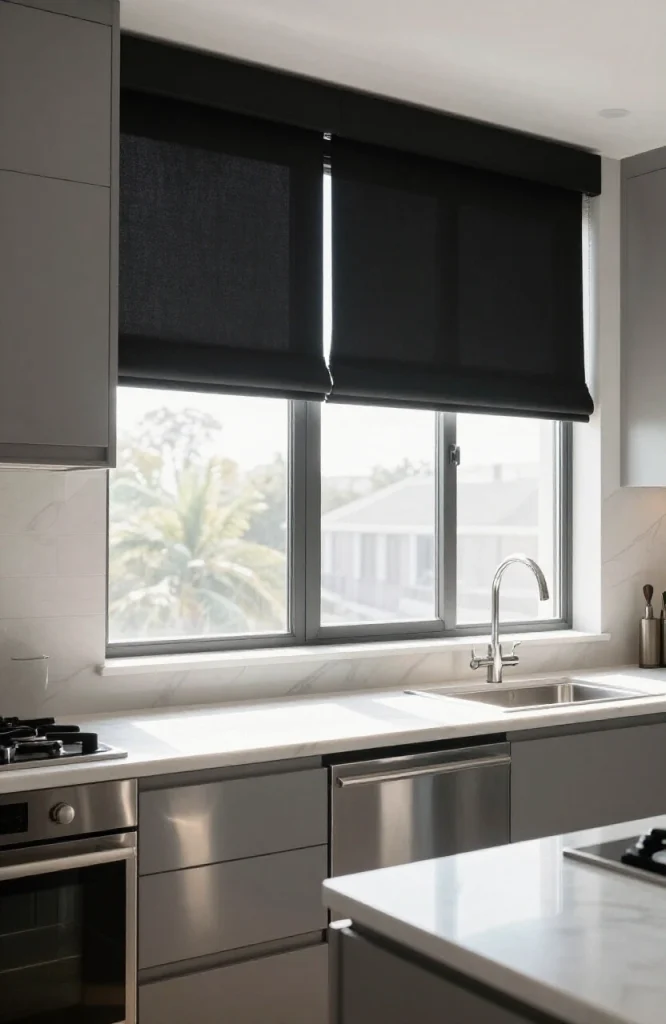
Blackout shades completely block outside light when lowered. While this is more commonly associated with bedrooms, blackout shades in a kitchen can be useful if morning light creates a strong glare on a computer screen or a TV screen mounted in the kitchen. Pair them with sheer panels so the window looks finished when the shades are raised.
25. Bamboo Roman Shades
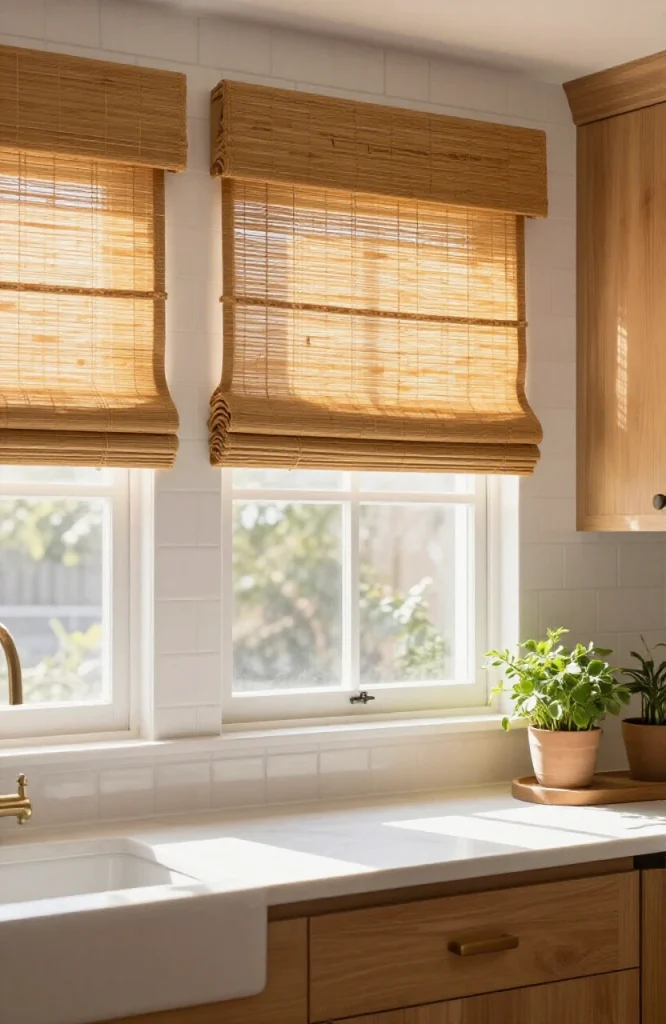
Bamboo Roman shades combine the structure of a Roman shade with the natural material of bamboo. They roll up in folds like a fabric Roman shade but have the textural look of woven bamboo or matchstick. They work well in kitchens with wood accents, open shelving, or earthy color palettes.
26. Velvet Curtains
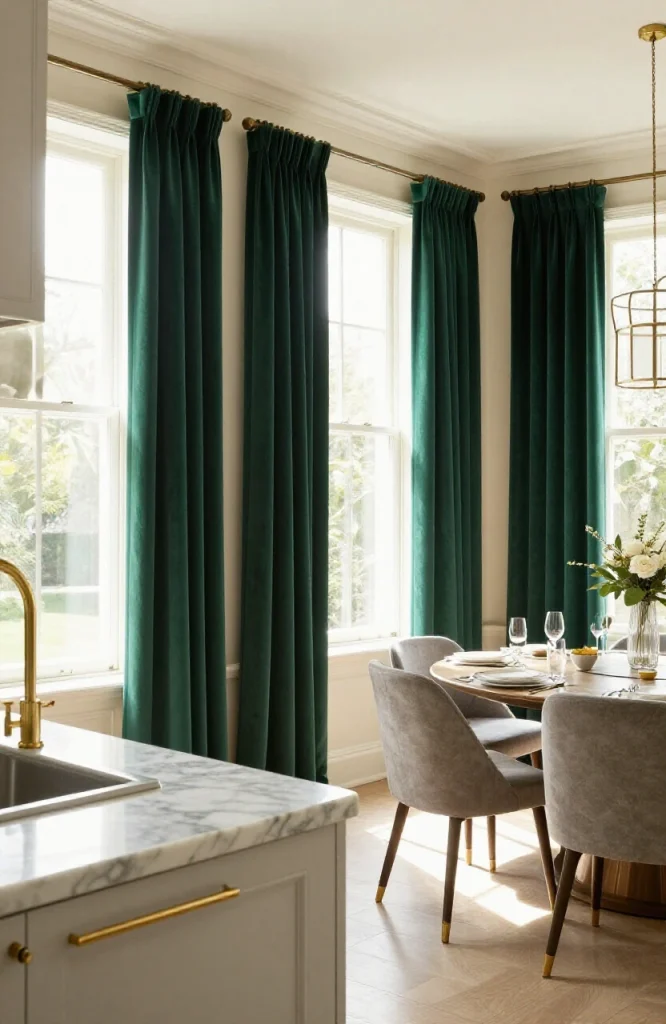
Velvet in a kitchen is an unexpected choice that works in the right context, specifically a kitchen-dining room with a more formal or dramatic aesthetic. Velvet handles well when dry-cleaned, and a single panel on one side of a large kitchen window or sliding glass door can add a strong design moment. Keep the rest of the kitchen styling simple so the velvet reads as a deliberate accent.
27. Patterned Fabric Roman Shades
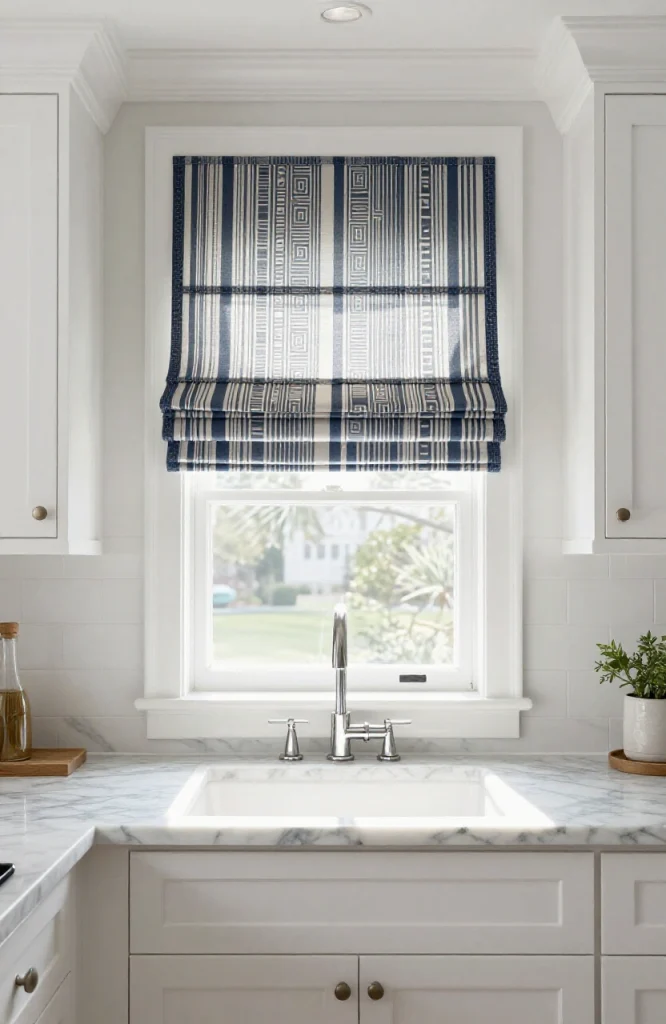
A patterned Roman shade brings color and print into a kitchen without the bulk of curtain panels. This is one of the easiest ways to introduce a second color or a geometric, botanical, or stripe pattern into the room. For kitchens with all-white or neutral cabinets, a patterned shade at the window becomes the main decorative element in the space.
28. White Cotton Curtains
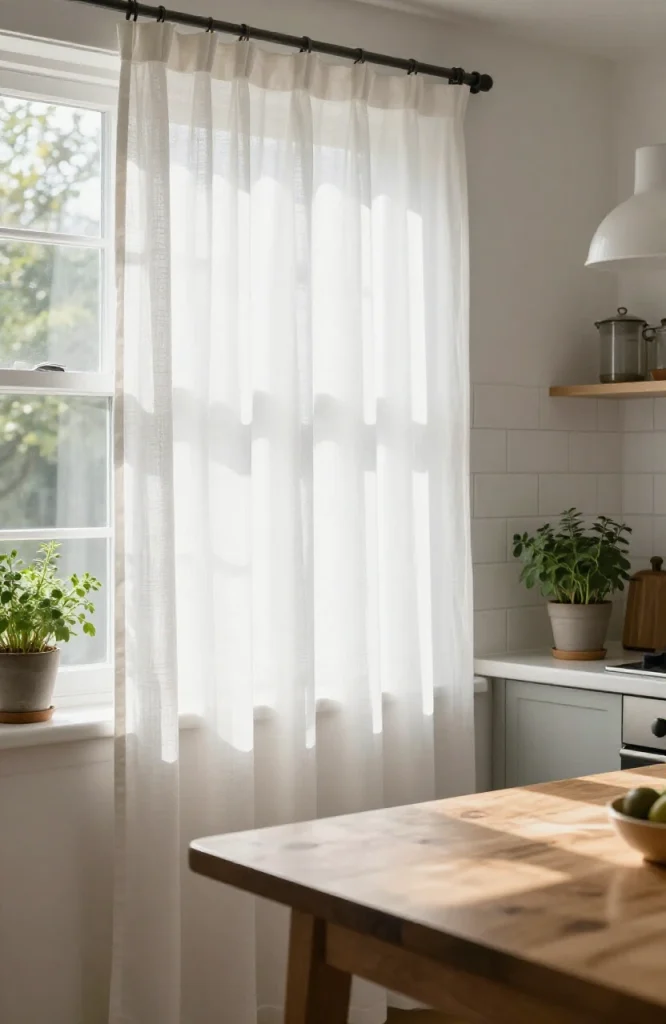
White cotton curtain panels are one of the most reliable kitchen window treatments available. They launder easily, bleach clean, suit every kitchen style from modern to farmhouse, and keep the room feeling bright. The main consideration is length, since floor-length panels look more formal while sill-length or apron-length panels feel more casual and practical in a busy kitchen.
29. Striped Curtains
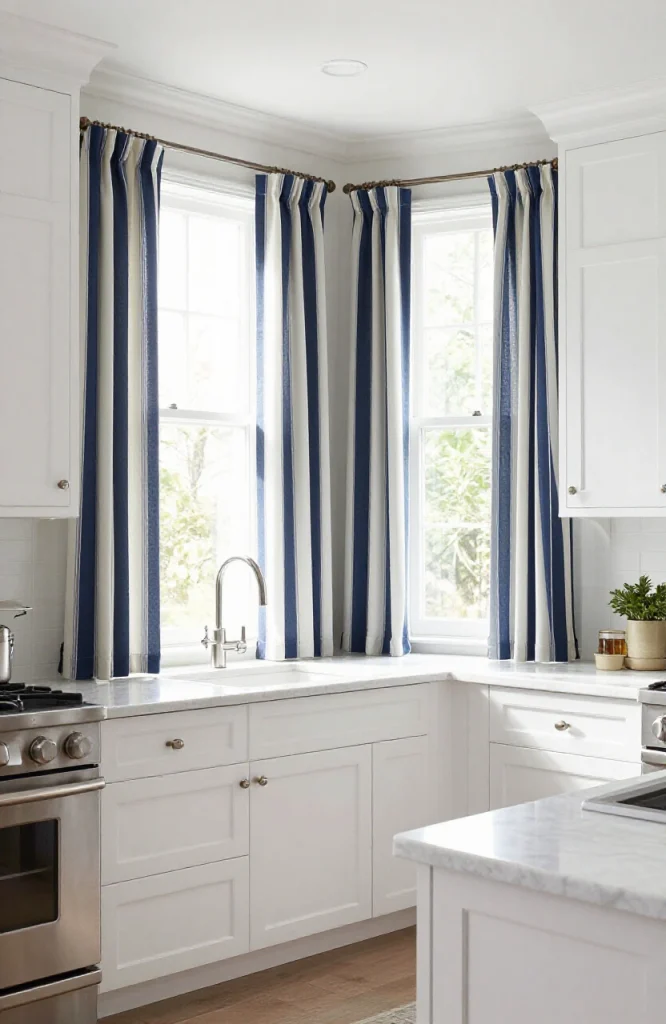
A horizontal or vertical stripe pattern in curtain panels brings graphic energy to a kitchen window without committing to a complex print. Vertical stripes draw the eye upward and make low ceilings feel taller. A bold stripe in black and white or navy and cream suits a kitchen with strong contrasts in the cabinetry or tile, while a softer stripe in warm neutrals fits more relaxed palettes.
30. Kitchen Window Cornice Box
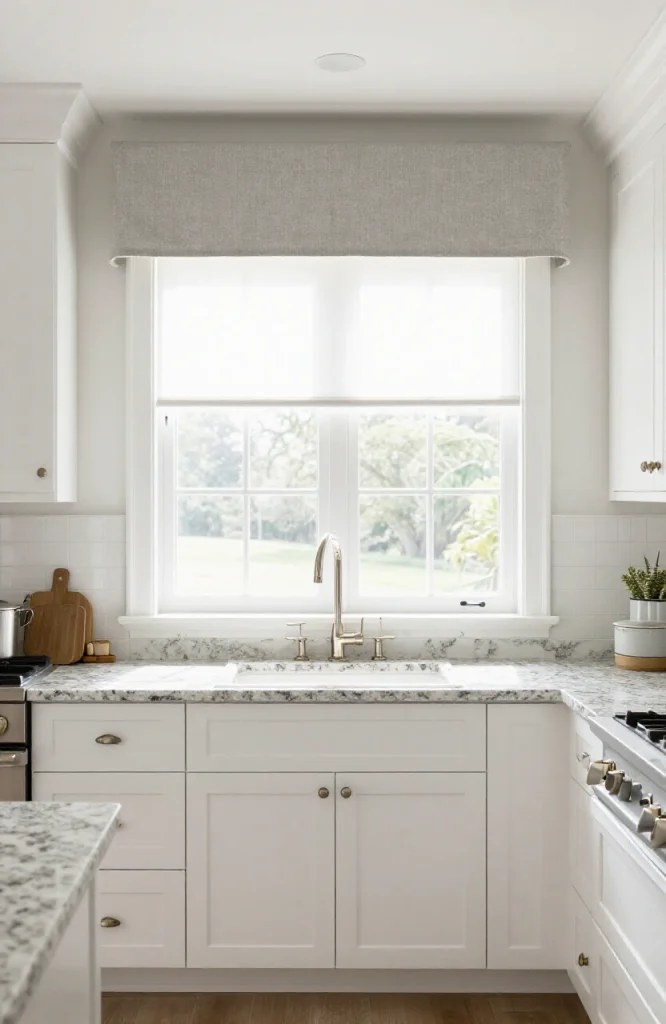
A cornice box is a rigid, upholstered frame mounted above the window that covers the top of the treatment hardware and creates a finished look. It works well when you have blinds or shades underneath and want the window to look more designed. A cornice box in a solid fabric matches the kitchen’s dominant color, or in a wood finish, it ties into cabinetry details.
31. Curtain Rods with Decorative Finials
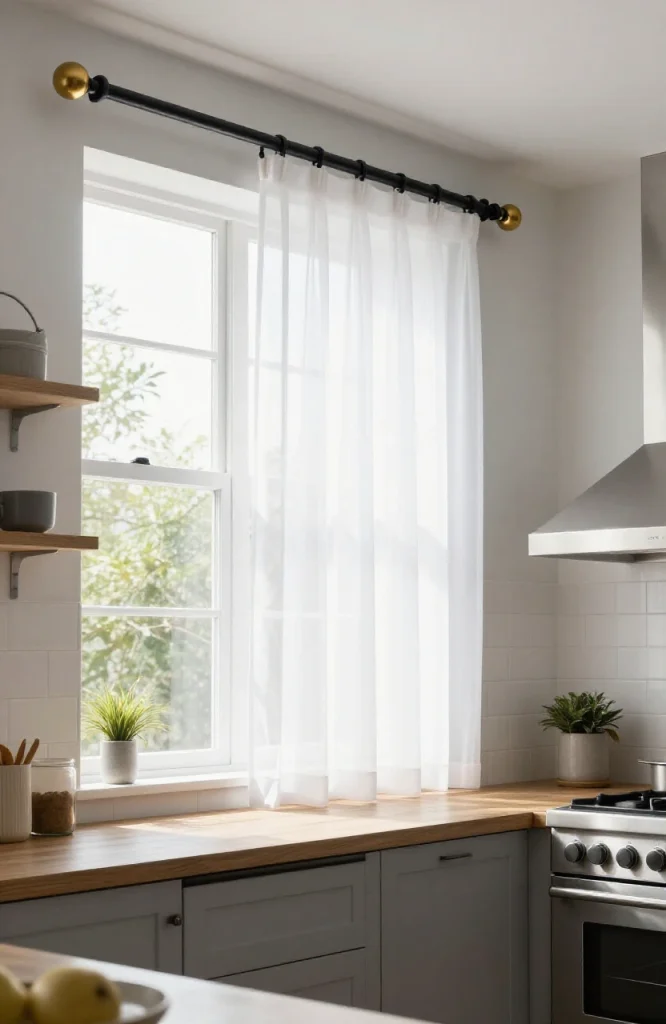
The curtain rod and its end finials are part of the window treatment’s visual identity. A simple matte black rod with globe finials suits a modern or industrial kitchen. Brass rods with pointed finials suit a traditional or eclectic kitchen. Choosing a rod finish that matches your cabinet hardware or faucet creates a polished, considered look without requiring any additional decorating effort. This kind of hardware coordination is one of the quieter principles behind a good-looking kitchen, which you can read more about in our corner sink ideas guide.
32. Double Rod Setup for Layered Panels
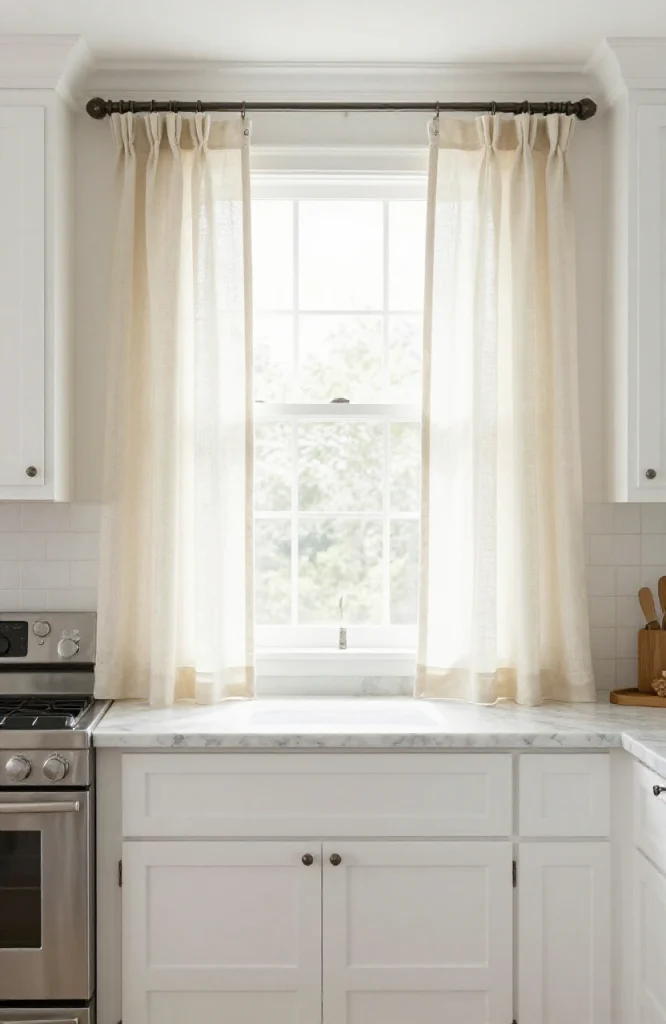
A double curtain rod holds two separate layers of panels on the same window, typically a sheer on the inside rod and a heavier panel on the outer rod. This gives maximum flexibility since you can use the sheer alone during the day and add the heavier panel for privacy in the evening. For a kitchen with a larger window or a window that faces a patio door, the layered look also adds visual weight to the space.
33. Sink Window Shelf Treatment
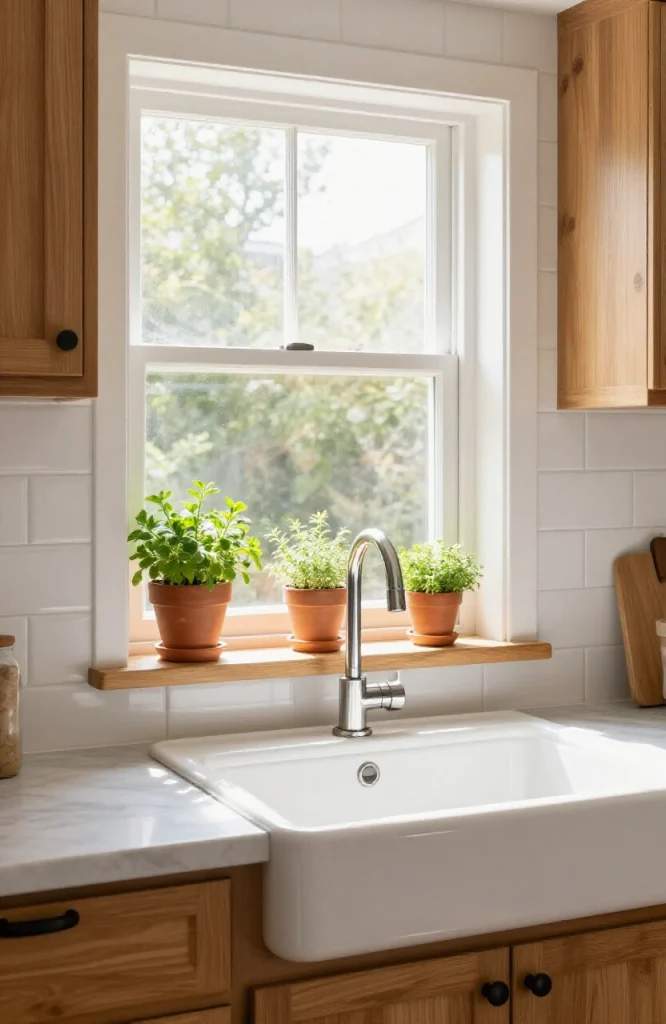
Instead of a traditional window treatment, some homeowners turn the kitchen sink window into a display area using a narrow shelf mounted inside the window frame. Potted herbs, small plants, or a row of glass bottles on the shelf act as a natural privacy screen while still allowing light to filter through. This works particularly well in a kitchen where the windowsill is deep enough to hold plants without blocking the view entirely.
34. Scandinavian-Style Half Curtain
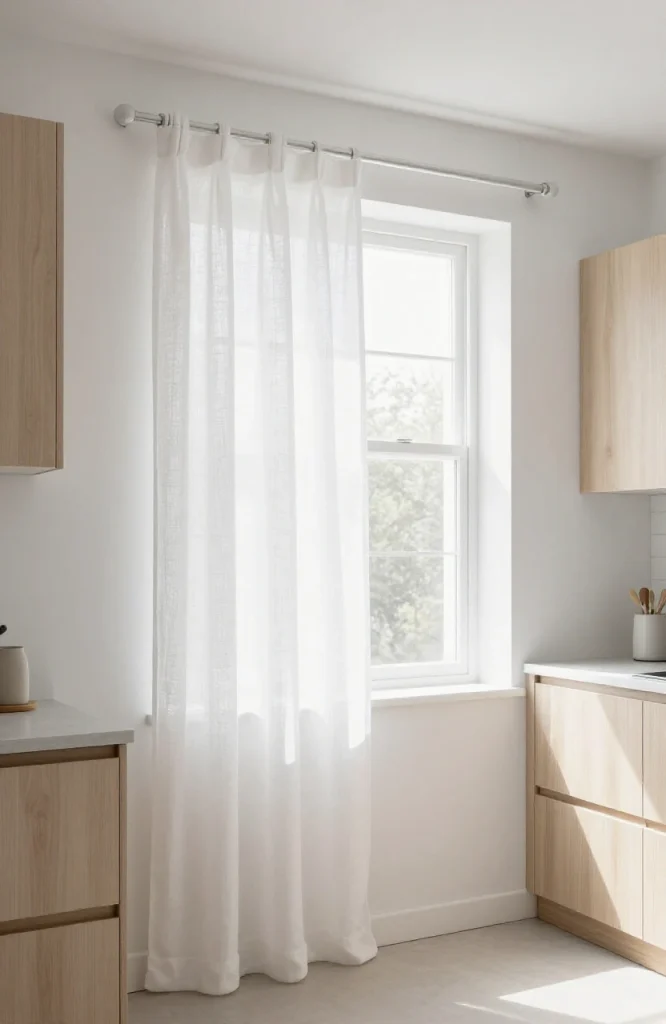
The classic Scandinavian window treatment is a simple cotton or linen panel hung on a slim rod, stopping at mid-window or at the sill. The rod sits within the window frame, the fabric is usually white or a muted solid, and the effect is clean, quiet, and light-filled. This style suits minimalist, Nordic, or modern farmhouse kitchens particularly well.
35. Curtains with a Contrasting Border
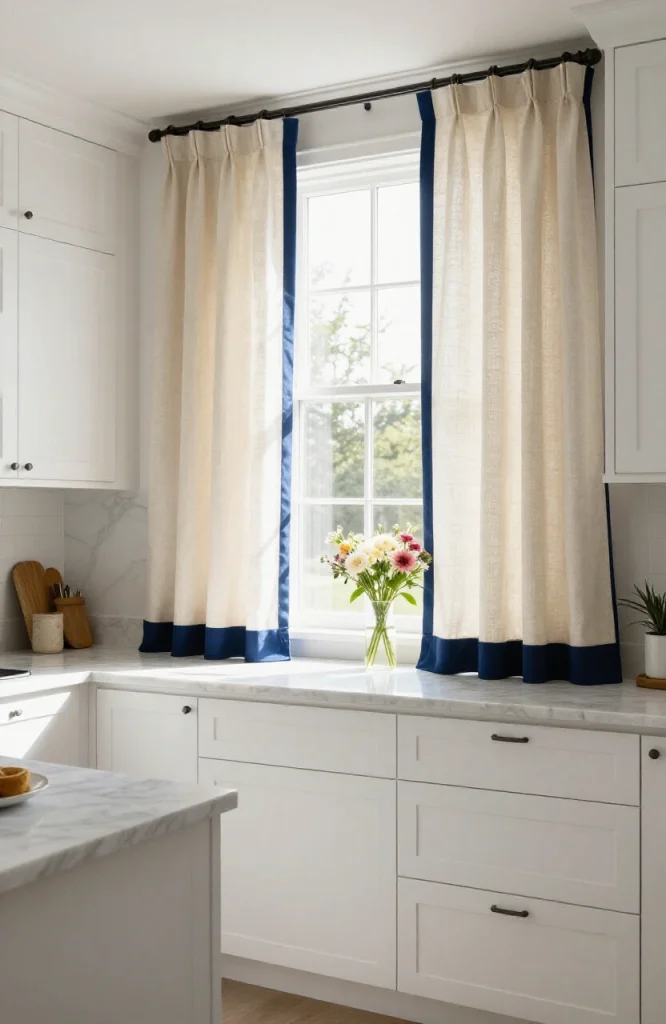
Adding a contrasting border along the leading edge or hem of a curtain panel gives it a custom, tailored look without requiring anything more complex than a solid-colored fabric strip sewn onto a standard panel. A white linen curtain with a black border reads sharply modern. A cream panel with a terracotta border suits a warmer, earthier kitchen palette.
36. Kitchen Bay Window Treatment
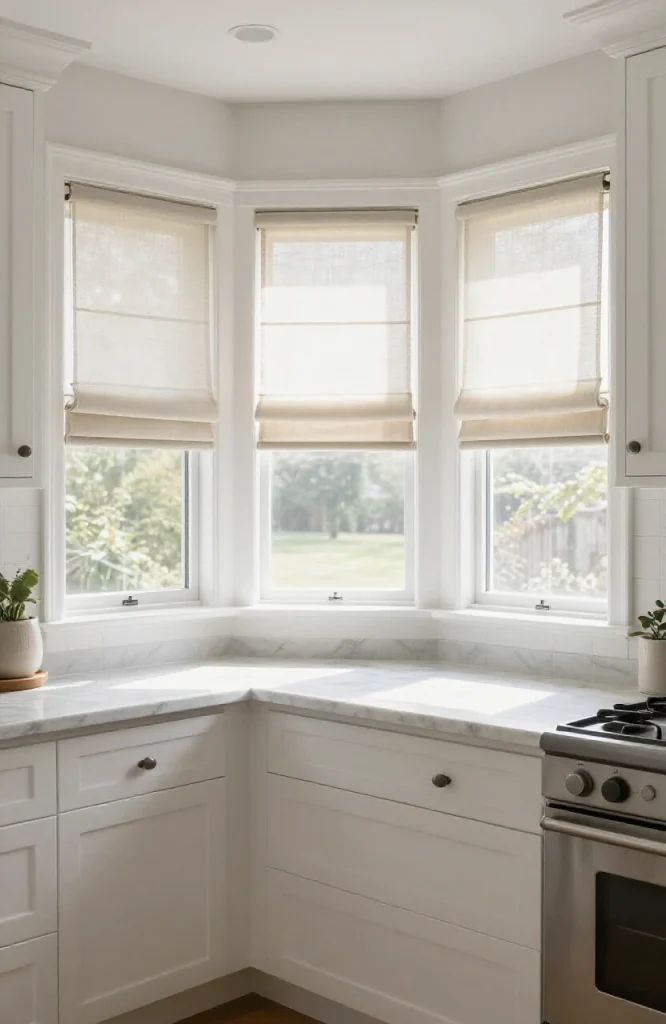
A bay window in a kitchen needs a treatment that fits the angled configuration without blocking the full width of the window. The most practical approach is to mount individual inside-mount shades or shutters in each section of the bay, which maintains the bay’s architectural interest. For a softer look, a curved curtain rod fitted to the shape of the bay allows panels to frame the whole bay as a single unit.
37. Window Treatment for a Kitchen Pass-Through
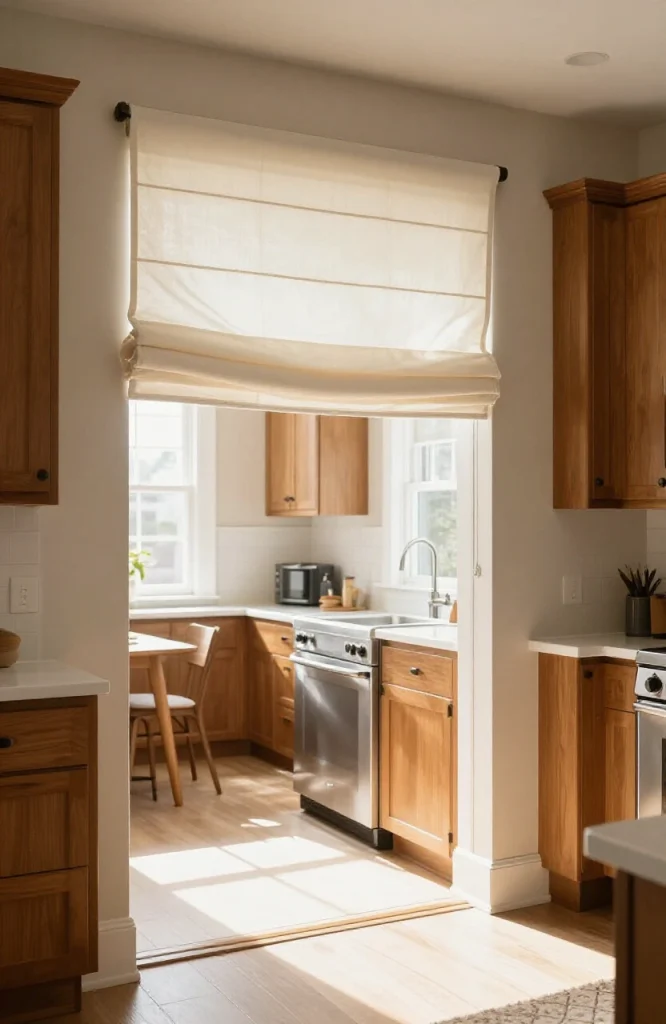
A kitchen pass-through, the horizontal opening between a kitchen and a dining or living area, sometimes benefits from a small Roman shade or a roller shade that can close off the opening when needed. A simple shade in a fabric that matches the kitchen’s window treatments creates consistency across the room’s openings.
38. Tension Rod Curtains for Rental Kitchens
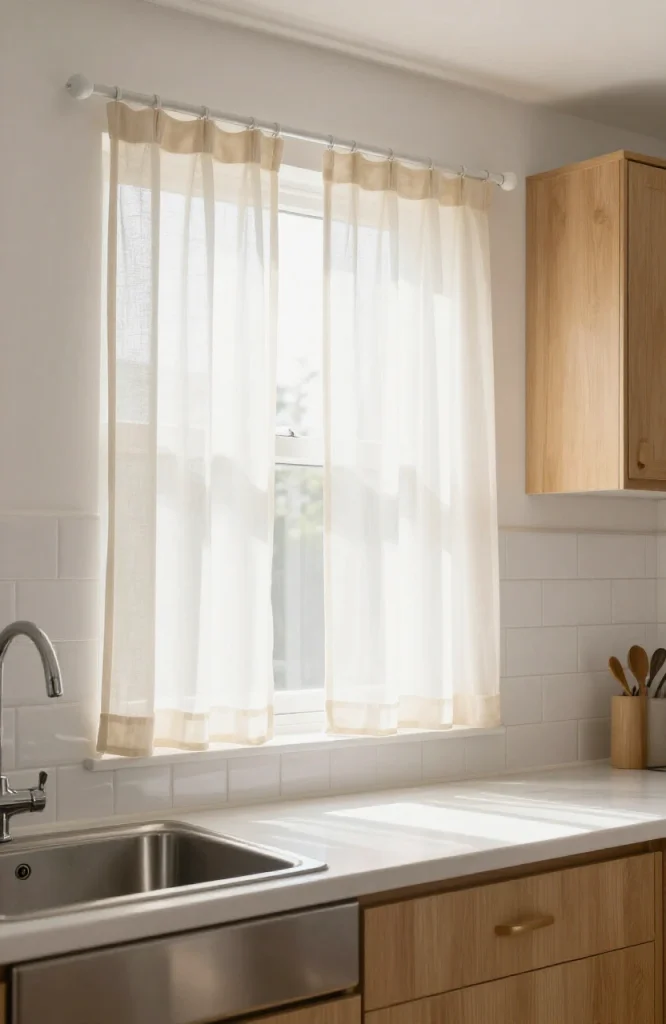
For a rental kitchen where drilling is not allowed, a tension rod fits inside the window frame without any wall hardware. Pair a tension rod with lightweight panels or a simple café curtain clip. The tension rod holds securely enough for lightweight fabrics and can be removed completely without leaving marks on the wall or window frame.
39. Kitchen Window Treatment for a Small Window
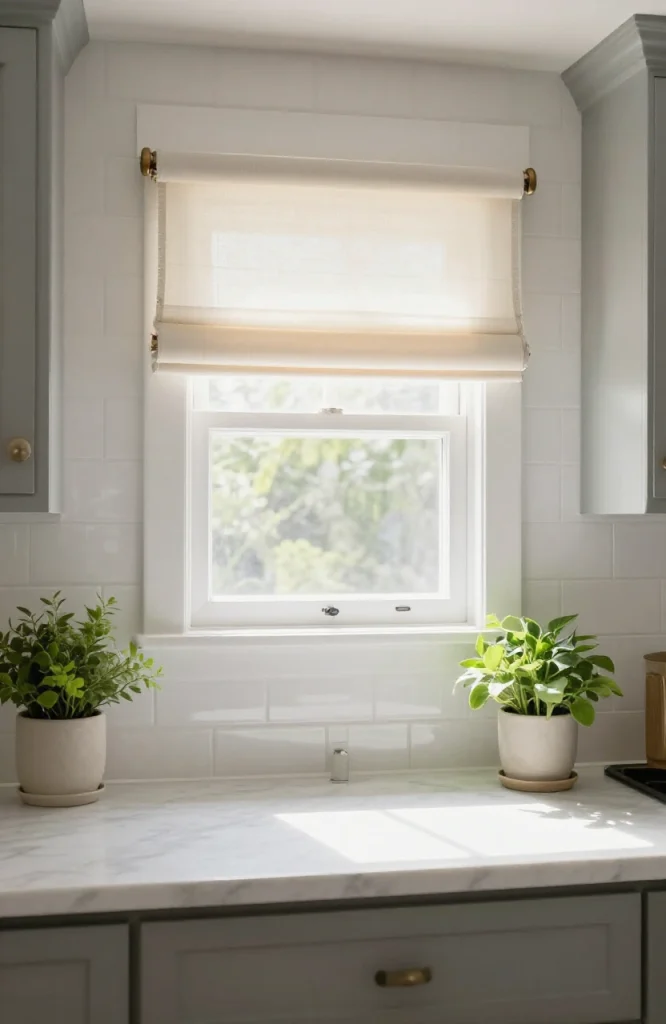
Small kitchen windows above countertops look best with treatments that don’t overwhelm the window size. A simple roller shade, a small Roman shade, or a pair of café curtain panels each work well here. Avoid large-scale patterns or heavy fabrics that make a small window feel even smaller. Inside-mount hardware keeps the surrounding wall space uncluttered and visually expands the window.
40. Seasonal or Rotating Window Treatments
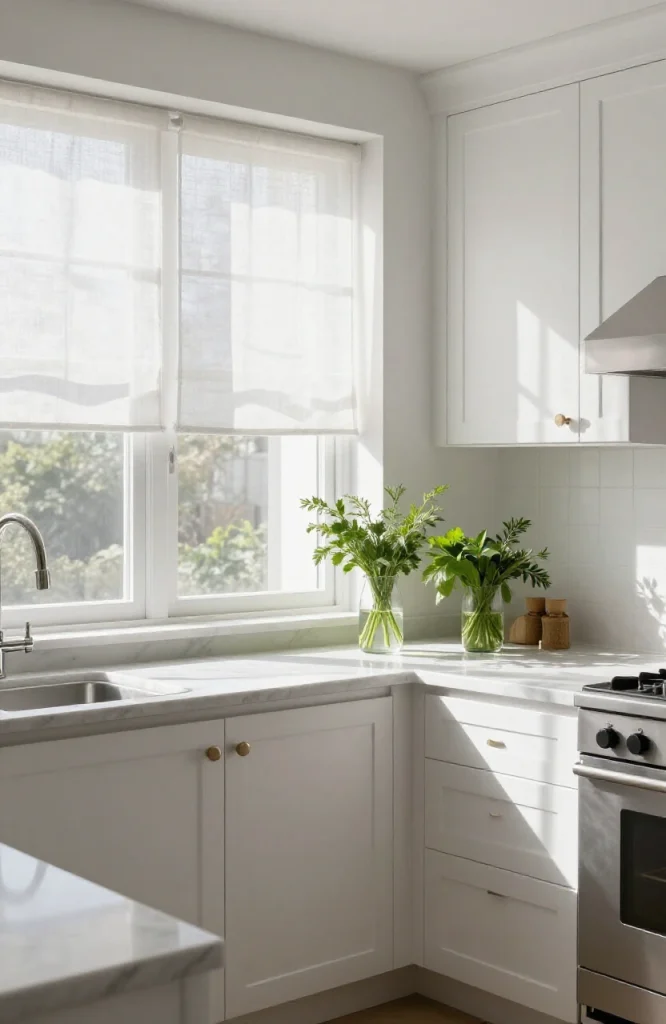
Some kitchen windows benefit from a treatment that changes with the season. Light sheer panels in summer allow maximum airflow and natural light. A heavier cotton or linen panel in autumn and winter adds warmth and insulation. Keeping two sets of panels for the same window and rotating them twice a year is a low-cost way to refresh the kitchen’s look without redecorating. This kind of seasonal update connects naturally with broader seasonal decor approaches, as explored in our minimalist Christmas decor ideas.
How to Choose the Right Kitchen Window Treatment
The right choice depends on four practical factors: moisture exposure, light needs, privacy requirements, and cleaning ease.
Windows directly above or beside the sink need moisture-resistant materials, so faux wood blinds, vinyl roller shades, or composite shutters hold up better than natural fabrics in that location. Windows on the opposite side of the kitchen from the sink or stove can handle softer fabric options like Roman shades or linen panels.
Light needs vary by kitchen orientation. A north-facing kitchen benefits from treatments that let in maximum light, so sheers, sheer shades, and open-weave woven shades are good fits. A south or west-facing kitchen that gets strong afternoon sun is better served by solar shades, cellular shades, or a top-down bottom-up shade that lets you block direct glare while keeping some natural light in the room.
For cleaning, any fabric treatment used in a kitchen should be machine washable or easy to wipe down. This eliminates dry-clean-only fabrics for most households. Roller shades, faux wood blinds, and vinyl shutters are the easiest to maintain day-to-day.
Conclusion
The 40 kitchen window treatment ideas above cover every combination of style, function, and budget. Café curtains and tension rod panels work for renters and those looking for a low-investment update. Plantation shutters, motorized shades, and layered linen-and-blind setups are long-term solutions that add real value to the room. The most important step is matching the treatment to the specific conditions of the window, including how much moisture it faces, how much light the kitchen needs, and what cleaning routine is realistic for your household. Start with those criteria, and the style decision becomes straightforward from there.