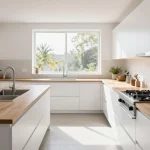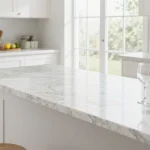

A corner sink solves one of the most persistent problems in home design: dead corner space that contributes nothing to the room. These 70 corner sink ideas cover kitchens, bathrooms, laundry rooms, mudrooms, home bars, and outdoor kitchens, so you can find an option that fits your layout, your style, and your budget. Each entry focuses on what actually makes that particular sink type worth considering, from material properties and sizing to how the placement affects the surrounding space.
1. Classic White Farmhouse Corner Sink

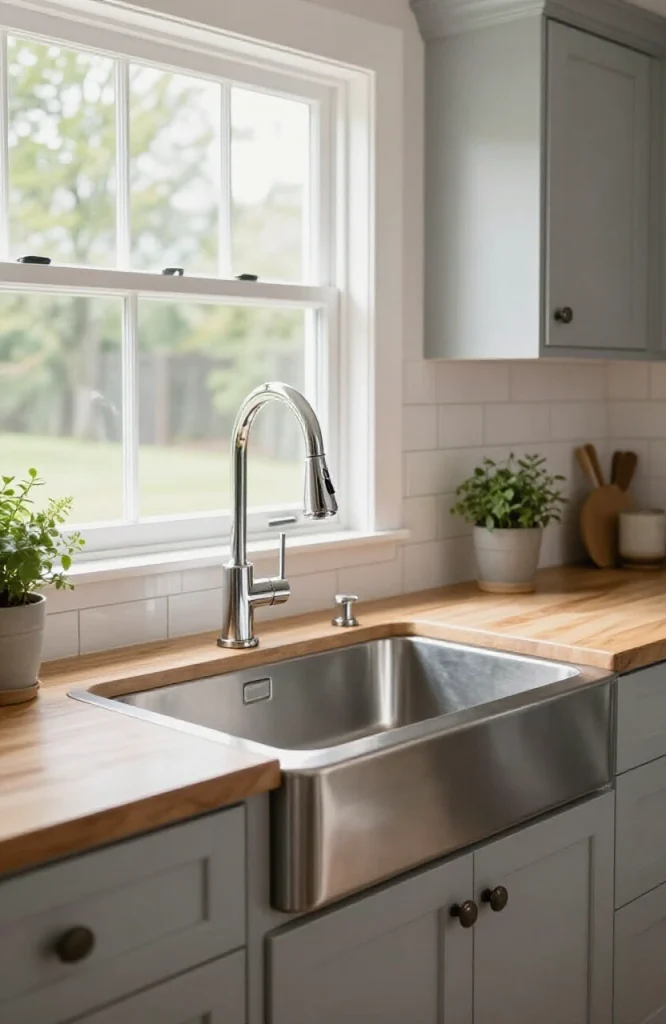
A white apron-front corner sink fits into a diagonal cabinet base and works particularly well in traditional or farmhouse-style kitchens. The exposed front panel of the apron adds character that a standard drop-in sink cannot match, and the deep single basin handles large stockpots and sheet pans without requiring you to angle them. White vitreous china and fireclay versions are the most common, and both are durable enough for daily heavy use. The white finish is one of the most versatile in kitchen design, reading as clean and neutral against painted cabinetry in any color from charcoal to sage. Cabinet manufacturers produce diagonal base units specifically for this configuration, so finding a matching cabinet is straightforward for most standard sink widths between 30 and 36 inches.
2. Stainless Steel Corner Kitchen Sink
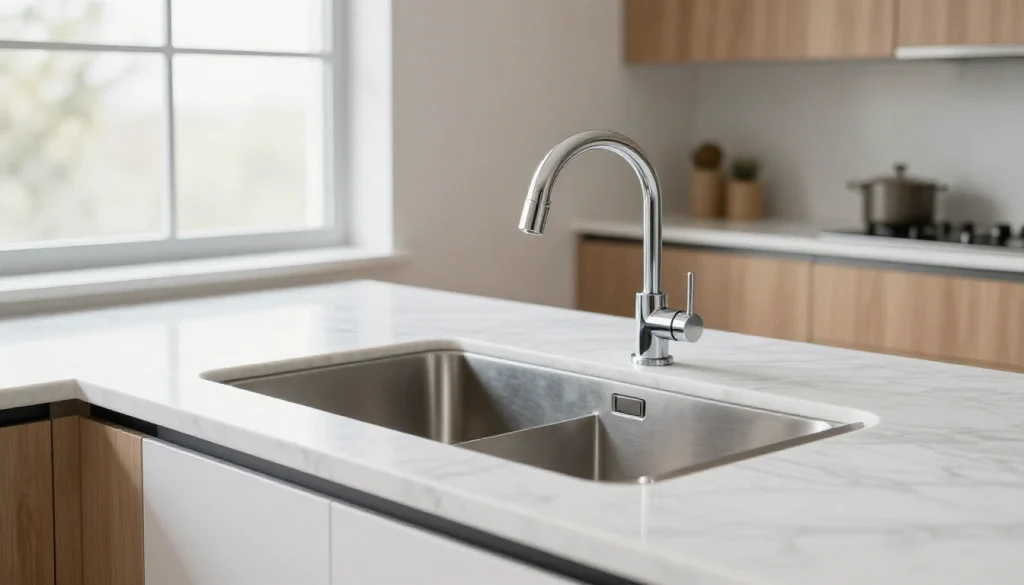
Stainless steel is the most widely installed sink material in residential kitchens for good reason. It holds up to sharp objects, heavy pots, acidic foods, and cleaning chemicals without permanent damage, and a brushed or satin finish hides minor scratches that accumulate over years of normal use. A single or double-bowl stainless version installed in a corner maximizes the counter run on both adjacent sides, which is especially useful in kitchens where the sink would otherwise interrupt a long work surface. Gauge matters: 16-gauge stainless is noticeably thicker and quieter than the 18-gauge or 20-gauge material found in lower-cost options. Sound-dampening pads bonded to the underside reduce the noise of water and dishes, which is worth specifying when you order. The corner position also means the sink sits slightly set back from the primary work zone, which reduces the chance of water splashing onto a food prep surface.
3. Undermount Corner Sink with Quartz Countertop
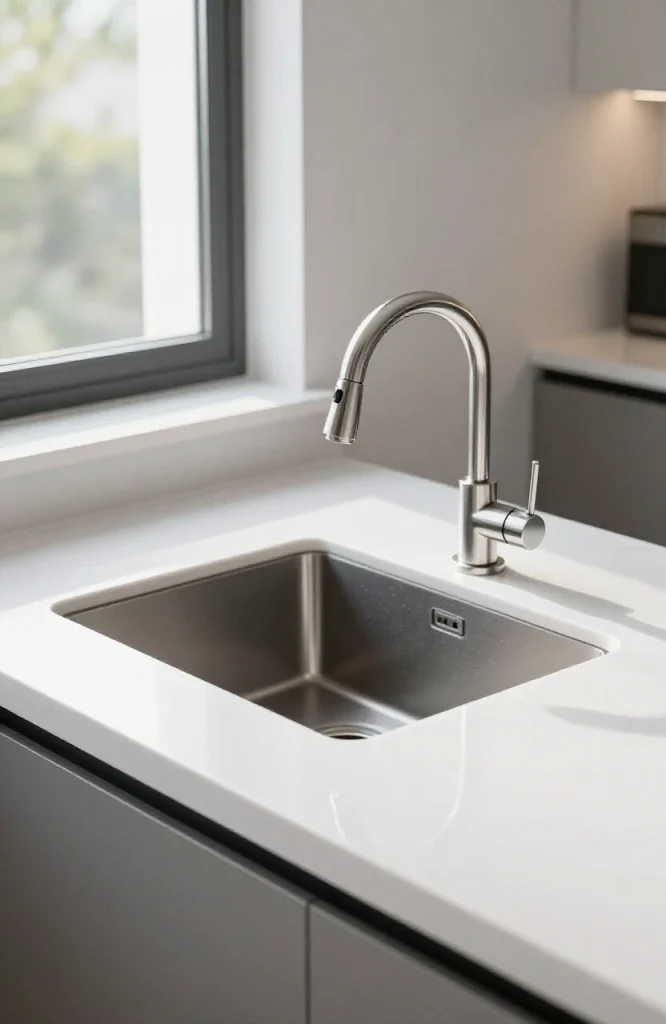
Undermounting a corner sink into a quartz countertop keeps the surface completely flush, with no rim or lip to catch crumbs, food debris, or standing water. The result looks cleaner than a drop-in installation, and wiping the counter directly into the sink basin requires no effort at all. Quartz is one of the best pairing materials for an undermount because the surface is non-porous, consistent in thickness, and holds the undermount clips without issue. The fabricator cuts the sink opening at the exact corner angle during countertop production, so the fit is precise. In contemporary kitchens, this combination creates the kind of minimal, unbroken work surface that looks well-considered from every angle. Color matching is worth thinking through at the planning stage: a white quartz paired with a stainless sink reads very differently than a dark quartz paired with a matte black composite bowl.
4. Cast Iron Enamel Corner Sink
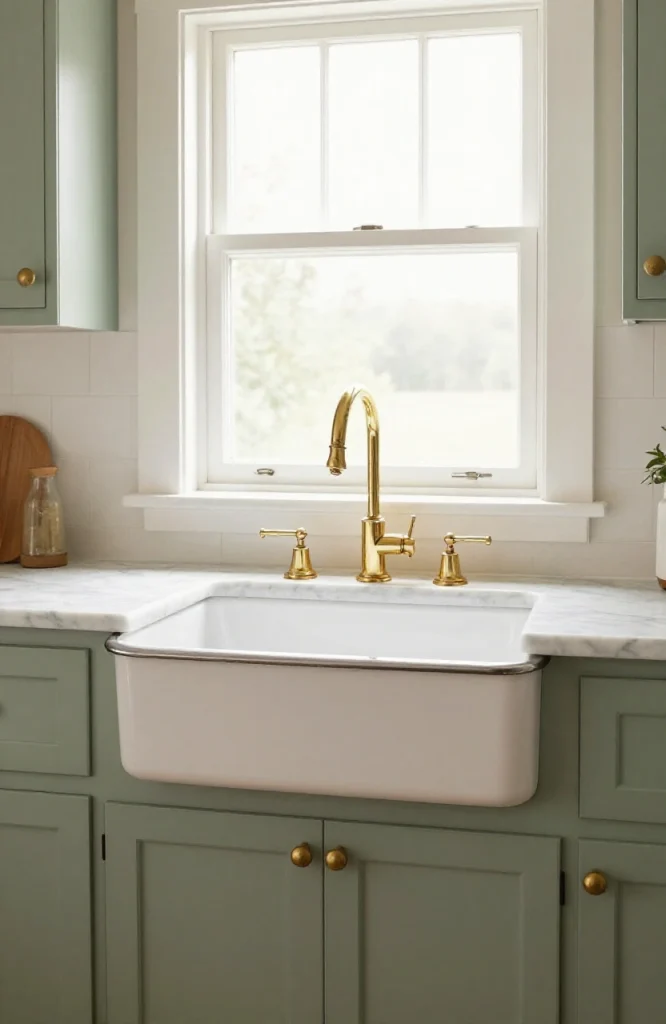
Cast iron sinks with porcelain enamel coating are among the heaviest and most durable options available for a kitchen. The iron core gives the sink a substantial feel that no other material replicates, and the enamel surface is hard, non-porous, and resistant to most staining when cleaned regularly. One practical advantage is heat retention: hot water stays warm longer in a cast iron basin than in stainless or acrylic, which is useful when soaking dishes. The material requires care with abrasive scrubbers, since the enamel can chip if struck with a heavy object, but normal daily use poses no risk. Cast iron corner sinks are produced in a wide range of colors beyond white, including cream, biscuit, slate, navy, and various custom shades from manufacturers like Kohler and American Standard. The weight of a cast iron corner sink requires a cabinet and countertop rated to support it, which is worth confirming with your installer before ordering.
5. Double Bowl Corner Kitchen Sink
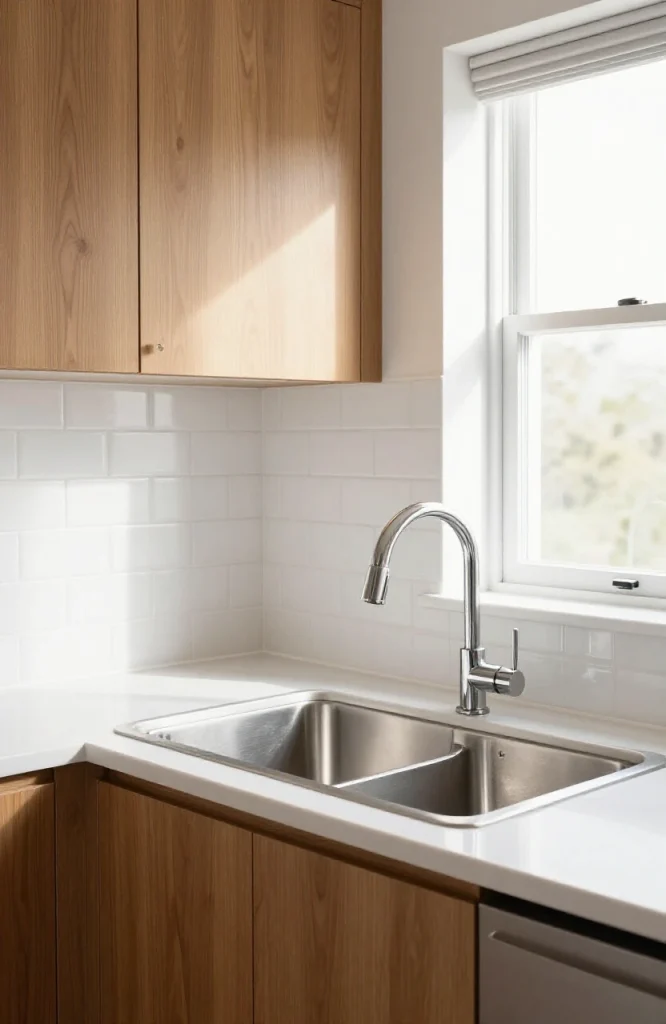
A double bowl layout in the corner divides the basin into two separate zones, typically one for washing and one for rinsing or soaking. The diagonal position is an advantage compared to a straight installation: because both bowls face you directly rather than running parallel to the wall, you can move between them without shifting your body sideways. Standard double bowl corner sinks place the two basins at equal depth, but offset versions give you one shallow and one deep bowl, which adds flexibility for different tasks. Equal-divide and 60/40 splits are both common options. The minimum cabinet size for a double bowl corner sink is usually a 36-inch diagonal unit, but 33-inch versions exist for tighter spaces. Stainless is the most common material for this format, though composite granite versions are increasingly available and offer better noise dampening.
6. Small Corner Sink for Tight Kitchens
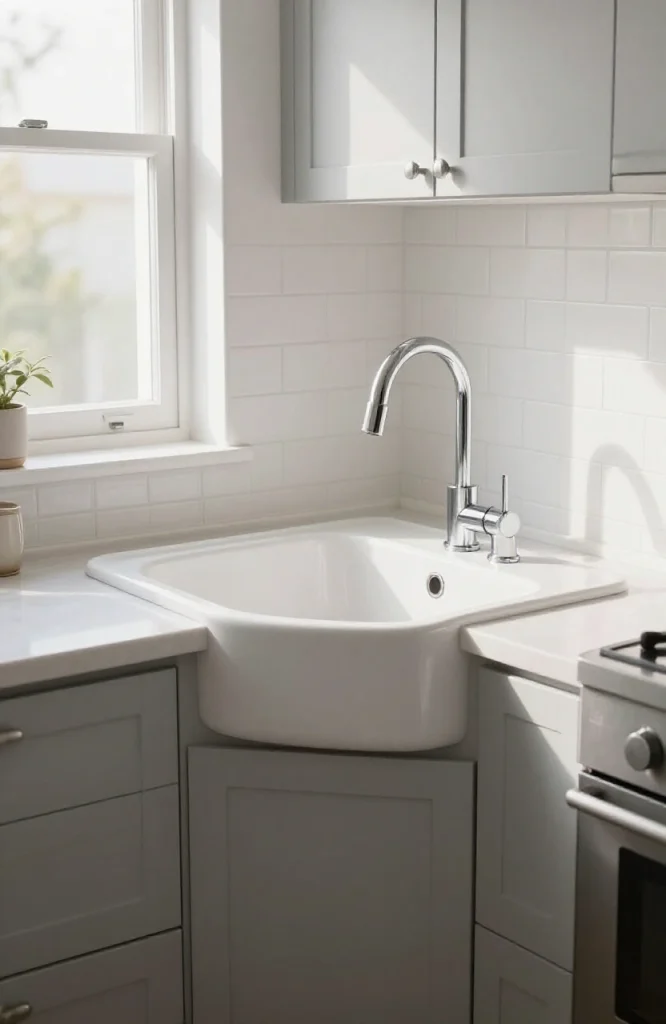
Compact corner sinks designed for galley kitchens, studio apartments, and narrow secondary kitchens free up linear counter space that a centered sink placement would consume. Many compact models measure between 15 and 23 inches across the diagonal face while still offering a functional single bowl with enough depth for everyday washing. The key trade-off is bowl capacity: small corner sinks handle cups, plates, and smaller pots easily, but a full sheet pan or large roasting dish will not fit. For kitchens where those items are a regular part of cooking, sizing up to at least a 24-inch model is worth the extra cabinetry cost. Stainless is the dominant material in this size range because it can be pressed into a small format without the thickness limitations of cast iron or fireclay. A compact corner sink also leaves room for a small appliance or cutting board on the adjacent counter, which matters in a kitchen where every surface does multiple jobs.
7. Corner Sink with Built-In Draining Board
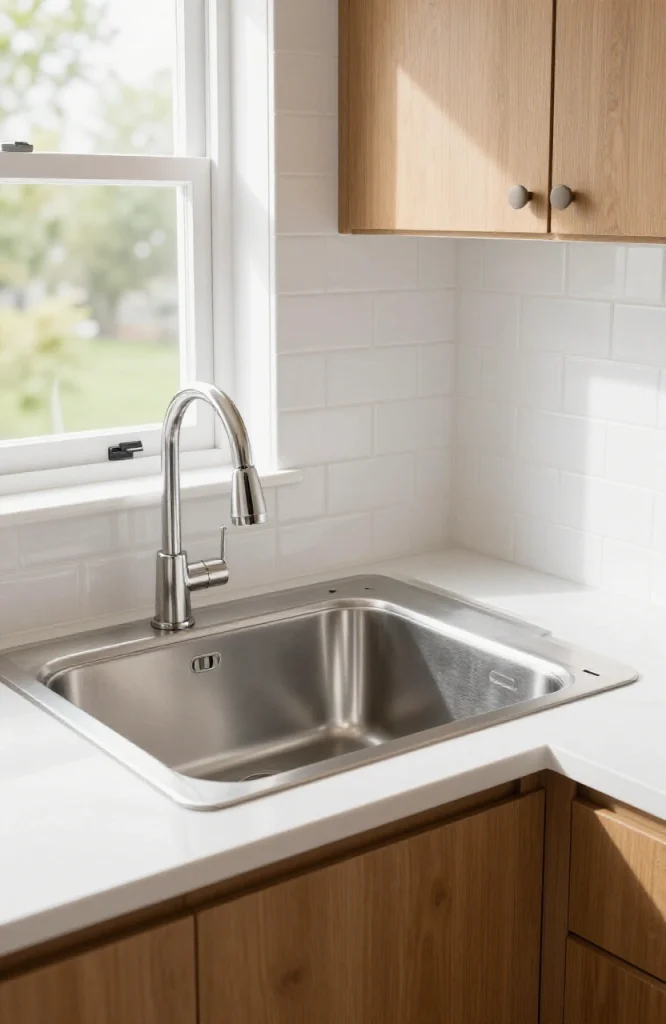
Some corner sinks include a draining board cast or pressed directly into the sink body on one or both sides, sloped toward the basin so water runs back in automatically. This removes the need for a separate dish rack sitting on the counter and keeps the corner zone self-contained after washing up. Integrated draining boards are most common in stainless steel and fireclay, where the material lends itself to the geometry. The draining surface can be ridged or grooved, and the direction of slope should be confirmed before installation so it drains toward the bowl rather than the counter. In kitchens where counter space is limited, this feature is a genuine practical improvement over placing a rubber mat and a separate rack on the counter beside the sink. Some models include grooved ribbing on the draining surface that lifts items slightly to allow air to circulate beneath them, which helps dishes dry faster without toweling.
8. Black Granite Composite Corner Sink
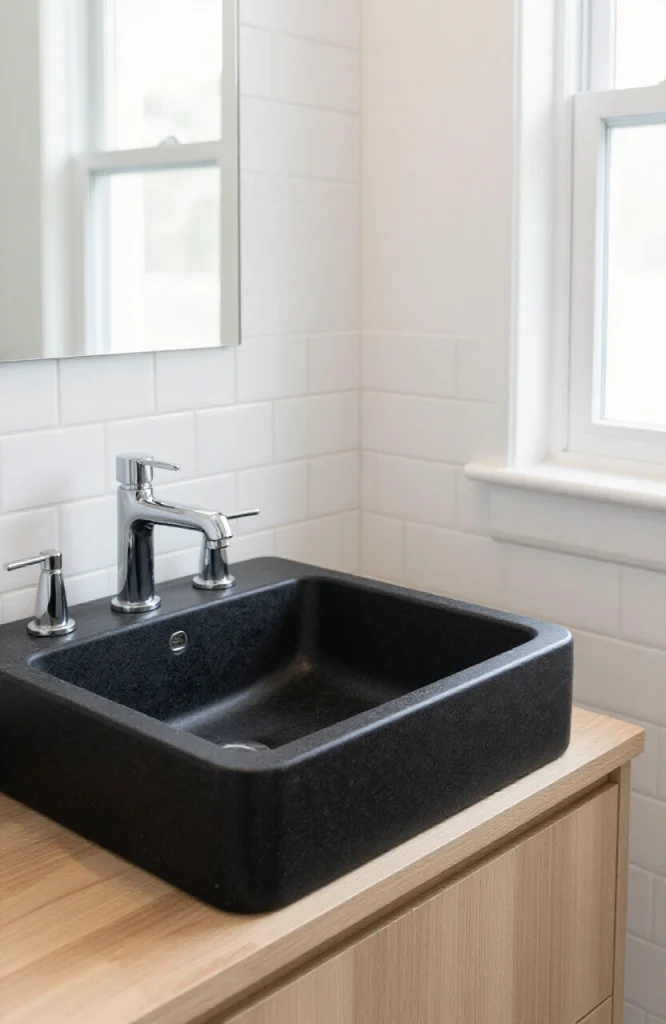
Granite composite sinks are made from a mixture of stone particles and acrylic resin, producing a material that is harder and denser than standard acrylic but lighter than cast iron. Matte black is the most popular finish in this category and pairs well with dark cabinetry while creating a strong contrast against light countertops. The material resists heat up to around 280 degrees Celsius, resists staining from wine, coffee, and acidic foods better than stainless, and does not show water spots as visibly. Sound absorption is another advantage: the density of composite material deadens the noise of running water and dishware more than thinner stainless options, which is a notable quality difference in a kitchen used daily. Corner versions are available in round, square, and rectangular bowl shapes. The matte surface ages consistently without discoloration if maintained with a food-safe mineral oil treatment every few months, which takes about five minutes and extends the life of the finish considerably.
9. Corner Sink Below a Window
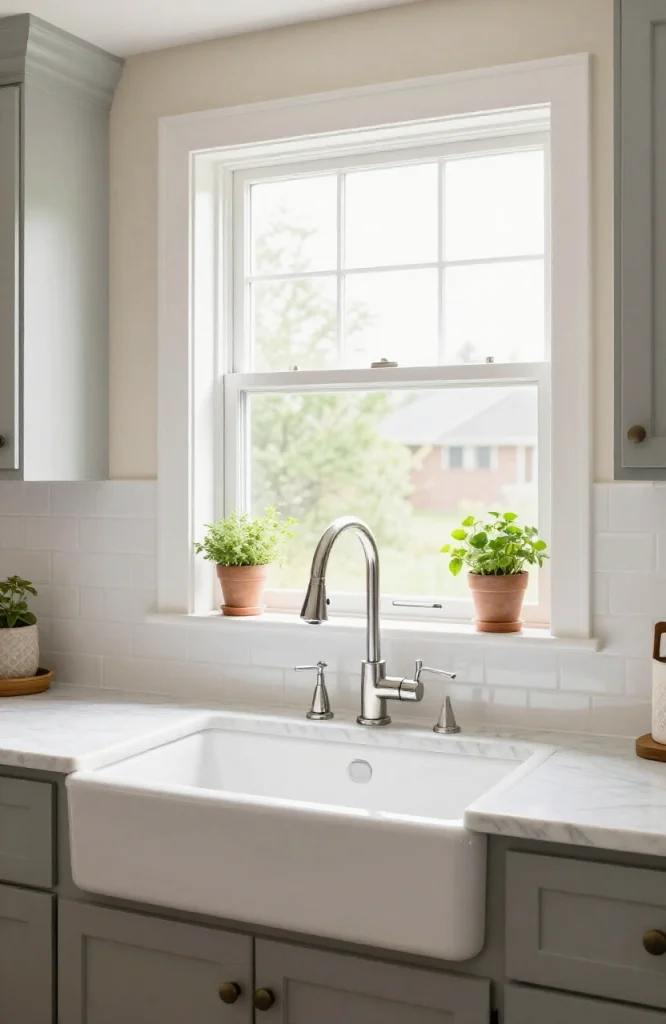
Placing a corner sink directly below a window where two walls meet is one of the most requested configurations in kitchen planning. Natural daylight while washing up reduces eye strain, and having a view, even of a small courtyard or garden, makes the task noticeably more pleasant. This is one of the most popular corner sink configurations in open-plan homes because the window typically sits at the junction of two exterior walls, which is exactly where corner sinks belong structurally. The plumbing for a corner installation runs through the diagonal base cabinet, so a window above the corner does not create any additional plumbing complexity compared to a standard placement. Window size and sill height should be considered during planning: a sill set too low will be difficult to keep dry, and a window set too high above the sink will not deliver the view benefit. Casement windows that open to the side work better than bottom-hung versions in this position since the sink limits how far you can reach to open a window that swings inward.
10. Wall-Mount Corner Sink for Small Bathrooms
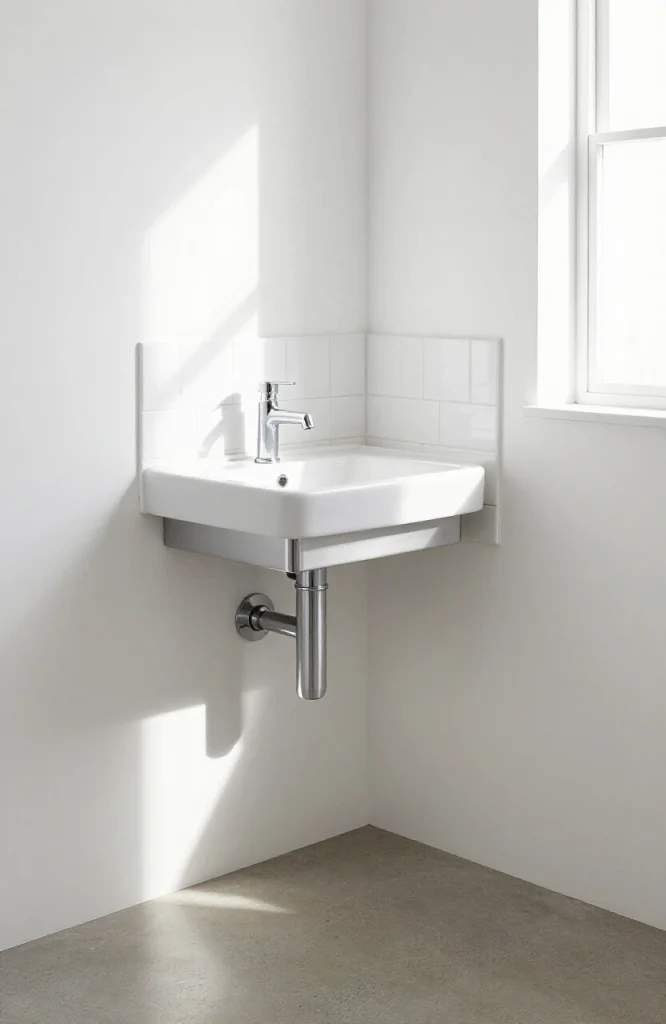
A wall-mounted corner sink brackets directly into the wall studs at the corner, removing the cabinet beneath entirely and leaving the floor open. This makes a small bathroom feel noticeably larger because the eye can travel to the baseboard on both sides without interruption, and the open floor space is easier to clean. It works well in powder rooms, small en suites, and guest bathrooms where storage is handled elsewhere in the room. The plumbing pipes are exposed below unless a partial shroud is added, which suits industrial and modern bathroom styles but may feel unfinished in more traditional interiors. Installation requires wall blocking added to the framing at the correct height before the drywall goes up, so it is much easier to specify during a renovation than to add later as a retrofit. Standard mounting height is between 31 and 36 inches from floor to sink rim, but adjusting for the height of the primary users is worth doing while the wall is open and accessible.
11. Pedestal Corner Sink
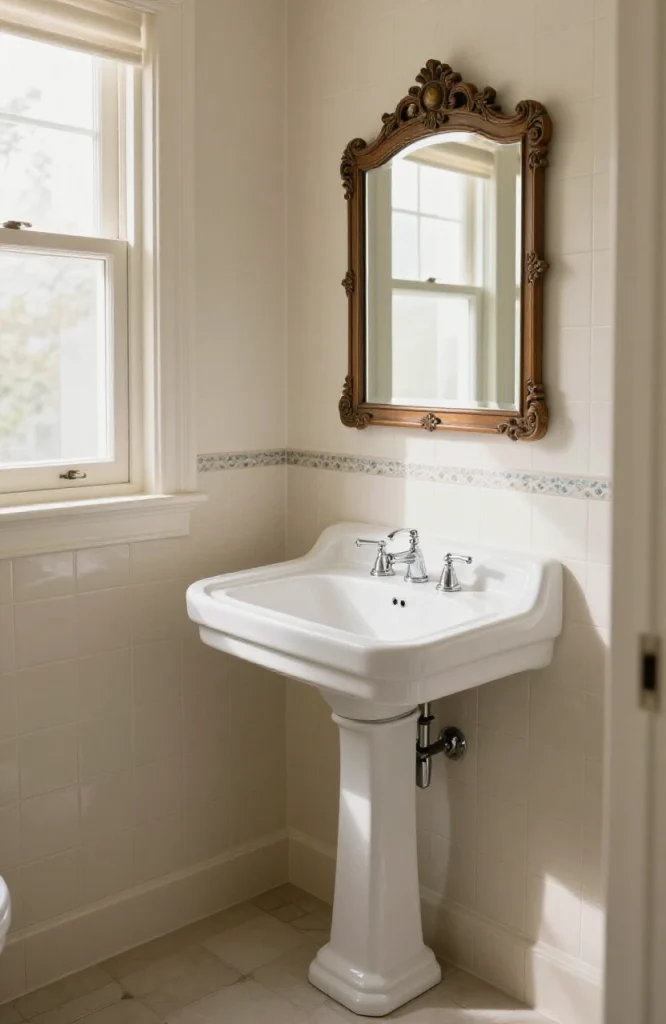
A pedestal corner sink stands on a single column that hides the water supply lines and drain pipe while keeping a freestanding, furniture-like appearance. The pedestal format suits period homes, traditional bathrooms, and cottage interiors where a floating or cabinet-mounted sink would look out of place and disrupt the room’s character. The column narrows toward the floor on most designs, which preserves some visual floor space compared to a vanity cabinet, though not as much as a fully wall-mounted installation. Storage is the main limitation: a pedestal sink provides no shelf or drawer space beneath, so towels, toiletries, and cleaning supplies need to be handled elsewhere in the room. If the bathroom has space for a separate linen tower or recessed shelving nearby, this is a manageable trade-off for the aesthetic benefit. Matching the finish of any exposed pedestal hardware to the faucet and other metal fixtures in the room pulls the look together without requiring additional decorating effort.
12. Corner Vessel Sink on a Triangular Vanity
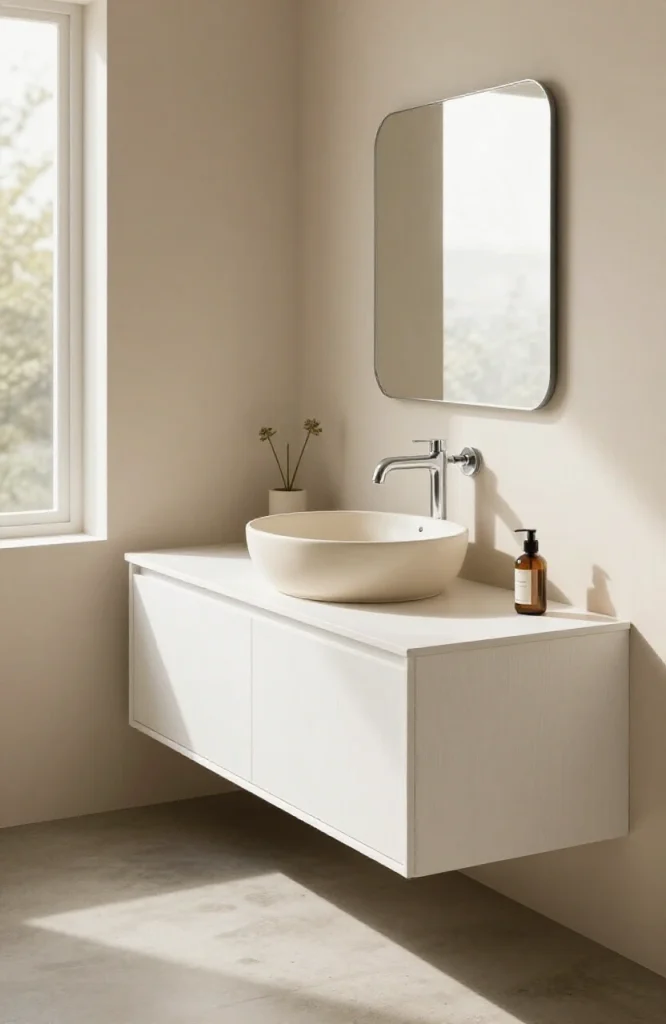
A vessel sink sits on top of the counter surface rather than into it, and a triangular corner vanity provides a purpose-built platform for this format. The combination draws the eye upward and creates a deliberate focal point in the corner, which is particularly effective in bathrooms where the opposite wall is plain or functional. Stone vessel bowls in travertine, marble, or slate suit warm, natural bathroom settings. Tempered glass bowls work in contemporary spaces where transparency is part of the design language. Ceramic vessels are the most affordable and widely available in both round and rectangular profiles. The vanity below should be fitted with a wall-mounted or tall deck faucet that clears the vessel rim, since a standard low-profile faucet will not reach the bowl properly. Storage in a triangular vanity is limited by the geometry, but manufacturers produce purpose-built triangular units with drawers and doors that make reasonable use of the space available.
13. Corner Bathroom Sink with Storage Cabinet Below
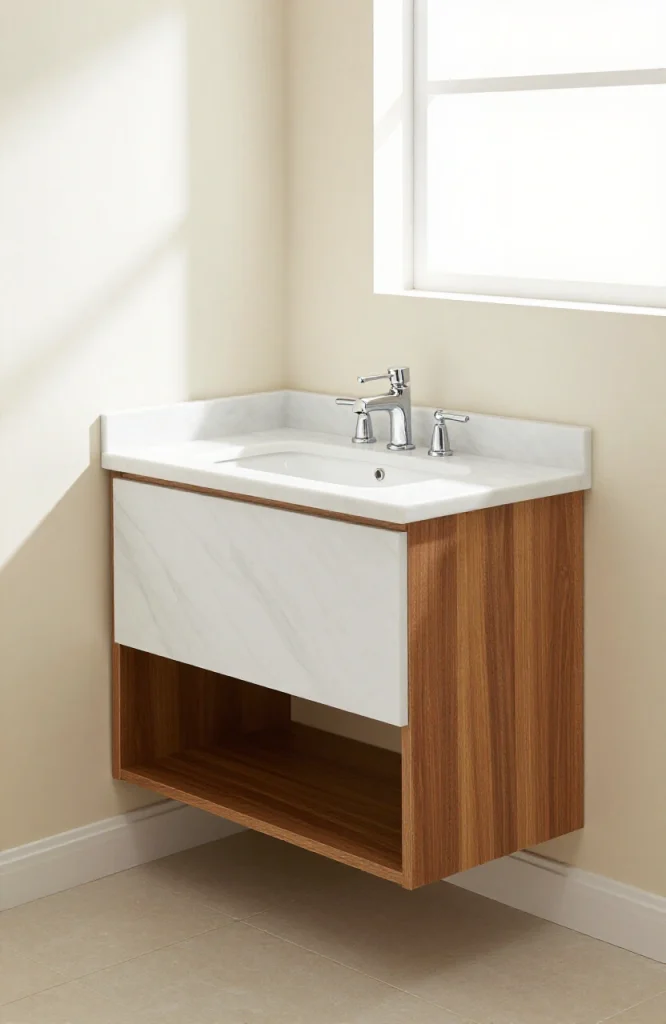
A corner vanity cabinet with a sink mounted on top gives you meaningful storage that a wall-mount or pedestal approach cannot offer. The diagonal cabinet face accepts a drop-in or undermount sink, and the interior of the cabinet holds cleaning supplies, spare toiletries, and towels behind a door or in drawers. This matters in bathrooms without a separate linen closet, where storage space has to come from wherever it can be found within the room. Standard triangular corner vanities are 24 or 36 inches wide on each side, with the larger size offering enough interior depth for full-size cleaning products and a standard-size waste bin. Soft-close hinges and drawer slides are worth specifying because the corner cabinet is often in a tight space where a swinging door that stays open becomes an obstacle for anyone else using the room. Plumbing cutouts at the back of the cabinet should be confirmed against your drain and supply positions before ordering the unit.
14. Undermount Corner Bathroom Sink
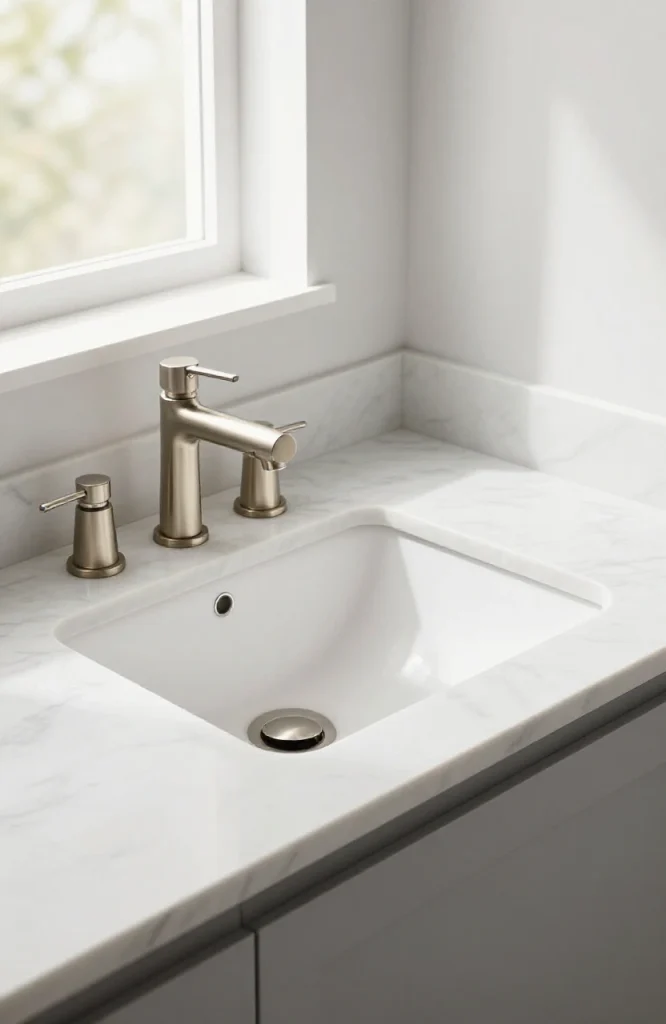
Undermounting a sink into a corner vanity top creates a seamless transition between the countertop and the basin. There is no rim sitting above the surface to accumulate toothpaste, soap residue, or water, which simplifies daily cleaning considerably and keeps the vanity top looking orderly. The look suits modern and minimalist bathrooms where the design goal is flat, uninterrupted surfaces with no visible hardware breaks. Stone, solid surface, and quartz are the best countertop materials for undermounting because they can be finished with a smooth, polished edge directly at the sink opening. Porcelain and ceramic tile countertops are more difficult to undermount cleanly because the grout line at the edge of the opening is hard to seal and tends to discolor over time with repeated moisture exposure. The undermount format requires professional installation to ensure the sink clips are correctly set into the underside of the countertop material before it is placed on the vanity.
15. Corner Sink in a Kids’ Bathroom
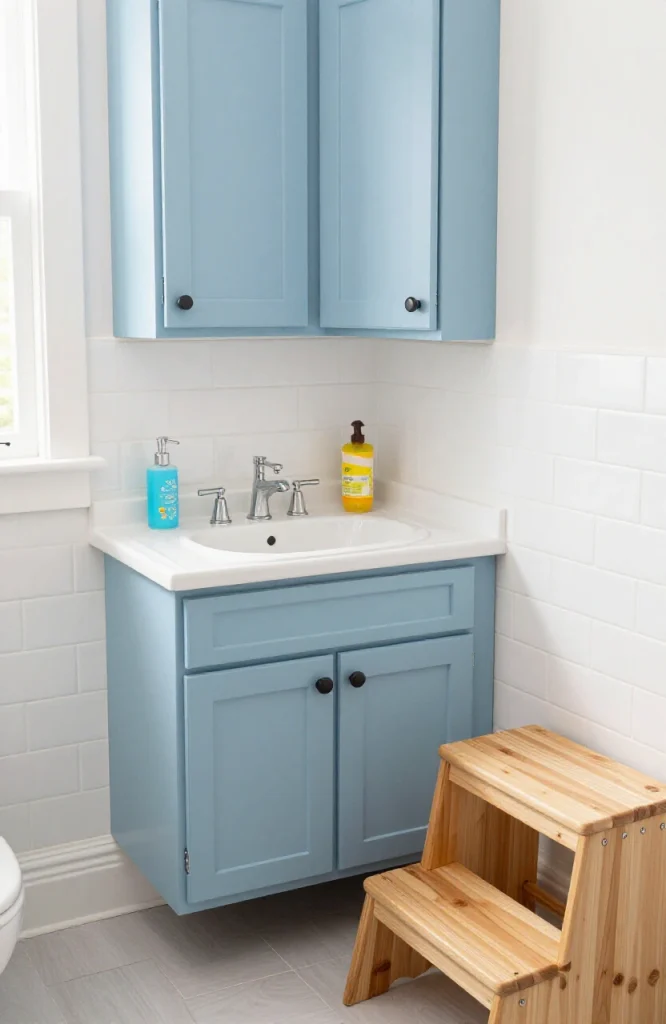
A corner sink installation in a children’s bathroom benefits from a lower mounting height than the adult standard, typically around 28 to 30 inches from floor to rim rather than the usual 32 to 36 inches. A lower height makes hand-washing genuinely accessible for children without a step stool, which reduces the chance of a child climbing on something unstable to reach the faucet. If the bathroom will be used by both adults and children over many years, a wall-mounted corner sink set at a compromise height of around 30 inches works for most children once they reach school age and remains comfortable for adults who do not mind a slightly lower wash position. The faucet should be a lever or sensor type rather than a round knob, since small hands find knob-style faucets harder to grip and turn. Durable, non-porous materials like ceramic or composite are the most practical finish choice given the likelihood of toothpaste, craft paint, and other residue in daily use.
16. Industrial Pipe Corner Sink
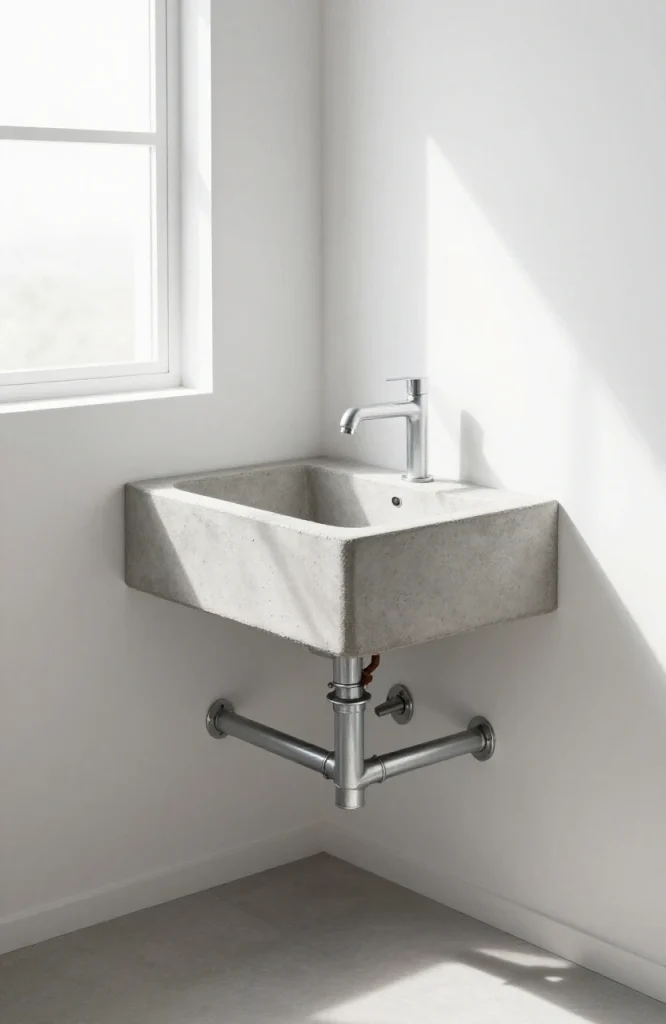
An exposed pipe corner sink treats the supply lines and drain as visual elements rather than concealing them behind cabinetry or wall panels. A simple steel or concrete basin mounted at corner height with visible black iron or copper pipework suits loft-style bathrooms, converted warehouse apartments, and industrial-themed powder rooms with raw wall finishes. The visible plumbing is the design feature here, not an oversight, and it reads best when the pipes are properly fabricated: consistent finish, neat junctions, and fittings that look intentional rather than provisional. For more on how to carry this aesthetic through a full room, see loft apartment decoration ideas. A concrete or steel basin should be sealed correctly if it is custom-made, since unsealed concrete stains with water minerals and soap over time in ways that are difficult to reverse. Pipe shelving on the adjacent walls can extend the industrial design language of the corner sink into the surrounding space without requiring additional large fixtures.
17. Corner Utility Sink for Laundry Rooms
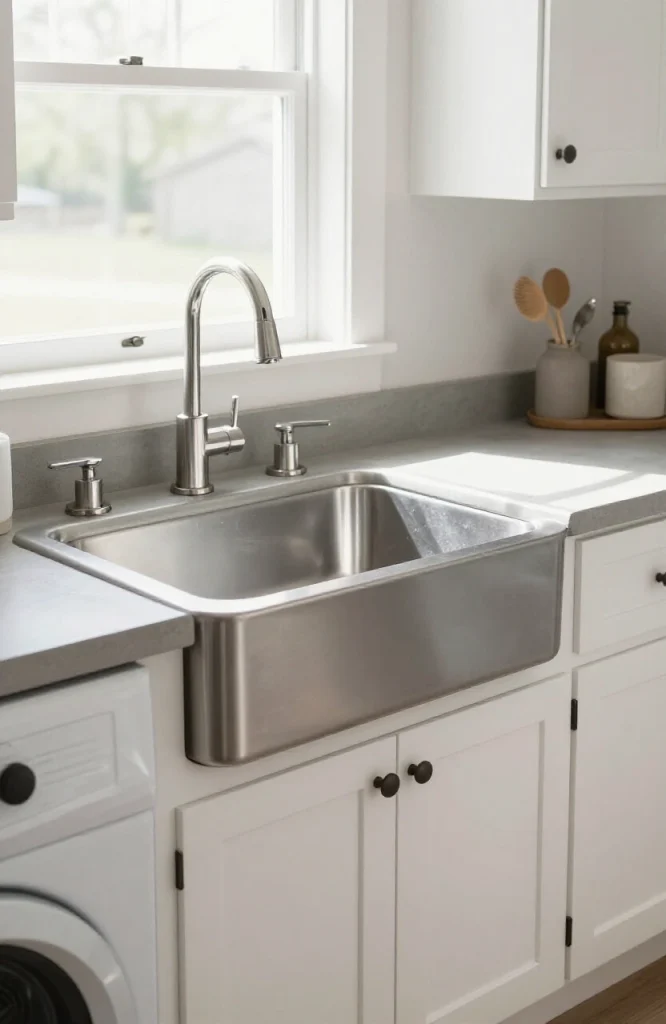
A deep single-bowl utility sink in a laundry room corner is one of the most practical corner sink applications in the house. It handles hand-washing delicates, soaking stained clothing, cleaning garden tools, rinsing mops and buckets, and washing paint brushes, all tasks that would dirty the kitchen or bathroom sink if done there. Standard utility sinks are 22 to 25 inches deep, which is significantly deeper than a kitchen sink, and most are made from polypropylene, stainless, or cast acrylic for resistance to bleach and heavy-duty cleaning products. Wall-mount versions free up floor space for a laundry trolley or storage unit beneath the sink. Freestanding floor models on adjustable legs suit uneven floors common in older laundry rooms and basements where the subfloor may not be perfectly level. A pull-out spray faucet or a high-arc mixer makes filling large buckets and rinsing oversized items significantly easier than a standard low-profile tap that limits how you can position a container beneath it.
18. Corner Sink in a Mudroom
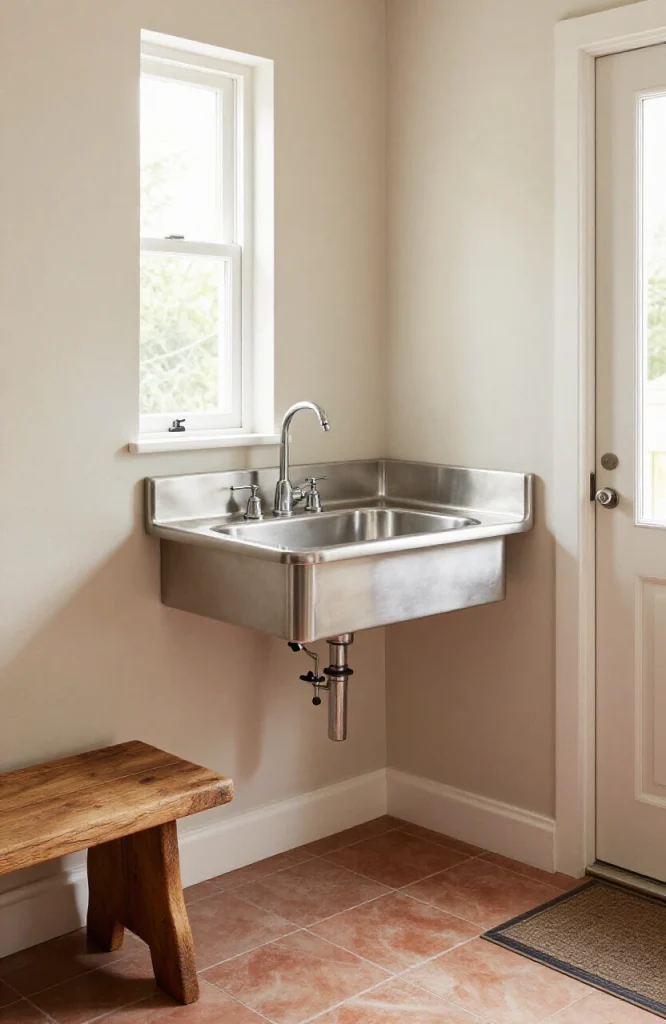
A mudroom corner sink positioned near the entry point of the house catches mess before it travels further in. A composite or stainless bowl handles garden soil, sports equipment cleanup, pet paws, and general outdoor grime without the concern about scratching or staining a more decorative material. The corner placement works well in mudrooms because these rooms often have an irregular layout with the door opening on one wall and storage running along another, making the corner a natural location for a sink that is accessed from either direction. A pull-out spray faucet with a long hose gives enough reach to rinse boots placed on a mat beside the sink or to clean items that do not fit in the basin itself. A drain tray or rubberized mat on the floor beneath the sink catches drips and splashes, which is especially useful in mudrooms where the floor may be tile or sealed concrete that shows water marks from daily use.
19. Copper Corner Kitchen Sink
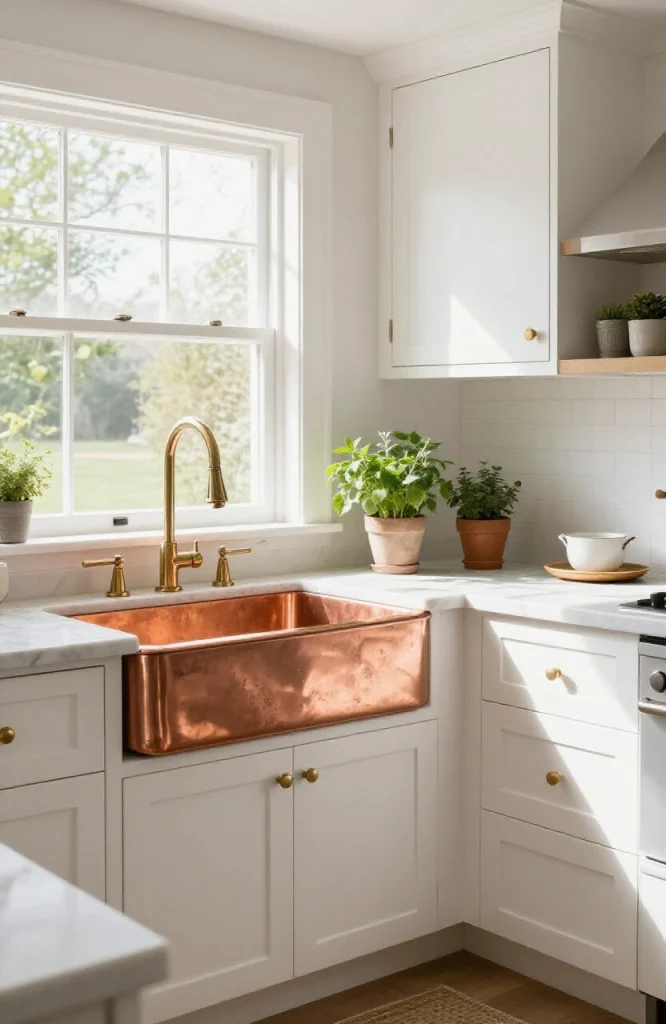
Copper kitchen sinks develop a living patina over time as the metal oxidizes, shifting from bright orange-red toward darker brown and eventually a matte bronze tone. Many homeowners find this aging process adds character that a static finish cannot replicate, though it requires acceptance that the sink will look different in five years than it does on installation day. Hammered copper finishes hide water spots and minor surface marks better than smooth versions, and the texture catches light in a way that suits rustic, Mediterranean, and artisan kitchen styles. A corner placement is particularly effective with copper because the sink is visible from two sides as you move through the kitchen, showing off the hammering and patina from multiple angles simultaneously. Copper also has natural antimicrobial properties, which is a genuine functional advantage in a surface that handles raw food preparation regularly. The material requires specific care: acidic cleaners accelerate the patina, while wax-based treatments slow it down, so the maintenance routine should reflect how you want the finish to evolve over time.
20. Fireclay Corner Sink
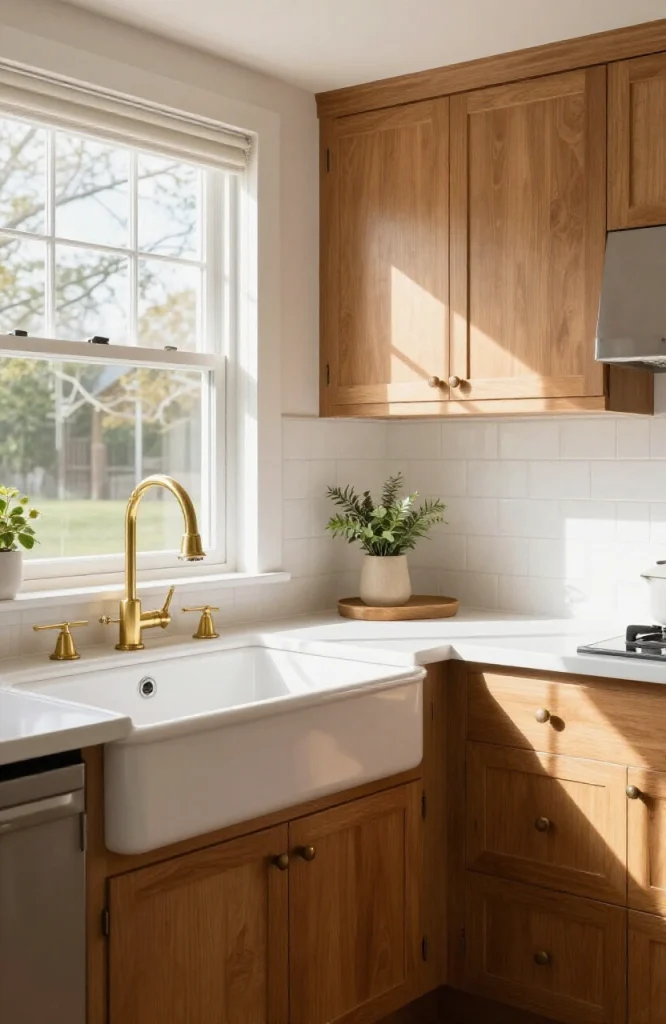
Fireclay is produced by shaping clay into the sink form and firing it at temperatures above 1,000 degrees Celsius, which fuses the clay and glaze into a single non-porous mass. The result is a surface harder than standard ceramic, resistant to thermal shock, and completely sealed against staining from the factory rather than relying on surface sealants applied after manufacture. A corner fireclay sink in cream or white suits cottage kitchens, traditional English-style kitchens, and farmhouse-style remodels where the sink is meant to look like a considered material choice rather than a standard fitting. Fireclay corner sinks are heavier than ceramic but lighter than cast iron, which makes installation somewhat more manageable than a cast iron equivalent. The glaze can chip if struck hard with a heavy object, but the clay body beneath is the same color as the glaze in most brands, so minor chips are less visible than on enameled iron. Sizes range from compact 24-inch diagonal models to large 36-inch versions suited to professional-style kitchens where basin capacity is a priority.
21. Corner Sink with Integrated Cutting Board
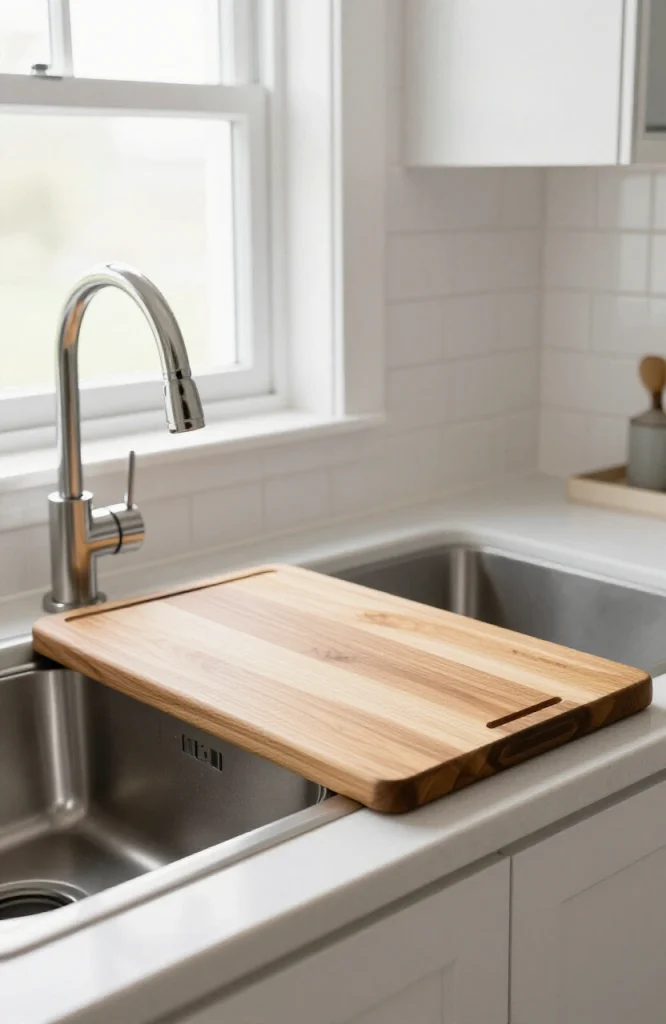
Some kitchen corner sinks come with a matching solid wood or composite cutting board engineered to fit over one of the bowls or across the sink deck on a pair of recessed rails. The board converts the corner zone into a dedicated prep station where you can cut, chop, and transfer directly to the bowl for rinsing without moving to a separate surface. Teak and bamboo are the most common wood options because they resist moisture better than other hardwoods and do not warp as readily with repeated wet-dry cycles during everyday kitchen use. The board should be removed and dried upright after each use rather than left sitting in moisture, which applies to cutting boards wherever they are placed. Some sink manufacturers produce this as a factory accessory specifically sized to their sink dimensions, while universal versions are available to fit a range of sink openings. The combination works especially well for vegetable prep and fruit washing, where transferring from board to rinse basin is a frequent and repetitive action.
22. Diagonal Corner Cabinet Sink Setup
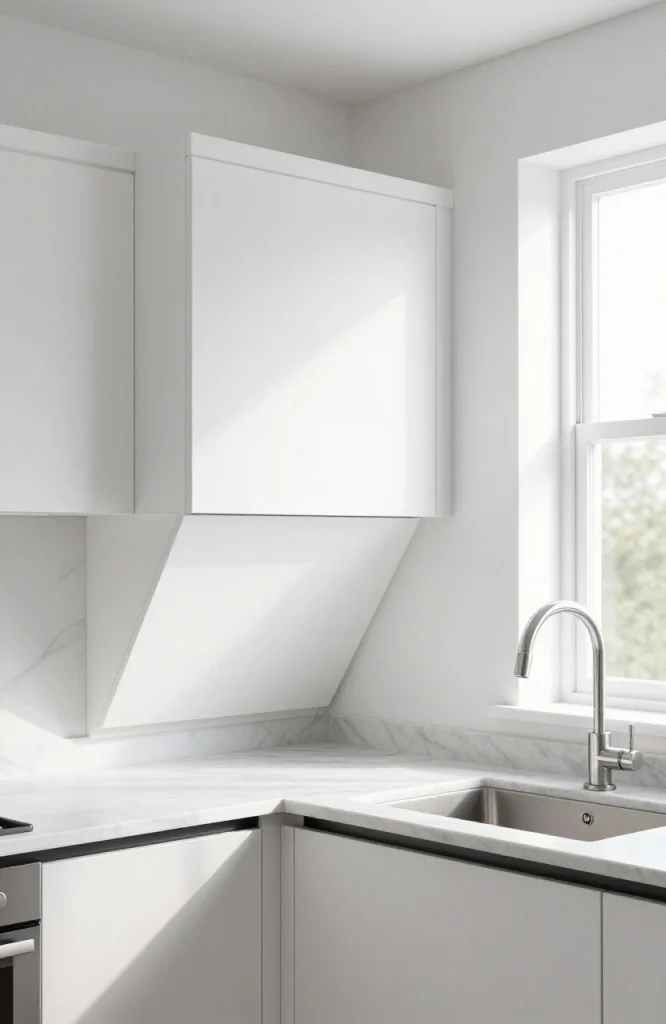
The diagonal corner cabinet is the standard structural approach for installing a corner kitchen sink. The cabinet face is angled at 45 degrees to the two adjacent walls, creating a flat front panel that the sink drops or mounts into from above or below. This configuration is produced by most major cabinet manufacturers as a standard item in their base cabinet ranges, which means it accepts off-the-shelf sinks in common widths without custom fabrication or special ordering. The diagonal angle also reduces the depth of the dead space behind the cabinet compared to a standard corner lazy-susan unit, making the under-sink plumbing access slightly more practical. The inside of the diagonal cabinet is irregularly shaped, but it remains usable for storing cleaning products, a garbage disposal, and water filtration equipment. Dimensions vary by manufacturer, but most diagonal bases are designed around a 36-inch opening, which accepts sinks between 24 and 33 inches in outside dimension.
23. L-Shaped Corner Sink Configuration
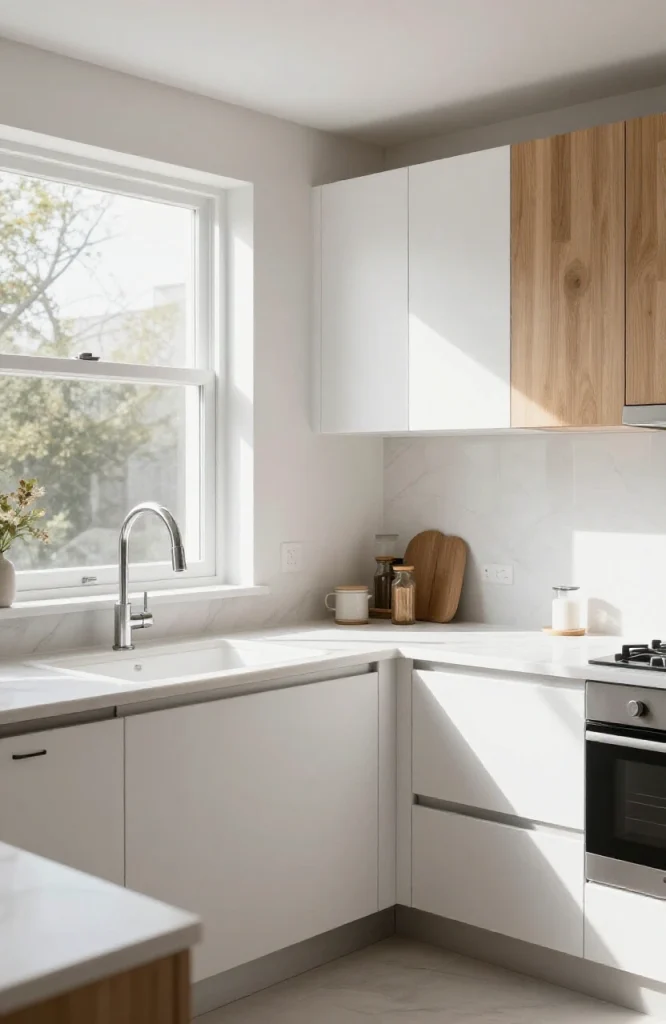
An L-shaped sink wraps the basin around the corner itself rather than sitting at a diagonal, giving you a larger total work area in the sink zone than any diagonal format can provide. This configuration requires a custom or semi-custom installation because the basin spans both adjacent wall runs and needs a corner cabinet with a specific internal cutout to match the exact dimensions of the sink. The advantage is significant: an L-shaped corner sink can offer the equivalent of a 36-inch single run plus an additional 18 to 24 inches along the adjacent counter, which suits larger kitchens and households that cook in volume. The geometry also means you can position the faucet at the corner apex, giving equal reach to both sides of the basin. This format works well in open-plan setups where the sink zone anchors a large kitchen perimeter run. Plumbing for this configuration centers the drain at the corner, which requires precise rough-in positioning during the construction or renovation stage.
24. Corner Bar Sink
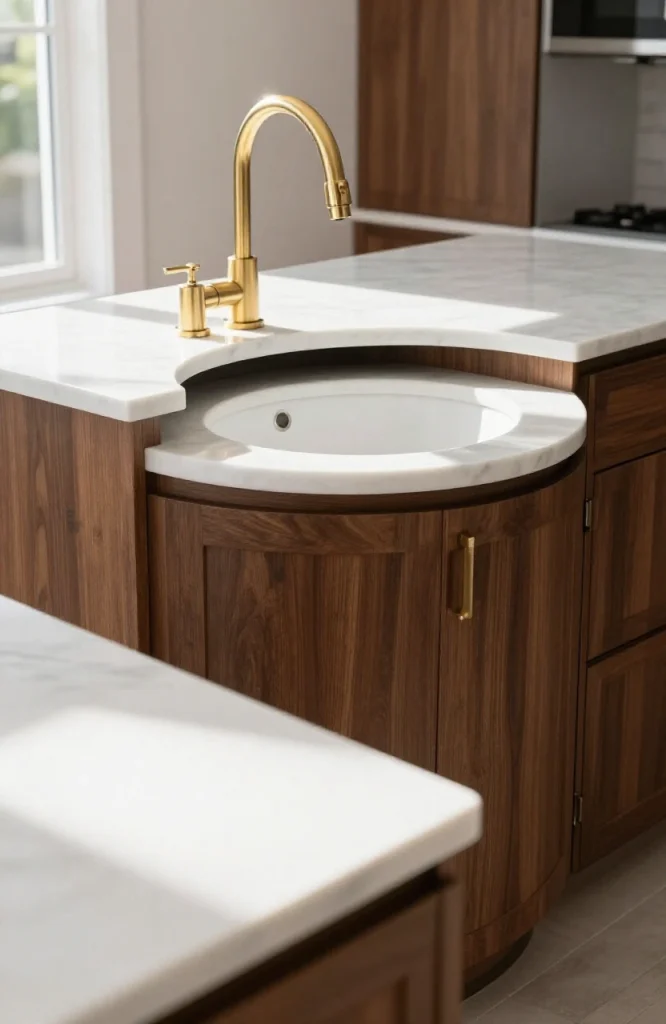
A corner bar sink is a small secondary sink, typically between 9 and 15 inches in diameter or across each side, installed in the corner of a home bar, butler’s pantry, or kitchen island. It handles drink preparation, ice bucket filling, wine glass rinsing, and bar tool cleaning without requiring access to the main kitchen sink during food preparation. The small size means it drops into a relatively shallow corner cutout, and the under-sink space is large enough for a wine chiller or a compact under-counter refrigerator on one side. Stainless steel is the most common material because it is easy to keep clean and resists the cocktail ingredients and acidic drinks that pass through it regularly. Round bar sinks suit curved or oval counter edges, while square versions fit better in a tightly defined rectangular corner cabinet. A dedicated cold water line and drain are all that is needed for installation, making this one of the more straightforward corner sink additions from a plumbing standpoint.
25. Corner Sink with Two Faucets
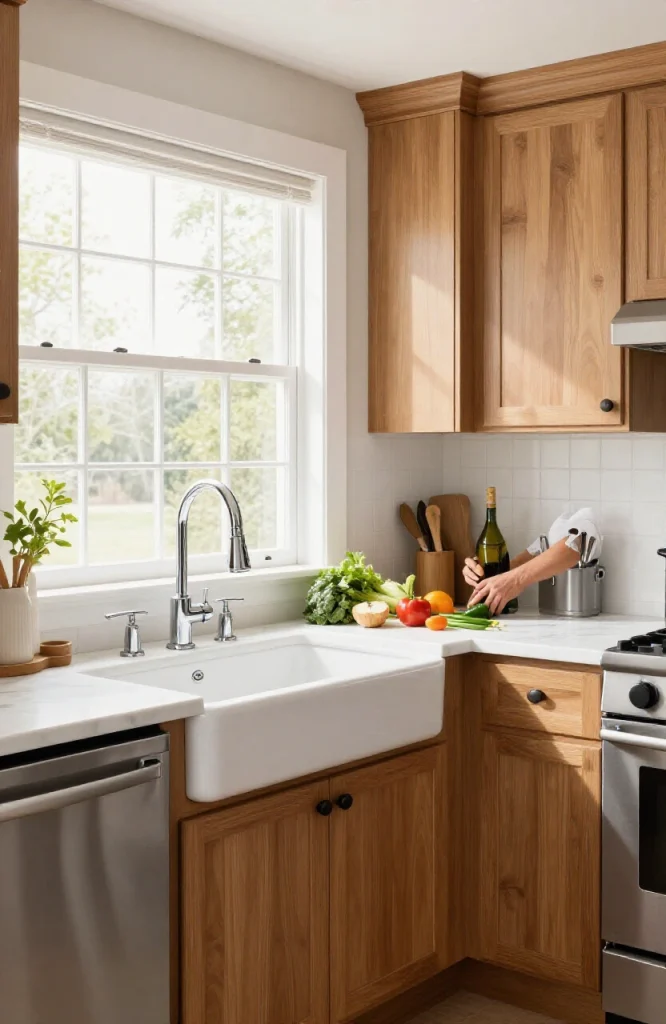
A corner sink configuration with two separate faucets serves a large kitchen where two people frequently work at the sink simultaneously, or where the sink sits at the junction of two distinct prep zones on either side of the corner. Each faucet handles its zone independently, so both users can control water temperature and flow without interfering with each other. This format requires a sink with enough deck space for two faucet holes drilled at appropriate positions, or wall-mounted faucets on the two adjacent walls above the basin. The plumbing requires two separate hot and cold supply connections, which adds to the rough-in complexity but is straightforward for any licensed plumber working from the plans. The corner placement centers the sink between both zones naturally, making the two-faucet format more logical here than it would be in a straight run where one user would be reaching past the other to access a far faucet.
26. Corner Prep Sink in a Kitchen Island
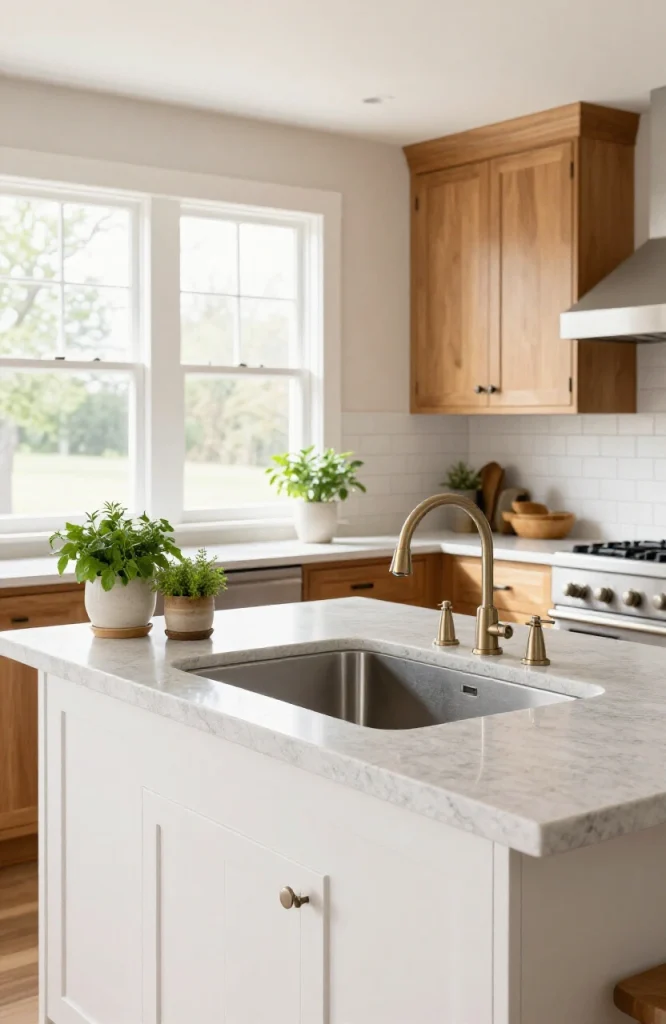
Installing a secondary prep sink in the corner of a large kitchen island puts washing and rinsing capacity exactly where food preparation happens, separate from the main cleanup sink on the perimeter wall. Island corners are regularly underused in kitchen design, given over to decorative corbels or dead counter space, and a small prep sink changes that entirely. A 15- to 20-inch round or square bowl is enough for vegetable washing, herb rinsing, and handwashing during cooking without taking up the counter space needed for prep boards and mixing bowls. The faucet should be compact and positioned so it does not block sightlines across the island from the seating side. A short pull-down spray head suits this format better than a tall gooseneck, which can feel oversized on a prep-scale sink. Plumbing for an island corner sink runs through the island base to a connection point in the floor, which should be planned at the structural stage of the kitchen design.
27. Corner Sink with Pull-Down Spray Faucet
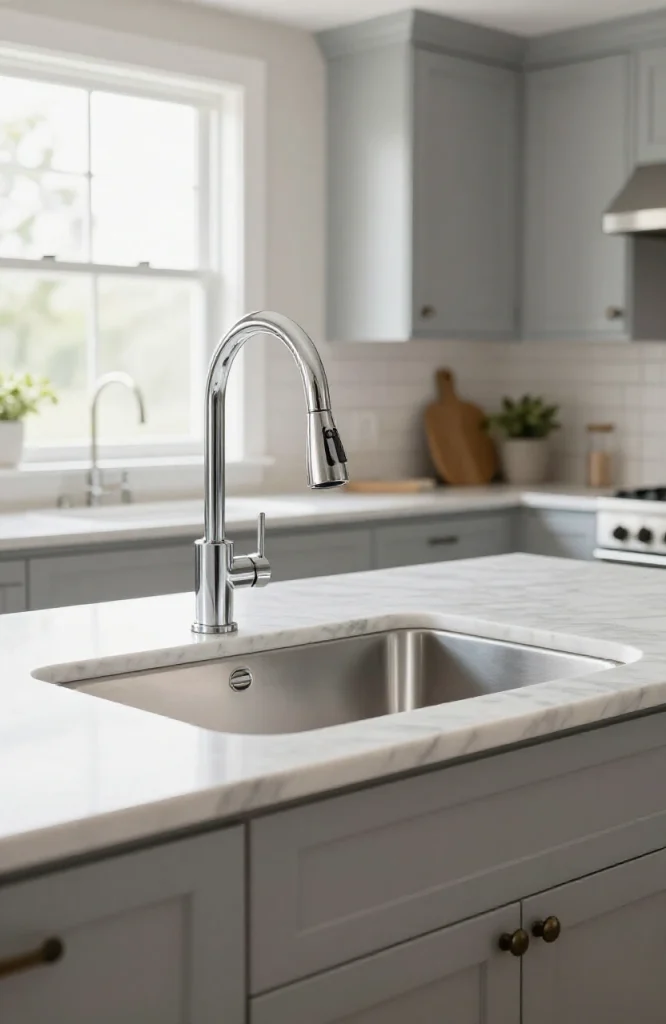
A pull-down spray faucet extends the reach inside a corner sink significantly compared to a fixed spout. Standard faucet spouts have a set reach that may not cover the full bowl of a large corner sink, especially when the basin is set back into the corner rather than positioned close to the front of the cabinet face. A pull-down head brings the water source directly to wherever it is needed, including the back corners of the bowl and the areas beneath the rim that a fixed spout cannot reach efficiently. Most pull-down faucets include a spray and stream function on the head, controlled by a button, and the magnetic docking mechanism used by most current models keeps the head parked securely when not in use. The hose inside the faucet body should be rated for the water pressure in your supply line: cheaper versions use thinner braided hose that can develop leaks at connection points within a few years of daily use, so specifying a solid brass body with a stainless braided hose is worth the extra cost at installation.
28. Corner Sink Paired with Open Shelving
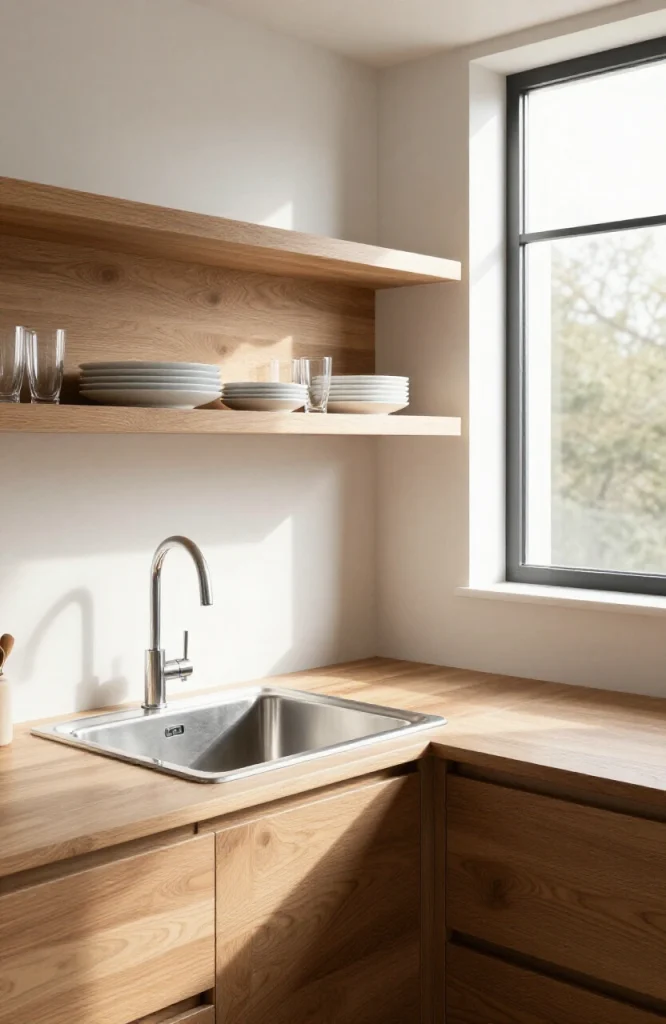
Placing open shelves on the walls above a corner sink keeps frequently used items within easy reach without the visual weight of upper cabinets closing in on the corner. Plates, glasses, oils, and frequently used utensils sit at eye level and are accessible without opening cabinet doors. The open shelf format also works well aesthetically in a corner because shelves on both walls create a symmetrical frame around the sink zone rather than a single shelf run that ends abruptly at the corner. For detailed guidance on how to arrange and style this combination, see open shelving kitchen ideas. The practical consideration is that items stored above a sink collect grease and moisture more quickly than in closed cabinets, so the shelving material should be sealed or painted and the items stored there should be things you use often enough to keep clean through regular rotation.
29. White Ceramic Corner Bathroom Sink
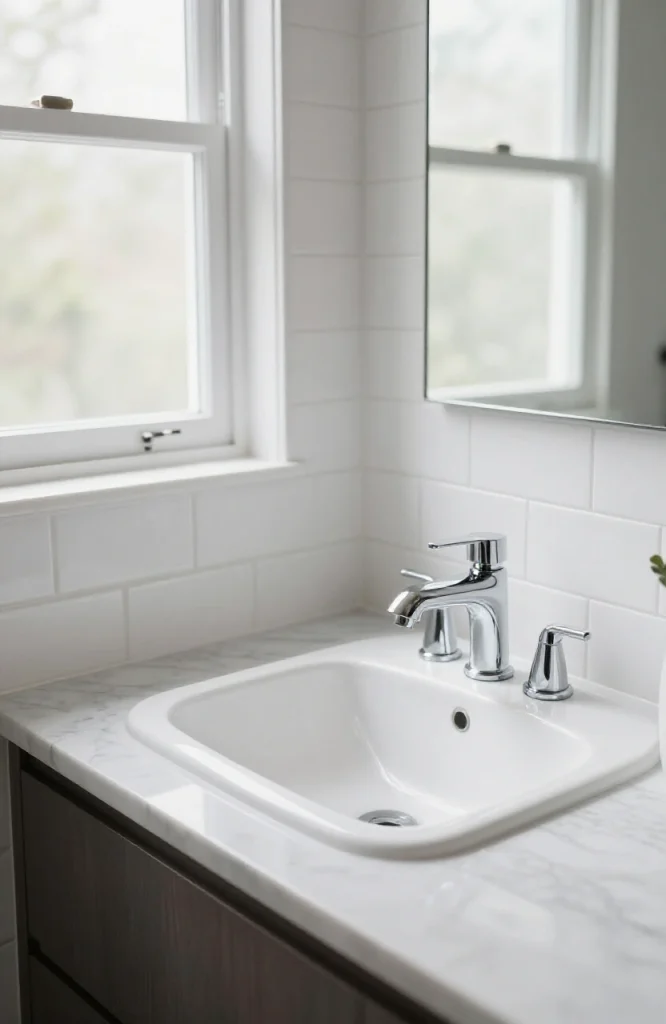
White ceramic is the most widely produced and most widely sold material for bathroom corner sinks, and for practical reasons: it is durable, non-porous from the factory, resistant to most bathroom chemicals, and easy to clean with standard household products. The vitreous china glaze used on bathroom-grade ceramic is harder than the glaze on kitchen sinks and resists most surface scratching under normal use conditions. Drop-in, undermount, wall-mount, and vessel versions are all produced in white ceramic corner formats, giving you flexibility on the installation method without having to change material. The price range is wide: budget ceramic corner sinks start below $80, while higher-end designer versions in the same material can cost several hundred dollars, with the difference usually in the precision of the casting, the thickness of the walls, and the quality of the glaze. For most bathrooms, a mid-range ceramic corner sink from a reputable manufacturer is the most sensible combination of cost and longevity.
30. Corner Sink with Mirrored Cabinet Above
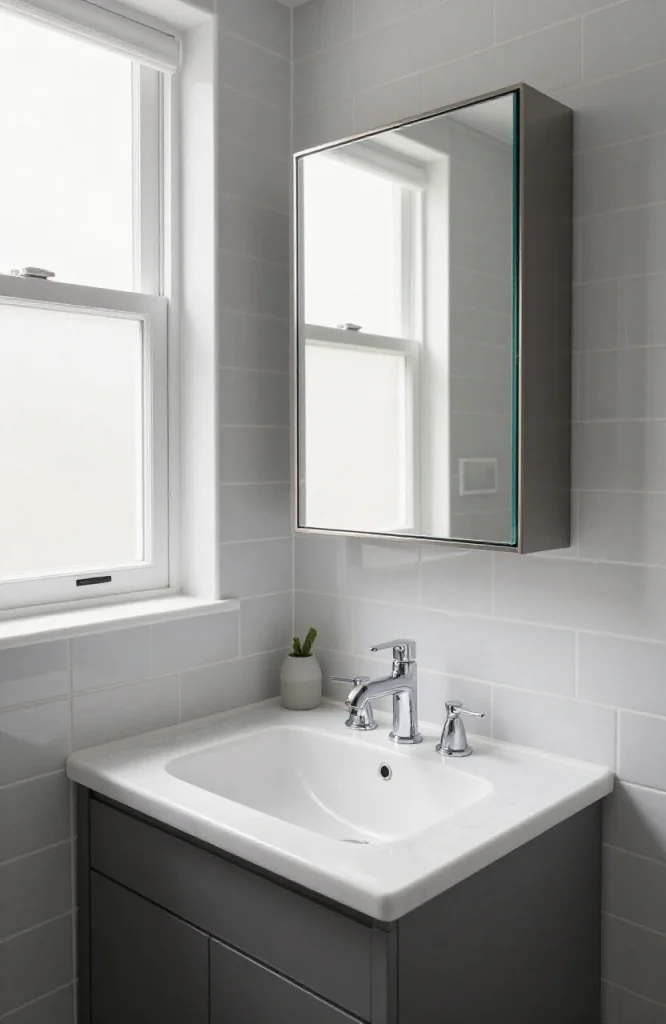
A mirrored cabinet mounted directly above a corner sink handles two needs in one unit: storage for toiletries, medications, and grooming products, and a mirror for daily use at the sink. In small bathrooms where wall space is limited, placing both functions at the corner means the remaining walls stay free for towel bars, artwork, or light fixtures. Mirrored corner cabinets are produced in triangular and angled formats specifically for corner mounting, with the mirror face angled to reflect the user standing at the sink rather than the wall directly behind the cabinet. Depth is worth checking before ordering: shallower cabinets hold small items only, while deeper units accommodate full-size product bottles but project further into the room. Soft-close hinges are worth specifying because a swinging mirror cabinet door in a small bathroom can catch on towel rails or the toilet if it opens too freely and lacks a controlled close.
31. Floating Corner Vanity with Sink
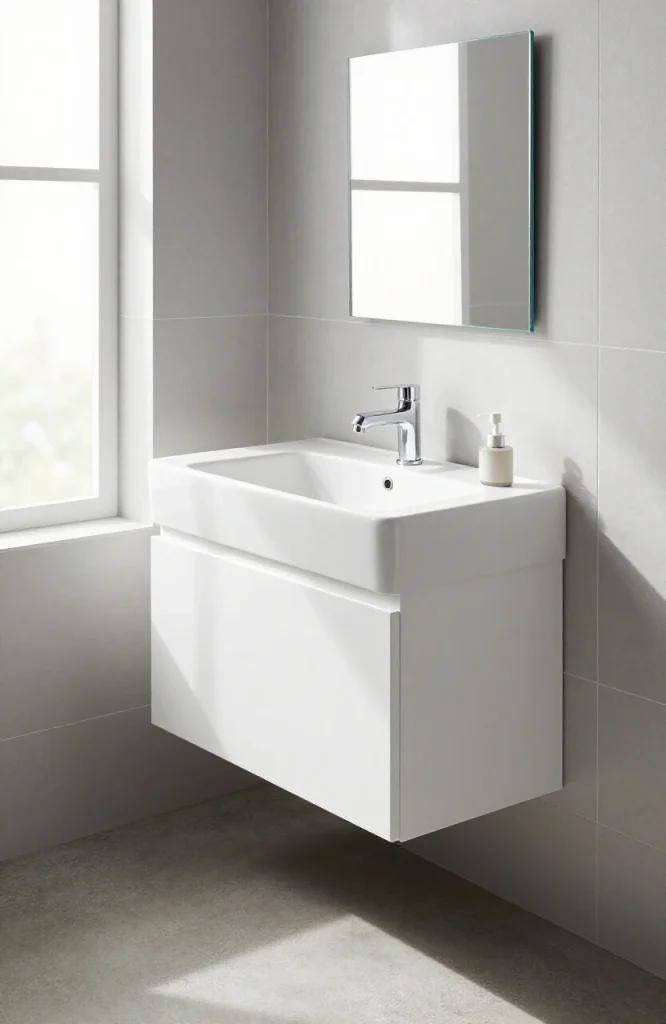
A floating or wall-hung corner vanity suspends from the wall framing at a set height, with nothing touching the floor beneath it. This creates the impression of more floor space in a small bathroom because the tile or flooring material runs uninterrupted from wall to wall beneath the vanity, with no cabinet base interrupting the sight line at floor level. The clear space beneath also makes floor cleaning straightforward, which is a practical advantage in a busy bathroom that sees daily use. Wall-hung vanities require robust wall blocking installed during construction or renovation, since the weight of the vanity, sink, water, and stored contents concentrates on the mounting points rather than distributing to the floor. Heights between 15 and 20 inches from floor to vanity base are common in floating designs, which gives enough clearance for cleaning equipment while keeping the mounting height at a comfortable position for most adults.
32. Corner Sink in an En Suite Bathroom
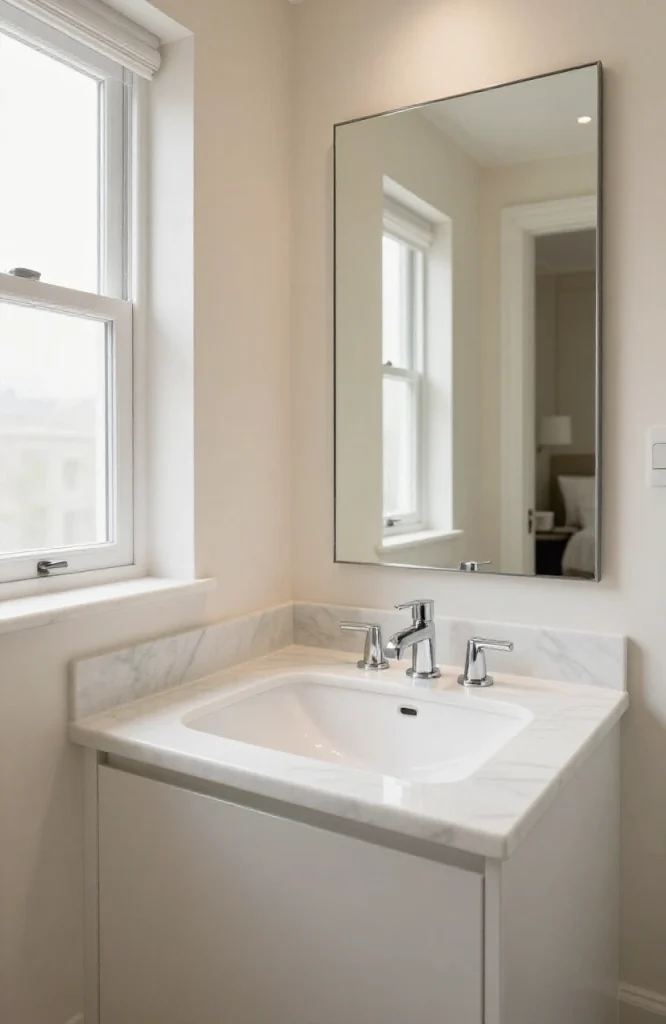
En suite bathrooms attached to bedrooms often have layouts shaped by the placement of the main bedroom walls, closets, and the bathroom door itself, producing angles and alcoves that a corner sink fits into better than a centered basin placed on the main wall. Placing the sink in the corner of the en suite keeps the primary wall free for a large mirror, a double vanity, or a freestanding tub depending on the size of the space. The proximity of the bathroom to the sleeping area means noise is worth considering in fixture selection: a quiet basin faucet and a soft-close drain stopper reduce the chance of waking a sleeping partner during early morning use. A wall-mount or floating vanity corner sink is particularly effective in an en suite because it keeps the floor open and makes the bathroom feel like a considered extension of the bedroom rather than a functional utility space attached to it.
33. Concrete Corner Sink
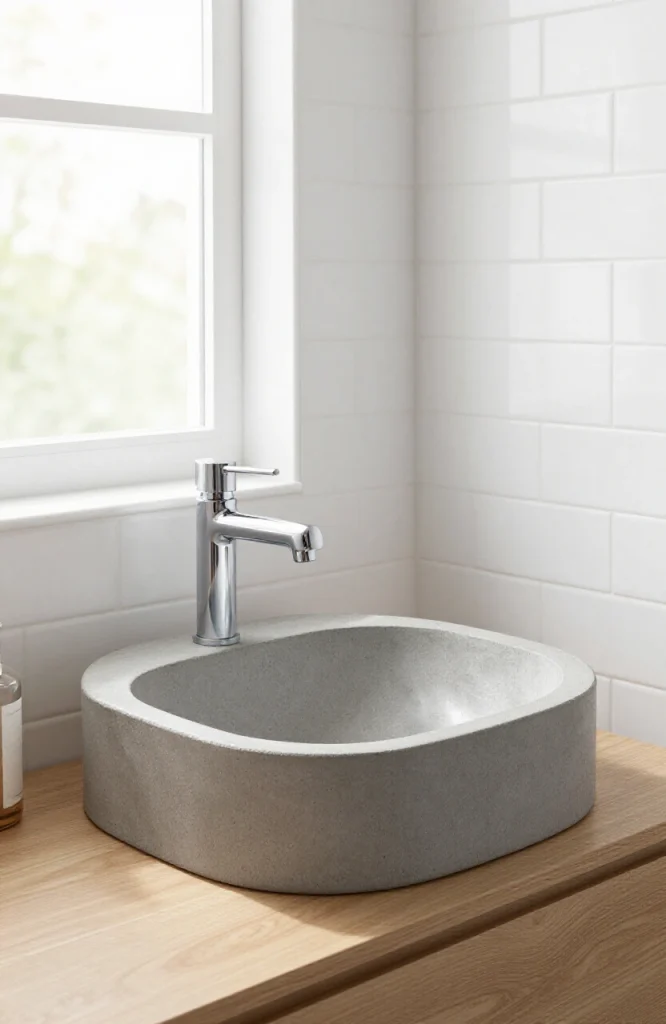
A poured concrete corner sink is almost always custom-made to fit the specific corner dimensions of the room, which means it can be shaped to match an unusual angle, extend along one wall more than the other, or include integral side shelves or a drain board. The concrete body needs to be sealed with a penetrating food-safe sealer before use and resealed annually to prevent staining from water minerals, soap, and other daily residue that penetrates unsealed surfaces over time. Matte finishes are the most common because they hide sealer application marks and minor surface variation better than polished concrete, which amplifies every imperfection. Embedded pigments can tint the concrete to any color during the mixing stage, allowing precise matching to tiles, flooring, or cabinetry in the room. The industrial and organic character of concrete suits modern and brutalist interiors but can also work in warmer, more natural settings when combined with wood cabinetry and warm-toned lighting that balances the coolness of the material.
34. Corner Sink with Tiled Surround
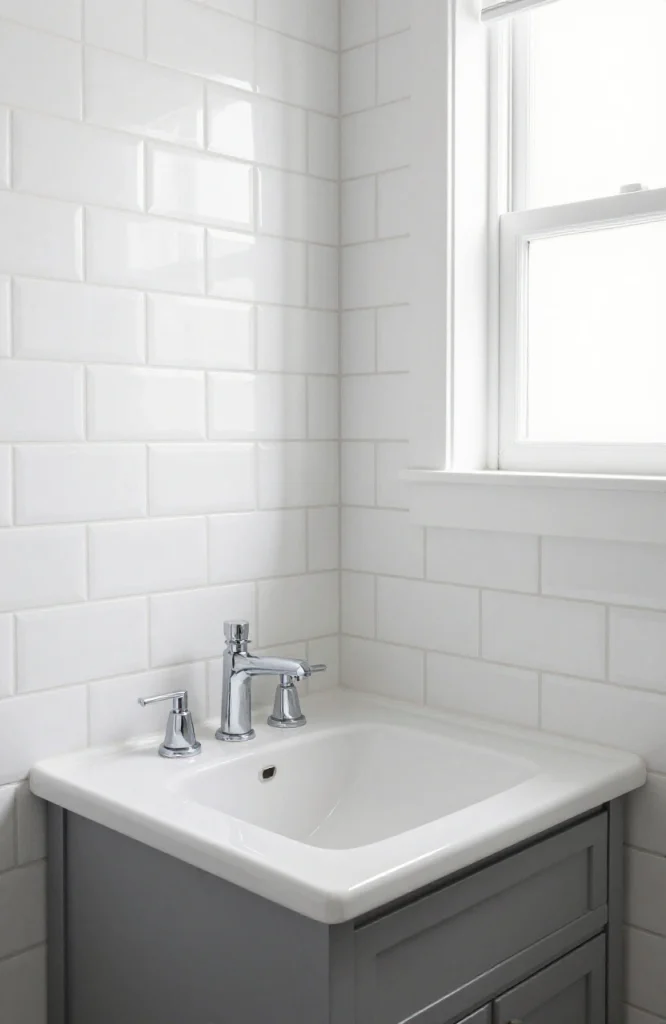
Tiling the wall area around a corner sink, including the diagonal section between the two walls, creates a cohesive backsplash that makes the corner feel like a considered design zone. Without a tiled surround, a corner sink can look isolated against plain painted walls, especially in kitchens where cabinetry ends at the corner and the sink is the only element in that zone. Small format mosaic tiles work particularly well at a corner because they wrap around the angled surfaces without requiring complex cuts that would be visible and difficult to execute cleanly. Subway tile in a running bond pattern also handles the corner transition well as long as the cuts are made accurately where the tile meets the diagonal. For color direction on the backsplash, see kitchen backsplash color ideas. The grout color between tiles at the corner joint should be sealed at installation and resealed every two years to prevent moisture penetration behind the tile in a surface that sees regular water exposure.
35. Vintage Enamel Corner Sink
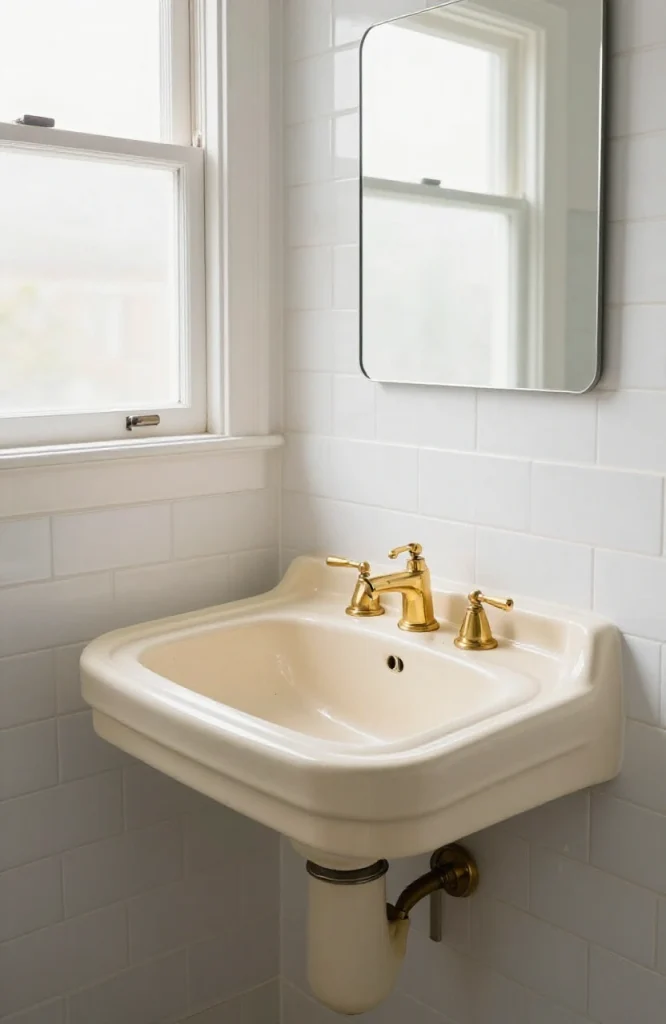
Reclaimed or reproduction vintage enamel corner sinks bring period character to older homes and renovation projects where an authentic, slightly imperfect aesthetic is the goal. Original mid-century corner sinks are available through architectural salvage dealers, and reproductions from specialist manufacturers replicate the proportions and finish of the originals without the wear of decades of use. Enamel chips and cracks can often be repaired with a color-matched enamel touch-up kit, so a reclaimed sink with some surface wear does not necessarily mean a compromised function. The heavy iron or steel body beneath the enamel is durable enough to last indefinitely if the enamel surface is maintained and not subjected to impact damage. These sinks often came installed in corners originally, particularly in sculleries, service kitchens, and small bathrooms built between the 1920s and 1960s, so the corner format is historically appropriate and adds to the sense that the sink belongs in the space rather than being added as a later renovation.
36. Corner Sink in a Tiny House Kitchen
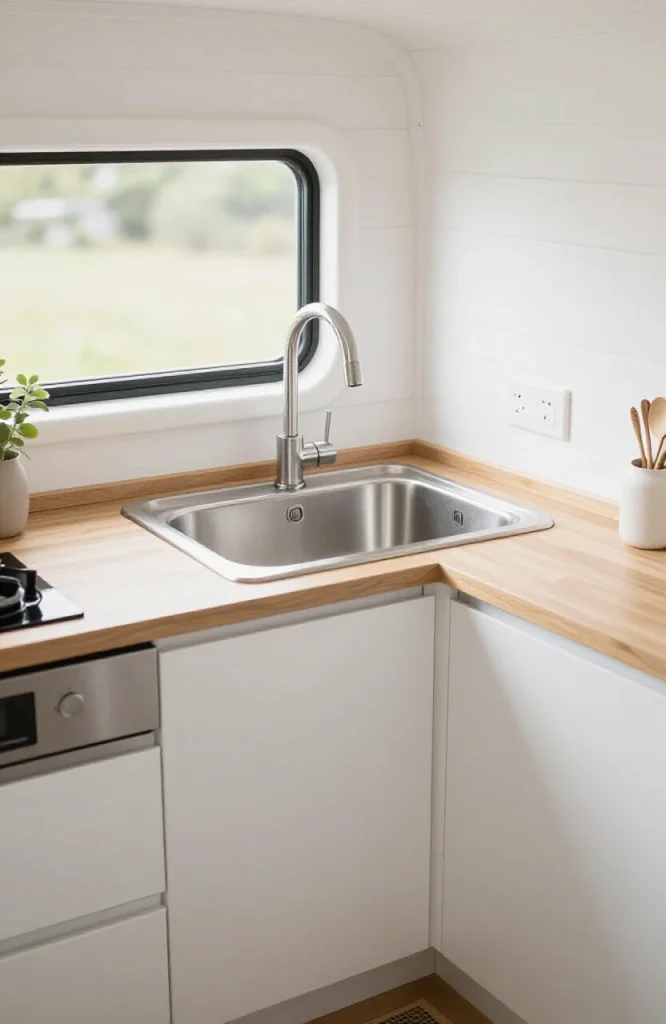
Tiny house kitchens work within floor plans that are often under 200 square feet for the entire living space, which means every fixture placement is a significant decision with real consequences for daily comfort. A corner sink in this context is often the only configuration that makes sense, because a centered sink placement would interrupt the primary counter run and reduce the working surface below a usable minimum for food preparation. Compact round or square bowl stainless models between 15 and 20 inches are produced specifically for small-format kitchens and fit diagonal corner bases that take up less cabinetry depth than a standard sink run. The under-sink space in a tiny house corner cabinet can hold the water filtration system, the compost bin, or cleaning supplies, keeping these items out of the main living area. Wall-mount versions without a cabinet below are an option if storage is handled by shelving elsewhere in the kitchen and the priority is keeping the floor visually open.
37. Corner Sink with Garbage Disposal
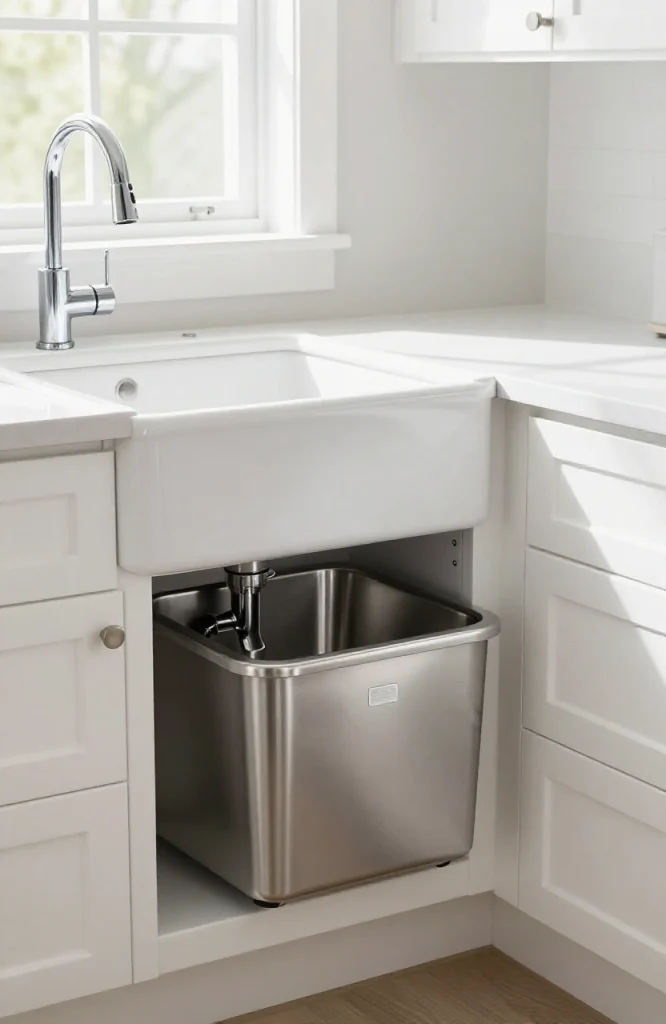
A garbage disposal unit mounts beneath the sink drain and fits inside the diagonal corner cabinet alongside the drain pipe and supply connections. The diagonal base cabinet provides slightly more interior depth than a standard straight cabinet, which makes it easier to fit the disposal body, the drain assembly, and the electrical connection without the cramped conditions that make under-sink work frustrating. Disposals require a switched electrical outlet inside the cabinet or a wall switch wired nearby, which should be included in the rough-in stage of the renovation before walls are closed. Continuous feed disposals are the most common residential type and handle most food waste effectively with cold running water; batch feed models require a stopper to activate, which some users prefer for safety reasons. The combination of a corner sink with a disposal and a filtered water tap keeps the kitchen sink zone highly functional without requiring additional counter-level fixtures to serve each separate need.
38. Corner Sink with Filtered Water Tap
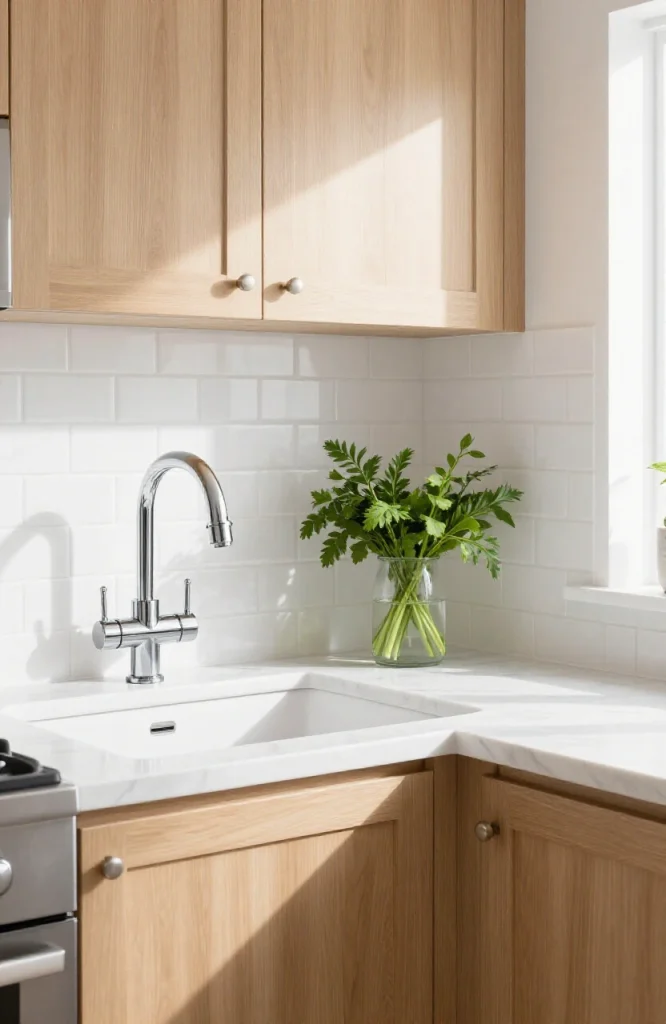
A separate filtered water tap added to a corner sink deck provides drinking water quality at the exact point where food preparation happens, without the inconvenience of a separate pitcher filter sitting on the counter or a countertop unit occupying prep space. A three-hole corner sink, or a sink with a dedicated deck hole for an accessory tap, accommodates the filtration faucet alongside the main mixer without crowding the deck area. The filtration unit sits inside the corner cabinet, connected to the cold water supply line, and the cartridge replacement interval is typically six to twelve months depending on local water quality and consumption volume. In kitchens where the corner sink is the primary prep zone, having filtered water on tap at that location is more practical than filling bottles or a pot from a separate tap elsewhere in the kitchen. The filtration faucet finish should be matched to the main faucet: brushed nickel, matte black, and chrome versions are widely available from most filtration tap manufacturers.
39. Two-Tone Corner Sink Cabinet
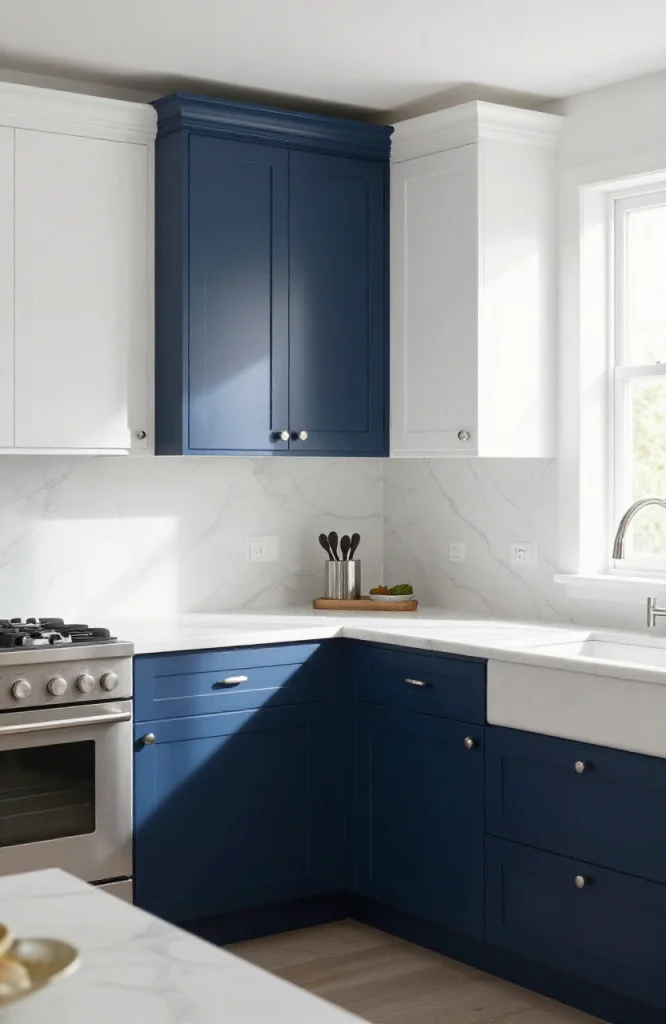
Painting the corner sink cabinet a different color from the rest of the kitchen cabinetry gives the sink zone its own visual weight and separates it clearly from the storage and cooking areas on either side. This treatment works particularly well in kitchens where the corner sink sits between two runs of cabinetry in contrasting colors, acting as a transition point between the two tones. A darker color on the corner unit, navy, forest green, or charcoal, against lighter main cabinets creates depth in the corner rather than letting it recede into the background as dead space. The two-tone approach also means the corner cabinet takes on the character of a piece of furniture rather than a standard kitchen fitting, which suits kitchens designed with a collected or less-uniform aesthetic. Paint finish matters in a wet zone: a hard-wearing eggshell or satin waterborne enamel holds up to splash and steam better than a flat or matte finish that absorbs moisture over time.
40. Corner Sink in a Scandinavian Kitchen
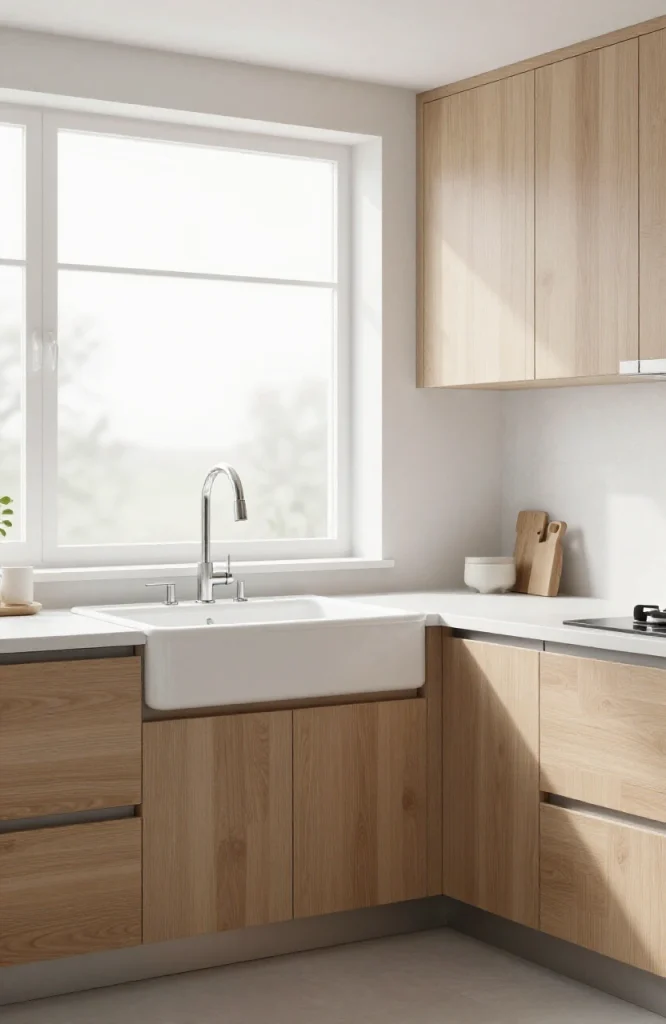
Scandinavian kitchen design relies on clean lines, restrained color, natural materials, and a deliberate absence of decorative clutter that competes with the quality of the materials themselves. A simple stainless or white composite corner sink with a brushed nickel or matte black single-lever faucet fits this aesthetic directly without requiring any special treatment of the corner zone. The corner sink removes a potential visual focal point from the center of the kitchen and places the functional element where it does not compete with the overall calm of the space. For color guidance in this palette, see warm Scandinavian living room paint, which covers the neutral undertone distinctions that also apply to kitchen surfaces and cabinetry. Wood drawer fronts, white upper cabinets, and a modest open shelf on one of the walls above the sink are common companions to a corner sink in this style. Clutter management is more important here than in most other kitchen styles: a corner sink that accumulates bottles, sponges, and soap dishes loses the clean quality that defines the Scandinavian approach entirely.
41. Corner Sink with a View into the Garden
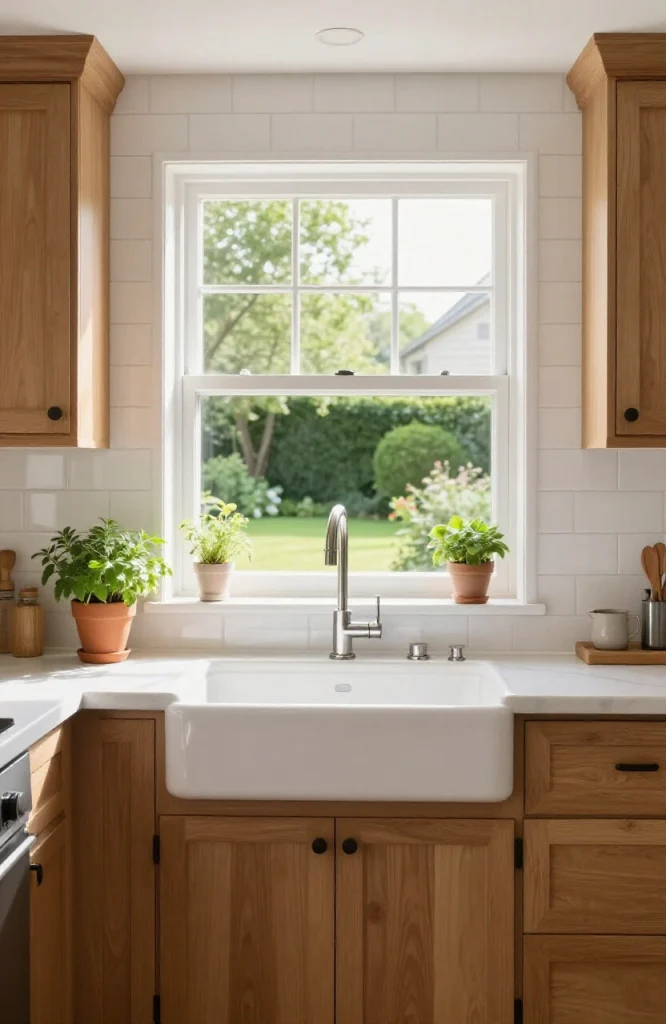
A corner sink positioned to face outward through a window or a glazed wall section toward a garden or outdoor space turns a routine daily task into a more pleasant experience. The key is the geometry of the corner: where one wall is an exterior wall and the adjacent wall is shared, placing a window on the exterior side at sink height gives a direct view with natural light on one or both sides of the sink position. Layouts that angle the sink toward the garden are worth planning at the beginning of a kitchen design rather than adding a window after the fact as an afterthought. The sill should be kept clear of objects so the view remains open from a standing position at the sink, and a deep sill can double as a herb growing shelf for frequently used plants. In climates where the kitchen overlooks a green or planted space year-round, this is one of the design decisions that makes a kitchen feel genuinely connected to the site rather than purely enclosed and functional.
42. Apron Front Corner Sink in a Large Kitchen
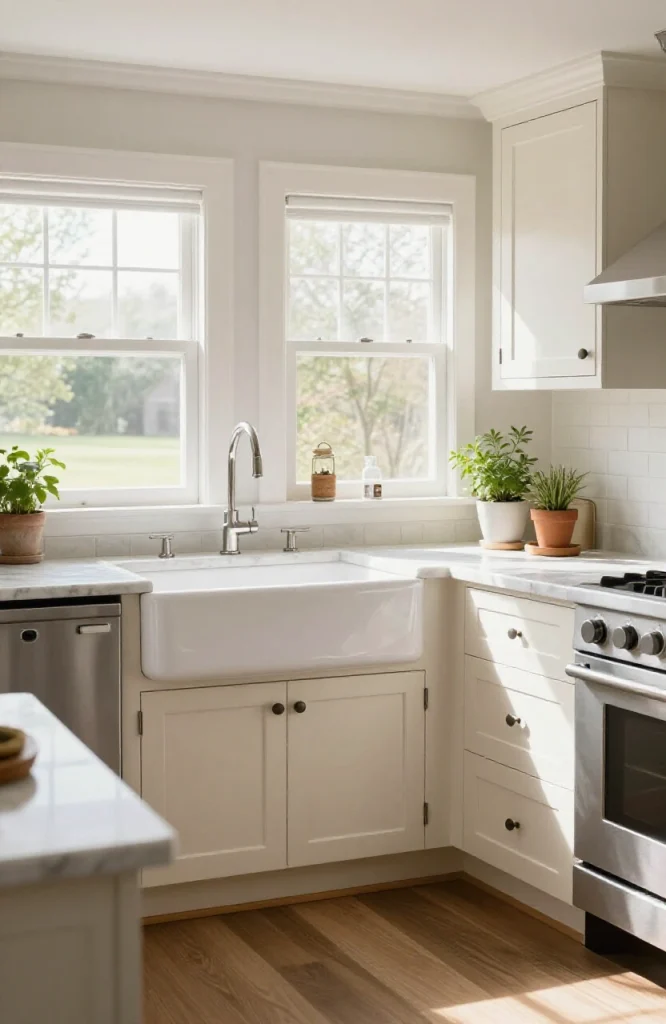
In a large kitchen with generous counter runs on both sides of the corner, a full-size apron-front corner sink anchors the prep zone without looking out of scale with the surrounding cabinetry and appliances. Sizes up to 36 inches in the diagonal format are available from manufacturers including Kohler, Rohl, and several specialty fireclay producers. The exposed front panel of the apron contributes to the visual weight of the sink and helps it read as a central feature of the kitchen rather than a utilitarian fitting tucked into a corner. A large apron corner sink suits professional-style kitchens with commercial-grade ranges, integrated refrigeration, and stone countertops, where the material and fixture quality of each element is part of the overall design language. Installation requires a base cabinet built specifically for the apron depth, since the front of the sink extends below the standard countertop edge and requires a cabinet face cut at the appropriate height to clear the apron correctly.
43. Corner Sink in a Victorian-Style Kitchen
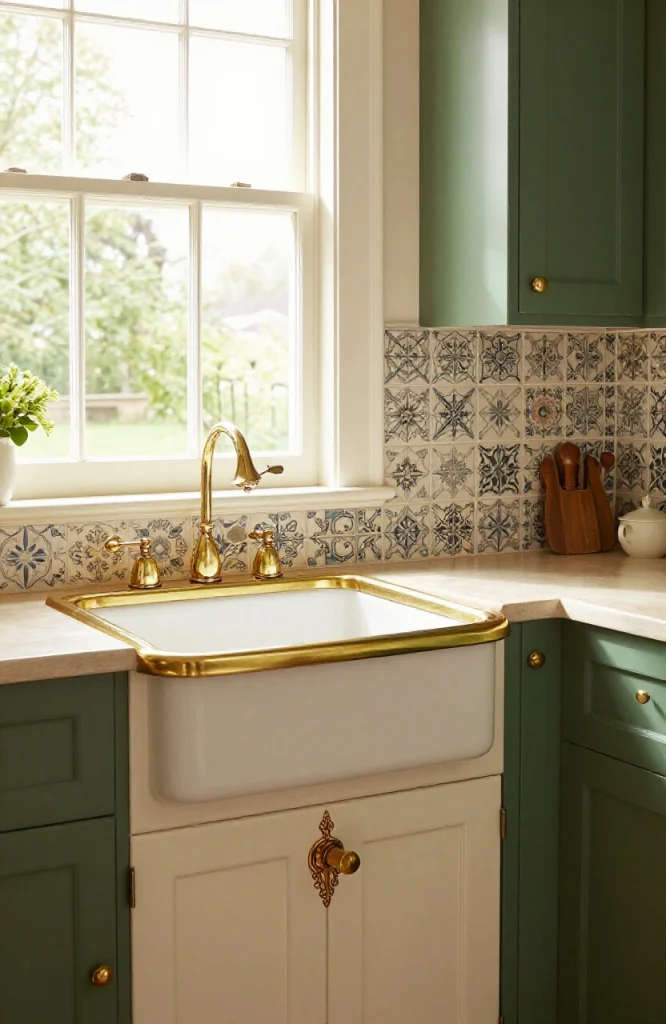
Victorian kitchen design favors ornate hardware, rich colors, patterned tile, and fixtures with visible craft and material quality that signal a considered approach to the room. A corner butler’s sink in porcelain or fireclay, paired with a cross-handle or lever bridge faucet in unlacquered brass or nickel, fits this style precisely and without contradiction. The corner placement mirrors how sculleries were historically organized in Victorian homes, where the working sink occupied the corner of a service kitchen to keep it separate from the main cooking area. For detailed direction on the broader kitchen design, see Victorian-style kitchen ideas. Above the corner sink, a plate rack in painted wood or a set of open shelves displaying period-appropriate dishware carries the decorative language upward and gives the corner zone a finished, intentional look. The faucet finish should match other metal fixtures in the room: mixing brass and chrome in a Victorian kitchen reads as an oversight rather than a considered material decision.
44. Glass Corner Sink
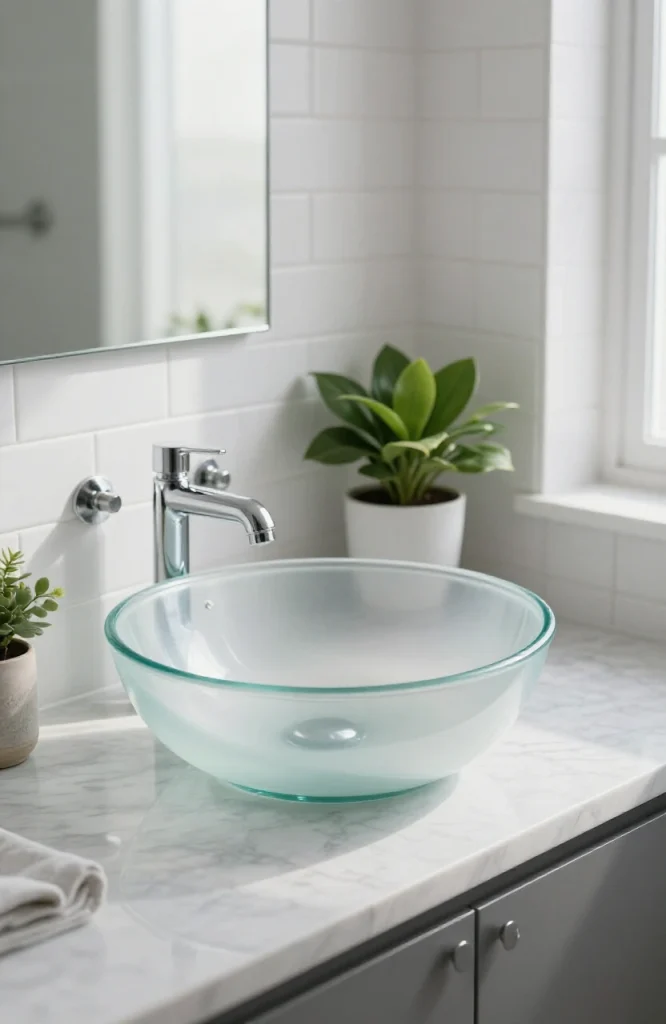
A hand-blown or tempered glass corner vessel sink is one of the most visually distinctive options for a contemporary bathroom where the sink itself is the design statement. The transparency of the glass allows the faucet water stream and the basin color to be fully visible, which creates a different kind of presence in the room than an opaque ceramic or stone sink. Colored glass vessels, cobalt blue, smoke, amber, and pale green are all available, and the color shifts depending on the angle of light, making the sink look different at different times of day. Tempered glass is the required specification for a sink application since standard glass would be a safety risk if it broke during use. A simple triangular shelf or floating vanity below a glass vessel keeps the transparency as the defining feature rather than competing with it. Wall-mounted faucets work best with glass vessels because they approach the bowl from behind rather than through a deck hole, preserving the unbroken geometry of the glass form.
45. Corner Sink with Motion Sensor Faucet
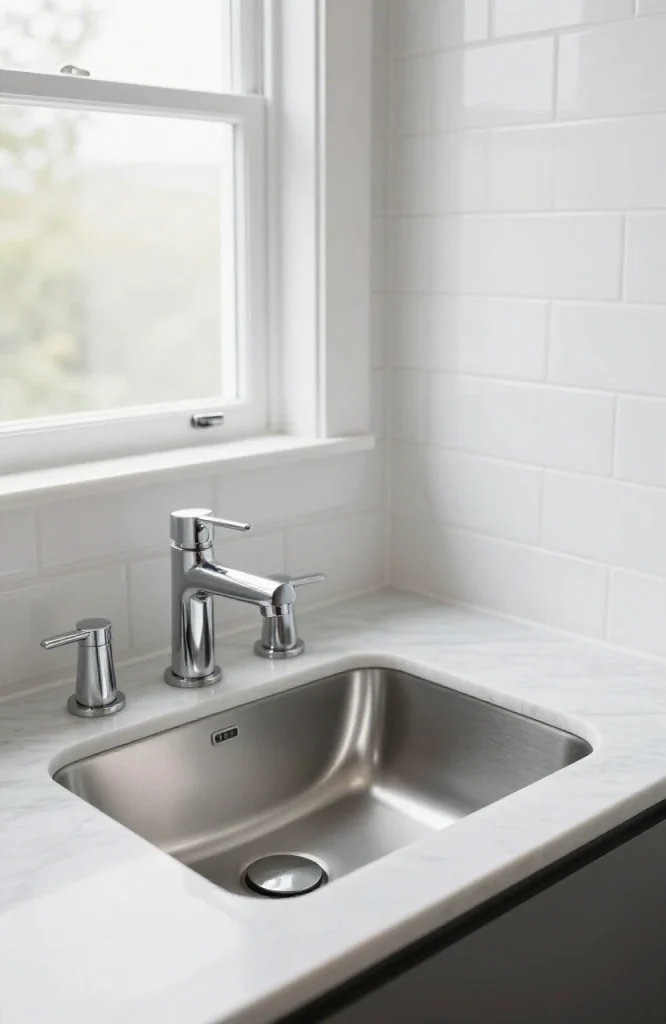
A motion sensor or touchless faucet activates water flow when hands are detected within the sensor range beneath the spout, without any physical contact with the handle or lever. On a corner sink in a busy kitchen, this is genuinely useful during food preparation when hands are coated with raw meat residue, dough, or oil, because it removes the need to touch the faucet and either contaminate it or stop to clean it before continuing to cook. In bathrooms, touchless faucets reduce the transfer of illness-causing bacteria during cold and flu season in shared household spaces. Most residential motion sensor faucets run on batteries or connect to a standard under-sink electrical outlet, and sensor range and activation delay are usually adjustable to reduce false triggers from movement near the sink area. Temperature on a touchless kitchen faucet is typically set via a manual knob that you adjust once and leave, with the sensor controlling only the on and off function.
46. Corner Sink in a Master Bathroom
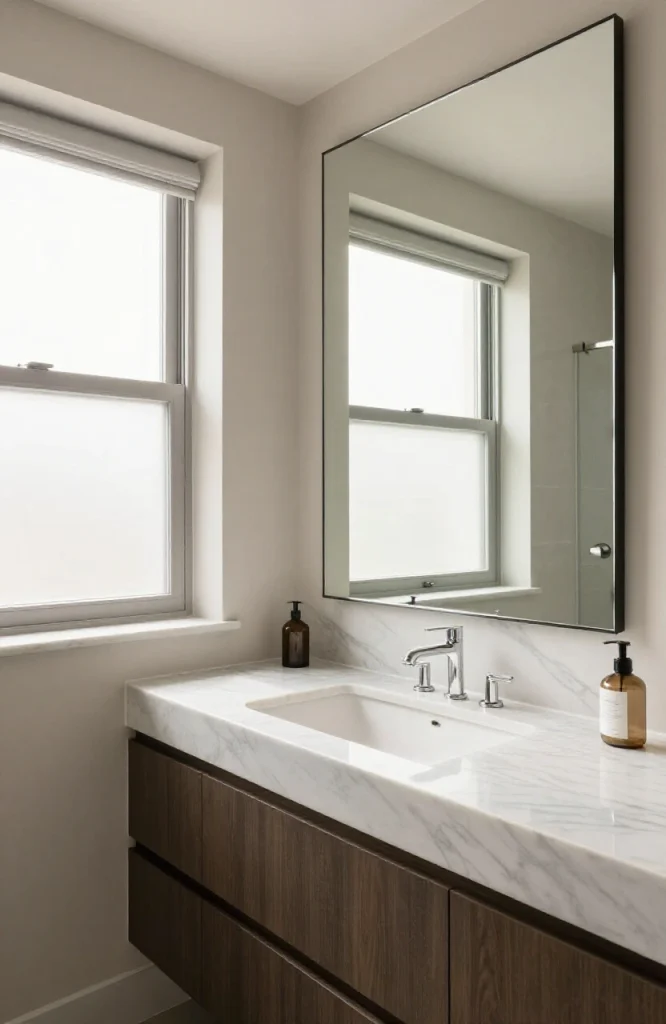
A corner sink in a master bathroom frees the primary wall for a large format mirror, a double vanity, or a freestanding soaking tub, depending on the room’s size and what the layout prioritizes. Even in a generous master bathroom, placing one sink in the corner rather than crowding a third basin along the main wall can open a full wall section for a specific design feature or storage unit. For ideas on creating a genuinely restful master suite, see luxurious bedroom tips, which covers the material and finish choices that often cross between the bedroom and the adjoining bathroom. The corner sink in a master bath functions as a secondary wash station, used during the morning routine while the primary vanity handles main grooming tasks. Matching the material and faucet finish of the corner sink to the primary vanity maintains a cohesive palette throughout the room without requiring any additional design effort.
47. Corner Sink with a Waterfall Faucet
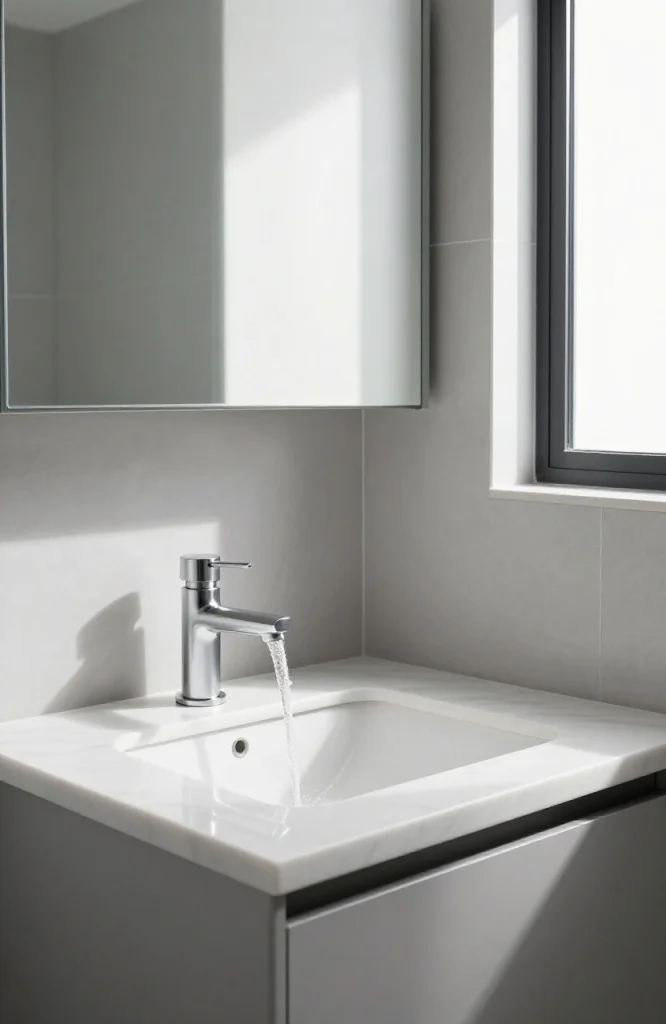
A waterfall faucet delivers water as a wide, flat sheet rather than a single concentrated stream, which creates a visual effect that suits contemporary and spa-style bathrooms particularly well. On a corner vessel or undermount sink, the waterfall spout is typically wider than a standard faucet and sits closer to horizontal, so the water flows across the basin surface rather than falling vertically into a single point that can splash. This format suits large-format basins where a standard spout would create splashing by dropping water from too great a height relative to the basin surface. The flow rate of a waterfall faucet is generally lower than a standard tap, which means filling a basin takes slightly longer, but daily hand-washing is completely unaffected in practice. Matte black and brushed gold finishes are the most current choices for waterfall faucets, and both suit the contemporary bathroom aesthetic where the faucet carries as much visual importance as the sink itself.
48. Built-In Corner Sink Near a Window Seat or Breakfast Nook
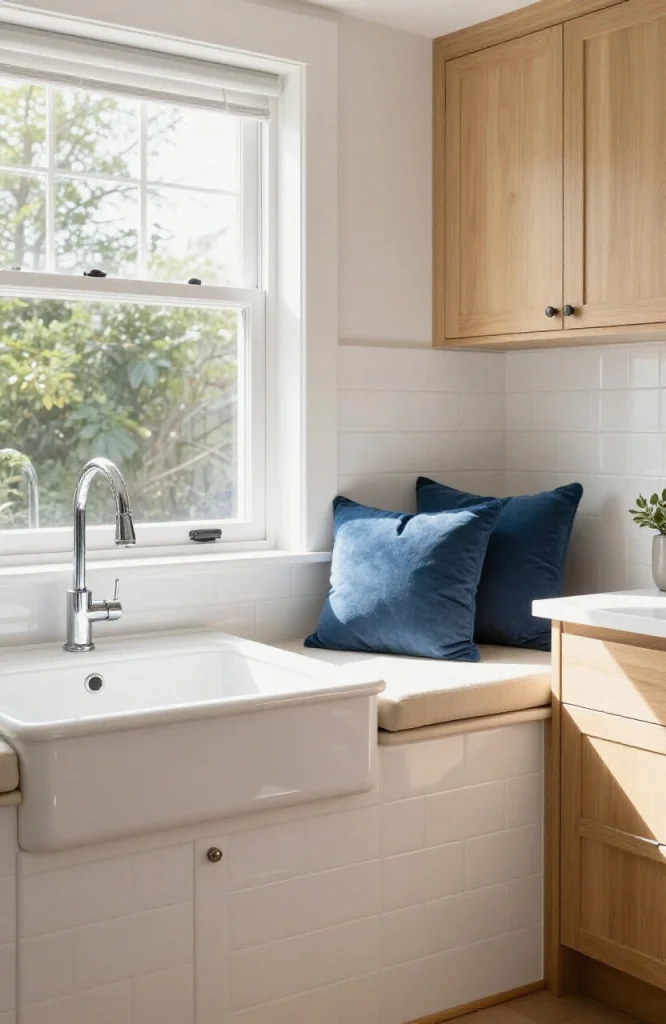
In kitchens where a window seat or breakfast nook occupies the space near the corner, placing the sink in that corner keeps the cooking, prep, and social zones of the kitchen physically close without requiring anyone to cross the room to move between them. The corner sink acts as the natural boundary between the working kitchen and the eating or sitting area, and the transition feels deliberate when the sink is properly integrated into the cabinetry rather than standing isolated as a separate unit. The window above the corner, which is common in this configuration, lights both the sink and the adjacent seating area simultaneously, which is an efficient use of a single window opening. Bench seating for the nook can wrap around the adjacent wall, stopping at the corner cabinet base to create a clear physical boundary between the kitchen work zone and the social space beside it.
49. Rectangular Corner Sink Set at an Angle
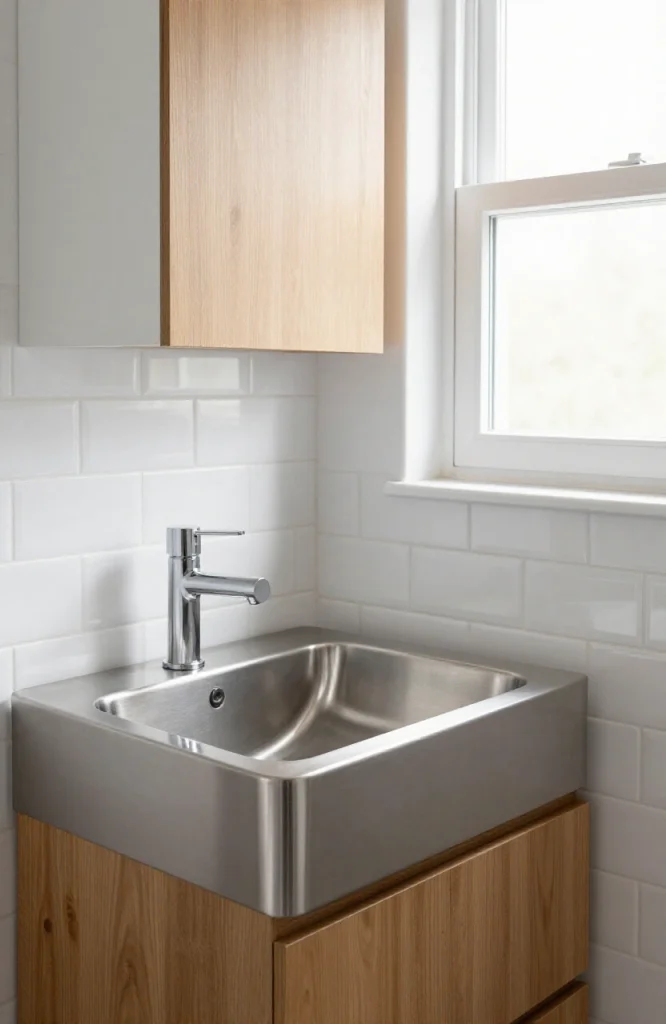
Rather than using a diagonal cabinet that places the sink face at 45 degrees to both walls, some designers set a standard rectangular sink directly into the corner at a specific angle, exposing the rim of the basin as a visible design element that can be seen from both adjacent counter runs. This approach requires a countertop cut at the precise angle needed to receive the sink rim, which is a custom fabrication job rather than a standard installation. The result is a corner treatment that reads as considered and deliberate rather than the default solution for an awkward position. The angled basin is accessible from both sides and acts as a feature of the kitchen rather than a compromise. It works best in kitchens where the countertop material is thick and visually prominent, such as a 3-centimeter stone slab, since the angled edge becomes a design detail in itself that rewards close attention.
50. Corner Sink with a Single Lever Mixer
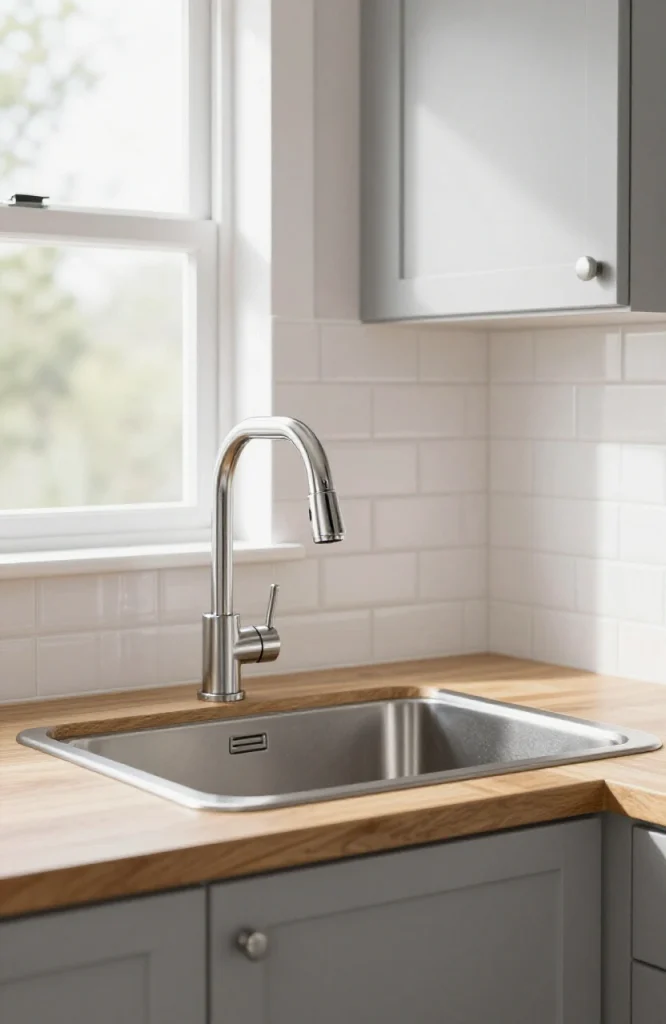
A single lever mixer on a corner sink controls both temperature and flow volume with one hand: left for hot, right for cold, and up and down for flow rate. During cooking, when one hand is often holding a pot or a utensil, this one-handed operation is a practical advantage over separate hot and cold handles that each require a grip and a turn. Gooseneck or high-arc lever mixers provide enough clearance above the basin for tall pots, carafes, and vases, which matters in a corner sink where reaching the back of the basin requires a faucet spout with enough reach to cover the full bowl area. Pull-out versions with a flexible hose and spray head combine the single lever simplicity with the extended reach needed for a corner basin. In terms of construction materials, a solid brass internal body with a chrome, brushed nickel, or matte black exterior finish offers the best longevity in a frequently used kitchen or bathroom faucet.
51. Corner Sink in a Basement Wet Bar
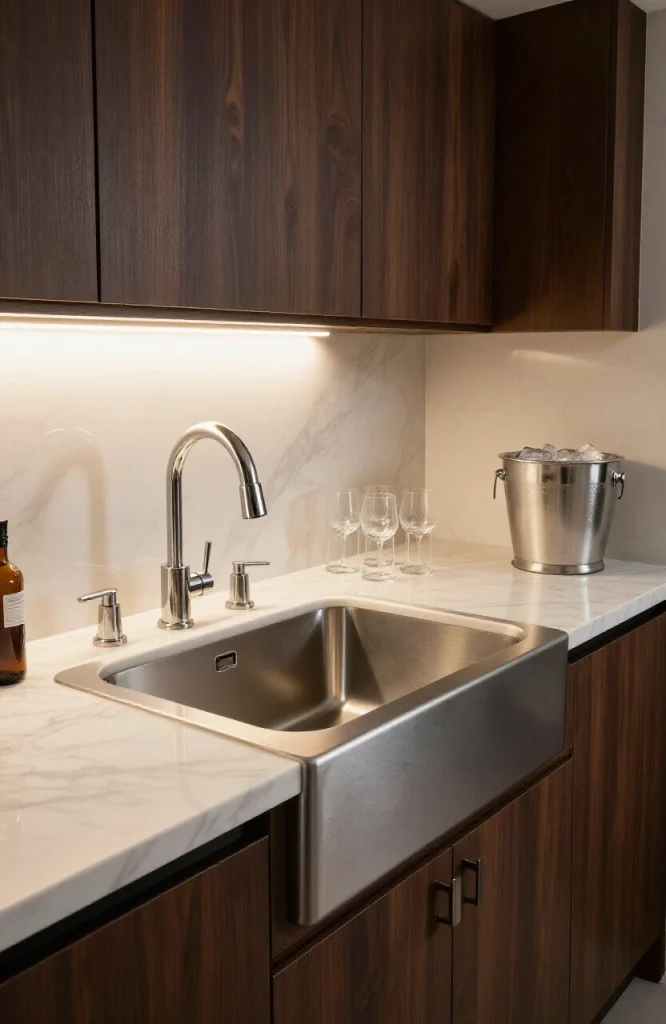
A basement wet bar corner sink turns an underused corner into a functional service area for a games room, cinema room, or informal entertaining space. It handles drink preparation, glass washing, ice bucket filling, and general bar cleanup without requiring a trip upstairs to the main kitchen, which changes how the basement space gets used for extended gatherings. A stainless bar sink between 9 and 15 inches in diameter is usually sufficient for this purpose, and the compact size keeps the corner footprint small enough to leave room for a bar refrigerator or wine storage on the adjacent counter run. The under-sink space inside the corner cabinet holds the refrigerator or glass storage, since bar items used regularly are better stored at a convenient height rather than in a deep corner cabinet below counter level. A bar sink in a finished basement adds genuine daily functionality to the space and tends to increase how often the room is actually used, particularly when guests spend extended time there.
52. Corner Sink in a Home Office Kitchenette
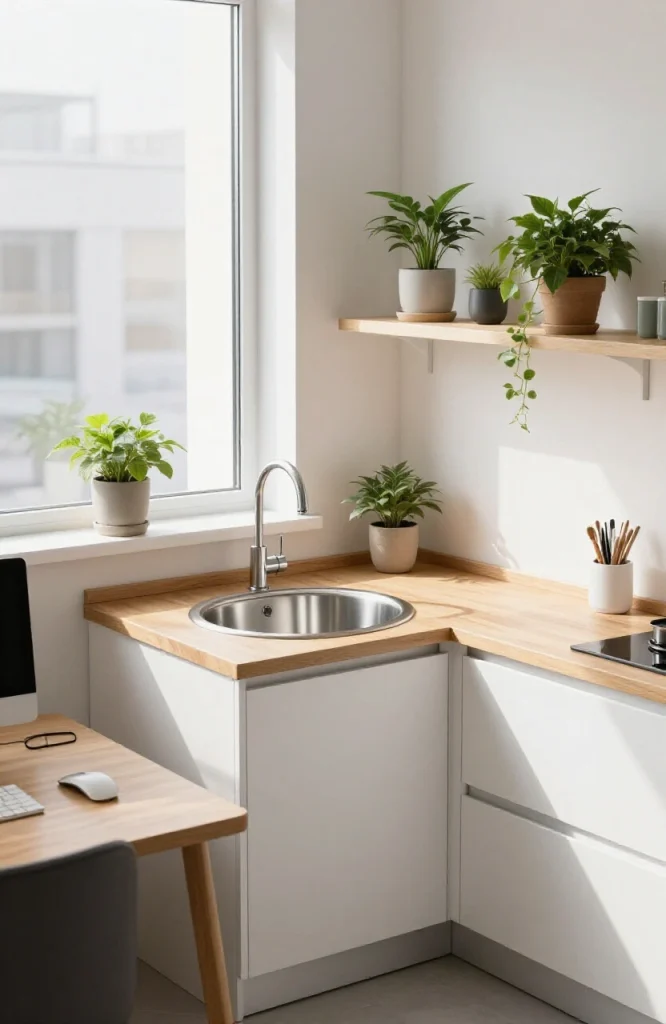
A small corner sink in a home office kitchenette lets you rinse cups, fill a kettle, water plants, and wash hands during the workday without walking to the kitchen or bathroom. A 12- to 15-inch round or square single bowl is usually enough for these tasks, and it can be installed in a compact corner unit alongside a mini-fridge and a small counter area that serves as the office’s self-contained refreshment zone. The plumbing connection is minimal: a cold water supply and a drain connection to an existing waste line in the building. Wall-mounted models work well in a home office setting because they leave floor space for the office chair, a storage cabinet, or a printer unit beneath. For home office setup ideas that address the broader workspace environment, see flexible workspace setups. The corner sink turns a home office into a self-contained working environment for a full day, reducing interruptions and allowing longer focused work sessions.
53. Corner Sink with Stone Countertop
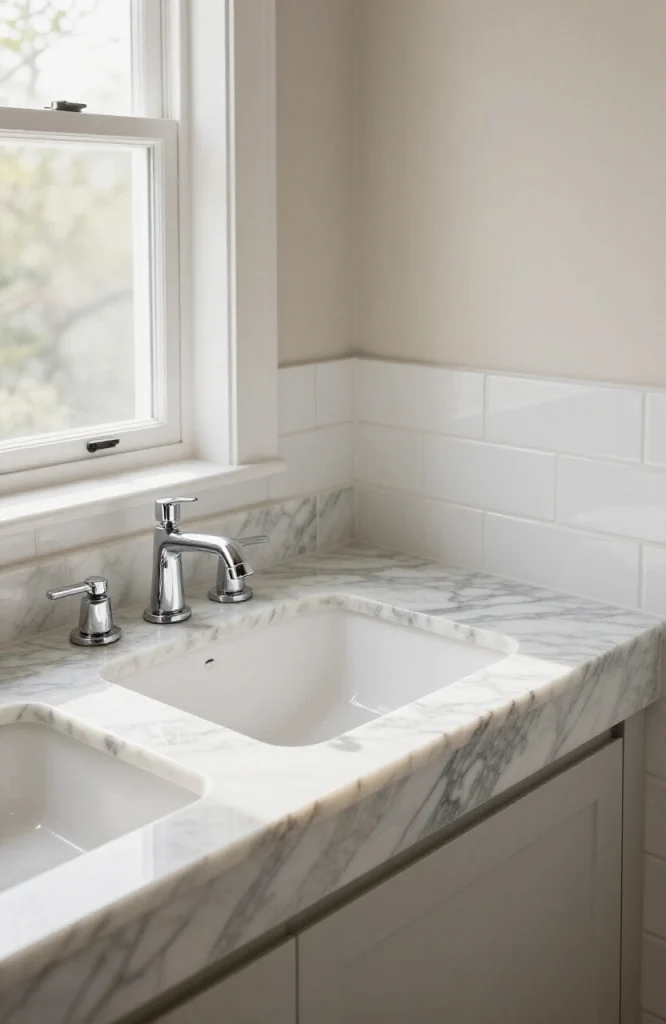
A corner sink installed into a stone countertop, whether marble, granite, quartzite, or soapstone, gains the visual benefit of the stone’s natural patterning directed toward the sink zone and visible from the room. The veining in most natural stones draws the eye across the surface and toward the corner, making the sink feel like the endpoint of a designed surface rather than an isolated fitting dropped into an awkward position. Fabricators cut the sink opening on a diagonal for a drop-in, or as a precisely sized undermount opening, and the stone edge at the opening is typically finished in a polished or honed profile to match the rest of the counter. For the corner countertop itself, the fabricator pieces the stone across the diagonal angle in a way that either continues or deliberately contrasts the veining direction, and discussing which approach you prefer at the template stage prevents surprises at installation. See marble countertop alternatives for a full comparison of stone and stone-look surfaces at different price points.
54. Corner Prep Sink with a Dedicated Soap Dispenser
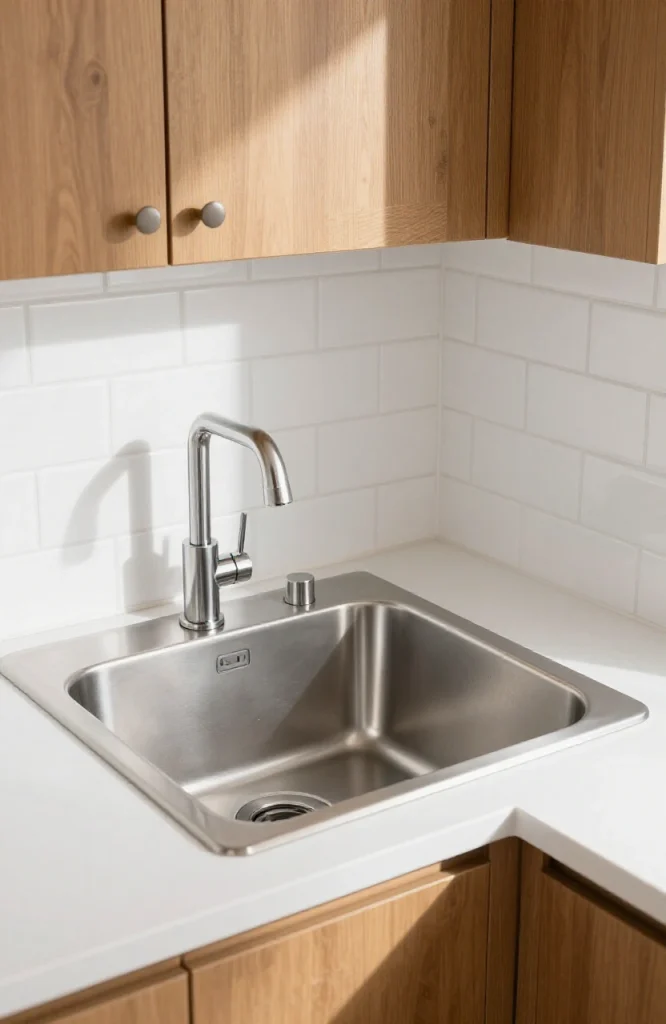
A recessed or deck-mounted soap dispenser integrated into the corner sink removes the need for a soap bottle sitting on the counter beside the basin. In a corner configuration where the available deck space is limited by the geometry of the cabinet and countertop, eliminating the soap bottle saves meaningful surface area and keeps the area around the sink orderly. Deck-mounted dispensers require a hole in the countertop or sink deck and a reservoir bottle in the cabinet below that you refill from a bulk supply, which is more economical and less wasteful than individual disposable bottles replaced when they run out. Recessed dispensers sit flush with the countertop surface and are nearly invisible when not in use, which suits minimal kitchen designs. Both styles are available in the full range of common faucet finishes, so matching the dispenser to the faucet finish takes no effort if you specify both components from the same manufacturer or the same finish range.
55. Corner Sink for an Outdoor Kitchen
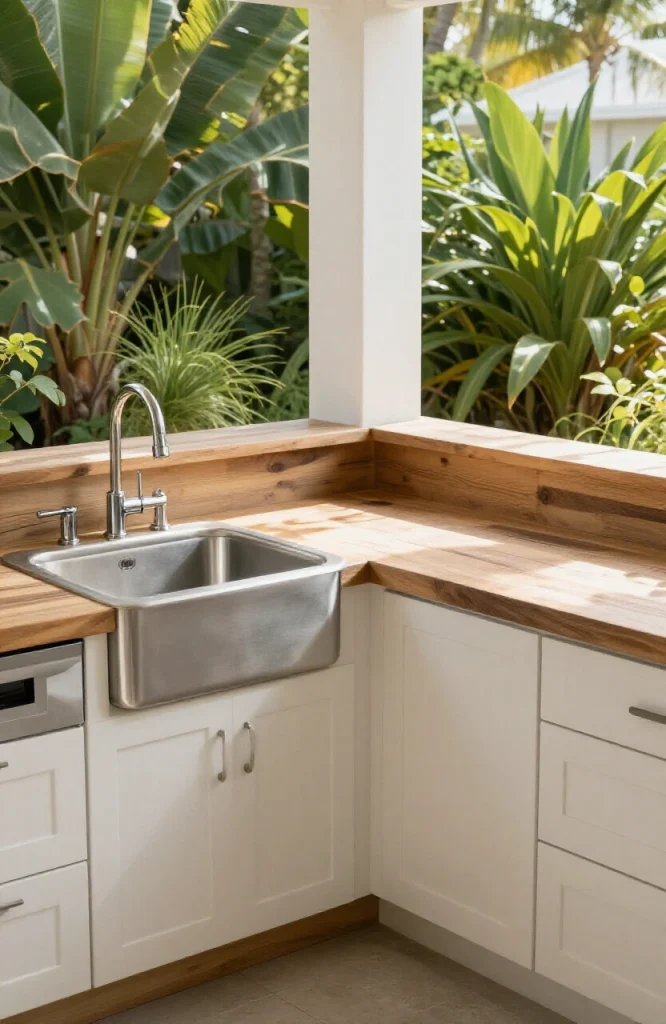
An outdoor kitchen corner sink in marine-grade stainless steel sits at the corner section of the outdoor cabinetry and provides a rinse station for food prep, a cleanup point after cooking, and a hand-washing location without requiring a walk back into the house. The corner placement in an outdoor kitchen is often the most logical position structurally because outdoor kitchen layouts tend to be L-shaped or U-shaped around a grill station, and the corner is the natural junction between the cooking and prep zones on either side. Materials for the outdoor sink and faucet need to be rated for exterior exposure: marine-grade 316 stainless is more corrosion-resistant than standard 304 grade, which matters particularly in coastal environments with salt air exposure. The under-sink space in an outdoor cabinet can be left open or closed with a weatherproof door, and the drain line should connect to a proper waste system rather than draining onto the patio or garden surface.
56. Corner Sink Paired with a Compact Dishwasher
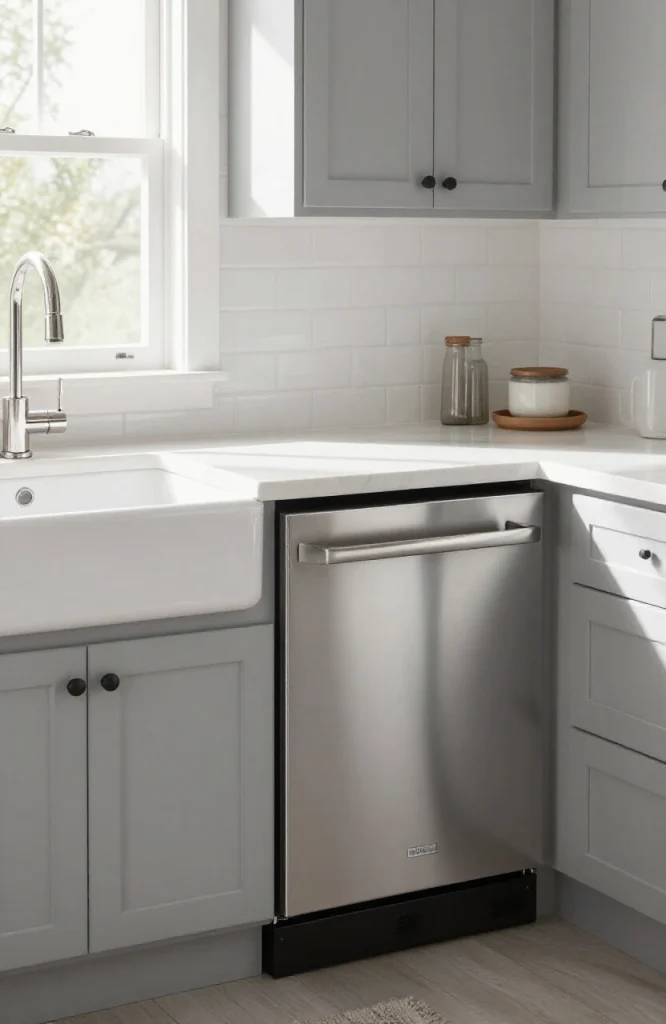
A slimline 45-centimeter dishwasher or a drawer dishwasher installed directly beside a corner sink shortens the load and unload routine because plates and glasses travel from the drain board into the dishwasher with minimal movement. The corner position often allows a dishwasher on one side of the diagonal cabinet without blocking foot traffic through the kitchen, as long as the dishwasher door opens away from the main path through the room. Drawer dishwashers are particularly useful in corner configurations because the drawer opens toward the user rather than swinging outward and potentially blocking an adjacent cabinet door in a tight space. Two-drawer models give the option of running a small load in one drawer independently without waiting for a full load, which suits smaller households or days with limited dishes. The water connection for the dishwasher runs from the same hot water supply line as the corner sink, keeping all the plumbing grouped in one area of the kitchen rather than distributed across multiple locations.
57. Corner Sink with a Brushed Nickel Faucet
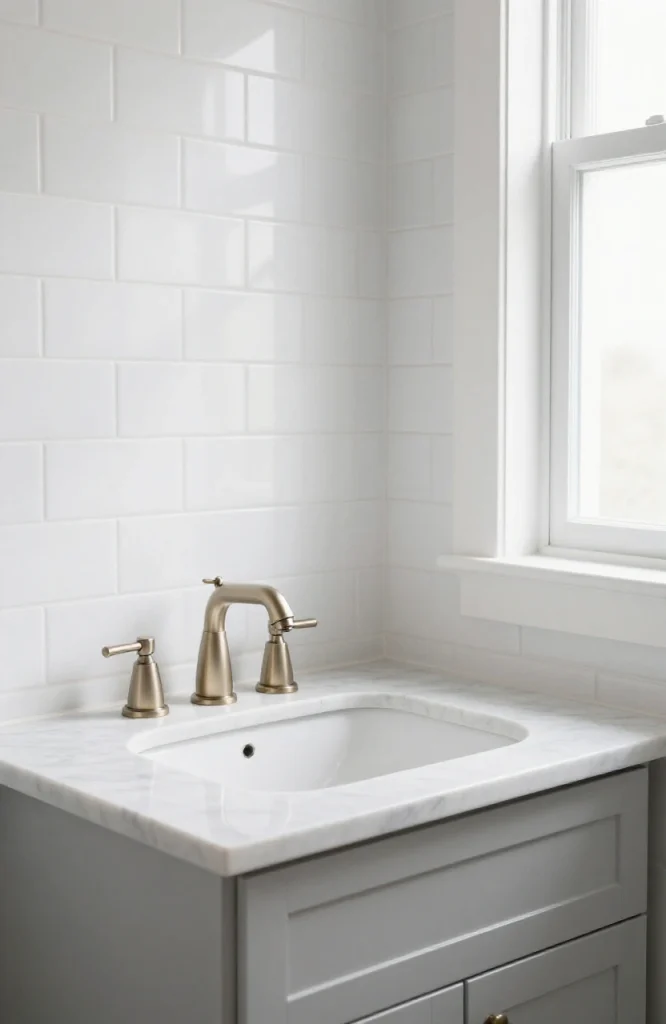
Brushed nickel is produced by mechanical abrasion of the nickel surface to create a consistent directional grain that diffuses reflected light and hides fingerprints and water spot marks more effectively than polished chrome. On a kitchen or bathroom corner sink used multiple times daily, this translates to a faucet that looks clean between formal cleaning sessions without needing constant wiping after each use. The finish suits a wide range of design styles from traditional to contemporary, and it bridges between warmer hardware tones like brass and cooler tones like chrome without clashing noticeably with either. Brushed nickel ages more consistently than unlacquered brass and requires less specific maintenance, making it one of the lower-maintenance faucet finish options available. When specifying brushed nickel hardware for a room, matching the finish across the faucet, towel bars, cabinet pulls, and light fixture is worth the effort of sourcing consistent products, since different manufacturers’ interpretations of brushed nickel vary more than you might expect when items are placed side by side.
58. Corner Sink in a Rental-Friendly Renovation
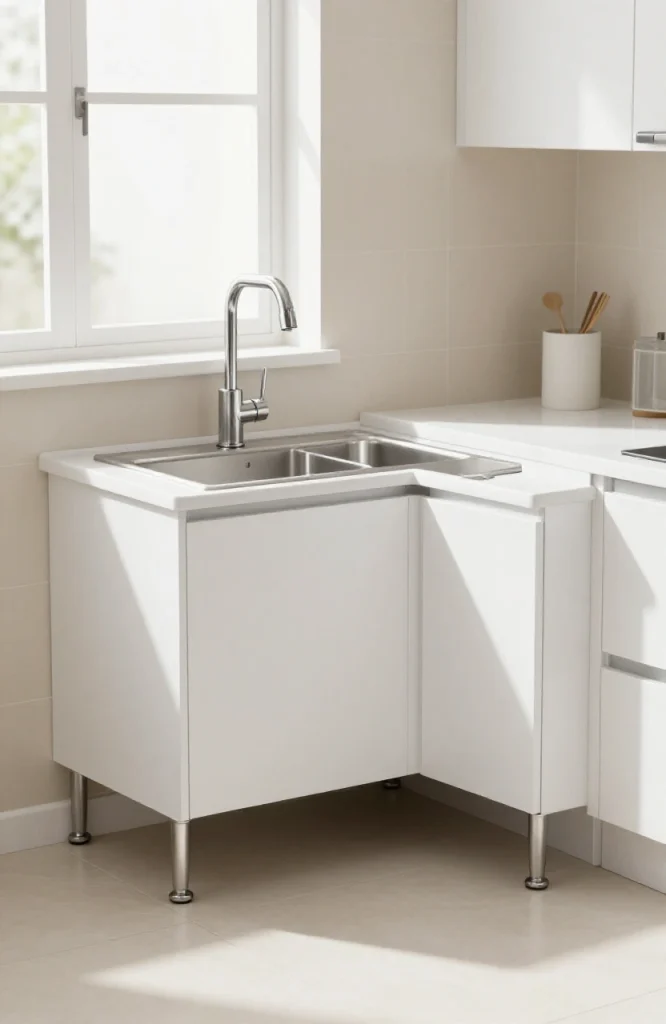
For renters or homeowners wanting to avoid permanent plumbing changes, freestanding corner sink units with their own cabinetry on casters or adjustable feet connect to existing supply and drain connections through flexible hoses rather than fixed pipe. These units are available in small footprints suitable for bathroom corners and laundry room corners, and they can be moved or removed when the tenancy ends without leaving permanent marks on the walls or floors. The connection method relies on the existing shut-off valves beneath the standard sink being accessible and compatible with the flexible supply lines, which is worth confirming before purchasing the unit. The trade-off is that freestanding corner units tend to have less storage and a less finished appearance than built-in installations, but for a rental apartment or a temporary living arrangement, the flexibility to take the unit with you when you leave makes this the most practical approach.
59. Corner Sink with Wainscoting Below
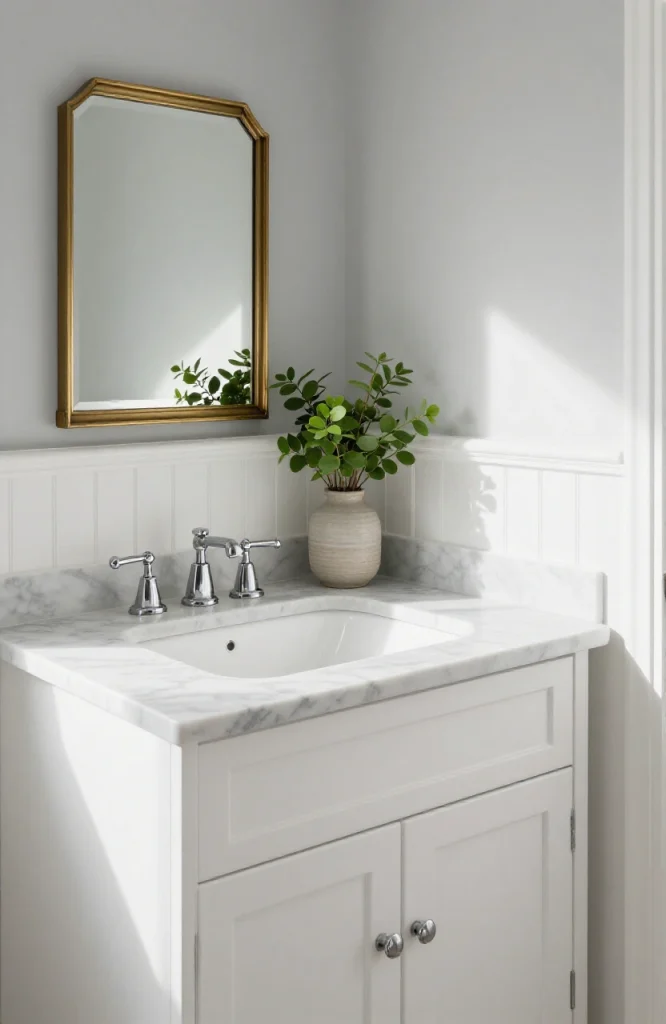
Running beadboard or shaker-panel wainscoting along the walls on both sides of a corner sink creates a cohesive wall treatment that makes the corner feel like a designed zone rather than just the place where the sink happens to be positioned. The wainscoting panels run from the baseboard up to a rail at approximately counter height, and the sink sits centered within this framed surround. In a bathroom, this approach works well in cottage, traditional, and farmhouse styles where panel wainscoting is already part of the room’s character. In a kitchen, it suits unfitted or period-style kitchens where the cabinetry has a furniture-like quality and the walls contribute to the overall aesthetic rather than being fully concealed behind upper cabinets. The painted surface of the wainscoting needs to be moisture-resistant in a wet zone: an oil-based or hard waterborne enamel in a semi-gloss finish holds up to splash and humidity considerably better than standard flat wall paint.
60. Corner Sink with a Retractable Drying Rack
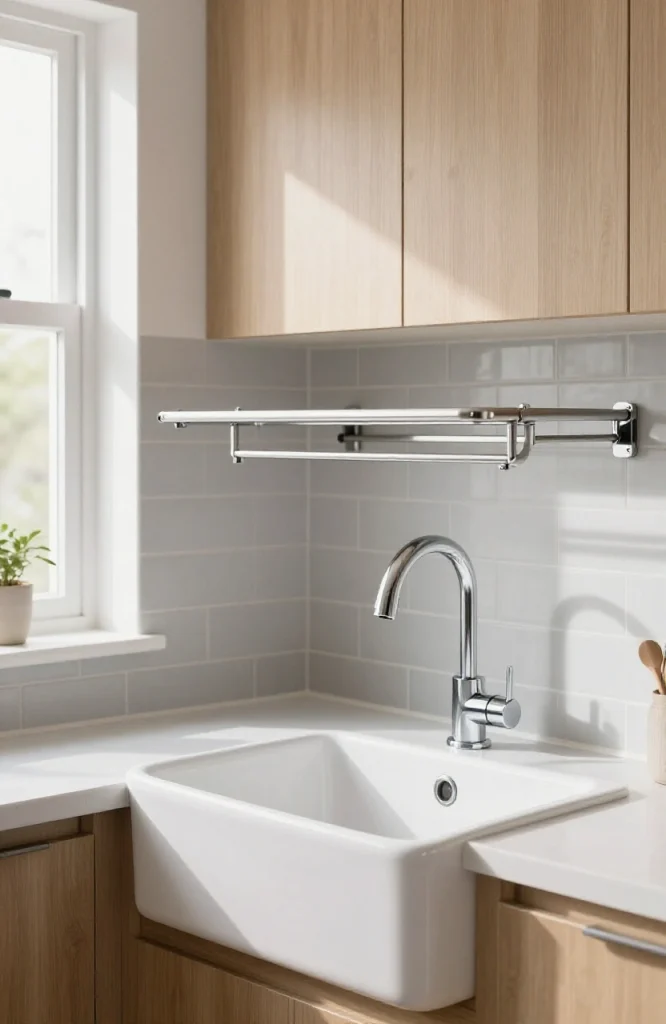
A wall-mounted retractable dish rack installed above a corner sink folds flat against the wall when not in use and extends horizontally over the sink when needed for draining after washing up. This removes the need for a permanent countertop rack beside the sink, which is a meaningful space saving in a corner configuration where the available deck area is already limited by the geometry of the cabinet and the adjacent counter runs on both sides. Most retractable racks mount with two wall anchors and fold on a pivot to a flat position that projects less than two inches from the wall when stored. They are produced in stainless steel, coated steel, and plastic-coated wire in finishes that can be coordinated with the faucet hardware. The rack should be positioned so that items draining from it fall directly into the sink bowl rather than onto the counter below, which requires measuring the sink position and the rack extension length carefully before drilling the mounting holes.
61. Corner Sink Under Floating Shelves
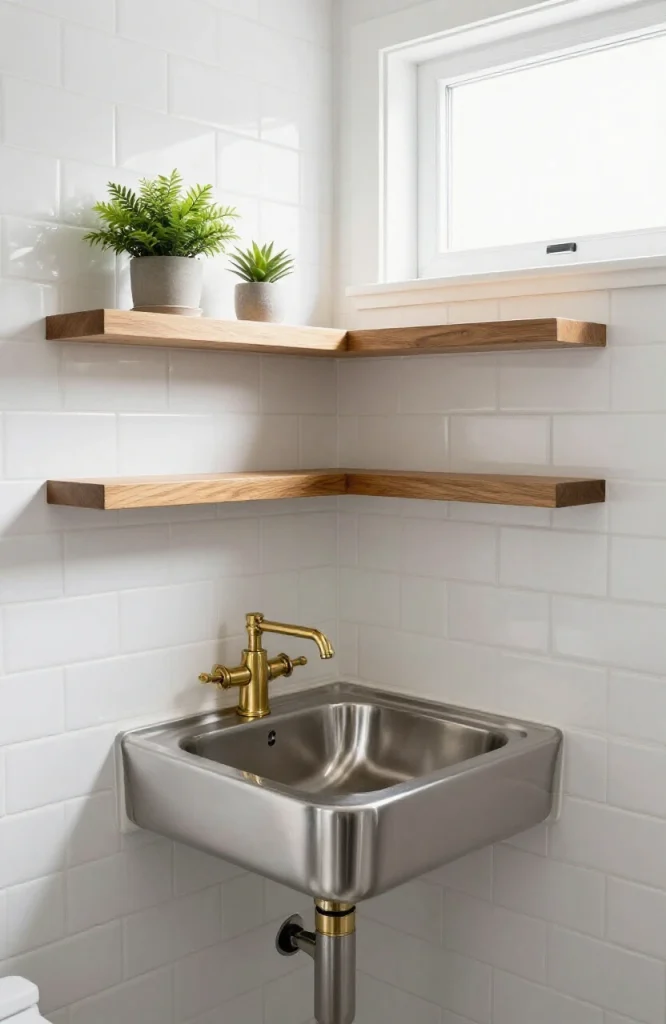
Floating shelves mounted on both walls above a corner sink create a symmetrical storage zone that frames the sink from above on two sides and makes the corner feel like a considered part of the room. Items stored closest to the sink on both shelves stay within reach during prep or washing without requiring a step sideways to access them. Plates, glasses, oils, and frequently used spices suit this position in a kitchen. Towels, toiletries, and small plants work well in a bathroom version of the same approach. The symmetry of two shelves meeting above a corner sink gives the corner genuine visual structure rather than leaving it as an awkward junction between two plain wall runs. The shelves themselves should be sealed or painted to resist moisture from the sink below, particularly in kitchens where steam rises during cooking or in bathrooms where condensation accumulates on surfaces after hot showers. All shelf brackets should be anchored into studs or wall plugs rated for the full load the shelves will carry, including the weight of everything stored on them.
62. Corner Sink in a Transitional Kitchen
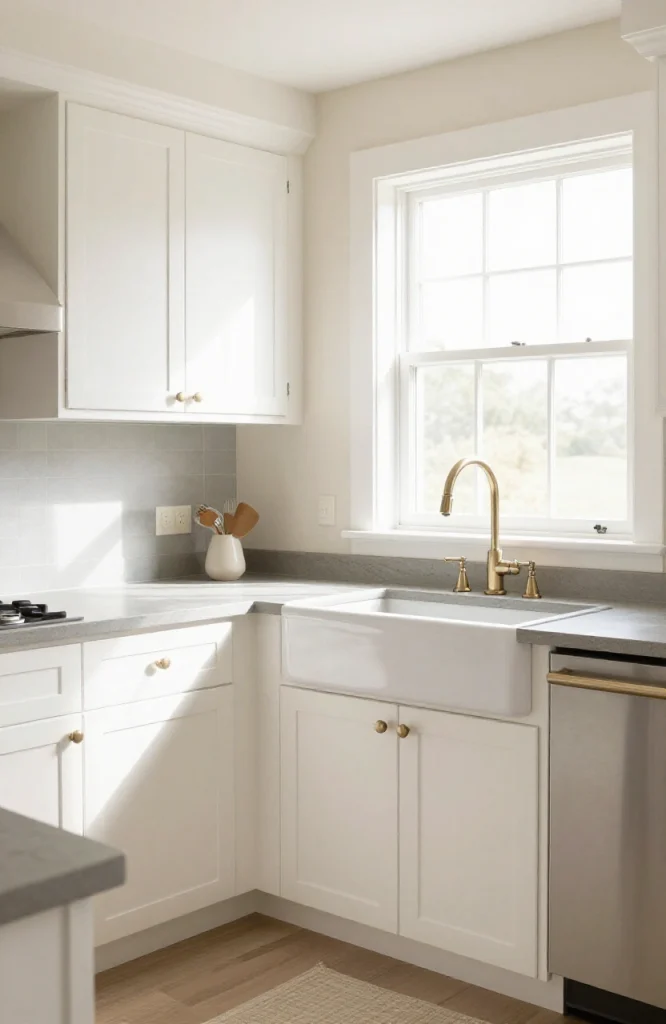
A transitional kitchen sits deliberately between traditional and contemporary: shaker cabinet doors, simple hardware, stone countertops, and a restrained color palette that avoids the ornate detailing of a full period style and the extreme minimalism of a fully modern design. A corner sink in a classic material like fireclay or cast iron, installed beneath a simple deck faucet in brushed nickel or matte black, suits this style without pushing it too far toward either end of the spectrum. The corner position removes the sink from the primary sightline of the kitchen, which suits the transitional design tendency toward calm, organized surfaces that do not compete with each other for attention. Paired with a white tile or simple stone backsplash in the corner zone and a consistent hardware finish throughout the kitchen, the transitional corner sink reads as a deliberate choice rather than a default compromise for a difficult corner position.
63. Corner Sink with a Window-Mounted Plant Shelf
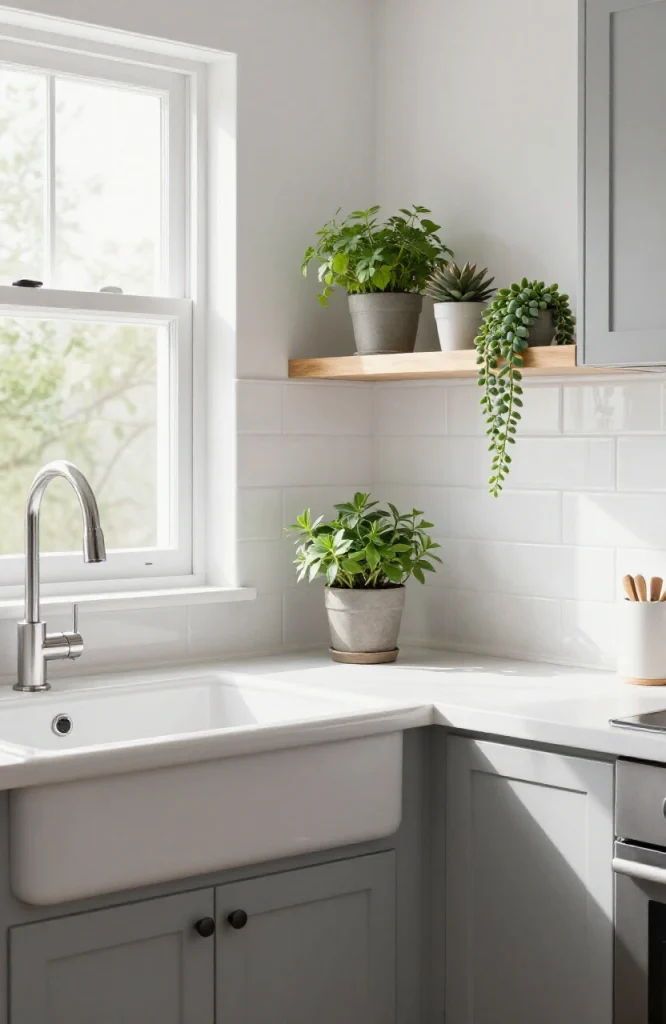
A narrow shelf installed across the lower portion of the window above a corner sink holds small herb pots, succulents, or trailing plants at a height where they receive consistent natural light and benefit from the ambient moisture that rises from regular sink use. Basil, chives, and mint grow well in this position in a kitchen, staying fresh for cutting directly into dishes being prepared nearby. Most tolerant succulents manage well in a bathroom corner window where light levels are adequate. The shelf should be made from a material that handles moisture without warping: sealed hardwood, powder-coated metal, or a glass shelf that does not interrupt the light from the window behind it. Pots should have drainage holes and sit in saucers or on a draining tray to prevent water pooling on the shelf and marking the window frame below. This is a detail that adds life to the corner zone without significant cost or installation complexity.
64. Corner Sink in a Dark-Painted Kitchen
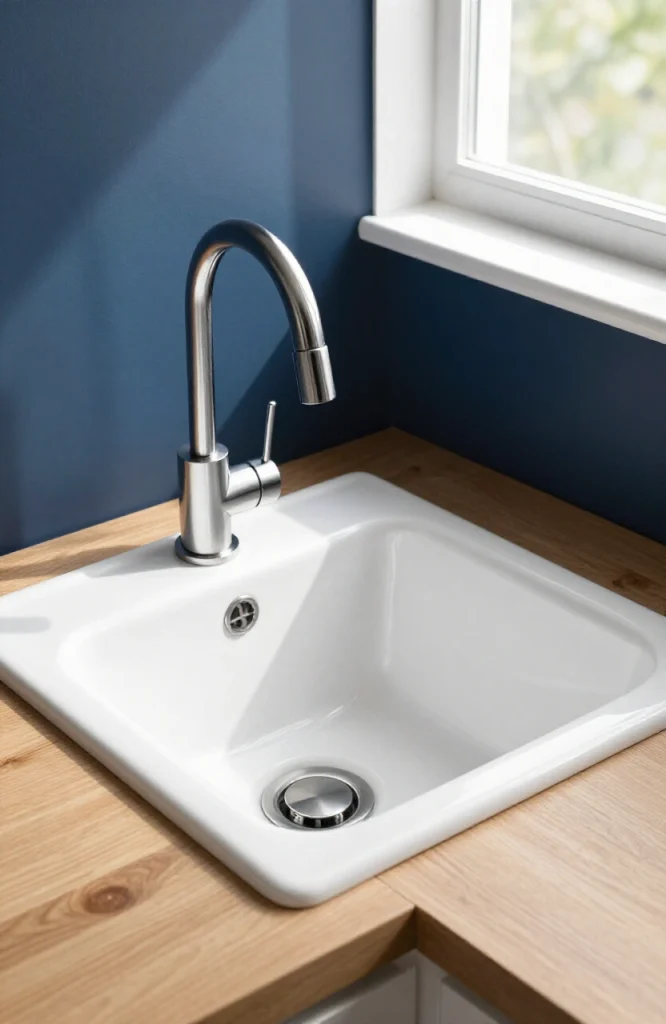
A white ceramic or stainless corner sink in a kitchen painted in a deep color, navy, forest green, charcoal, or near-black, creates a clear focal point in the corner through material and tonal contrast. Dark kitchens benefit from light-colored fixtures to prevent the room from reading as too heavy and closed-in, and a white or metallic corner sink serves that function precisely without requiring any additional light-colored element. The corner placement keeps the sink from dominating the room visually: because it sits in the corner rather than centered on a main wall, the contrast draws the eye without making the sink the only thing you notice when entering the space. Faucet finishes in matte black or brushed brass suit a dark kitchen better than polished chrome, which can look harsh against a deeply saturated wall color. Upper shelving or open wall cabinets above the corner sink should carry the same dark color as the rest of the kitchen cabinetry to keep the corner sink as the deliberate light element rather than one competing detail among many.
65. Corner Sink with a Semi-Circular Drain Board
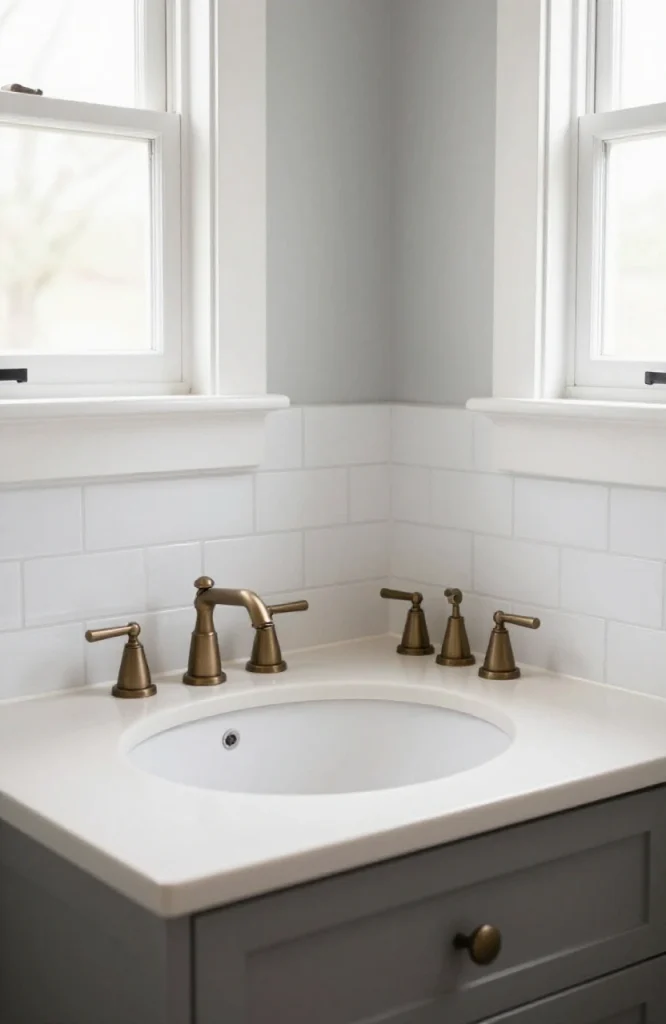
A semi-circular or angled drain board integrated into the countertop on one side of the corner sink works with the natural geometry of the corner rather than imposing a standard rectangular form onto it. The curved or angled edge of the drain board echoes the diagonal of the sink cabinet face and creates a continuous flow between the sink basin and the adjoining counter surface. Custom stone fabricators can cut this form directly into a quartz, granite, or solid surface countertop, with the drain channels routed into the surface during fabrication and sloped toward the sink at a 1 to 2 degree pitch that is enough to drain effectively without being perceptible underfoot. The result is a counter zone specifically designed for drainage rather than a generic flat surface with a separate rubber mat placed over it. In kitchens where the corner sink is the primary prep and cleanup sink, this detail improves the daily function of the area considerably and eliminates the clutter of a separate drain rack.
66. Corner Sink in a Bathroom Renovation on a Budget
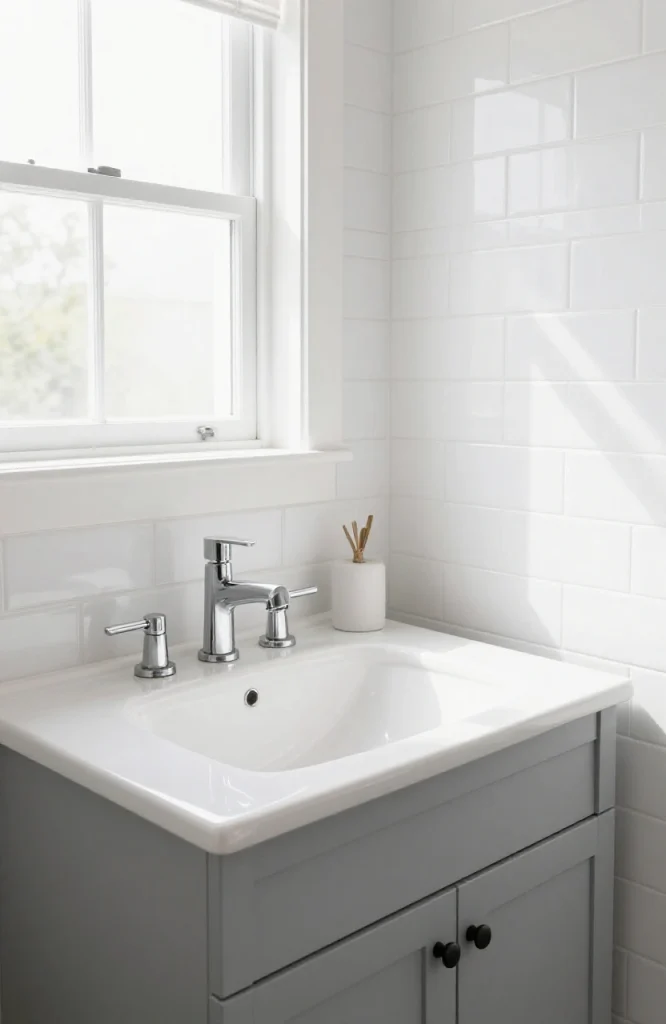
A drop-in corner sink in vitreous china or ceramic is one of the most cost-effective ways to refresh a bathroom without relocating plumbing. Most drop-in corner models fit standard 24-inch triangular corner vanity cabinets that are widely available from home improvement retailers at accessible prices, and the combination of cabinet and sink typically costs under $300 for a serviceable bathroom update that looks significantly better than an aging vanity. The installation requires cutting the sink opening in the vanity top or replacing the top with a pre-cut model, dropping the sink in from above, and connecting the existing supply and drain lines to the new basin. For a full range of approaches to refreshing a bathroom at different budget levels, see simple ways to reinvent your bathroom. Upgrading the faucet at the same time as the sink adds a noticeable improvement for a modest additional cost, particularly if the existing faucet shows lime scale buildup or wear that cleaning alone will not fully address.
67. Corner Sink with a Brass Faucet
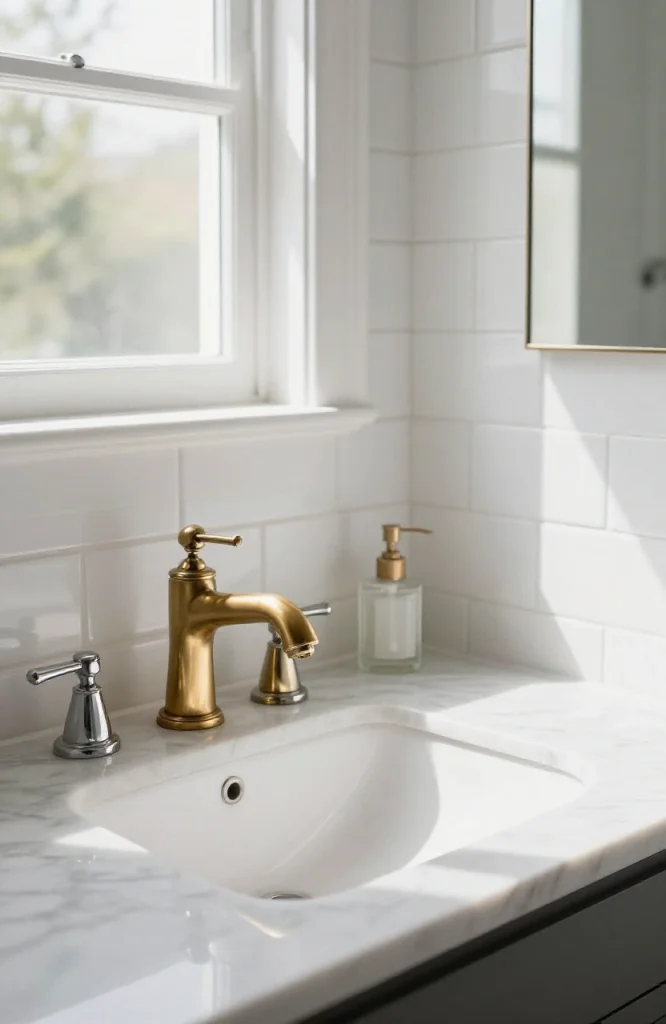
A brass faucet on a corner sink adds warmth and a sense of material quality that chrome does not replicate in the same way. Unlacquered brass develops a natural patina as the metal oxidizes, shifting from a bright gold tone toward a warmer, more muted finish that many homeowners choose to maintain rather than reverse by polishing. Lacquered brass retains its original color longer but can flake over time, leaving an uneven finish that is difficult to correct without stripping and relacquering. Satin or brushed brass sits between the two extremes and ages more gracefully than polished versions in daily-use applications. Brass faucets suit both vintage-inspired and contemporary bathrooms and kitchens, depending on the surrounding materials: paired with marble and dark wood, brass reads as luxurious; paired with white tile and simple cabinetry, it reads as warm and considered without being ornate. The internal body construction matters as much as the exterior finish: a solid brass body will outlast a zinc alloy body in long-term use regardless of what the surface treatment looks like.
68. Corner Sink in a Compact Powder Room
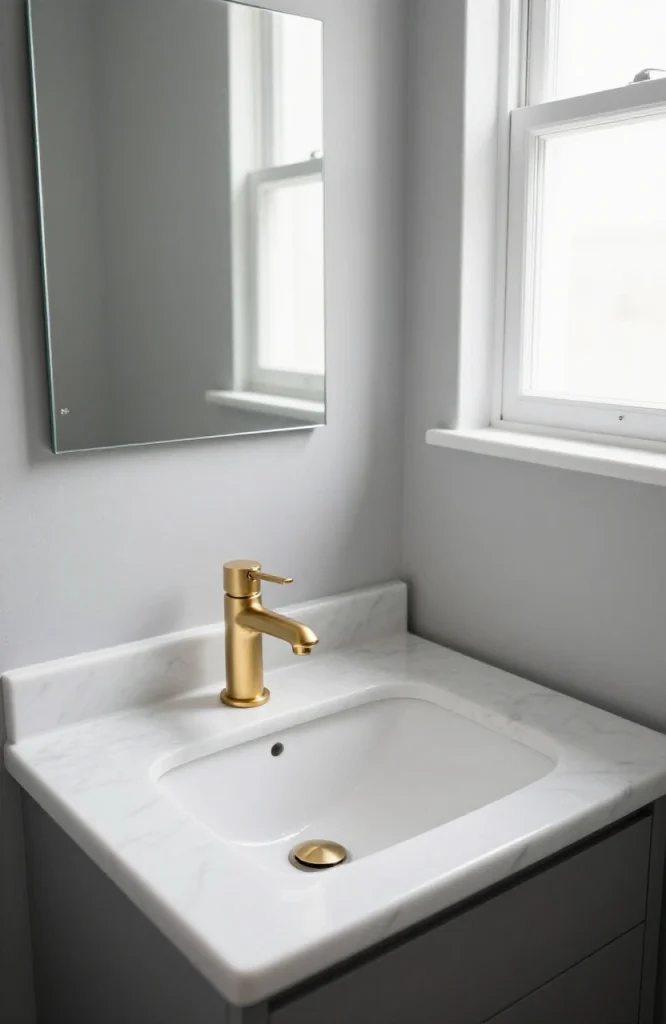
A powder room is purpose-built for hand-washing and guest use, which means the sink is the primary fixture in the room and needs only to serve a single straightforward function. A compact corner sink, whether wall-mounted, pedestal, or vessel on a triangular shelf, fits the powder room precisely because it leaves the adjacent wall space free for a mirror, artwork, or a towel bar that would otherwise have to compete with a larger vanity cabinet. The powder room is also one of the rooms in a house where a statement sink material, colored glass, hand-painted ceramic, or sculptural stone, is practical rather than indulgent because the room is used briefly and infrequently, so a more distinctive approach does not compromise daily function the way it might in a heavily used family bathroom. Corner placement in a powder room typically keeps the toilet and sink on separate walls, which makes the small room feel less crowded and easier to navigate for guests unfamiliar with the layout.
69. Corner Sink with Integrated Side Shelves
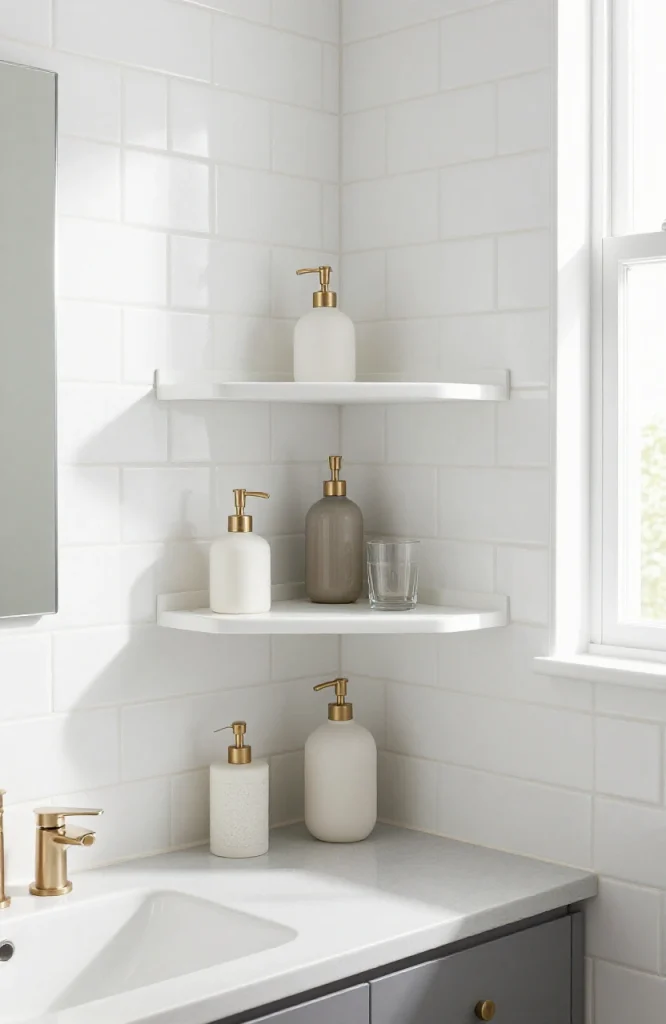
Triangular corner shelves installed at counter height on either side of the sink, running along the two adjacent walls from the sink edge to the nearest cabinet or wall end, hold hand soap, dish soap, sponges, and small items that would otherwise crowd the limited deck space around a corner basin. These shelves can be tiled in the same material as the backsplash to create a continuous horizontal band around the sink zone, or left as sealed wood shelves that contrast with the tile in both material and color. The height should be set to keep items at a convenient reach without blocking the backsplash tile above, which typically means a shelf depth of 4 to 6 inches positioned 4 to 6 inches above the counter surface. In bathrooms, this same approach organizes toothbrush holders, soap dishes, and small skincare items in defined positions around the corner sink rather than leaving them to accumulate on the vanity top in a random arrangement.
70. Corner Sink as a Room Design Feature
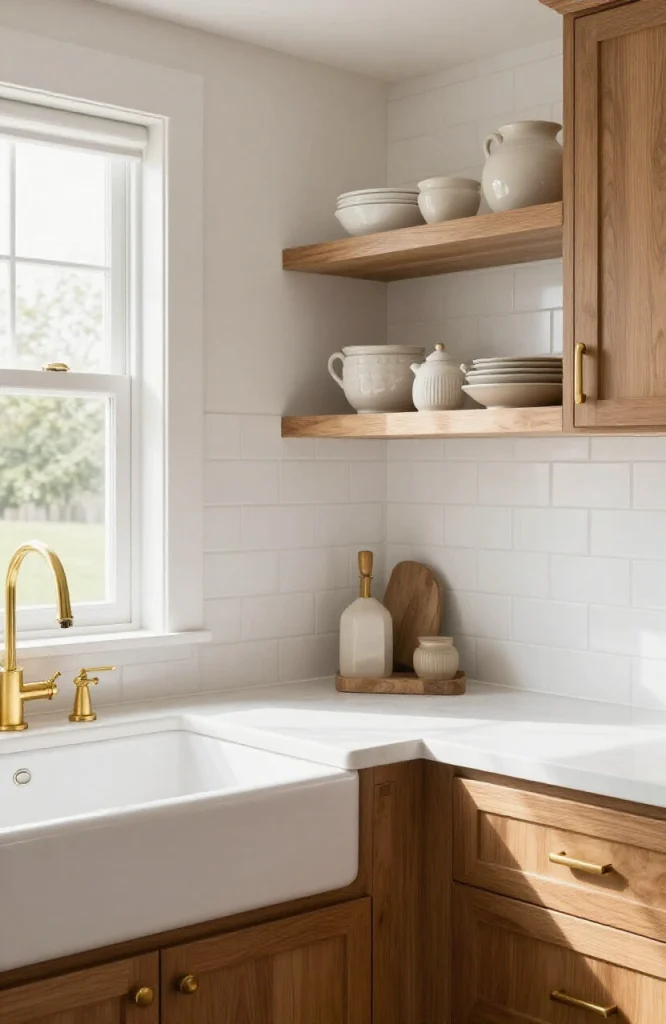
Rather than treating the corner sink as something to minimize or conceal behind a standard cabinet, some kitchens and bathrooms are designed to make the corner sink the most deliberately considered element in the room. A hand-hammered copper bowl on an exposed frame, a large fireclay basin with a custom bridge faucet in unlacquered brass, a poured concrete vessel with embedded stone aggregate, or a deep stainless trough with wall-mounted commercial faucets all read as feature elements rather than standard fittings that happen to be in the corner. The corner position, rather than being a constraint that needs to be worked around, becomes a genuine advantage here because the sink is visible from multiple angles and from across the room, giving any design detail more visual exposure than a centered basin on a single wall ever could. Lighting the corner deliberately, with a recessed downlight directly above the basin or a pendant hung low over the corner, reinforces the idea that the sink is the focal point of that zone and worth looking at as part of the room’s design.