
Loft apartments are one of those spaces that look great in photos but can feel overwhelming once you’re actually standing in one with a couch and a moving truck. The high ceilings are beautiful, but they make the room feel like an echo chamber. The open floor plan is exciting, right up until you realize you have no idea where the bedroom ends and the kitchen begins.
The good news is that loft decorating follows a clear set of rules once you understand what you’re working with. These 22 loft apartment decoration ideas cover everything from zoning your space and picking the right furniture, to lighting tricks and the small details that make a loft feel like a real home.
1. Treat Exposed Brick as a Feature, Not a Problem

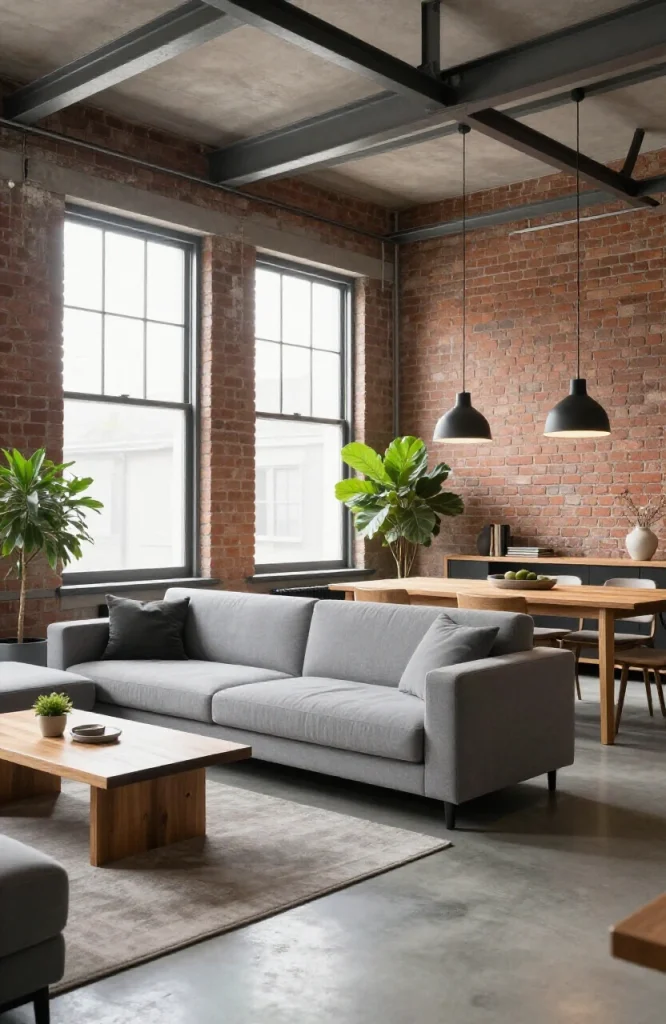
If your loft has exposed brick, resist the urge to cover it up. Brick walls are one of the defining features of loft living, and they bring texture, warmth, and a sense of history that no paint job can replicate.
The best approach is to let the brick be the focal point of whatever wall it’s on. Keep the furniture in front of it simple and in neutral tones so the brick does the talking. If the mortar looks tired, a quick repointing job can freshen it up without losing that raw character.
Avoid adding too many decorative items on a brick wall. One or two pieces of art hung on a picture rail work better than a cluttered gallery.
2. Leave Pipes and Ductwork Exposed
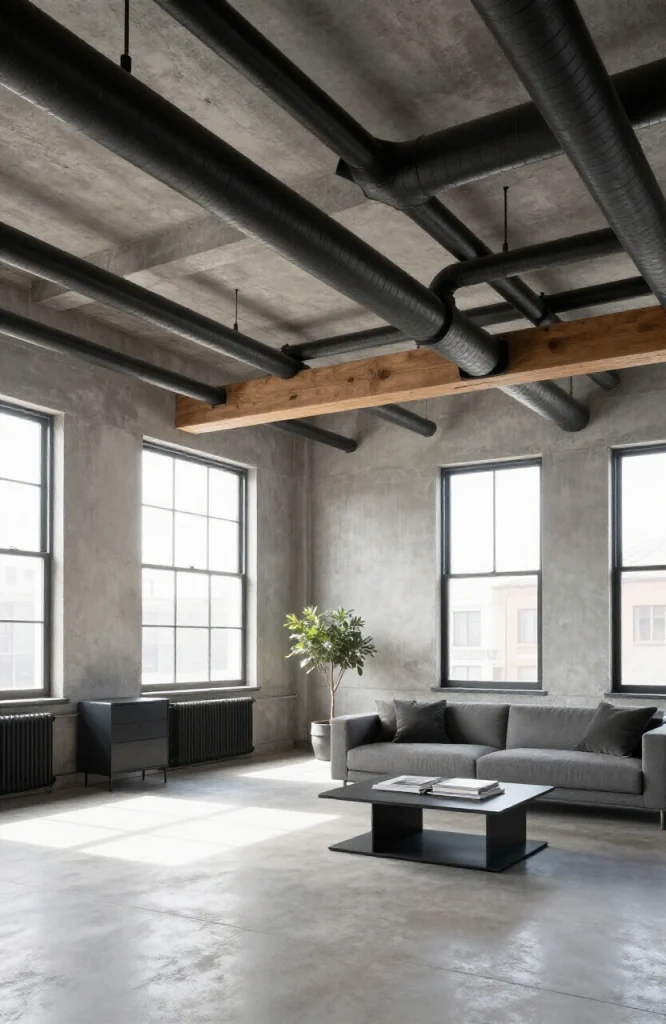
Painting over or boxing in the pipes and ductwork in a loft usually makes the space feel lower and more confined. Instead, lean into them.
Painting exposed pipes and ductwork in matte black makes them look intentional rather than accidental. You can also match them to the ceiling color for a more subtle look. Either way, they become part of the design rather than something to apologize for.
3. Use Concrete Floors as Your Base and Layer Rugs on Top
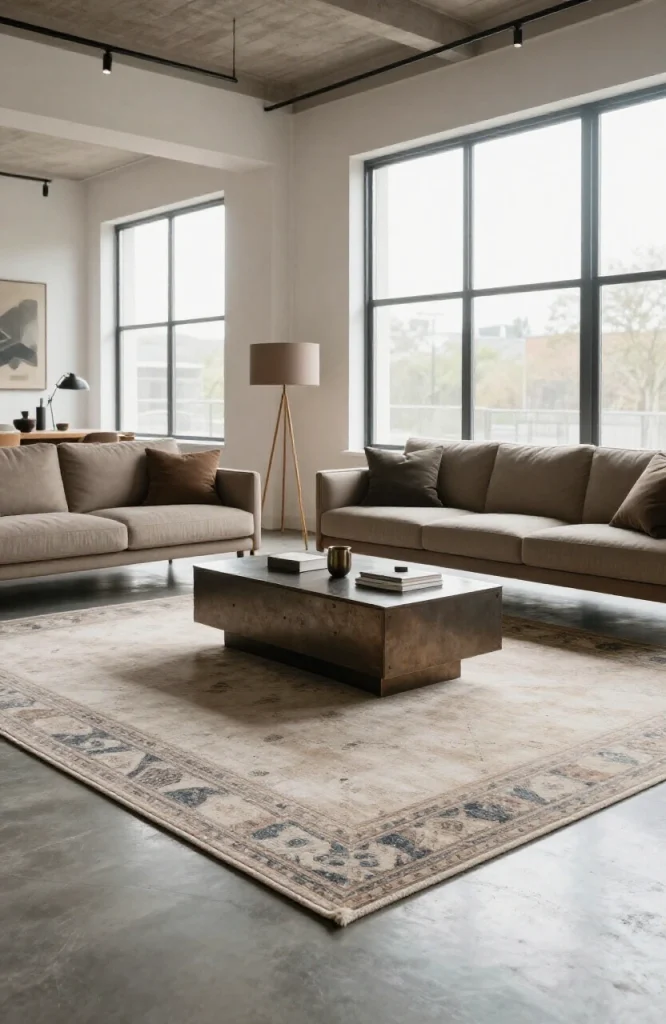
Polished concrete floors are common in loft apartments, and they look great, but they can make a space feel cold and hard. The solution is layered rugs.
A large area rug under the living room furniture immediately makes that zone feel warmer and more defined. You don’t need the most expensive rug in the store. A flat-weave jute rug, a wool blend, or even a vintage-style rug from a secondhand store can do the job well.
The key is size. Go bigger than you think you need. A rug that only fits under the coffee table but leaves the sofa legs hanging off the edge makes the room feel cramped, even in a large loft.
4. Zone the Space with Furniture Placement, Not Walls
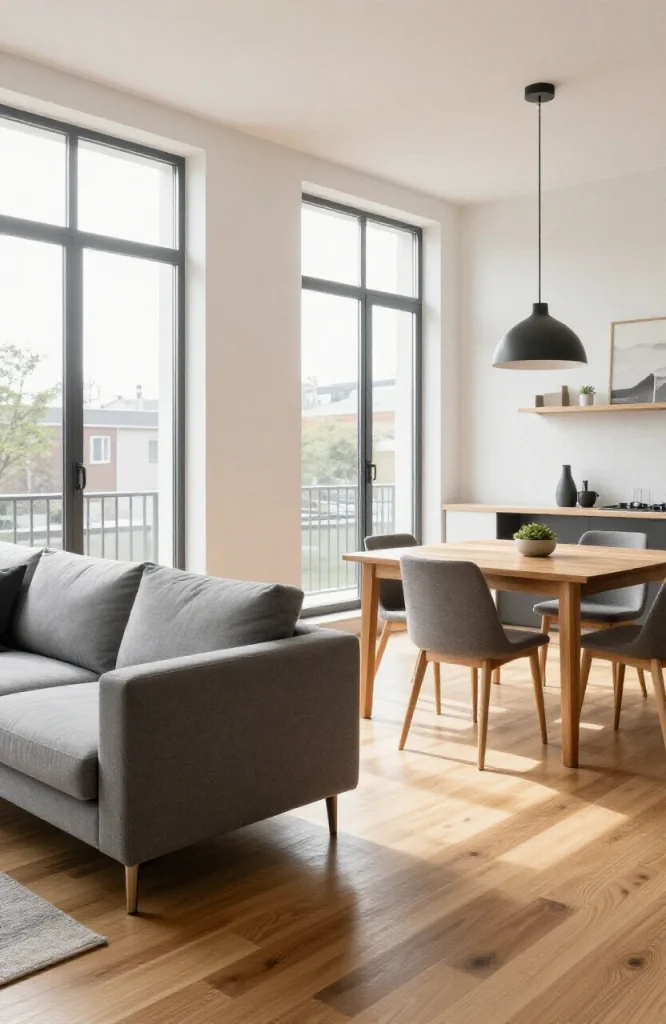
One of the biggest challenges in a loft is making one large room feel like distinct spaces. The temptation is to add walls or partitions, but in most cases, smart furniture placement does the same job without cutting off light and flow.
Position your sofa with its back toward the dining area rather than pushed against a wall. This creates a clear visual boundary between the living room and whatever is behind it. A console table placed along the back of the sofa reinforces that boundary and gives you extra surface space.
For more on how to pull together a full living room, take a look at our complete guide to living room decor.
5. Use a Large Sectional to Anchor the Living Area
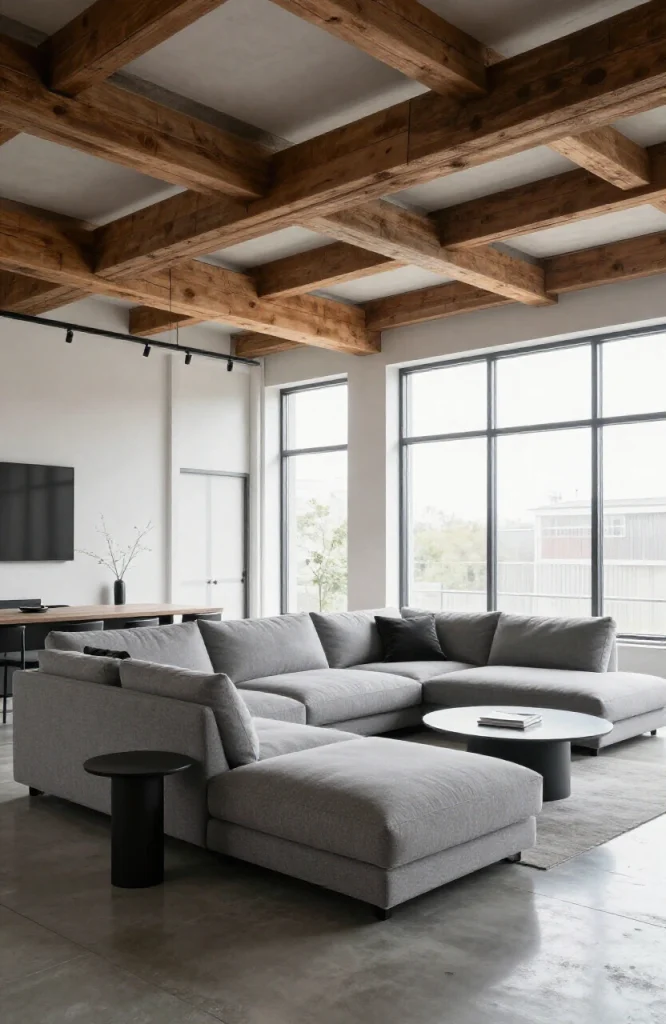
In a loft with an open floor plan, a standard three-seat sofa can look like it got lost. A sectional sofa naturally takes up more visual real estate and signals clearly that this corner is the living area.
Go for an L-shaped sectional in a neutral fabric like light gray, warm cream, or charcoal. Avoid overstuffed styles that look too casual for the industrial bones of most lofts. A sectional with clean lines and legs (rather than one that sits directly on the floor) keeps the space from feeling heavy.
6. Place Area Rugs to Define Each Zone
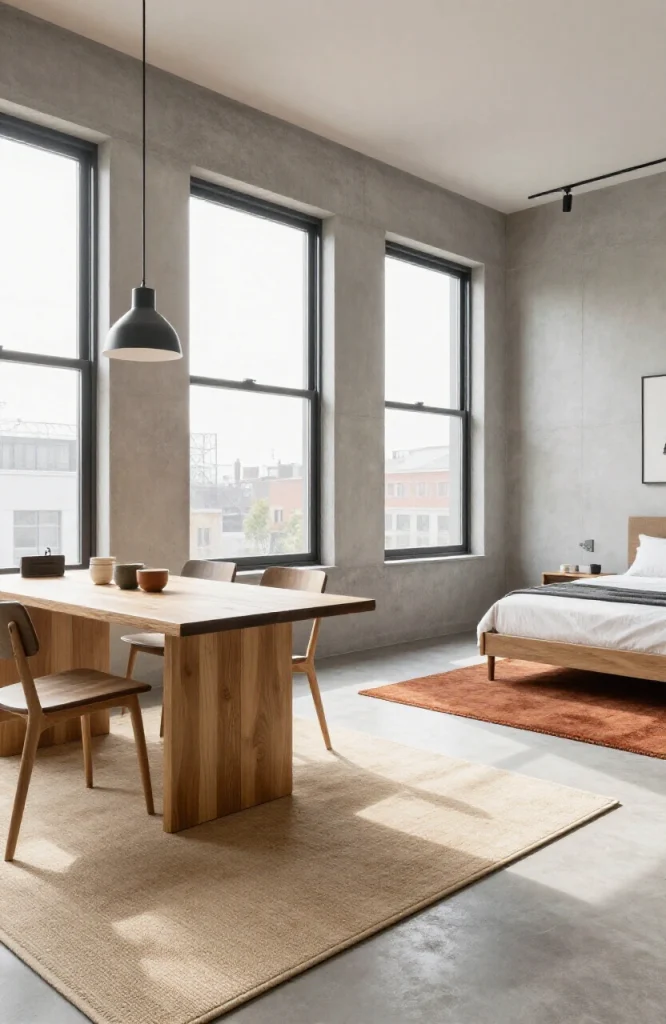
Beyond the living area, use rugs to mark out your other spaces too. A rug under the dining table defines the dining zone. A smaller rug beside the bed defines the sleeping area in a studio loft.
The rugs don’t need to match each other exactly, but they should feel like they belong to the same color family. Mixing a jute rug in the living area with a patterned wool rug under the dining table works well as long as the tones are consistent.
7. Install Tall Bookshelves as Room Dividers
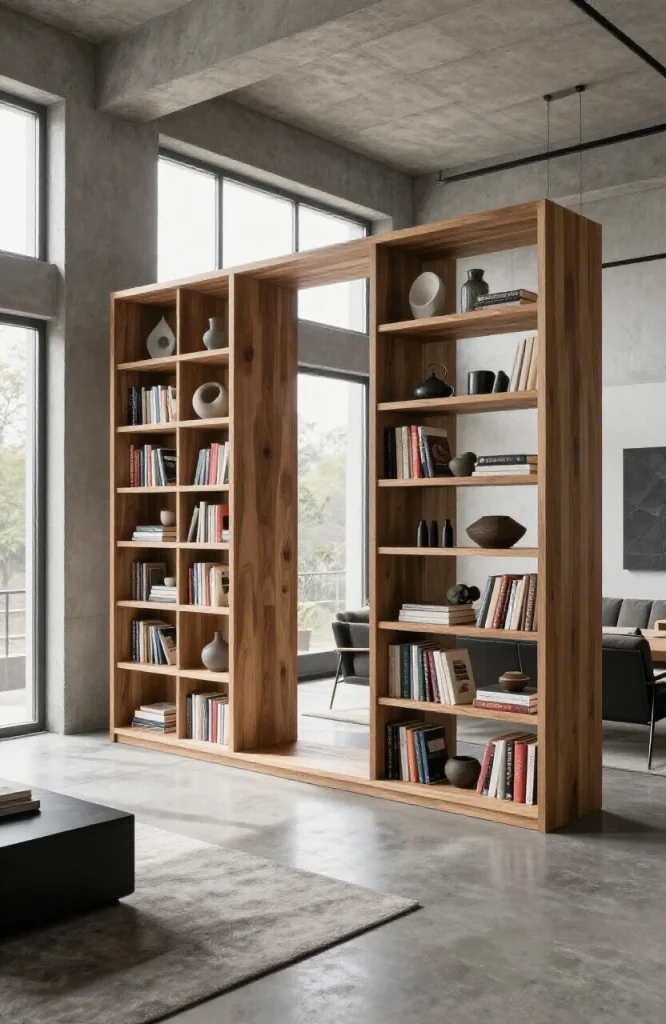
Open bookshelves that go from floor to ceiling serve two purposes in a loft: they create a soft visual divide between zones, and they take advantage of the vertical space that most lofts have in abundance.
Style them with a mix of books, plants, and a few decorative objects. Avoid packing every shelf to capacity. A shelf that has some breathing room looks intentional. One that is stuffed to the edges looks like a storage unit.
If you style both sides of the shelf (facing the living area and facing the bedroom or dining area), the bookshelf works as a proper room divider that still keeps light and air moving through the space.
8. Hang Curtains Floor to Ceiling for a Soft Partition
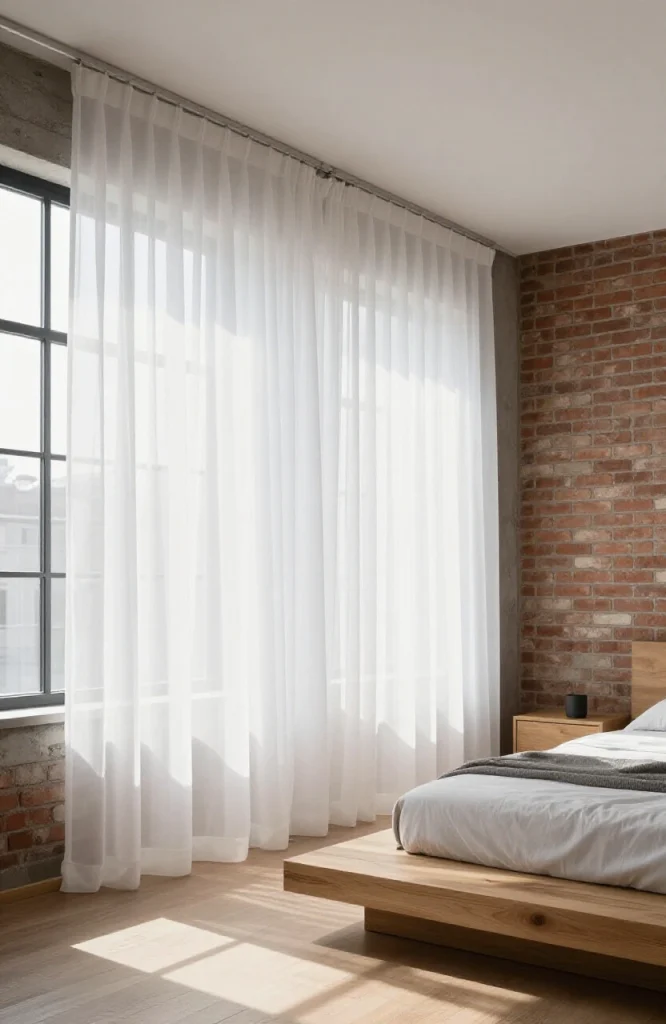
Curtains hung from ceiling-height tracks or rods create an inexpensive and flexible room divider. This works especially well for carving out a sleeping area in a studio loft or for adding a bit of privacy around a home office corner.
Choose a fabric that is light enough to let some daylight through when the curtains are drawn. Linen and cotton voile are good choices. Heavy blackout curtains can make a partitioned area feel like a box rather than a room.
9. Match Lighting to Each Zone
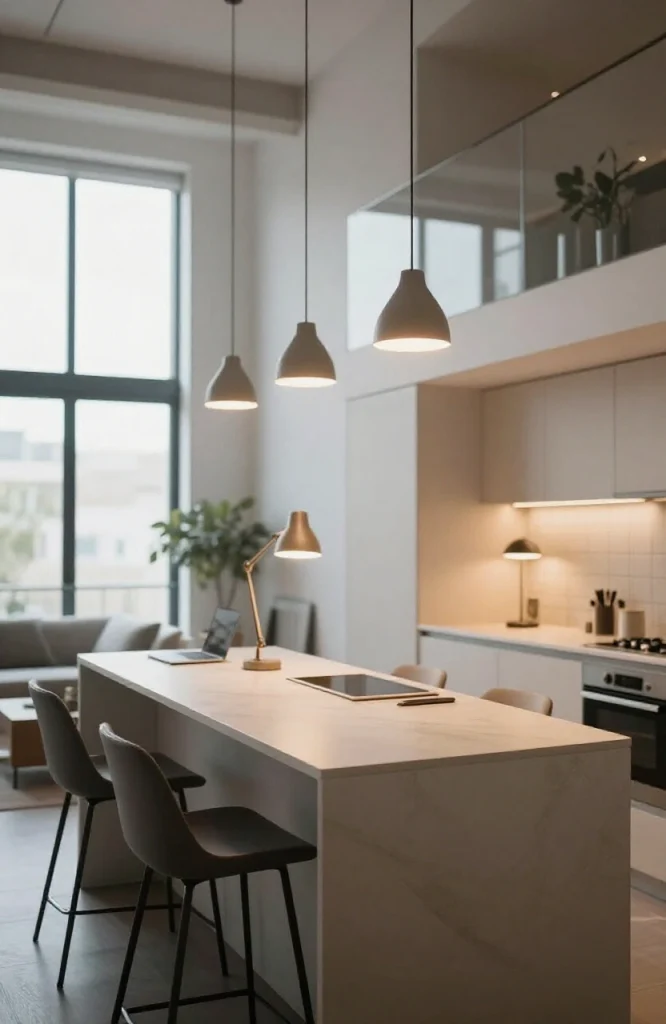
One of the most overlooked parts of loft decoration is using different lighting to signal different areas. When the entire space is lit the same way, it feels like one big undifferentiated room.
Use pendant lights over the dining table. Put a floor lamp in the reading corner. Add under-cabinet lighting in the kitchen. Each light source quietly tells the eye where one zone ends and another begins, without the need for any walls at all.
For detailed advice on getting this right, our article on home office lighting ideas covers layered lighting in practical terms.
10. Go Big with a Statement Pendant or Chandelier
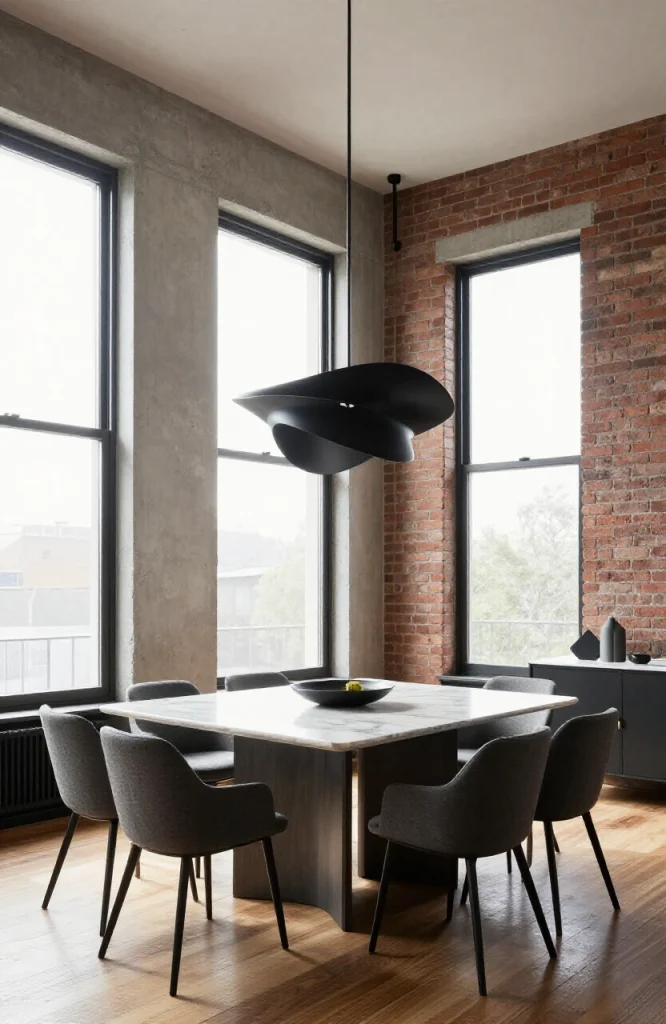
Lofts have high ceilings, and that means standard ceiling lights look tiny and underpowered. A statement pendant or chandelier hung low over the dining table or in the center of the living area fills that vertical space and gives the room a clear focal point.
You don’t need to spend a fortune. Wicker pendants, rattan chandeliers, and oversized drum shades all work well and are available at most home stores. The key is scale. What looks large in the store often looks just right once it’s up in a loft.
11. Try Edison Bulbs and Cage-Style Fixtures
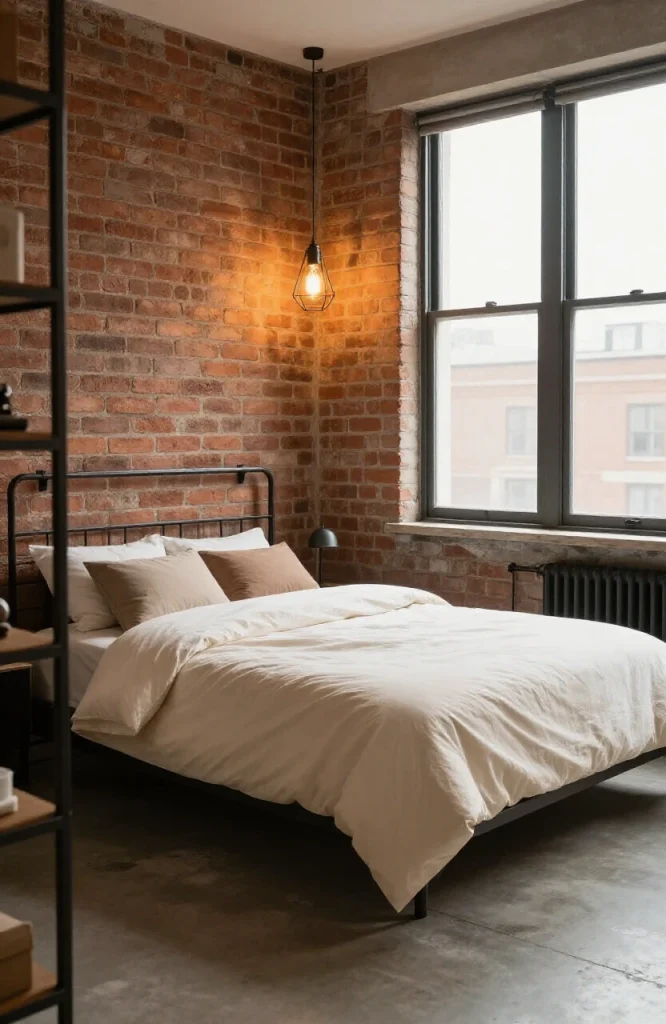
For a more industrial look, cage-style light fixtures with Edison bulbs are a natural fit in loft apartments. They are widely available, affordable, and they add warmth to spaces that can otherwise feel cold.
Hang them in clusters over the kitchen island or dining table at different heights for a more dynamic effect. A single cage pendant over a reading chair also works well as task lighting that doubles as decor.
12. Use Track Lighting for Flexibility
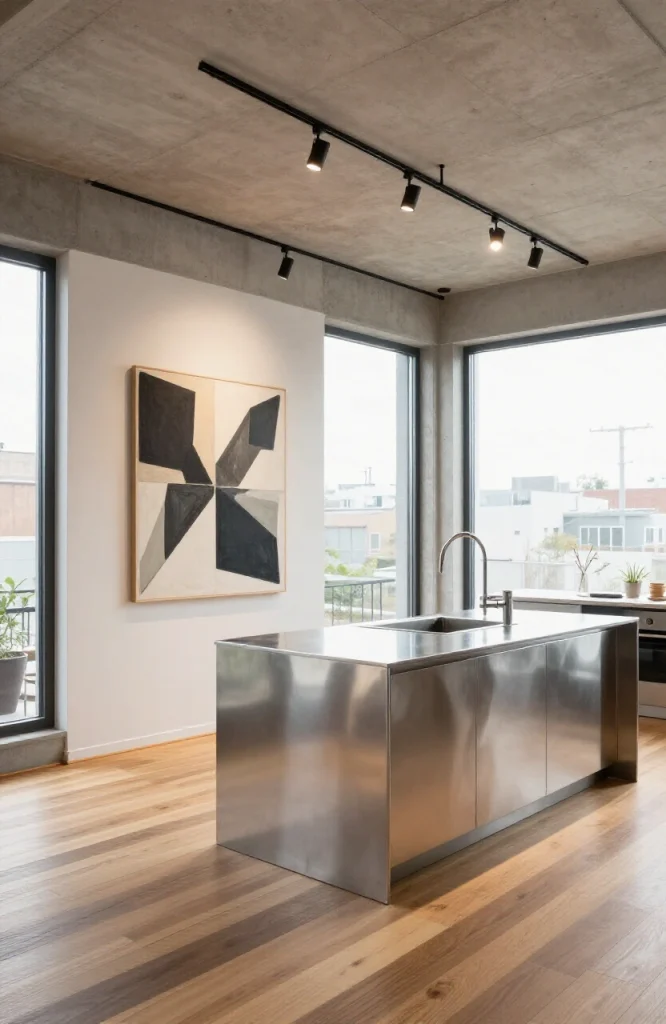
Track lighting is particularly useful in lofts because you can point individual heads toward specific areas, highlight art on a wall, or illuminate a kitchen worktop without adding more ceiling fixtures.
It looks good in matte black or brushed nickel and suits the industrial character of most loft spaces. If your loft has exposed ceiling joists or beams, track lighting attached to those runs can look very intentional and considered.
13. Go Vertical with Storage
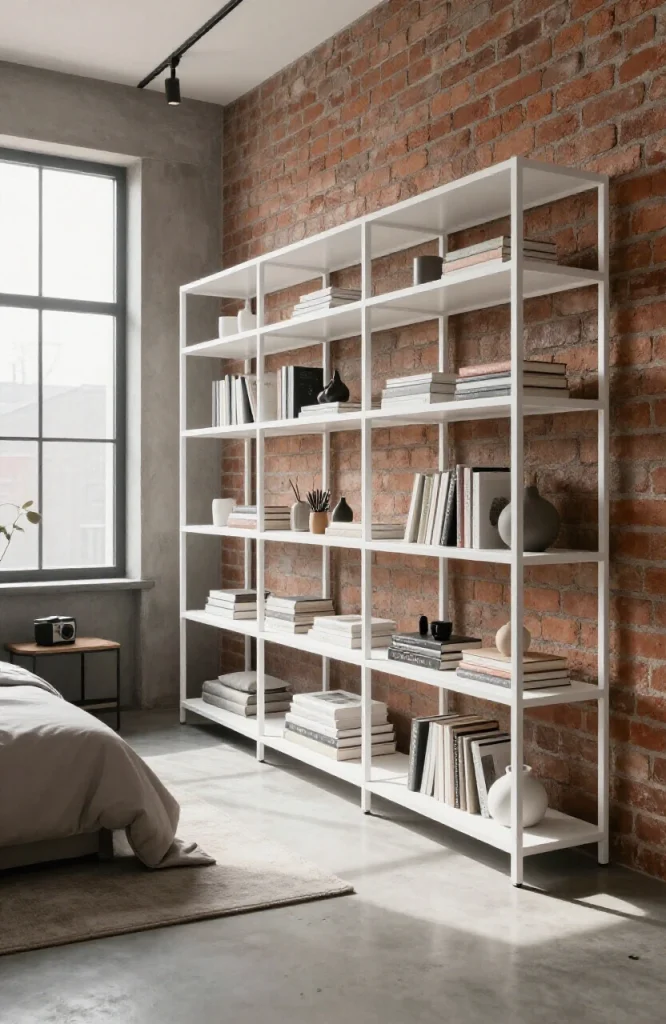
Floor space in a loft is precious because you need it to breathe. Wall and vertical storage keeps your belongings organized without sacrificing that openness.
Tall shelving units that reach close to the ceiling make use of space that would otherwise go to waste and draw the eye upward, which makes the room feel even taller. In the kitchen, open shelving on the walls above the counter is a practical and good-looking option that suits the loft aesthetic far better than upper cabinets with doors.
14. Consider a Lofted Bed or Mezzanine Level
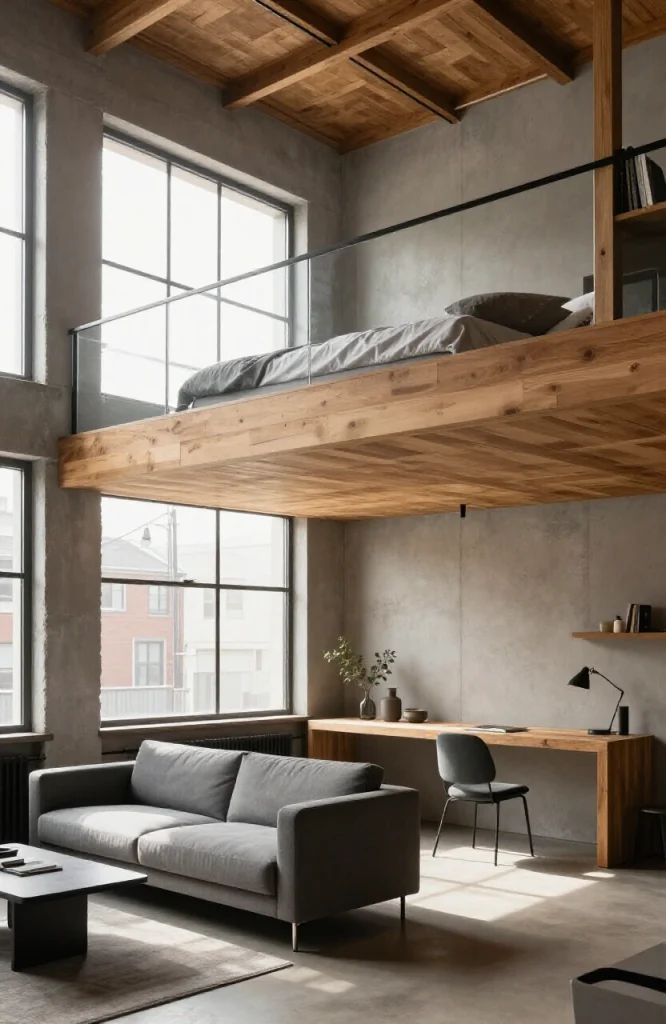
In a studio loft with enough ceiling height, a lofted bed platform is one of the most space-saving moves you can make. Sleeping on the upper level frees up the floor below for a sofa, a desk, or a small dining area.
A mezzanine level built by a carpenter can feel like a genuine second story in the apartment and dramatically changes how the whole space functions. It is a bigger investment, but it can make a small loft feel like a two-level home.
15. Choose Multi-Functional Furniture
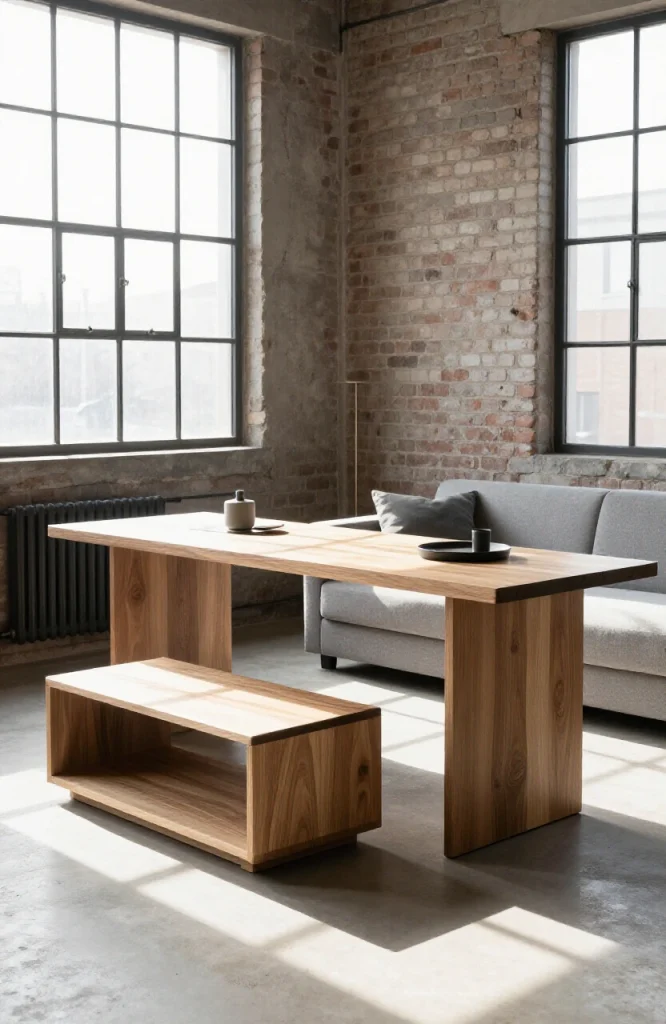
A sofa bed, a dining table that folds out from a console, an ottoman with storage inside: these kinds of pieces earn their place in a loft by doing more than one job.
The goal is not to fill the space with furniture, but to make sure each piece you bring in pulls its weight. A storage bench at the foot of a bed, for example, provides seating, holds extra blankets, and also acts as a visual separator between the sleeping area and the rest of the space.
16. Pair Metal with Warm Wood
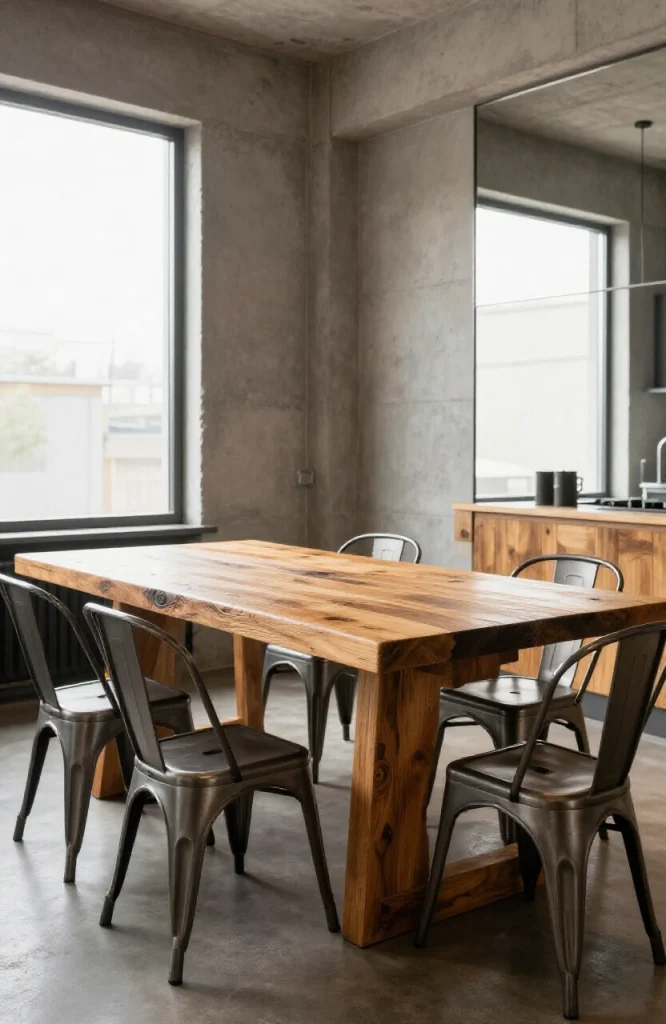
Raw metal and concrete are the backbone of most loft spaces, but too much of either can make a home feel cold. Warm wood is the natural counterbalance.
A reclaimed wood dining table, a wooden coffee table, or even a few wooden shelves introduce warmth and texture that soften the industrial edges without fighting against them. The contrast between raw steel or black metal and warm honey-toned or dark walnut wood is one of the most satisfying combinations in loft decorating.
If you enjoy this kind of bold contrast approach in bedroom design, take a look at our men’s bedroom ideas for more on mixing metals and warm materials.
17. Go Oversized with Wall Art
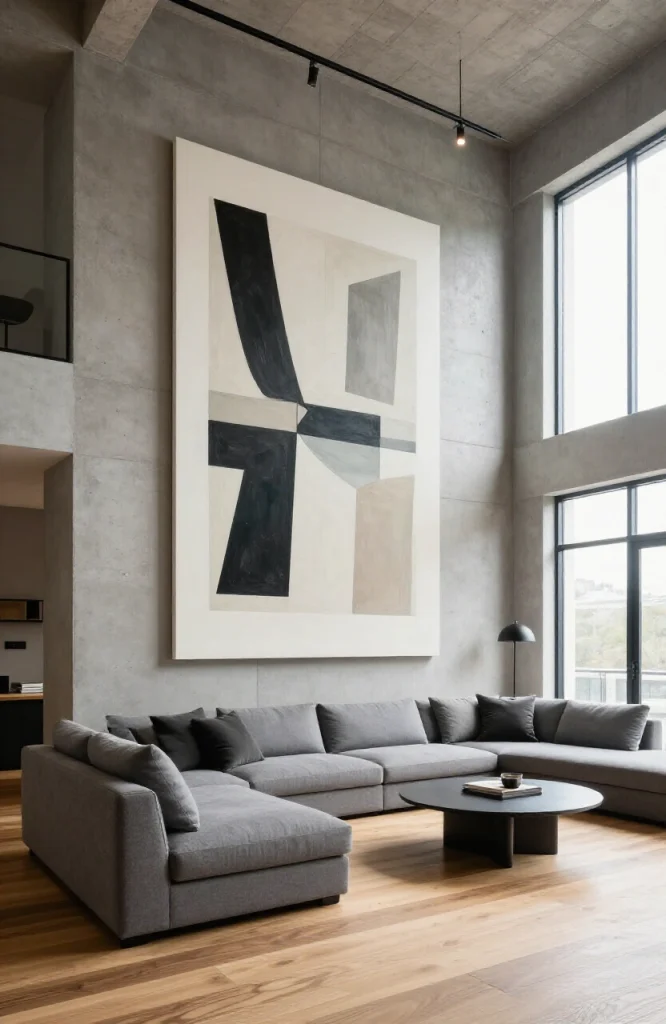
In a room with 10 or 12-foot ceilings, a standard 24×30 inch print disappears. Scale your art to the wall.
One large canvas or print hung at eye level above the sofa makes a much stronger statement than five smaller frames arranged in a gallery layout. If you prefer a gallery wall, go with a tighter arrangement of larger pieces rather than a spread-out collection of small frames.
Abstract prints, black and white photography, and graphic posters all work well in loft spaces. Ornate, heavily framed traditional pieces can feel out of place against exposed brick or concrete.
18. Build a Gallery Wall on a Brick or Painted Feature Wall
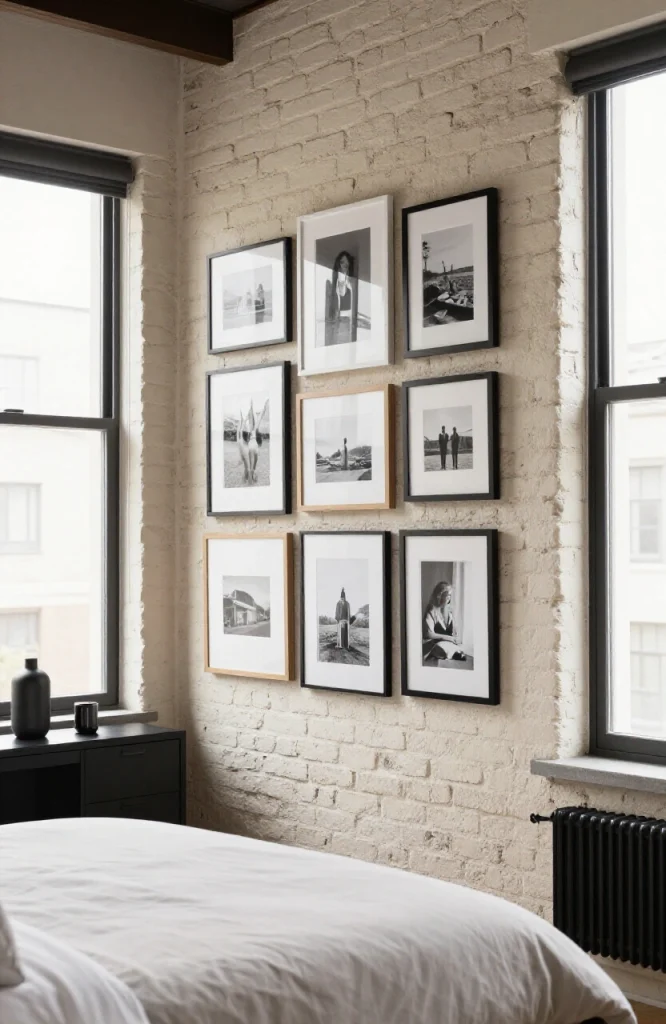
A gallery wall in a loft works best when it has some structure to it. Choose a central piece and build outward, keeping a consistent gap of two to three inches between frames.
Mix sizes but keep the frame finish consistent. All black frames, all natural wood frames, or all white frames give the arrangement a cohesive look even when the prints inside are varied.
For the color palette of the prints, pull one or two tones from the rest of the room so the gallery wall feels connected to the space rather than pasted onto it.
19. Use Plants to Soften the Industrial Feel
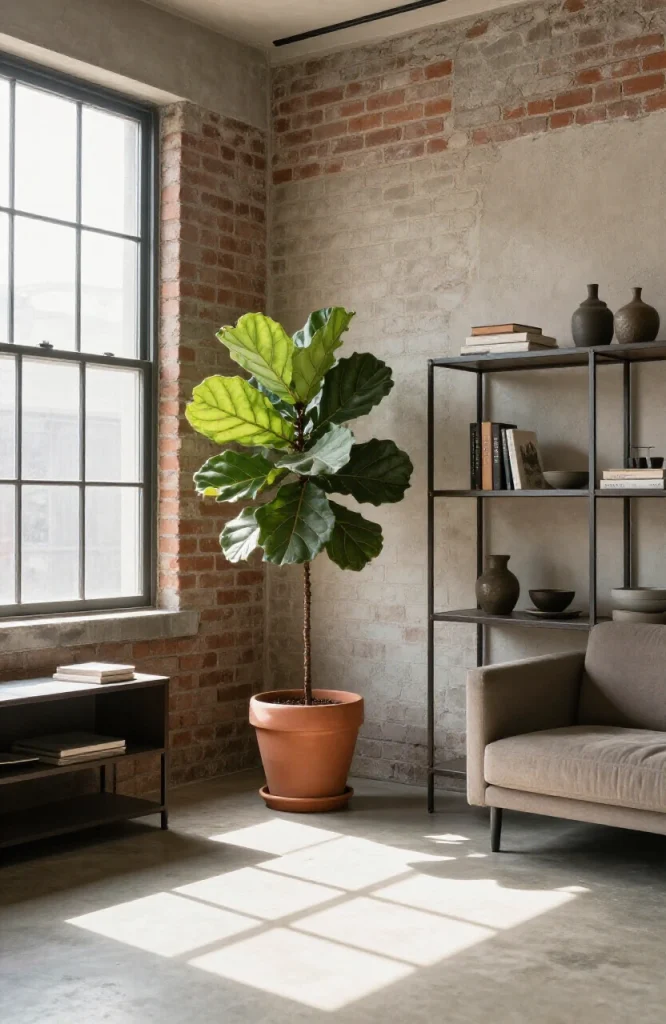
A loft with exposed concrete, brick, and metal can start to feel austere without some organic material in the mix. Plants are the quickest fix.
A large fiddle leaf fig or olive tree in a terracotta or black matte pot brings life to a corner without cluttering it. Trailing pothos or string of pearls on high shelves softens the vertical surfaces. A row of smaller plants along a windowsill adds color and life to a space that otherwise skews heavily toward gray and brown tones.
For easy care in a busy household, snake plants, ZZ plants, and pothos are hard to kill and look good in most loft settings.
20. Create One Clear Focal Point in Each Zone
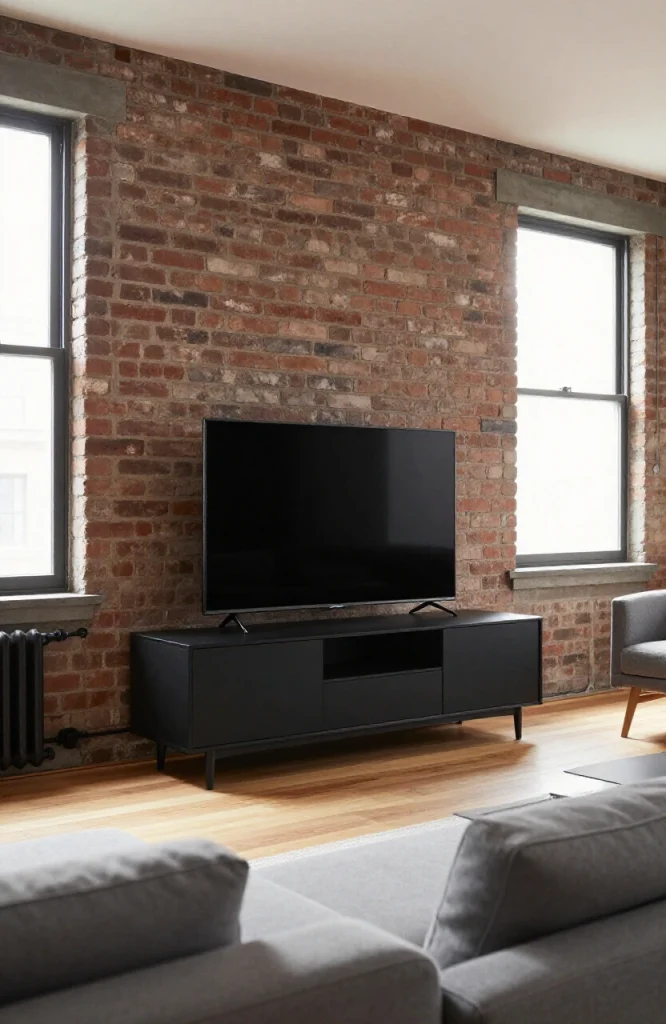
Every zone in your loft should have something that the eye lands on first. In the living area, that might be the TV console, a large piece of art, or a fireplace. In the dining area, a statement pendant light above the table does that job. In the sleeping area, a solid headboard or a canopy frame gives the bed a sense of enclosure.
Without focal points, the eye has nowhere to rest and the whole space can feel chaotic despite your best organizational efforts.
21. Keep the Color Palette Tight
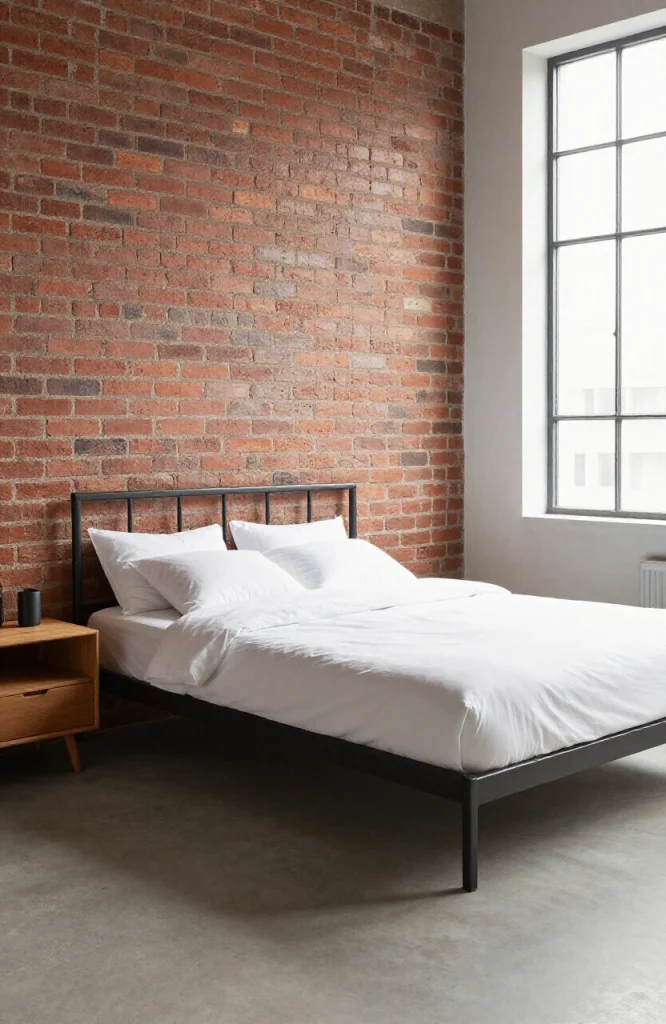
Lofts with too many competing colors feel busy rather than lively. The raw materials of the space, brick, concrete, metal, and wood, already provide a lot of visual texture. Adding a dozen different colors on top of that makes everything fight for attention.
Stick to two or three main colors for walls, large furniture, and textiles. Neutrals like warm white, soft gray, and warm tan work well as a base. One accent color, used in cushions, a rug, or a few pieces of art, is enough to add personality without tipping into chaos.
If you want more help choosing wall colors that complement these kinds of neutral bases, our guide to bedroom paint color ideas has a range of options that translate well to loft spaces too.
22. Leave Some Space Empty
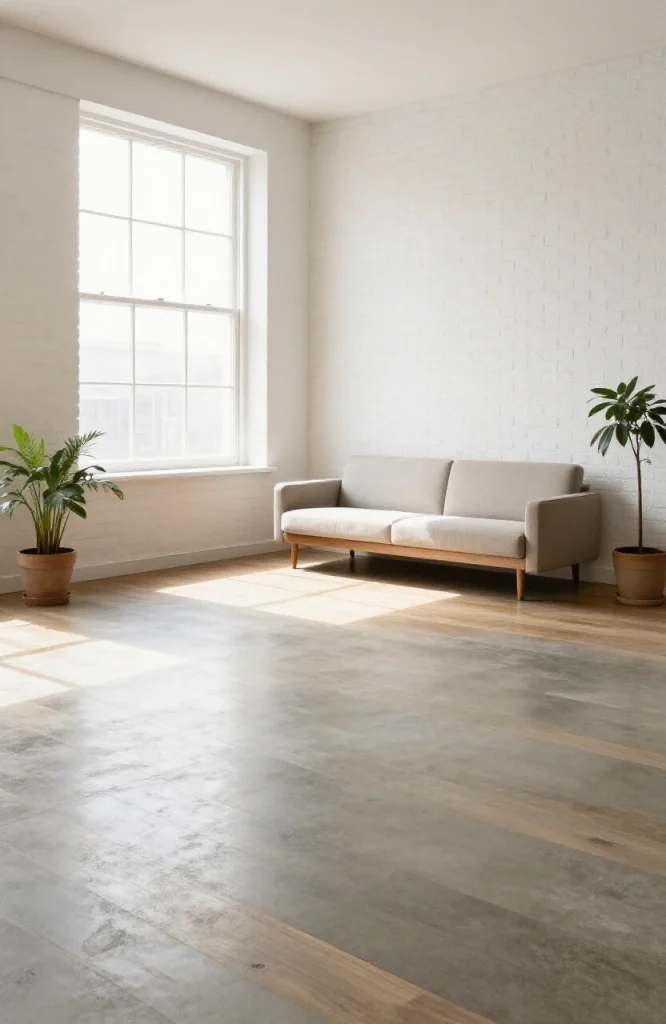
The instinct when moving into a large loft is to fill it up. Resist that. Empty space in a loft is not wasted space. It is what makes the apartment feel open, airy, and worth living in.
Choose each piece of furniture and each decorative item deliberately. If you find yourself adding something just to fill a corner, it probably does not need to be there. A loft that has a little empty space in it feels calm and considered. One that is packed edge to edge feels like a storage unit, no matter how nice the individual pieces are.
Frequently Asked Questions
How do you make a loft apartment feel cozy? Layer rugs on the floors, add warm lighting at multiple heights, and bring in natural materials like wood and linen. Plants, throw blankets, and cushions in warm tones all help. The goal is to add softness without cluttering the space.
What furniture works best in a loft apartment? Furniture with clean lines and simple silhouettes suits loft spaces well. Avoid overly ornate or very delicate pieces that look lost against raw industrial materials. Sectional sofas, solid wood dining tables, metal-frame chairs, and storage ottomans are all practical and good-looking choices.
How do you divide a loft apartment without walls? Furniture placement, area rugs, bookshelves, and curtain tracks are the most practical tools. Each defines a zone without physically blocking light or air. Changing the lighting in each area reinforces the separation further.
What colors work best in a loft apartment? Neutral bases work best because the raw materials of the space already provide texture and visual interest. Warm whites, soft grays, warm tans, and charcoal are all solid choices. Add one accent color through rugs, cushions, or art to prevent the space from feeling bland.
How do you decorate a small loft apartment? Focus on vertical storage, multi-functional furniture, and keeping the floor plan as open as possible. A lofted bed or mezzanine level can free up significant floor space. Use mirrors to bounce light around and make the space feel larger than it is.
What is the difference between a loft apartment and a studio apartment? A studio apartment is a self-contained unit with all living functions in one room, usually with standard ceiling heights. A loft apartment typically has high ceilings, large windows, and an open layout, often in a converted industrial building. Some lofts are large; others are compact. The defining features are the ceiling height and the open plan, not the overall size.
Conclusion
Decorating a loft apartment is a balancing act between the raw character of the space and the warmth you need to actually live in it. The ideas above give you a clear starting point, whether you are working with a large converted warehouse or a compact urban loft.
Start with zoning and lighting. Get those two things right and the rest of the decoration decisions become much easier. Then bring in the furniture, art, and plants that reflect how you actually want to live in the space.
For more home decoration ideas across every room, browse the rest of the homedeckor.com blog.