
A bathroom that still looks good in fifteen years is one of the smartest investments you can make in your home. Knowing how to create a timeless bathroom comes down to a handful of decisions made early, most of them around materials, proportion, and restraint. I’ve worked through dozens of bathroom projects at homedeckor.com, and the rooms that age best share the same traits: neutral foundations, quality fixtures, considered storage, and lighting that flatters rather than glares. None of it requires a large budget. It requires intention.
Start With a Neutral Color Palette

The color palette you choose is the single decision that most affects how long your bathroom feels current. Whites, soft grays, warm creams, and stone-toned beiges have remained bathroom staples for over a century because they work with almost every fixture finish, tile style, and accessory set you might swap in later.
Avoid locking color into surfaces that are expensive to change. Tile, cabinetry, and countertops should stay neutral. If you want color, put it in towels, a bath mat, or a painted wall, all of which can change for under $50. A deep navy or forest green accent can look strong today, but when you apply it to grout or vanity panels, you’re committing to it for a decade or more.
One practical rule: use no more than three tones from the same family. A warm white wall, an off-white marble countertop, and a greige floor tile read as cohesive without being flat. More than three distinct tones and the room starts competing with itself.
Choose Classic Tile Patterns and Materials
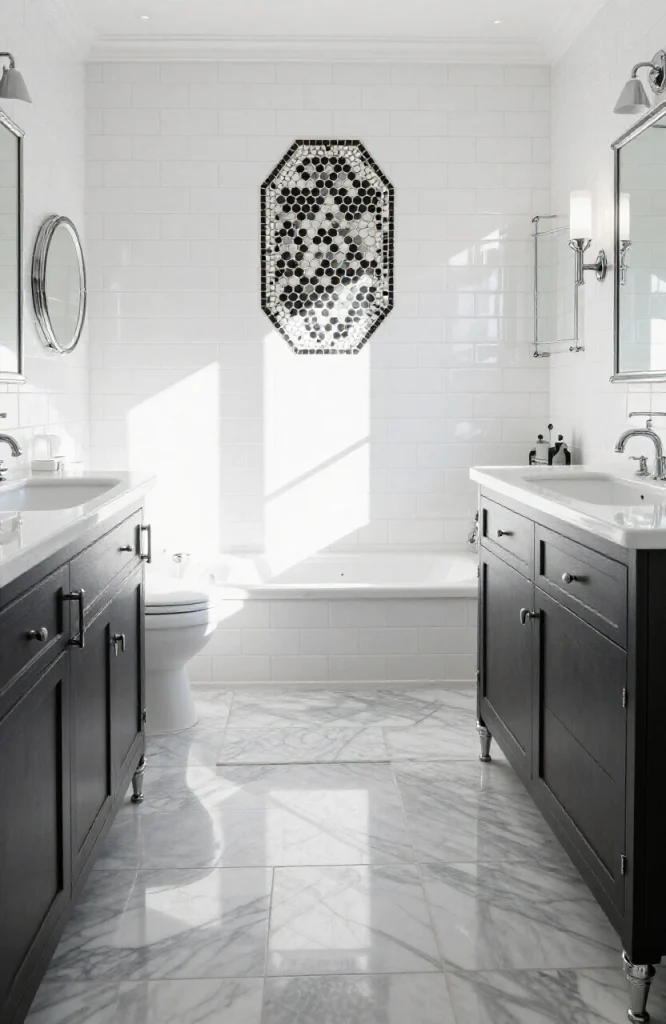
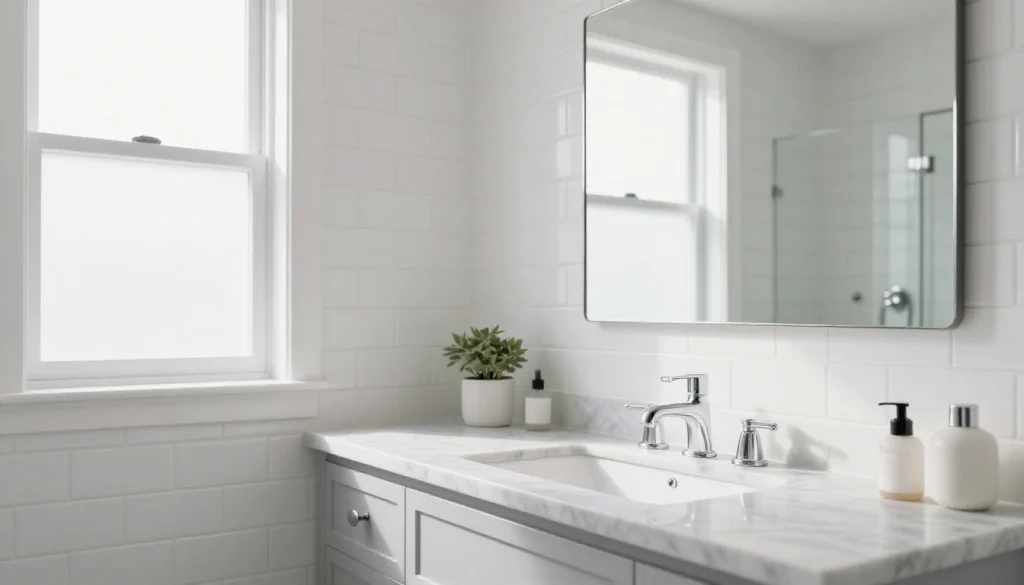
Tile is where many bathrooms date themselves. The safest choices are also the oldest ones: subway tile in a brick or straight lay, large-format stone tile, hexagon mosaic floors in white or black, and square field tile. These patterns have appeared in homes since the early 1900s and show no signs of leaving.
Materials matter as much as pattern. Natural stone, porcelain with a matte finish, and ceramic in neutral tones all age gracefully. High-gloss colored tiles, textured 3D tiles, and anything with a strong graphic print tend to feel linked to a specific design moment. A white subway tile with white grout, for example, read as dated in the late 1990s but has circled back fully and will likely do so again in the future because the shape is so fundamental.
If you want visual interest, add it through grout color, tile orientation, or a small accent strip rather than a large-pattern feature wall. A dark grout on a white hex floor creates contrast without committing to a trend.
For more on durable bathroom surface choices, see our guide to marble countertop alternatives for options that balance looks with long-term practicality.
Invest in Quality Fixtures With Simple Silhouettes
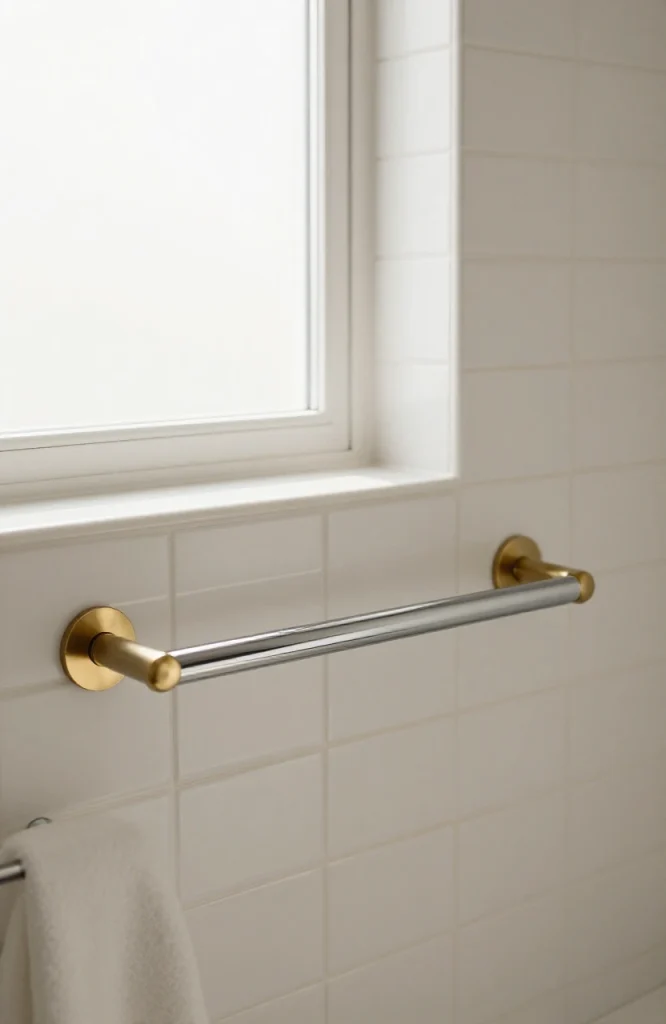
Faucets, showerheads, and towel bars are handled every day, and they signal quality instantly. The fixtures most likely to look current in twenty years are the ones with the least ornamentation: straight spouts, clean lever handles, and simple profiles.
Finish choices matter, but not all finishes age equally. Polished chrome has remained a bathroom standard for over a hundred years. Brushed nickel and polished nickel are close behind. Matte black has been popular for the past decade and is likely to remain so, though it is more trend-adjacent than chrome. Unlacquered brass develops a patina that many people find characterful rather than dated, but it requires more maintenance.
Avoid combination finishes or overly sculptural shapes. A waterfall faucet with a wavy spout may look strong in photos today, but its visual novelty fades faster than a simple arc spout does.
Buy the best fixtures your budget allows on the items you touch most: faucets, flush plates, and door hardware. You can save on towel rings and toilet paper holders.
Select a Vanity That Fits the Room’s Proportions
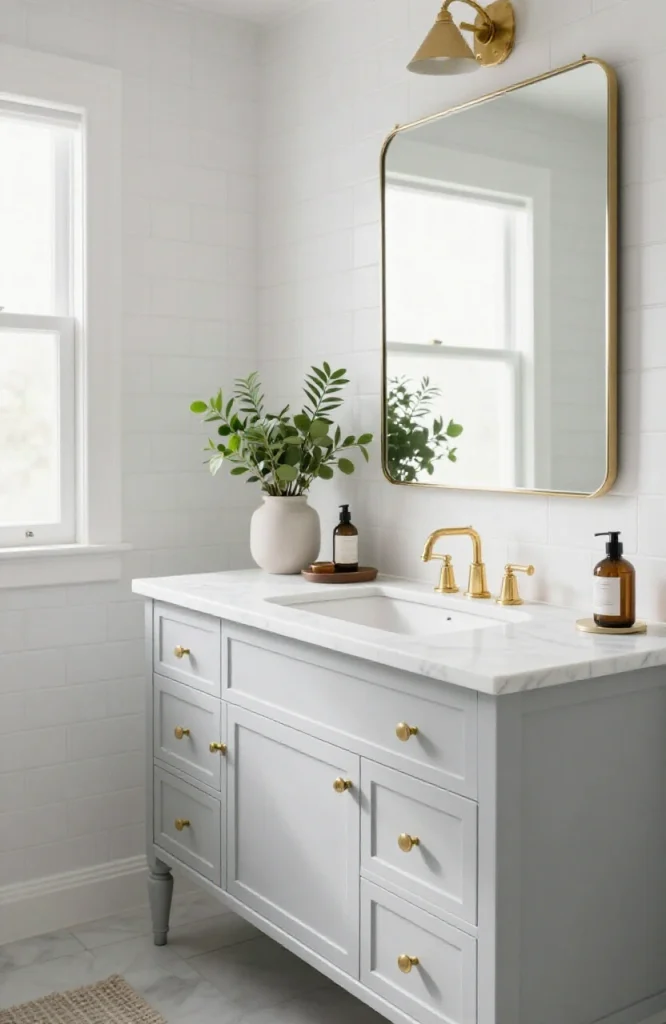
The vanity is the visual anchor of most bathrooms, so its shape and scale do a lot of work. Traditional frame-and-panel cabinetry, Shaker-style doors, and furniture-style vanities with legs have all proved their staying power over decades. Ultra-flat, handle-free modern cabinets can look clean, but they read as products of a specific decade more quickly than a Shaker door does.
Scale to the room honestly. A floating 48-inch vanity in a small bathroom looks forced; a pedestal sink or a narrow furniture-style vanity fits the space better and looks more considered. In a larger bathroom, a double vanity with symmetrical placement is both practical and visually stable.
Wood tones in medium to warm ranges, walnut, oak, and painted white or navy, tend to hold better than very dark espresso finishes or high-gloss lacquer. Pair the vanity with a countertop in marble, quartz, or a marble-look porcelain for a surface that reads as quality without constant maintenance.
Plan Storage as Part of the Design
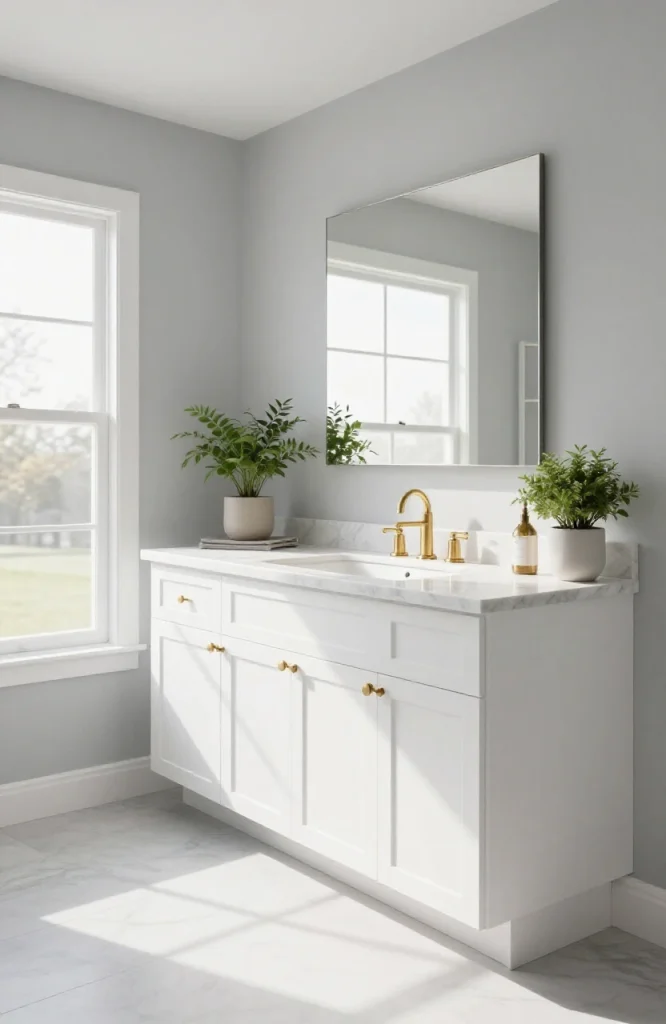
Clutter is the fastest way to make any bathroom feel tired. When storage is added as an afterthought, it shows. When it is built into the design from the start, it disappears into the room and makes everything feel more considered.
Recessed niches in shower walls, built-in shelving on either side of a mirror, under-vanity drawers, and medicine cabinets with mirrored fronts are all storage solutions that feel permanent and intentional. They also photograph well, which matters if you ever plan to sell.
Surface organization matters too. A small tray on the vanity to contain everyday items keeps the counter from looking scattered. For ideas on how to keep a vanity looking clean and styled, our bathroom tray ideas article covers practical options across every budget.
The goal is a bathroom where nothing visible looks accidental. Products should be behind doors or corralled on a tray, towels folded or hung, and the countertop clear except for one or two deliberate items.
Layer Lighting Across Three Sources
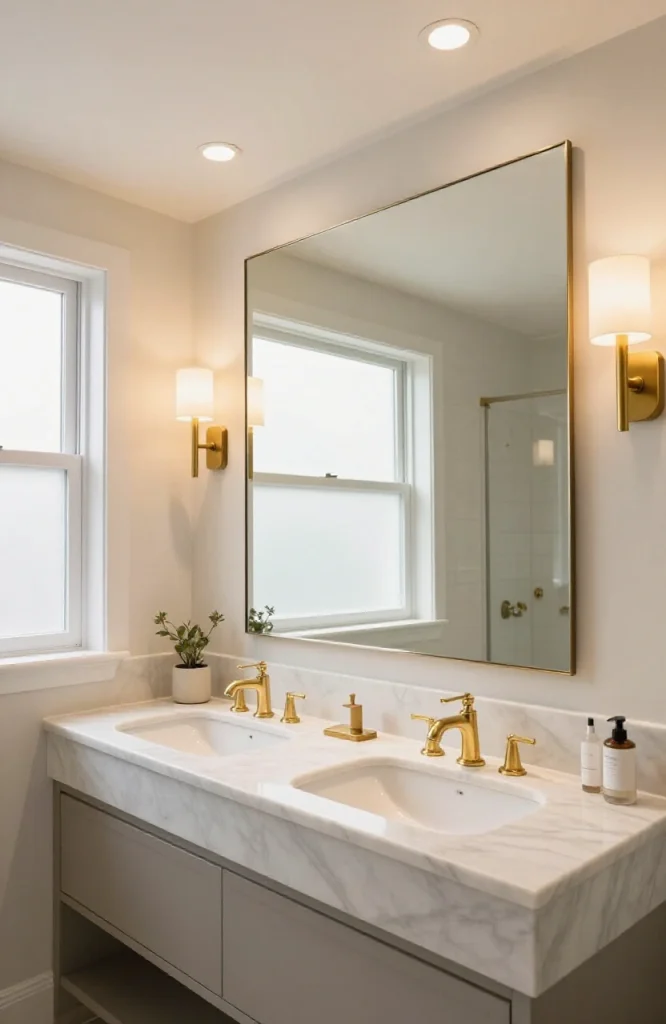
A single overhead light is the biggest lighting mistake in bathrooms. It creates harsh shadows on faces, makes the room feel clinical, and removes depth from the space.
Timeless bathrooms use three layers. Ambient light provides the base, usually a recessed fixture or a flush-mount ceiling light. Task lighting sits at eye level beside or above the mirror, where it lights the face evenly for grooming. Accent lighting adds warmth, small wall sconces, a chandelier over a freestanding tub, or a backlit mirror all qualify.
Warm white bulbs (2700K to 3000K) read as more residential and comfortable than cool white. Dimmer switches on at least the ambient layer let you shift the room from functional morning light to a quieter evening atmosphere without any additional cost.
The fixture shapes themselves follow the same rule as hardware: simple profiles with quality materials outlast ornate or novelty designs. A classic drum shade, a simple cylinder, or an exposed bulb on a brass arm all read as timeless because they reference earlier eras without pretending to be antiques.
Use Natural Materials for Texture and Warmth
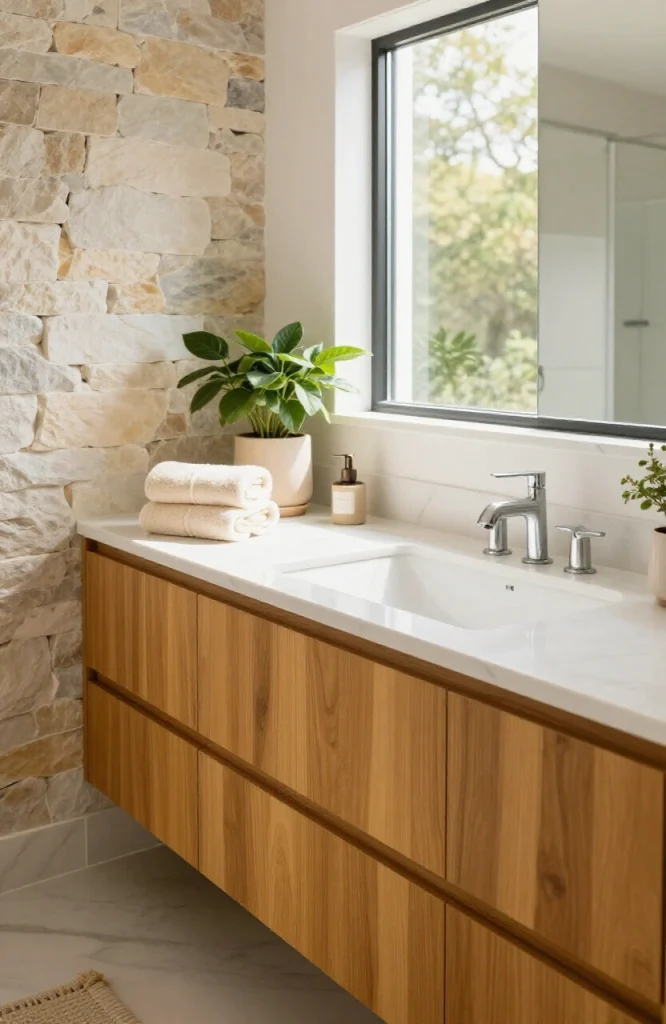
A bathroom built entirely from hard, manufactured surfaces tends to feel cold and impersonal, no matter how well the other choices are made. Natural materials introduce texture and variation that feels grounded and human.
Stone countertops, teak or oak accents, linen towels, and wicker storage baskets all add warmth without requiring a specific design era. A teak bath mat next to a white freestanding tub, for example, reads as considered regardless of whether the room is traditional or contemporary. Natural materials also tend to look better as they age, developing patina and character rather than simply wearing out.
One note on balance: natural materials work best as accents against a neutral tile and paint backdrop. A fully wood-paneled bathroom can feel heavy; a bathroom with a white tile floor, plaster walls, and a single walnut floating shelf reads as layered and calm.
Keep the Architecture Clean and Proportional
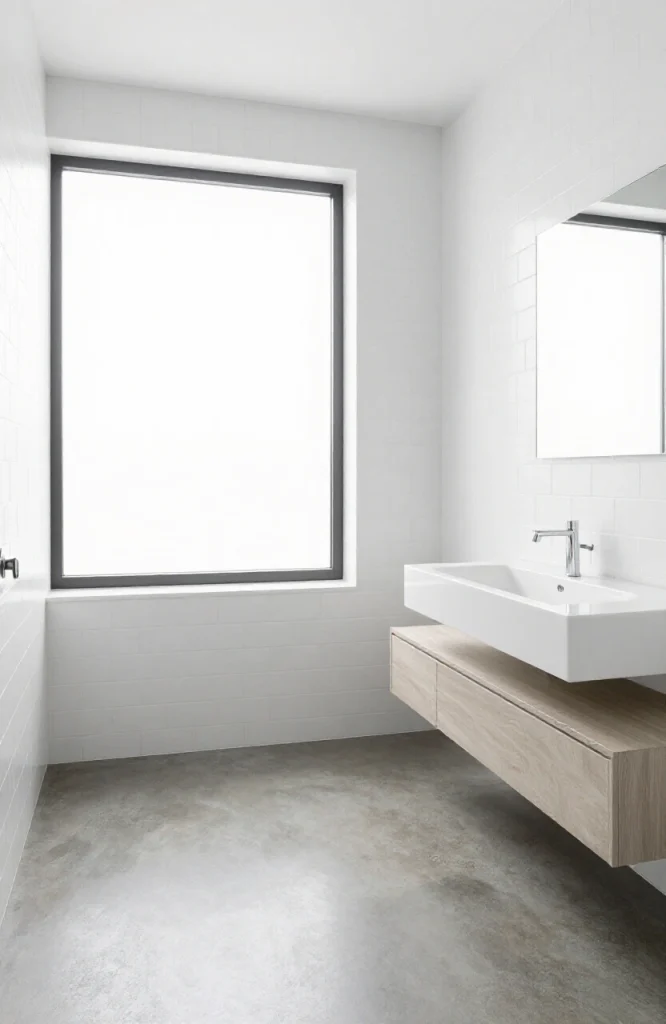
The structural elements of a bathroom, the ceiling height, door placement, window size, and the position of fixtures, determine how well the space works before a single finish is chosen. A bathroom with good proportions needs less decoration to feel right.
Where you have a choice, taller doors read as more generous. A window placed above the waterline of the shower maintains privacy while bringing in natural light. Mirrors sized to the full width of the vanity rather than smaller round mirrors feel more balanced in most spaces.
Exposed plumbing, intentionally chosen pipes in brass or black steel, can look considered in an industrial or transitional bathroom. Hidden plumbing behind walls is cleaner and ages better in most styles. If you’re working on a full remodel, ask your plumber about in-wall carriers for toilets and wall-hung sinks, which eliminate the visual clutter of exposed pipe runs.
For bathroom spaces that double as a sink area in kitchens or utility rooms, a corner sink can preserve floor space while keeping the room proportional.
Avoid Trend-Specific Details in Permanent Elements
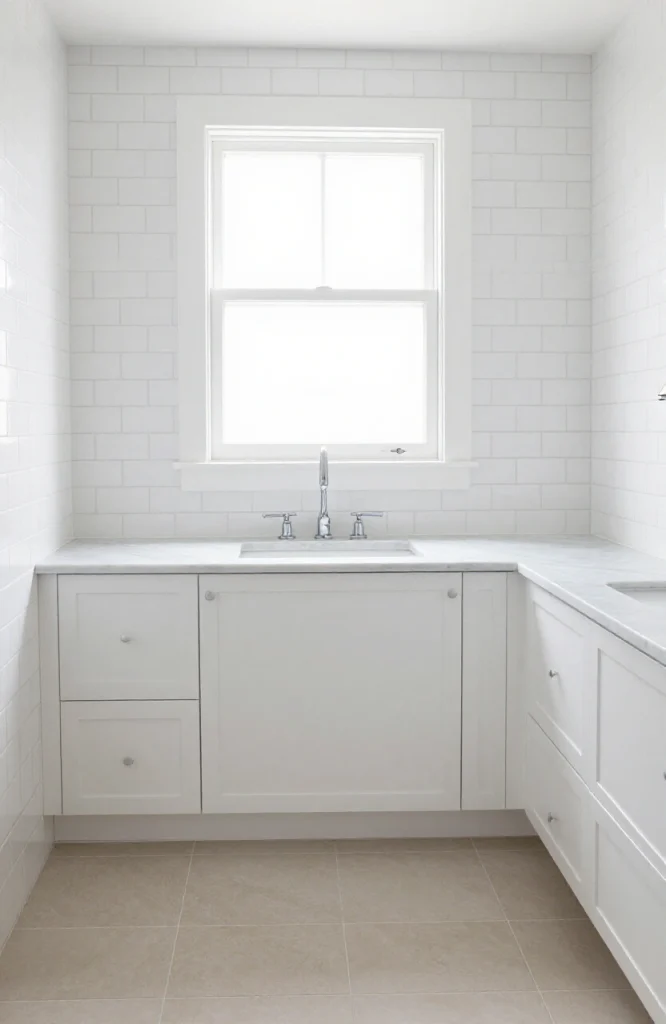
The clearest way to date a bathroom is to put a trend into a surface that costs thousands to change. This includes: grout colors in unusual hues, patterned encaustic cement tiles as the primary floor, highly textured 3D wall tiles, and novelty fixture shapes that reference a specific design moment.
This is not an argument against personality. A vintage mirror, a piece of framed art, an unusual soap dish, or a patterned shower curtain can all express personal taste. The difference is that these items are easy to swap when tastes shift. Tile is not.
Ask one question before committing to any finish or fixture: does this look feel specific to the last five years, or has it appeared in well-regarded bathrooms for at least thirty years? Subway tile passes. Terrazzo in pastel pink does not. A simple chrome faucet passes. A matte olive-green toilet does not.
The goal is a bathroom that looks current without depending on what is current. Those two things are not the same, and the distinction is what makes the difference between a bathroom that still feels right in a decade and one that needs a full refresh.
Conclusion
Learning how to create a timeless bathroom is less about finding the perfect tile and more about making decisions that hold up across changing tastes. Start with a neutral palette, commit to quality materials in the surfaces you can’t easily change, keep the architecture proportional, and layer storage and lighting as part of the design rather than after the fact. The rooms that age best are usually the ones that made the least noise to begin with.
If you’re planning updates room by room, the same principles apply across the rest of your home. Our guides to open floor plan decoration and marble countertop alternatives are worth reading alongside this one for a consistent approach to finishes and layout decisions throughout your space.
Start with one element you can change this week, whether it’s a vanity light, a set of linen towels, or regranting a tile floor, and build from there.