
After spending years covering kitchen renovations for this site, I keep coming back to one layout that quietly outperforms most others in small and mid-sized homes: the parallel kitchen. Modern parallel kitchen designs use two countertops facing each other with a walkway in between, and this arrangement puts everything within a few steps of your hands. If you have ever cooked in a kitchen where the stove, sink, and fridge felt scattered across three walls, you already understand why this layout has become so popular in apartments, row houses, and open-plan homes alike.
This guide walks through 40 modern parallel kitchen designs, covering layout basics, storage, lighting, materials, and style choices, so you can plan a kitchen that looks good and actually works for daily cooking.
1. What Is a Parallel Kitchen Layout

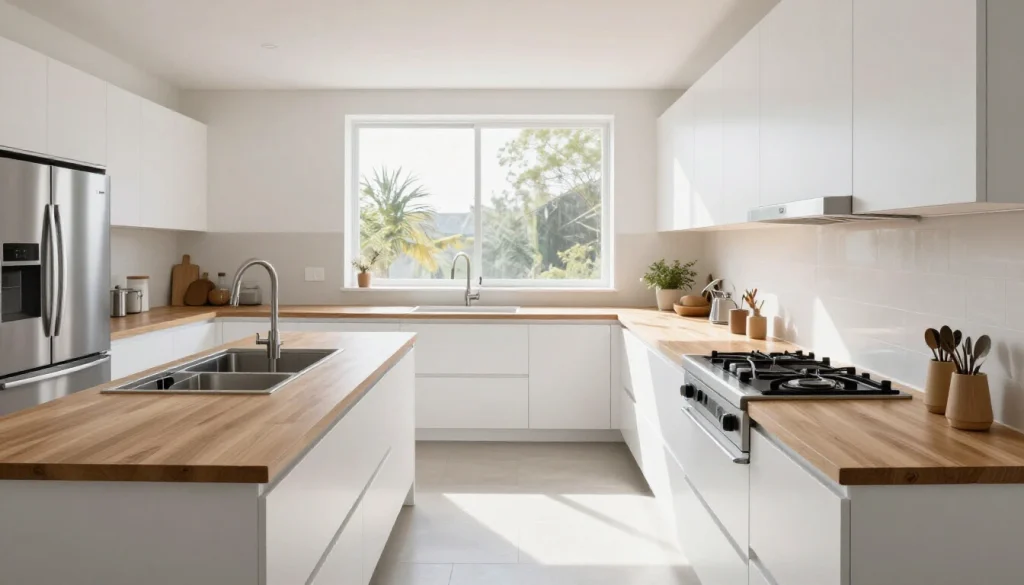
A parallel kitchen, also called a galley kitchen, places two countertops on opposite walls with an open aisle between them. Every zone sits within reach: the sink and prep counter on one side, the stove and storage on the other. This setup differs from an L-shaped or U-shaped kitchen because it does not wrap around a corner, which keeps the floor plan narrow and direct. Parallel kitchens work well in row houses, apartments, and homes with long, narrow rooms where a corner layout would waste space.
Because the two counters run in straight lines, cabinet planning is simpler and material costs often come in lower than curved or angled layouts. Modern parallel kitchen designs lean on this simplicity, using flat-front cabinets, hidden hardware, and a tight color palette to keep the narrow space from feeling closed in.
2. Ideal Kitchen Dimensions for a Parallel Design
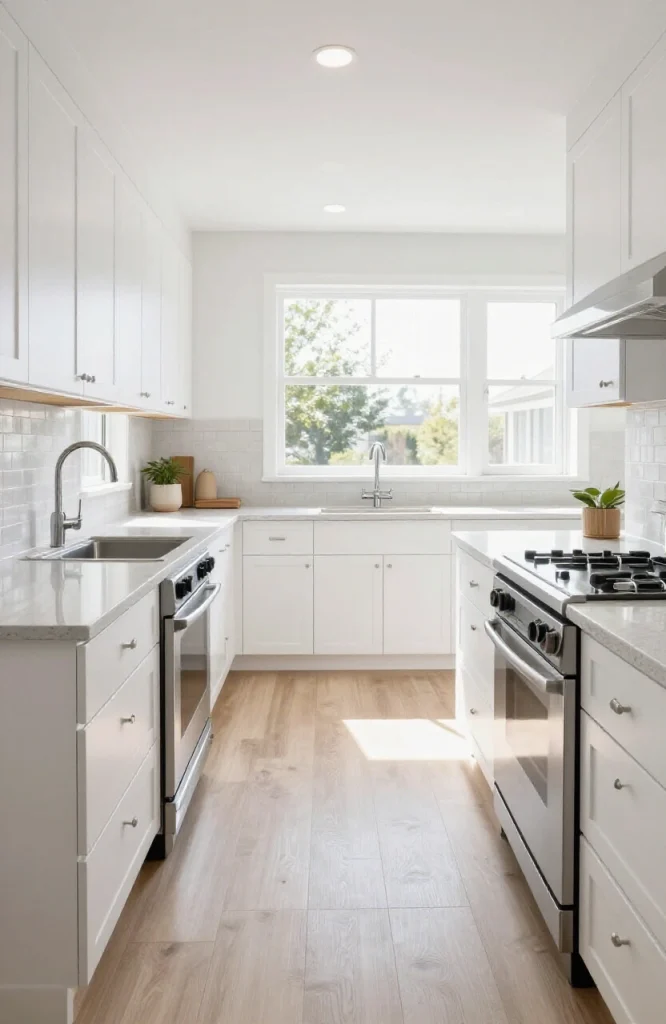
Room width decides how well a parallel kitchen performs. Most kitchen designers suggest a minimum overall width of 8 feet, which allows for two 24-inch counters plus a walkway of roughly 4 feet between them. Anything narrower forces people to squeeze past each other during cooking, and anything wider starts to feel like two separate kitchens instead of one connected workspace. If your room runs long and narrow, that extra length is not wasted. It gives you room for a pantry cabinet at one end or a small breakfast counter at the other.
Before you commit to cabinet orders, measure the full room length and width, mark where doors and windows fall, and check that appliance doors will open fully without hitting the opposite counter.
3. Walkway Width and Safety Clearance Between Counters
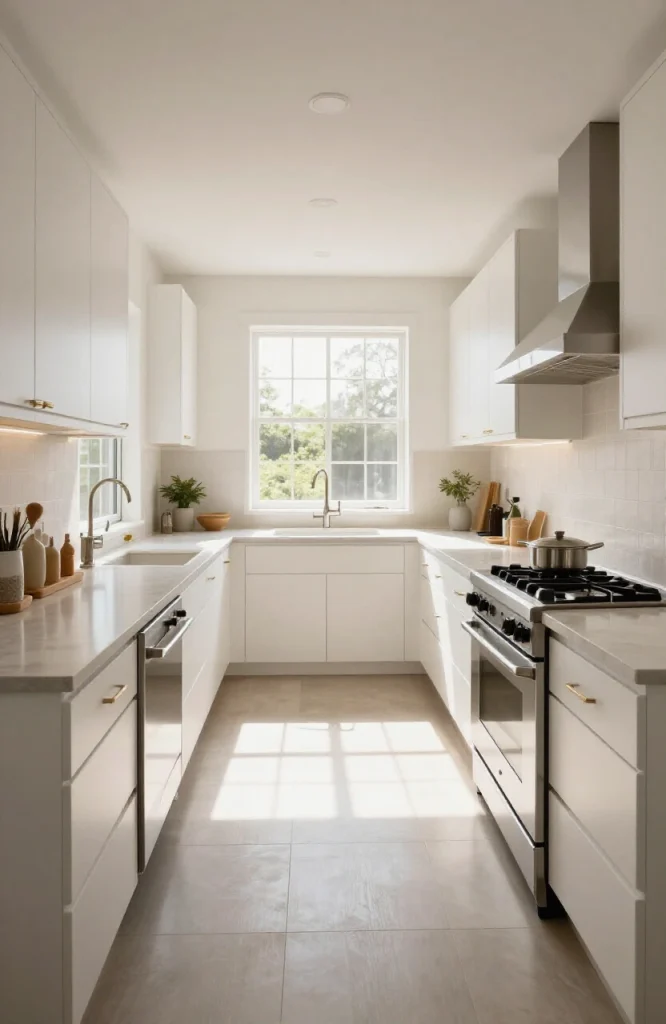
The aisle between your two counters needs enough room for a person to bend down and open a lower cabinet or oven door without bumping into anything behind them. A single cook can work comfortably with 42 inches of clearance, while two people cooking at once need closer to 48 inches. Homes with a wheelchair user or anyone who needs extra turning space should aim for 60 inches where the floor plan allows it. Skimping on this measurement is one of the most common planning mistakes in a parallel kitchen, since it looks fine on paper but feels tight the moment two people try to move around each other with hot pans. Mark the walkway width with tape on the floor before finalizing your cabinet order, and stand in it with the oven door open to confirm the space actually works.
4. The Classic Work Triangle in a Parallel Kitchen
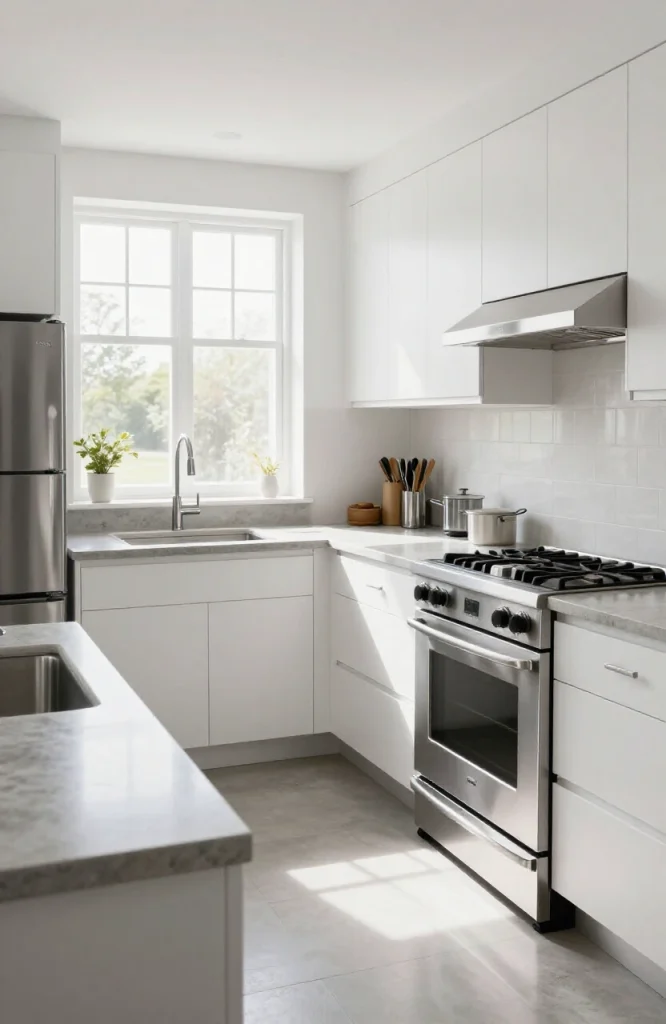
The work triangle connects the sink, stove, and refrigerator, and it remains one of the most reliable planning tools for any kitchen layout. In a parallel design, this triangle naturally splits across the two counters, which cuts down on wasted steps during cooking. Place the sink and stove on the same side whenever plumbing allows it, and keep the fridge on the opposite counter near the entry so grabbing ingredients does not interrupt someone chopping at the main counter. Interior designer Elena Cross, who has planned dozens of narrow-lot kitchen renovations, explains it this way: “A kitchen works best when the walking path stays clear, not when the countertop looks impressive in photos.” That advice holds true for parallel layouts more than most, since the narrow aisle leaves little room for correcting a poor triangle after installation.
5. Sleek Minimalist Parallel Kitchen Design
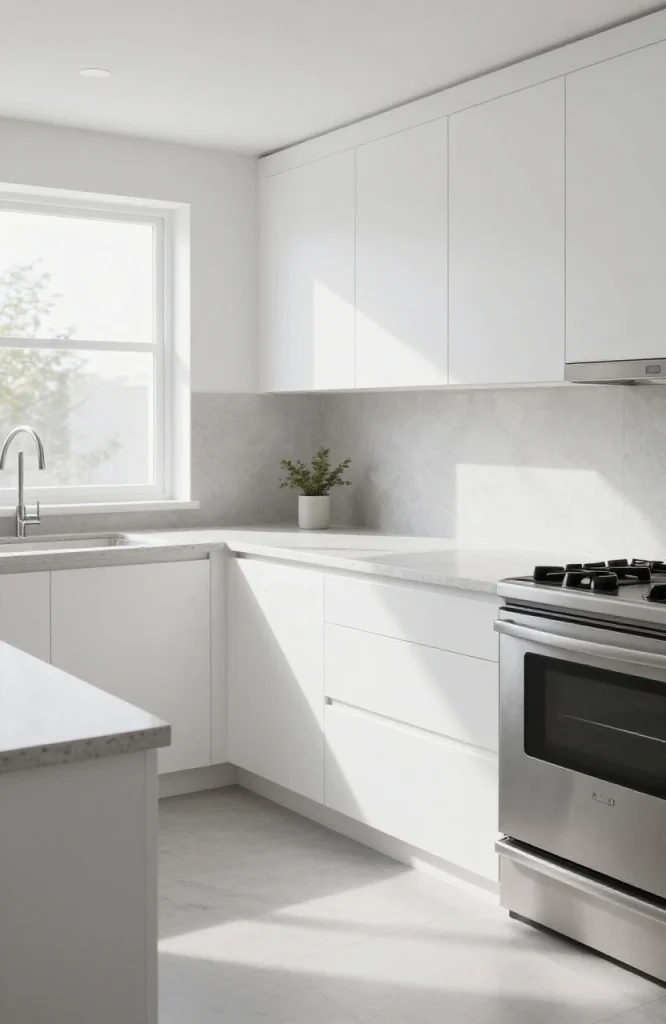
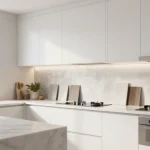
Minimalist parallel kitchens rely on flat cabinet fronts, hidden handles, and a single dominant color to keep visual noise low. White or light gray cabinetry paired with a matching countertop makes the narrow room feel wider, since there is no strong contrast line pulling the eye toward the walls. Integrated appliances, meaning a fridge and dishwasher built behind matching cabinet panels, keep the run of cabinets unbroken from end to end.
This style suits people who prefer an uncluttered counter and store small appliances inside cabinets rather than displaying them. A minimalist parallel kitchen also photographs and resells well, since the neutral palette does not date as quickly as bolder color choices.
6. Handleless Cabinets for a Clean, Unbroken Look
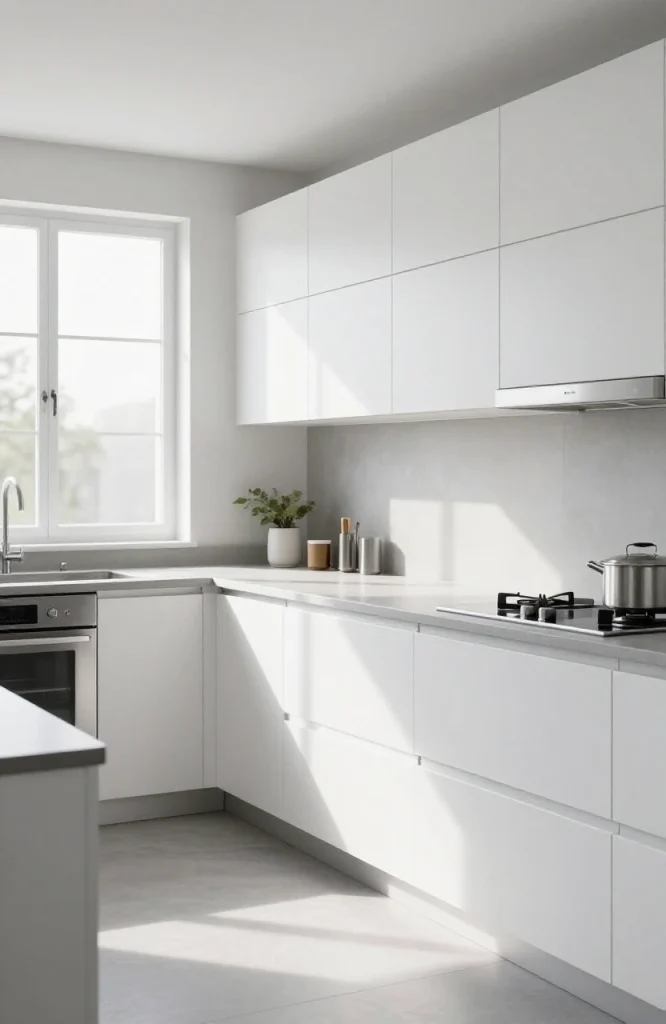
Handleless cabinets use a push-to-open mechanism or a recessed finger pull instead of traditional knobs and handles. In a parallel kitchen, where both walls sit close together, this detail removes the small visual bumps that handles create along a long run of cabinets. The result reads as one continuous surface from one end of the room to the other. Push-to-open hardware costs more upfront and needs regular adjustment, since the mechanism can loosen with heavy daily use. A recessed pull channel, cut into the top edge of each door, offers a cheaper alternative that still keeps the front panel smooth. Either option works well with matte or high-gloss finishes and pairs naturally with the minimalist style covered above.
7. Two-Tone Cabinet Combinations
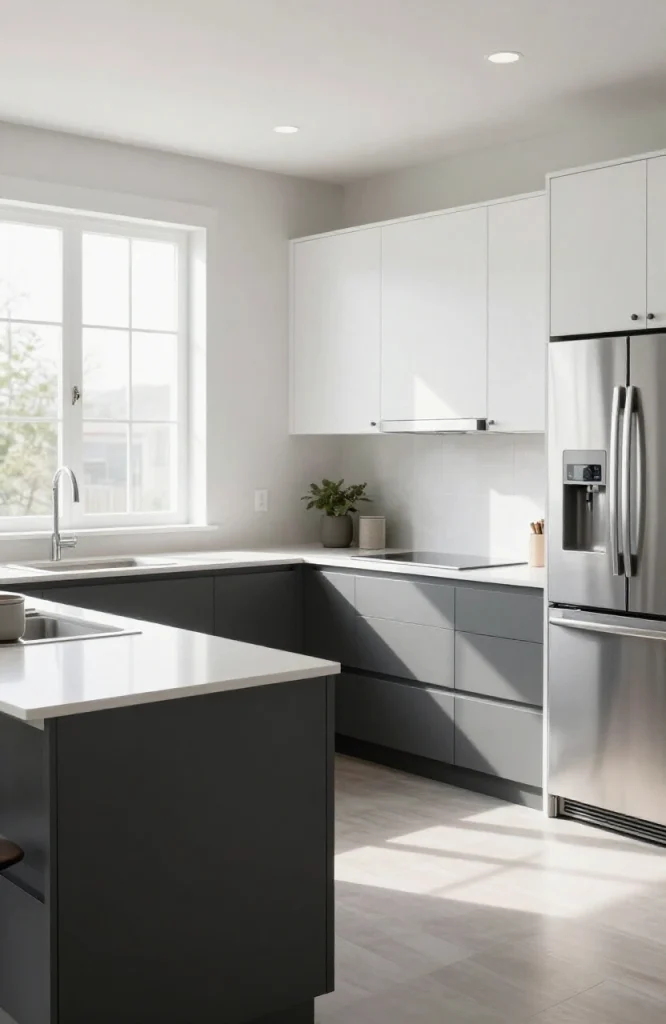
Pairing a dark lower cabinet with a lighter upper cabinet, or splitting the two counters into different colors, adds depth to a parallel kitchen without breaking up the floor plan. A common combination uses navy or charcoal on the base cabinets with white or pale wood on the wall units, which keeps the room grounded while still feeling bright near eye level. Another approach puts one full counter in a warm wood tone and the opposite counter in white, creating a visual contrast between the two sides of the room. Two-tone kitchens hide daily marks and fingerprints better on the darker half, which makes them practical for households that cook often. Keep the countertop material consistent across both colors so the kitchen still reads as one connected design instead of two mismatched halves.
8. Matte Black Parallel Kitchen Design
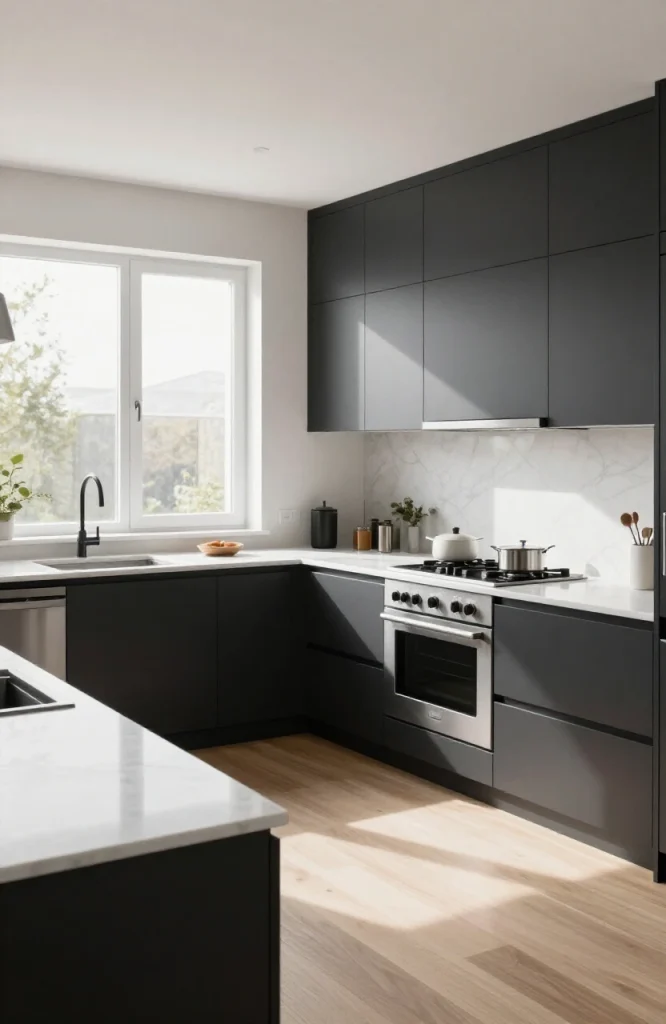
Matte black cabinetry has moved from a niche trend into a common request for modern parallel kitchens, particularly in homes that already lean toward dark, moody interiors. Black cabinets absorb light rather than bounce it, so this style depends on strong task lighting under the wall cabinets and pendant fixtures overhead to keep the room from feeling closed in. Brass or brushed gold hardware against matte black creates contrast without adding another color to the palette. A tiled backsplash in a lighter tone, or a section of open wood shelving, breaks up the dark surfaces and adds texture. This design suits larger parallel kitchens with good natural light more than small, windowless galley spaces, where dark cabinetry can feel heavy.
9. All-White Parallel Kitchen for Small Spaces
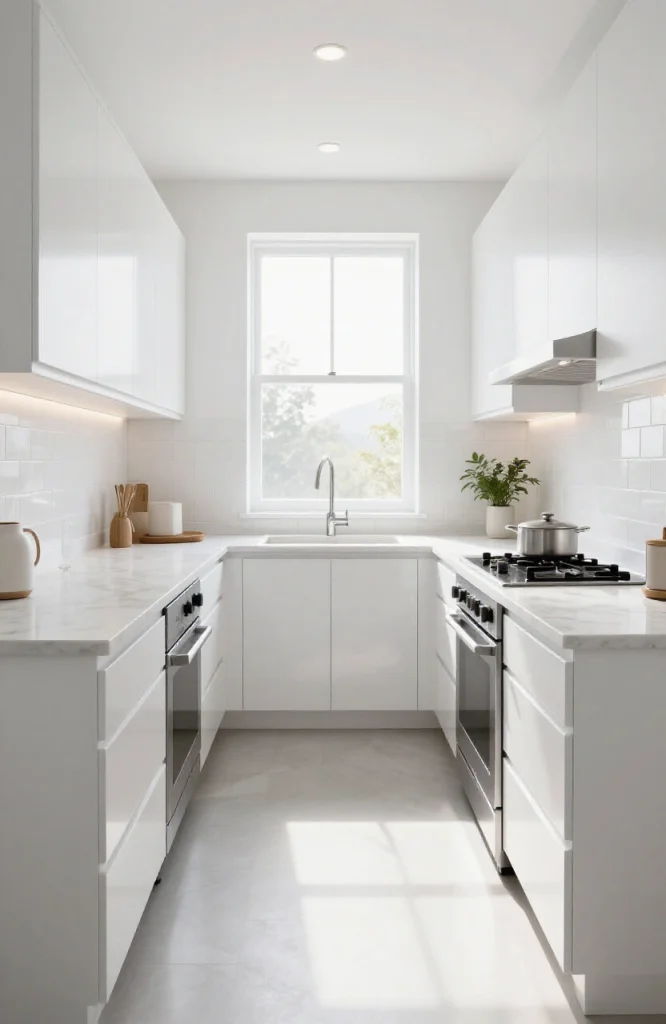
White cabinetry remains the most reliable choice for narrow parallel kitchens because it reflects available light instead of absorbing it. A full white kitchen, from cabinets to countertop to backsplash, removes the visual break between surfaces and makes a tight room read as larger than its actual square footage. The risk with an all-white design is a flat, sterile feel, which you can avoid by adding texture through a ribbed cabinet front, a woven light fixture, or a wood cutting board left out on the counter. White kitchens also show stains and grease marks more visibly than darker finishes, so a matte or textured finish hides daily wear better than a high-gloss surface. This style works particularly well in apartments and rental-adjacent homes where resale flexibility matters.
10. Warm Wood Finish Parallel Kitchen
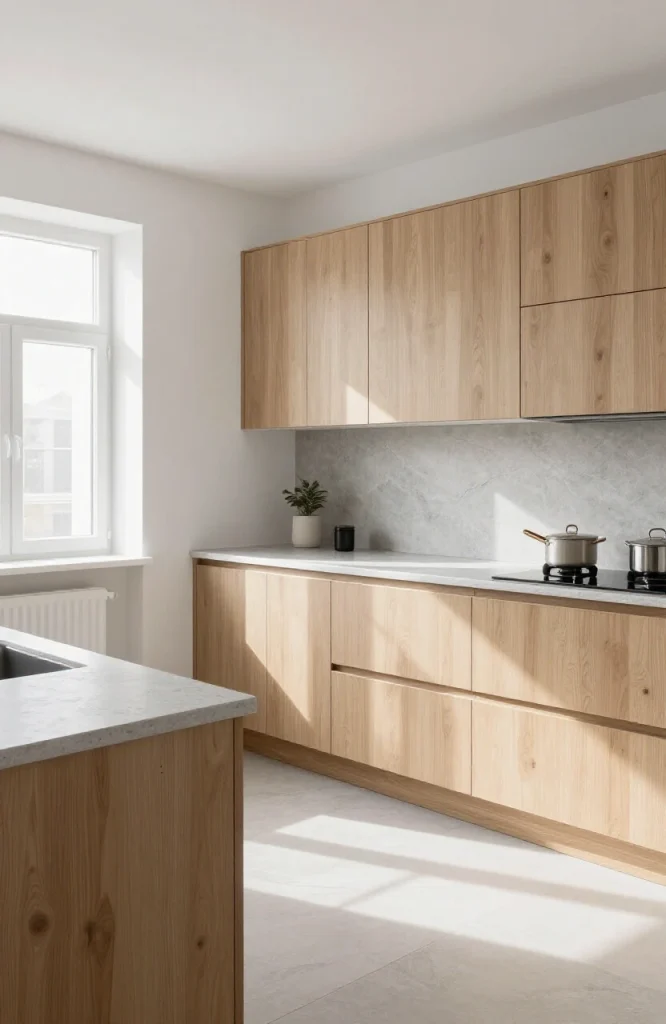
Wood cabinetry brings warmth into a layout that can otherwise feel clinical, especially when paired with white walls or stone countertops. Light oak or ash finishes suit Scandinavian-leaning kitchens, while darker walnut tones fit a more traditional or rustic home. Full wood cabinetry on both counters can feel heavy in a narrow room, so many modern parallel kitchen designs use wood on the lower cabinets only, keeping the upper cabinets in white or open shelving to balance the visual weight. Wood veneer offers a lower-cost way to get the look without solid wood pricing, and it holds up well as long as the finish includes a sealant rated for kitchen moisture. Pair wood cabinetry with simple black or brass hardware rather than anything ornate, since the grain pattern already provides enough visual interest.
11. High-Gloss Parallel Kitchen for Maximum Light Reflection
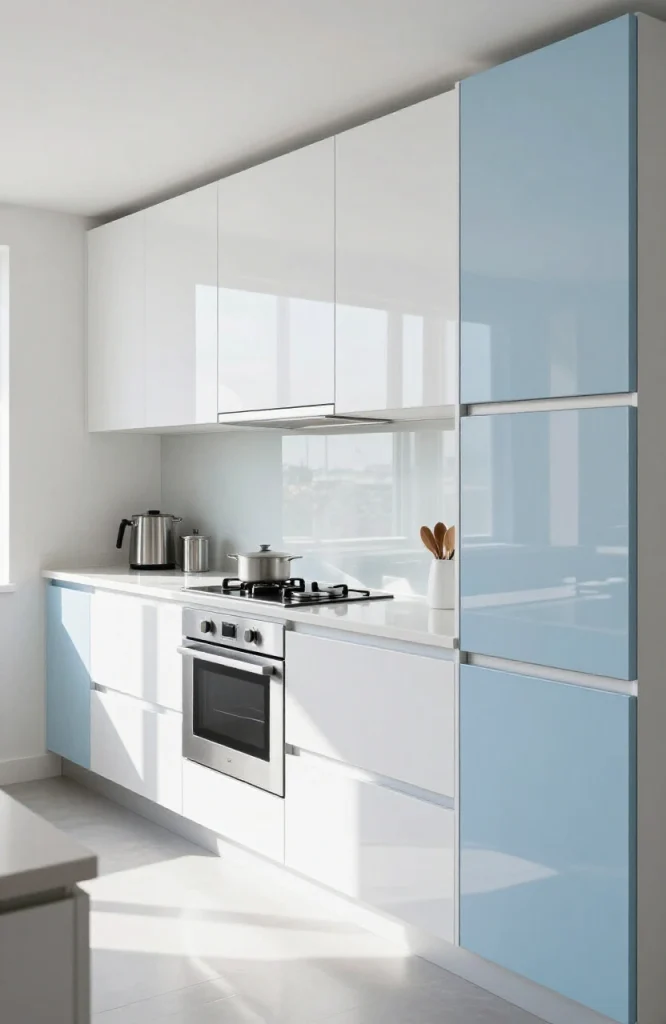
A high-gloss finish on cabinet fronts bounces light around the room the way a mirror does, which makes it one of the more effective finishes for a kitchen that lacks windows. Gray, white, and pale blue gloss finishes are common choices, since they read as modern without feeling cold. High-gloss surfaces show fingerprints and water spots more than matte finishes, so households with young children may find the daily upkeep frustrating. Acrylic-faced cabinets tend to hold their shine longer than lacquered finishes and resist yellowing over time. Adding a glass or mirrored backsplash on one wall amplifies the light-bouncing effect further, though this pairing works best in kitchens with good ventilation, since gloss surfaces show grease splatter quickly near the stove.
12. Industrial-Style Parallel Kitchen with Exposed Materials
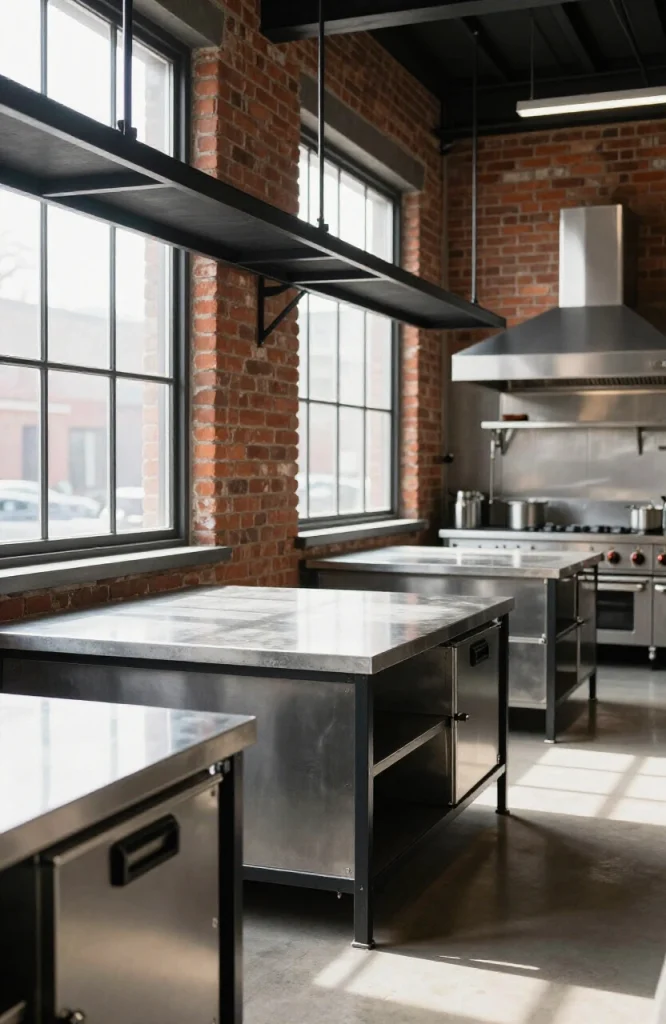
An industrial parallel kitchen leans on raw, unfinished materials such as exposed brick, blackened steel shelving, and concrete or polished cement countertops. This style suits converted lofts, older apartments with existing brick walls, and homes that already lean toward an urban aesthetic in the rest of the interior. Stainless steel open shelving replaces upper cabinets on one side, giving the room a working-kitchen feel similar to a small restaurant galley. Because industrial finishes tend to run cooler in tone, warm lighting and a wood cutting board or two help keep the space from feeling too cold for daily use. This design also tends to cost less than fully custom cabinetry, since exposed materials require less finishing work.
13. Scandinavian Parallel Kitchen Design
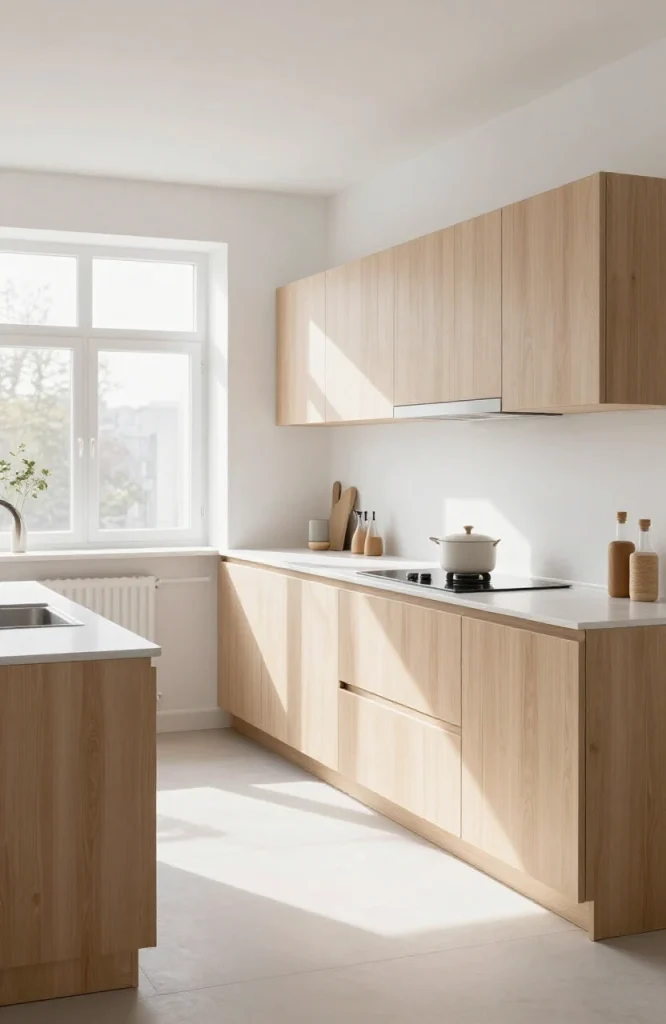
Scandinavian design favors light wood, white walls, and simple hardware, all of which suit a parallel layout that depends on light to feel open. Cabinets typically stay flat-fronted with minimal detailing, and countertops in butcher block or pale quartz continue the light, natural feel. Storage stays mostly hidden behind closed doors, with only a few open shelves for everyday items like mugs or cookbooks. Plants and simple ceramic containers add warmth without introducing pattern or strong color.
This style photographs well and tends to age gracefully, since it avoids trend-driven details that can look dated within a few years. It also suits smaller budgets, since the look depends more on color and simplicity than on expensive materials.
14. Marble and Natural Stone Accents
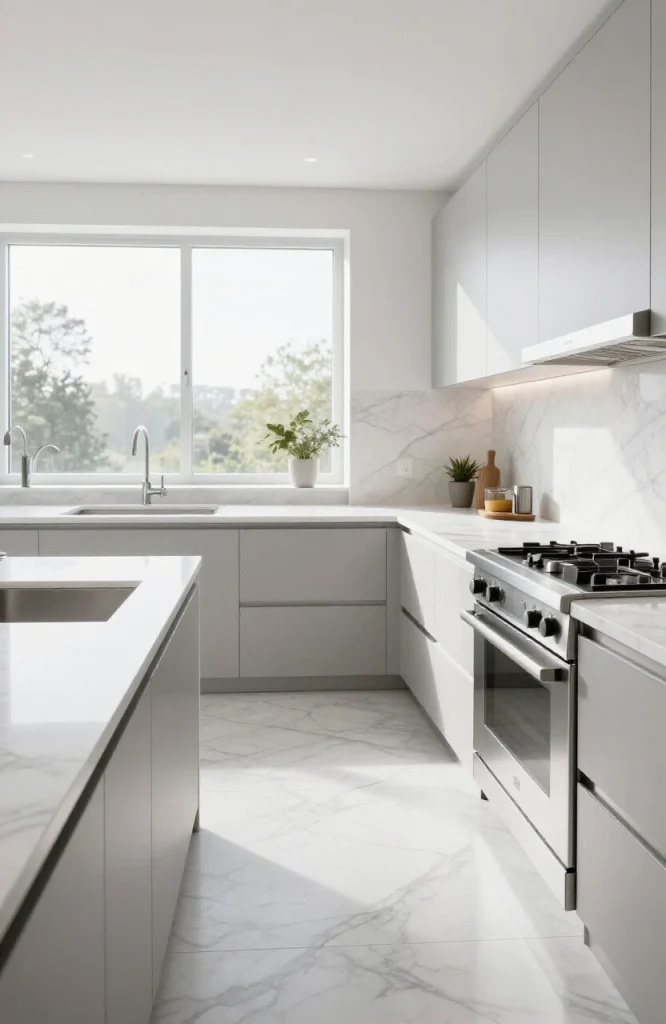
A full marble countertop across both sides of a parallel kitchen creates a strong sense of luxury, though the material requires regular sealing and careful handling to avoid staining from acidic foods. A more practical approach uses marble only on one counter, perhaps the baking or prep side, while the cooking counter uses a more durable quartz or granite surface. Marble-look porcelain slabs have become a popular substitute, since they replicate the veining pattern without the maintenance demands of natural stone. A marble backsplash that runs up to the underside of the wall cabinets adds the same visual impact at a fraction of the material cost of a full countertop. Pair stone accents with simple cabinet fronts so the material itself remains the focal point of the design.
15. Parallel Kitchen with a Central Island
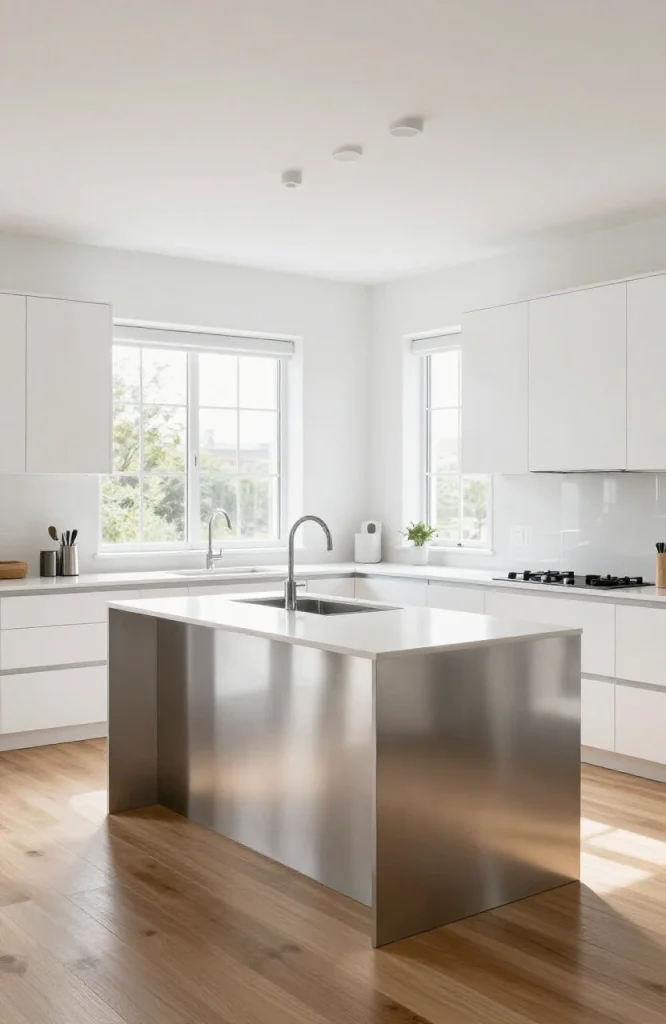
Adding a freestanding island between the two counters works only in rooms wide enough to keep the clearance on both sides above 42 inches, which usually means an overall room width past 10 feet. The island can hold the cooktop, a prep sink, or simply extra counter space and storage, turning a narrow galley into a more social cooking area. A rolling island offers flexibility for smaller rooms, since it can be pushed aside during meal cleanup to free up floor space. Pendant lighting over the island helps visually separate it from the two parallel counters, giving the room a clear center point. Before adding an island, confirm that appliance doors on both counters, plus the island itself, can all open at the same time without colliding.
16. Parallel Kitchen Without an Island for Tight Spaces
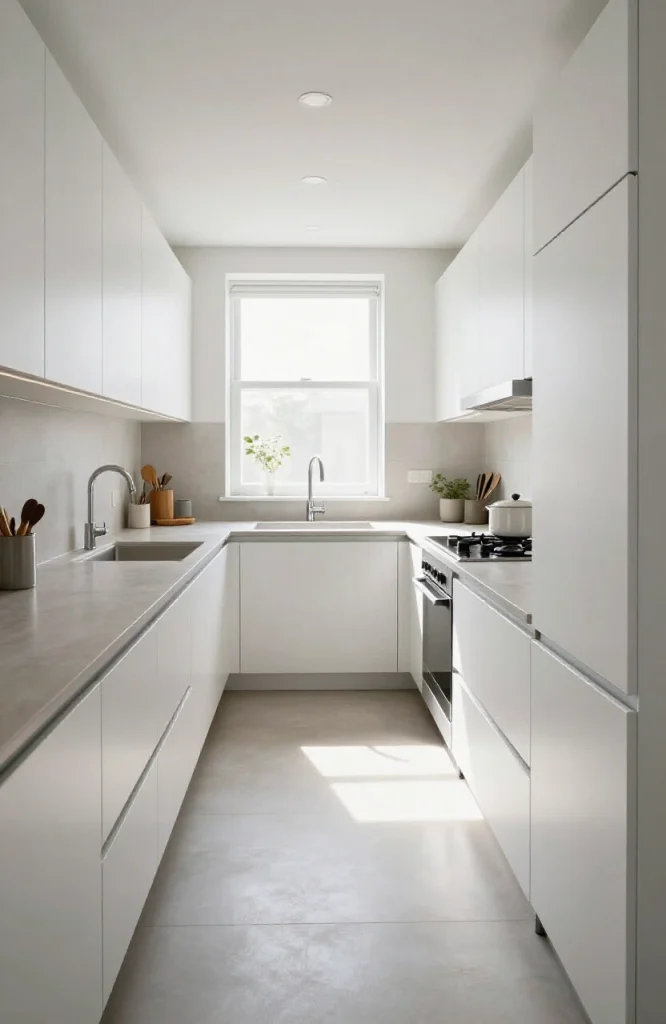
Most parallel kitchens skip the island entirely, and for narrow rooms this is the more practical choice. Without an island, the full floor stays open, which matters in apartments and older homes where the kitchen doubles as a hallway to another room. A narrow rolling cart or a fold-down counter attached to one wall can provide extra prep space when needed and tuck away when it is not. Skipping the island also frees up budget for higher-quality cabinets or appliances, since a built-in island with plumbing and electrical work adds significant renovation cost. This layout suits single cooks and small households more than large families who need multiple prep zones running at once.
17. Mirrored Backsplash to Widen a Narrow Kitchen
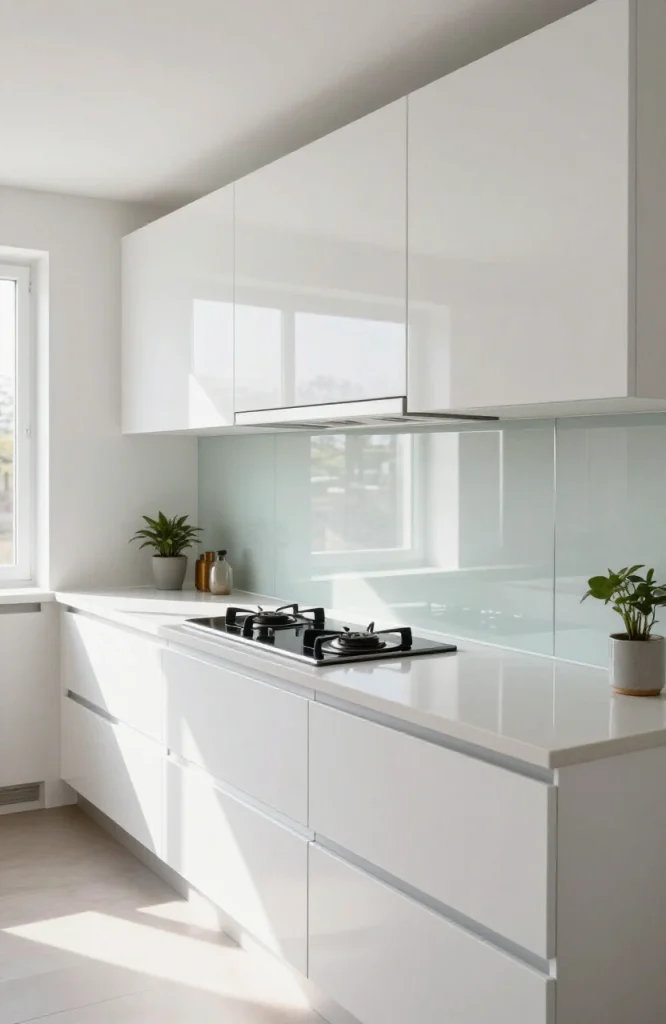
A mirrored backsplash on one full wall reflects the opposite counter, which visually doubles the perceived width of a tight galley kitchen. This trick works especially well paired with light cabinetry, since dark colors absorb too much of the reflected light to create the same effect. Antique or smoked mirror finishes soften the reflection and hide small imperfections better than a clear mirror, which shows every water spot near the sink. Mirrored surfaces near a stove need a heat-resistant backing and regular cleaning, since grease builds up quickly on any reflective surface. This approach costs more than standard tile but delivers one of the most noticeable space-expanding effects available for a narrow kitchen.
18. Bold Backsplash as a Focal Point
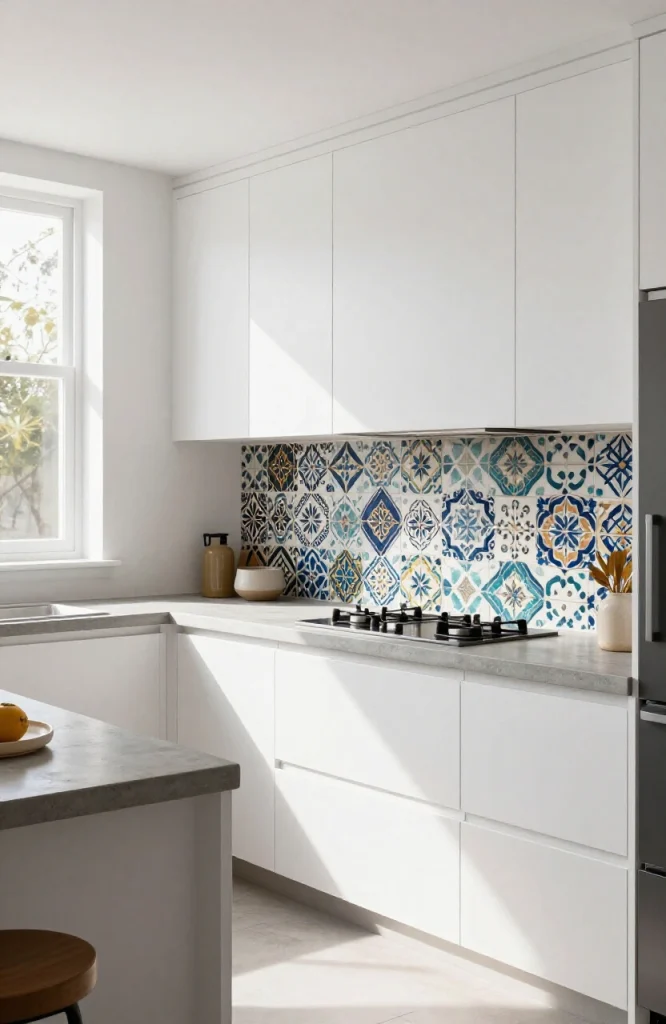
A patterned or brightly colored backsplash gives a mostly neutral parallel kitchen a clear point of visual interest without needing to change the cabinet color. Moroccan-style tile, a bold geometric pattern, or a single wall of colored zellige tile all work well behind the stove or sink counter. Because a parallel kitchen has two full walls of counter space, you can apply the bold pattern to just one side and keep the opposite counter simple, which prevents the room from feeling overwhelming. Grout color matters as much as tile choice here: a matching grout keeps the pattern clean, while a contrasting grout adds definition to each tile edge. This approach also gives homeowners an easy way to refresh the kitchen later without replacing cabinets or countertops.
19. Open Shelving in a Parallel Layout
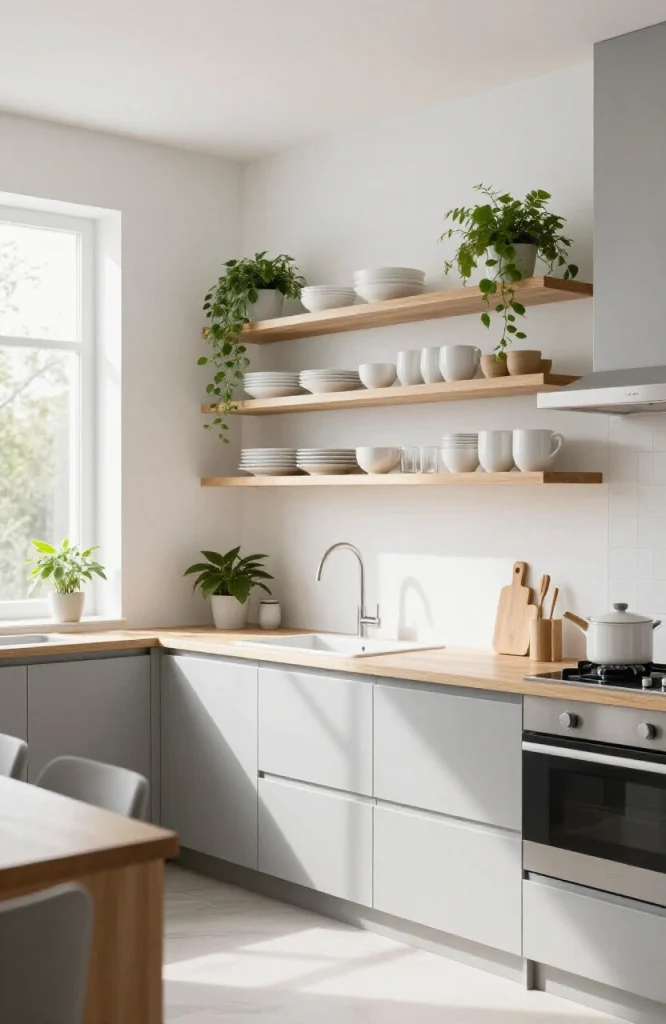
Open shelving replaces upper cabinets on one or both sides of a parallel kitchen, which lightens the visual weight of the room and creates a spot to display dishware, cookbooks, or a small plant. Wood or metal brackets holding floating shelves work well against a tiled or painted backsplash, and the open format makes daily items easier to reach than a closed cabinet door. The tradeoff is that open shelves require more regular tidying, since every item on display stays visible whether it is organized or not.
If you like the look but want to keep clutter hidden, consider adding open shelving to just the end wall or above the sink, while keeping the main storage runs enclosed. For more layout ideas that balance open display with closed storage, see this guide to bookshelf ideas, many of which translate directly into kitchen shelving.
20. Closed Storage and Pull-Out Drawers
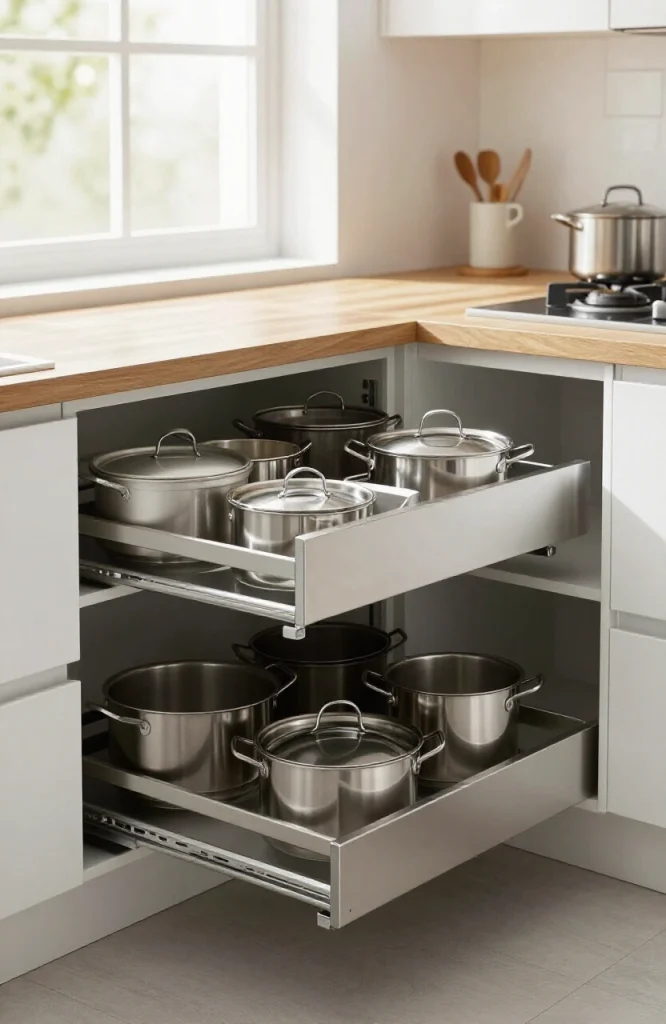
Deep pull-out drawers hold pots, pans, and small appliances far more efficiently than a traditional cabinet with a single shelf, since everything slides forward instead of getting buried at the back. In a parallel kitchen, where every inch of counter and cabinet space matters, drawer-based lower cabinets consistently outperform standard cabinet doors for daily usability. Divided drawer inserts keep lids, cutting boards, and baking sheets separated instead of stacked in a pile. Upper cabinets benefit from pull-down shelving in the higher sections, which brings rarely used items within reach without a step stool. This kind of storage planning costs more during installation but pays off every single day the kitchen gets used.
21. Corner Storage Solutions for Awkward Angles
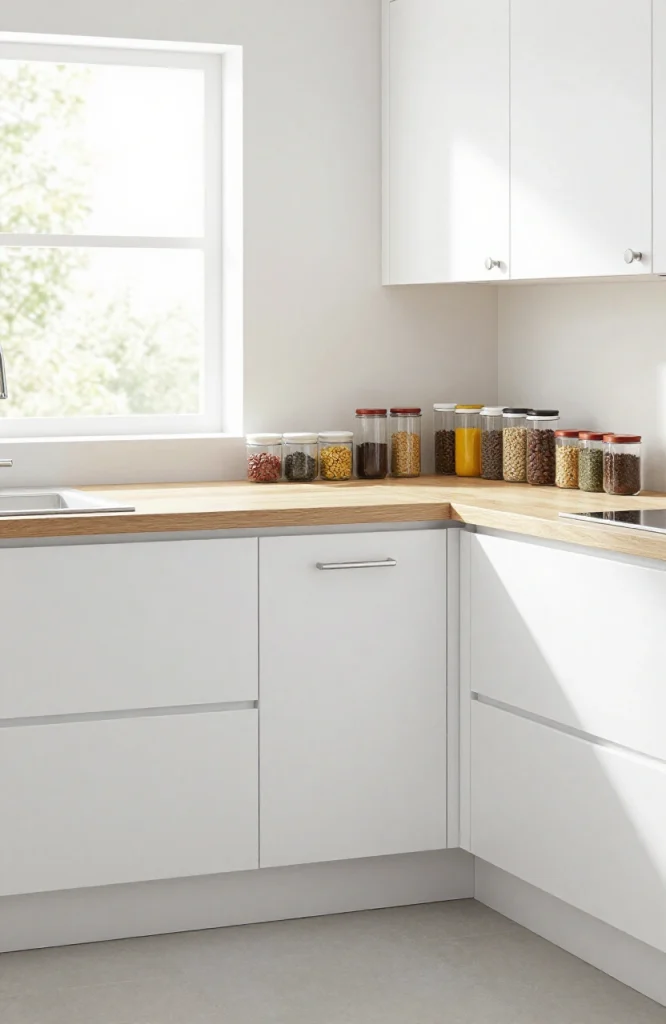
Parallel kitchens with an L-turn at one end, where the two counters meet a third wall, often waste the corner cabinet space because standard shelves cannot reach the back corner. A rotating lazy Susan, a pull-out corner unit, or a diagonal cabinet front all solve this problem by bringing the full depth of the corner within reach. Blind corner cabinets, which sit behind an adjacent cabinet door, need a specific pull-out mechanism to avoid becoming dead storage that nobody uses. If your parallel layout includes a corner sink at one end, similar space-saving hardware applies there too. This guide to corner sink ideas covers layout options that work well alongside a parallel counter arrangement.
22. Tall Pantry Units for Vertical Storage
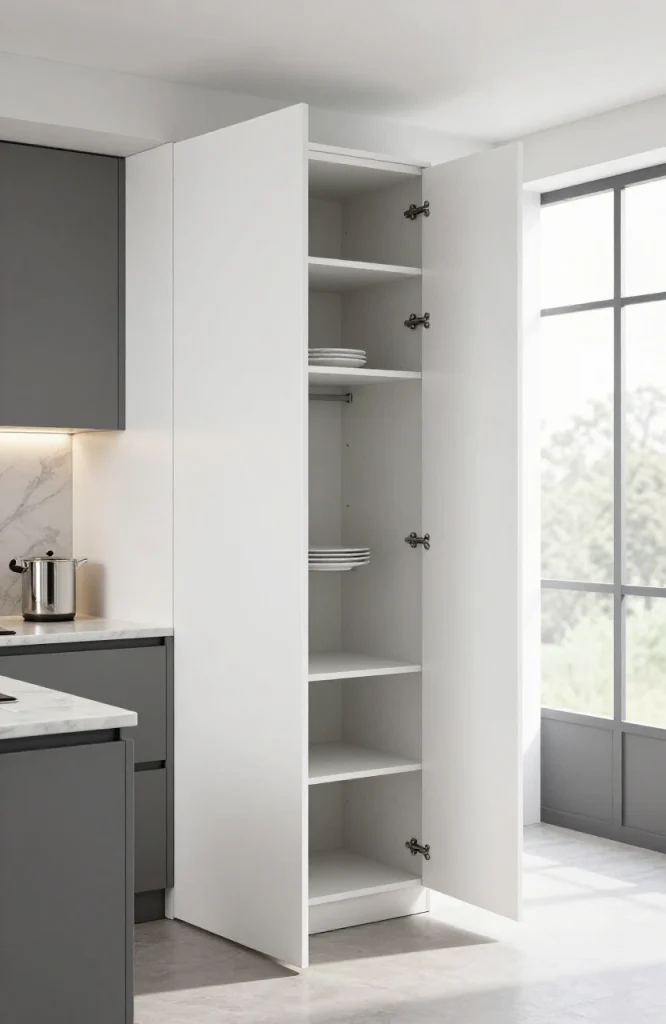
A tall pantry cabinet, built floor to ceiling at one end of a parallel kitchen, adds significant storage without taking up extra counter length. Pull-out pantry shelving, where narrow shelves slide forward on rails, makes items at the back of a deep cabinet just as accessible as items at the front. In smaller parallel kitchens, a single tall pantry unit at the end wall often replaces several feet of standard base and wall cabinets, freeing up that wall length for other uses. Glass-front pantry doors give the option to display well-organized dry goods, while solid doors hide everything behind a clean panel. Planning for a pantry early in the design process matters, since retrofitting one into an already-built kitchen usually means removing existing cabinetry.
23. Under-Cabinet and Toe-Kick Lighting
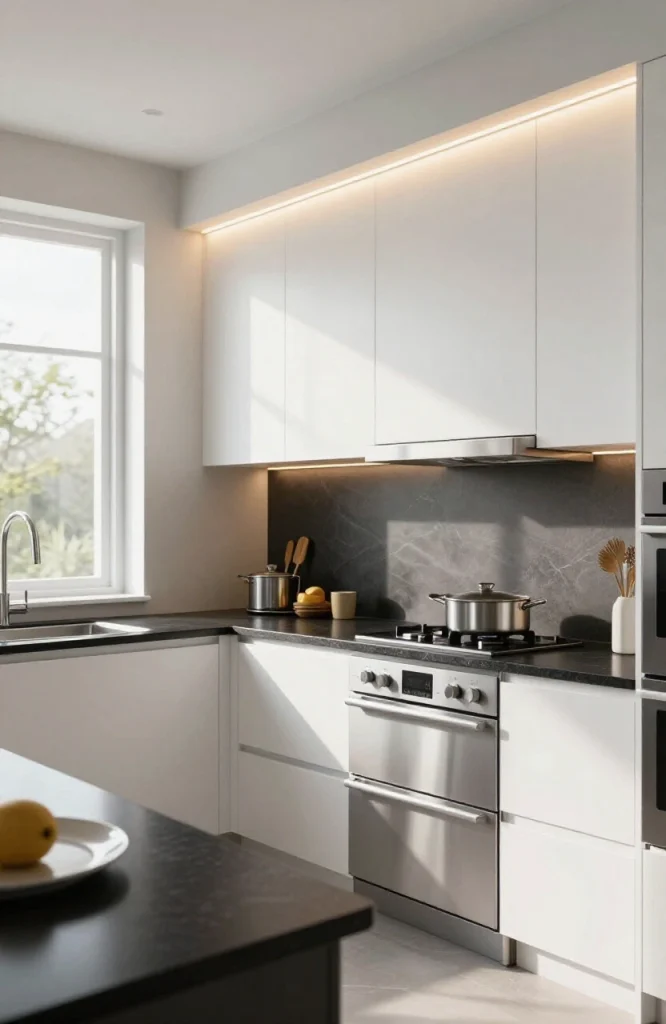
Under-cabinet lighting installed beneath the upper cabinets removes shadows from the counter below, which matters most directly above the main prep and cutting area. LED strip lights cost little to install and use very little electricity, making them a practical upgrade even in a kitchen that is not undergoing a full renovation. Toe-kick lighting, placed at floor level beneath the lower cabinets, adds a soft glow that works well as nighttime lighting without needing to switch on the main overhead fixture. In a parallel kitchen, running both light sources down the full length of each counter keeps the entire workspace evenly lit instead of leaving darker sections between fixtures. Warm white bulbs, in the 2700 to 3000 Kelvin range, suit most kitchen finishes better than cooler white light.
24. Pendant Lighting Over a Parallel Island
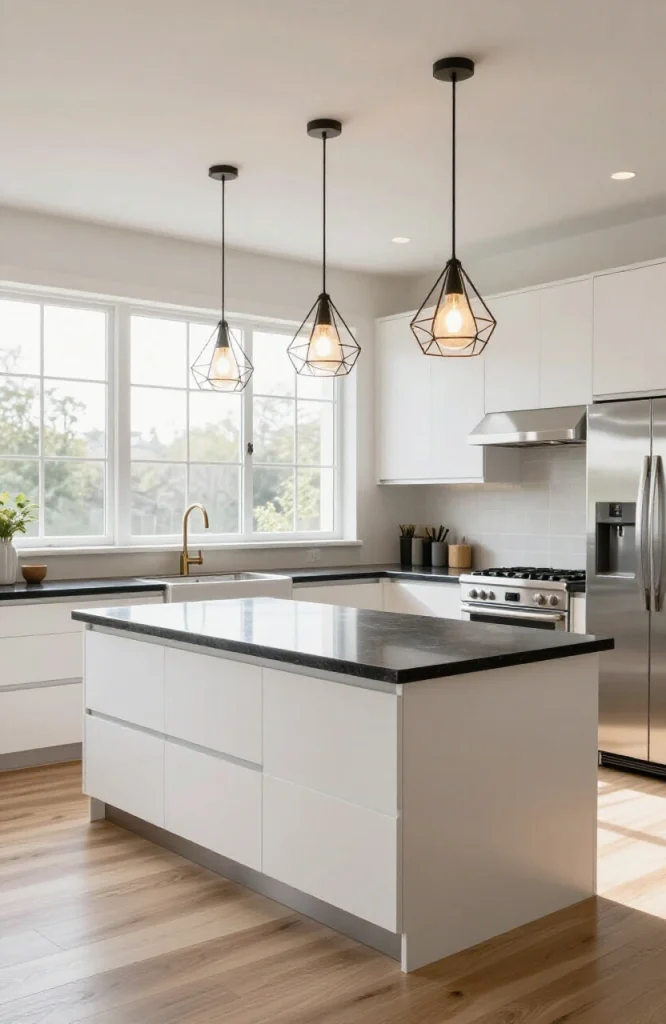
When a parallel kitchen includes an island, pendant lighting hung directly above it creates a visual anchor and provides focused light for close prep work. Two or three pendants spaced evenly along the island length work better than a single large fixture, since the spread of light covers more of the counter surface. Pendant height matters: most designers recommend hanging the bottom of the fixture between 30 and 36 inches above the counter, low enough to focus light downward but high enough to avoid blocking sightlines across the room. Glass or metal shades keep the style consistent with the rest of a modern kitchen, while a mix of finishes, such as black metal with a brass interior, adds a small detail without overwhelming the space. Skip pendant lighting entirely in kitchens without an island, since it has nothing to anchor over.
25. Layered Lighting Plan for a Parallel Kitchen
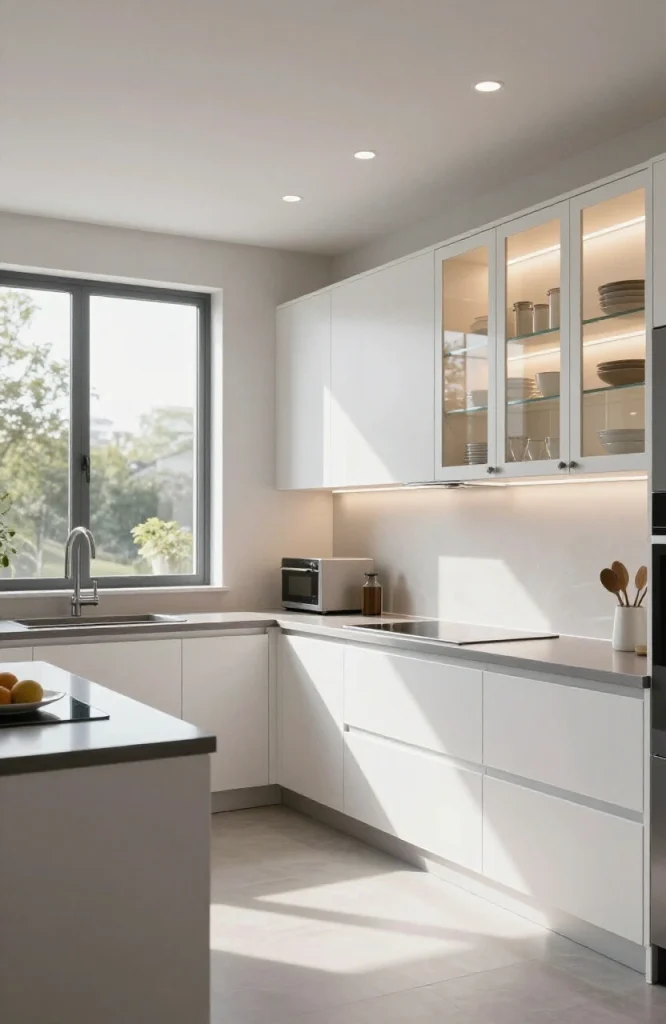
A well-lit parallel kitchen combines three light sources: ambient overhead lighting for general use, task lighting under the cabinets for prep work, and accent lighting inside glass cabinets or along open shelving for visual depth. Relying on a single ceiling fixture leaves the counters in shadow, since the light source sits too far from the work surface. Dimmable switches on each layer let the room shift from bright task lighting during cooking to a softer glow during a meal at the counter. Recessed can lights spaced along the center of a narrow kitchen provide even ambient coverage without adding visual bulk to a tight ceiling. Planning the lighting layout at the same time as the cabinet layout avoids the common problem of fixtures landing directly above upper cabinets instead of over open counter space.
26. Countertop Material Choices
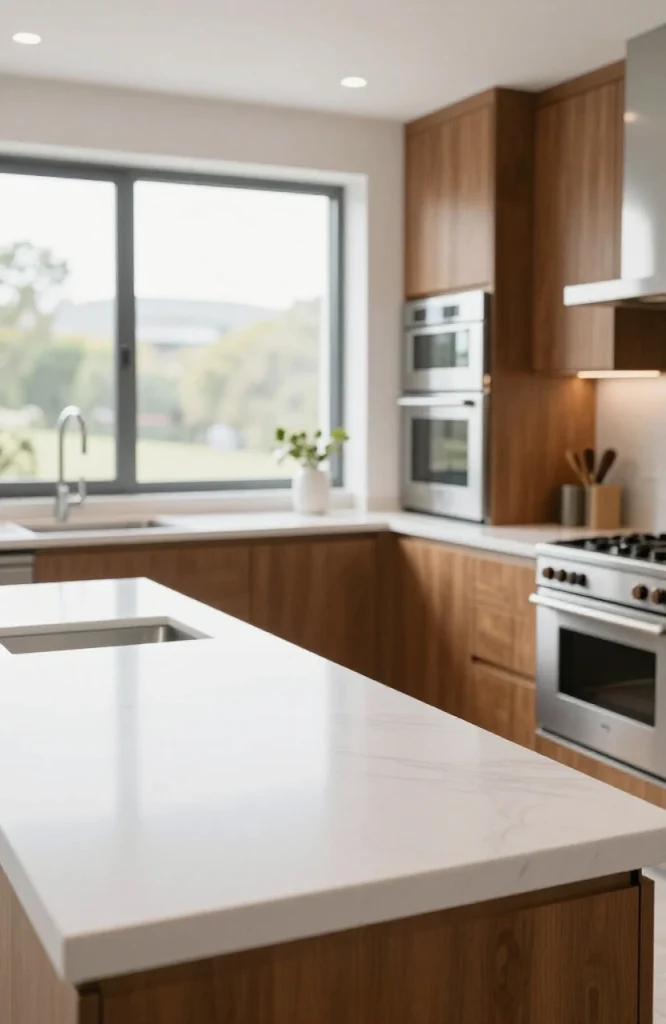
Quartz remains the most common countertop choice for modern parallel kitchens because it resists staining and scratching without the sealing that natural stone requires. Granite offers a similar durability with more natural pattern variation, though each slab looks slightly different, which matters if you want to match countertops across both sides of the kitchen. Butcher block brings warmth at a lower price point but needs regular oiling and is not ideal directly beside a sink, where standing water can damage the wood over time. Laminate countertops have improved significantly in appearance and now come in convincing stone and wood patterns at a fraction of the cost of quartz or granite. Keep the material consistent across both counters in a parallel kitchen unless you are deliberately using different materials for different work zones, as covered in the marble accent section above.
27. Flooring Choices for a Parallel Kitchen
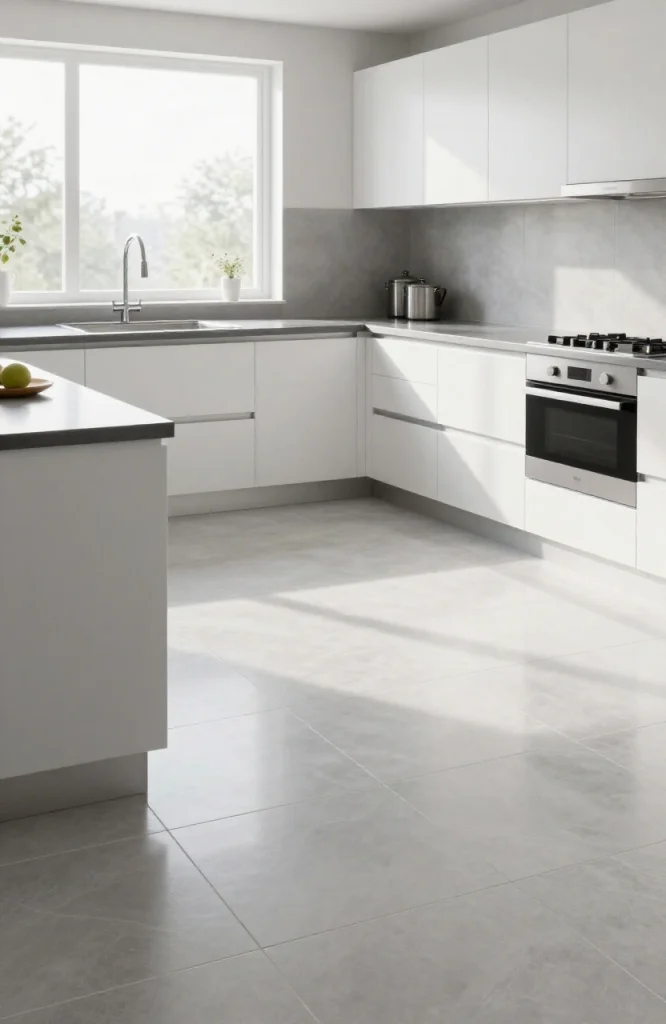
Kitchen flooring needs to handle water, dropped items, and daily foot traffic better than flooring in most other rooms. Large-format porcelain tile has become a common choice for modern parallel kitchens, since it resists moisture and comes in finishes that mimic natural stone or wood without either material’s maintenance demands. Luxury vinyl plank offers a softer, warmer feel underfoot and handles moisture well, making it a practical choice for households with young children who spend time on the kitchen floor. Running the flooring in the same direction as the counters, lengthwise down the room, makes a narrow kitchen appear longer and more open. Avoid heavily patterned flooring in a tight galley kitchen, since busy patterns underfoot compete with the cabinet and counter design above them.
28. Window Treatments and Natural Light Planning
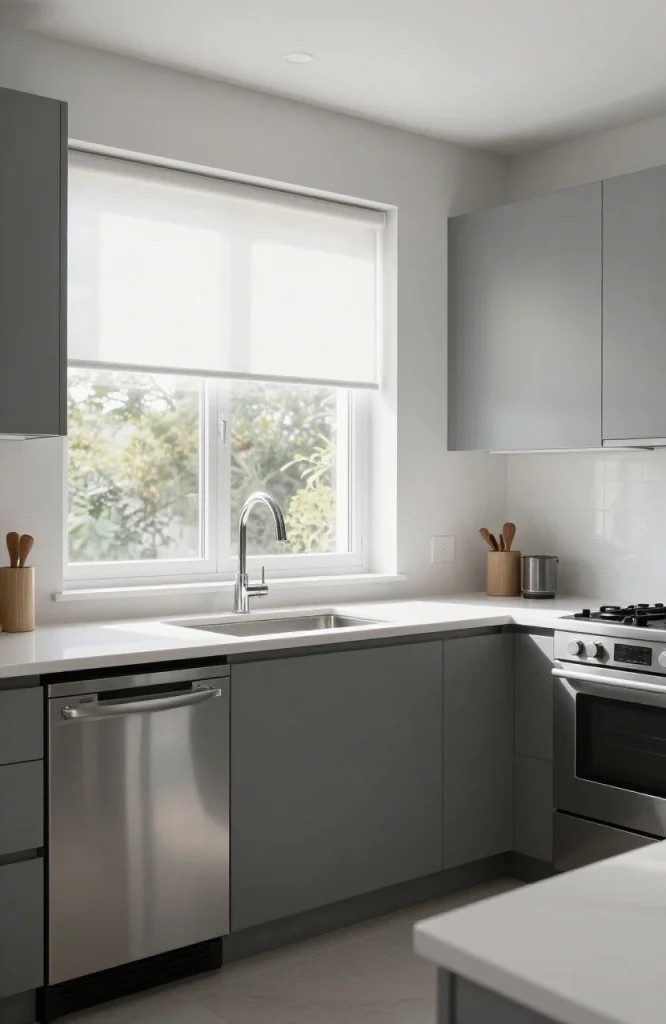
Parallel kitchens often include a window at one end of the room, above the sink, or along one of the two counters, and how you treat that window affects both light levels and privacy. Simple roller shades or cafe curtains work well over a kitchen sink window, since they keep fabric away from water splashes while still allowing light through the top portion of the glass. Skipping window treatments entirely suits kitchens with good exterior privacy and strong natural light, letting the window itself become part of the design rather than something to cover. For a full breakdown of options suited specifically to kitchen windows, including which treatments handle grease and moisture best, this guide to kitchen window treatment ideas covers the full range of practical choices.
29. Appliance Placement and Workflow Zones
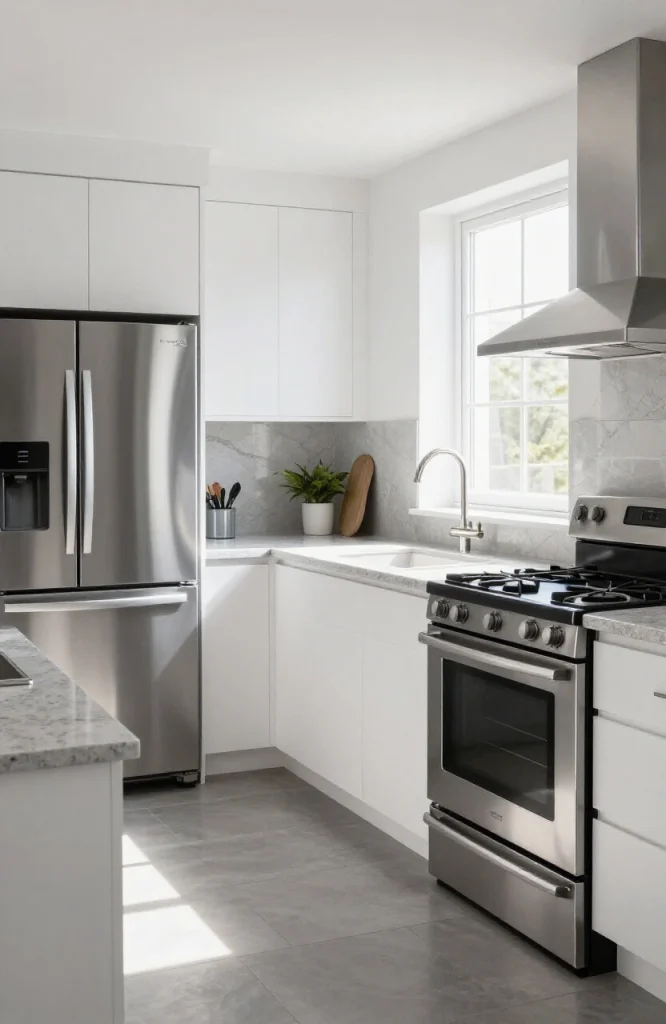
Grouping appliances by function rather than spreading them randomly across both counters keeps a parallel kitchen efficient during actual cooking. The cold zone, meaning the refrigerator and any pantry storage, works best near the entry point of the kitchen so groceries do not need to cross the entire room. The wet zone, covering the sink and dishwasher, and the hot zone, covering the stove and oven, should sit close enough together that moving a pot from stovetop to sink does not require walking around the kitchen. In a parallel layout, this often means placing the sink and stove on the same counter with the fridge directly across, keeping the busiest daily movements confined to a short, direct path rather than a long loop around the room.
30. Integrated vs Freestanding Appliances
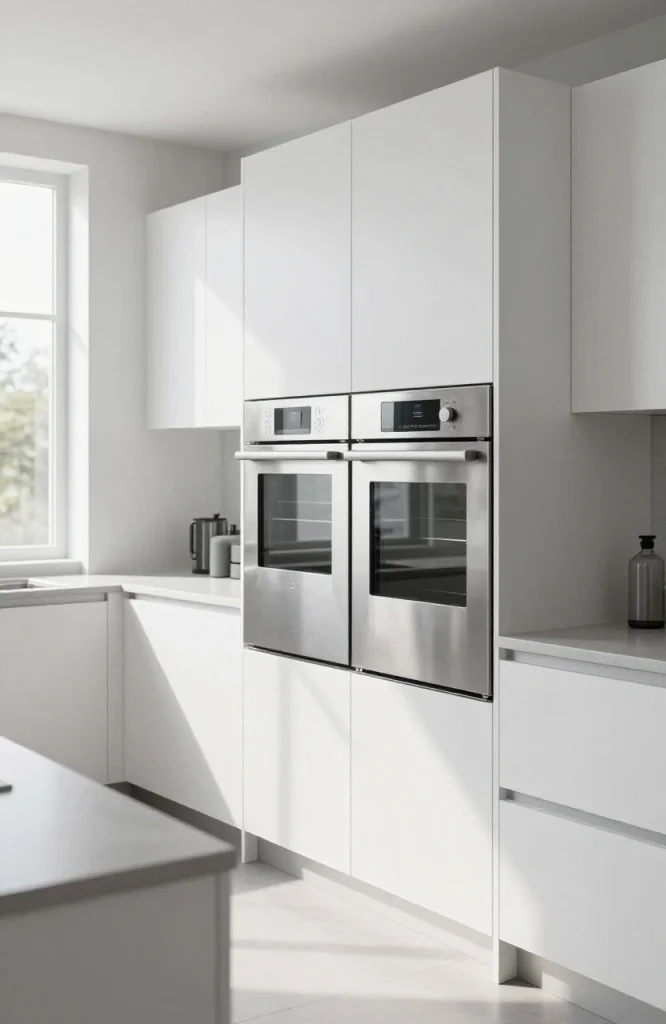
Integrated appliances sit behind cabinet-matching panels, which keeps the visual line of a parallel kitchen unbroken from end to end and suits minimalist or handleless cabinet styles particularly well. Freestanding appliances, meaning a fridge or dishwasher with its own visible finish, cost less upfront and offer more flexibility if you want to upgrade or replace a single appliance later without matching it to the surrounding cabinetry. In a narrow parallel kitchen, a freestanding fridge with a protruding handle can eat into walkway clearance more than an integrated model, so measure carefully before committing to either option. Mixing the two, for example an integrated dishwasher with a freestanding fridge, is common and lets you put your budget where it matters most to your daily routine.
31. Ventilation and Range Hood Design
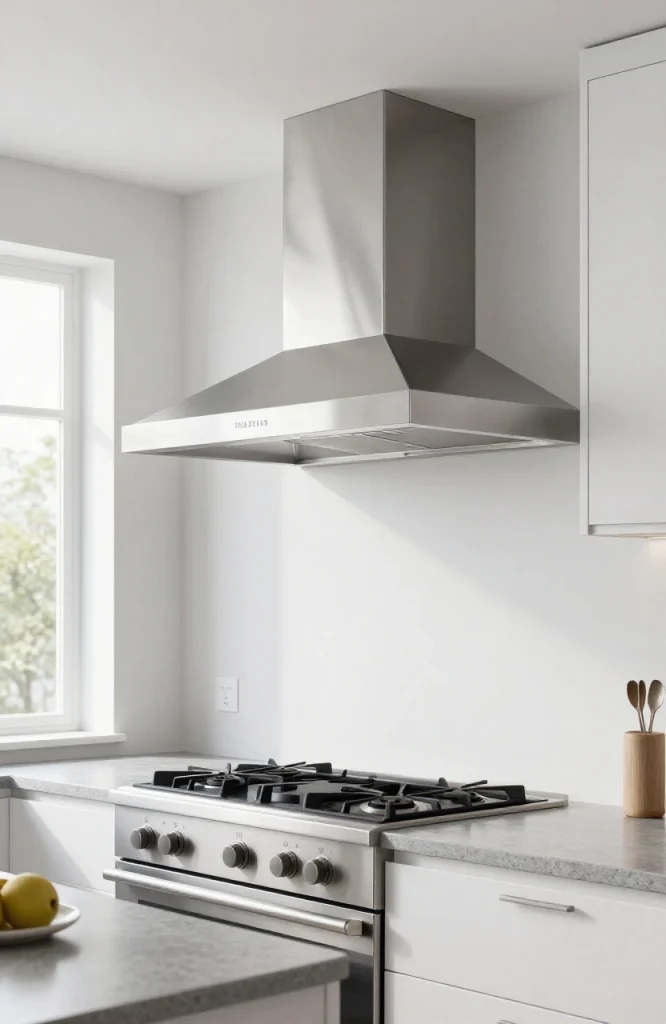
A range hood pulls smoke, grease, and steam away from the stove, and its size needs to match the width of your cooktop for it to work properly rather than just looking the part. In a parallel kitchen, the aisle width can limit how far a hood can extend without interfering with sightlines across the room, so a slimmer, wall-mounted hood often fits better than a large box-style unit. Ducted hoods that vent outside the home remove air quality problems far more effectively than recirculating hoods, which filter and return air to the room. A hood finished to match the surrounding cabinetry disappears into the design, while a stainless steel or black statement hood becomes a visual focal point above the cooking counter. Either approach works, but the ducting method matters more for long-term air quality than the finish choice.
32. Color Palette Selection for Small vs Large Kitchens
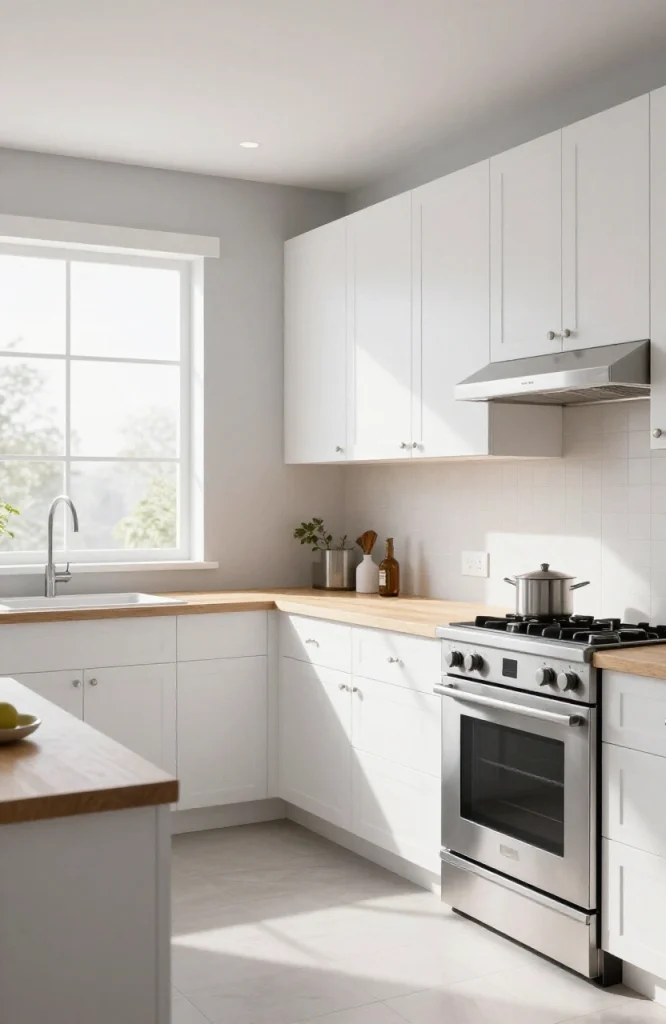
Small, narrow parallel kitchens generally benefit from a light, low-contrast palette, since pale colors reflect available light and avoid making the walls feel like they are closing in. Larger parallel kitchens have more room to absorb bold color choices, such as a full run of dark green or navy cabinets, without the space feeling cramped. A useful rule for tight kitchens is to keep no more than two dominant colors in the room, plus one accent color used sparingly through hardware or a light fixture. Testing paint and cabinet samples under both daytime and evening lighting matters more in a parallel kitchen than in an open room, since the narrow aisle means you view the colors up close rather than from a distance.
33. Parallel Kitchen for Studio Apartments
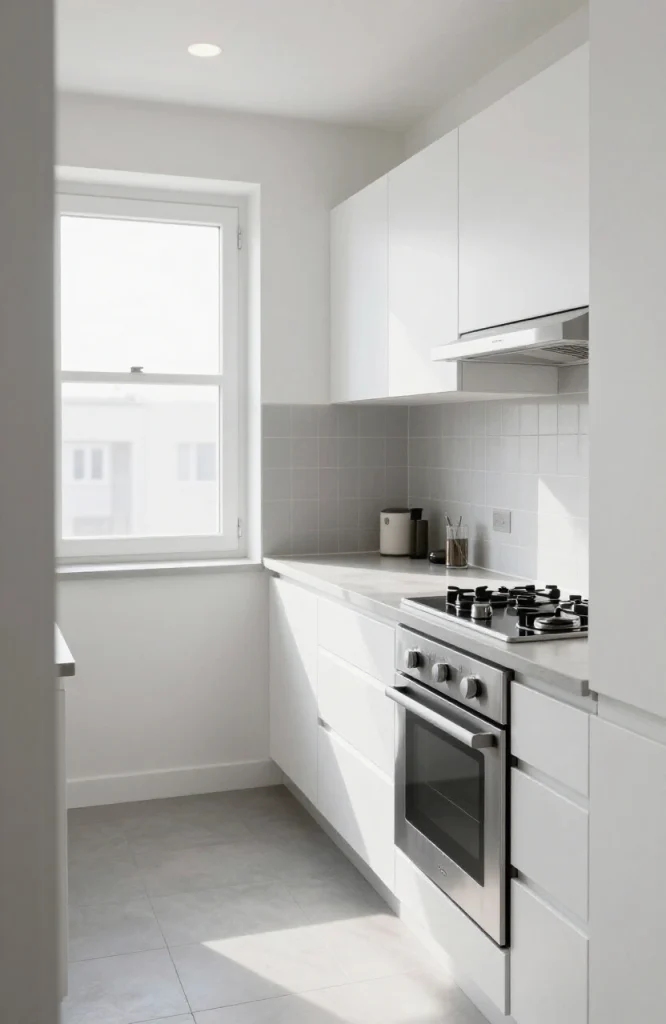
Studio apartments frequently use a parallel kitchen layout tucked along one wall or built into a shallow alcove, since it fits into a narrow footprint without needing a separate room. Compact appliances, including an 18-inch dishwasher or a two-burner cooktop, help a parallel kitchen fit into a studio without sacrificing the full range of daily cooking tasks. A rolling cart or fold-down counter can substitute for permanent extra counter space, tucking away when the studio needs open floor area for other uses. Keeping the cabinet color consistent with the rest of the studio’s finishes helps the kitchen blend into the overall room rather than reading as a separate space. Good ventilation matters even more in a studio, since cooking odors have nowhere else to go.
34. Parallel Kitchen Opening into a Dining or Living Area
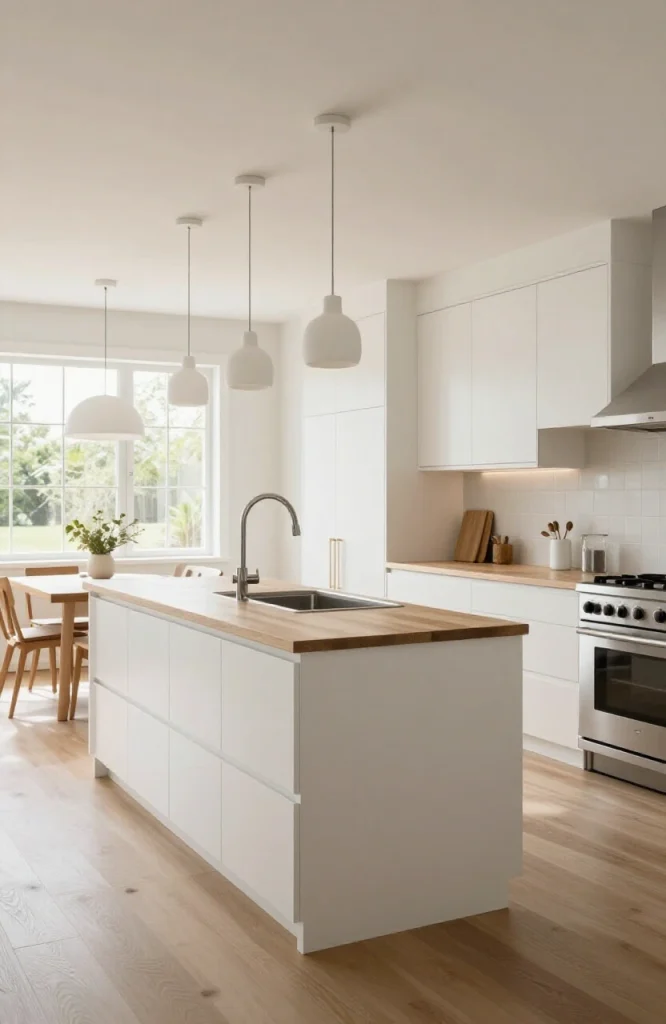
Many modern homes remove the wall between a parallel kitchen and the adjacent living or dining space, creating a single open room where the kitchen still keeps its distinct two-counter layout. This arrangement works best when the flooring and wall color carry through from the kitchen into the connected room, avoiding a hard visual break where the kitchen used to have a wall. A peninsula counter at one end of the parallel layout can mark the transition point without fully closing the space back off. For a detailed look at keeping a connected floor plan organized into clear zones, this guide to open floor plan decoration ideas covers the layout principles that apply directly to a kitchen opening into a shared living area.
35. Budget-Friendly Parallel Kitchen Ideas
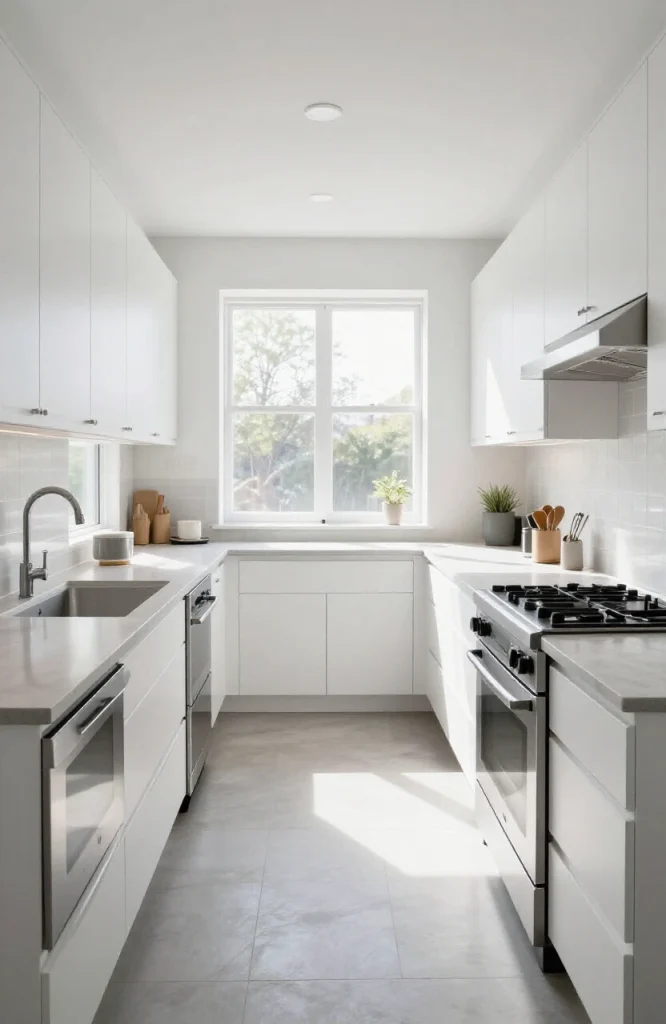
A parallel layout already costs less than an L-shaped or U-shaped kitchen in most cases, since the straight cabinet runs require less custom cutting and fewer corner units. Keeping this budget advantage means resisting the urge to add a full stone countertop or custom cabinetry once the layout is set. Laminate countertops in a stone-look finish, stock cabinets from a home improvement store, and a simple subway tile backsplash together can deliver a clean, modern look at a fraction of custom pricing. Painting existing cabinets rather than replacing them saves the most money of any single change, provided the cabinet boxes themselves are still structurally sound. For more ways to refresh a kitchen without a full renovation, this guide to ideas for updating a kitchen covers additional low-cost changes that apply directly to a parallel layout.
36. Luxury Parallel Kitchen Design Elements
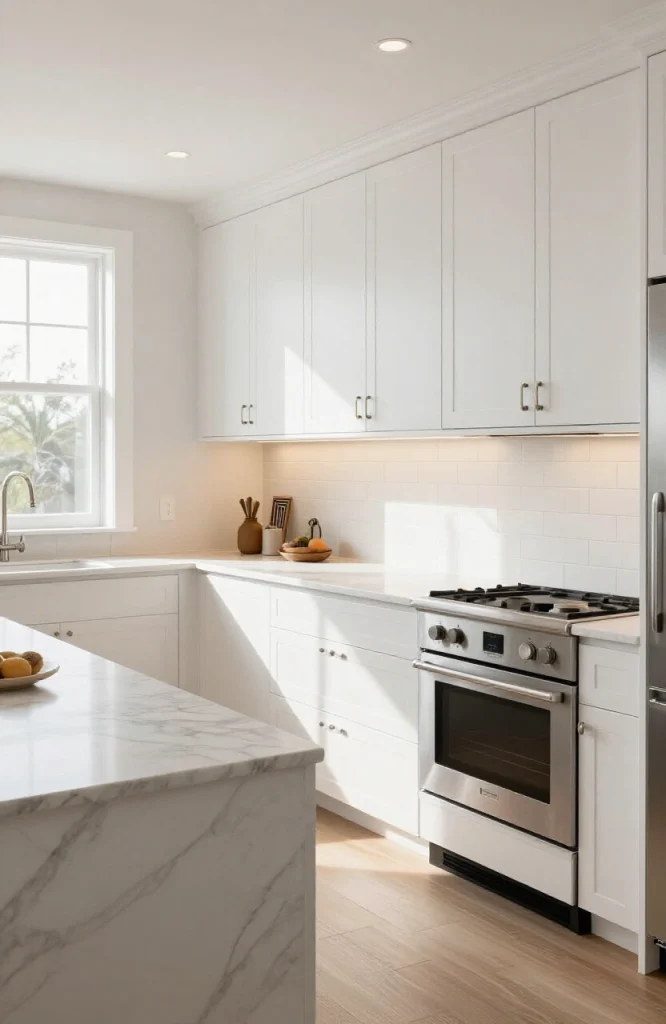
At the higher end, a parallel kitchen can include full-height custom cabinetry, book-matched marble slabs where the veining pattern lines up across adjacent pieces, and integrated smart appliances controlled from a wall panel or phone app. Brass or unlacquered bronze hardware, which develops a natural patina over time, adds a sense of permanence that plated finishes cannot match. A secondary prep sink on one counter, separate from the main cleanup sink, lets two people work without competing for the same water source. Custom lighting, including motion-sensor cabinet lighting or a fully programmable scene system, rounds out a luxury build. These upgrades add real cost, so choosing one or two, such as the stone slabs or the hardware, delivers most of the visual impact without stretching the full budget across every category at once.
37. Smart Technology in Modern Parallel Kitchens
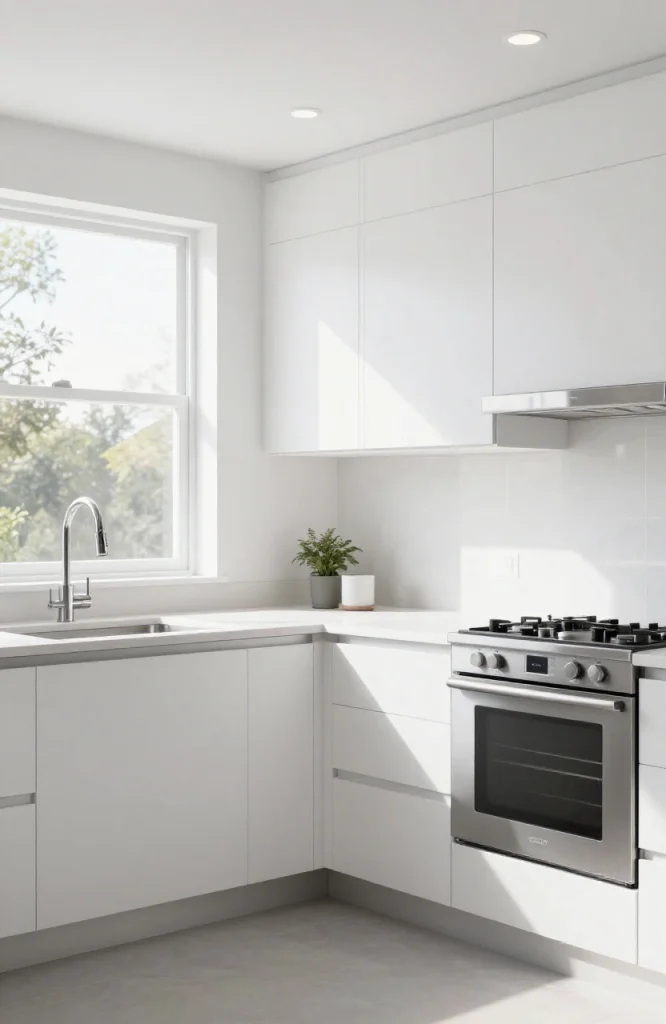
Smart faucets with touchless activation reduce cross-contamination during food prep and work particularly well in a parallel kitchen where counter space stays tight and hands are often full. Voice-controlled lighting and smart plugs let you turn on under-cabinet lights or a coffee maker without reaching across a counter covered in ingredients. A smart oven or range that can be monitored remotely gives peace of mind during longer cooking tasks, though this technology adds meaningful cost and is worth considering only if you already use similar smart home devices elsewhere. Keep wiring and outlet placement in mind during the planning stage, since retrofitting smart technology into finished cabinetry later usually means cutting into walls or countertops that were already installed.
38. Sink and Faucet Placement in a Parallel Layout
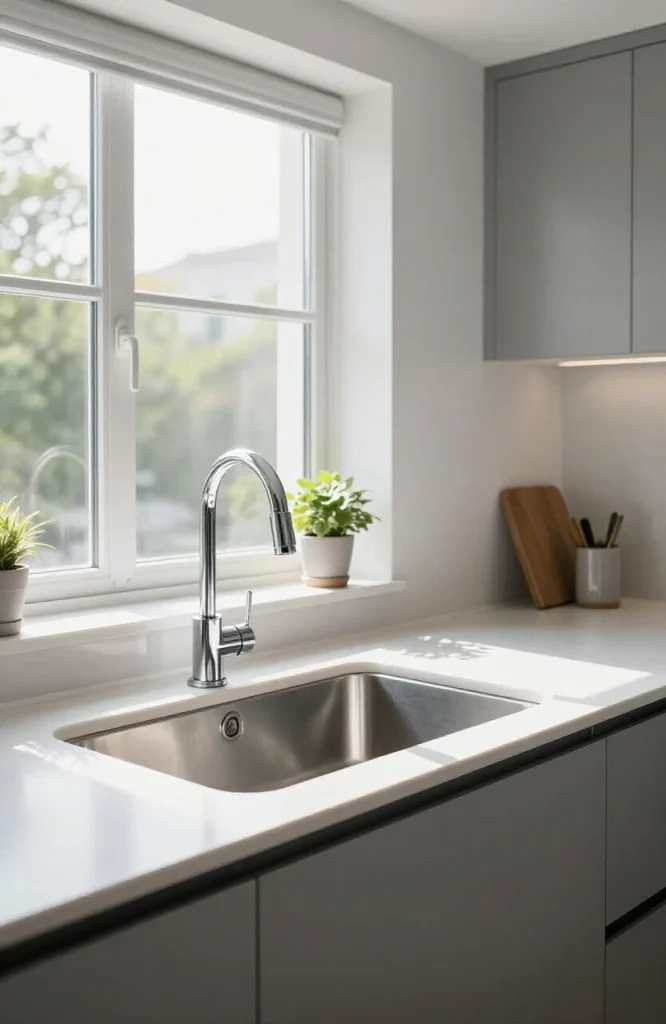
Placing the sink under a window, when one exists along the parallel counter, gives the person washing dishes a view outside rather than facing a blank wall. A single-basin sink suits smaller parallel kitchens better than a double basin, since it frees up more usable counter space on either side. Faucet height matters more in a parallel kitchen than in a wider layout, since a tall gooseneck faucet can interfere with sightlines across the narrow aisle toward the opposite counter. If your parallel layout includes a corner where the counter turns, a corner-mounted sink can make use of that otherwise awkward space rather than forcing a straight sink placement that eats into prep counter length.
39. Common Mistakes to Avoid in Parallel Kitchen Design
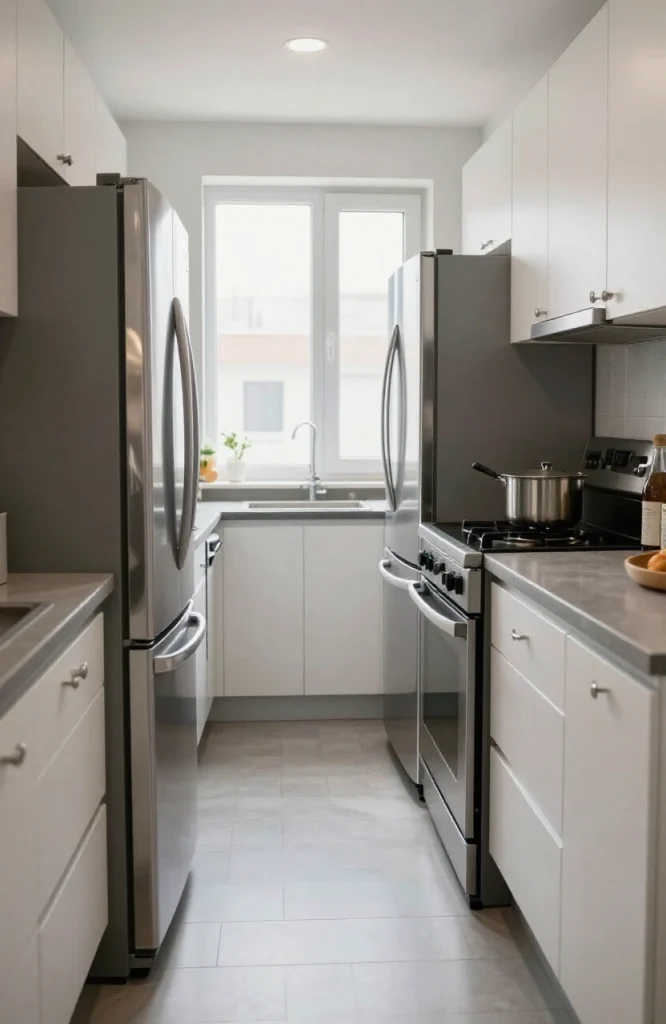
The most frequent mistake in parallel kitchen planning is underestimating walkway width, which looks acceptable on a floor plan drawing but feels cramped the moment appliance doors open at the same time. A second common mistake places the fridge too far from the entry point, forcing every grocery trip to cross the full length of the kitchen. Mismatched cabinet depths between the two counters, even by an inch or two, throw off the visual balance of the room and can create awkward gaps near the ends. Skipping adequate lighting under the upper cabinets leaves the main prep counter in shadow, a problem that becomes obvious only after the kitchen is finished and in daily use. Reviewing these details against your own floor plan before ordering cabinets prevents costly changes after installation.
40. How to Plan a Parallel Kitchen Renovation Step by Step
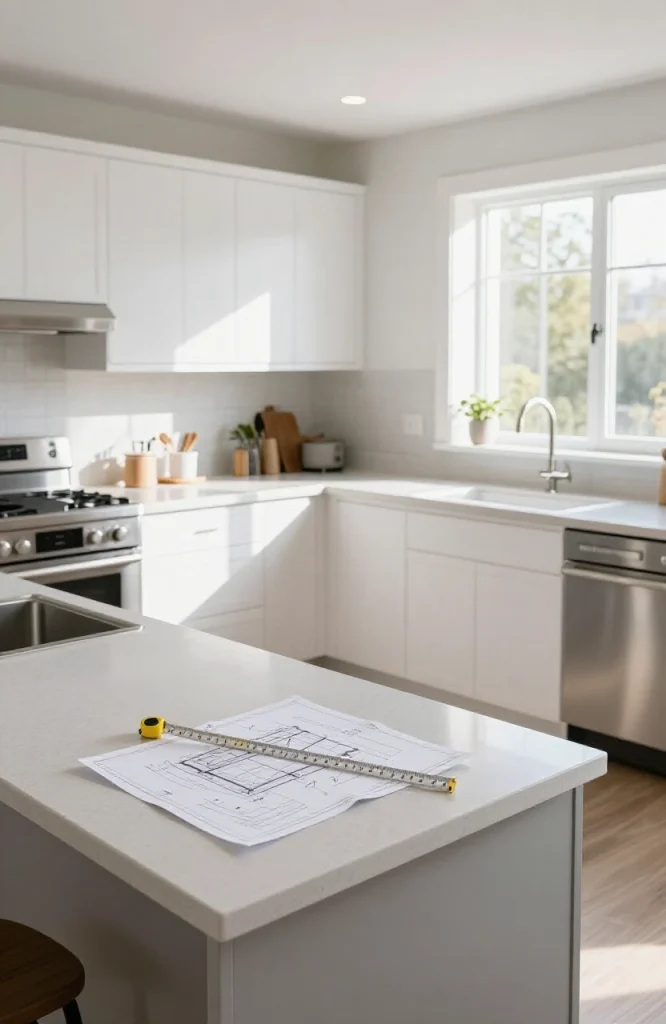
Start by measuring the full room, marking window and door locations, and noting where existing plumbing and electrical lines run, since moving these adds significant cost to any renovation. Next, decide on your work triangle placement, positioning the sink, stove, and fridge to minimize crossing back and forth across the narrow aisle. From there, choose your cabinet style and color palette, keeping the earlier sections on light reflection and walkway clearance in mind if your kitchen runs narrow. Select countertop and flooring materials that match your budget and daily use patterns, then finalize your lighting plan before cabinets go in, since electrical work is far easier to adjust before installation than after.
Finally, walk through the finished floor plan on paper or with tape on the floor one more time, checking every appliance door and drawer against the walkway width, before placing your final order.
Conclusion
A parallel kitchen rewards careful planning more than any single style choice. Get the walkway width, work triangle, and storage right, and nearly any color palette or material combination covered in this guide will function well for years of daily cooking. Skip those fundamentals, and even the most photogenic finish will feel frustrating to use. Start with your room’s actual measurements, choose a style from the modern parallel kitchen designs above that matches how you use your kitchen day to day, and build outward from there.
If you are also planning changes to the rest of your home during the same renovation, this site’s guide to ideas for updating a kitchen and its guide to open floor plan decoration ideas both cover related changes that pair naturally with a new parallel layout.